Naschmarkt eating guide: Vienna's best market
Vienna: Naschmarkt Food Tasting Tour
What should I eat at the Naschmarkt in Vienna?
Start with Austrian Liptauer cheese on dark bread, then try Turkish börek or gözleme, fresh olives, and a Käsekrainer sausage. Saturday is the best day — the flea market runs alongside and the energy is highest.
Vienna’s most democratic food destination
The Naschmarkt has existed in roughly its current form since the late 1500s, when the Wienzeile canal was routed here and farmers began selling dairy produce alongside it. Today it stretches 1.5 kilometres through the 6th district, housing around 120 stalls and a further 30 restaurants — a mix of Austrian, Turkish, Lebanese, Japanese, Korean, Greek, and everything in between.
It is, in the best sense, chaotic: a place where a Viennese pensioner buying sauerkraut stands next to a Japanese tourist eating Käsekrainer, who stands next to a local chef sourcing obscure mushrooms. Come hungry.
| Where | Naschmarkt area, Wienzeile, 6th district |
| Cost | €4–8 per stall item; €15–25 sit-down |
| Time needed | 1.5–2 hours, +1–2h flea market |
| Best day | Saturday morning, 7–11am |
| Closed | Sundays |
What you need to know
Layout and orientation
The Naschmarkt runs east-west along the Linke Wienzeile. The eastern end (near Karlsplatz) is more upmarket, with better-quality Austrian produce and the more established food businesses. The middle sections are the main eating zone. The western end transitions toward the Saturday flea market.
The restaurants inside the market (restaurants with seating, not just stalls) are concentrated in the eastern portion. They are tourist-priced relative to their quality. The food stalls throughout the market are better value.
When to go
Saturday, 7–11am is the gold standard. The weekly flea market (Flohmarkt) occupies the area west of Kettenbrückengasse U4 station, and the regular market stalls are in full swing. The energy is at its highest. Come hungry and without luggage.
Weekday mornings (7–10am) are better for serious shopping — Viennese locals buying their weekly produce, less tourist pressure, stall holders with more time to talk.
Midday and afternoon are crowded with office workers (lunchtime rush) and tourists. Not ideal unless you’re specifically going to a restaurant booking.
Sundays: closed.
The flea market on Saturday
The Saturday Flohmarkt at the Naschmarkt (behind the U4 Kettenbrückengasse station) is one of the best in Vienna. Books, vinyl, vintage clothes, antiques, kitchenware, old photographs, Habsburg-era curios, and a great deal of miscellaneous old things. Admission free. Open from 6am to roughly 6pm. Bargaining is accepted and expected.
What to eat at the Naschmarkt
Austrian classics
Käsekrainer — pork sausage stuffed with Emmental cheese, grilled until the cheese bubbles. The quintessential Naschmarkt food. Get it from one of the Würstelstände (sausage stands), eaten with mustard and a Semmerl (bread roll). Cost: €4–6.
Liptauer — Austrian/Hungarian cheese spread made from quark, paprika, onion, capers and caraway. Red-orange in colour, slightly sharp and savoury. Spread on dark bread (Schwarzbrot) from one of the bread stalls. Excellent with a cold Radler (beer mixed with lemon soda).
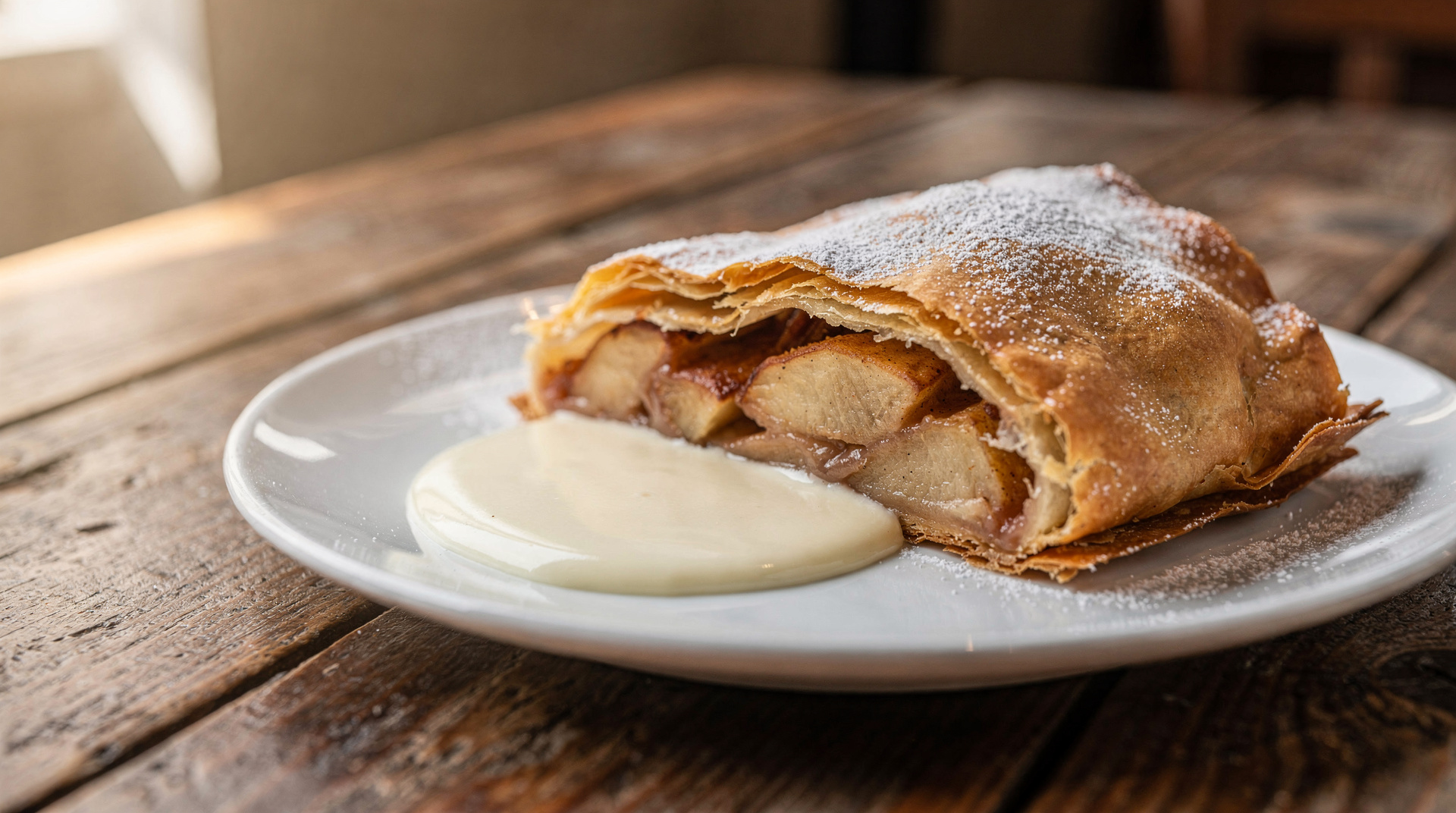
Strudel — particularly Topfenstrudel (curd cheese strudel) and Apfelstrudel. Look for stalls baking fresh rather than selling pre-sliced refrigerated versions. The Vienna pastry tour guide explains what good strudel looks like.
Mozzarella di Bufala and Austrian cheese — the Italian and cheese stalls in the eastern section sell excellent produce. Austrian mountain cheeses (Bergkäse, Graukäse) are worth trying — robust, complex flavours at reasonable prices.
International options
The Naschmarkt’s mid-section is home to a wide range of international stalls:
Turkish and Middle Eastern: Fresh börek (cheese or spinach pastry), gözleme (Turkish flatbread cooked on a griddle), kebabs, baklava. Several stalls have been run by the same Turkish families for decades.
Asian: A Japanese stall near the western end is consistently excellent for bento-style lunch boxes. Korean kimchi and other fermented vegetables appear regularly.
Greek: Large olive selection from multiple vendors — some of the best olives in Vienna at these stands. Marinated feta, dolmades, taramasalata.
French and Italian: Imported cheese, charcuterie, wine by the glass from small stalls.
The sit-down restaurants (honest assessment)
The restaurants inside the Naschmarkt (the ones with proper seating and printed menus) are tourist-priced for their quality. They’re not bad — some are good — but you can eat better for less money from the stalls themselves. If you do want a sit-down meal, the Silberwirt (just outside the market in the 5th district) and the restaurants along Rechte Wienzeile are better value. For more sit-down options beyond the market itself, our best restaurants in Vienna guide covers where else in the city to eat well.
A sensible order for grazing
The best way to eat here is to treat the market as a long, slow tasting menu rather than a single meal. Walk the whole length once without buying anything, noting which stalls have a queue of locals and which have a host calling people in. Then turn around and eat on the way back. Starting savoury with bread, Liptauer and a few olives, moving to something warm such as börek or a grilled sausage, and finishing with strudel or baklava keeps the sequence balanced and stops you filling up on the first thing you see.
Share everything. Most stall portions are generous enough that two people can sample far more by splitting each item. Ask for a taste of cheeses and olives before buying; vendors expect it, and it is the quickest way to learn what you like. A few words of German, or a smile and a pointing finger, go a long way.
Eating well if you are vegetarian
The Naschmarkt is one of the easiest places in Vienna to eat without meat, which is not something you can say about every traditional Beisl. Cheese stalls, bread stalls, olive vendors, falafel and hummus counters, spinach börek, fresh fruit and the many pickled vegetables add up to a full meal without any compromise. Vegans will find more to eat in the Middle Eastern and Asian sections than in the Austrian ones, where lard and butter are common. If you want a wider overview of meat-free options across the city, the Vienna food guide is a good companion to this page.
Combining the market with the rest of the neighbourhood
The market sits close to several of the city’s best-known sights, so it pairs naturally with a longer day. After a morning of eating, many visitors walk toward the MuseumsQuartier to digest among the courtyards and galleries, or head up to the Innere Stadt for a coffee house stop. Architecture lovers will enjoy the buildings that line the Linke Wienzeile along the market’s edge, a short walk from the Ringstrasse route. If you are building a full visit, the 3-day Vienna itinerary shows where a market morning fits best, and the weekend itinerary does the same for a shorter stay.
For a first-hand account of a Saturday visit, read our Naschmarkt Saturday morning diary, which captures the mood better than any list of stalls can.
How the Naschmarkt fits into a Vienna food itinerary
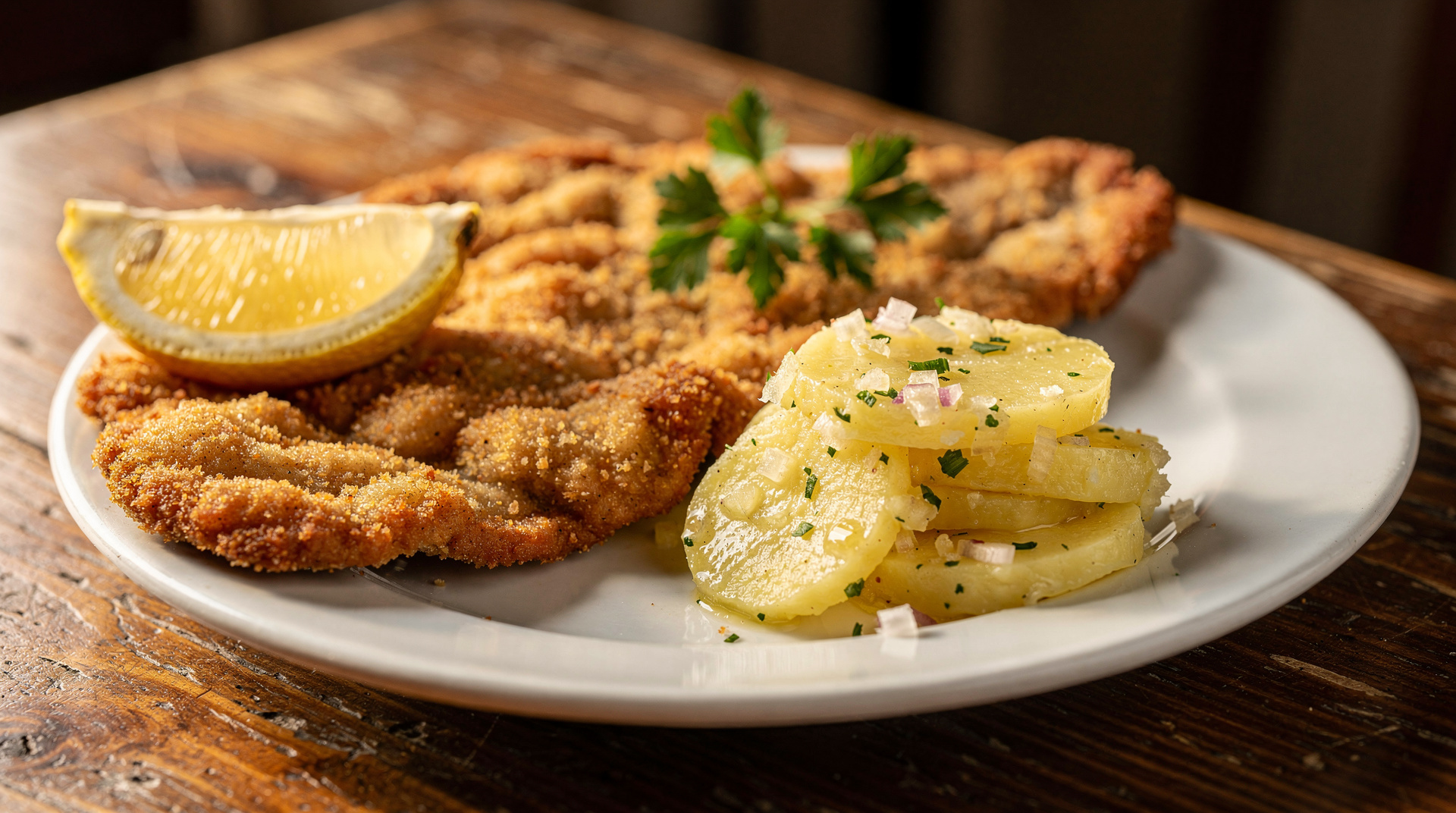
The Naschmarkt is the single most useful stop for understanding Vienna’s food culture in one visit, but it isn’t the whole story. Traditional Viennese cooking — schnitzel, Tafelspitz, goulash — is better experienced at a proper Beisl (traditional tavern) than at the market’s stalls; the schnitzel guide covers where to find the real thing.
Coffee house culture, similarly, sits outside the Naschmarkt entirely and deserves its own dedicated visit — see the Viennese coffee house guide for the etiquette and the best addresses. If you’re trying to decide between a self-guided Naschmarkt visit and a broader guided food tour of the city, the Vienna food tours compared guide lays out the trade-offs, and our general Vienna food guide sets the Naschmarkt in the context of everything else worth eating in the city.
Seasonal produce at the Naschmarkt
The Naschmarkt’s produce stalls shift with the Austrian growing season more than most visitors expect. Spring (April–May) brings white asparagus (Spargel) — a genuine Austrian obsession, sold by weight at multiple stalls and worth trying if you’re visiting in season. Summer brings an abundance of Burgenland stone fruit — apricots (Marillen) in particular, used in the Marillenknödel dumplings and the apricot schnapps sold at several stalls.
Autumn is mushroom season — foraged Austrian mushrooms (Eierschwammerl/chanterelles, Steinpilze/porcini) appear at the specialist stalls and are a genuine local delicacy worth seeking out, not a tourist gimmick. Winter thins the fresh-produce offering somewhat but the covered, permanently-stocked stalls (cheese, cured meats, spices, olives) run at full strength year-round.
Whatever the season, the stalls are a useful guide to what Austrians are actually cooking at home. If something unfamiliar is piled high and a local is weighing it carefully, it is probably worth asking about. Pairing a market snack with a glass of regional wine is an easy way to continue the theme; the Grüner Veltliner guide explains which bottles suit cheese, bread and olives best.
Guided food tours of the Naschmarkt
A guided tour is genuinely useful here. The market is large and confusing for first-timers, the best stalls aren’t obvious, and a knowledgeable guide will explain the history of specific vendors, introduce you to things you might not have tried, and get you past the decision paralysis of 120 stalls.
The Naschmarkt gourmet tour covers the market with a local guide — typically 2–2.5 hours, multiple tastings included, focused on both Austrian classics and the international stalls.
The Vienna food tour often includes a Naschmarkt stop alongside other city food highlights — broader coverage of Vienna’s food scene.
Honest tips
Don’t eat at the first sausage stand you see. The stands at the Karlsplatz end (the tourist entrance) are more expensive. Walk further in and compare prices and grilling quality.
Bring cash. Most stalls are cash-only. ATMs are available at Karlsplatz but not inside the market. €50 is enough for a substantial eating session.
Saturday flea market tip: The good finds go early. Arrive at 6–7am for first pick. After 10am the interesting items are largely gone and the market fills with tourists.
Ignore the laminated restaurant menus. The sit-down restaurants with hosts standing outside are the worst value in the market. The stalls behind them are better food for a quarter of the price.
The market is partially covered in a permanent structure over the central section — it’s viable in light rain. Heavy rain makes it unpleasant; consider rescheduling if severe weather is forecast.
Buy wine to drink at the market. Several wine stalls sell glasses and bottles of Austrian wine. Finding a bench in the market and eating olives, cheese and bread with a glass of Grüner Veltliner is one of the most pleasant things you can do on a Saturday morning in Vienna.
The orchid stalls near the eastern entrance are where Viennese apartment dwellers buy their houseplants. A good €5–8 orchid is an unusual (if logistically challenging) souvenir.
Frequently asked questions about the Naschmarkt
Is the Naschmarkt touristy?
It is both — genuinely local and increasingly touristy. Weekday mornings remain primarily local. Saturday is a mix. The sit-down restaurants lean tourist; the stalls remain mostly genuine. The flea market attracts a full range.
Can I buy wine and spirits at the Naschmarkt?
Yes. Multiple wine stalls sell Austrian wine by the bottle (sometimes by the glass). Schnapps and Obstbrand (fruit brandy) vendors are also present. Prices are competitive with wine shops, sometimes better for small producers.
Is the Naschmarkt accessible?
The main market area is flat and accessible for wheelchairs and buggies, though it can be crowded. The flea market section is more chaotic and less organised. Weekday mornings are easier to navigate than Saturday.
How far is the Naschmarkt from the city centre?
About 1–1.5km from Stephansdom, roughly 15–20 minutes on foot walking along the Ringstrasse and through the 4th district. The U4 (Karlsplatz or Kettenbrückengasse) is the most direct public transport option and takes about 5–8 minutes from the city centre.
Can I take food from the Naschmarkt on the plane?
Fresh produce and meats may be subject to customs restrictions depending on your destination. Within the EU/Schengen area, packaged goods (Liptauer in sealed jars, wine, schnapps, packaged cheese) travel without issue. Cured meats and fresh dairy may have restrictions for travel to the US, UK, or Australia.
Top experiences
Bookable activities with verified prices and instant confirmation on GetYourGuide.