Bratislava
Day trip from Vienna to Bratislava: the castle, old town, UFO bridge, the speedboat option and realistic advice on what fits in a single day.
From Vienna: Guided Tour to Bratislava with Speed Boat Ride
Quick facts
- Distance from Vienna
- 60 km (1 hour by train or 75 min by hydrofoil)
- Train
- Wien Hbf → Bratislava Hlavná stanica, RegioJet/ÖBB, 1h
- Currency
- Euro (€) — Slovakia is in the Eurozone
- Language
- Slovak (English widely understood in city centre)
Europe’s most underrated capital
Bratislava is one of Europe’s smallest national capitals — its city centre is compact enough to walk across in 30 minutes — and also one of the most rapidly transformed. Since Slovakia joined the EU in 2004, the old town has been extensively restored, a new financial district has risen on the Danube riverfront, and the city has developed a restaurant and bar scene that has nothing to do with communist nostalgia. Yet it remains dramatically less visited than Vienna, Budapest or Prague, which gives it an authenticity and an unhurried quality that its better-known neighbours have largely lost to the touring-group economy.
| Where | 60 km east of Vienna, on the Danube |
| Cost | Modest train fare; hydrofoil and guided tours cost more |
| Time needed | A full day; the old town alone can be done in half a day |
| Getting there | Train (1h) or seasonal hydrofoil (75 min) |
| Best time | April–October; hydrofoil only runs in this window |
For visitors based in Vienna, Bratislava is 60 kilometres and one hour away by train — genuinely one of the most accessible foreign capital cities in Europe. The two cities were, for much of their history, part of the same administrative unit: Bratislava (then called Pressburg, or Pozsony in Hungarian) was the coronation city of the Hungarian kingdom within the Habsburg Empire and one of the most important cities in Central Europe. The separation into distinct national capitals only came with the 20th century. Walking the old town, you feel the Habsburg inheritance in the architecture — the baroque palaces, the pastel townhouses, the scale of the main square — while the contemporary city around it is unmistakably Slovak.
Getting there
By train: RegioJet or ÖBB from Wien Hauptbahnhof to Bratislava Hlavná stanica, approximately 1 hour, with trains running every 30–60 minutes. The fare is modest — check current prices on the ÖBB or RegioJet websites, as booking in advance generally reduces the cost. The station is about 1 km from the old town centre, easily walkable or a short bus or tram ride.
By hydrofoil (Twin City Liner): The speedboat service operates from April to October, departing from Vienna’s Schwedenplatz on the Danube Canal and arriving at Bratislava’s city centre quay in approximately 75 minutes. It is more expensive than the train but is a genuinely different experience — the Danube at speed, with the Slovak lowlands opening up as you approach the city. A popular choice for visitors who want to arrive one way and return the other.
| Option | Time | Best for |
|---|---|---|
| Train (RegioJet/ÖBB) | ~1 hour | Cheapest, most frequent, year-round |
| Hydrofoil (Twin City Liner) | ~75 min | A scenic one-way Danube crossing, April–October only |
| Guided coach + hydrofoil combo | Full day | Sightseeing handled without independent navigation |
The guided Bratislava tour from Vienna with speed boat ride combines coach transport to Bratislava, a guided city tour, and return by hydrofoil — covering the city’s highlights with the added experience of the Danube crossing in both directions.
The Bratislava city highlights day trip from Vienna is the standard guided option, covering the old town, castle and main sights with an English-speaking guide — the practical choice if you prefer not to navigate independently.
Bratislava’s castle, old town and Slavín memorial sit on three different levels of the same hill, and the walk between them eats the day: a Bratislava day trip with a private guide and transport keeps the climbing to the parts that reward it.
What to see
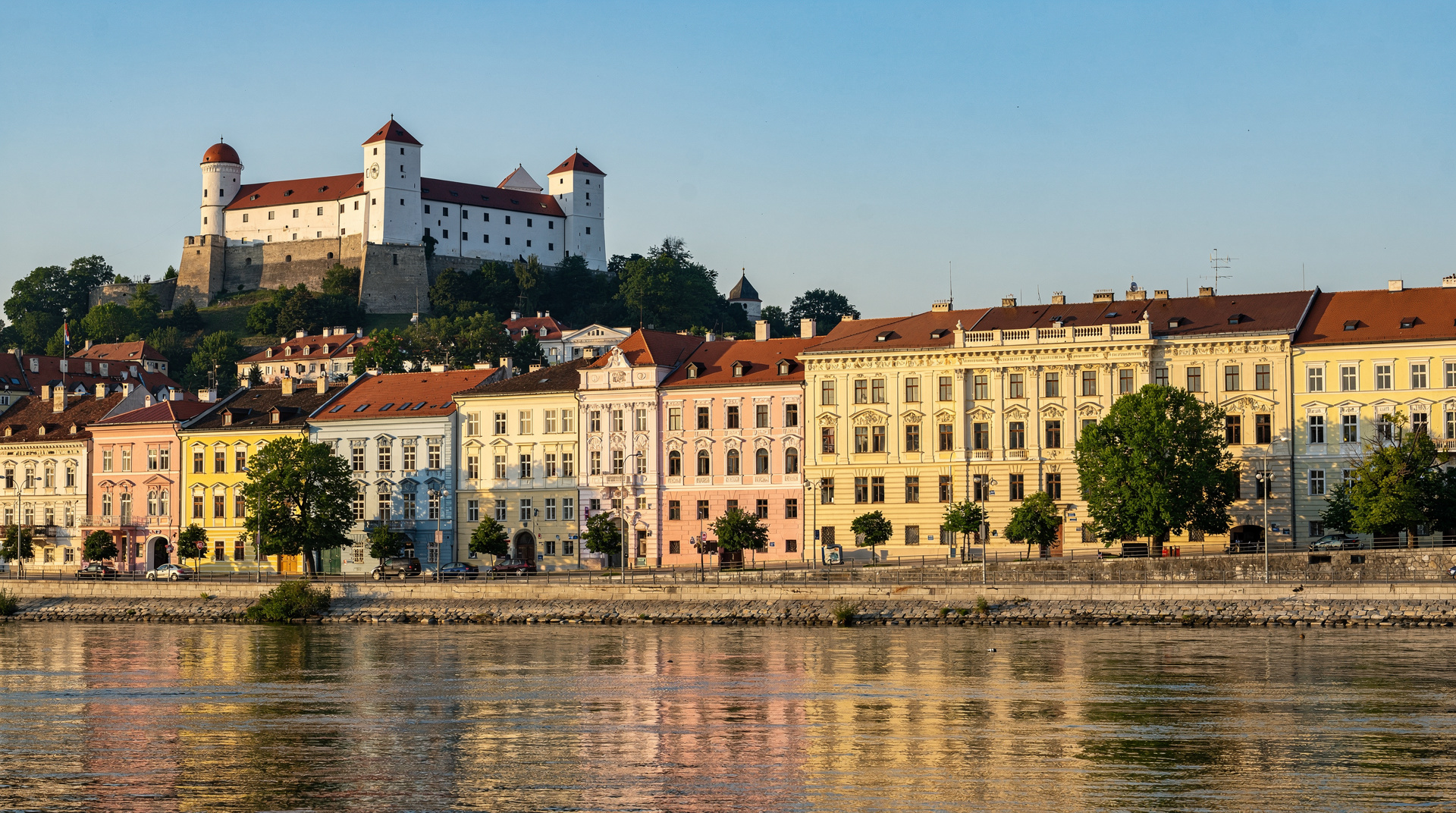
Bratislava Old Town (Staré Mesto) — the compact historic centre, largely pedestrianised, with 18th-century pastel-coloured burgher houses along Hlavné námestie (the main square) and the winding lanes of Michalská Street. The Michael Gate (Michalská brána), the only surviving medieval city gate, frames the best old-town photography: its Gothic tower rising above the baroque street below. The Old Town Hall with its asymmetric leaning tower dates from the 14th century and houses the city museum. The Primate’s Palace on Primaciálne námestie — a neoclassical palace from 1781 — contains a remarkable set of English tapestries in its Hall of Mirrors and is open to visitors during the week.
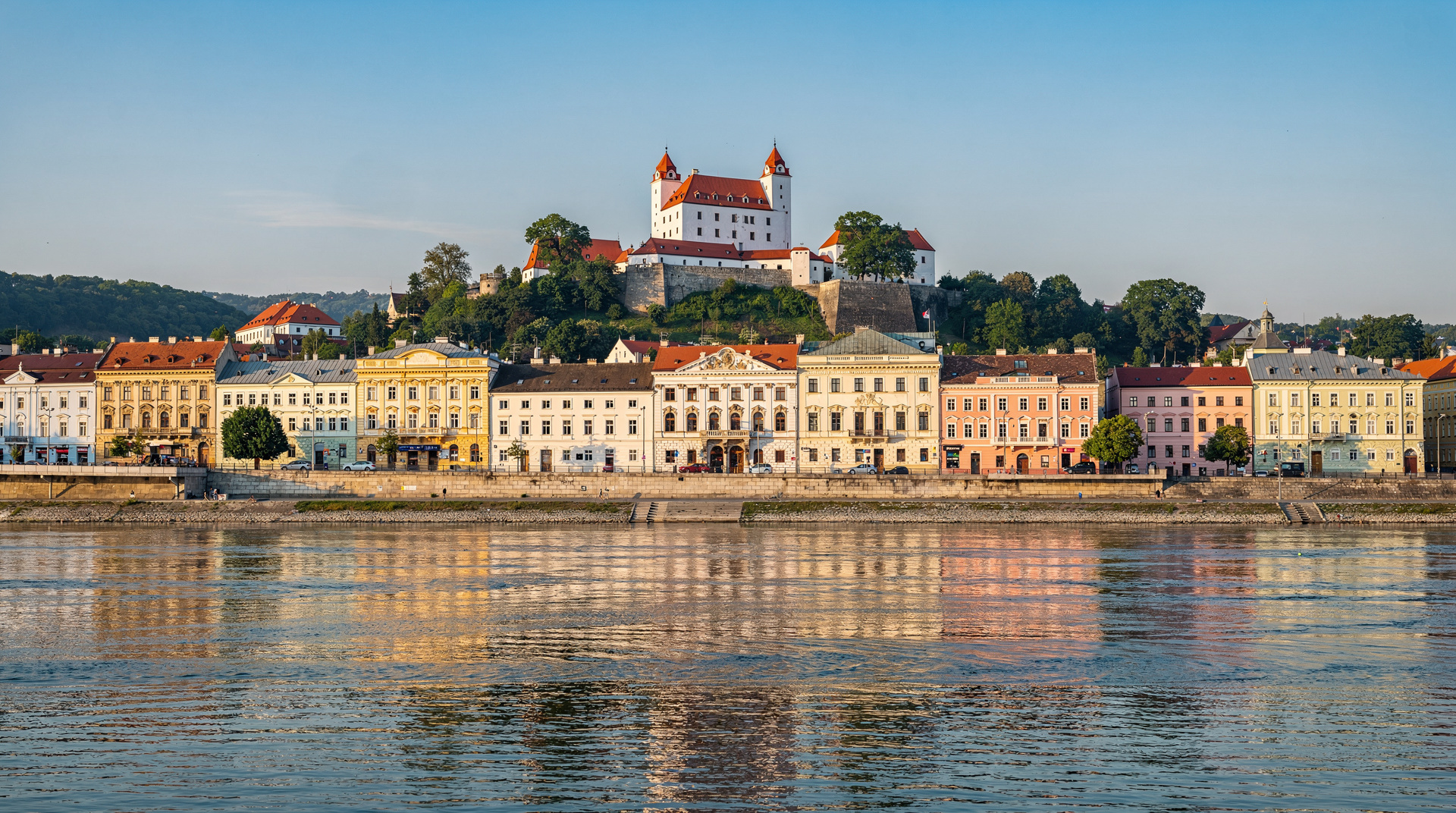
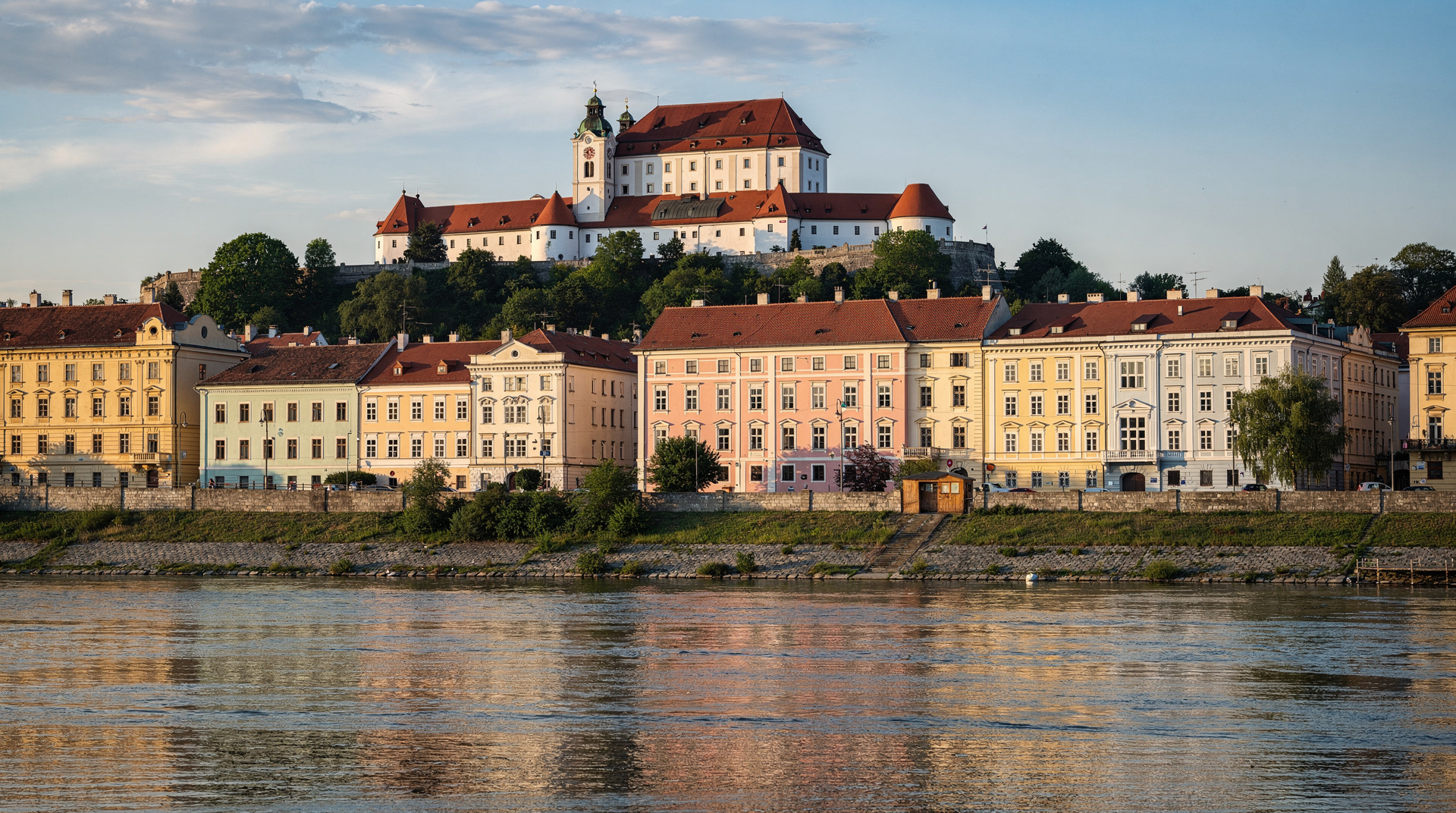
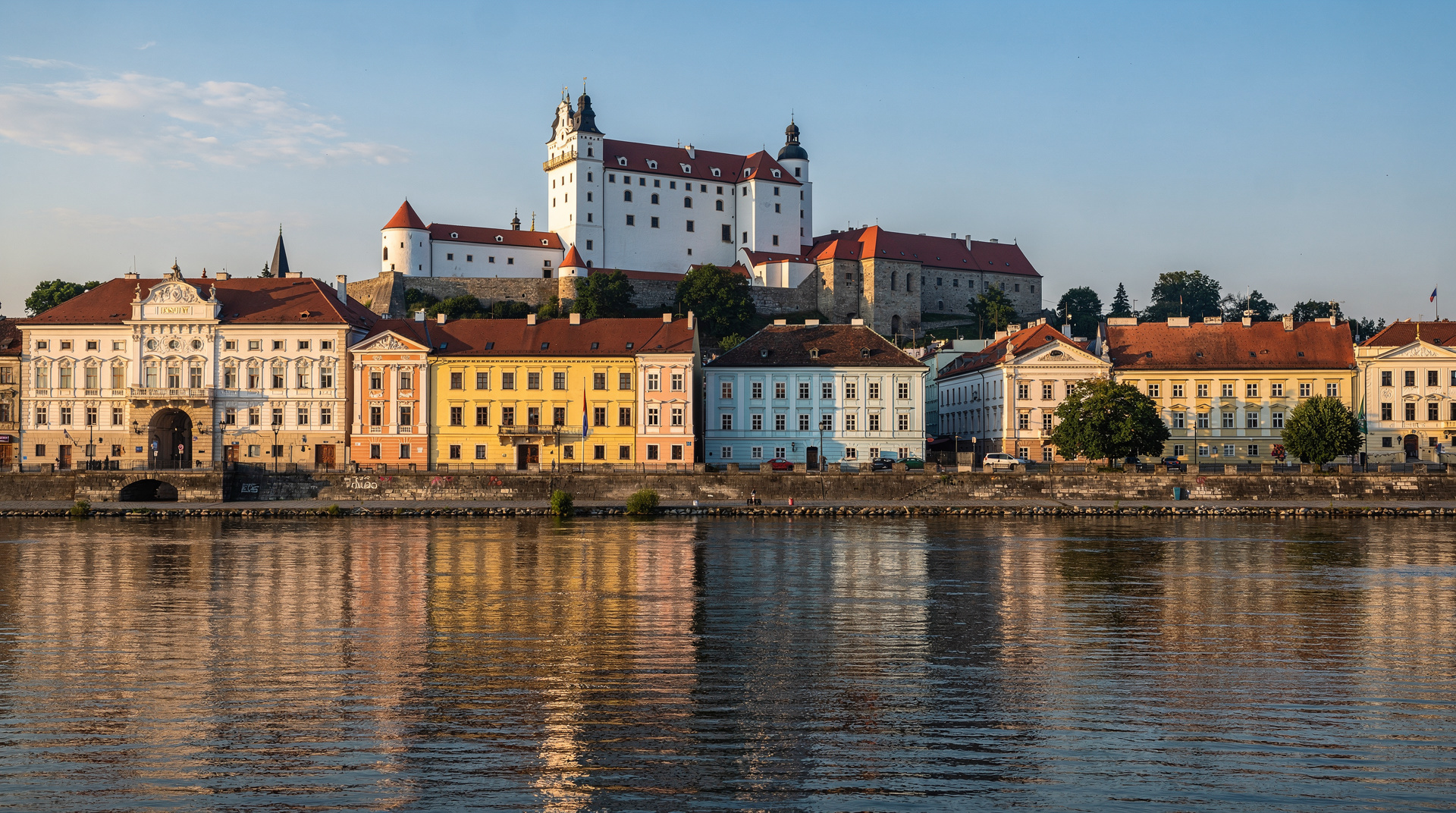
Bratislava Castle (Bratislavský hrad) — the large white fortress on the hill directly above the old town, reconstructed after a fire in 1811 and again in the 1960s. The reconstruction is thorough to the point of starkness — the castle looks more like a modern administrative building than a medieval fortress — but the views from the ramparts over the Danube, the Petržalka district, and the flat Slovak plain are genuinely impressive. The Museum of History inside covers Slovak history from the Celts through the Habsburg period. Worth visiting principally for the hilltop position and the panorama.
SNP Bridge (UFO Bridge) — the modernist cable-stayed bridge from 1972, with its flying-saucer observation platform at 85 metres above the Danube. The design was controversial when built — its placement required demolition of part of the old Jewish quarter — but it has become one of Bratislava’s defining images and the viewing platform (with a café and bar) offers the best panoramic view of the city. A lift from the bridge pylon reaches the platform; admission includes a drink voucher.
Communist-era street sculptures — Bratislava has accumulated a collection of whimsical street sculptures worth finding: Čumil, the man emerging from a manhole cover on Panská Street, is the most famous. A Napoleonic soldier leans against a bench on Hlavné námestie. A winking photographer crouches on Laurinská Street. Part of the old town’s pleasure is discovering these on foot; a good guide will find them all.
Devin Castle — 12 km from the city centre, at the confluence of the Danube and Morava rivers, the ruined medieval fortress on a cliff above the water is Bratislava’s most dramatically situated sight — and one of Slovakia’s most symbolically important. Bus 29 from the city or as part of guided tours. See Devín Castle for more.
The Bratislava day trip with a local guide gives a more personal city experience, covering local food spots and less-visited neighbourhoods alongside the main sights — particularly good for visitors who have already seen the standard circuit.
The Bratislava half-day trip from Vienna is the shorter option if combining Bratislava with another destination or if arriving later in the morning.
Where to eat
Slovak cuisine is hearty, regionally specific, and considerably better value than Vienna’s equivalent. Key dishes to know: bryndzové halušky — potato dumplings with sheep’s milk cheese and bacon, Slovakia’s national dish and available in virtually every traditional restaurant; kapustnica — a warming sauerkraut soup with smoked meat, typically made from Christmas sausage; and štefanský rezeň — a pork schnitzel variation with a different preparation from the Viennese original.
Modrá Hviezda (Blue Star) on Beblavého Street in the old town has long been regarded as one of the best places for traditional Slovak cooking in the city — a 19th-century cellar restaurant with good bryndzové halušky and an honest menu. Bratislavský Meštianský Pivovar (Bratislava Burgher Brewery) on Drevená brews its own beer and serves a solid Slovak kitchen. Both are genuinely local restaurants that have not been fully absorbed into the tourist-only economy.
For coffee and pastry, the Café Mayer on Hlavné námestie has the best historic interior in the city; the Slovak Pub on Obchodná Street is the obvious choice for anyone who wants an overview of Slovak beer styles and regional dishes in one sitting.
Shaping your day in the city
The simplest way to use Bratislava is to treat it as a slow, unhurried counterpoint to a busy Vienna week. If you have already spent time on the grand imperial sights, such as the Hofburg or Schönbrunn, the smaller scale here is a relief: no queues to plan around, no timed tickets to juggle, and no pressure to tick off a list. Start in the old town while the lanes are quiet, climb to the castle once the morning light is good for photographs, and leave the riverside and the UFO platform for the late afternoon.
A sensible order is the old town first, lunch second, castle third and the bridge last. Keeping the climb for after you have eaten means you are not walking uphill on an empty stomach, and the views from the ramparts are better when you already know the streets below. If energy is low, drop the castle museum and simply enjoy the terrace and the panorama.
Bratislava also rewards visitors who like to wander without a plan. The side lanes off Michalská Street, the small courtyards and the quieter squares are where the city feels most itself. Take a coffee break in a place that looks full of locals rather than the first terrace you pass. If coffee-house culture is part of why you travel, the habits you learned in Vienna, described in the Viennese coffee house guide and the coffee house etiquette notes, carry over here in a more relaxed form.
Who this trip suits
Bratislava suits first-time visitors to the region who want a second country without a long journey, and it suits repeat visitors to Vienna who have already seen the headline sights. Travellers on a tighter budget will find it a pleasant change; the Vienna on a budget guide is worth reading alongside this page if you are comparing where your money goes furthest. Families can manage it too, although the hill and the cobbles mean small children may tire early, so see the Vienna with kids guide for general pacing ideas that apply here as well.
If you are choosing between neighbouring cities, the Vienna vs Budapest comparison and the Vienna vs Prague comparison help you decide how Bratislava fits into a wider plan. The best day trips from Vienna roundup puts it next to the other options, and the Budapest day trip guide is the natural next read if you want something grander at the cost of a longer journey.
Practical tips before you go
- Wear comfortable shoes. The old town is cobbled and the castle approach is steep.
- Keep your ticket or booking confirmation handy if you travel by train or hydrofoil; the Vienna public transport guide explains how to reach the departure points in Vienna.
- Build in a little slack for the return journey so that a late lunch or a long coffee does not turn into a rushed dash to the station.
- If you are arriving in Vienna by air and heading straight out, the airport to city guide will help you plan the first leg.
- Travelling in cooler months? The Vienna in winter guide gives a sense of what to pack, and the same layers will serve you in Bratislava.
Honest take
Bratislava is compact, inexpensive, and genuinely rewarding for a day trip. Its great virtue is scale — you can walk from the train station to the castle hill and back, with lunch and a coffee stop in between, in a single day without once feeling rushed. It does not have the imperial grandeur of Vienna or the baroque density of Prague. What it has is an authentic central European character that is harder and harder to find in the more heavily toured capitals — the kind of city where the café you choose is the one the locals are in, because there aren’t enough tourists to support separate economies.
The city has changed dramatically since EU accession. The Petržalka district across the Danube — the largest communist-era housing estate in Central Europe, a forest of prefabricated panel blocks stretching to the Hungarian border — is not beautiful in any conventional sense, but it is sociologically fascinating, and the contrast with the restored baroque old town visible across the water is stark and illuminating. A short tram or bus ride into Petržalka gives a completely different perspective on what Bratislava is and where it came from.
Currency note: Slovakia uses the Euro. No exchange needed.
Planning transport and combining with other capitals
For the full range of train, hydrofoil and bus options with current timetable advice, see the Vienna to Bratislava transport guide and the fuller Bratislava day trip from Vienna guide.
Bratislava also works well as one stop on a longer Central European circuit — the Vienna, Budapest and Bratislava 3-capitals itinerary lays out a realistic multi-day route linking all three cities, and the Budapest destination guide covers the other gateway city most visitors compare Bratislava against. For a first-person account of a short visit, the Bratislava quick getaway trip diary is a useful read before you go.
If you are still deciding how many days to give the whole region, the how many days in Vienna guide and the Vienna weekend itinerary show where a Bratislava day fits, while the Vienna 3-day itinerary is a good base if you have only a short stay. For a wider view of the surrounding area, the Vienna destination page links to everything else nearby.
Top experiences
Bookable activities with verified prices and instant confirmation on GetYourGuide.