Melk
Visit Melk Abbey from Vienna: Austria's most dramatic monastery perched above the Danube. Bus-boat combination, what to see inside and getting there.
Vienna: Wachau Valley, Melk Abbey Tour with Danube Boat Trip
Quick facts
- Distance from Vienna
- 85 km (1h15 by train)
- Train
- Wien Hbf → Melk, hourly, 1h15
- Abbey admission
- Around 14€ (adult)
- Classic route
- Vienna → Melk by bus, Melk → Krems by boat, back by train
Austria’s most spectacular monastery
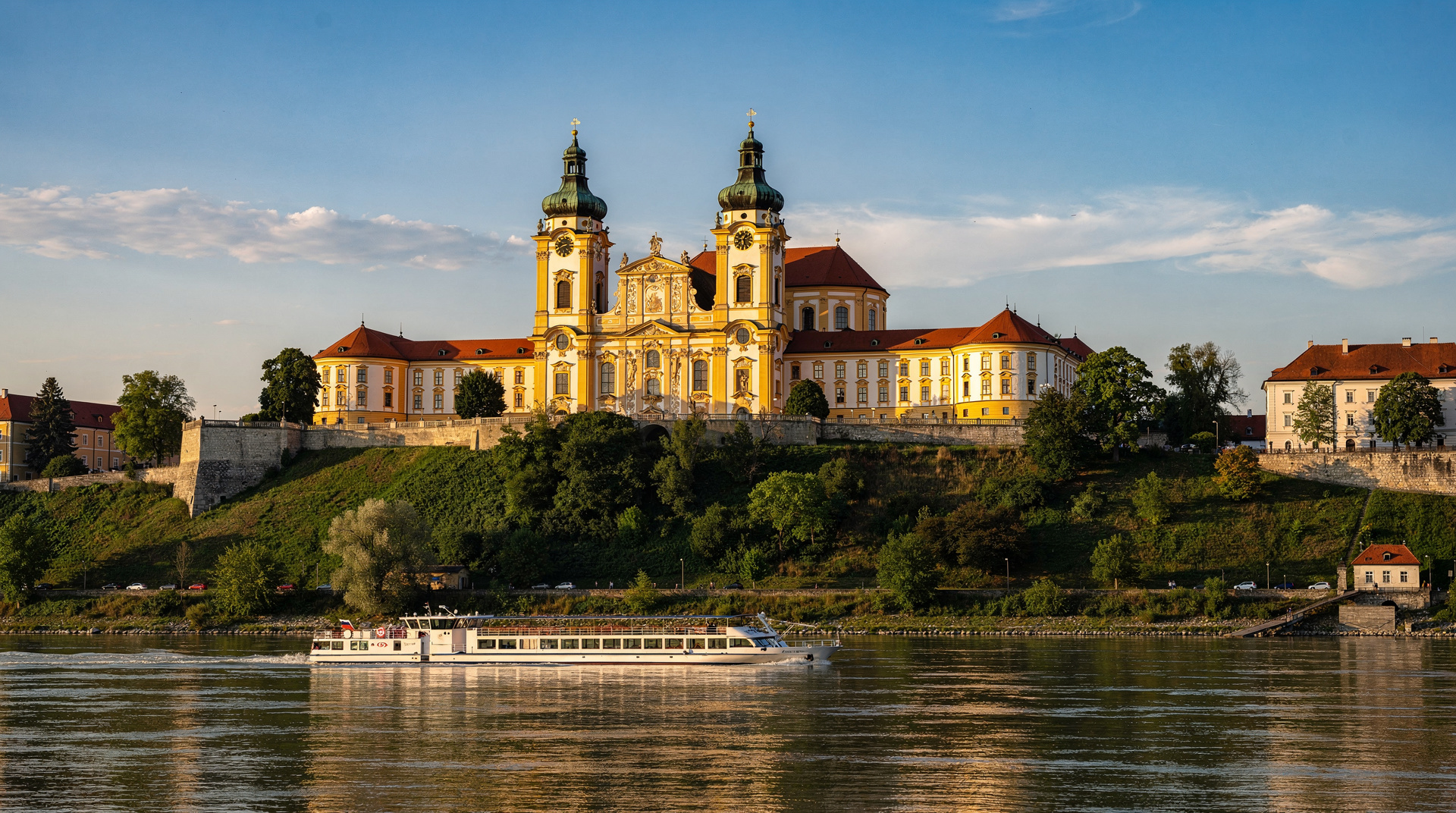
Melk Abbey (Stift Melk) rises from a cliff above the Danube 85 kilometres west of Vienna — a baroque complex of such scale and drama that it looks painted onto the skyline. Founded as a Benedictine monastery in 1089, the current buildings date from a complete reconstruction in 1702–1736 under the direction of Jakob Prandtauer, producing what is considered the finest example of Austrian baroque architecture. When Napoleon occupied Vienna in 1809, his officers used the abbey’s courtyard as their billet and left without touching the library. Even the French knew better.
The abbey library alone — two floors of gilded shelves, some 16,000 manuscripts and early printed books, and a ceiling fresco by Paul Troger — is worth the train ticket from Vienna. Umberto Eco reportedly visited Stift Melk before writing The Name of the Rose, and its labyrinthine grandeur is easy to understand once you’re inside.
| Distance from Vienna | 85 km (1h15 by train) |
| Cost | Abbey admission around €14; bus-boat combined tickets from around €40–60 |
| Time needed | Half a day; a full day for the classic bus-boat-train circuit |
| Getting there | Train from Wien Hbf, or the classic bus-to-Melk / boat-to-Krems circuit |
| Best time | April–October (boat to Krems only runs in this window) |
Getting there
By train: Wien Hauptbahnhof to Melk Bahnhof, hourly service, approximately 1h15. The station is at the bottom of the hill; a 10-minute uphill walk brings you to the abbey entrance, or there is a small shuttle. Return trains every 1–2 hours. The journey runs along the south bank of the Danube through the St. Pölten valley — unremarkable until the train rounds the final bend and Melk Abbey appears above you on the cliff. The first sight of it from the train window is genuinely startling.
The classic Wachau circuit: The most popular approach combines the outward journey with the return by Danube boat — and it is the correct way to do this trip. The structure:
- Vienna → Melk by train or coach (or take the organised tour bus)
- Visit Melk Abbey (2 hours)
- Take the DDSG Blue Danube boat from Melk downstream to Krems (1h45, April–October)
- Return from Krems to Vienna by train (1 hour)
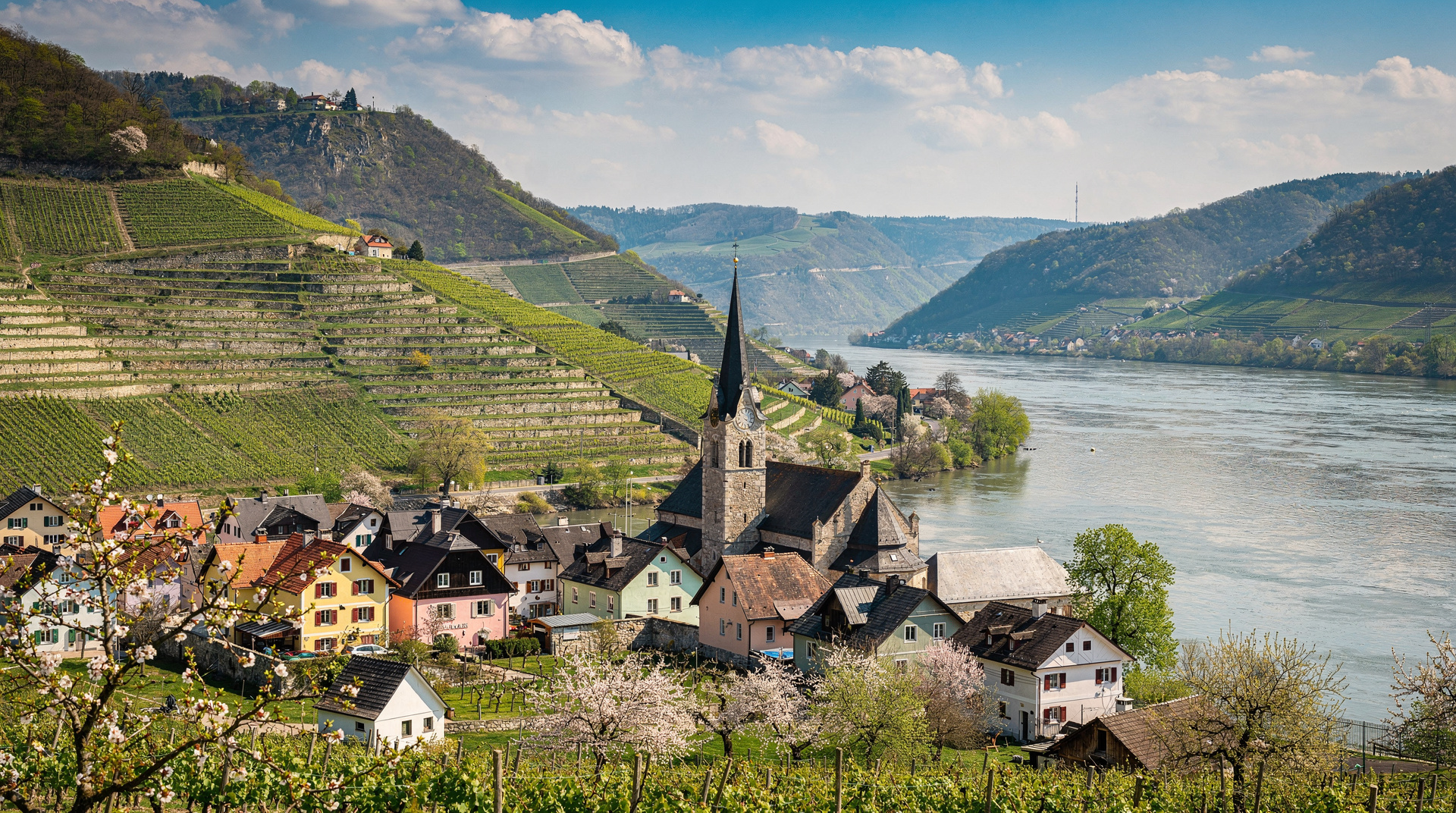
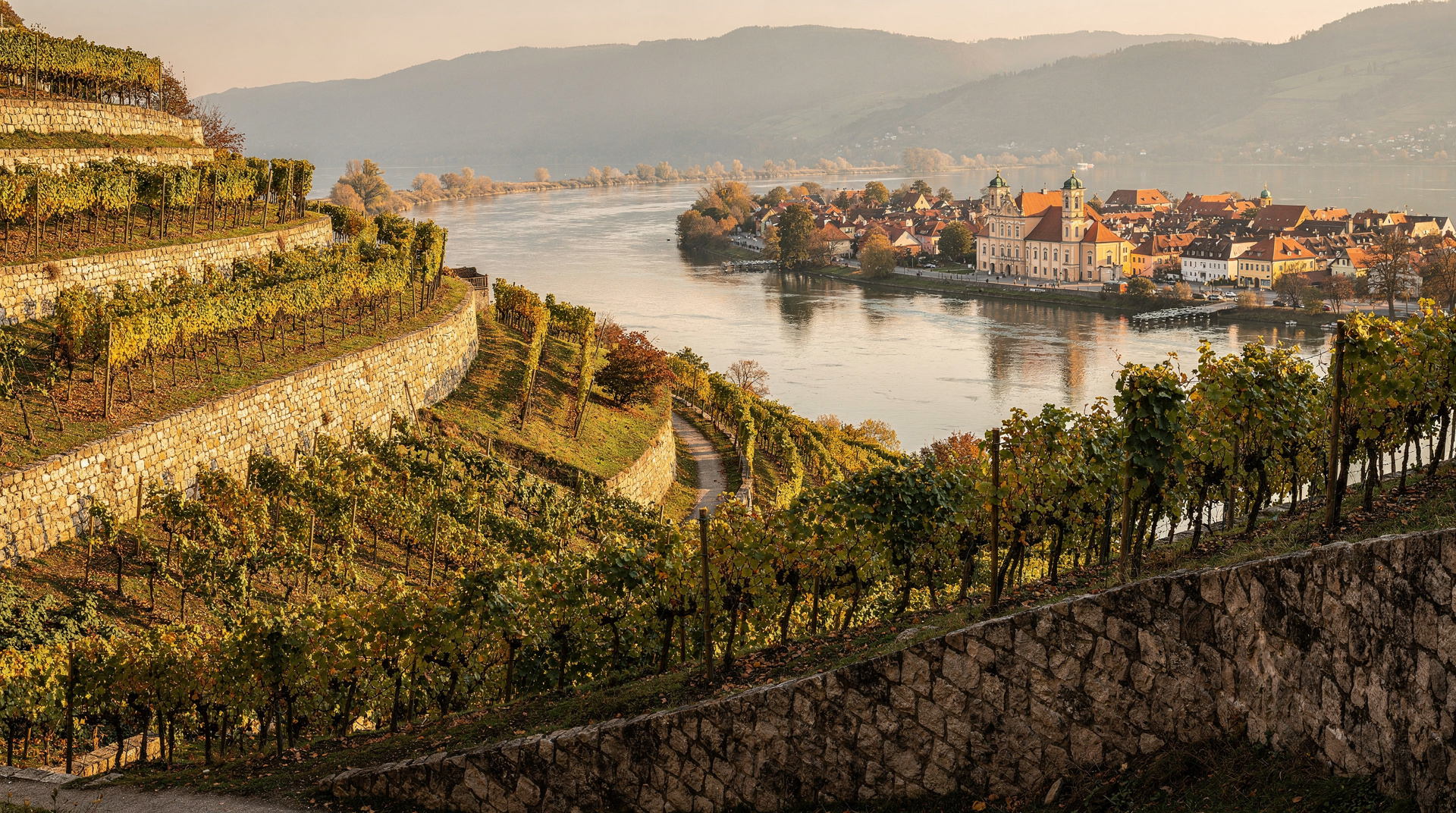
This circuit gives you Melk Abbey, the Danube boat through the most scenic stretch of the Wachau, and arrival in Krems with time for lunch or wine before the train home. The boat section — past terraced vineyards, the ruin of Aggstein Castle on the cliff, and the blue-towered church at Dürnstein — is one of central Europe’s great short river journeys.
The Wachau Valley bus and boat tour from Vienna handles this circuit on a guided basis — coach to Melk, abbey visit, Danube boat to Krems, train back. A well-organised day that removes all the connection anxiety of managing it independently.
The Wachau Valley day tour with Melk Abbey visit covers more of the valley with additional stops at Dürnstein and Aggstein — better if you want more than just Melk, and if Dürnstein’s association with Richard I of England (imprisoned here 1192–93) is on your list. The Melk Abbey day trip guide has a fuller step-by-step breakdown of timings for anyone assembling the route independently rather than on a guided tour.
What to see at Melk Abbey
The public tour of Melk Abbey takes 45–60 minutes through a self-guided circuit of the main rooms. Audio guides in English are available at the entrance and provide considerably more context than the room labels alone.
The Imperial Rooms (Kaiserzimmer) — the state apartments maintained for visits by the Habsburg emperors. The rooms are preserved with their original furnishings: silk wall hangings, ceremonial furniture, and an exhibition on the abbey’s history that uses these spaces as its backdrop. The Habsburgs expected luxury wherever they stopped, and the abbots of Melk — always conscious of the relationship between monastic patronage and imperial favour — delivered it.
The Library — the undisputed highlight and one of the most beautiful baroque rooms in Europe. Two floors of gilded oak shelves contain illuminated manuscripts dating to the 9th century, early printed books, and codices that the monastery has been accumulating for nine centuries. The ceiling fresco depicts Faith and the Sciences in allegory; the trompe-l’oeil architectural painted on the vaulted ceiling makes the room seem larger than it is. Photography is permitted and thoroughly warranted. Allow extra time here — it is the room most visitors wish they had spent longer in.
The Marble Hall — used for formal receptions, its ceiling fresco by Paul Troger (1731) depicts Reason guided by Wisdom and Justice. The proportions are more intimate than Schönbrunn’s equivalent, the painting more direct. The hall is still used for concerts during the Melk Summer Music Festival (late June to early August), and the acoustic is exceptional.
The Terrace and views — the open terrace between the library and the church gives the best view in Melk: the Danube below, the vineyards stretching toward Dürnstein, the flat agricultural plain beyond. On a clear day you can trace the river’s course for several kilometres east and west. This is where most visitors stop to photograph the famous silhouette of the abbey against the valley. From ground level or the boat, the impression is of an impregnable fortress; from the terrace, it is clear how completely the building commands the landscape.
The Abbey Church — a baroque interior of gilded altars, trompe-l’oeil ceiling frescoes, and the organ loft where the monks still perform daily music. The light inside shifts dramatically depending on the hour — morning light from the east windows at its most theatrical. The church is still an active monastery (the Benedictine community numbers around thirty) and services are open to visitors; vespers at 17:30 is the most atmospheric time to be present.
The Abbey Garden — the formal baroque garden on the cliff edge is free to visit separately from the main abbey tour, making it accessible even if you don’t pay for interior access. The pavilion at the garden’s far end has the clearest view of the Danube valley and is notably less crowded than the terrace above.
The town below
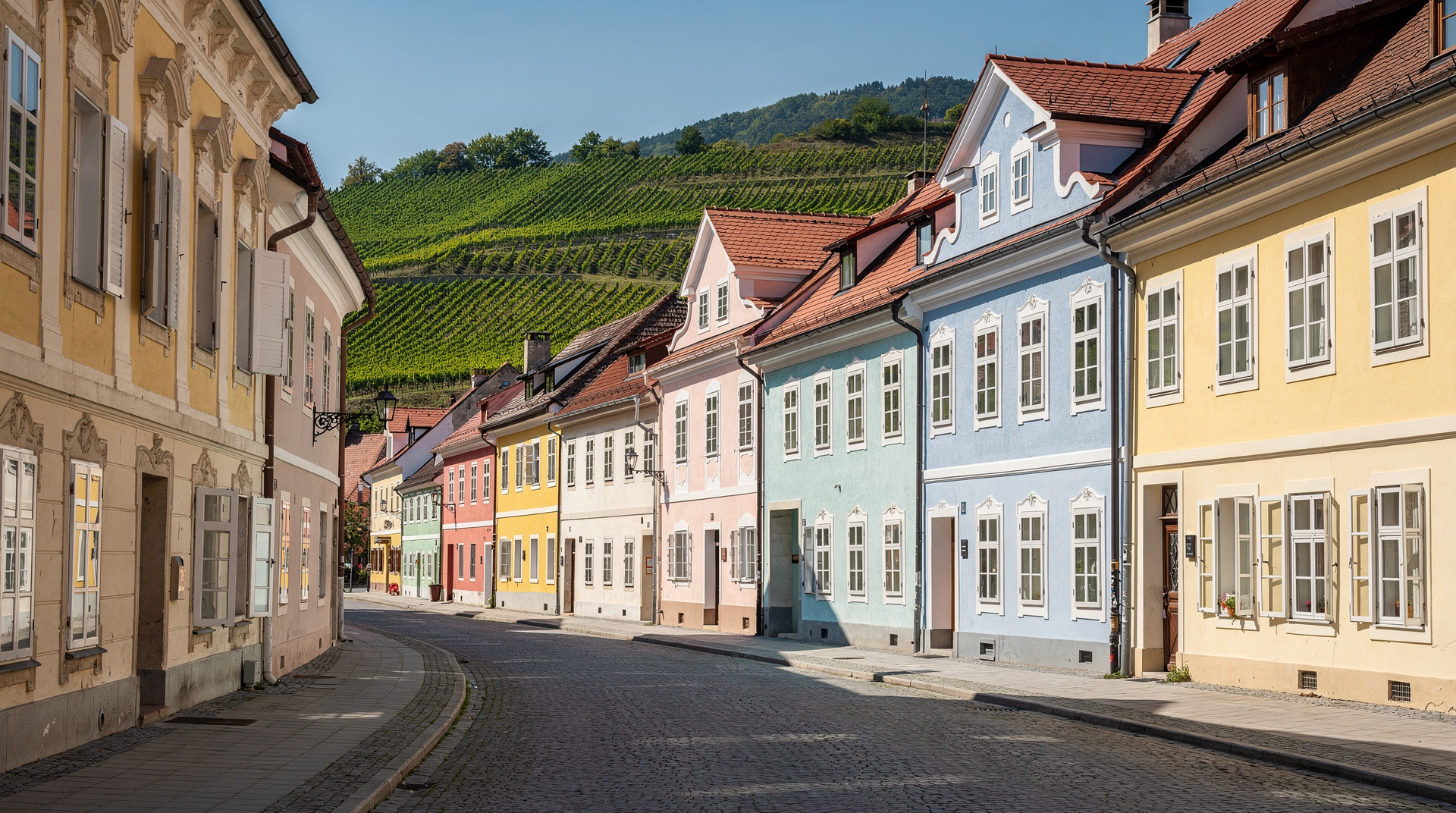
The town of Melk beneath the abbey is quiet and worth 30 minutes of exploration — the main street (Linzer Strasse) has a handful of restaurants and bakeries good for lunch before or after the boat. Restaurant Stift Melk adjacent to the abbey entrance is the most convenient option; for a more local atmosphere and better cooking, Zum Fürsten on Rathausplatz uses regional ingredients and has outdoor seating in the courtyard.
The main square (Rathausplatz) has a fountain and 17th-century buildings that give a sense of how a small Austrian market town looked before tourism concentrated on the abbey above. The town pharmacy — dating to the early 18th century — still operates in its original baroque premises.
Practical notes
The abbey is open daily from March to November (generally 09:00–17:30, with last entry at 16:30); December to February the interior tour is suspended but the church remains open for worship. School groups arrive heavily in late morning; arriving at opening time or after 15:00 provides the most comfortable visit.
The boat connection from Melk to Krems (DDSG Blue Danube service) runs April to October. Check the current schedule before planning the circuit — departure times from Melk are limited to one or two sailings per day, and missing the boat means the return by train from Melk rather than Krems. The boat journey takes 1h45 downstream (faster than the 3h return upstream direction, which is why the classic circuit runs Melk to Krems and not the reverse).
Combined tickets that include abbey entry and the boat journey are available at the abbey entrance and reduce queuing at the boat landing.
Choosing between the independent route and a guided day
The independent route suits travellers who like to set their own pace. You decide how long to linger in the library, whether to spend extra time on the terrace, and whether lunch happens in Melk or in Krems. The price of that freedom is a little planning: you need to know the boat schedule, keep the train home in mind, and accept that a delay at the abbey can ripple through the rest of the afternoon. The Melk to Krems boat trip guide is the place to check how that leg fits together before you commit to a plan.
A guided day suits those who would rather not think about connections at all. Someone else holds the timetable, the group moves on together, and the day has a clear shape from morning to evening. The trade-off is less flexibility inside the abbey, where many people want to stay longer in the library than a group schedule allows. If that sounds like you, consider travelling independently and treating the abbey as the anchor of the day, with everything else arranged around it.
Travellers who like to compare options before deciding will find the best day trips from Vienna guide a useful companion. It places Melk alongside the other excursions people commonly consider, so you can judge whether a monastery, a river and a wine town match what you want from a day away from the city.
How Melk fits into a longer Vienna stay
Melk works best as a single, well-chosen outing within a wider visit rather than something squeezed in on the first morning after a long flight. Many visitors slot it into the middle of a stay, once they have seen the big city sights and want a change of scenery. If you are still deciding how long to spend in the capital, the how many days in Vienna guide helps you see where an excursion like this belongs.
Those building a fuller schedule can look at the Vienna 5-day itinerary, which leaves room for a day beyond the city, or the Vienna 7-day itinerary if you want several outings at a relaxed pace. Both make it easy to see which days are best kept for museums and palaces and which suit a trip along the Danube.
The abbey also pairs naturally with the city’s own imperial story. After seeing how the Benedictines and the Habsburgs shaped this corner of the Danube, many people find the Habsburg history guide for travellers a good way to connect the monastery with the palaces back in Vienna, and Schönbrunn makes a worthwhile comparison for anyone curious about baroque ambition on a grander urban scale.
Tips for a better visit
- Go with the light in mind. The abbey church and the terrace both change character through the day, so think about whether you prefer the quieter feel of early hours or the softer atmosphere later on.
- Pace yourself inside. The tour is a long chain of rich rooms, and attention fades quickly. Take a moment on the terrace or in the garden to rest your eyes before moving on to the next section.
- Bring something for the weather. The terrace and the garden are open to the air, and the cliff-top setting can feel different from the streets below.
- Keep a flexible mindset about lunch. Eating in Melk is simple and convenient, while waiting until Krems gives you a more leisurely meal with a glass of local wine. Either approach works, as long as you keep the boat and train in mind.
- Look back at the abbey from the river. The view from the water is the one that explains why the building was designed to be seen from afar, and it is easy to miss if you are busy with your phone or your lunch.
Pairing Melk with other Danube stops
Because the abbey occupies only part of a day, many visitors add a second stop along the river. Dürnstein is the village most often chosen, with its blue-towered church and ruined castle above the vines, and it is easy to picture as part of the same journey. For a broader view of what the valley offers, the Danube river cruise guide from Vienna and the Wachau Danube cruise guide describe the different ways to spend time on the water.
Anyone who enjoys the idea of a long, scenic day but wants a different setting entirely might look at Salzburg or the Vienna Woods for another kind of excursion. Both offer a contrast to the river valley, and neither requires you to give up the comforts of returning to Vienna for the night.
Continuing on to Krems and the wider Wachau
Melk is one end of the classic Wachau circuit; Krems at the other end is where most visitors have lunch or a glass of wine before the train home. For the region as a whole — the vineyards, castle ruins and villages that fill the valley between the two towns — the Wachau Valley destination overview is the best orientation, and the Wachau day trip from Vienna guide covers the full logistics of the train-boat-train combination described above. If wine is part of the appeal, the Wachau wine route guide profiles the Riesling and Grüner Veltliner producers along the valley’s terraced slopes.
Top experiences
Bookable activities with verified prices and instant confirmation on GetYourGuide.