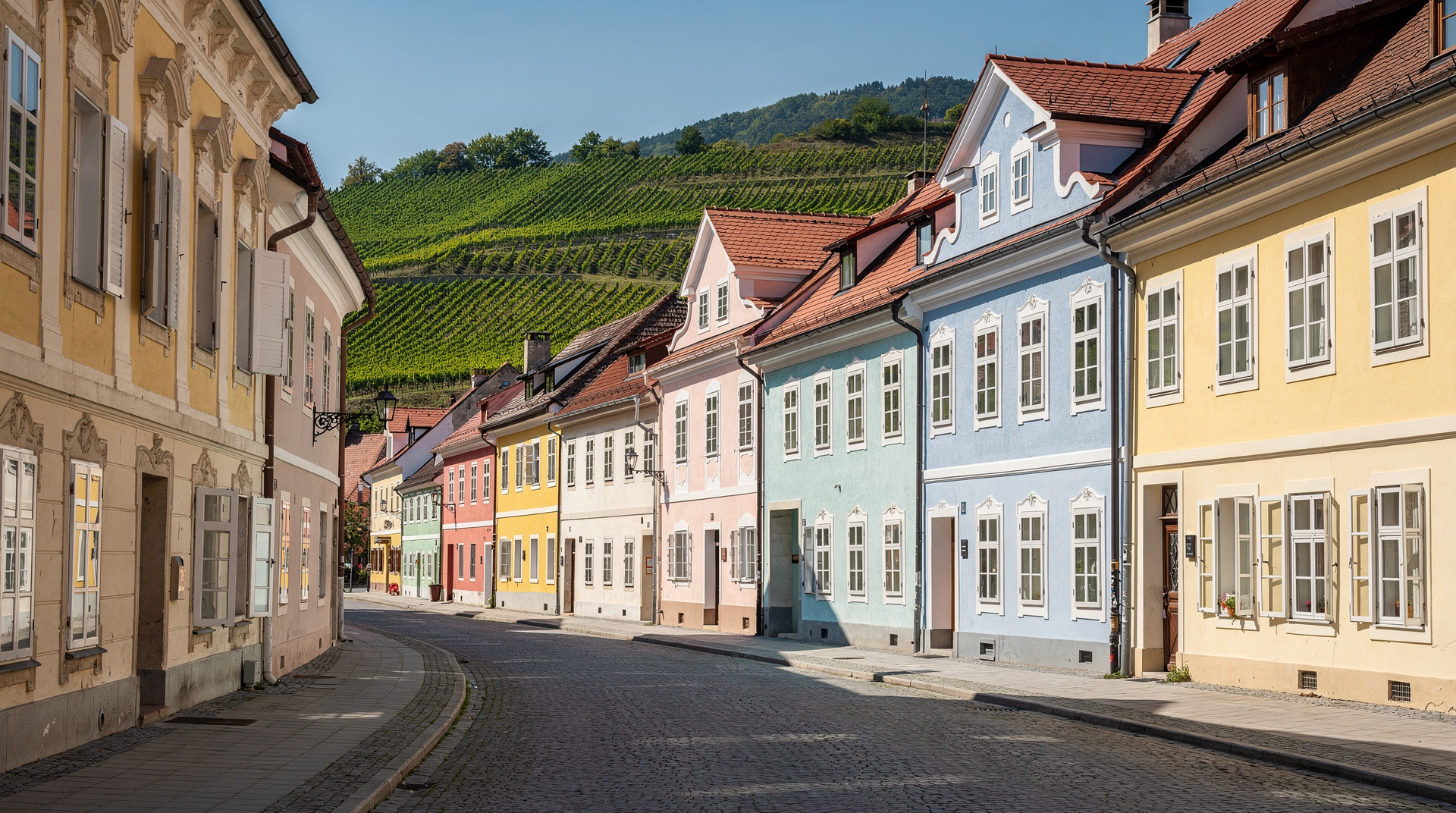
Wachau Valley
Plan your Wachau Valley day trip from Vienna: Melk Abbey, Dürnstein, Krems, the Danube boat, wine tastings and the best organised tour options.
Vienna: Wachau Valley, Melk Abbey Tour with Danube Boat Trip
Quick facts
- Distance from Vienna
- 75–100 km west
- UNESCO status
- World Heritage Cultural Landscape (2000)
- Main wines
- Grüner Veltliner, Wachau Riesling
- Classic route
- Vienna → Melk → boat → Dürnstein → Krems → Vienna
Why the Wachau is Vienna’s best day trip
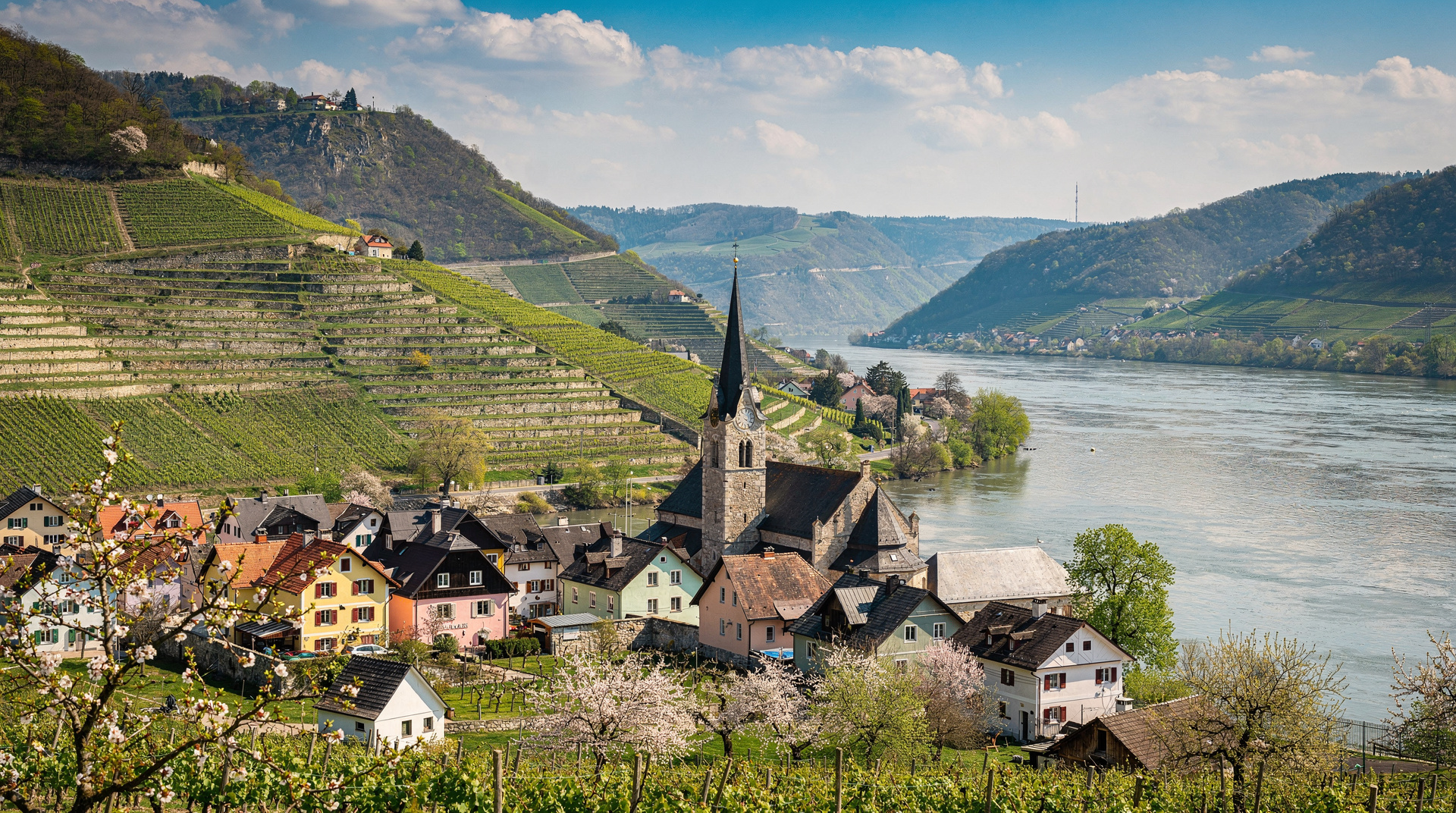
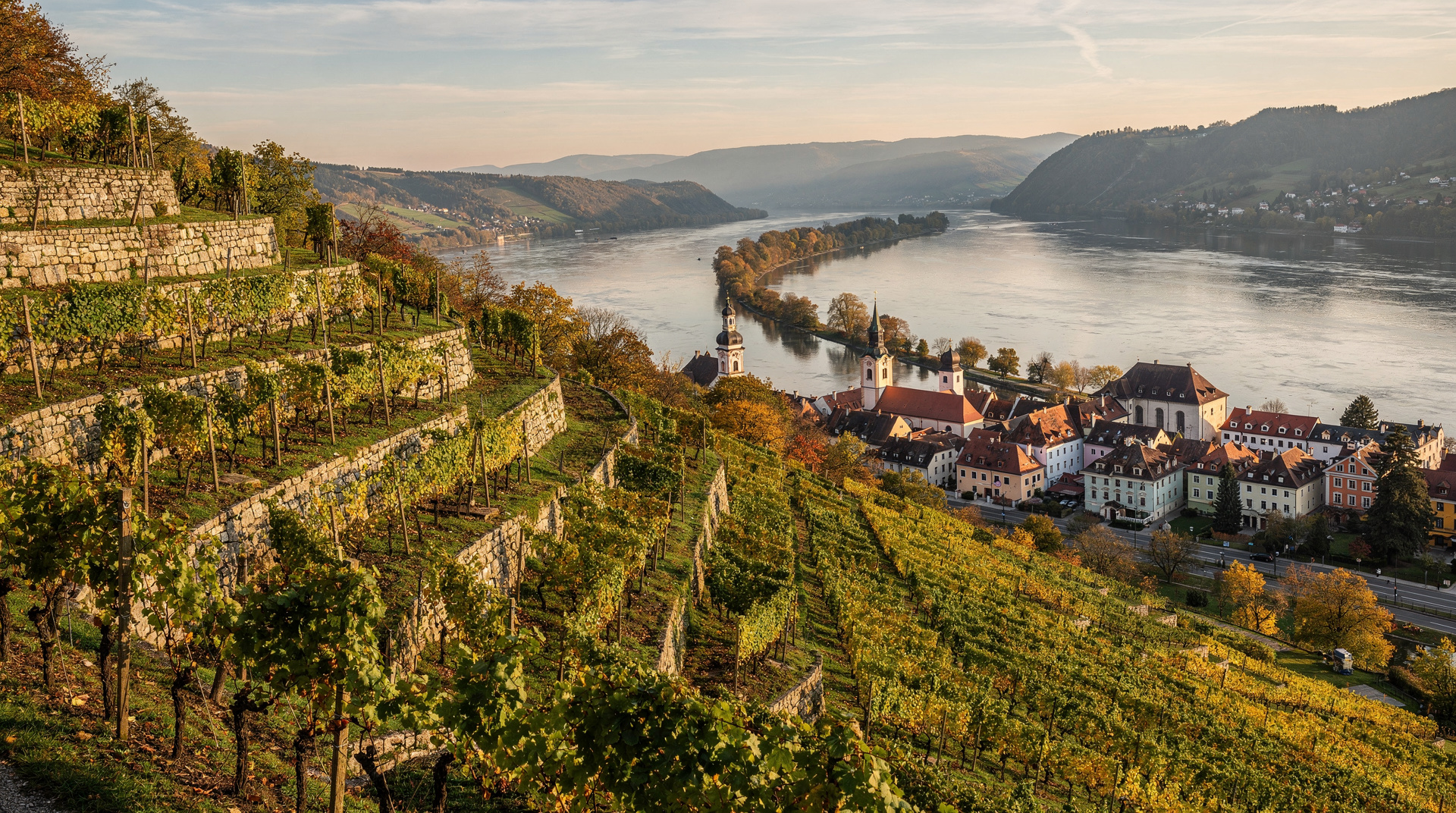
The Wachau Valley is a 36-kilometre stretch of the Danube between Melk and Krems where the river cuts through a landscape that has been shaped by human activity for at least a thousand years — vine-covered terraces on primary rock slopes so steep that harvesting requires individual hand-picking, ruined medieval castles on cliff edges above the water, baroque monasteries on outcrops that command the valley, and apricot orchards that turn the lower slopes pink-white each April.
It was designated a UNESCO World Heritage Cultural Landscape in 2000, one of only a handful of river landscapes to earn that status, and it earns the designation on every measure: depth of cultural heritage, landscape quality, and the quality of the wines grown here.
For visitors based in Vienna, the Wachau is 75–100 kilometres west and offers the complete complement to the city in a single day: river, vineyards, medieval history, and some of Austria’s finest white wine, all within reach of an early-morning train departure and a late-evening return.
| Where | 75–100km west of Vienna, along the Danube |
| Cost | Guided day tour typically 90–150€; independent train+boat around 50–70€ |
| Time needed | Full day (around 11 hours door-to-door) |
| Getting there | Train from Franz-Josefs-Bahnhof, or organised coach tour |
| Best time | April (blossom) and September–October (harvest) |
The classic Wachau circuit
The most-recommended day-trip structure is a circuit that travels west by land and returns east by river:
- Leave Vienna early — train from Franz-Josefs-Bahnhof to Melk (around 1h15), or organised tour coach
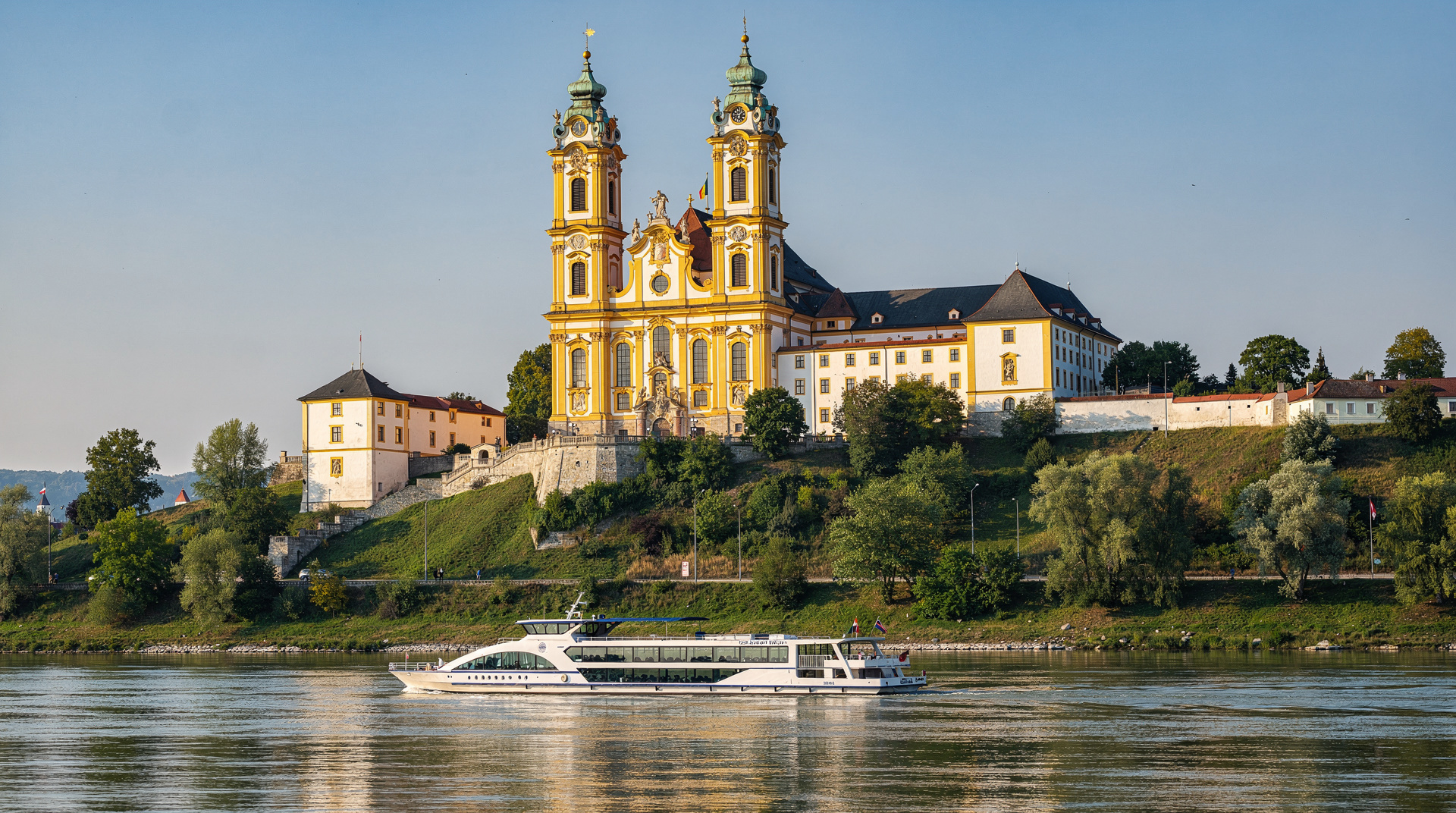
- Visit Melk Abbey — 2 hours for the baroque monastery on the cliff (see Melk guide)
- Take the Danube boat from Melk downstream to Krems (1h45 — the most scenic river stretch, April–October)
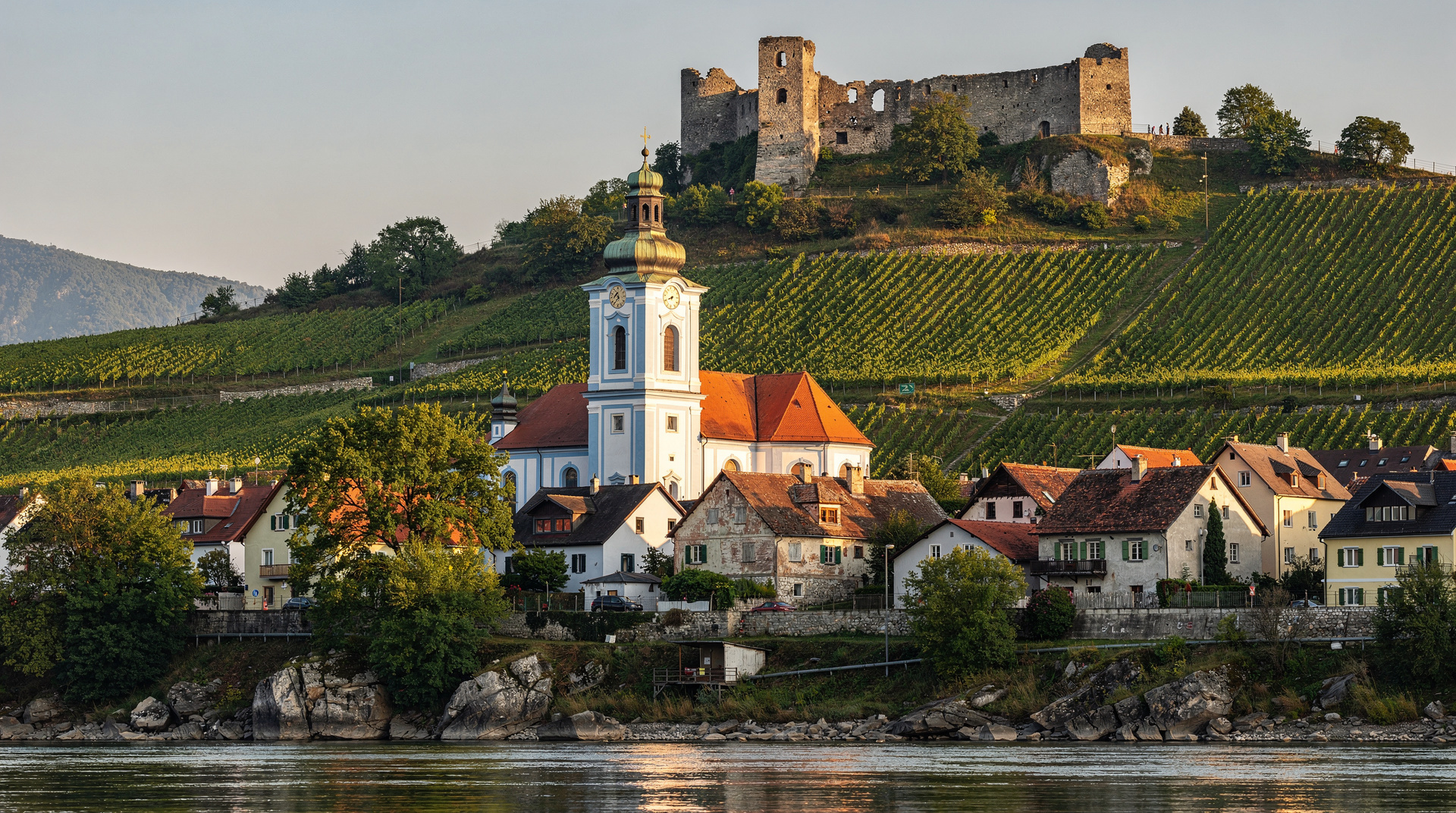
- Stop at Dürnstein — village walk, the blue-towered Augustinian church, 45 minutes
- Arrive in Krems for lunch and a wine tasting (the Sandgrube 13 winery in Krems is the most accessible)
- Train back to Vienna from Krems (1 hour)
Total door-to-door: approximately 11 hours. This circuit uses public transport and runs April to October when the DDSG Blue Danube boats operate. The boat section alone — past the Aggstein castle ruins on the cliff above the south bank, through the narrowest part of the valley at Spitz, past the almond and apricot terraces, and finally rounding the bend to see Dürnstein’s blue tower — is one of the finest short river journeys in Europe.
The guided Wachau Valley, Melk Abbey and Danube boat tour from Vienna follows this same circuit with a guide, including transport from Vienna and connections between the abbey, the boat landing, and the return train. Recommended for anyone who wants to manage Melk, the boat, and Krems without the anxiety of coordinating independent connections — the boat schedule and train timing require care.
The Wachau, Melk and the boat stretch between them occupy a morning, which leaves the afternoon free for whatever lies further west: a Wachau, Melk Abbey, Salzburg and boat trip tour pushes the day all the way to the Salzach.
Wine first
The Wachau’s wine is arguably its greatest distinction — the feature that elevates it above beautiful-Danube-valley into something genuinely irreplaceable. The valley produces Grüner Veltliner and Riesling that are among the most sought-after in Austria, classified under the local Vinea Wachau system:
- Steinfeder — light, 11.5% maximum, for early drinking
- Federspiel — medium-bodied, named after the falconer’s lure, for drinking within a few years
- Smaragd — full-bodied, named after the emerald-green lizard found on the warm stone walls of the valley, over 12.5% and the category that ages
Smaragd Rieslings from the Wachau’s steepest terraces (the Dürnsteiner Kellerberg or the Loibner Berg above Unterloiben) compete with the finest Moselle and Alsace wines for complexity and longevity. They come from vines growing in primary rock soils — gneiss, granite, amphibolite — that give the wines a mineral character that can’t be replicated elsewhere.
The Wachau Valley day tour with wine tasting is structured around winery visits and tastings at small producers — the right option for visitors where wine is the primary motivation. The guide explains soil types, microclimates, and the specific winemaking philosophy (no new oak, minimal intervention, single-vineyard bottlings) that separate Wachau Riesling from any other Austrian white.
The castles
The Wachau has three significant medieval fortifications:
Aggstein — on the south bank, the most dramatically sited. The ruined castle occupies a narrow rock spur 300 metres above the Danube, accessible on foot from the village of Aggstein. The Kuenrings — the robber barons who built Aggstein — reputedly held Danube merchants to ransom from this position in the 12th and 13th centuries. The ruin is extensive and the views from the highest point are extraordinary.
Dürnsteiner Kuenringer Burg — the ruin above Dürnstein village is associated with one of the most famous events in medieval history: King Richard I of England (Richard the Lionheart) was held captive here from 1192 to 1193 after being captured by Duke Leopold V of Austria, who was exacting revenge for a personal insult during the Third Crusade. His whereabouts were supposedly discovered by his minstrel Blondel, who wandered Europe singing beneath castle walls until Richard responded. The story is probably embellished but the setting is persuasive.
Schönbühel — a small privately-owned castle on a rock above the river near Aggstein, 11th century in origin and still inhabited. It cannot be entered but is impressively visible from the Danube boat and the cycle path below.
The Wachau 3 castles and wine private guided day tour covers all three castle sites along with wine tastings — the specialist option for visitors combining medieval history with the valley’s wine culture.
The Danube Cycle Path
The Donauradweg (Danube Cycle Path) is one of Europe’s most famous leisure cycling routes, running the full length of the Danube from Germany to Hungary. The Wachau section is both its scenic highlight and its most visited stretch. The north bank path between Melk and Krems is mostly flat and well-marked; the south bank path, passing below Aggstein and through Spitz, is the more dramatic and slightly hillier option.
Day-trip cyclists from Vienna can load bikes onto the Franz-Josefs-Bahnhof trains, cycle one direction through the valley, and return by train from Krems or Melk. Allow 5–6 hours for the 36 km Melk-to-Krems route (including stops at the villages and castle viewpoints). Bike rental is available at Melk station and in Krems. The Wachau by bike trip report covers one rider’s honest account of the route, including where the surface gets rough and which villages are worth stopping in.
For visitors comparing the boat-and-train circuit against other approaches, the Wachau day trip from Vienna guide lays out the full range of options — self-drive, organised tour, and independent public transport — with realistic timings for each. The Wachau wine route guide and Grüner Veltliner guide go deeper on the wine side specifically, useful preparation before any of the wine-focused tours above. Village-level detail for the two main stops is covered in the Dürnstein and Krems destination guides.
When to visit
April — apricot blossom on the lower terraces, wildflowers in the valley meadows, very quiet visitor numbers. The valley turns pink-white for a few weeks at most and is photographically at its most distinctive. This is also the moment when the wine producers open their first Heuriger evenings of the season.
September and October — harvest season. Many wineries hold open days during the Wachau harvest. The vine terraces turn gold and copper. The Wachau Marathon in late October is a popular running event along the valley road. This is the most atmospherically complete time to visit.
June to August — fully operational for boat trips, all attractions open and restaurants at full strength, but considerably busier and warmer. The boat is still the right way to arrive in Dürnstein.
November to March — the boats stop and the valley quiets significantly. The abbey at Melk remains open but the experience is monastery-only rather than full valley circuit. Some valley restaurants close for the season. The Dürnstein blue tower against a grey winter sky is a particular kind of beauty.
| Month | Boat service | Crowds | Highlight |
|---|---|---|---|
| April | Starting up | Low | Apricot blossom, wildflowers |
| June–August | Full | High | Warm weather, all attractions open |
| September–October | Full, ends October | Moderate | Harvest, gold vine terraces, best atmosphere |
| November–March | Suspended | Very low | Melk Abbey only; valley circuit not possible |
The Autumn in the Wachau diary captures the harvest-season atmosphere in more personal detail if September or October timing is what you’re weighing up.
Pairing the Wachau with the rest of your Vienna stay
The Wachau works best when it is slotted into a trip with some breathing room around it. After a day on the river, an easy morning is kind to tired legs, and a city day built around one major sight suits the following day well. The Vienna 5-day itinerary and the Vienna 7-day itinerary both leave space for a full day out of town, and the best day trips from Vienna guide helps you weigh the valley against the alternatives if you only have one free day.
If you are still deciding how long to stay in the capital overall, the how many days in Vienna guide is a good place to start. The Wachau rewards a clear head and an early start, so it is usually better placed in the middle of a stay than on the day you arrive or the day you fly home.
Boat, bike or tour: choosing your approach
Each way of seeing the valley suits a different kind of traveller, and none is wrong.
- The boat circuit is the choice for first-time visitors who want the river itself. The Melk to Krems boat trip guide explains what to expect on board, and the wider Wachau Danube cruise guide covers the other sailing options.
- A guided tour removes the logistics. It suits anyone who would rather spend the day looking at the scenery than checking connections, and it is the easiest way to taste wine without worrying about the journey home.
- Cycling gives the most freedom and the slowest, most intimate view of the terraces. It asks more of you physically and needs a little more planning around the return train.
- Two bases, one valley: if you can spare a night, the villages are best explored on foot once the crowds have thinned.
Whichever you pick, start early. The valley’s best light, quietest streets and easiest tasting-room conversations all come before the middle of the day.
What to pack and how to pace the day
A comfortable pair of walking shoes matters more than anything else, since Dürnstein’s lanes are cobbled and the climb to the castle ruin is uneven underfoot. Bring a layer even in warm months, because the river breeze on the boat deck can feel cooler than the streets. Carry water, a hat for sunny terraces and a small bag rather than a large one, which is easier to manage on trains, boat gangways and in tasting rooms.
Pace matters too. It is tempting to squeeze in every village, but the day is more satisfying if you let one or two places breathe. Many visitors find that a slow lunch and a single unhurried tasting beats three rushed ones. If you plan to taste wine, decide in advance who is handling the logistics home, and let the tasting be the unhurried end of the day rather than the middle.
Who should choose the Wachau over other day trips
The valley suits travellers who enjoy scenery, wine and history in equal measure and do not need a big-ticket sight to feel the day was worthwhile. If your tastes lean toward grand imperial interiors, the city itself has plenty, and the Melk Abbey day trip is a compact alternative that keeps most of the baroque grandeur. If music, lakes or a bigger city appeal more, the Salzburg day trip and the Hallstatt day trip are the usual rivals, though both ask for a longer day on the road. Those leaning toward wine more than castles will also enjoy the Burgenland wine route, which offers a very different, flatter and warmer wine landscape.
Families and slower-paced travellers can still enjoy the valley, particularly if they treat Melk and the boat as the day and leave out the rest. A shorter plan done well beats a long list done in a rush.
Staying overnight
One night in Dürnstein or Spitz transforms the Wachau from a busy day trip into a genuine immersion. Arrive after 17:00 when the day-trippers have left, and the valley is an entirely different place — the light on the terraces, the restaurant tables in the evenings, the sound of the river. Hotel Richard Löwenherz in Dürnstein and the smaller guesthouses in Spitz with direct Danube views are the most atmospheric options. Book ahead for September and October, when the valley is at its best and accommodation fills quickly.
Top experiences
Bookable activities with verified prices and instant confirmation on GetYourGuide.