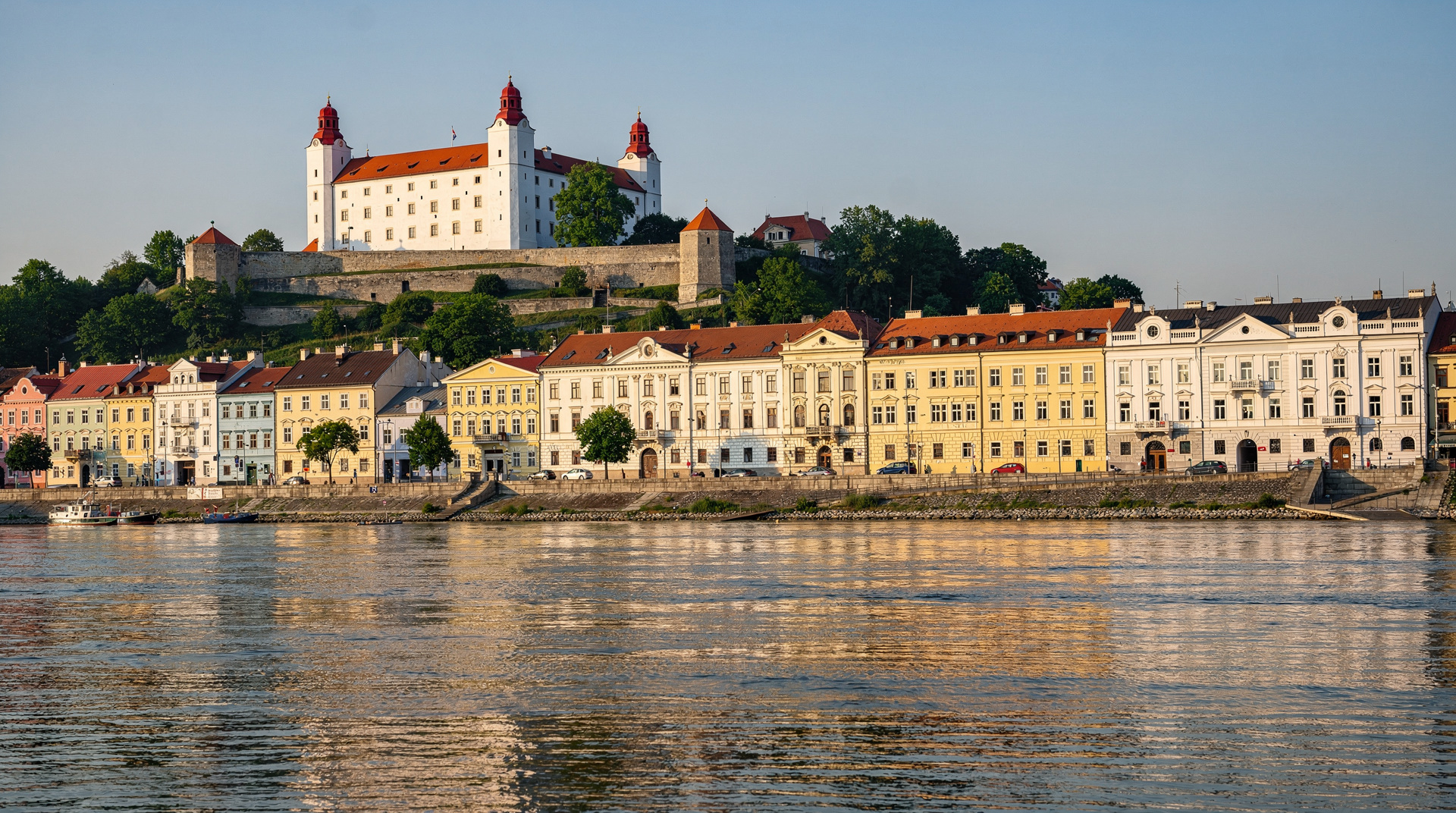
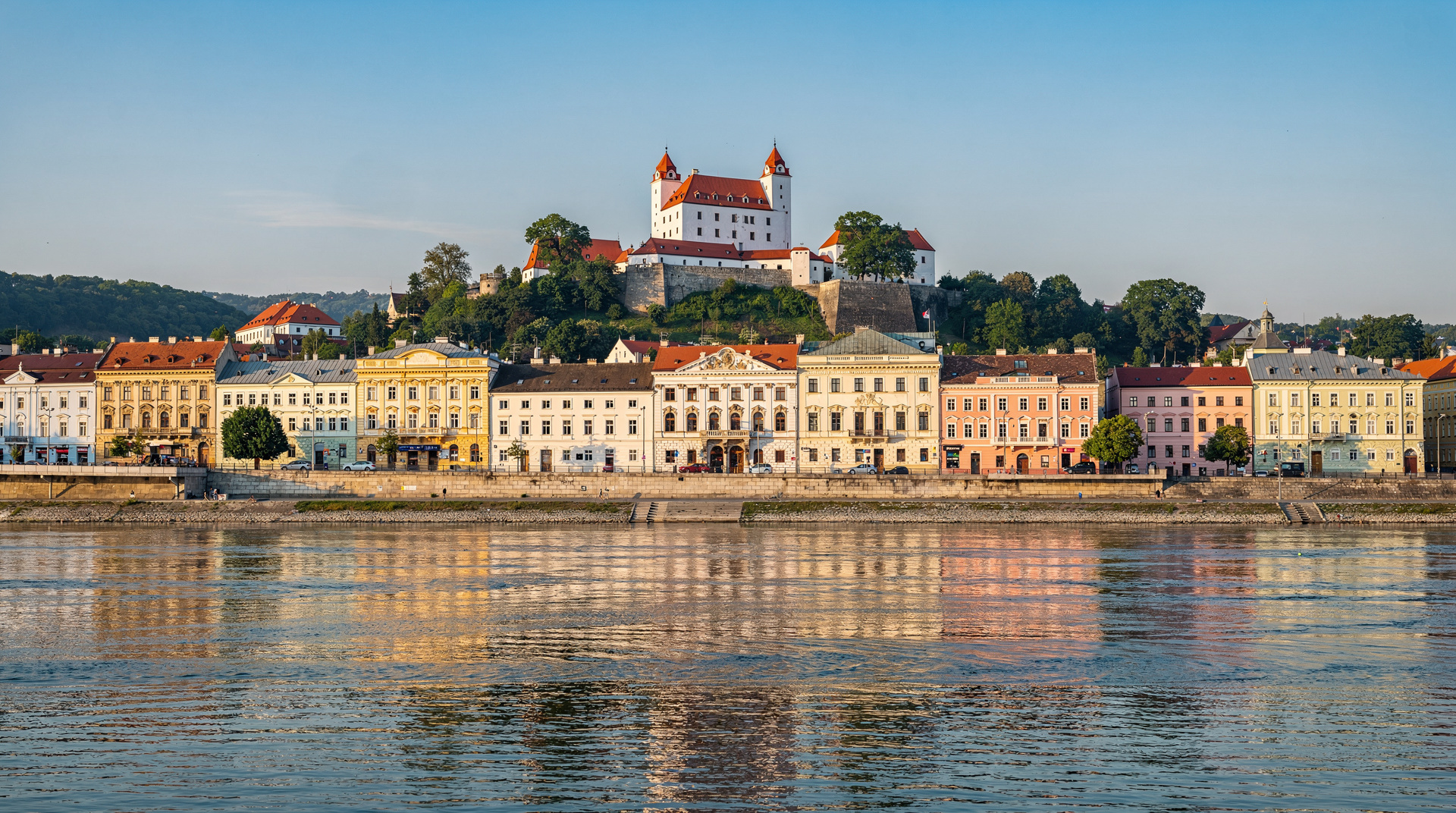
Devín Castle
Devín Castle near Bratislava: the ruined Slovak fortress at the confluence of the Danube and Morava rivers. How to get there and what to expect.
The Most Complete Bratislava Day Trip from Vienna
Quick facts
- Location
- 12 km from Bratislava, at the Austrian border
- Access from Bratislava
- Bus 29 from Nový Most, 25 minutes
- Admission
- Small fee for castle ruins
- Combined with
- Best paired with Bratislava old town
The cliff fortress at the border
Devín Castle stands on a steep limestone cliff where the Morava River meets the Danube — precisely at what was until 1993 the Iron Curtain border between Czechoslovakia and neutral Austria. The ruin is one of Slovakia’s most historically significant fortifications: strategically positioned at this river confluence since at least the 6th century, extensively developed during the Great Moravian Empire of the 9th century, and still commanding the landscape despite centuries of partial collapse. The position is everything — a narrow rocky headland with the two rivers visible on both sides and the Austrian plain spreading out on the western bank. No approach by water was possible without the fortress above controlling it.
The castle’s symbolic weight in Slovak culture goes beyond military history. Devín was adopted as a symbol of Slovak national identity during the 19th century national revival — the image of the ruined tower above the Danube appeared repeatedly in Romantic-era poetry and painting as an emblem of Slavic history reaching back to the Great Moravian state.
When communist Czechoslovakia placed the Iron Curtain through the river immediately below in the late 1940s, the fortress acquired a second layer of symbolism: a monument to medieval Slavic greatness literally cut off from the world by the most brutal border in Europe. The memorial to victims who died attempting to cross the Iron Curtain — erected near the castle entrance after 1989 — is simple and deeply moving in context.
| Where | 12 km from Bratislava, at the Austrian border |
| Cost | Small entrance fee for the ruins and museum |
| Time needed | 1.5–2 hours |
| Getting there | Bus 29 from Nový Most, 25 min, or a Danube boat excursion |
| Best time | April–October, morning for quieter grounds |
The site in detail
The ruins cover the hilltop in three connected sections. The Upper Castle occupies the highest point of the cliff — a needle of rock with the ruined walls of the medieval keep perched on it and the view extending westward into Austria on one side and northward up the Morava valley on the other. This is the oldest part of the complex, with foundations dating to the Great Moravian period.
The Lower Castle occupies the wider section of the plateau and contains the main museum building. Exhibits here cover the site’s history in chronological layers: Neolithic and Bronze Age settlement (the confluence has been a strategic point since prehistory), the Roman period (Devín was the Roman frontier fortification guarding the confluence — associated with the Roman fort Gerulata, which was part of the Danubian Limes frontier), the Great Moravian period in the 9th century when this was a principal centre of the first organised Slavic state, and the medieval Hungarian kingdom period that followed. English signage throughout is adequate and the curatorial approach is appropriately scholarly rather than nationalist-sentimental.
The Maiden Tower (Dievčenská veža) stands at the furthest point of the cliff, on a narrow rock finger projecting above the Danube. According to legend — invariably identified as almost certainly invented — a captive princess was thrown from the tower rather than be taken by her enemies; she plunged into the river below. In reality, the tower is a later medieval addition to the defensive system, built when the main castle was being extended in the 14th and 15th centuries. It commands the most vertiginous views of any point on the site: the Danube flowing wide and fast below, the Austrian village of Hainburg visible on the opposite bank, the plains extending in both directions.
The gardens and terraced areas around the ruins are planted and maintained as open parkland — pleasant walking terrain with benches at intervals and the Danube-Morava confluence visible from multiple angles. In good weather, spending an hour simply walking the perimeter of the ruins is as rewarding as the museum interior.
Getting there
From Bratislava: Bus 29 from Nový Most bus stop (directly adjacent to the SNP Bridge/UFO Bridge on the Bratislava side) to the Devín end stop. Journey approximately 25 minutes, with buses running roughly every 30–40 minutes. A very straightforward connection that requires no navigation beyond following the bus numbers.
Some operators in Bratislava run boat excursions from the city quay to Devín and back — a 30-minute Danube approach that provides excellent views of the castle cliff from the water. The castle from the river, with the limestone headland rising above and the Slovak flag on the upper tower, is the most visually dramatic approach and worth it if the boat schedule aligns. Travellers starting from Vienna who like the idea of arriving on the water can look at a guided trip from Vienna that includes a speed boat ride, which builds the river leg into the day.
The most complete Bratislava day trip from Vienna covers both Bratislava old town and, in some itinerary variants, the Devín area — check what is specifically included when booking, as some tours offer the castle as an optional extension.
Practical notes
Devín village below the castle is residential and quiet — a very different atmosphere from central Bratislava. Reštaurácia Devín near the castle car park is the most convenient option for lunch after the ruins. The village itself is worth a brief walk for the contrast with Bratislava’s urban tempo; it functions as a weekend destination for Bratislava locals who come for the river air and the walking trails.
The best practical plan: arrive in Bratislava by train from Vienna, spend the morning on the old town and Bratislava Castle, take bus 29 to Devín in the early afternoon, spend 1.5–2 hours on the castle and grounds, and return to Bratislava Hlavná stanica for the evening train back to Vienna. The full circuit is entirely feasible without a car and leaves a satisfying sense of having covered the breadth of what Bratislava offers — from the baroque civic architecture of the old town to the ancient fortress at the edge of the nation. Those who would rather not manage the connections themselves can choose a Bratislava day trip from Vienna with a local-style focus, then use any free time to decide whether the castle bus fits the schedule.
Devín is best visited as a genuine addition to a Bratislava day rather than a standalone destination from Vienna. The 12 km between the two is easily bridged by bus, but the castle alone, without the old-town context, would feel like a long journey for a ruined hilltop. Together, they make the day substantially richer.
Why the setting matters more than the stones
Visitors who expect a restored palace with furnished rooms are usually surprised. Devín is a ruin in the full sense, and its appeal is the combination of landscape and layered history rather than any single spectacular room. The most useful way to approach it is to treat the walk as the attraction: the climb through the lower courtyard, the narrowing path toward the cliff edge, and the moment the two rivers come into view together. Read the museum labels first for context, then walk the walls with that context in mind, and the bare stonework starts to make sense as a frontier that changed hands many times.
The site also rewards slow looking. The rock itself is part of the story, because the builders used the natural headland as the foundation of the defences. Notice where walls follow the line of the cliff, where they stop, and where nothing was needed because the drop did the work. Photographers tend to prefer the light on the cliff late in the day, while those who care more about quiet should aim for the morning, when the grounds are least crowded.
How to spend your time on site
A sensible order is to start at the lower castle and the museum, so the chronology is fresh in your mind, then climb toward the upper castle and finish at the Maiden Tower for the widest view over the Danube. Doing it in that order means the most dramatic viewpoint comes last, when you have the context to appreciate what you are looking at, and the descent is easy walking through the parkland.
If you are travelling with children, the open grounds and the sense of being on a real cliff-top fortress tend to hold their attention better than the museum does. Keep a close eye on young ones near the edges, and plan the museum as a short stop rather than a long one. Our Vienna with kids guide has more thoughts on pacing days for families who are combining several cities.
Sturdy shoes are worth bringing. The paths between the sections of the ruin are uneven in places, and the stone can be slippery after rain. Bring water and a layer for the wind, since the exposed headland is noticeably breezier than the streets of Bratislava.
Devín in the wider story of the Danube
Devín is one stop on a much longer river story. The Danube links Vienna, Bratislava and Budapest within a few hours of each other, and the three capitals share overlapping Habsburg and Hungarian histories. Seen from the castle, with Austria visible across the water, that proximity is easy to feel. If you enjoy this kind of connected history, the Habsburg history for travelers guide is a good companion, and the Vienna vs Budapest comparison helps if you are deciding how many of the region’s cities to include on one trip.
Those who prefer to see the river from the water at home before heading east can look at the Danube river cruise from Vienna guide, which describes how the Danube feels from the deck. It makes a nice contrast with the Devín cliff, where the river is seen from far above.
Planning the day around the weather and the season
Because so much of the visit is outdoors, the weather shapes the experience more than at an indoor museum. A clear day gives the best views of both rivers and across the Austrian plain, while grey or wet days make the cliff paths less pleasant and the views flatter. Check the forecast the evening before, and if the weather looks poor, consider keeping the afternoon in Bratislava’s old town instead and saving Devín for another trip.
Spring and early autumn are the most comfortable seasons for walking the ruins, and the parkland is at its most attractive then. If you are choosing the dates of your Vienna trip with day excursions in mind, the best time to visit Vienna guide covers how the seasons compare, and many of the same considerations apply across the border. For a fuller list of excursions that pair well with Devín, see the best day trips from Vienna roundup.
If you want to go further afield
Some travellers use Bratislava and Devín as the first step of a longer journey east or north. The Budapest day trip from Vienna guide and the Vienna to Budapest train page cover the next leg, while the Budapest destination page describes what waits at the end of it. Anyone who prefers to stay closer to home can use the Vienna destination guide to plan the remaining days around a single Devín afternoon, and the Vienna 3-day itinerary shows how a short stay can still leave room for a cross-border excursion.
A final thought on expectations: Devín is quiet, atmospheric and a little austere. It will not suit travellers who want entertainment on every corner, but it suits anyone who likes standing somewhere that has mattered for a very long time and quietly absorbing the view.
Combining with the rest of Bratislava
See the Bratislava destination guide for the old town, castle hill and restaurant recommendations that pair naturally with a Devín afternoon, and the Bratislava day trip from Vienna guide for full train and timing logistics. If travelling by public transport throughout, the Vienna to Bratislava transport guide covers every option from Vienna’s side.
For a first-hand account of combining both sights in a single day, the Bratislava quick getaway trip diary is worth reading before you go, and travellers extending further can fold both into the Vienna, Budapest and Bratislava 3-capitals itinerary.