Vienna food guide: what to eat and where
Vienna: Best of Vienna Food Tour
What should I eat in Vienna?
Start with Wiener Schnitzel at Figlmüller, a Melange at a classic Kaffehaus, Sachertorte at Hotel Sacher or Demel, and Apfelstrudel at Café Central. Avoid restaurants on Kärntner Straße — premium prices, industrial ingredients.
The honest Vienna eating guide
Vienna’s food culture runs deeper than the tourist-facing menu of Schnitzel and Sachertorte would suggest. It’s a city shaped by imperial abundance, Central European crossroads trade, and a centuries-old coffeehouse tradition. Eating well here requires knowing which institutions are genuinely excellent, which are merely famous, and which are overpriced traps dressed up in Baroque décor.
This guide covers what to eat, where to eat it, what to spend and which streets to walk past without stopping.
| Must-try dish | Wiener Schnitzel, around €22–28 |
| Where | Figlmüller, Plachutta Wollzeile, Naschmarkt |
| Coffee & cake | Café Central, Landtmann, Sperl |
| Avoid | Restaurants on Kärntner Straße & Graben |
| Budget | Around €15–25 mains; €8–12 at Naschmarkt |
What you need to know about Viennese cuisine
The imperial kitchen and its legacy
The Habsburg empire was one of the most ethnically diverse states in European history, and Viennese cuisine reflects that. Bohemian dumplings, Hungarian goulash, Croatian pastries, and Italian influences all blended in the imperial capital. What emerged is a cuisine that is simultaneously hearty, refined, and slightly melancholic — perfectly suited to long winter afternoons in a warm café.
The key dishes are: Wiener Schnitzel (breaded veal), Tafelspitz (boiled prime beef), Gulasch (paprika beef stew), Beuschel (offal ragout — not for everyone), and a constellation of desserts including Sachertorte, Apfelstrudel, Kaiserschmarrn and Palatschinken (thin pancakes).
The Kaffehaus — not just coffee
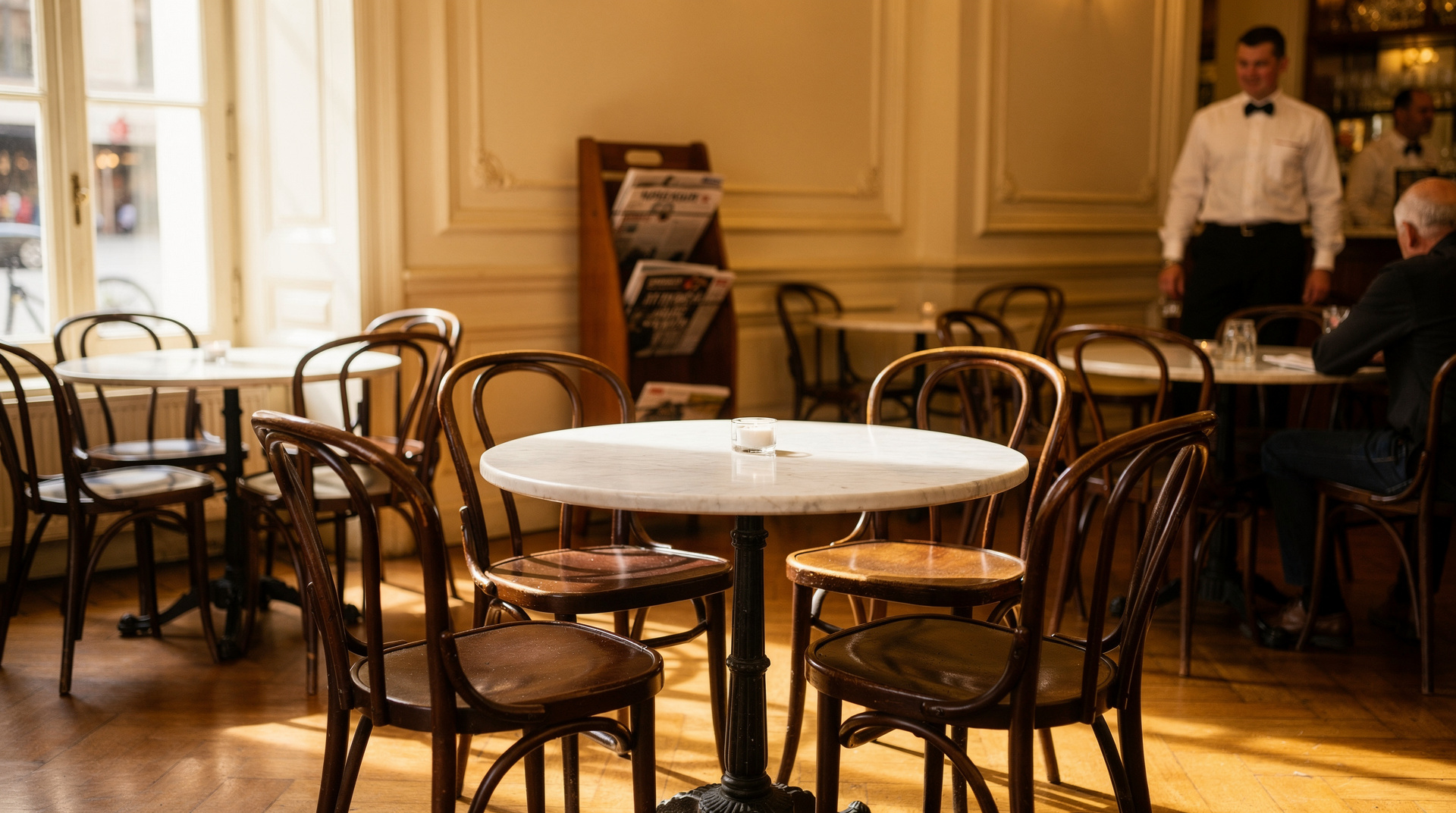
Vienna’s historic coffeehouses are UNESCO-listed cultural heritage (since 2011) and function as a distinct category of eating experience. You come for coffee, but you stay for the atmosphere — newspapers on wooden racks, marble-topped tables, unhurried waiters in black waistcoats. Pastries are serious here: Guglhupf (ring cake), Kipferl (crescent pastry), Topfenstrudel (curd cheese strudel), and the famous Mehlspeisen (flour-based desserts, a Viennese specialty).
The Viennese coffee house guide covers the best addresses in detail. The short version: go to Café Central, Landtmann, Sperl, or Hawelka and order a Melange with something from the cake trolley.
Würstelstand: Vienna’s street food institution
The humble Würstelstand (sausage kiosk) is as Viennese as anything inside a white tablecloth restaurant. Open late, often 24 hours, they serve Käsekrainer (pork sausage stuffed with cheese), Burenwurst (beef sausage), and Leberkäse (meatloaf), all eaten standing up at a chrome counter. The classic accompaniment is a Semmerl (bread roll) and a Senf (mustard). Cost: €3–5. This is what locals eat at 2am after a night out.
What to eat in Vienna: dish by dish
Wiener Schnitzel
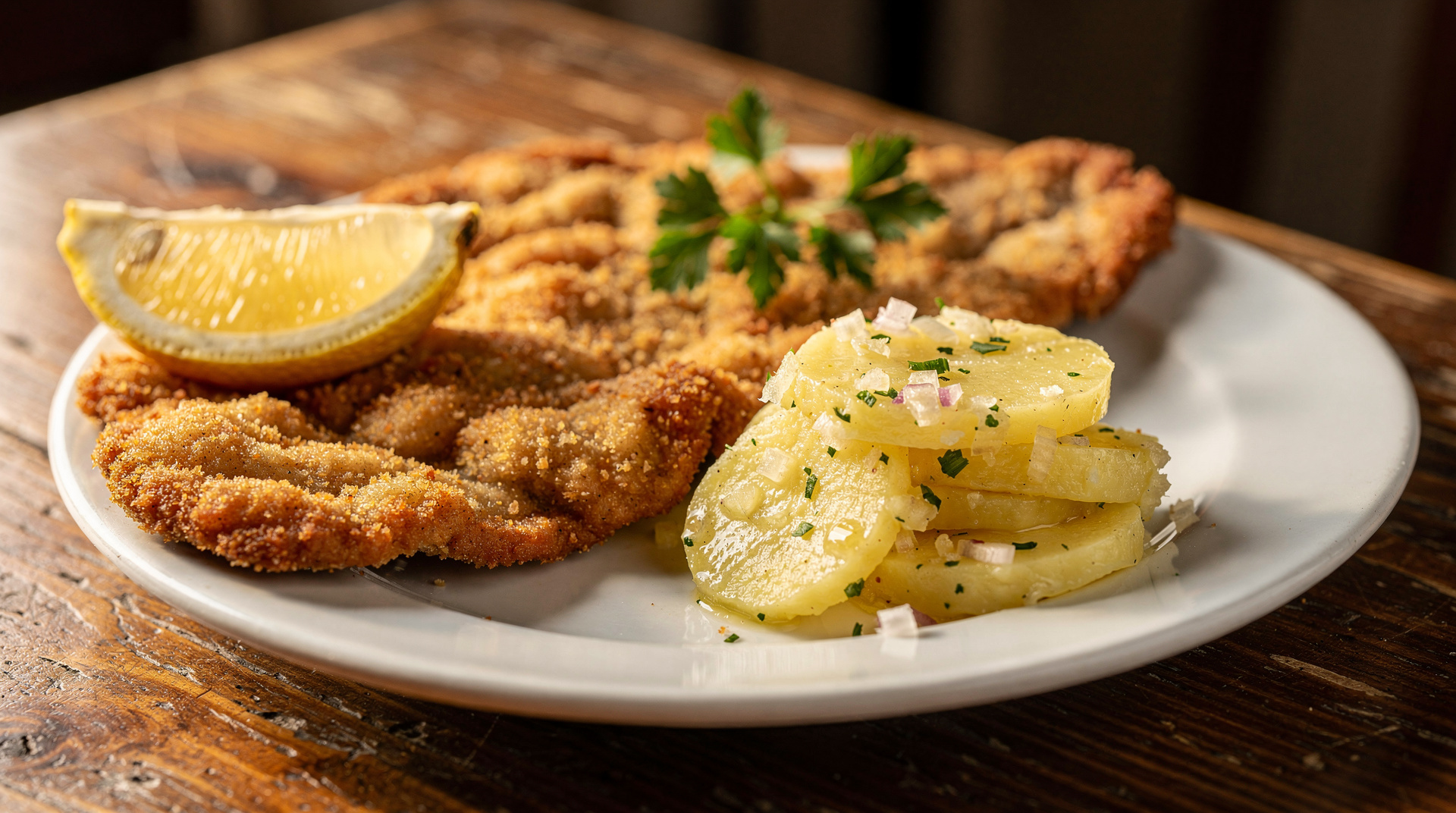
The pinnacle of Viennese main-course cooking. A genuine Wiener Schnitzel must, by Austrian law, be made from veal (Kalb). Any restaurant serving it with pork is technically offering a “Schnitzel Wiener Art” — in the style of Vienna, not the real thing. The proper version is pounded thin, breaded in fine breadcrumbs, and pan-fried in lard or clarified butter until golden and slightly bubbling (the breading should “soufflé” away from the meat slightly). Served with a lemon wedge and potato salad or Petersilkartoffeln (parsley potatoes).
For dedicated Schnitzel guidance, see the schnitzel where to eat guide.
Where to eat it:
- Figlmüller (Wollzeile 5 or Bäckerstrasse 6): the canonical address, known for Schnitzel the size of dinner plates. Yes, it’s touristy. Yes, the Schnitzel is genuinely excellent. Expect queues.
- Gasthaus Pöschl (Weihburggasse 17): smaller, quieter, excellent quality.
- Plachutta Wollzeile: technically known for Tafelspitz, but the Schnitzel is impeccable.
Avoid: Any restaurant on Kärntner Straße or Graben advertising Schnitzel at €28+ with a laminated menu and a host outside pulling tourists in. These use industrially produced pork and frozen potatoes.
Tafelspitz
A dish that defines Viennese bourgeois cooking: a large cut of prime boiled beef (specifically the tri-tip or rump cap), served in its own broth with crispy Rösti (potato pancake), apple-horseradish sauce, and chive sauce. It sounds simple. Done well, it is extraordinary. Plachutta Wollzeile (Wollzeile 38) is the undisputed institution — they serve it in a covered silver tureen, ladle the broth out first as soup, then plate the beef with the condiments. Allow 2 hours.
Gulasch
Hungarian-born, Viennese-adopted. Authentic Viennese Gulasch is a slow-braised beef stew seasoned generously with sweet paprika, onion, caraway and marjoram. Served with Nockerl (small egg dumplings) or bread. The best version is found at old Gasthäuser — look for Gasthaus Pöschl or the unassuming but excellent Zum Wohl near the Naschmarkt.
Sachertorte
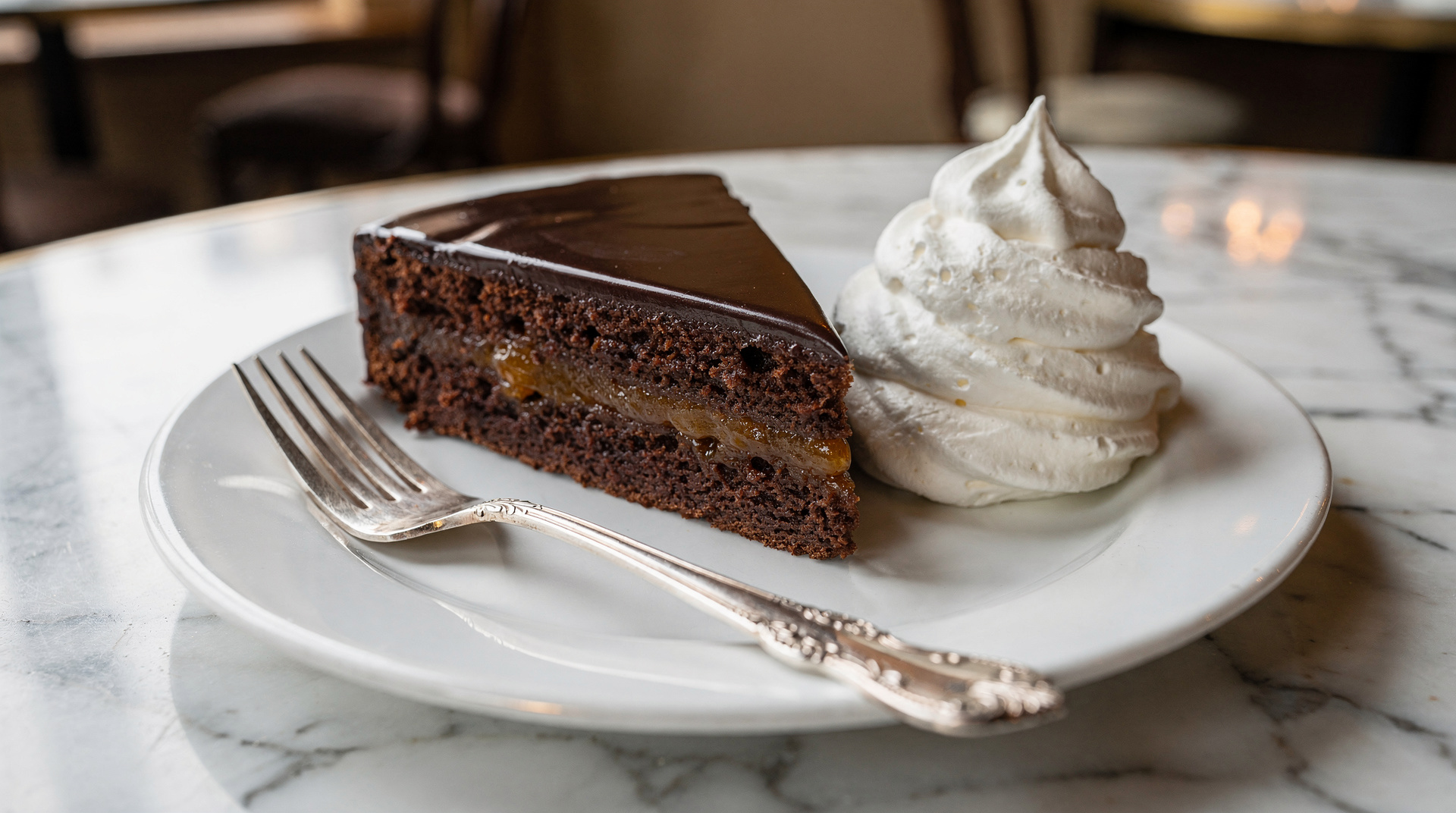
Vienna’s most famous cake is also its most fought-over. The Sachertorte real deal guide tells the full story, but the short version: Hotel Sacher makes the Original Sacher-Torte (trademarked, with apricot jam middle layer and sealed with the hotel’s round chocolate seal). Demel makes a competing version (the recipe difference is the subject of a famous mid-20th century lawsuit). Tourist cafés along the main streets sell generic versions with mediocre chocolate and preserved jam — they look the same but taste completely different.
Apfelstrudel
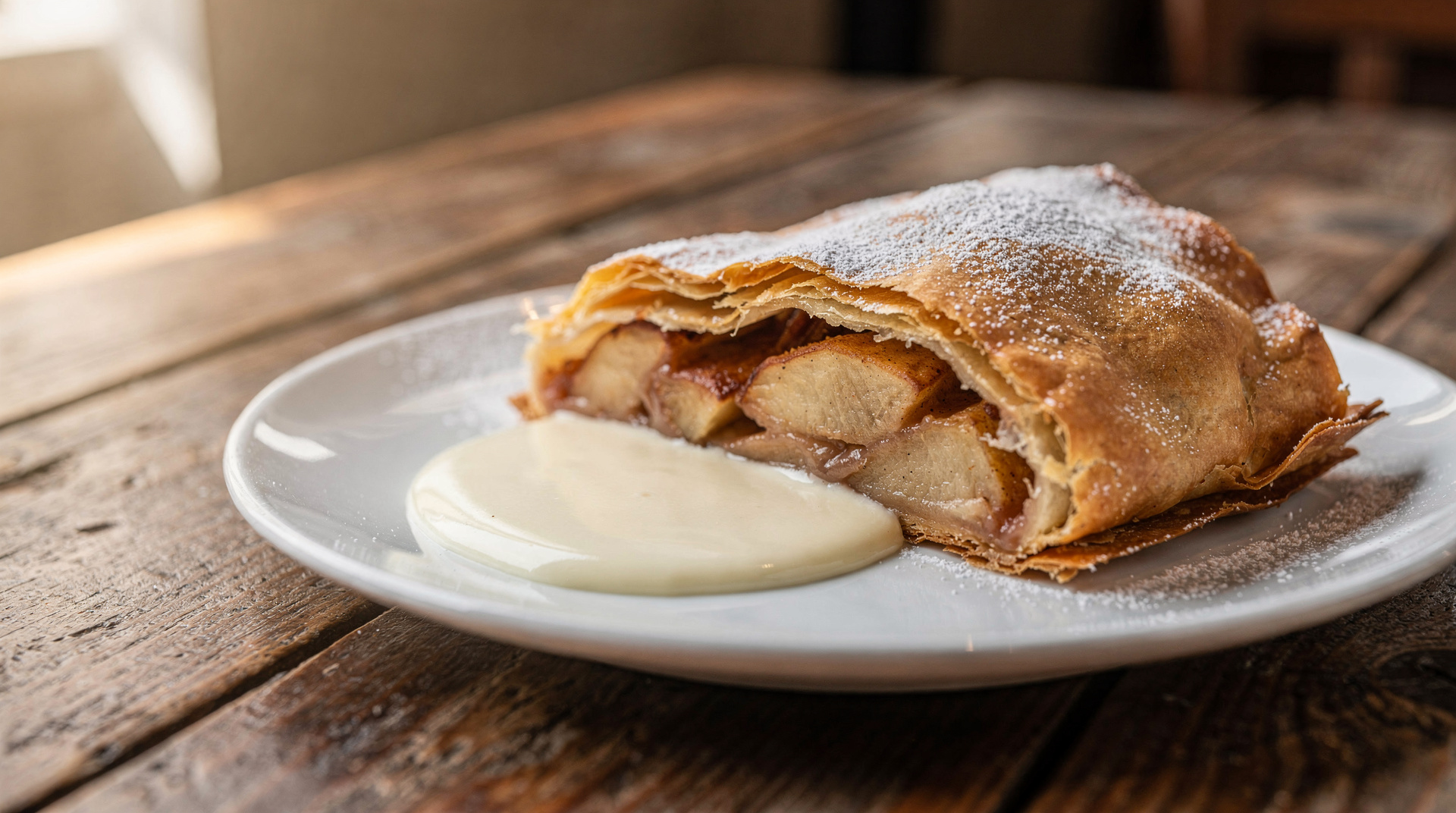
Vienna’s other great pastry. A good Apfelstrudel uses homemade strudel dough (stretched so thin you can read a newspaper through it), filled with tart apples, cinnamon, raisins and breadcrumbs, baked until golden. Served warm with vanilla sauce or Schlagobers (whipped cream). Café Central makes one of the finest in the city. The Vienna pastry tour guide covers this and more.
Kaiserschmarrn
Deconstructed fluffy pancake, torn apart during cooking, caramelised in butter, dusted with icing sugar, and served with Zwetschkenröster (stewed plums). It’s a dessert you cannot share — too good and too satisfying. Found in most traditional restaurants and coffeehouses.
Guglhupf and Kipferl
The Guglhupf (marble bundt cake, often flavoured with rum) is the quintessential Kaffehaus cake. The Kipferl (crescent-shaped pastry made with yeast dough) is the forerunner of the French croissant, supposedly brought to Paris from Vienna after the 1683 siege. Eat one fresh from a bakery in the morning.
Reading a menu like a local
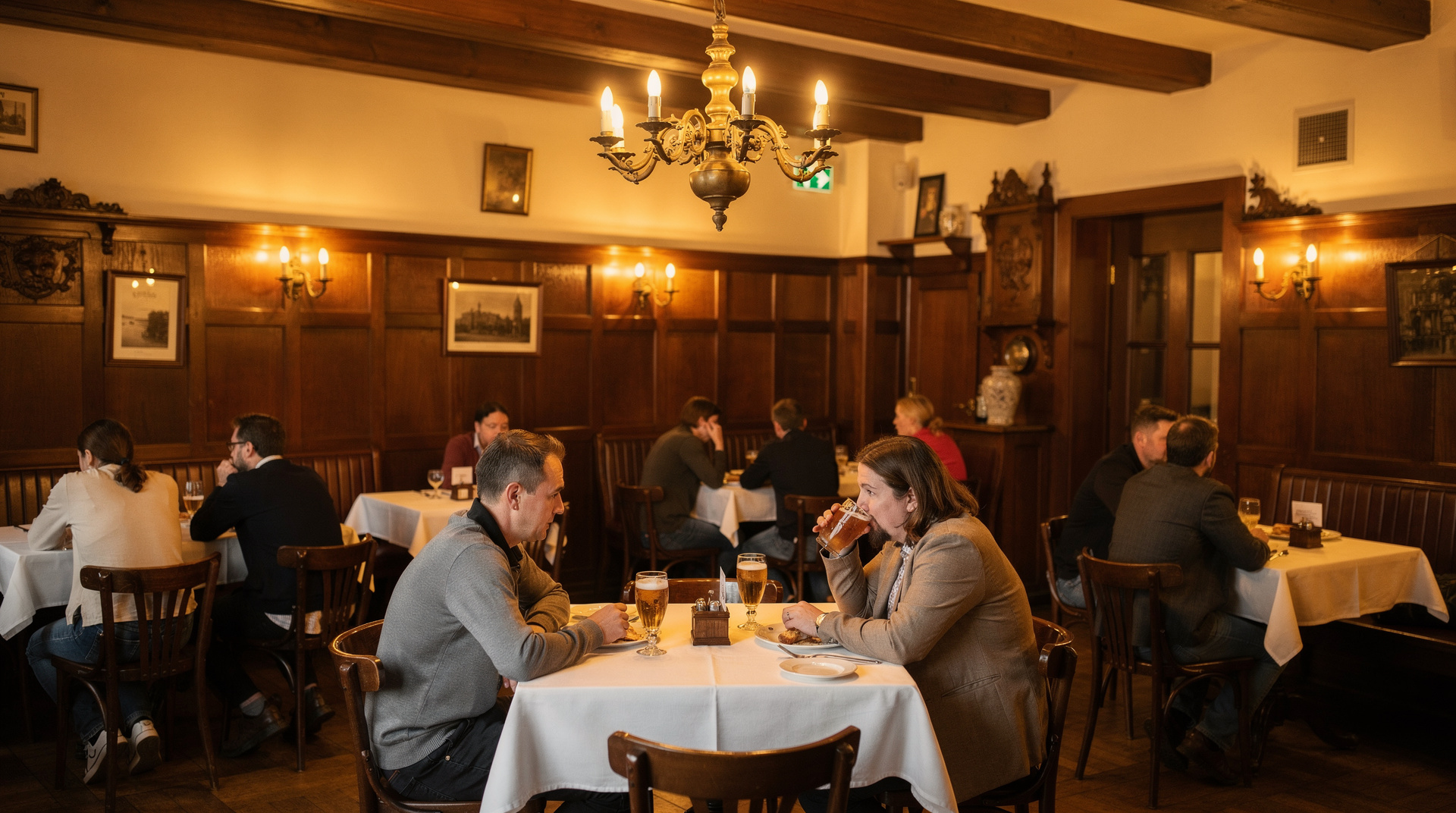
A few small signals separate a genuine Gasthaus menu from a tourist-oriented one. Prices listed with weight (per 100g, common for Tafelspitz or steak cuts) rather than a flat plate price is a normal Austrian convention, not a hidden fee — ask the server for an estimated total if it’s unclear. A short, seasonally rotating menu (a handful of daily specials, or “Tagesteller,” chalked on a board) is generally a better sign than a long laminated menu offering every conceivable Austrian and international dish at once. Menus printed only in German, or German with a simple typed English translation rather than glossy photography, tend to correlate with kitchens cooking for a local clientele rather than a purely tourist one.
Where to eat by neighbourhood
Innere Stadt (1st district)
The historic centre has a concentration of excellent restaurants but also the highest density of tourist traps. Navigate carefully. Figlmüller Bäckerstrasse, Plachutta Wollzeile, and Café Central are excellent. The streets between them are hit-and-miss.
Naschmarkt area (6th district)
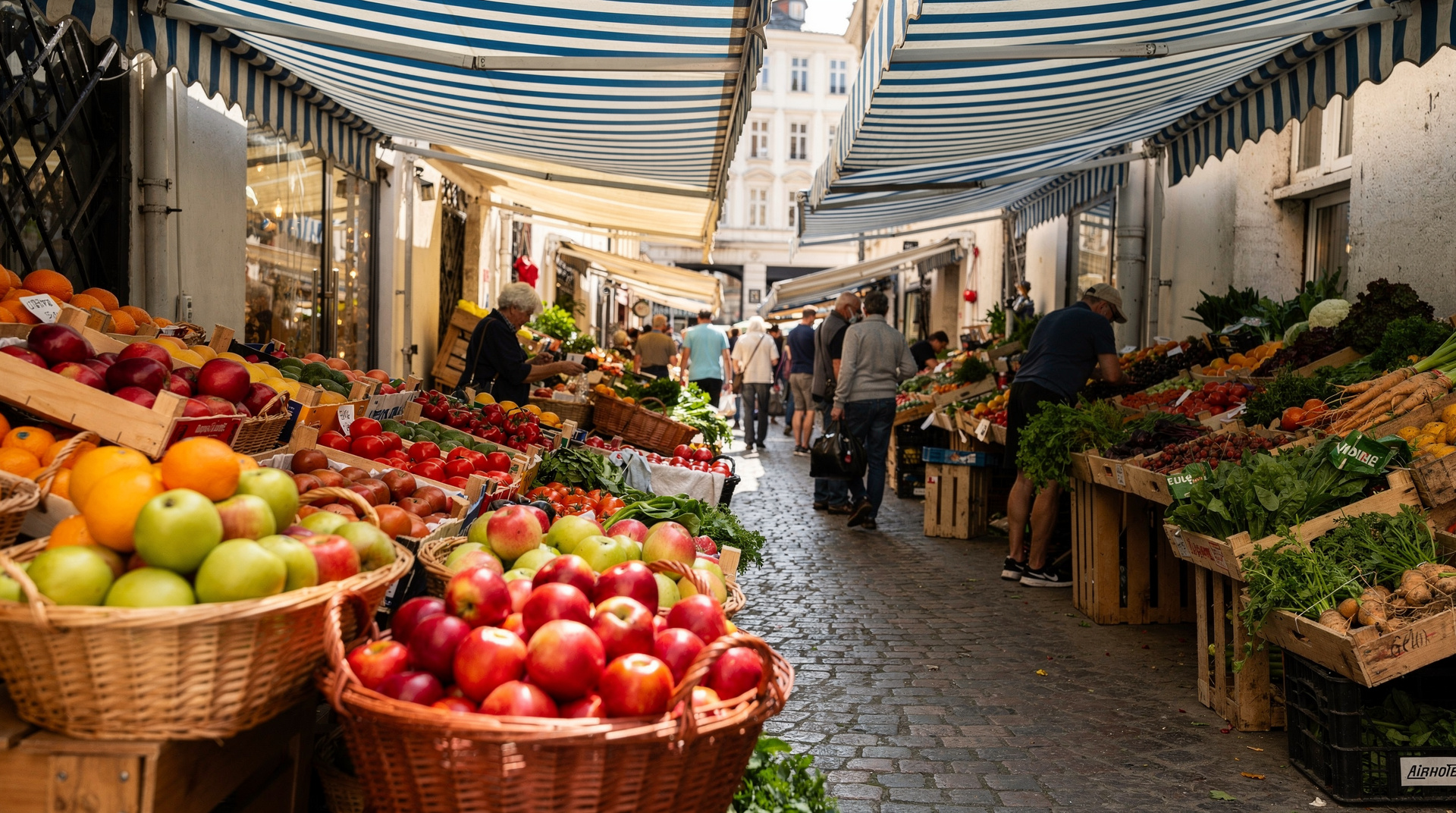
The Naschmarkt eating guide goes deep on this, but in summary: Vienna’s outdoor market (Saturday is the best day, with the flea market added) has the city’s best range of international and Austrian food at non-tourist prices. Spice merchants, cheese vendors, olive stalls, Turkish gözleme, Japanese bento, and Austrian Würstelstände all within walking distance.
Neubau and Mariahilf (7th/6th district)
Vienna’s creative quarter has excellent independent restaurants, cafés, and natural wine bars. Less formal, better value, frequented by locals.
Grinzing and Heuriger villages
Traditional Heurigen (wine taverns) in Grinzing, Nussdorf, and Stammersdorf serve cold buffets — Liptauer cheese spread, black bread, Lardo, smoked meats — alongside glasses of new wine. This is old-school Viennese eating culture at its most relaxed. The Heuriger guide explains how it works.
Eating on a genuinely tight budget
Vienna can be eaten well on a modest budget if you know where to look. Naschmarkt stalls, Würstelstände, and bakery counters all deliver a satisfying meal for €5–12, well below the €22–28 Figlmüller Schnitzel or the €40–55 mid-range dinner. Supermarket options — a fresh Semmerl with cheese or ham from a BILLA or Spar, eaten in a park — are a perfectly normal way for budget travellers to handle at least one meal a day without feeling like you’re missing the city’s food culture, since the sit-down Kaffeehaus experience is really the one splurge worth prioritising over restaurant dinners if funds are tight.
Tickets and food tours
Guided food tours are genuinely useful in Vienna because the culinary landscape is spread across neighbourhoods and the best spots aren’t obvious from the street.
The Vienna food tour takes you through the Naschmarkt, a Kaffehaus, a Würstelstand, and a traditional restaurant — a solid 3-hour introduction to the range of Viennese eating.
The Austrian food and coffee house tour focuses on the Kaffehaus tradition alongside Austrian specialties — a good choice if you want to understand the coffee culture alongside the food.
For market-specific depth: the Naschmarkt gourmet tour covers the market in detail with a local guide explaining what to buy and where.
If you only have one meal for each category
For visitors without time to read every section here: Schnitzel at Figlmüller or Gasthaus Pöschl, Tafelspitz at Plachutta Wollzeile, Sachertorte at Hotel Sacher or Demel (see the Sachertorte real deal guide for the full story of which is “authentic”), Apfelstrudel at Café Central, and one Naschmarkt lunch on a Saturday morning. That combination alone covers the essential Viennese food experience even on a short trip; everything else in this guide is refinement.
Honest tips
The tourist menu surcharge is real. Restaurants in the pedestrian zones (Kärntner Straße, Graben, Kohlmarkt) mark up by 30–50% relative to quality. The closer to Stephansdom, the worse the ratio of price to quality.
Book in advance for the best places. Figlmüller fills up 2–3 days ahead at peak season. Plachutta Wollzeile is quieter but should still be reserved for dinner.
Go to a Heuriger at least once. It’s an experience that doesn’t exist elsewhere in the world: wine made on the property, eaten from a buffet, in a garden or converted farmhouse, with locals doing exactly the same thing. Take the wine-tasting Heurigen tour if you want a guided introduction.
Pastry at a coffeehouse is not a snack — it’s a meal. A slice of Sachertorte at Café Sacher with a Melange is around €16–20 total. Sit down, take your time. The waiter will not rush you.
Vienna is excellent for grocery shopping. The BILLA Plus, Spar, and Interspar supermarkets stock excellent Austrian produce — local cheese, pumpkin seed oil, Liptauer spread, Manner wafers, and wine from all regions. The airport shops are cheaper than the tourist souvenir shops.
Allergies and dietary needs: Viennese cuisine relies heavily on wheat flour, dairy, and meat. If you have coeliac disease or a dairy intolerance, stick to the more modern restaurants in Neubau or the Naschmarkt area, where alternatives are more common.
The genuinely excellent, non-touristy addresses — Plachutta Wollzeile, Gasthaus Pöschl, and even Figlmüller at peak times — fill up predictably on weekend evenings and during major events. A same-day reservation by phone or through the restaurant’s website is usually enough outside the busiest holiday weeks, but booking two to three days ahead removes any risk if you have a specific evening in mind and don’t want to be turned away or wait an hour at the door.
Frequently asked questions about Vienna’s food scene
What does a typical Viennese breakfast look like?
The classic Viennese Frühstück is a bread roll (Semmerl or Kipferl), butter, jam, a soft-boiled egg, and a Melange. Coffeehouses serve extended breakfast menus until midday. Hotel breakfasts are typically generous buffets.
Is Viennese food expensive compared to other European capitals?
It’s mid-range by Western European standards. Slightly cheaper than Zurich, comparable to Munich, more expensive than Prague or Budapest. A two-course dinner with wine at a good mid-range restaurant costs €40–55 per person.
What Austrian wine should I drink with my meal?
Grüner Veltliner is the go-to white — crisp, peppery, and versatile with Schnitzel and fish. Riesling from Wachau pairs beautifully with rich dishes. For reds, try Zweigelt (lighter) or Blaufränkisch from Burgenland (more structured). The Grüner Veltliner guide explains the regional classifications.
What is a Heuriger?
A Heuriger is a traditional wine tavern licensed to sell the winemaker’s own wine on the premises. The name means “this year’s wine.” They operate seasonally (roughly April to October), identified by a pine branch (Buschen) hanging at the entrance. Cold buffets accompany the wine — you don’t typically get a full hot-food menu.
On tipping: rounding up or adding roughly 5–10% is standard practice, handed directly to the server rather than left on the table. Service is already included in the menu price by law, so tipping is a gesture of appreciation rather than a wage top-up, and it’s entirely acceptable to simply round a €17.50 bill up to €19 or €20 rather than calculating a precise percentage.
Where do Viennese locals actually eat?
Outside the tourist triangle. The 7th district (Neubau), 8th (Josefstadt), and 17th–19th (heurigen villages) are where locals concentrate. The Naschmarkt is popular with locals on Saturday mornings. Würstelstände are the universal late-night option across all districts.
Top experiences
Bookable activities with verified prices and instant confirmation on GetYourGuide.