Grüner Veltliner guide: Austria's signature white wine
From Vienna: Wachau Valley Day Tour with Wine Tasting
What is Grüner Veltliner?
Grüner Veltliner (GrüVe) is Austria's most-planted white grape and its signature wine — a crisp, peppery, bone-dry white with notes of white pepper, fresh herbs, citrus, and sometimes mineral undertones. Found in Heurigen, wine lists, and Wachau vineyards throughout the region.
Austria’s wine identity in a single grape
Wine drinkers who haven’t explored Austrian wine often assume Austria produces primarily reds, or they conflate it with Germany. In fact, Austria is a white wine country first, and Grüner Veltliner is the reason to understand it. No other country grows this grape at significant scale. No other wine tastes quite like it.
Grüner Veltliner (GrüVe in wine shorthand) accounts for approximately 30% of Austria’s total vineyard area. In the best sites — the steep terraced slopes of the Wachau, the loess soils of Kamptal — it produces wines that challenge white Burgundy in complexity and age-worthiness. In the Heurigen of Vienna’s wine villages, it produces the easy, peppery, fresh carafe wine that Viennese have been drinking for centuries.
This guide explains what Grüner Veltliner is, how the quality levels differ, and where to drink it in and around Vienna.
| What | Austria’s flagship dry white grape — peppery, citrusy, food-friendly |
| Where to try | Heurigen (Grinzing/Nussdorf), Wachau/Kamptal wineries, Vienna wine bars |
| Price | Around €3–6/Viertel at a Heuriger; €20–100+/bottle for Wachau Smaragd |
| Classification | Steinfeder (light) < Federspiel (medium) < Smaragd (premium, age-worthy) |
| Best pairing | Wiener Schnitzel, white asparagus (April–June) |
What you need to know
The character of the grape
Grüner Veltliner’s defining flavour marker is white pepper — a spicy, slightly pungent note that is unlike any other white wine. This comes from a compound called rotundone, also found in Australian Shiraz and Sicilian Nero d’Avola. Combined with:
- Herbaceous freshness — green herbs, sometimes parsley or grass
- Citrus peel — particularly grapefruit and lemon zest
- Green apple and pear — in lighter examples
- Mineral undertones — particularly in Wachau examples from granite and gneiss soils
- Weight — in Smaragd classification, significant body and richness
The wine is almost always bone-dry. A residual sugar note in a Grüner Veltliner is unusual and typically indicates a different style (Spätlese or Auslese — late harvest — which exists but is uncommon).
The Wachau classification explained
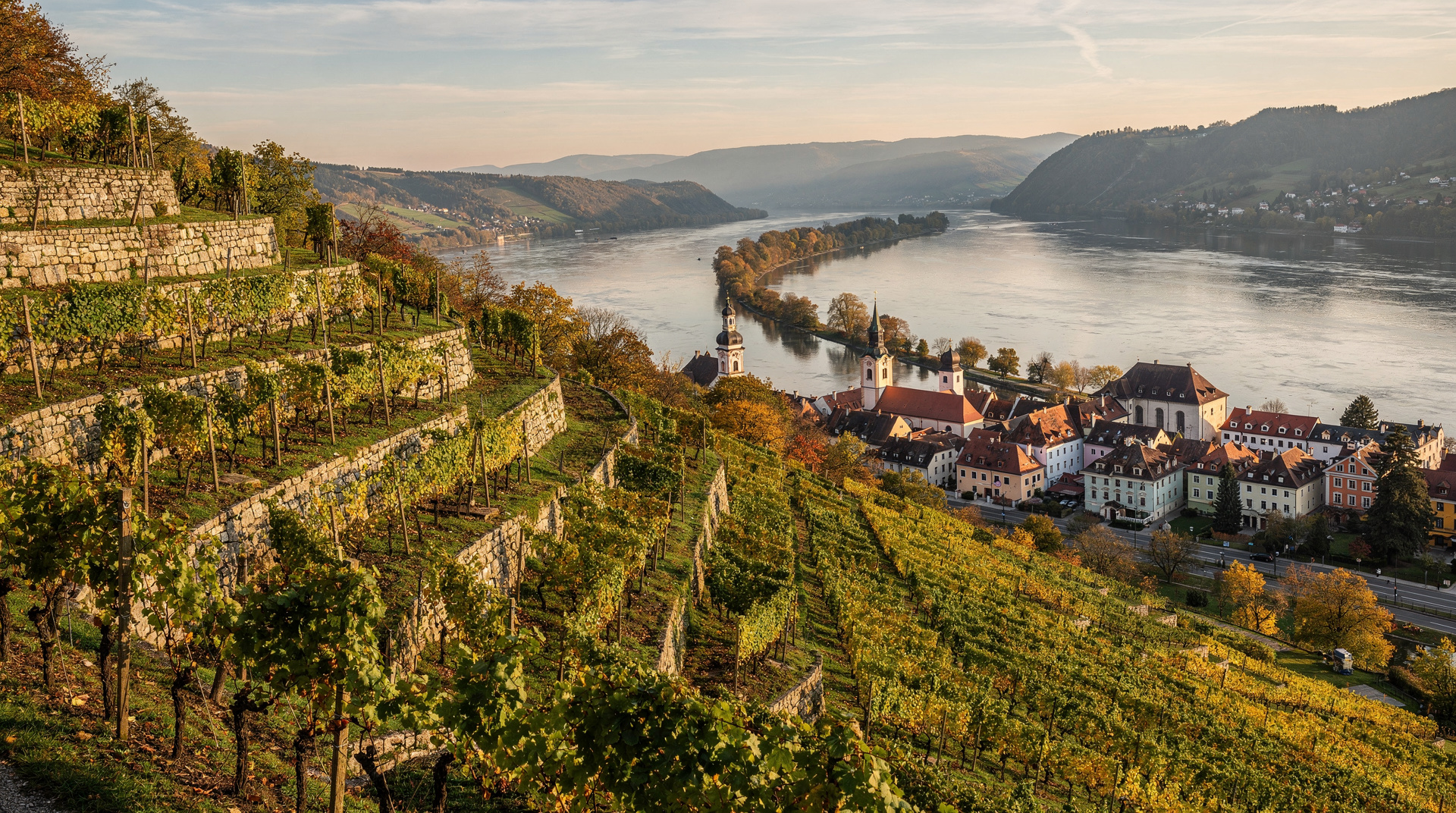
The Wachau Valley — Austria’s most famous wine region, between Melk and Krems along the Danube — uses a local classification system for Grüner Veltliner and Riesling that isn’t based on appellation geography but on wine style:
Steinfeder (named after a feather grass that grows on the slopes): The lightest style. Up to 11.5% ABV. Delicate, fresh, meant to be drunk young — within a year or two of harvest. The classic Heuriger-quality wine.
Federspiel (named after the lure used in falconry): Medium body. 11.5–12.5% ABV. More depth than Steinfeder, good acidity, 3–5 years of pleasant drinking. The most versatile food-pairing option.
Smaragd (named after the local Smaragdeidechse, an emerald lizard that basks on the warm terrace walls): The premium category. Over 12.5% ABV, often 13.5–14.5%. Rich, full-bodied, complex, age-worthy. The best Smaragd examples (Nikolaihof, Rudi Pichler, FX Pichler) rival top white Burgundy and should be cellared 5–15 years.
Wachau vs. Kamptal vs. Weinviertel
Wachau: The most celebrated region. Steep terraced vineyards on granite and gneiss, significant temperature variation between day and night, Mediterranean influence from the east. Produces the most complex and age-worthy Grüner Veltliners. Also the most expensive.
Kamptal (around Langenlois, north of Krems): Loess and granite soils, slightly warmer and drier than Wachau. Producers like Bründlmayer, Hirsch, and Schloss Gobelsburg produce excellent GrüVe at slightly lower prices than Wachau. Arguably better value for the quality.
Kremstal (around Krems): Between Kamptal and Wachau in style. Good producers: Stadt Krems, Nigl.
Weinviertel (the large region north of Vienna): The volume region. Produces lighter, everyday Grüner Veltliners for the Heuriger trade. Good for carafe wine; rarely age-worthy.
Vienna hills (Wienerwald, Grinzing, Nussdorf): Lighter, fresh styles ideal for Heuriger drinking. Fritz Wieninger in Stammersdorf produces the most serious Vienna-origin GrüVe.
Where to drink Grüner Veltliner in Vienna
At a Heuriger
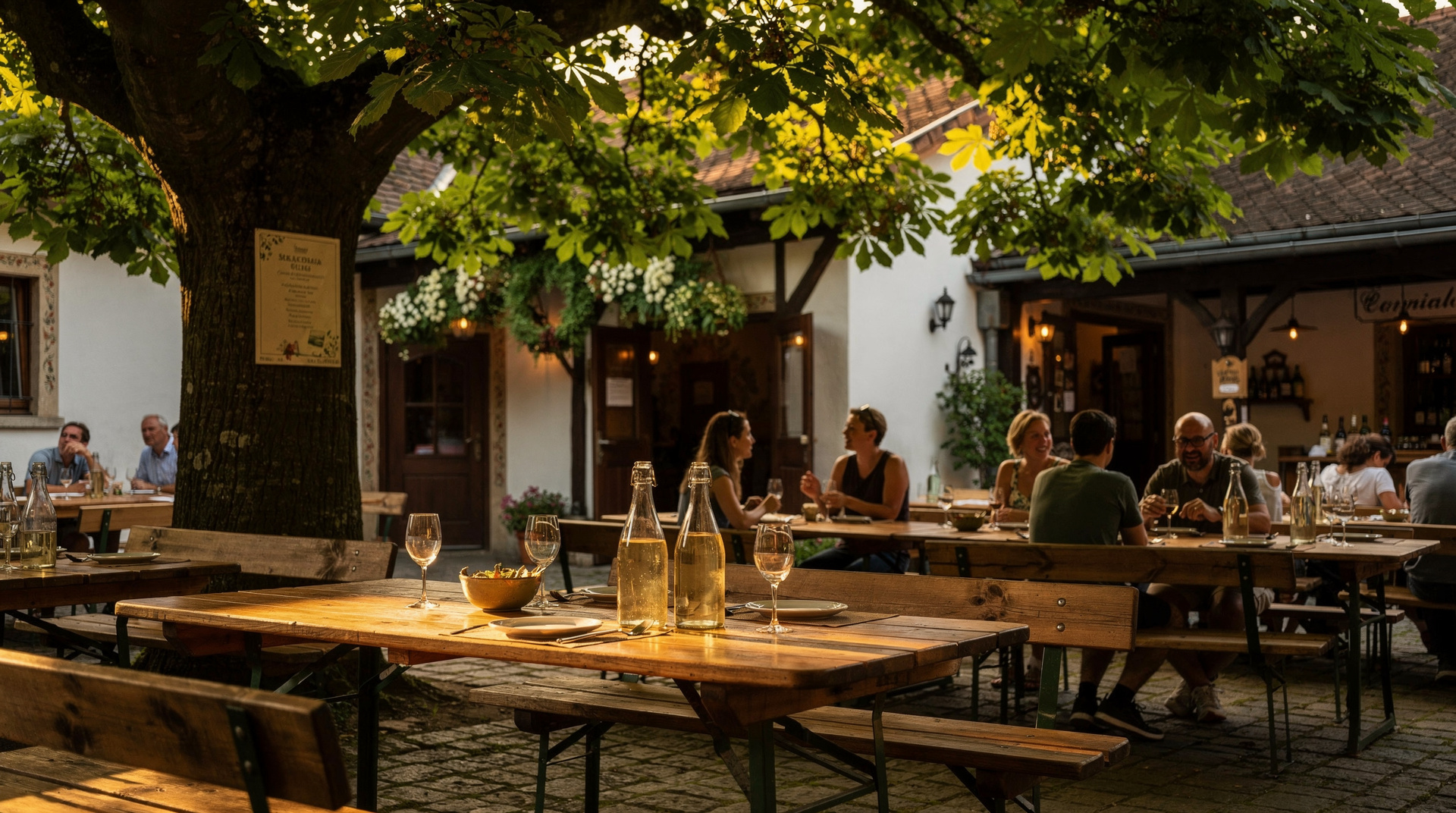
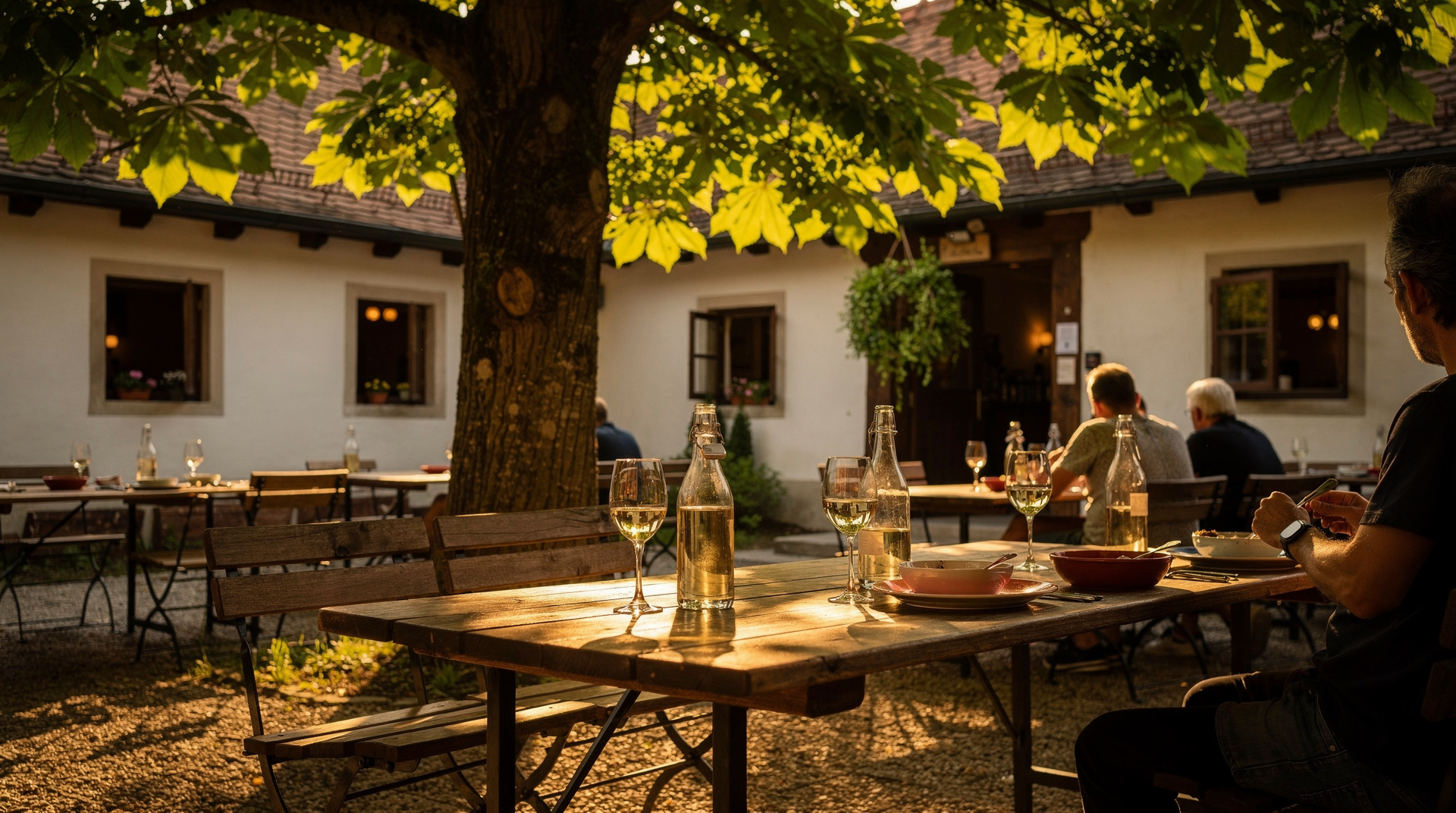
The most traditional context. Order a Viertel (quarter-litre) of Grüner Veltliner from the winemaker’s own production, accompanied by Liptauer cheese on dark bread. The wine will typically be a Steinfeder or simple Federspiel — fresh, slightly peppery, easy. Not a complex tasting experience, but an authentic one.
See the Heuriger guide and best Heurigen guide for specifics.
At a Viennese wine bar
Vienna has a growing natural wine bar scene (particularly in the 7th district) alongside more traditional wine bars (Weinschanken) that stock a range of Austrian producers. Look for: the Vinothek W (Breite Gasse 9, 7th district), Zum Wohl (5th district), and the wine stalls at the Naschmarkt.
At a restaurant
Most good Viennese restaurants have Austrian wine lists with at minimum Kamptal and Wachau Grüner Veltliners. The pairing with Schnitzel or Tafelspitz is canonical. Ask the sommelier for a Federspiel for food pairing or a Smaragd if you want to taste the premium level.
On a wine tour
The best way to understand the range of Grüner Veltliner is to taste them in sequence in the Wachau Valley itself.
The Wachau Valley day tour with wine tasting takes you to the wine region itself — vineyard visits, tastings with producers, and the landscape context that makes Wachau wine make sense. See the Wachau wine route guide for the full day-trip picture.
The small-group Heurigen wine tour provides a Vienna-based introduction to Austrian wine culture, with GrüVe tastings in a Heuriger context — good for visitors who can’t make the Wachau day trip.
Pairing it with a Viennese meal
Grüner Veltliner is at its best beside the food it grew up with. If you are planning a schnitzel dinner, the guide to where to eat schnitzel is a good starting point, and the best restaurants in Vienna list helps you find tables with a proper Austrian wine list. For a broader picture of what to eat alongside the wine, the Vienna food guide covers the classic dishes, and the Naschmarkt eating guide shows where to graze on market food with a glass in hand.
Turning a taste into a wine trip
Once you have enjoyed a glass or two, the grape makes a natural thread for planning a day out. The Wachau day trip from Vienna is the obvious choice for terraced vineyards, while the Wachau Danube cruise guide and the Melk to Krems boat trip let you see the same slopes from the river. If you would rather stay close to the city, the Vienna Woods day trip pairs well with an afternoon in a wine village, and the Grinzing Heuriger district is the easiest place to sit down with a carafe of the local white.
For a wider look at the region behind the wine, read about the Wachau Valley and the Burgenland wine route, where the red-wine side of Austria begins. A slow evening at a wine village is also a fine way to close a longer stay, so the five-day Vienna itinerary is worth a look if you want to fit a tasting between the big sights. Readers who prefer a first-hand account can enjoy the Heuriger evening in Grinzing diary.
How to order and taste Grüner Veltliner
At a Heuriger or wine bar
“Einen Viertel Grünen, bitte” (a quarter-litre of Grüner Veltliner, please). Most Heurigen have only their own GrüVe on the menu — no choice required. At a wine bar, specify the region: “Einen Kamptal Grünen Veltliner” or “Einen Wachau Federspiel.”
Tasting notes to look for
On the nose: white pepper (immediately), citrus zest (lemon or grapefruit), fresh herbs (parsley, tarragon sometimes). On the palate: dry, clean, moderate to high acidity, the pepper note again on the finish.
A Smaragd adds: weight (almost oily texture in the richest examples), stone fruit (peach, apricot), mineral depth, a longer finish.
Tasting with intention
If you are trying several glasses in one sitting, work from the lightest style to the richest, so that a weightier wine does not flatten the delicate one that follows. Take a moment with each glass before you drink: swirl, smell, and notice whether the pepper arrives first or the citrus does. Then sip, and pay attention to the finish, which is where Grüner Veltliner tends to show its character. A short, clean finish points to a simple everyday wine; one that lingers and keeps its spice is usually a sign of a more serious bottle.
Do not be shy about asking questions. Winemakers and sommeliers in Austria are generally happy to explain how a particular wine was made and which food it suits, and a curious guest is usually rewarded with a better recommendation than the one printed on the list. Keep a note on your phone of the wines you liked, with the producer and the style, so that you can find them again at a wine shop before you fly home.
Temperature
Lightly chilled, not ice-cold. 10–12°C is ideal. Heuriger wine served in a carafe at summer temperatures (15–18°C) is acceptable — the warmth lets the pepper notes express themselves.
Honest tips
Wachau Smaragd is more expensive than it looks on restaurant wine lists. A Smaragd from FX Pichler or Nikolaihof runs €50–100+ per bottle in a restaurant. Worth ordering once if budget allows; genuinely excellent wine.
Kamptal GrüVe offers better value. Bründlmayer and Hirsch produce Federspiel and Smaragd examples that match Wachau quality at 20–30% lower price. On a restaurant wine list, seek Kamptal if the Wachau options seem expensive.
The Heuriger version is a different wine. The carafe Grüner at a Nussdorf Heuriger is delicious and appropriate for what it is — a light, fresh quaffing wine. Don’t compare it to a Wachau Smaragd and conclude GrüVe is simple. They’re as different as Chablis and Montrachet.
Pair it with asparagus. In spring (April–June), Viennese restaurants run Spargelkarte (asparagus menus). White asparagus with Hollandaise and a crisp Federspiel Grüner Veltliner is the greatest spring eating experience in the city.
Choosing between a Heuriger and a cellar door
Visitors often wonder whether to spend their wine time in a Vienna Heuriger or travel out to a winery. They offer different pleasures. A Heuriger is a social, relaxed evening: a bench, a carafe, a plate of simple food and the murmur of other tables. A winery visit is closer to a lesson, with a guide who walks you through the styles and lets you compare them side by side. If you have only one free evening, choose the Heuriger. If you have a full day and an interest in how the wine is made, choose the wine region. Many travellers do both, starting in the countryside and finishing with a casual glass back in the city.
Region comparison at a glance
| Region | Style | Typical price | Best for |
|---|---|---|---|
| Wachau | Steep terraces, granite/gneiss, most age-worthy | Highest (€25–100+) | Serious tasting, cellaring |
| Kamptal | Loess/granite, slightly warmer | Mid (€15–40) | Best value-for-quality |
| Kremstal | Between Kamptal and Wachau | Mid (€15–35) | Balanced, less crowded cellar doors |
| Weinviertel | High-volume, everyday drinking | Low (€6–15) | Casual carafe wine |
| Vienna hills | Light, fresh, Heuriger style | Lowest (€3–6/Viertel) | Drinking on the spot at a Heuriger |
Buying a bottle to take home
Grüner Veltliner travels well and is one of the more rewarding wine souvenirs from a Vienna trip, since it is rarely stocked outside specialist shops back home. Wine shops in the Innere Stadt and the Naschmarkt area sell Wachau and Kamptal bottles at close to cellar-door prices — look for Nikolaihof, FX Pichler, Rudi Pichler and Prager for Wachau; Bründlmayer, Hirsch and Schloss Gobelsburg for Kamptal.
A Federspiel travels safely in checked luggage wrapped in clothing; Smaragd bottles worth €50+ are better protected in a proper wine sleeve or shipped through the winery if buying a case. EU duty-free allowances for personal wine imports are generous for most visitors returning to non-EU countries, but check your home country’s limit before buying a case.
Frequently asked questions about Grüner Veltliner
How does Austrian Grüner Veltliner compare to Italian Pinot Grigio?
Grüner Veltliner is fuller-bodied, more flavourful, and more complex than most commercial Pinot Grigio. The pepper note is distinctive. If you enjoy light Italian whites, you’ll likely enjoy GrüVe — but expect more character.
Is Grüner Veltliner good for ageing?
Light Steinfeder and simple Federspiel examples: drink within 2–3 years. Good Kamptal and Wachau Federspiel: 5–8 years. Premium Wachau Smaragd from top producers: 10–20 years. The best examples (Nikolaihof Vinothek, FX Pichler Unendlich) are among the world’s most age-worthy white wines.
What food does Grüner Veltliner pair with?
The classic pairings: Wiener Schnitzel, white asparagus, fresh water fish (Saibling/char, Forelle/trout), light pasta dishes. The peppery acidity makes it particularly good with richer dishes where the acid provides contrast. Less suited to sweetly spiced food (Indian, Thai) where the pepper-on-pepper combination can clash.
Is there a rosé or red Grüner Veltliner?
No. Grüner Veltliner is exclusively a white wine grape. Rosé production from this variety doesn’t exist. Austria’s red wine identity comes from other grapes: Zweigelt (a lighter, cherry-fruited variety), Blaufränkisch (more structured, peppery red), and Sankt Laurent. See the Burgenland wine guide for Austrian red wine.
Top experiences
Bookable activities with verified prices and instant confirmation on GetYourGuide.