Best Heurigen in Grinzing and Nussdorf: honest recommendations
Vienna: Small-Group Wine Tasting Tour with Heurigen
Which Heuriger is the best in Grinzing or Nussdorf?
In Nussdorf: Heuriger Mayer am Pfarrplatz (Beethoven's former residence, excellent wine) and Heuriger Schübel-Auer (quieter, very good Grüner Veltliner). In Grinzing: Heuriger Hirt and Heuriger Fritz Wieninger. Nussdorf has a less touristy atmosphere overall.
Choosing the right Heuriger: what the guidebooks miss
Most recommendations of Viennese Heurigen list the same six or seven names — the ones that are reliably open, have websites, accept credit cards, and have been in the guidebooks for 20 years. These are fine. Some of them are excellent. But the Heuriger landscape is wider than that, and understanding the difference between tourist-facing and genuinely local is worth a brief detour.
The village with the most tourist pressure is Grinzing. The village with the best balance of quality and local feel is Nussdorf. The village the Viennese themselves would point you toward if they were being honest is Stammersdorf.
This guide covers specific recommendations honestly, including which ones have drifted toward tourist performance and which remain genuine. For the cultural background on what a Heuriger actually is, see the Heuriger guide to Vienna; for the wine itself, the Grüner Veltliner guide.
| Where | Grinzing, Nussdorf or Stammersdorf, 19th/21st district |
| Cost | around €20–30 per person, food + 3 glasses |
| Time needed | 3–4hrs for a proper afternoon |
| Getting there | Tram D (Nussdorf), Bus 38A (Grinzing), Tram 31 (Stammersdorf) |
| Best time | September for Sturm, 3–7pm |
Village comparison
| Village | Tourist pressure | Local feel | Getting there |
|---|---|---|---|
| Nussdorf | Moderate | High | Tram D, 25–30 min |
| Grinzing | Highest | Moderate | Bus 38A, similar time |
| Stammersdorf | Lowest | Highest | Tram 31, ~35 min |
| Neustift am Walde | Low | Good | Bus 35A, ~30 min |
What you need to know
The tourist pressure map
Grinzing: The first Heuriger village that many visitors encounter. Bus 38A from Heiligenstadt (U4) deposits you at the main street, which has a concentration of Heurigen, some excellent, some coasting on reputation. The problem: several Grinzing Heurigen have expanded into large group-catering operations — buses of coach tourists, printed tour-guide commentary, “traditional Austrian” entertainment that wasn’t organic. If you choose carefully, Grinzing still has genuine options.
Nussdorf: Reachable by Tram D to its final stop, Nussdorf. A compact wine street (Nussdorfer Strasse) with several clustered Heurigen. More local clientele, better neighbourhood character, excellent wine from the Mayer and Schübel-Auer families. The most practical recommendation for most visitors.
Stammersdorf: North of the Danube, 35 minutes from the centre (Tram 31). The largest Viennese wine village, least known to tourists, most working-winery in feel. Some Heurigen are down unsigned country lanes. Requires more research but worth it.
Neustift am Walde: 30 minutes from the centre (Bus 35A). A pleasant village with reliable Heurigen and less tourist pressure than Grinzing.
Recommended Heurigen
Heuriger Mayer am Pfarrplatz (Nussdorf)
Address: Pfarrplatz 2, 1190 Vienna Character: Vienna’s most celebrated Heuriger — Beethoven lived in the adjacent building in 1817. Own vineyards, own wine production, excellent Grüner Veltliner and Riesling. Open more regularly than most Heurigen (year-round in the restaurant section, seasonal Buschenschank).
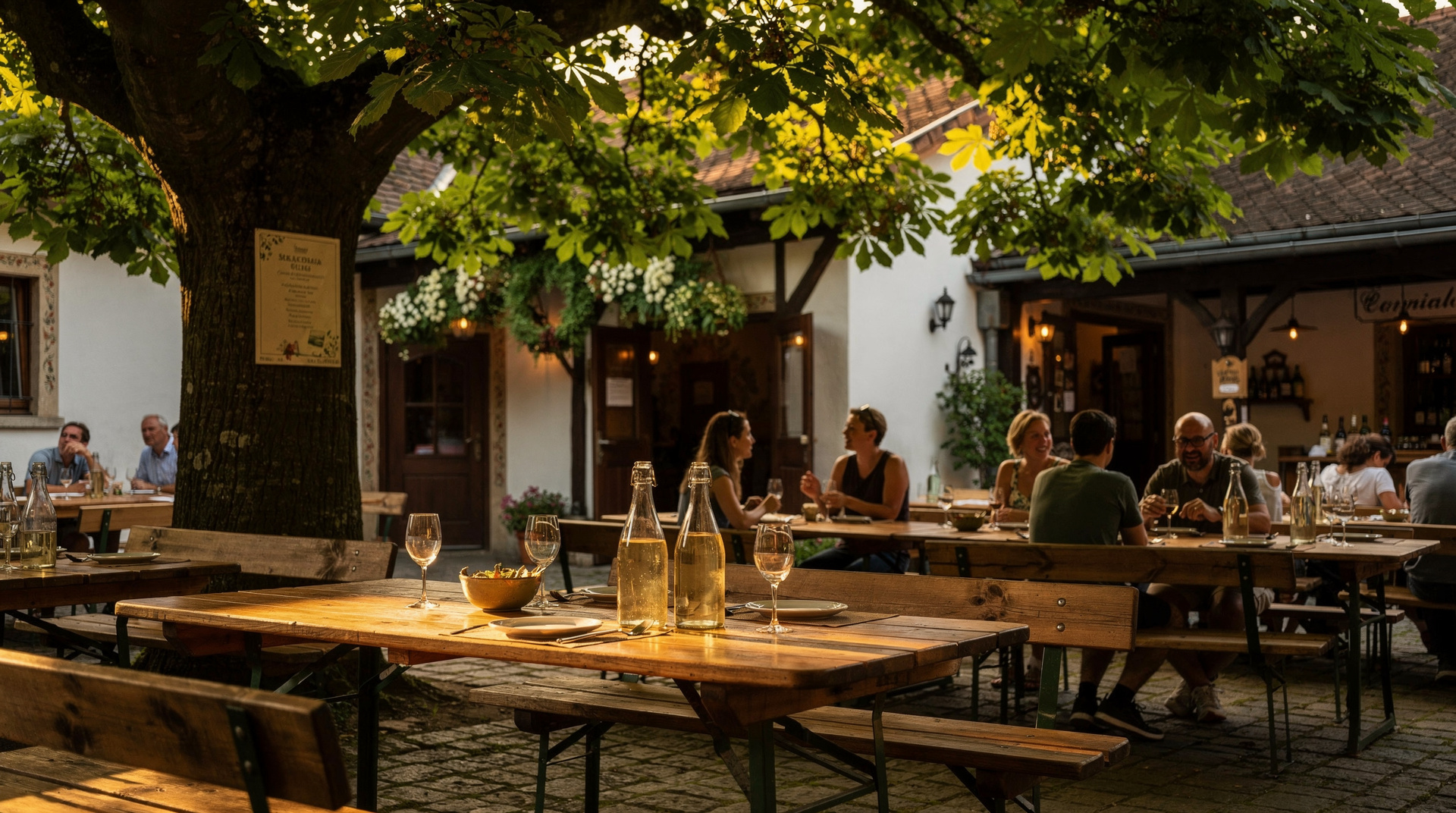
This is the famous one, and it deserves the reputation on wine quality. The setting — a large garden surrounded by vines, with the church tower as backdrop — is beautiful. More organised and slightly more expensive than a purely traditional Heuriger (they offer live music on some evenings), but the wine is genuine and excellent.
Best for: First-time Heuriger visitors wanting reliability, good wine, and a beautiful setting.
Heuriger Schübel-Auer (Nussdorf)
Address: Kahlenberger Strasse 22, 1190 Vienna Character: A smaller, quieter Nussdorf Heuriger with own vineyards and less tourist traffic than Mayer. The Grüner Veltliner here is particularly good — peppery, fresh, with good weight.
Slightly harder to find and only open during specific Buschenschank periods. The garden is less grand than Mayer’s but the atmosphere is more intimately Viennese. A better choice if you want the genuine Heuriger experience rather than the celebrated version of it.
Best for: Visitors who’ve done Mayer on a previous trip and want something more local.
Heuriger Fritz Wieninger (Stammersdorf)
Address: Stammersdorfer Strasse 78, 1210 Vienna Character: One of Vienna’s most celebrated small-production winemakers, with own vineyards in Stammersdorf and Groß-Enzersdorf. The Wieninger Heuriger is more wine-bar than traditional tavern — a stylish but informal setting where serious Austrian wine is the focus. Not for those seeking the traditional pine-branch, cold-buffet experience, but for those who want excellent wine in a vineyard setting.
Best for: Wine enthusiasts, anyone interested in premium Austrian wine, visitors to whom quality matters more than tradition.
Heuriger Hirt (Grinzing)
Among the better Grinzing options — own wine production, less theatrics than some of the larger operations, good cold buffet. Not the most romantic setting (Grinzing’s main street is occasionally bus-heavy), but consistent quality.
Best for: Visitors who want Grinzing specifically and want a reliable rather than tourist-trap version.
Heuriger Reinprecht (Grinzing)
One of the larger, more commercial Grinzing Heurigen — can accommodate 300+ people, has regular live music, appears in most tourist literature. The wine is fine, the buffet is large, the atmosphere is busy. Not a traditional Buschenschank experience, but if you’re in a group that wants a lively evening with wine, food, and music, it works.
Best for: Groups wanting an organised, social Heuriger evening rather than a quiet Buschenschank experience.
How to plan a Heuriger afternoon
The Nussdorf route (recommended for most visitors)
- Take Tram D from the Ringstrasse to its final stop (Nussdorf) — 25–30 minutes
- Walk along Nussdorfer Strasse, checking for Buschen (open signs)
- Start at Heuriger Mayer am Pfarrplatz (Pfarrplatz 2) for an Achtel of Grüner Veltliner and cold buffet
- Continue to Schübel-Auer for a comparison Viertel
- Walk back to the tram or continue on foot to Kahlenberg for sunset views
Total time: 3–4 hours. Cost per person: €20–30 including food and 3 glasses of wine.
The Stammersdorf route (for the more adventurous)
- Take Tram 31 from Schottenring (about 35 minutes)
- Walk through the village looking for open Buschenschanken
- Stop at Wieninger for wine, then explore the back lanes for smaller family operations
- Return by tram or combine with a visit to the Leopoldsberg viewpoint
Less predictable but more rewarding if you find the right places open.
What to order and how to pace yourself
A Heuriger is not a restaurant, and it rewards a different rhythm. The wine arrives in small measures, the food is chosen from a counter, and nobody expects you to hurry. Start with the house Grüner Veltliner, which is the safest way to judge a producer, and only then move on to Riesling or a blend. If the place has a mixed-white option, it is often the most honest expression of what the family grows.
At the buffet, choose a few things rather than piling a plate: a spread, some cold meats, a salad, bread. You can go back as many times as you like, and the second round is always better judged than the first. Water is normal to order alongside the wine, and nobody will think less of you for it. Pacing matters most if you plan to visit two Heurigen in one afternoon, as in the Nussdorf route above: a single glass at each stop keeps the comparison meaningful and the walk to the tram pleasant.
Choosing between the villages by traveller type
First visit to Vienna, short stay. Go to Nussdorf. It is easy to reach, the clustered Heurigen mean you can change your mind on arrival, and it pairs naturally with a walk up toward the hills. If your days are tight, the 3-day itinerary leaves room for an early-evening Heuriger without sacrificing the main sights.
Wine enthusiasts. Stammersdorf and the Wieninger wine-bar setting suit you better than anything in Grinzing. If your interest runs deeper into Austrian white wine, the Burgenland wine route guide is the natural next step after your Vienna afternoon.
Groups and celebrations. Grinzing’s larger operations are built for exactly this. Go knowing what you are getting, and you will not be disappointed by the lack of intimacy.
Couples. A quieter garden such as Schübel-Auer, timed for the late-afternoon light, is a romantic evening without any staged performance. The honeymoon guide has more ideas for pairing it with the rest of a trip.
Slow travellers. If you like to understand a place rather than tick it off, read the Grinzing destination page before you go; it explains how the village sits within the wider wine-growing landscape on the edge of the city.
Making the afternoon part of a wider day
The wine villages sit at the edge of the Vienna Woods, so a Heuriger afternoon combines easily with the surrounding countryside. If you enjoy walking, the Vienna Woods hiking guide shows how to build a longer outing that ends with a glass of wine rather than a taxi queue. For a full account of what an evening in the village feels like, the blog entry a Heuriger evening in Grinzing is a first-hand read worth having before you choose where to sit.
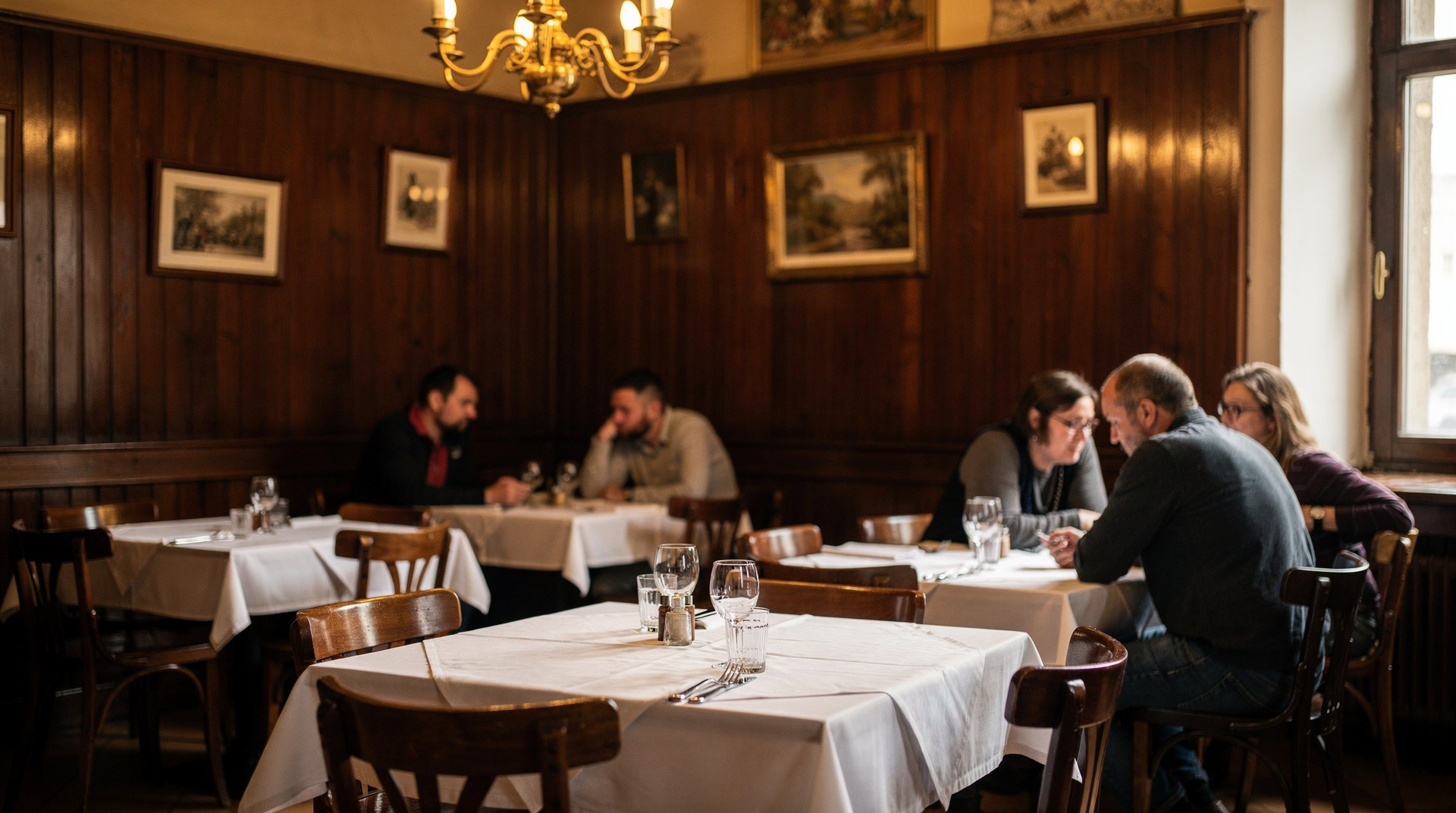
If rain is forecast, do not cancel outright. Many Heurigen have covered or indoor rooms, and a wet afternoon often means fewer visitors and a warmer welcome. Just check that the place is open before you set out, as noted in the tips below.
Guided Heuriger tours
Finding open Heurigen and navigating the village transport independently requires some planning. A guided wine tour removes this uncertainty while adding context.
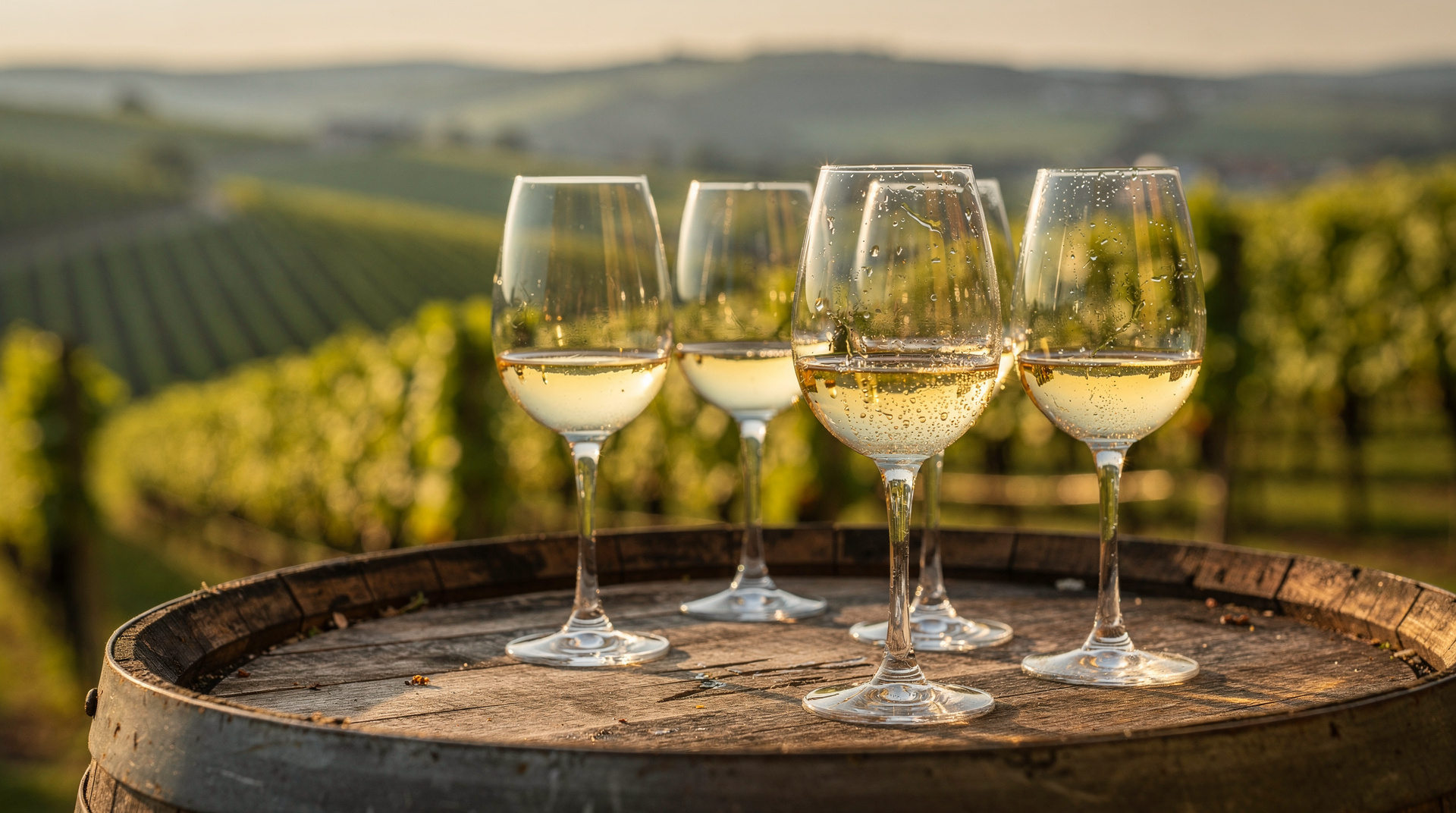
The small-group Heurigen wine tasting tour visits a genuine Heuriger with explanation of Austrian wine culture, Buschenschank traditions, and guided tastings of multiple wines.
The half-day countryside wine tour with meal combines a Heuriger visit with broader wine country exploration — good for visitors who want to see more of the wine landscape around Vienna.
Honest tips
The famous ones are famous for a reason — but not always the reasons you’d hope. Mayer am Pfarrplatz is excellent wine. Reinprecht is a reliable operation but not the authentic Heuriger experience. Know which you want before you go.
Check opening before you travel. Call the Heuriger you want to visit. The number is on their website. Most speak at least basic English. A 2-minute phone call saves an unnecessary journey.
Go in September for Sturm. The autumn grape harvest brings the new wine (Sturm) and the best vineyard atmosphere of the year. The Heurigen in September are at their most alive.
Take public transport, not a taxi. The wine villages are well-served by public transport, and you’ll want to drink without worrying about driving. A Vienna public transport day ticket covers all the U-Bahn, tram, and bus routes you’ll need.
Nussdorf is 5 minutes further than Grinzing but worth it. The Tram D to Nussdorf takes 25 minutes from the Ring — only slightly longer than the Bus 38A to Grinzing — and delivers a noticeably better experience.
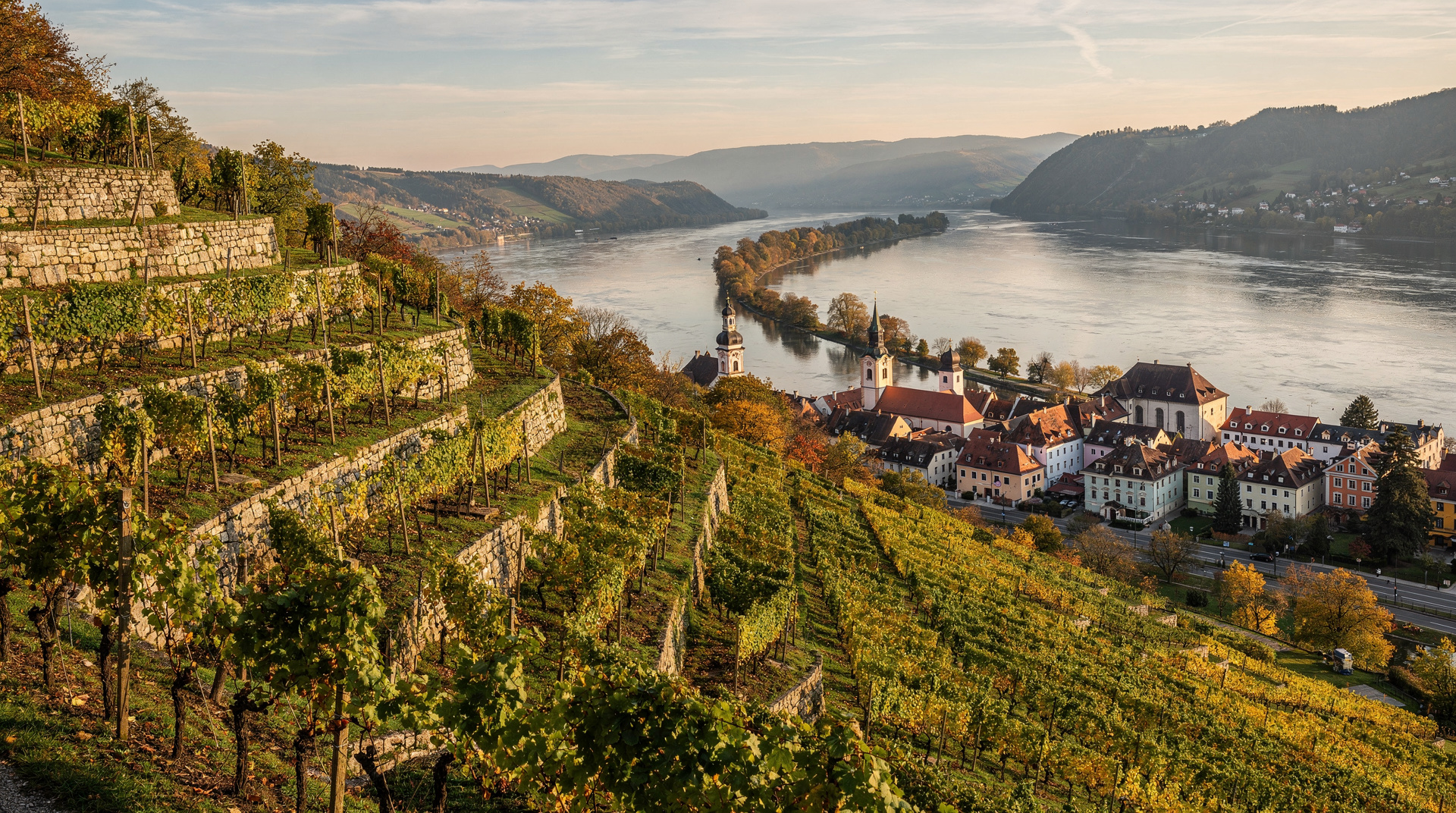
Combine with the Wachau if wine is the real draw. A Heuriger afternoon covers Vienna’s own wine villages, but if you have a full day to spare, the Wachau wine route reaches Austria’s most celebrated Grüner Veltliner and Riesling vineyards along the Danube. For a Heuriger evening after a day of sightseeing, pair it with the Vienna food guide or the Naschmarkt eating guide for lunch beforehand.
Autumn is the best season overall. Beyond September’s Sturm, the vineyards themselves are at their most photogenic in October — see Vienna in autumn for how a Heuriger afternoon fits a wider seasonal visit.
Frequently asked questions about Heurigen in Grinzing and Nussdorf
What is the best time of day to visit a Heuriger?
Traditional Heuriger culture peaks between 3pm and 7pm. Arriving at 3–4pm gives you the best light in the garden, the fullest buffet, and relaxed service before the after-work crowd arrives. In summer, staying until sunset (around 8pm in July) is magical.
How much German do I need?
Minimal. At the established Heurigen (Mayer, Reinprecht, Wieninger), English is spoken. At smaller traditional Heurigen, basic phrases are helpful — “Einen Viertel Grünen, bitte” (a quarter-litre of Grüner Veltliner) and “Was empfehlen Sie?” (what do you recommend?) will cover most needs.
Is it acceptable to share a table with strangers at a Heuriger?
Yes — communal table seating (Gemeinschaftstisch) is the traditional Heuriger format. Long shared tables with benches are normal, and sitting down next to a group of strangers with a “Darf ich?” is standard practice. This is part of what makes Heurigen social rather than merely a dining transaction.
Can I combine a Heuriger visit with hiking?
Yes, and it’s one of the best combinations Vienna offers. The Kahlenberg and Leopoldsberg hills above Nussdorf and Grinzing have excellent walking trails with views over the city. Hike in the afternoon, descend to a Heuriger by early evening. The Kahlenberg hiking guide covers the specific routes.
Top experiences
Bookable activities with verified prices and instant confirmation on GetYourGuide.