Heuriger guide: how to visit a Viennese wine tavern
Vienna: Small-Group Wine Tasting Tour with Heurigen
How do you visit a Heuriger in Vienna?
Take the tram or bus to Grinzing, Nussdorf, or Stammersdorf and look for the pine branch (Buschen) hanging at the entrance — it means the Heuriger is open. Order wine by the Viertel (quarter-litre) or Achtel (eighth-litre) and serve yourself from the cold buffet. Open roughly April to October.
The institution that defines Viennese wine culture
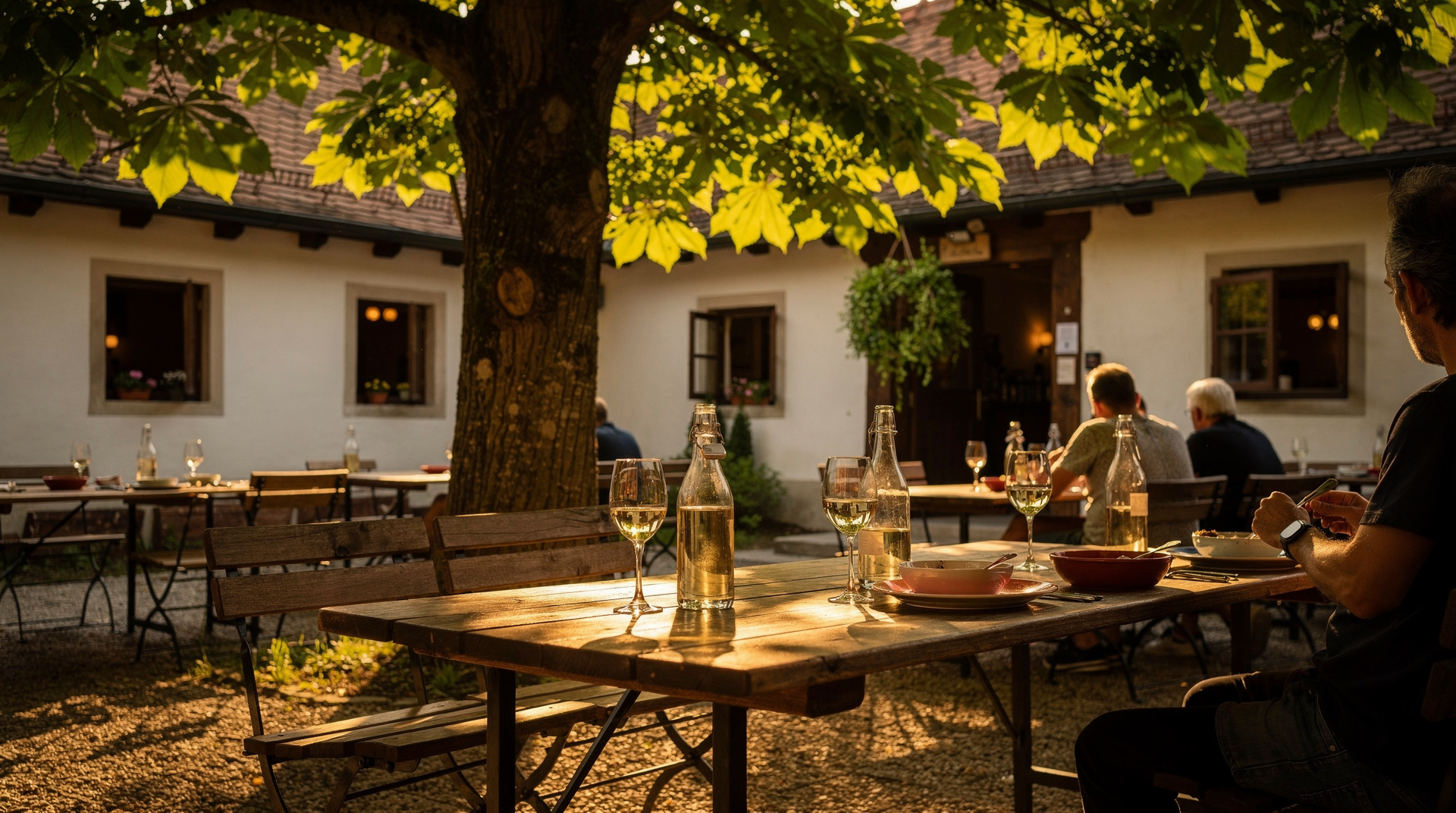
A Heuriger is not a wine bar, not a restaurant, and not a pub. It’s something specific to the wine-growing villages around Vienna: a working winery that opens its own premises to sell its own wine, accompanied by a cold buffet of traditional Austrian foods, in a garden or converted farmhouse. No other city in the world has this in its suburbs.
The tradition is ancient — Emperor Joseph II granted winegrowers the right to sell their own wine directly to the public in 1784, bypassing the monopoly of urban taverns. The Buschenschank law is still the legal basis today: only wine produced on the property can be sold, and the tavern’s open status is signalled by a pine branch (Buschen) at the entrance.
This guide explains how the Heuriger works, how to get to the wine villages, and what to expect when you arrive.
| Where | Grinzing, Nussdorf, Stammersdorf, Neustift, Sievering (19th/21st districts) |
| Cost | Around €20–35/person for wine and a buffet plate |
| Season | Roughly April–October (check the pine branch/Buschen) |
| Getting there | Tram/bus 15–35min from the city centre |
| Best time | Weekday afternoons (3–7pm); September for Sturm |
What you need to know
The Buschen rule
The pine branch hanging at the entrance is not decoration. It is a legal signal that the Heuriger is currently open under the Buschenschank licence. When the branch is absent or withered, the establishment is closed. This means:
- Heurigen don’t have fixed opening seasons — they open when they choose, for as long as they choose
- You should always verify before making the journey (call ahead, check the website, or look for current listings)
- The opening schedule is often seasonal (April–October is most common) and the closures between periods can be unpredictable
Some larger, more commercial Heurigen have evolved beyond the strict Buschenschank model and maintain regular hours year-round — these are the ones typically recommended in tourist literature because they’re more reliable. The truly traditional ones require more planning.
What’s served
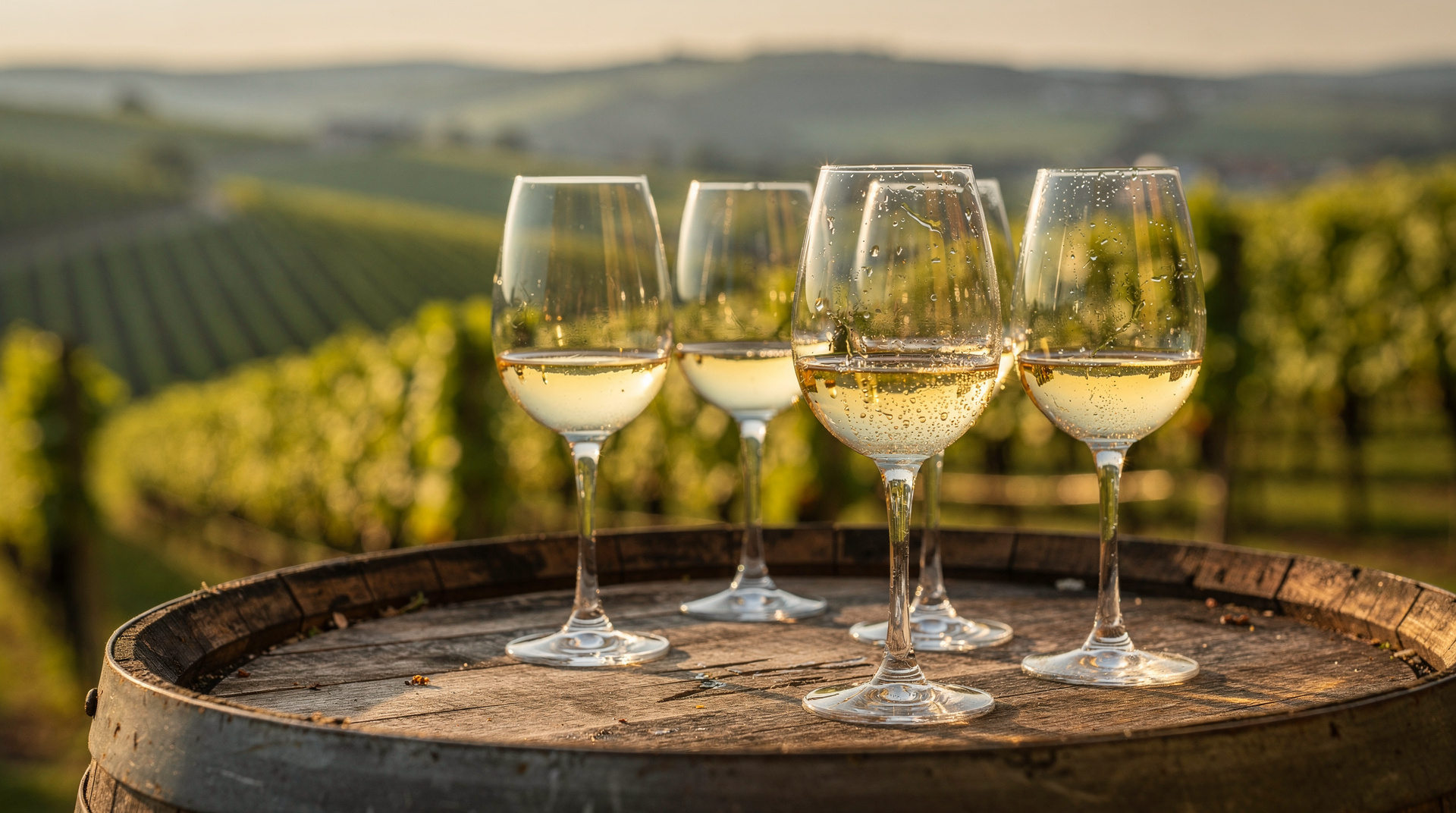
Wine: The winemaker’s own production. Typically Grüner Veltliner and Riesling for whites (the dominant varieties in the Vienna hills), sometimes Welschriesling, sometimes reds (Zweigelt, Blaufränkisch). Sold by the Viertel (250ml, a quarter-litre) or Achtel (125ml). Prices: €3–6 per Viertel depending on the establishment and vintage. The wine is poured from the cask (Fasswein) or from bottles.
Sturm: In autumn (September–October), partially fermented grape juice called Sturm is available. It’s slightly alcoholic (1–7% depending on fermentation stage), naturally sweet, and cloudy. Addictive. Children can drink the fully unfermented version (Traubenmost).
Cold buffet: The Buschenschank licence traditionally allows only cold food service (warme Küche is a separate licence). The standard cold buffet includes:
- Liptauer (paprika cheese spread) on dark bread
- Lardo or Speck (cured fat/smoked pork)
- Smoked meats and sausages
- Pickled vegetables (Essiggurken, Rote Beete)
- Hard-boiled eggs
- Salads (potato, bean, cucumber)
- Käseplatte (cheese plate)
Some larger Heurigen also offer hot dishes (Gulasch, Schnitzel) under a separate licence. At strictly traditional Buschenschanken, the cold buffet is all you’ll get — and it’s entirely sufficient.
What it costs
Wine: €3–6 per Viertel. Food from the buffet: typically €8–15 for a plate loaded with cold cuts and bread. Total for a full Heuriger afternoon: €20–35 per person, including 3–4 glasses of wine and a generous food plate. This is significantly less expensive than restaurant dining of equivalent quality.
Getting to the Heuriger villages
All the main Heuriger villages are reachable by public transport from central Vienna:
Grinzing (19th district): Bus 38A from Heiligenstadt (U4) — 15 minutes. The most well-known and slightly most touristy village. Still has genuine Heurigen alongside the tourist-facing ones.
Nussdorf (19th district): Tram D to the end (Nussdorf) — 25 minutes from the Ring. Calmer than Grinzing, with excellent Heurigen along the main street and the Nussdorfer Strasse.
Stammersdorf (21st district): Tram 31 to Stammersdorf — 35 minutes. The largest wine village in Vienna’s catchment area. Least touristy, most working-winery feeling. The best Heurigen here are in back gardens reached via unmarked lanes.
Neustift am Walde (19th district): Bus 35A from Döbling — 30 minutes. Pleasant village setting, accessible Heurigen, good mix of local and visitor clientele.
Sievering (19th district): Bus 39A from Gersthof — 20 minutes. Quietest of the main villages. Few tourists.
The Heurigen Express
A small hop-on-hop-off tram (Heurigen-Express) runs between the wine villages April to October, stopping at Grinzing, Neustift, and surrounding areas. Tourist-facing but useful for connecting multiple villages in one afternoon. Departs near the city; check current schedule and stops at the start of the season as routes sometimes change.
What to do when you arrive
Look for the Buschen. If the pine branch is displayed, you’re welcome to enter. Walk in, find a table (outdoor garden preferred in good weather), and sit down. No reservation needed at most traditional Heurigen.
Order wine directly. Flag down the server or walk to the bar and order. “Einen Viertel Grüner Veltliner, bitte” is your opener. If you’re unsure which wine, ask “Was empfehlen Sie?” (what do you recommend?).
Serve yourself from the buffet. The cold buffet is typically self-service — take a plate, serve yourself, and pay by weight or flat-fee. At some Heurigen the food is brought to you. Ask the server if unclear.
Settle in. A Heuriger afternoon runs 2–3 hours. The point is not to eat quickly and leave — it’s to drink slowly, eat well, and sit in a garden with good company.
Guided Heuriger experiences
If you’d rather not navigate bus timetables and Buschenschank schedules independently, a guided wine tour is an excellent option.
The small-group Heurigen wine tasting tour takes you to a genuine Heuriger with a guide who explains the wine tradition, the Buschenschank system, and leads tastings of multiple Austrian wines.
The half-day countryside wine tour with meal combines the Heuriger experience with a meal and vineyard visit — a more comprehensive introduction for visitors who want both wine education and the cultural setting.
Honest tips
Check before you go. Heurigen close without notice, open irregularly, and may not be findable from tourist information. Call ahead, check the website, or ask at your hotel about current openings.
Go in the afternoon. The classic Heuriger time is 3–7pm. Arriving at lunchtime is possible but unusual; arriving after 7pm is possible at the commercial ones but many traditional Heurigen close by 8–9pm.
Go on a weekday. Saturday afternoons at Grinzing can feel crowded, with tourist groups and buses competing for tables. Tuesday or Wednesday in September, when the Sturm is running, is the ideal Heuriger experience.
Stammersdorf and Nussdorf are better than Grinzing for an authentic experience. Grinzing is the most famous and the most commercialised. Nussdorf is 25 minutes from the Ring by tram and feels genuinely local.
Bring cash. Traditional Heurigen may not accept cards. €50 per person is more than enough for an afternoon of wine and food.
The Heuriger in autumn is special. September and October bring Sturm (partially fermented new wine), harvest energy, and grape-pressing activity. The most atmospheric time of year to visit.
What to order beyond the basics
Beyond the standard Viertel of Grüner Veltliner and the Liptauer buffet, a few Heuriger-specific requests are worth knowing. Ask for a “G’spritzter” (a wine spritzer, wine mixed with sparkling water) if you want something lighter for a long afternoon — it’s a completely normal order and not seen as diluting good wine. In late autumn, some Heurigen serve “Roter Sturm,” the red-grape version of the partially fermented new wine, alongside the more common white Sturm. If the buffet looks unfamiliar, ask for “eine gemischte Platte” (a mixed plate) rather than trying to identify every item yourself — staff are used to assembling a representative sample for first-time visitors.
Comparing the main Heuriger villages
| Village | Travel time | Atmosphere | Best for |
|---|---|---|---|
| Grinzing | ~15min (bus 38A) | Well-known, some tourist-facing spots | First-timers, easiest access |
| Nussdorf | ~25min (tram D) | Calmer, more local | A quieter alternative close to Grinzing |
| Stammersdorf | ~35min (tram 31) | Largest, least touristy | Genuine working-winery feel |
| Neustift am Walde | ~30min (bus 35A) | Pleasant, mixed crowd | Balanced local/visitor mix |
| Sievering | ~20min (bus 39A) | Quiet, few tourists | Escaping crowds entirely |
Pairing a Heuriger visit with the rest of your day
A Heuriger afternoon works well bookended by other Vienna activities rather than as a stand-alone outing. Many visitors combine it with a morning at the Kahlenberg or Vienna Woods viewpoint above Grinzing and Nussdorf — both villages sit at the base of the wooded hills, so a short hike or scenic bus ride before the Heuriger makes a natural half-day loop. If wine itself is the main interest rather than the social ritual, compare the Heuriger’s simple carafe wine against the more serious bottles covered in the Grüner Veltliner guide — tasting both in the same trip is the best way to understand the full range of Austrian white wine, from everyday to cellar-worthy.
Choosing your village and your Heuriger
If this is your first visit, start with the shortlist in our guide to the best Heurigen in Grinzing and Nussdorf, which helps you pick a specific address rather than wandering the lanes. The village itself is described in the Grinzing Heuriger destination page, useful if you want a feel for the setting before you go. For a first-hand account of how an evening unfolds, read the Heuriger evening in Grinzing diary.
The Heuriger is one half of Vienna’s food culture. The other half is the coffee house, so it is worth reading the Viennese coffee house guide and the notes on coffee house etiquette to understand how the city’s slow-sitting habits fit together. For the wider picture of what to eat across the city, the Vienna food guide and the Naschmarkt eating guide cover the dishes you will meet outside the wine villages, and the Schnitzel guide is the place to go if you want a hot meal on a different evening.
Fitting a Heuriger into your trip
Because a Heuriger afternoon is slow by design, it sits best on a day with little else planned. If you are still building your schedule, the 3-day itinerary and the 5-day itinerary both leave room for an unhurried evening, and the Vienna in autumn guide explains why the harvest weeks are such a good moment for the wine villages. Travellers thinking about the season more broadly will find the best time to visit Vienna helpful.
If the wine itself fascinates you, the next step is to look beyond the city hills. The Wachau wine route guide and the Burgenland wine route guide show how the regions differ, and the Wachau day trip is the easiest way to taste them without changing hotels. Getting around on the way back from the villages is covered in the Vienna public transport guide, which is worth a look before an evening of wine so that you know your route home.
Frequently asked questions about Heurigen in Vienna
Are Heurigen only in Vienna?
No — Heurigen exist throughout Lower Austria (Niederösterreich), Burgenland, and Styria wherever wine is made. The concept is specifically Austrian and is concentrated in wine-producing regions. Vienna’s proximity to its own vineyards (the Wienerwald hills and the 19th district) makes it unusual for a major city to have wine taverns in its suburbs.
Can I buy wine to take home from a Heuriger?
Yes. Most Heurigen sell bottles and sometimes 5-litre canisters of their own wine. Prices are typically lower than wine shops selling equivalent quality. Buying directly from the winemaker is one of the pleasures of the Heuriger. Check import restrictions for your home country if planning to bring more than personal-use quantities.
What is the Grüner Veltliner like at a Heuriger?
Generally lighter and less structured than the Wachau or Kamptal Grüner Veltliners you’ll encounter in wine shops — Heuriger wine is typically sold as Fasswein (cask wine) from the current or previous year, designed to be drunk young and fresh. Peppery, slightly herbaceous, crisp acidity. The Grüner Veltliner guide covers the full range of Austrian Grüner Veltliner quality levels.
Is there any Heuriger experience in central Vienna itself?
A few wine taverns in the city centre use the name “Heuriger” in a looser sense — they serve Austrian wine and cold buffet food but aren’t attached to a working winery. These are perfectly pleasant places to eat and drink but aren’t the authentic Buschenschank experience. For the real thing, travel to the villages.
Top experiences
Bookable activities with verified prices and instant confirmation on GetYourGuide.