Viennese coffee house guide: which café to choose and why
Vienna: Typical Austrian Food Tour with Coffee House Visit
Which Viennese coffee house should I visit?
Café Central for the beautiful Habsburg-era setting and excellent pastries; Landtmann for a quieter, more local atmosphere; Hawelka for old-Vienna bohemian character; Sperl for unchanged 1880s interiors; Demel for the best pastry counter.
The institution that defines Vienna
The Viennese Kaffehaus is one of the few places in the world that functions simultaneously as a café, a library (with newspapers), a business meeting room, a writing study, and a social club — while requiring no membership and charging only for coffee.
Since 2011, UNESCO has recognised Viennese coffee house culture as Intangible Cultural Heritage of Humanity. The Viennese themselves treat this recognition as slightly unnecessary — the coffeehouse has simply always been there. Stefan Zweig wrote “it is a democratic club to which admission costs the price of a cup of coffee.” Nothing essential has changed.
This guide covers the main coffeehouses, their personalities, and how to navigate the culture correctly.
| Where | Innere Stadt (Central, Landtmann, Demel) and the 6th–7th districts (Sperl, Hawelka) |
| Cost | around €4–7 per Melange; €14–19 for coffee and cake |
| Time needed | 45 minutes to several hours — no time limit enforced |
| Best for | First visit: Central or Landtmann; authenticity: Sperl or Hawelka |
| Booking | Not required; arrive weekday mornings to avoid queues |
What you need to know
The fundamental rule
You may sit for as long as you like on a single coffee. No pressure, no hovering waiter, no subtle hints that your table is needed. This is not a bug in Austrian service — it is the entire point. The Kaffehaus exists for guests to occupy themselves at leisure, whether for 20 minutes or 3 hours.
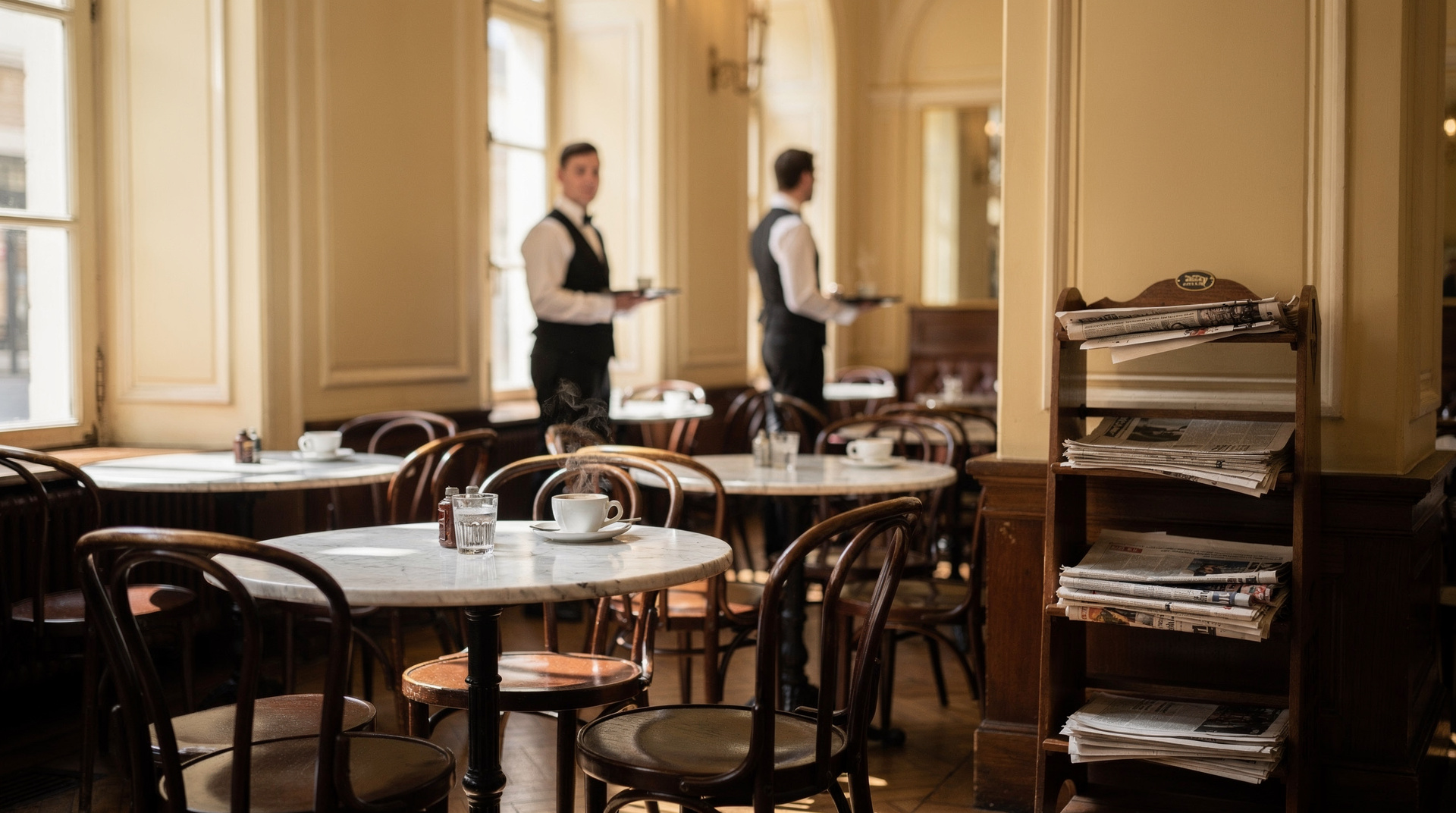
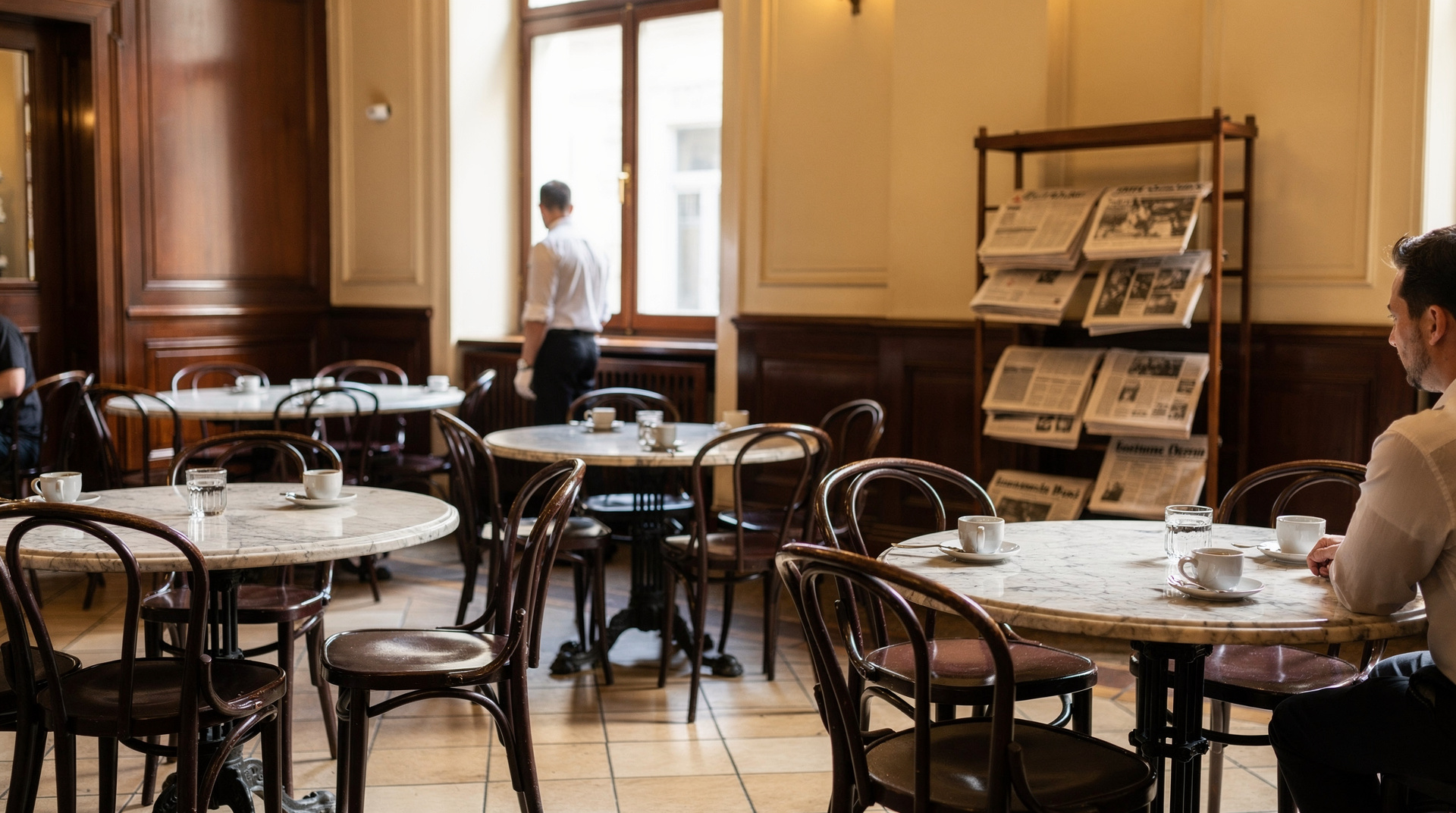
In practice: once your order arrives, you are left alone unless you signal otherwise. The automatic accompaniment is a small glass of water, replenished without being asked.
The newspaper racks
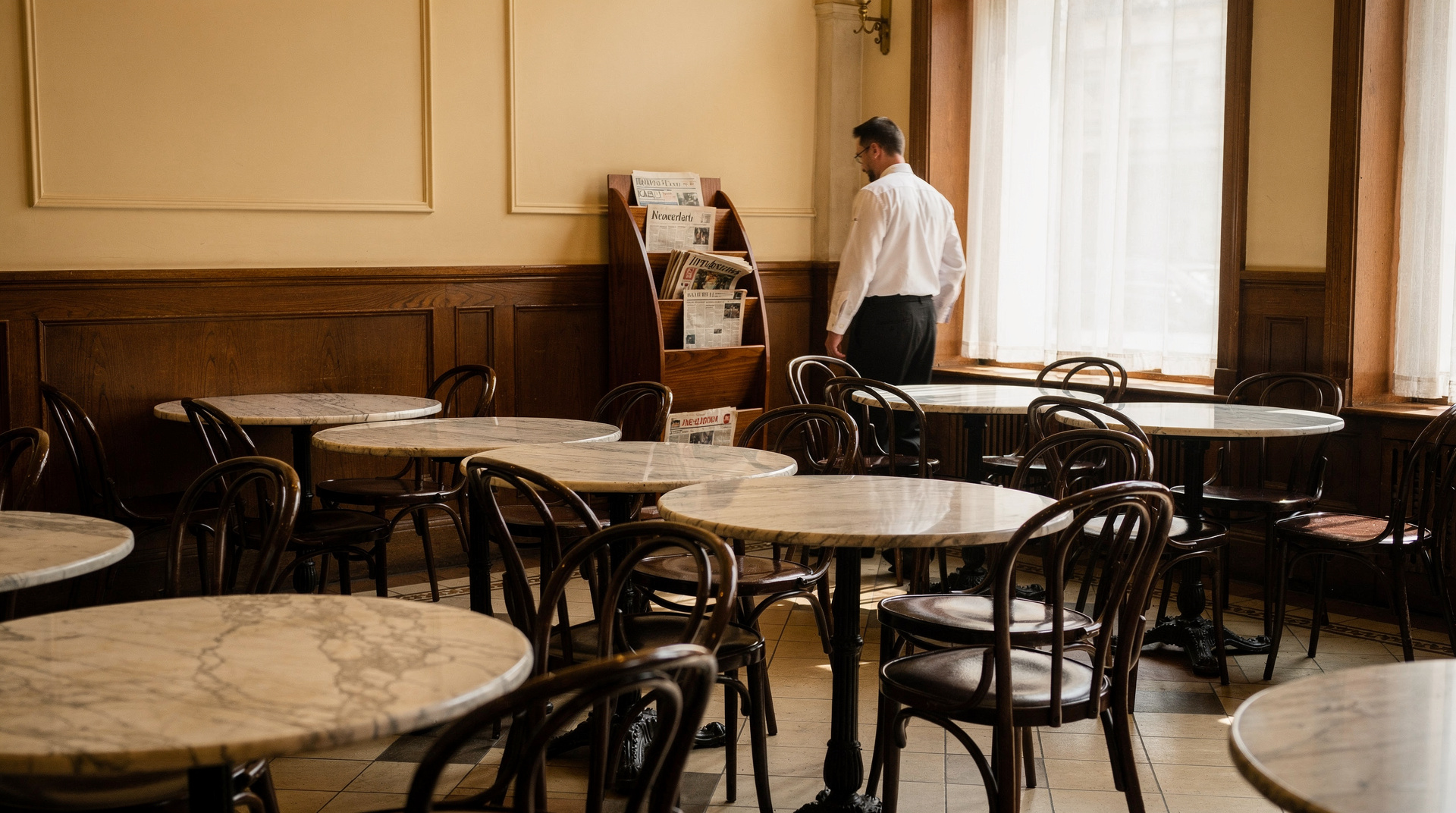
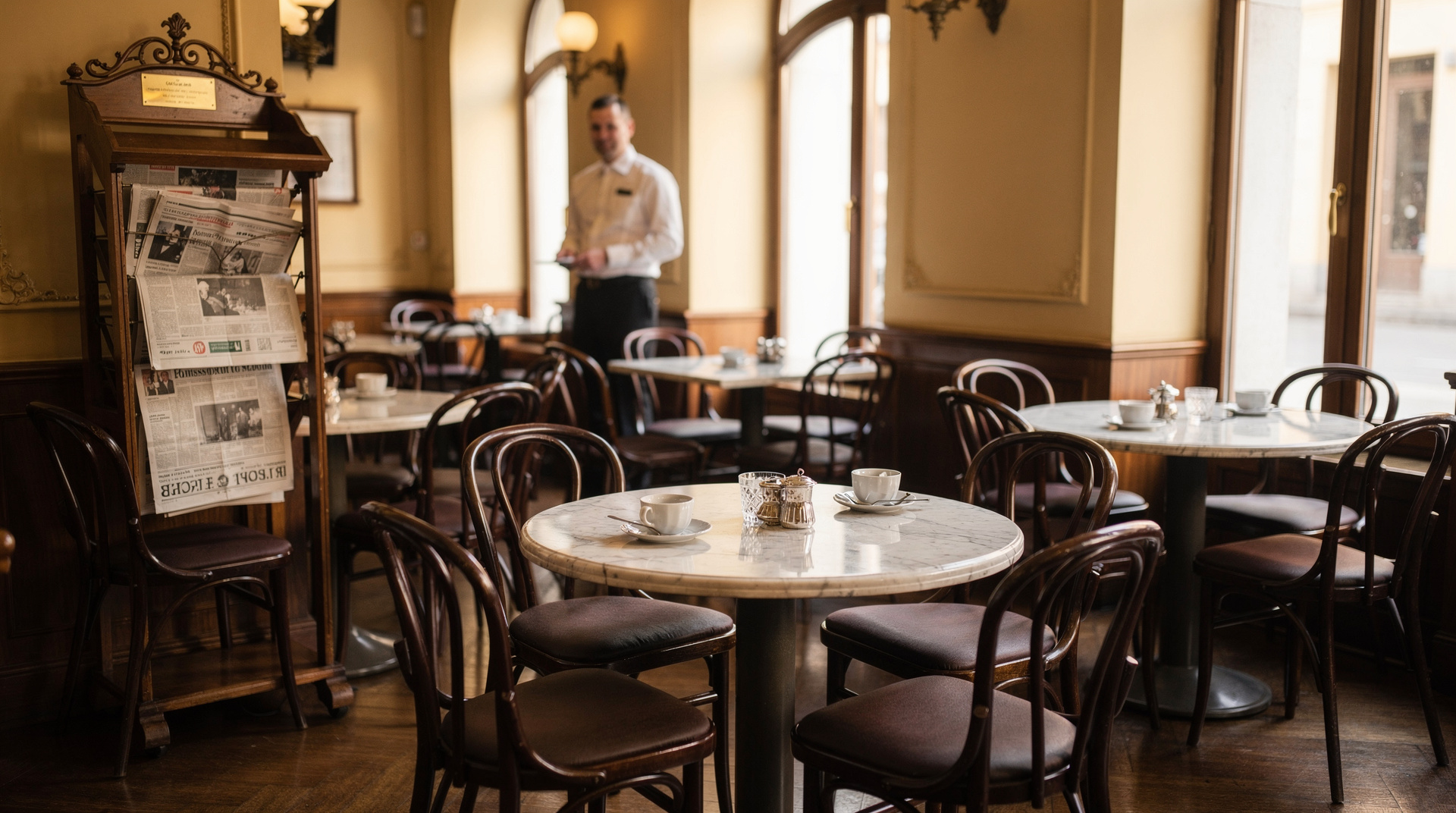
Traditional Kaffeehäuser provide newspapers on long wooden rods, hung on a rack near the entrance. Viennese papers (Die Presse, Der Standard, Kurier), German papers, and often the International Herald Tribune or equivalent English-language paper. Guests take a newspaper to their table, read it, and return it. The system has worked for 350 years.
Coffee and cake culture
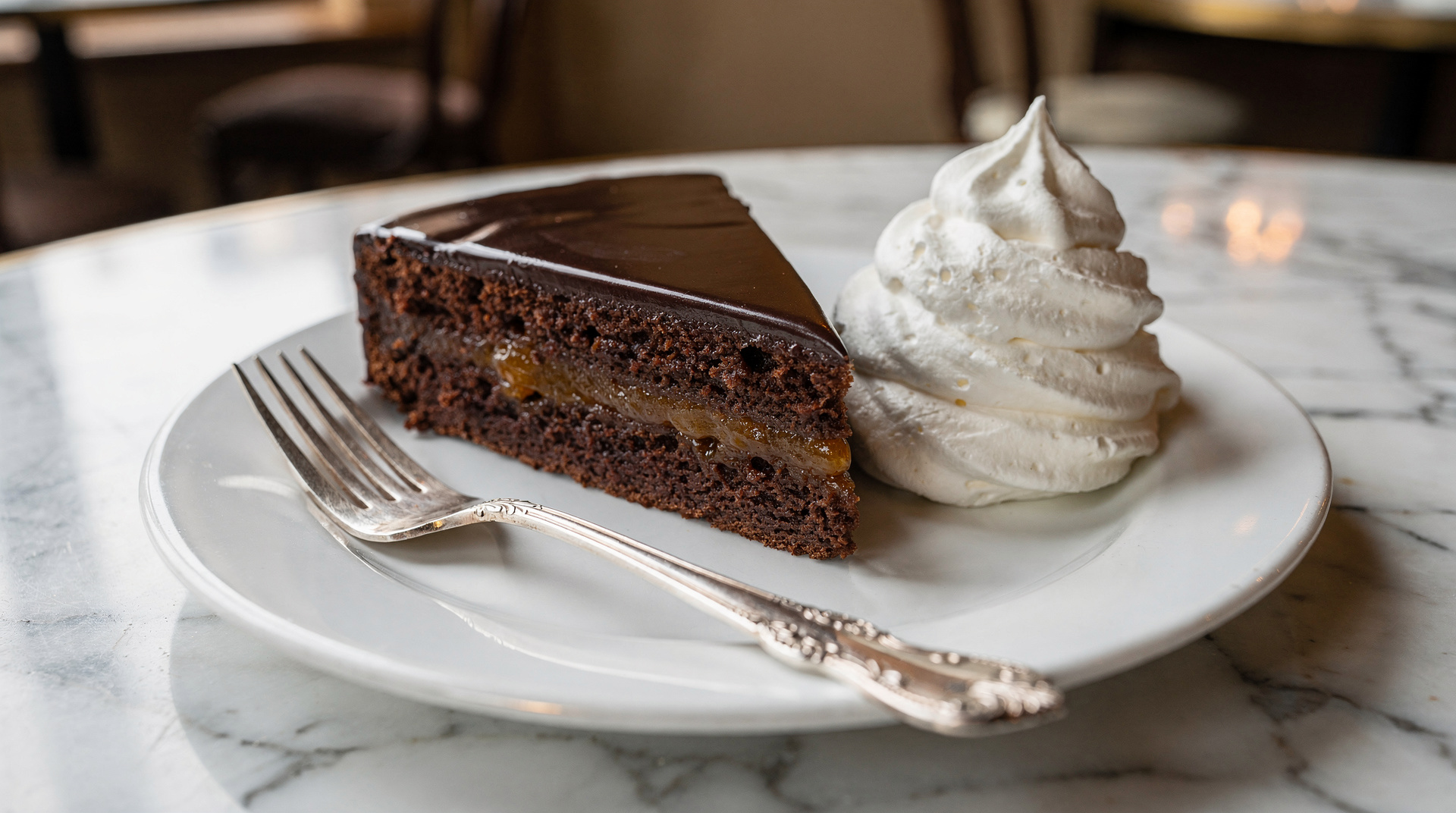
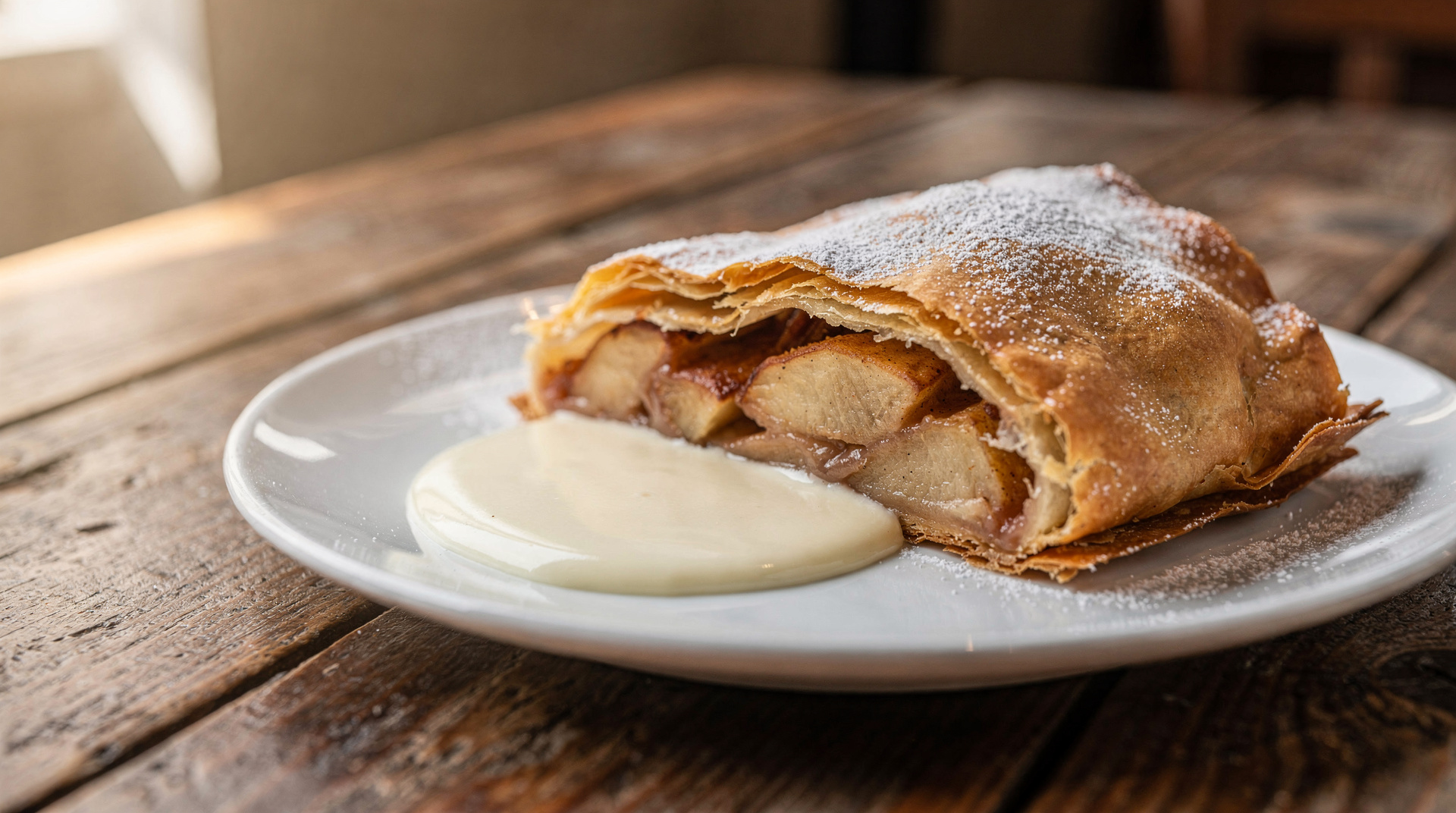
The Kaffehaus is the natural home of the Mehlspeisen tradition — the Viennese sweet pastries that accompany coffee. A slice of Sachertorte with a Melange, a piece of Guglhupf with an Einspänner, or Kaiserschmarrn after a light lunch are the classic combinations. The Vienna pastry tour guide explains the main options.
For the full breakdown of coffee types — Melange, Einspänner, Großer Brauner, Mokka, Maria Theresia — see the Viennese coffee types explained guide.
The main coffeehouses: personalities and strengths
Café Central
Address: Herrengasse 14, 1010 Vienna Character: Grand Habsburg-era Palais setting, marble columns, arched ceilings, live piano music (lunch and afternoon). The most photographed interior of any Viennese café. Crowd: 70–80% tourists at peak hours. Shorter queues weekday mornings. Food quality: High — excellent Apfelstrudel, good Gulasch, solid Sachertorte. Price range: Higher end (Melange €6–7, Sachertorte slice €8). Best for: First-time visitors wanting the full Kaffehaus visual experience. Literary footnote: Leon Trotsky and Sigmund Freud were regulars here before World War I. The card-playing figure at the entrance is supposedly modelled on Austrian poet Peter Altenberg.
Café Landtmann
Address: Dr.-Karl-Lueger-Ring 4, 1010 Vienna (on the Ringstrasse, near the Burgtheater) Character: More restrained than Central — mahogany panelling, quieter atmosphere, less theatrical. Consistently named Freud’s favourite coffeehouse. Crowd: More Viennese professionals and politicians than tourists. Linked to the nearby Burgtheater audience. Food quality: High — excellent lunch menu, good pastries, proper Gulasch. Price range: Mid-to-high. Best for: A calmer alternative to Central; a proper lunch; anyone who prefers an atmosphere with fewer cameras.
Café Demel
Address: Kohlmarkt 14, 1010 Vienna Character: The most elaborate confectionery in Vienna — gilded display cases, glass walls into the kitchen, rotating seasonal pastry creations. More confectionery shop than traditional Kaffehaus, but with extensive café seating. Crowd: Mixed tourists and serious pastry buyers. Food quality: Outstanding pastry counter — the best in Vienna for variety and technical skill. Rivals Hotel Sacher on Sachertorte. Price range: High. Best for: Serious pastry interest; the Eduard Sacher Torte (Demel’s version of Sachertorte); window-shopping the cake counter.
Café Hawelka
Address: Dorotheergasse 6, 1010 Vienna Character: The bohemian coffeehouse. Dark, smoky-feeling even now, unchanged décor since the 1930s, famous for artists, writers and the legendary owner Josefine Hawelka who served Buchteln (sweet buns) from 10pm until closing. Crowd: Mixed — literary tourists, regulars who’ve been coming for 40 years, younger Viennese. Food quality: Basic — the coffee is excellent, the Buchteln are famous (evening only), the food menu is limited. Price range: Mid-range. Best for: Atmosphere, character, and a genuine sense of what Vienna’s café culture felt like pre-renovation. Not for pastry selection.
Café Sperl
Address: Gumpendorfer Strasse 11, 1060 Vienna (6th district) Character: The one most Viennese will name if you ask for “the real thing.” Unchanged since its 1880 opening — bare wooden floors, billiard table, card players, chess regulars. No Instagram-perfect renovation. Crowd: Locals first, then a growing number of visitors who’ve done their research. Food quality: Solid — good Guglhupf, reliable coffee. Price range: Lower than the Innere Stadt coffeehouses. Best for: The most authentic Kaffehaus experience of the main-name options. A 15-minute walk or short tram ride from the centre.
Café Prückel
Address: Stubenring 24, 1010 Vienna Character: 1950s modernist décor — unusual in a city of historicist interiors. Live piano and chamber music on some evenings. Significantly less touristy than Central or Demel. Crowd: Local regulars, music students, chess players. Food quality: Reliable, no-frills Austrian café food. Price range: Mid-range. Best for: Visitors wanting an authentic experience in the Innere Stadt without the tourist volume of Café Central.
Café Mozart
Address: Albertinaplatz 2, 1010 Vienna Character: The tourist-facing café directly opposite the Albertina museum. Name-checks Mozart heavily. Less interesting than the others listed here — more café-restaurant, less Kaffehaus tradition. Best for: Convenience post-Albertina visit. Not a destination in itself.
How the main coffeehouses compare
| Coffeehouse | Character | Crowd | Price |
|---|---|---|---|
| Café Central | Grand Habsburg setting | 70–80% tourists at peak | Higher (Melange €6–7) |
| Café Landtmann | Restrained, professional | Mostly Viennese, more locals | Mid-to-high |
| Café Sperl | Unchanged since 1880 | Mostly locals | Lower than Innere Stadt |
| Café Hawelka | Bohemian, dark, historic | Mixed regulars and visitors | Mid-range |
| Café Demel | Confectionery showcase | Mixed tourists and pastry buyers | High |
For a deeper look at which coffeehouses tip into tourist-trap territory versus which stay genuinely local, see our companion Viennese coffee tourist traps guide. And for the full head-to-head between the three most commonly compared houses, the Café Central vs Landtmann vs Sacher guide goes deeper than the summary above.
Coffeehouse etiquette in brief
Vienna’s coffeehouse culture has unwritten rules that trip up first-time visitors more than any pricing or menu confusion. Waiters do not hover — you must catch their eye to order or ask for the bill. Sitting for an hour or more on a single Melange is completely normal and expected, not a sign you should leave. Reading the provided newspapers is welcomed, even for non-paying browsers who buy just one coffee. Our full coffee house etiquette guide covers the finer points, including tipping norms and how to address the waiter correctly.
Pairing coffee with Vienna’s pastry tradition
No Viennese coffeehouse visit is complete without considering what to eat alongside the coffee. Sachertorte is the obvious answer, but it’s worth knowing the difference between the original recipe and the versions served around town — see the real Sachertorte guide for the full story. Beyond Sachertorte, the Vienna food guide covers the wider Austrian food scene if your coffeehouse visit is one stop in a longer day of eating your way through the city.
Guided coffeehouse experiences
The coffeehouse experience benefits from context. A guide who can explain the social history, the coffee types, and the correct way to interact with the institution adds considerable value to what might otherwise be a slightly confusing experience.
The Austrian food and coffee house tour includes an extended visit to a traditional Kaffehaus, with explanation of coffee types, pastry traditions, and the cultural significance of the institution.
The Vienna food tour includes a Kaffehaus stop as part of a broader culinary experience, which provides useful contrast between the coffeehouse and other Viennese food traditions.
Honest tips
Go on a weekday morning. Café Central has queues of 20–45 minutes on weekend mornings at peak season. Arriving at 8–9am on a Tuesday is a completely different (and better) experience.
Don’t order in English immediately. Trying German — “Einen Melange, bitte” — makes the experience feel more reciprocal. Waiters speak English without exception at all the major coffeehouses.
The glass of water is not a signal to leave. Some visitors mistake the water glass for a hint. It isn’t — it’s automatic service. Stay as long as you like.
Café Sperl is worth the detour. If authenticity matters more to you than Innere Stadt convenience, take the 15-minute walk or U2 to Museumsquartier and walk south. Sperl is the coffeehouse that other coffeehouse guides name when they want to sound like they know something.
Evening in a Kaffehaus is different from morning. Evenings at Café Hawelka, with the Buchteln arriving at 10pm and the chess players still at their boards, feel genuinely apart from the tourist Vienna of daytime. Worth experiencing if you’re in Vienna for more than 2 nights.
Frequently asked questions about Viennese coffee houses
When did Viennese coffee houses start?
The first documented Viennese coffeehouse opened in 1683, after the defeat of the Ottoman siege — tradition holds that sacks of coffee were left behind by the retreating Ottoman army, though this is likely apocryphal. More certainly, Armenian merchants introduced coffee to Vienna in the late 17th century, and the coffeehouse spread rapidly as a meeting place for merchants, intellectuals, and journalists.
Why is the waiter in a Viennese café called a “Herr Ober”?
“Herr Ober” (literally “Mr. Head Waiter”) is the traditional form of address for a male Viennese café waiter. Female waiters are addressed as “Frau Kellnerin.” The titles imply a certain dignity of profession — Viennese café service is considered skilled work, not a student job. Many Viennese café waiters have worked the same establishment for decades.
Can I use Wi-Fi and charge my laptop in a Kaffehaus?
Yes — most coffeehouses have Wi-Fi, though speeds vary. Working on a laptop for extended periods is culturally acceptable (and historically appropriate — journalists and writers have always worked in coffeehouses). Order something every hour or two as a courtesy.
Are children welcome in Viennese coffee houses?
Yes. Children are welcome throughout the day. The usual European café norms apply — active children should be managed rather than allowed to run freely. Most coffeehouses have a small selection of non-alcoholic drinks and simpler food items for children.
Top experiences
Bookable activities with verified prices and instant confirmation on GetYourGuide.