Café Central vs. Landtmann vs. Sacher: comparing Vienna's historic cafés
Vienna: Typical Austrian Food Tour with Coffee House Visit
Should I visit Café Central, Landtmann, or Café Sacher?
Café Central for the most dramatic setting; Café Landtmann for the best lunch and a more local atmosphere; Café Sacher for the Sachertorte experience. You can visit all three in a day — they're within 10 minutes' walk of each other.
Three institutions, three distinct experiences
Vienna’s most famous coffeehouses are often mentioned in the same breath, as if they were interchangeable. They aren’t. Café Central, Café Landtmann, and Café Sacher each have a distinct personality, different strengths, different crowd compositions, and different optimal uses.
This guide compares them directly on five dimensions — setting, coffee, food, crowd, and value — so you can choose intelligently rather than defaulting to whichever appears first in your search results.
| Where | All three in the Innere Stadt, 10 min walk apart |
| Cost | Melange €5.50–7, cake slice €7.50–10, mains €14–26 |
| Time needed | 45–60 min per café; a full day to do all three |
| Booking | Landtmann takes reservations; Central/Sacher café room is walk-in |
| Best for | Central = setting, Landtmann = food, Sacher = Sachertorte |
What you need to know
Their proximity
All three are in the Innere Stadt (1st district) within a 10-minute walk of each other:
- Café Sacher: Philharmoniker-Strasse 4 (behind the Staatsoper)
- Café Central: Herrengasse 14 (near the Hofburg)
- Café Landtmann: Dr.-Karl-Lueger-Ring 4 (on the Ringstrasse, facing the Burgtheater)
This means there’s no logistical reason to choose between them — visiting all three across a single day is entirely viable. The walk between them also takes you past some of the city’s best-known sights, so a café day fits naturally into a wider stroll through the Innere Stadt or along the Ringstrasse. If you’re building a longer stay around these stops, the Vienna 3-day itinerary shows where a coffeehouse break slots in best.
Their opening hours
All three are open daily, typically from 8am to 11pm (Café Sacher) or 10pm (Central, Landtmann). No advance reservation is required for walk-in café visits at Central or Sacher, though bookings are accepted for specific dining times. Landtmann takes reservations for lunch and dinner.
Head-to-head comparison
Setting and architecture
Café Central: The most dramatically beautiful interior of the three. The café occupies the ground floor of the Palais Ferstel, built in 1860 — a Venetian Gothic revival structure with soaring arched ceilings, marble columns, terracotta tile floors, and elaborate chandeliers. The central hall has a glazed ceiling that floods the space with diffused light. Live piano music plays at lunch and afternoon. The wax figure at the entrance (supposedly modelled on poet Peter Altenberg) has become a tourist attraction in itself. Setting score: 5/5
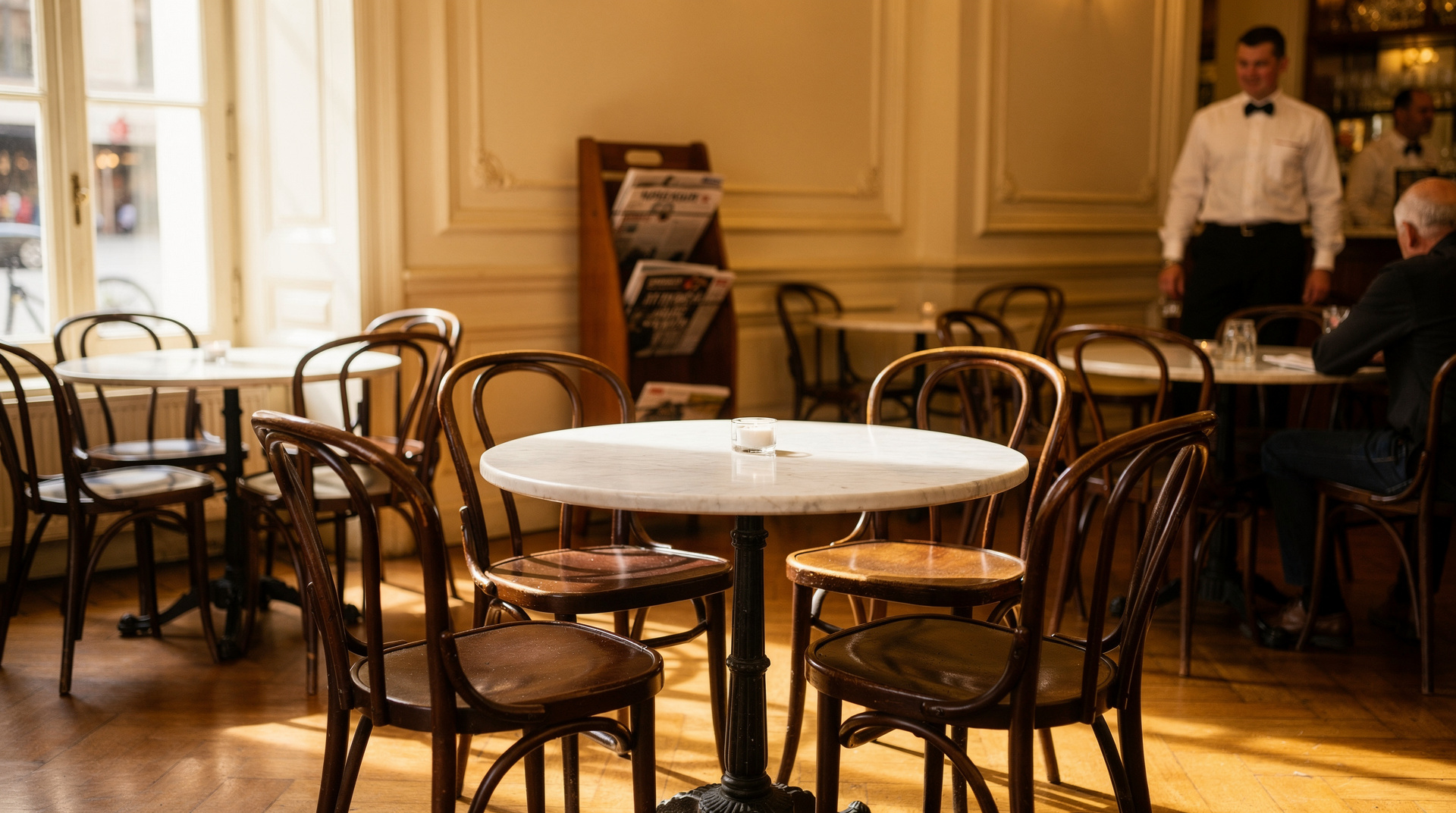
Café Landtmann: More restrained. A 1873 building with mahogany panelling, art nouveau elements, and a series of distinct rooms — some more intimate, some more formal. Less theatrical than Central, more conducive to an extended lunch or an afternoon conversation. The outside terrace (Schanigarten) on the Ringstrasse is excellent in summer. Setting score: 3.5/5
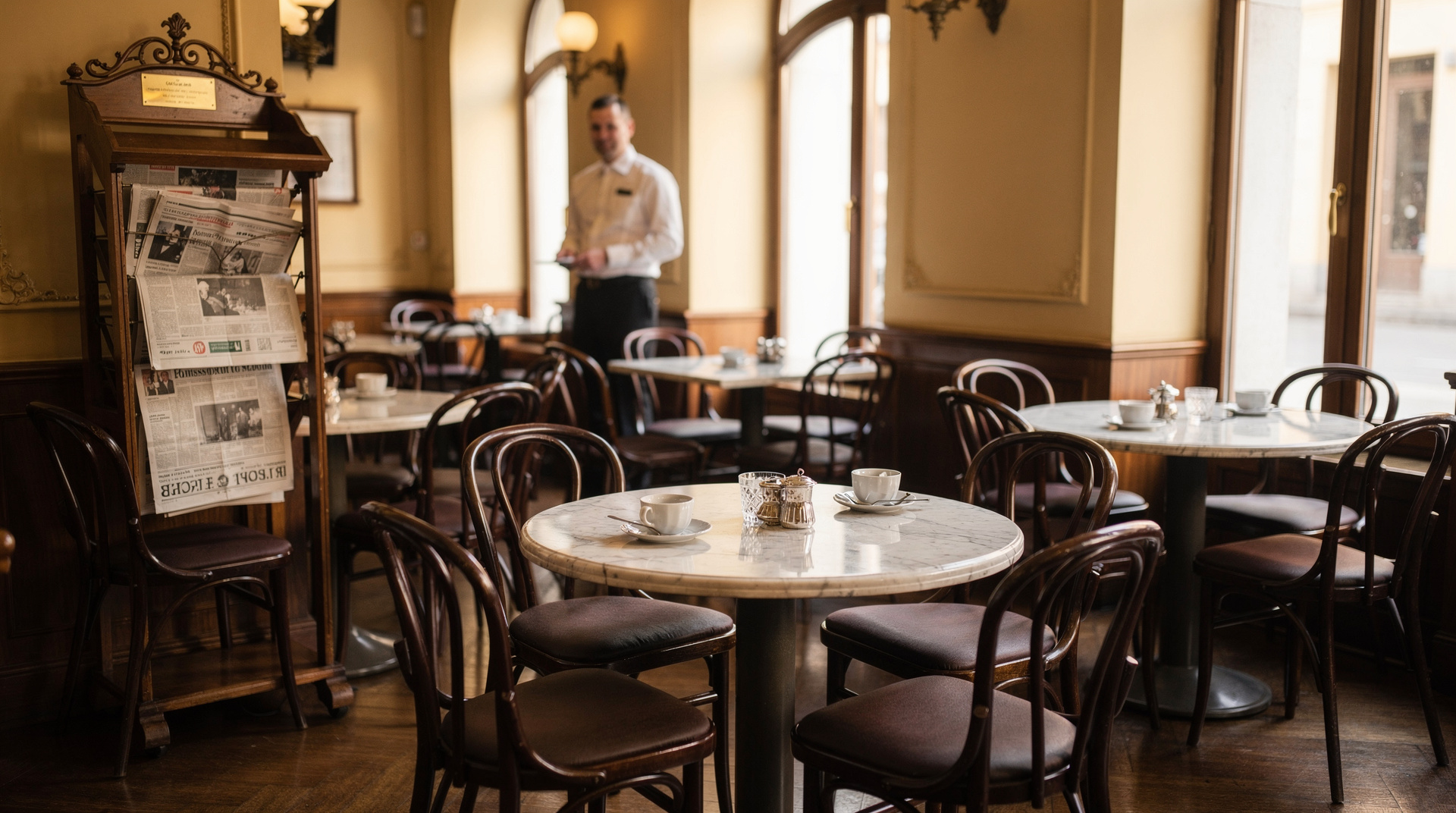
Café Sacher: Red velvet dominates — red walls, red upholstery, dark wood. Intimate and slightly theatrical in a different way from Central: where Central is all height and light, Sacher is warm, dense, and almost deliberately old-fashioned. The famous Sacher family photographs and memorabilia create a sense of living in a hotel’s private history. Setting score: 4/5
Coffee quality
All three serve genuinely good coffee. The differences are subtle — roast profile, service style, and the care with which milk is steamed.
Café Central: Excellent Melange. Coffee taken seriously and executed well. Café Landtmann: Consistently good. The Großer Brauner is particularly well made here. Café Sacher: The coffee is good but not the primary draw — the emphasis is on the Sachertorte. Overall: all three score 4/5 for coffee quality
Food and pastry
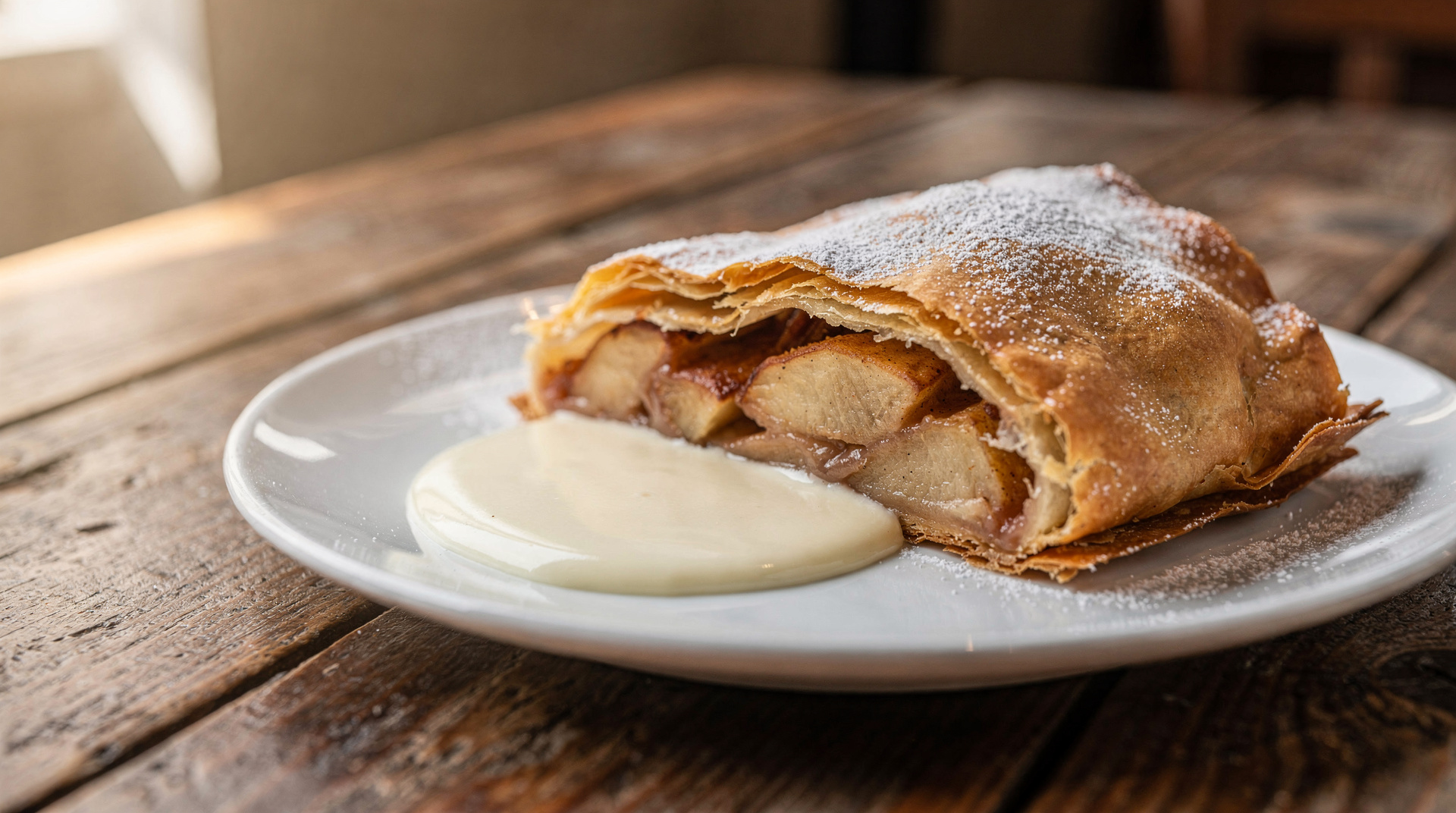
Café Central: Strong pastry selection — the Apfelstrudel is excellent, the Sachertorte is good (not the trademarked original, but properly made). The lunch menu (Mittagskarte) runs to Gulasch, Tafelspitz, and seasonal dishes. Prices are high but quality is reliable. Food score: 4/5
Café Landtmann: The best full food menu of the three. The Tafelspitz is excellent, the Schnitzel is properly made, and the cake selection is reliably good. The kitchen takes food seriously in a way that the other two don’t always match. More restaurant than coffeehouse in food terms. Food score: 4.5/5
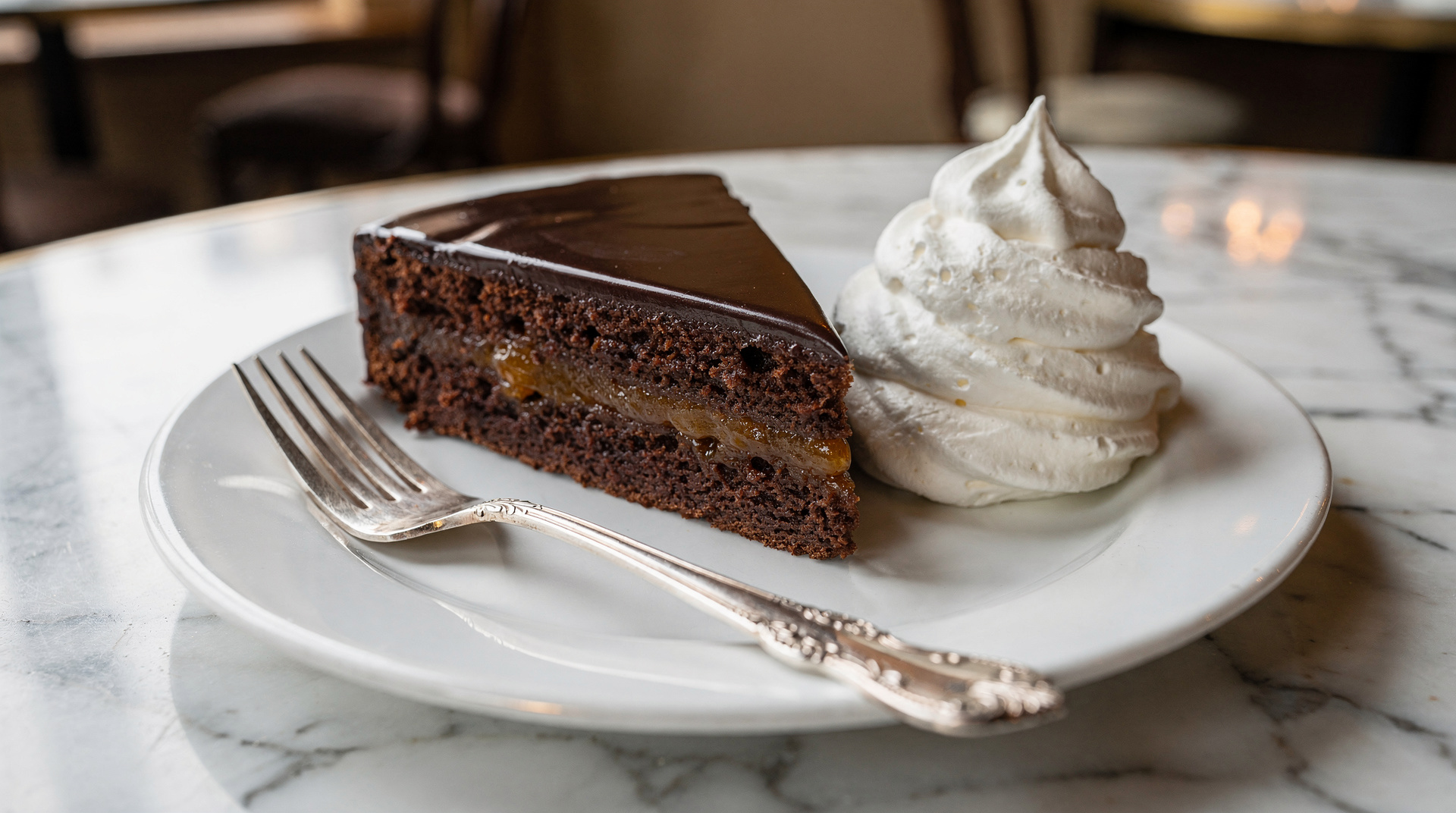
Café Sacher: The Original Sacher-Torte (the only legally trademarked version) is served here. The pastry counter is less extensive than Demel’s but the cake itself is excellent — the correct chocolate glaze, the apricot jam middle layer, the dense moist sponge. See the Sachertorte guide for detail. Food beyond Sachertorte is secondary. Food score: 4/5 for Sachertorte; 3/5 for general food
Crowd and atmosphere
Café Central: 70–80% tourists at peak times. Instagram photography frequent. Queues on weekend mornings. The noise level is higher than at traditional coffeehouses. Not the place to experience “Viennese life” as it’s actually lived. Crowd score: 2/5 for authenticity
Café Landtmann: More balanced — 40–50% local regulars (professionals, politicians, Burgtheater patrons), 50–60% informed visitors who’ve sought it out specifically. Quieter than Central. The outdoor terrace is particularly good in summer. Crowd score: 3.5/5 for authenticity
Café Sacher: Explicitly a hotel café and tourist destination. The crowd is heavily tourist. What makes it different from a generic tourist trap is that the product (the Original Sacher-Torte in particular) is genuinely excellent. Come for the cake, not for authentic local atmosphere. Crowd score: 2/5 for authenticity; 5/5 if you specifically want the Sachertorte
Value
All three charge significant premiums relative to ordinary cafés:
- Melange: €5.50–7 at all three
- Sachertorte or Strudel (slice): €7.50–10
- Main course: €18–26
Café Landtmann offers the best food value — the quality of the kitchen matches the price point better than the other two. Café Central has reasonable pastry value but main courses are expensive for what they are. Café Sacher is the most expensive overall and the least varied in what you can order. Value score: Landtmann 3.5/5; Central 3/5; Sacher 2.5/5
The verdict by traveller type
| If you are… | Go to… |
|---|---|
| First-time visitor who wants the full visual experience | Café Central |
| Someone who cares most about food quality | Café Landtmann (for lunch) |
| Specifically seeking the original Sachertorte | Café Sacher |
| Trying to avoid tourist crowds | Café Landtmann or Café Prückel |
| On a budget | Skip all three — go to Café Sperl |
| Visiting with the full itinerary to visit all three | Morning Sacher, lunch Landtmann, afternoon Central |
Beyond these three
If you’ve already visited Central, Landtmann, and Sacher (or if authenticity matters more than fame), consider:
- Café Sperl (6th district): the most unchanged historic coffeehouse, genuinely local clientele
- Café Hawelka (1st district): old-Vienna bohemian character, excellent late-night Buchteln
- Demel (1st district): the finest pastry counter in Vienna, a serious rival to Sacher on Sachertorte and, according to some Viennese, the truer version despite losing the original trademark dispute
None of these three alternatives requires a reservation for a simple coffee-and-cake visit, and all three sit at a lower price point than Central, Landtmann or Sacher while matching or exceeding them on atmosphere for anyone prioritising local character over fame.
The Viennese coffee house guide and best coffee houses cover the fuller range. If you’d rather avoid the usual traps while you choose, the guide to Viennese coffee tourist traps and the wider Vienna tourist traps overview explain what to watch for, and the Sachertorte real vs. tourist comparison helps you judge the cake itself.
Coffee house manners at any of the three
All three follow standard Viennese coffeehouse etiquette: a table is yours for as long as you like after ordering a single Melange, waiters won’t rush the bill, and the free glass of water that arrives with your coffee is normal, not an upsell. See the coffee house etiquette guide if this is your first Kaffeehaus visit — small habits (how to flag a waiter, how to order a “Melange” correctly) make the experience smoother at any of these three. If you want to understand the wider menu of coffee styles before choosing what to order, the Viennese coffee types explained guide covers Brauner, Einspänner, Verlängerter and the rest.
Guided coffee house experiences
The Austrian food and coffee house tour includes extended time in at least one historic Kaffehaus with cultural context from an expert guide — the most efficient way to understand what distinguishes these institutions before you visit independently.
The Vienna food tour includes a coffeehouse stop as part of a wider culinary tour — useful for placing the Kaffehaus in the context of Viennese food culture.
Honest tips
Don’t try to do all three back-to-back on a single morning. Coffee and cake three times in one sitting is excessive. Plan one per day, or do morning-Sacher, lunch-Landtmann, afternoon-Central spread across a full day.
The Café Sacher queue on Saturday morning is deterrent enough to go elsewhere first. Go to Café Central first (same crowd density but faster-moving queue), then Sacher mid-afternoon when the tourist wave has partially receded.
Landtmann is the best lunch choice of the three. If you’re in the area around noon, a proper sit-down lunch at Landtmann (Tafelspitz, a Melange, a shared Apfelstrudel) is a genuinely excellent Viennese experience at a price that matches the quality.
Café Sacher at 8am is completely different from Café Sacher at noon. Opening time — before the tourist day has properly started — the café is quiet, the waiters are unhurried, and the cake tastes better.
Landtmann’s position on the Ringstrasse, facing the Burgtheater, also makes it a natural pause between sights, and Central’s location near the Hofburg suits a break during a visit to the Hofburg palace. For readers who want the broader picture of where to eat in the city beyond cafés, the Vienna food guide is the next step.
If you’re pairing a café visit with a wider pastry crawl, the Vienna pastry tour guide lists other stops worth building around these three.
Frequently asked questions about these three cafés
Is Café Central the birthplace of Viennese coffeehouse culture?
No — it opened in 1876. Other Viennese coffeehouses predate it by centuries (the first documented Viennese coffeehouse opened in 1683). Central became famous partly because of its beautiful building and partly because of the notable figures who frequented it (Trotsky, Altenberg, Freud). The building itself (Palais Ferstel) was built in 1860 as a commercial exchange.
Does Café Sacher take reservations?
For the Café Sacher main café room, walk-in only. For the hotel restaurant (Anna Sacher, upstairs), reservations are required and strongly recommended. The difference: the café serves coffee, cake, and light items; the restaurant is a full fine-dining establishment.
Why is Café Landtmann associated with Freud?
Sigmund Freud lived and worked on Berggasse 19 (now the Freud Museum), about 20 minutes’ walk from Landtmann. He reportedly visited regularly for the afternoon newspapers and a Melange. The connection is historically documented in correspondence. Whether this makes the coffee better is a matter for individual analysis.
Are these cafés different in winter vs. summer?
Yes, meaningfully. Summer brings outdoor terrace seating (best at Landtmann facing the Ringstrasse), more tourist volume, and longer queues. Winter — particularly the Christmas market period (mid-November to December 23) — brings a specific atmosphere: warm interior, colder windows, Punsch on some menus, and even more visitors. January and February are the quietest months and the best for an unhurried visit.
Which of the three is best for a first-time visitor short on time?
Café Central, if you only have time for one — it delivers the most immediately impressive setting and a reliably good Melange and Strudel in a single stop. Go before 10am to avoid the weekend queue. If food quality matters more than the room, choose Landtmann instead.
Top experiences
Bookable activities with verified prices and instant confirmation on GetYourGuide.