Best coffee houses in Vienna: ranked honestly by type
Vienna: Typical Austrian Food Tour with Coffee House Visit
What is the best coffee house in Vienna?
For the setting: Café Central. For authentic local atmosphere: Café Sperl or Café Prückel. For pastry: Demel. For a quieter alternative to Central: Café Landtmann. Café Hawelka for old-Vienna character and late-night Buchteln.
Ranking Vienna’s coffee houses honestly
Vienna has approximately 1,000 coffeehouses operating today. Around 20 have genuine historical significance and interesting interiors. Six to eight of those are worth planning a visit around specifically. This guide ranks them by use case — not by prestige or Instagram popularity.
For the cultural background on what makes a Kaffehaus different from a regular café, see the Viennese coffee house guide. This page focuses on where to go and why. For the vocabulary itself, see Viennese coffee types explained, and for the unwritten social rules, coffee house etiquette in Vienna.
| Best overall setting | Café Central |
| Best pastry | Demel |
| Most local | Café Sperl |
| Best value lunch | Café Landtmann |
| Open latest | Café Schwarzenberg (midnight) |
The eight, compared
| Café | Setting | Pastry | Authenticity | Best for |
|---|---|---|---|---|
| Café Central | 5/5 | 4/5 | 2/5 | First visit, architecture |
| Demel | 3/5 | 5/5 | 3/5 | Pastry, sweets to take away |
| Café Sperl | 3/5 | 4/5 | 5/5 | Authenticity, locals |
| Café Landtmann | 4/5 | 3.5/5 | 3/5 | Lunch, quieter Ringstrasse |
| Café Hawelka | 3/5 | 3/5 | 4/5 | Evening atmosphere, Buchteln |
| Café Prückel | 3.5/5 | 3.5/5 | 4.5/5 | Authenticity inside the Innere Stadt |
| Café Schwarzenberg | 4/5 | 3/5 | 3/5 | Late nights, post-concert food |
| Café Mozart | 2/5 | 2/5 | 1/5 | Convenience only — see below |
What you need to know
The ranking criteria
Coffeehouses have been ranked on four factors: setting/architecture, coffee quality, pastry quality, and authenticity of atmosphere (ratio of locals to tourists, how much the experience feels like a genuine Kaffehaus versus a tourist recreation of one).
No single café scores perfectly on all four. The right choice depends on what you prioritise.
The tourist-authenticity trade-off
The most architecturally spectacular coffeehouses (Central, Café Sacher) are also the most tourist-heavy. The most authentically local coffeehouses (Sperl, Prückel, Hummel) have less dramatic interiors. This is not unique to Vienna — it’s the standard tourism paradox. The right answer depends on your priorities.
Best for first-time visitors: Café Central
Address: Herrengasse 14, 1010 (Innere Stadt) What to order: Melange, Apfelstrudel When to go: Weekday morning, 8–10am
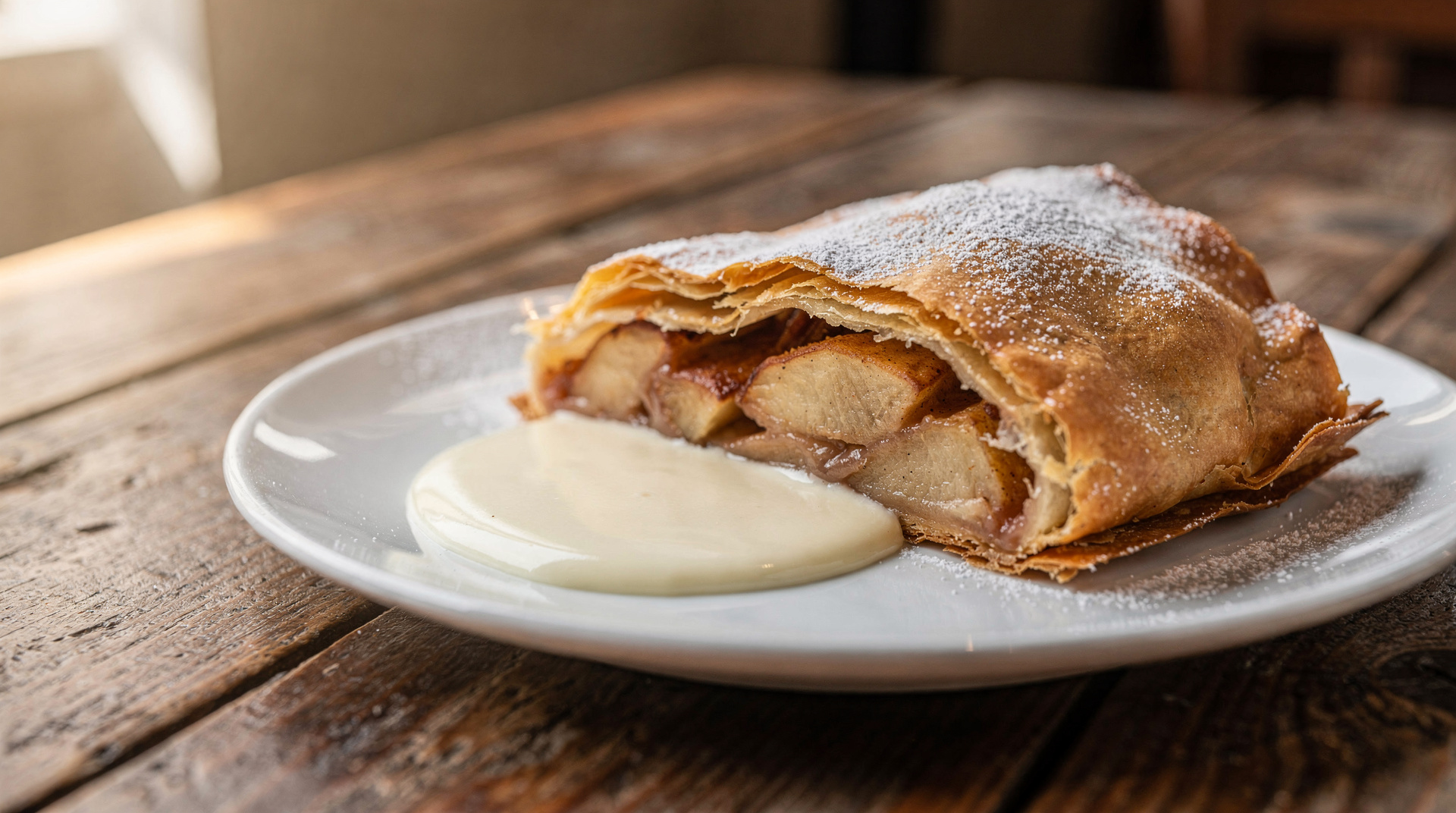
The magnificent neo-Gothic Palais Ferstel interior — soaring arched ceilings, marble columns, live piano at lunch — is the archetypal image of Viennese café culture. The food is genuinely good (the Apfelstrudel is excellent), the coffee is proper, and the setting is worth seeing regardless of the tourist element.
The queue at weekends is real (20–45 minutes). Go on a Tuesday morning and you’ll have the place almost to yourself.
Best for: First visit to Vienna, architecture lovers, anyone wanting the full visual experience.
Best for pastry: Demel
Address: Kohlmarkt 14, 1010 (Innere Stadt) What to order: Eduard Sacher Torte, seasonal cake counter selection When to go: Midday for the widest selection; glass display refreshed in the morning
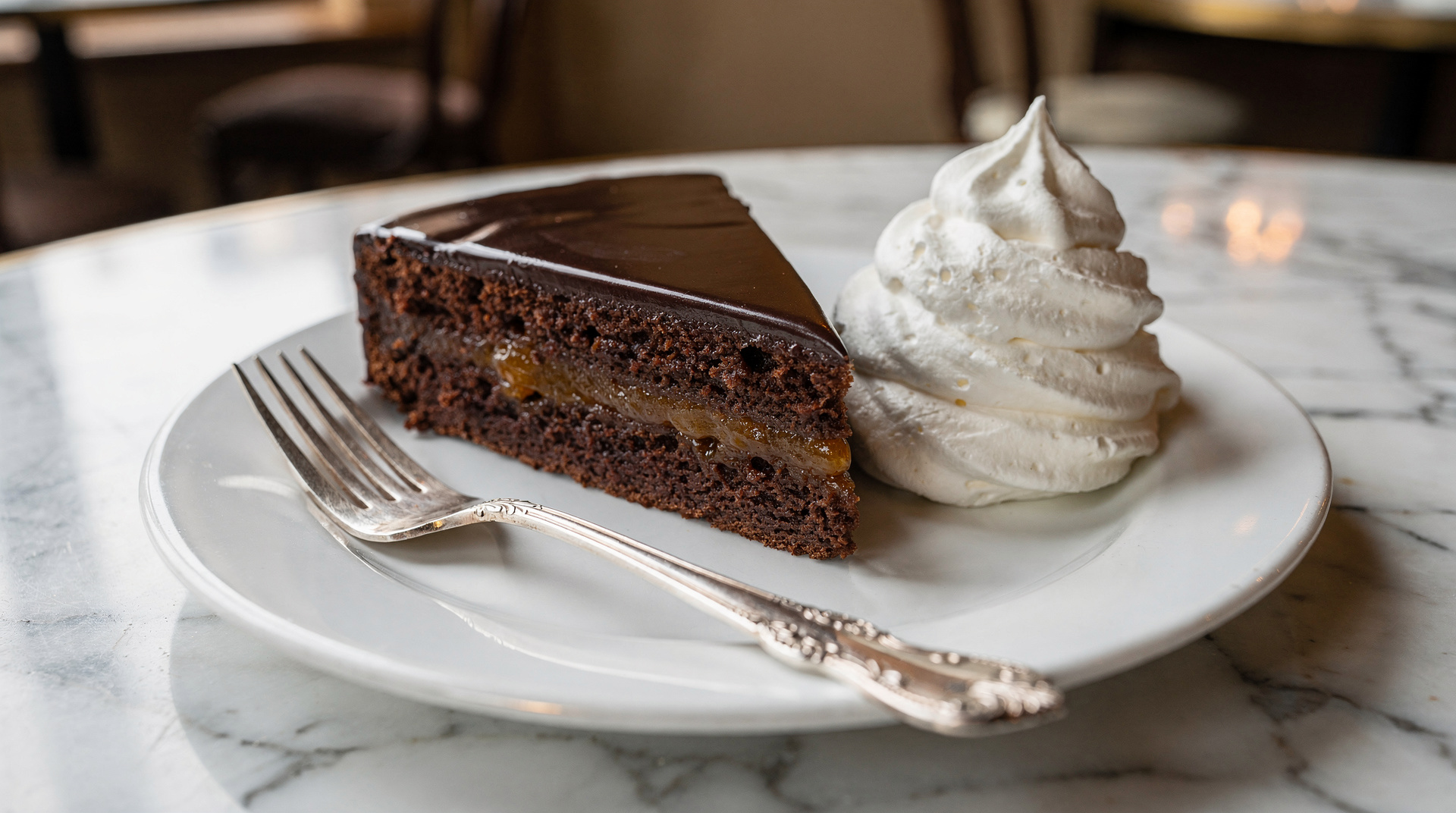
Demel is as much a confectionery as a coffeehouse. The pastry counter under glass domes is stocked with rotating seasonal creations that go well beyond the standard Kaffehaus menu. The glass windows into the kitchen let you watch confectionery work in progress. The Sachertorte rival (Eduard Sacher Torte) is excellent and typically less contested than Café Sacher.
Best for: Serious pastry interest, buying sweets to take away, the full confectionery experience.
Best for local atmosphere: Café Sperl
Address: Gumpendorfer Strasse 11, 1060 (6th district/Mariahilf) What to order: Melange, Guglhupf When to go: Weekday afternoon
Unchanged since 1880. Bare wooden floors, green velvet banquettes, a functioning billiard table, chess players and card players at their regular corners. Sperl feels like it has continued existing regardless of whether anyone decided to make it famous — because it has.
The crowd is overwhelmingly local. Prices are noticeably lower than the Innere Stadt. The coffee is excellent. The Guglhupf is one of the city’s best.
Best for: Authenticity, a sense of unchanged Viennese daily life, visitors who’ve done the tourist coffeehouses on a previous trip.
Best near the Ringstrasse: Café Landtmann
Address: Dr.-Karl-Lueger-Ring 4, 1010 (Ringstrasse) What to order: Großer Brauner, Tafelspitz (for lunch) When to go: Weekday lunch or afternoon
Sigmund Freud’s regular café for 20 years. The calmer, more restrained alternative to Café Central — mahogany rather than marble, a more professional clientele (politicians, lawyers, Burgtheater audience). The lunch menu is one of the best of any Kaffehaus in the city.
Landtmann is more expensive than it should be for what it offers, but it’s consistently good and dramatically less touristy than Central for an equivalent location.
Best for: A quieter Innere Stadt alternative, the best Kaffehaus lunch menu, visitors who find Café Central too overwhelming.
Best for old-Vienna character: Café Hawelka
Address: Dorotheergasse 6, 1010 (Innere Stadt) What to order: Melange (day), Buchteln (10pm–closing) When to go: Evening
Josefine Hawelka served Buchteln (warm sweet yeast buns filled with jam) from 10pm until closing until she was well into her 90s. Her son continues the tradition. Hawelka is dark, slightly atmospheric in a way that suggests 70 years of cigarette smoke absorbed into the walls (even after the smoking ban), with mismatched furniture and a clientele that includes genuine bohemian holdouts from the 1960s alongside visitors who’ve read about them.
Not a place for Apfelstrudel research — go for the atmosphere and the late-evening Buchteln.
Best for: Evening visits, old-Vienna atmosphere, anyone who wants to feel what the 1950s cultural coffeehouse scene might have been like.
Best for avoiding tourists entirely: Café Prückel
Address: Stubenring 24, 1010 (Innere Stadt, near the MAK museum) What to order: Melange, daily pastry When to go: Morning or evening
The most underrated major coffeehouse in Vienna. 1950s modernist interior (a genuine rarity in the historicist city) and located one block from the Museum of Applied Arts — just far enough from the tourist core to avoid the crowds. Live piano and chamber music on specific evenings. Chess tables available.
Prückel proves that you can find an authentic Kaffehaus experience in the Innere Stadt without competing with tour groups. It simply requires walking five minutes past the obvious options.
Best for: Anyone prioritising authenticity while remaining in the first district.
Best for late nights: Café Schwarzenberg
Address: Schubertring 3-5, 1010 (Ringstrasse) What to order: Gulasch, Melange When to go: Late evening after a concert or opera
One of Vienna’s few coffeehouses open late (until midnight on most nights). On the Ringstrasse with a magnificent view of the illuminated boulevard. The kitchen serves proper Austrian food until late — a bowl of Gulasch after the Staatsoper or a Musikverein concert is an excellent way to end an evening. More expensive than average.
What to avoid
Café Mozart (Albertinaplatz) is directly opposite the Albertina and trades heavily on the Mozart name. The interior is fine but not interesting; the food is adequate but not worth seeking out; the main appeal is convenience for post-museum visitors. Not worth a special visit.
Generic “Kaffehaus” branded tourist cafés along Kärntner Straße and the streets immediately around Stephansdom often have the visual elements of a Kaffehaus (marble tables, wooden coat racks) but none of the cultural substance — coffee is Nespresso-grade, pastries are from a wholesale supplier, waiters are incentivised to turn tables quickly.
If the line between a real Kaffehaus and a staged one still feels blurry, Viennese coffee tourist traps lists the warning signs in more detail, and the wider Vienna tourist traps guide shows how the same pattern repeats elsewhere in the city.
Matching a coffee house to your day
The best choice is rarely the café with the highest score; it is the one that fits the part of the city you are already in. Staying within the Innere Stadt, Central, Demel, Hawelka and Prückel are all a short walk from each other, so you can pick by mood rather than logistics. Along the boulevard, the Ringstrasse gives you Landtmann and Schwarzenberg, which suit a break between big sights or a slow end to an evening.
- After a museum morning: Landtmann for a proper lunch, or Prückel if the Albertina or another first-district museum has left you wanting somewhere calm.
- Before or after a concert: Schwarzenberg is the practical choice, and it pairs naturally with the Musikverein or the Vienna State Opera.
- On a rainy afternoon: Sperl, where nobody will hurry you, with a book and a slow Melange.
- For a sweet-toothed shortcut: Demel, then continue to a second stop if you want to compare cakes.
None of these needs a reservation strategy. What helps is arriving with no fixed schedule afterwards, because a Kaffehaus visit that is squeezed between two timed tickets loses most of what makes it worthwhile.
How coffee houses fit into a longer trip
On a short stay, one well-chosen coffee house per day is plenty and still leaves room for sightseeing. If you are still working out how long to stay, how many days in Vienna helps you decide how much slack to leave, and the 3-day itinerary shows where a café stop sits naturally between the big sights. Travellers who like the idea of a relaxed pace can borrow the same logic for market mornings: the Naschmarkt eating guide works well as a counterpoint to a quiet afternoon indoors.
For a more personal take on the same places, the Viennese coffee houses we love diary describes what visiting felt like rather than how the venues rank. It is a useful companion if you want to hear about the experience before committing a morning to it.
Guided coffee house experiences
The Austrian food and coffee house tour includes extended time in a traditional Kaffehaus with explanation of coffee types, ordering ritual, and cultural context. A genuinely useful introduction for visitors who want to understand the tradition before navigating it independently.
The Vienna food tour includes a Kaffehaus stop as part of a wider culinary experience — good for understanding where the coffeehouse fits within the broader Viennese food culture.
Honest tips
The outside seating (Schanigarten) is pleasant but less authentic. Traditional Kaffehaus culture is an interior experience. If weather permits outside seating, take it for a coffee and people-watching, but for the full coffeehouse atmosphere, sit inside.
Order in German. “Einen Melange, bitte” is the opener. The waiter will switch to English immediately if you need it, but the attempt communicates respect for the institution.
Coffee houses double as writer’s offices. Bring a book, a journal, or a plan to sit quietly. The average visitor stays 45 minutes; locals may stay 2–3 hours. Both are equally acceptable.
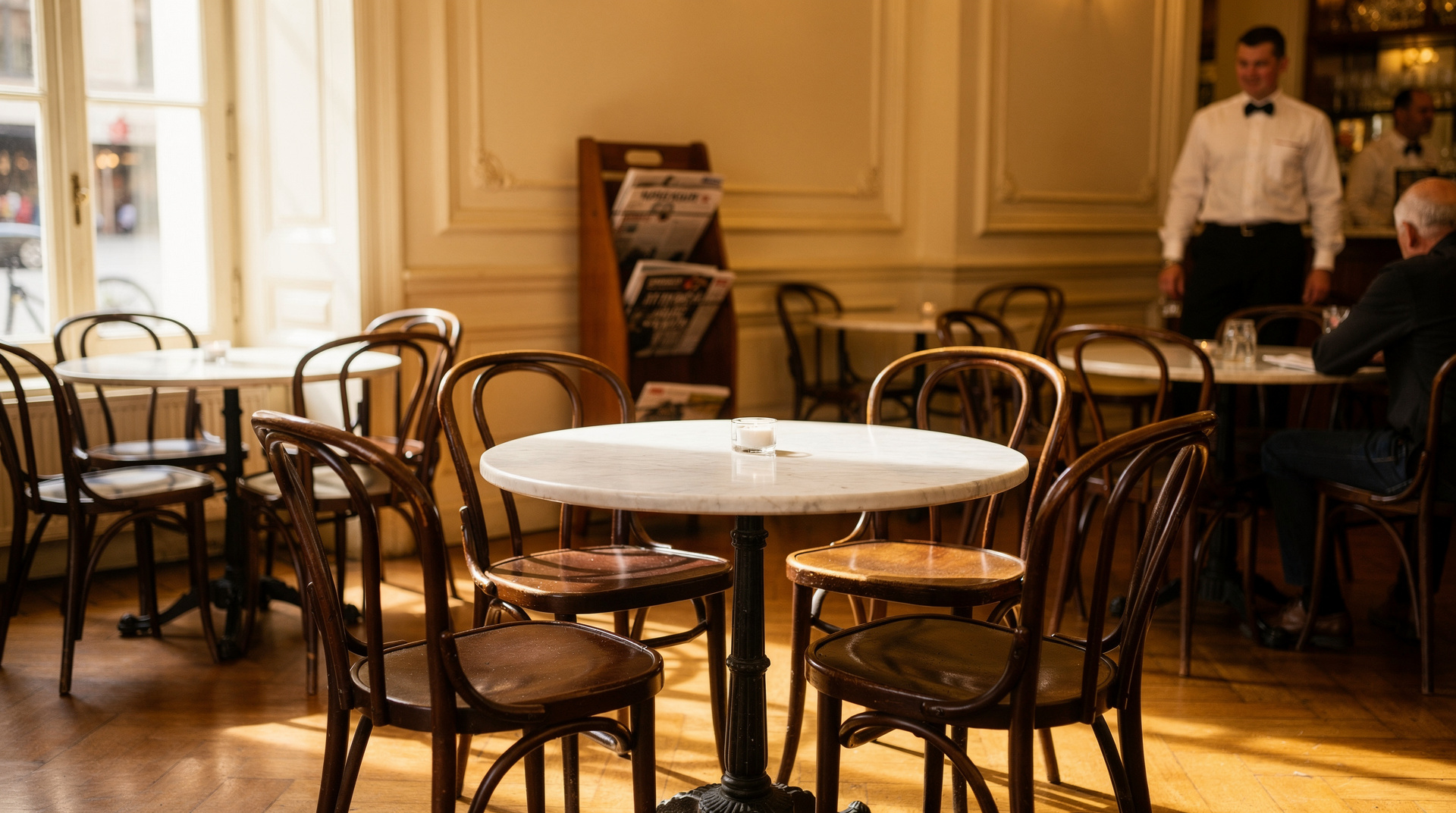
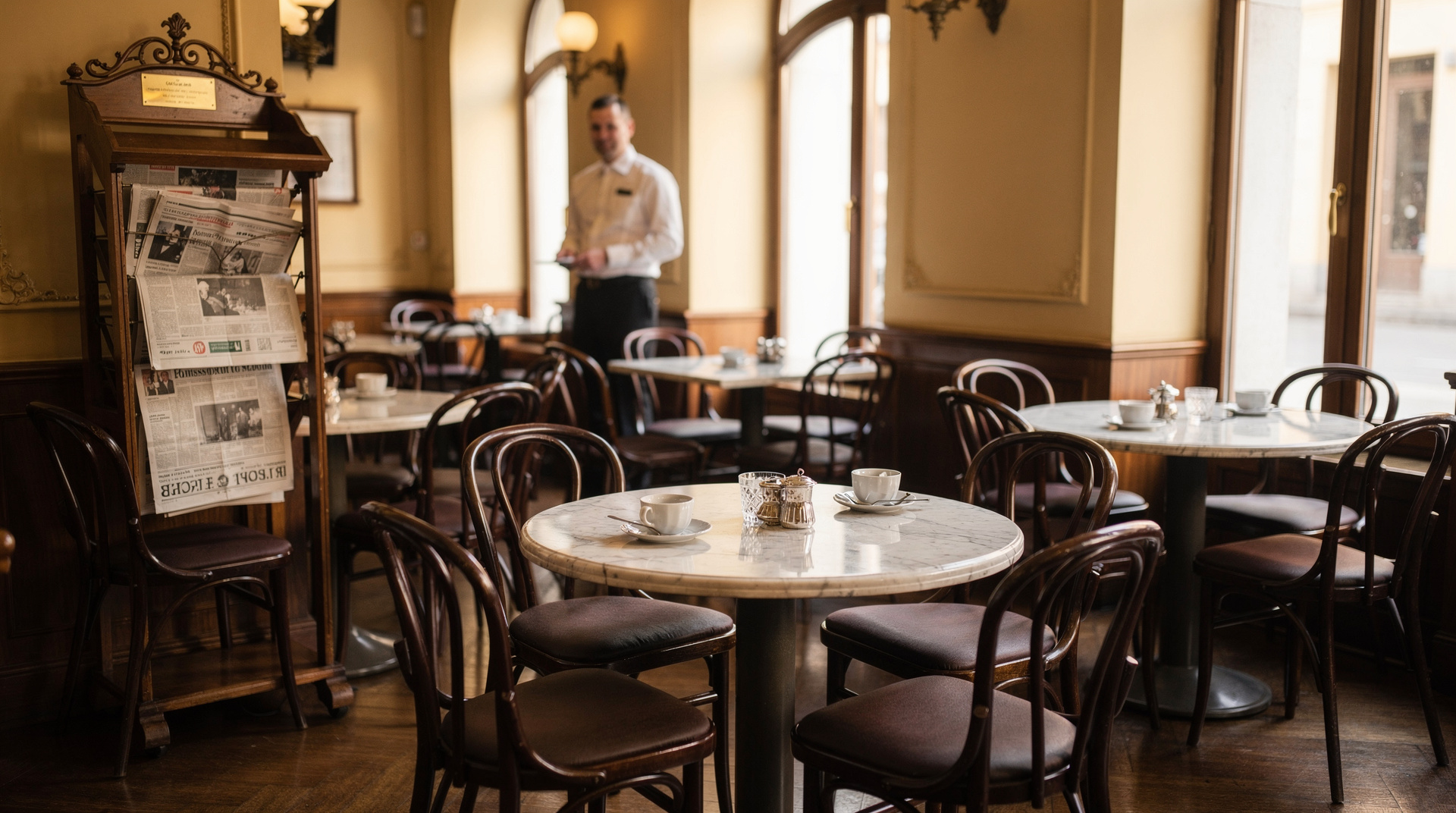
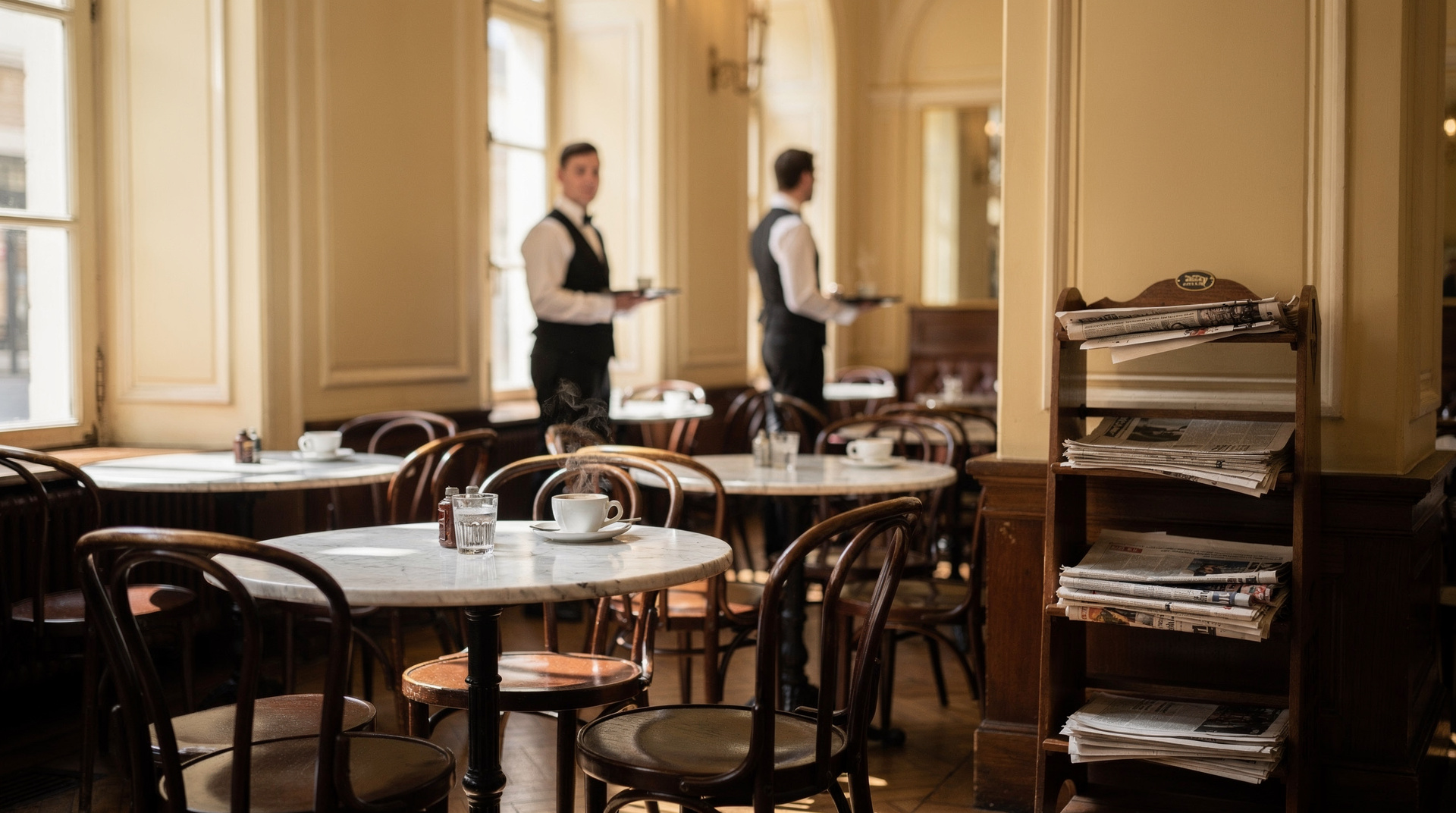
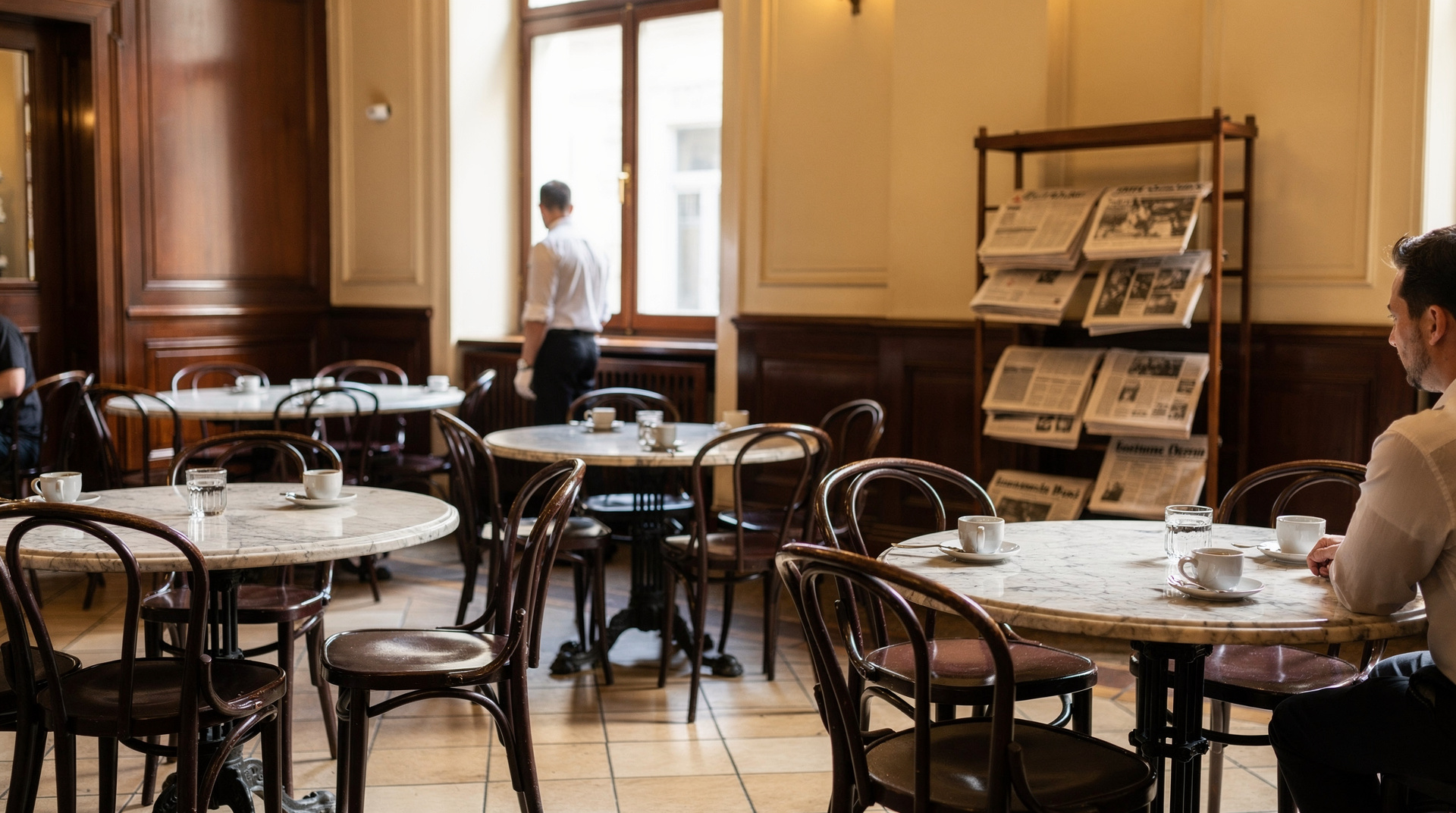
The newspaper racks are yours to use. Help yourself to a paper on the rack — it’s provided for guests. Return it when you leave.
Compare Central, Landtmann and Sacher directly: if you’re torn specifically between the three most-discussed grand coffeehouses, the Café Central vs Landtmann vs Sacher comparison goes deeper than the ranking above. For the full Viennese food picture beyond coffee, see the Vienna food guide or book the Vienna pastry tour.
Frequently asked questions about Vienna’s best coffee houses
How many coffee houses should I visit?
Two or three is a good number for a 3–5 day trip. One grand-interior tourist experience (Central or Sacher), one local neighbourhood café (Sperl or Prückel), and one pastry-focused visit (Demel) covers the main types.
Can I visit multiple coffee houses in one morning?
Yes, but space your visits by 1.5–2 hours. Drinking three Melanges in succession is excessive; visiting three coffeehouses and having a coffee at each is entirely culturally appropriate over a 4–5 hour morning. Combine with walking the Ringstrasse between stops.
Which is better for a first date or romantic occasion: Central or Landtmann?
Landtmann. The quieter atmosphere, better lunch menu, and Freud association make it more intimate and conversational than the busier, more tourist-trafficked Central.
Is Café Demel better than Café Sacher?
For pastry variety, yes — Demel’s changing counter is more extensive. For the Sachertorte specifically, both are excellent and the difference is a matter of personal preference (see the Sachertorte guide). For atmosphere, Café Sacher is more theatrical; Demel is more refined.
Top experiences
Bookable activities with verified prices and instant confirmation on GetYourGuide.