Ringstrasse architecture walk: Vienna's imperial boulevard explained
Vienna: Big Bus Hop-On, Hop-Off Sightseeing Tour
What is the Ringstrasse and why is it worth seeing?
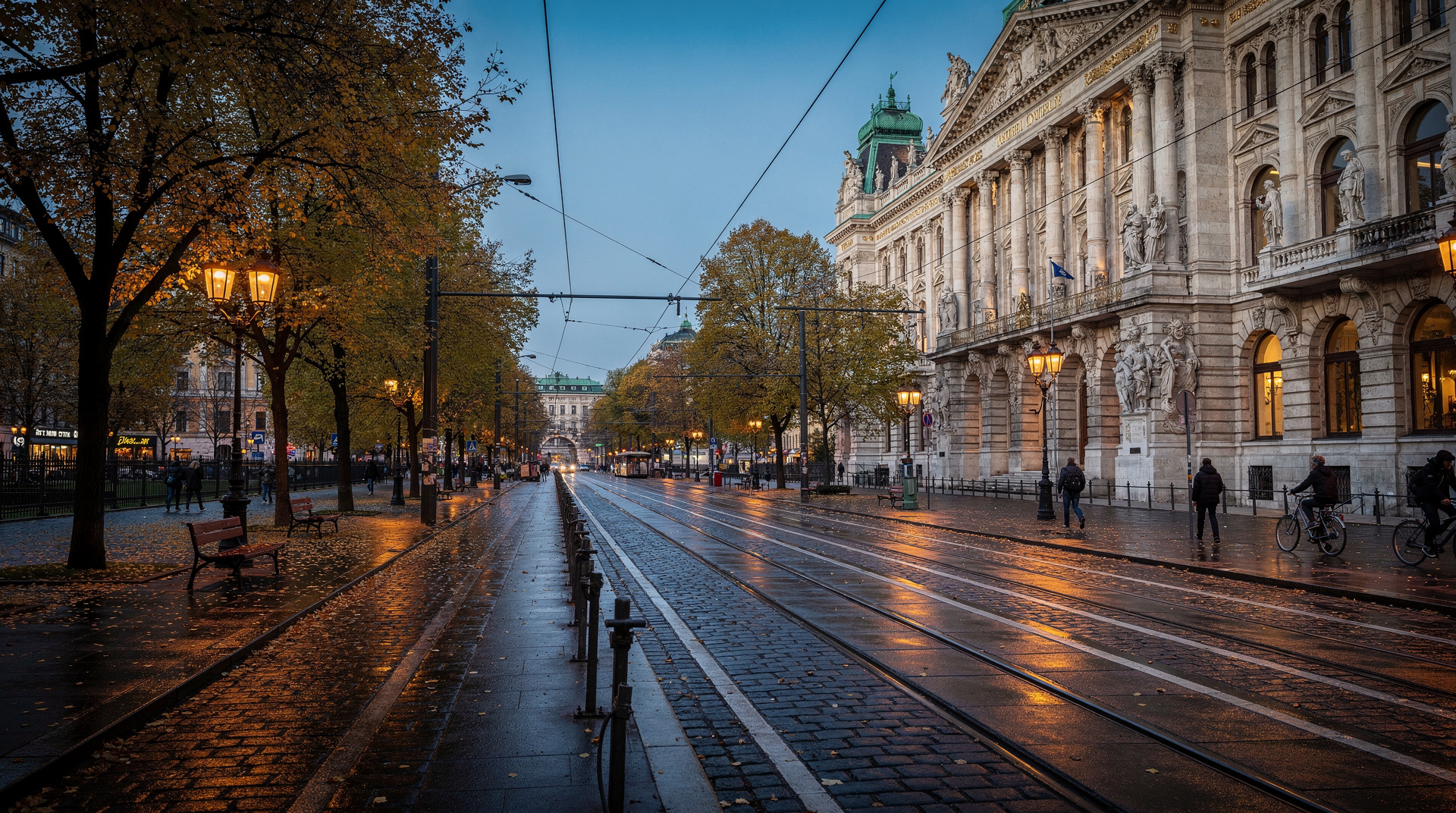
The Ringstrasse is Vienna's 5.3-kilometre ceremonial boulevard, built between 1857 and 1900 after Franz Joseph I ordered the demolition of the medieval city walls. It is lined with monumental public buildings — the Opera House, Parliament, Rathaus, Burgtheater, and two major museums — each designed in a different historical style as a deliberate statement of Habsburg identity. Walking the full ring takes 1.5–2 hours; understanding what you are looking at requires knowing the story behind it.
What the Ringstrasse actually is
In 1857, Emperor Franz Joseph I issued an imperial decree ordering the demolition of Vienna’s medieval city walls and the glacis — the cleared defensive strip outside them — and their replacement with a new circular boulevard. He was 27 years old. The empire had just lost a war with Sardinia and France; Vienna’s medieval fortifications were militarily obsolete; and the city needed to project power through urban form.
The result was the Ringstrasse: 5.3 kilometres of boulevard connecting the Innere Stadt to its surrounding districts, lined with an unprecedented sequence of monumental public buildings commissioned over the following four decades. It is one of the most coherent examples of 19th-century urban planning in Europe and one of the most deliberately ideological street-scapes in the world.
Understanding it transforms a walk around the ring from “lots of big buildings” into a comprehensible argument about power, culture, and identity.
| Where | The 5.3km ring boulevard around Vienna’s Innere Stadt |
| Cost | Free to walk; individual buildings charge separate admission |
| Time needed | 45–60 min (highlights) to 2 hrs (full loop) |
| Getting there | Start at Staatsoper, U1/U2/U4 Karlsplatz |
| Best time | Weekday mornings for the buildings’ interiors; evenings for the illuminated exteriors |
The self-guided walk: a route and what to see
The walking order at a glance
| Stop | Style | Built | Worth going inside? |
|---|---|---|---|
| Staatsoper | Neo-Renaissance | 1861–1869 | Yes, guided tour or performance |
| Kunsthistorisches/Naturhistorisches Museums | Renaissance Revival | 1872–1891 | Yes, both charge admission |
| Parliament | Greek Revival | 1874–1883 | Yes, free tours |
| Rathaus | Gothic Revival | 1872–1883 | Yes, free weekday tours |
| Burgtheater | High Baroque | 1874–1888 | Yes, guided tours |
| Votivkirche | Gothic Revival | 1856–1879 | Yes, free entry |
| Stadtpark/Kursalon | Landscape park, Renaissance-style hall | 1862 (park) | Optional, concerts ticketed |
Start: Staatsoper (Vienna State Opera)
The Opera House is the building that gave the Ringstrasse its first major trauma. When it opened in 1869, the Viennese press mocked it as a “sunken chest” — built too low for its surroundings because the street was raised after the foundations were laid. One of the two architects, Eduard van der Nüll, committed suicide before it opened; the other, August von Siccardsburg, died two months later of a heart attack. Franz Joseph, who had made a mildly negative comment about the building, was so shaken by the reaction that he resolved never to comment publicly on architecture again.
The Opera House was rebuilt after World War II bomb damage (1945) and reopened in 1955 as the first major Viennese cultural institution to be restored. It is one of the great opera houses in the world — see our Vienna State Opera guide for how to attend.
Heading west: the museums
Walking west from the Opera House along Opernring, you reach Maria-Theresien-Platz — the square flanked by the Kunsthistorisches Museum (Art History Museum) and the Naturhistorisches Museum (Natural History Museum). Both were designed by Gottfried Semper and Karl von Hasenauer and built between 1872 and 1891. They are identical in external design and symmetrically placed, with the statue of Maria Theresa between them.
The Kunsthistorisches Museum houses the Habsburg art collections — one of the greatest collections of paintings in the world. See our Kunsthistorisches Museum guide for what to prioritise. The Naturhistorisches Museum contains the oldest known female figurine in the world (the Venus of Willendorf, 28,000 years old) — see our Naturhistorisches Museum guide.
Parliament
Continuing north along the ring, the Parliament building (1874–1883) is designed in Greek Revival — a deliberate reference to Athenian democracy as the conceptual foundation of constitutional government. The building was severely damaged in World War II and completely rebuilt internally in the 2020s; the contemporary interior is now mixed with the original facade.
Rathaus (City Hall)
Vienna’s neo-Gothic Rathaus (1872–1883) faces the Ringstrasse across the Rathauspark. The Gothic style was chosen to evoke the era of free imperial cities and civic self-governance — the argument being that Vienna’s municipal government was heir to the tradition of medieval civic liberty. The Rathaus hosts free tours on most weekdays; the main festival hall and council chambers are worth seeing.
Burgtheater
Across the ring from the Rathaus: the Burgtheater (1874–1888), Vienna’s national theatre, designed by Gottfried Semper in High Baroque. Completed in 1888, it is the most important German-language theatre in the world and operates without commercial interruption (the Austrian state subsidises it heavily). Guided tours cover the lavishly decorated staircase ceilings — featuring early paintings by Gustav Klimt and his brother Ernst.
Votivkirche
Further north, the Votivkirche (1856–1879) is a neo-Gothic church built in thanksgiving following the survival of Franz Joseph from an assassination attempt in 1853. It is the finest neo-Gothic interior in Vienna: the nave is long and narrowly proportioned, the glass is exceptional, and it is free to enter.
Closing the loop: Stadtpark
Heading back south along the Stubenring and Parkring, the Stadtpark (City Park) appears on the inner side of the ring. It contains the gilded Johann Strauss II statue — one of Vienna’s most-photographed objects — and the Kursalon, the concert hall where Strauss conducted in the 1860s and where touristic concerts of his music are still performed. See our Kursalon Strauss concerts guide for what the concerts are like and how to book.
Why the “Ringstrasse style” became a byword for eclecticism
Architectural historians use the term “Ringstrassenstil” to describe the deliberate historicism of the whole project: rather than developing a single new architectural language, Vienna’s planners chose an existing historical style for each building based on the values it was meant to evoke.
This is sometimes read today as intellectually cynical — borrowing prestige from the past rather than inventing something new — and sometimes as a genuinely sophisticated piece of civic communication, readable at the time by an educated public fluent in architectural history in a way modern visitors rarely are. Either reading requires knowing the code: without it, the Ringstrasse is simply an impressive but confusing wall of stone facades. The Habsburg history guide provides the broader imperial context that the Ringstrasse project was built to project.
The Ringstrasse’s construction also physically erased what came before it: the glacis was a much-loved informal recreation ground for ordinary Viennese, used for strolling, skating and popular festivals, and its disappearance was mourned even as the new boulevard was celebrated. Franz Joseph’s decree traded a shared public commons for a monumental civic stage — a trade that still shapes how central Vienna functions today, with the Innere Stadt as a historic core and the Ringstrasse as its formal, ceremonial edge.
How to read a facade as you walk
Each stop rewards a few minutes of slow looking before you go in or move on. Start with the roofline and the sculpture programme: the figures on a Ringstrasse building usually tell you what the institution inside was meant to stand for. Then look at the entrance, which in most cases was designed for carriages and processions rather than for individual visitors, and notice how the scale of the doorway shapes the way you approach the building. If you are curious about how the court lived behind these public façades, the Franz Joseph and Sisi guide fills in the people. Finally, step back across the street. The architects planned these buildings to be read from the boulevard, so the best view is rarely from right beneath the portico.
It also helps to carry one question from stop to stop: what is this style borrowing, and from whom? Greek columns, Gothic spires, Renaissance loggias and Baroque stairways are each a quotation, and spotting the quotation is most of the fun. If you want a break from the stone, the inner side of the ring is where the green spaces sit, and the Ringstrasse destination page places the boulevard within the wider district.
Planning the walk around your day
The ring sits at the edge of the old town, so it slots easily into a longer plan. Many visitors treat it as a connecting thread between the big sights: the Innere Stadt lies just inside it, and the MuseumsQuartier is a short step from the museum end of the walk. If you are building a full itinerary, the 3-day itinerary and the weekend itinerary both show where a ring stroll fits naturally.
The walk pairs well with a coffee stop. Vienna’s coffee houses are an institution in their own right, and our coffee house guide will help you choose a place to rest between buildings rather than pushing on tired. Travellers interested in the art that came after the ring era can continue with the Klimt trail, which picks up the story of how painters and architects reacted to this historicist boulevard. For an overview of everything the city offers beyond the ring, the Vienna destination page is a good starting point, and our photography spots guide suggests where the boulevard looks its best on camera.
Tours of the Ringstrasse
Vienna: guided walking tour of city center highlights A guided walking tour that covers the major Ringstrasse buildings gives the architectural narrative in a single session — useful for visitors who want context before exploring independently.
Vienna: Big Bus hop-on, hop-off sightseeing tourThe hop-on hop-off bus is a practical option for the Ringstrasse if walking is difficult — the route follows the boulevard and the audio commentary covers the main buildings. It is a less engaging way to understand the architecture than walking, but effective for a first overview.
Honest tips
The Ringstrasse in 45 minutes: If you are short on time, cover the section from the Staatsoper to the Rathaus (westward along the ring). This includes the two museums, the Parliament, and the Rathaus — the most architecturally coherent section. Skip the eastern section (Stubenring, Parkring) if you are pressed for time.
Night walk: The Ringstrasse buildings are illuminated at night and the boulevard is much quieter. A 30-minute evening walk from the Opera House to the Rathaus is one of Vienna’s underrated experiences — particularly in winter when the Rathaus hosts the Christmas market.
What the Austro-Hungarian compromise changed: The Ringstrasse is almost entirely the product of the 1857–1890 period — before the Dual Monarchy (1867) and mostly before the great architect Otto Wagner, whose Secession-era work (the Karlsplatz Stadtbahn stations, the Post Office Savings Bank) responded to and rejected the Ringstrasse’s historicism. If you want to understand the architectural argument that followed, our Secession and Schiele guide covers the movement that declared war on the Ringstrasse’s eclecticism.
Combine with the Christmas market in winter. If visiting in late November or December, the Rathaus end of the walk coincides with the Rathausplatz Christmas market — a good way to see the building both by daylight and under its festive illumination in the same visit.
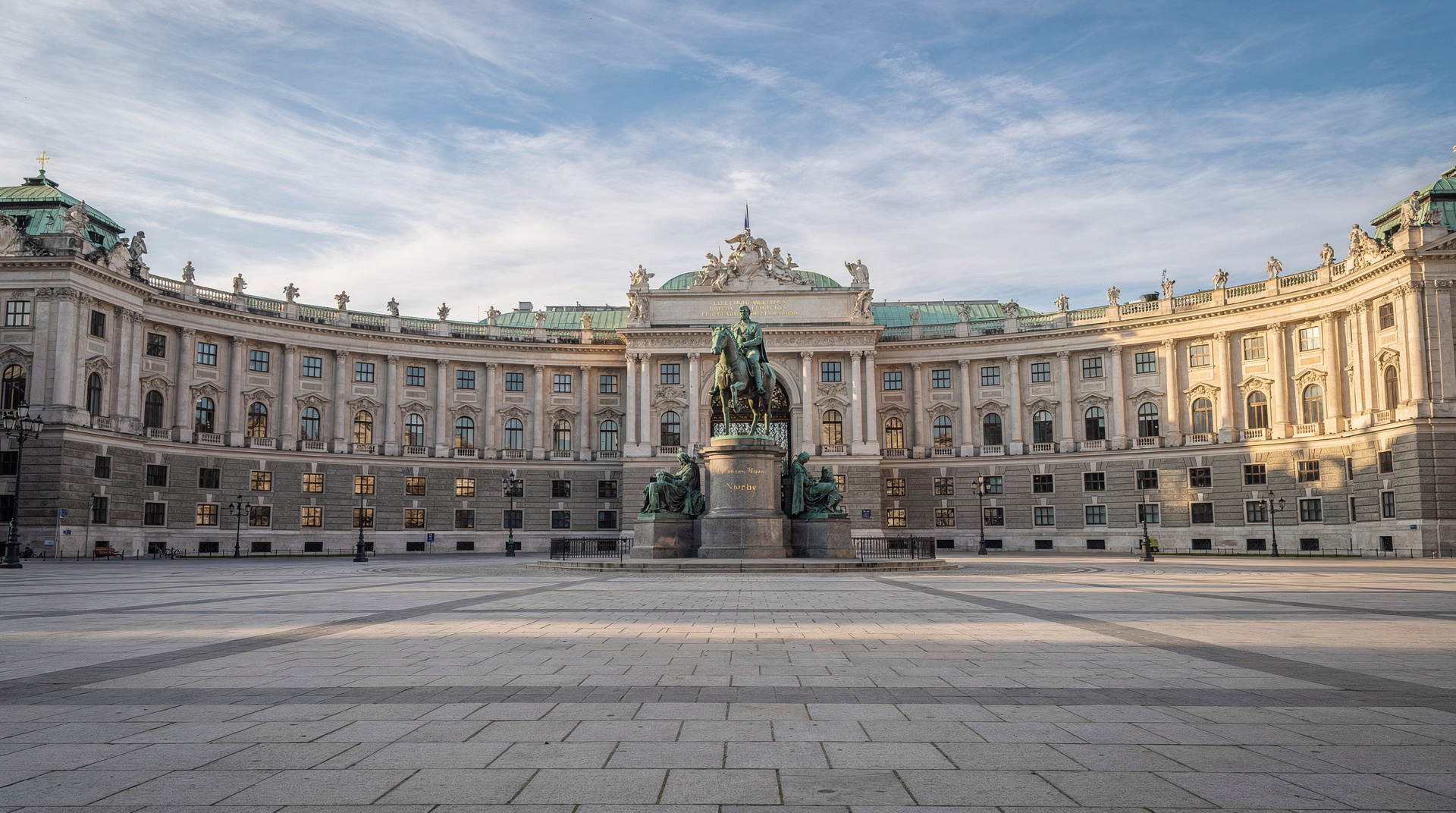
Pair it with the Hofburg. The Ringstrasse does not include the Hofburg Imperial Palace, which sits just inside the ring near the Staatsoper — see our Hofburg Palace guide to combine both in one day without retracing your steps.
Frequently asked questions about the Ringstrasse
How long does the Ringstrasse walk take?
Walking the full 5.3 km ring takes 1.5–2 hours at a comfortable pace. Covering the most interesting half — from the Opera House to the Rathaus — takes 45–60 minutes.
Can I go inside the buildings on the Ringstrasse?
Yes — the State Opera offers guided tours; the Parliament has free tours; the Kunsthistorisches and Naturhistorisches Museums require admission; the Rathaus and Burgtheater offer guided tours. Check schedules in advance.
What architectural styles are on the Ringstrasse?
Each major building was designed in a style reflecting its function: Parliament in Greek Revival; Rathaus in Gothic Revival; Burgtheater in High Baroque; the museums in Renaissance; the Opera House in Neo-Renaissance; the Votivkirche in Gothic Revival.
When was the Ringstrasse built?
Construction began in 1857 following Franz Joseph I’s imperial decree. The Opera House opened in 1869; the boulevard was mostly complete by 1890.
Is a hop-on hop-off bus good for the Ringstrasse?
It gives a seated overview and is useful for orientation. For understanding the architecture, a guided walking tour is considerably better.
What is the best starting point for the Ringstrasse walk?
The Staatsoper at the junction of Opernring and Kärntner Straße is the most dramatic starting point.
Top experiences
Bookable activities with verified prices and instant confirmation on GetYourGuide.