Kursalon Strauss concerts: what to expect and whether to book
Classics of Austria – Classical Concert in Strauss Hall
Are the Kursalon Strauss concerts worth attending?
Yes, if you specifically want the theatrical Johann Strauss waltz-and-polka experience in a period-appropriate setting. The Strauss Hall 1837 concerts are professionally staged, include costumes and choreography, and the Kursalon has genuine historical connection to Strauss himself. At €35–65, they are the right choice if atmosphere and Viennese character matter as much as musical depth.
What the Kursalon is and why it matters
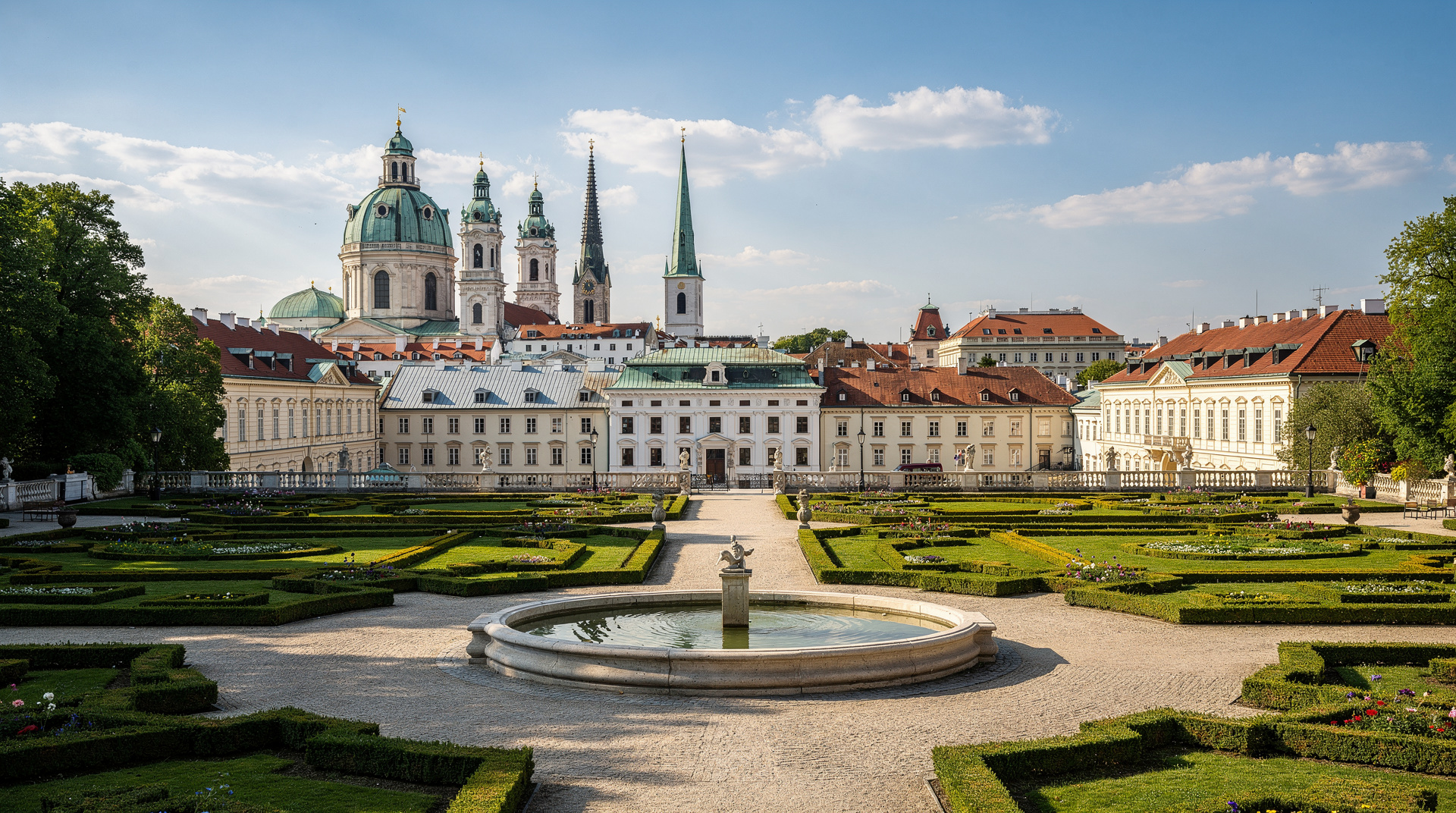
The Kursalon Wien, opened in 1867, is one of the most historically authentic venues in Vienna for the music of Johann Strauss II. Strauss did not merely play here — he conducted some of his most significant premieres in this building, and the hall’s association with his work is genuine rather than manufactured. The gilded Strauss statue in the adjacent Stadtpark (one of the most photographed objects in Vienna) faces in the general direction of the building.
Today the Kursalon hosts a series of tourist-oriented concerts that are explicitly designed around the Strauss repertoire. They are theatrical, professionally staged, and aimed at international visitors. This guide tells you whether that is what you want.
| Where | Johannesgasse 33, Stadtpark, 1st district |
| Cost | Around €35–65 depending on seating |
| Time needed | 90-minute concert; add 30 minutes for a pre- or post-show park walk |
| Getting there | U4 to Stadtpark, 3-minute walk |
| Best time | Book 3–7 days ahead; earlier for July–August or December |
What to expect at a Kursalon concert
The Strauss Hall 1837
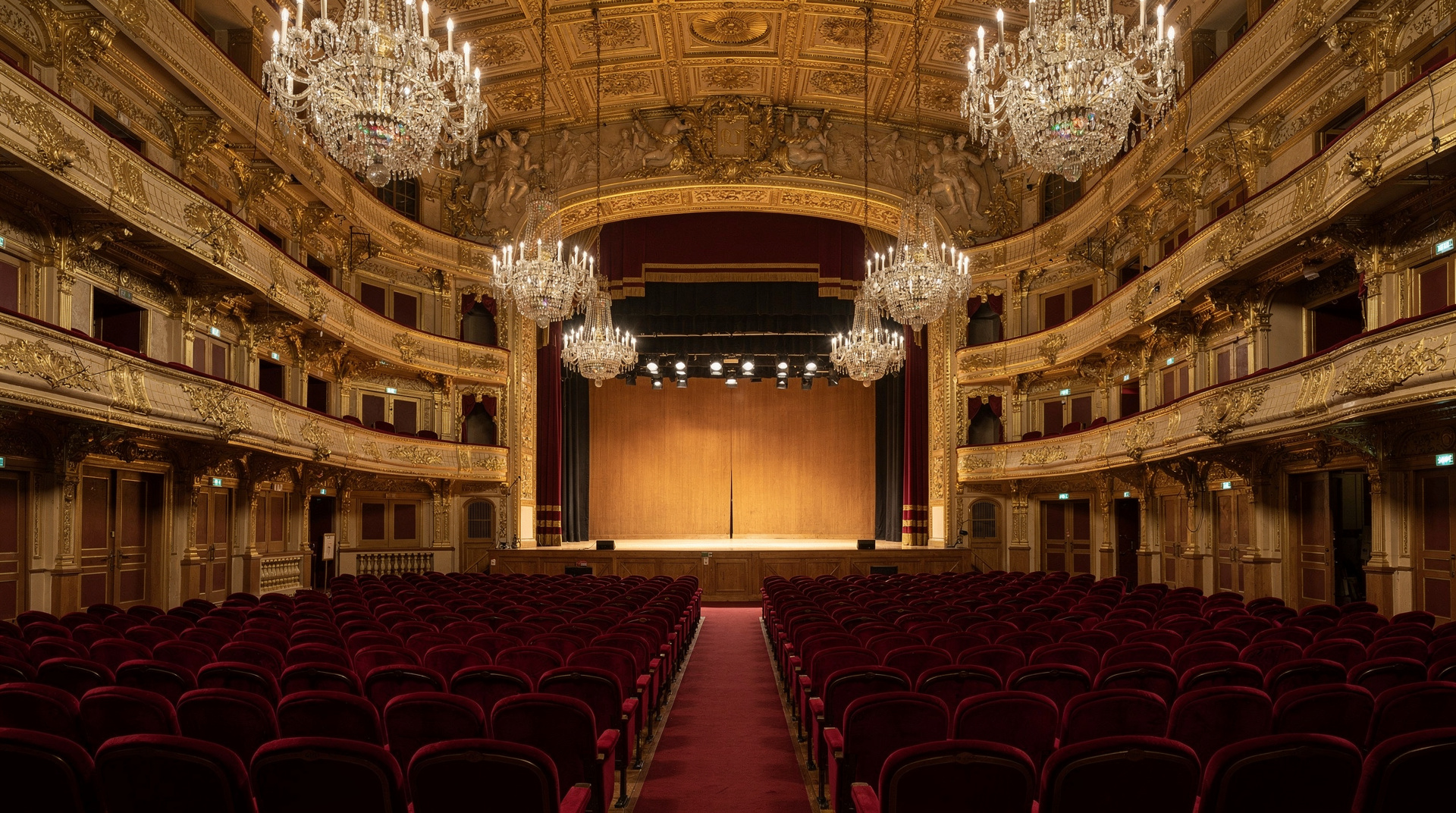
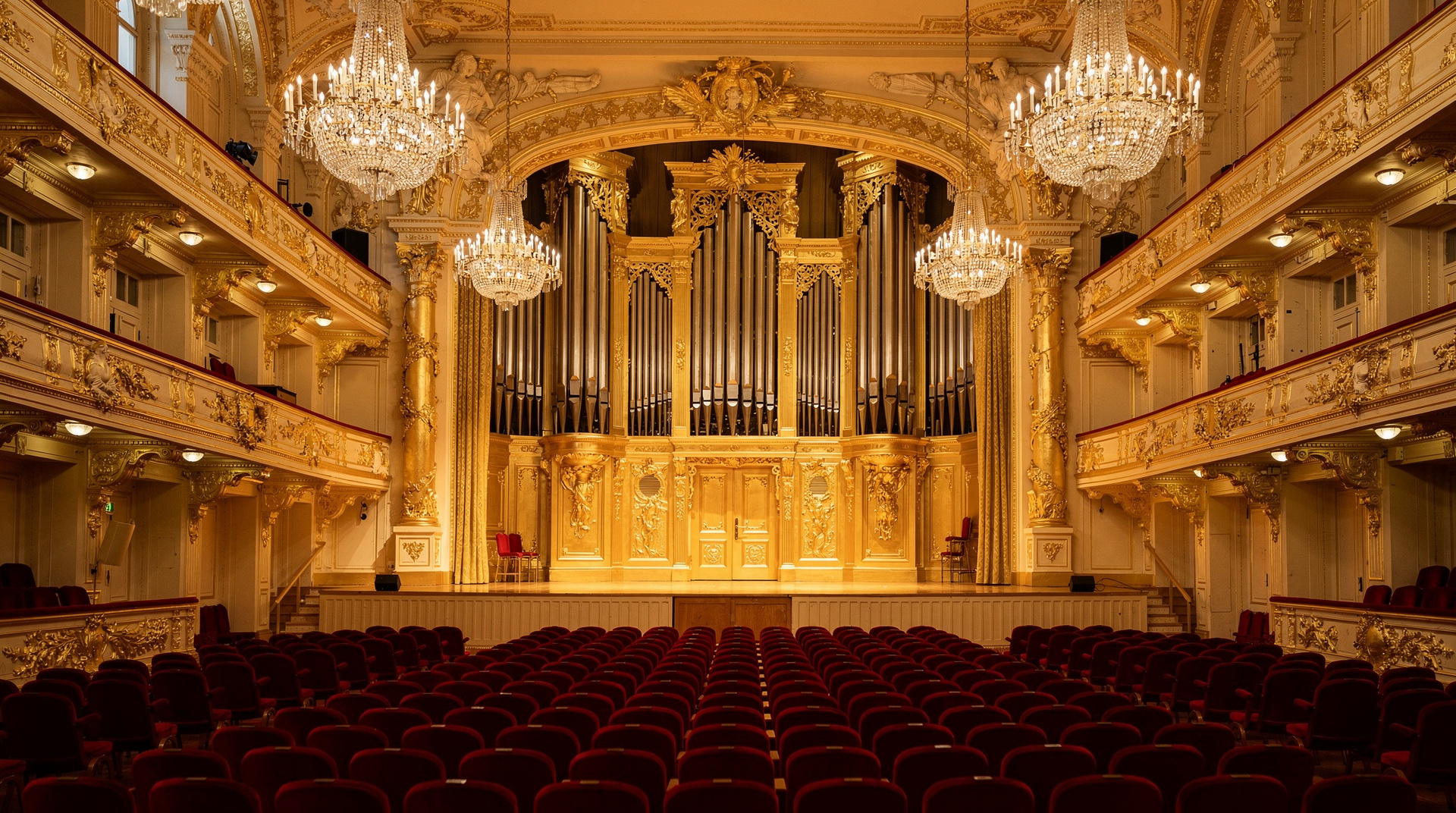
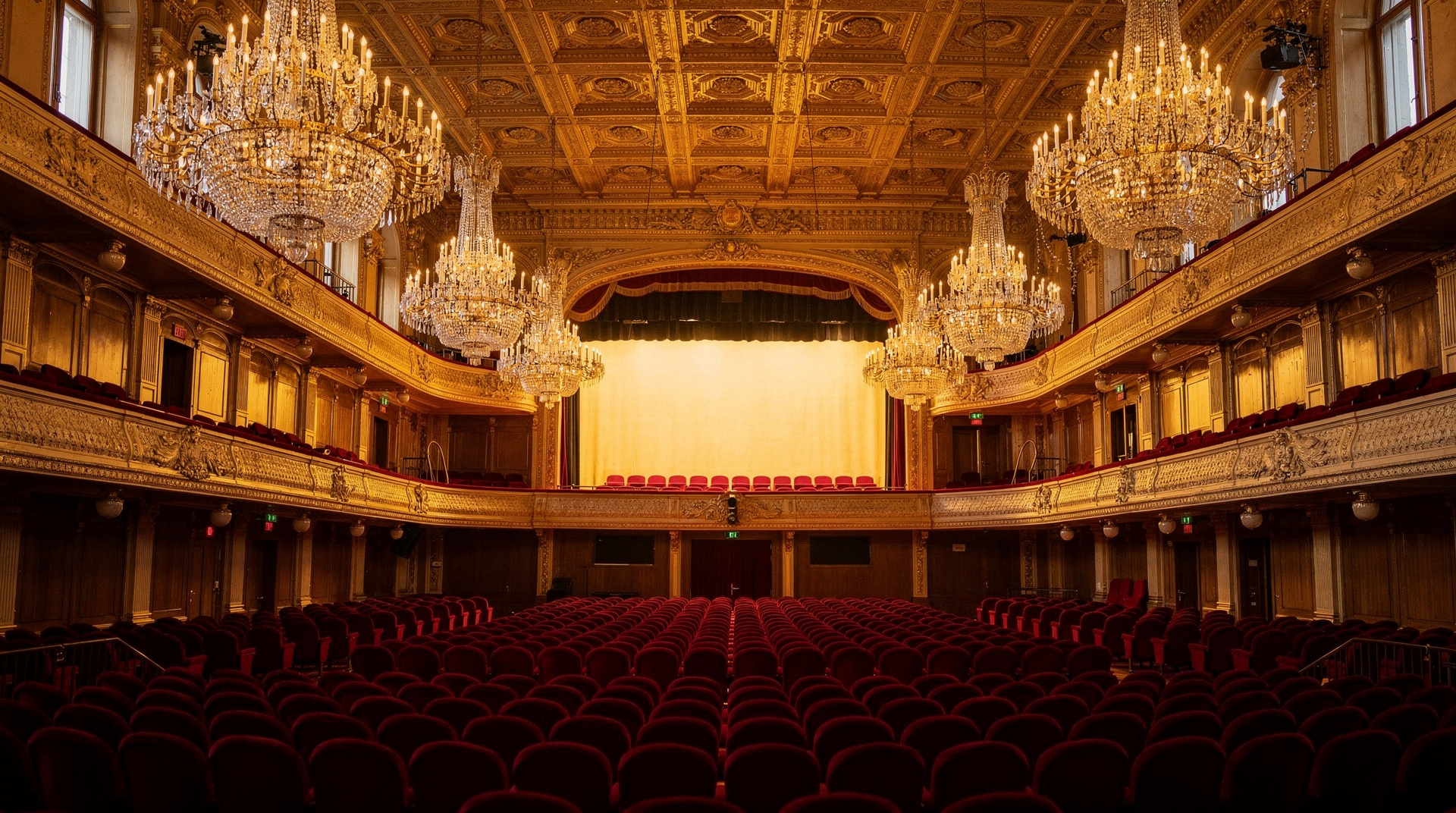
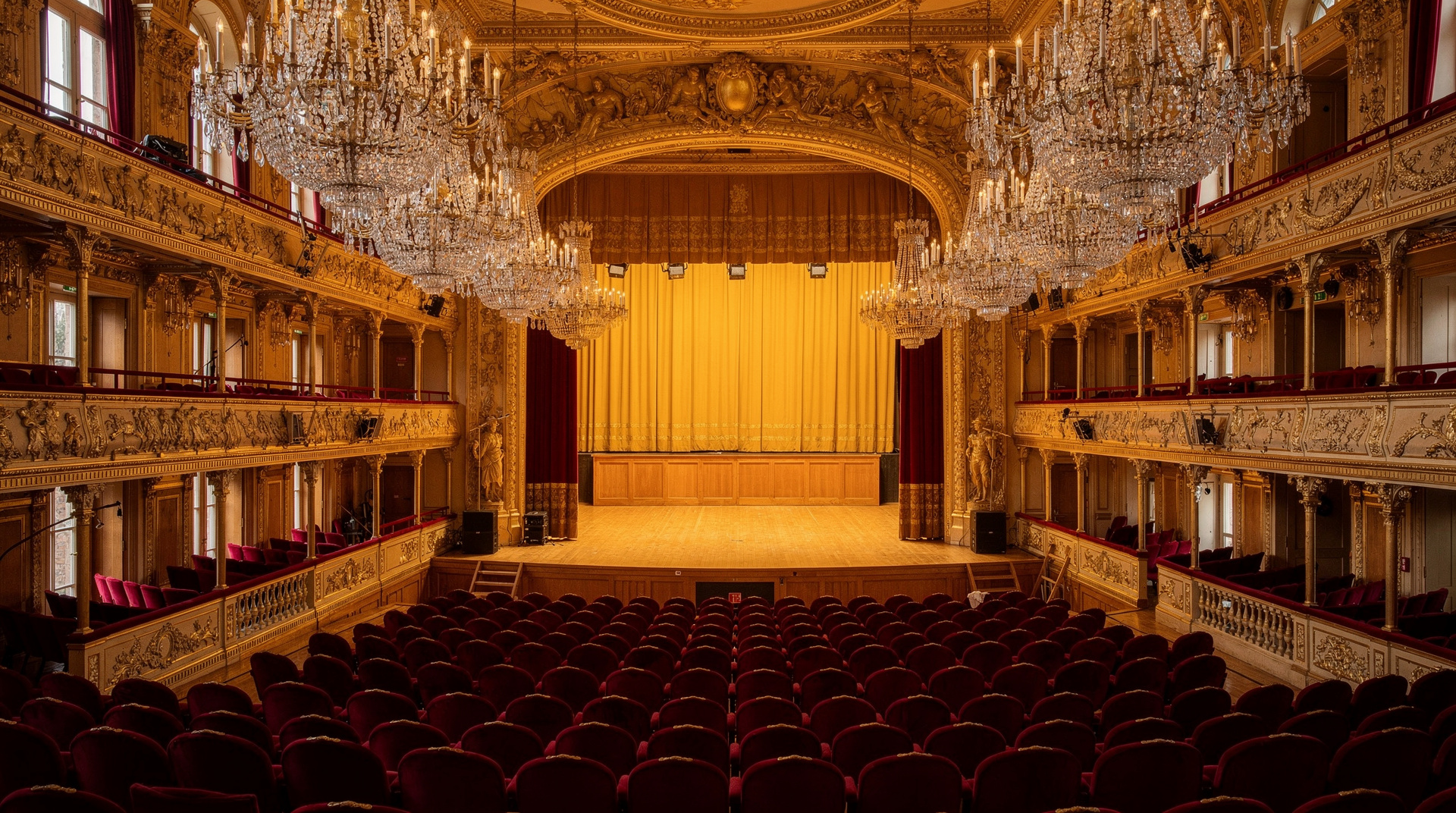
The principal concert hall of the Kursalon — the Strauss Hall 1837 — is decorated in the style of a 19th-century Viennese salon: warm lighting, period details, seating for approximately 400. The setting is appropriate to the music: Strauss waltzes sound natural in a room that looks like the era they were written for.
The programme
The standard 90-minute concert covers:
- Johann Strauss II waltzes and polkas (The Blue Danube, Tritsch-Tratsch Polka, Emperor Waltz, Radetzky March)
- Excerpts from operettas (Die Fledermaus, The Merry Widow)
- Mozart arias and symphonic excerpts
- Strauss father and son overtures
The programme is fixed and designed for audiences who may be hearing these works for the first time. For visitors who know the repertoire well, there is nothing surprising — but the setting and theatrical presentation make the concert more than the sum of its familiar parts.
The theatrical element
Kursalon concerts include choreography and staging that the Musikverein’s touristic concerts do not: costumed dancers performing waltz choreography, theatrical framing of the operetta excerpts, and an overall presentation closer to an evening show than a formal concert. This is appropriate to the repertoire — Strauss wrote music for dancing, and his polkas were genuinely meant to be performed with physical animation.
Booking tickets
Classics of Austria — classical concert in the historic 1837 Strauss Hall Tickets range from approximately €35 (standing or back seats) to €65 (premium front positions). The Kursalon runs multiple concerts daily in peak season (summer and the Christmas period). Booking online 3–7 days ahead is usually sufficient; popular dates can fill earlier.
The box office at the Kursalon also sells day-of tickets if the performance has not sold out.
The Kursalon programme leans hard on Strauss and Mozart in period costume, which is a different proposition from sacred music heard in the room it was written for: a concert at St Anne’s Church is the alternative when the ballroom format is not what you came for.
Comparing the Kursalon with other Vienna concert options
| Feature | Kursalon | Musikverein (touristic) | Schönbrunn Orangery |
|---|---|---|---|
| Setting | Period Viennese salon | World’s finest concert hall | 18th-century palace orangery |
| Theatrical staging | Yes (costumes, dancing) | No | Minimal |
| Repertoire | Strauss, Mozart, operetta | Vivaldi, Mozart, Strauss | Mozart, Strauss |
| Price range | €35–65 | €45–70 | €95–120 (with dinner) |
| Historical connection | Direct (Strauss conducted here) | High (home of Philharmoniker) | High (Habsburg palace) |
If you specifically want the Strauss waltz experience with theatrical staging, the Kursalon is the right choice. If the Musikverein Golden Hall’s acoustic reputation is more important, the Musikverein touristic concert is better value. If an all-in palace evening is the goal, the Schönbrunn Orangery package is the most complete experience.
See our Vienna classical concerts compared guide for a full matrix of all options.
Getting there and practical information
Address: Johannesgasse 33, 1010 Wien (Stadtpark) Getting there: U4 to Stadtpark (3 minutes walk) or U3/U4 to Landstraße/Wien Mitte (10 minutes walk) Nearest tram: Tram 2 (Weißgerberlände or Stubentor stops)
The Stadtpark itself is a pleasant 15-minute walk from the Staatsoper along the Ringstrasse. The Strauss statue is in the park about 5 minutes from the Kursalon entrance.
What to wear: Smart casual is entirely appropriate. Viennese concert etiquette is somewhat more formal than northern European or American norms, but the Kursalon’s tourist-oriented concerts do not enforce a dress code.
Dining: The Kursalon has a restaurant that serves Austrian cuisine before and after concerts. Booking a table for dinner before the concert is a pleasant option for an evening visit. The dining room overlooks the Stadtpark.
After the concert: the Stadtpark at night
The Stadtpark in the evening is one of Vienna’s underrated pleasures. The park is illuminated, the fountains are lit, and the Strauss statue is well-lit and photogenic after dark. Allow 15–20 minutes for a post-concert walk through the park before heading back toward the Ring.
The Ringstrasse is a 10-minute walk east from the Stadtpark. The area between the Stadtpark and the Musikverein (along the Lothringerstraße) has several good restaurants and cafés that are good options for a pre-concert dinner if you are not eating at the Kursalon itself.
Honestly: who the Kursalon is for
The Kursalon Strauss concerts are designed for visitors who want to experience Vienna’s most famous musical identity — the Strauss waltz tradition — in an appropriate setting with professional staging. They are not for visitors who want to hear the Wiener Philharmoniker or attend a serious operatic performance.
That is not a criticism. Most visitors to Vienna are hearing these works for the first time in a city that invented them, and the theatrical presentation at the Kursalon is the most complete version of that experience available. The room is appropriate, the musicians are competent, the staging is genuine rather than kitsch, and the price is reasonable.
For more context on choosing between the different Vienna concert options, see our classical vs touristic concerts guide.
How the Kursalon fits into a wider Vienna music evening
If a single concert is not enough, Vienna’s evening music scene rewards combining stops. The Musikverein concerts guide covers the touristic and subscription concert options at the world’s most acoustically celebrated hall, a 10-minute walk from the Kursalon along the Ringstrasse. For a genuinely different register — full orchestra and opera rather than salon-style Strauss — our Vienna State Opera guide explains standing-room tickets and the annual programme. And if a palace setting appeals more than a park pavilion, the Schönbrunn evening concert guide covers the dinner-and-concert package at the Orangery.
Booking strategy and seat selection
Front-row and premium seating (€55–65) puts you close enough to see the dancers’ choreography and the conductor’s expressions clearly, which matters more here than at a standard orchestral concert because the visual staging is part of the product. Back or standing sections (€35–40) are a reasonable compromise if budget matters more than sightlines — the acoustics in the Strauss Hall are consistent throughout the room, unlike some larger venues where the back rows genuinely suffer.
Before the music starts: arriving well
A Kursalon evening works best when it is not rushed. Arrive early enough to settle in, find your seat and take in the room, because the salon decoration is part of what you are paying for. If you are coming from the centre, the Vienna public transport guide explains how tickets and passes work, and the Vienna City Card review is worth a look if you are already weighing up discounts across several attractions in the same trip.
Visitors staying in the Innere Stadt will find the venue easy to reach, and our Innere Stadt neighbourhood page helps you place the Stadtpark relative to the old town. Those whose hotel sits further along the Ring can use the Ringstrasse architecture walk as a daytime warm-up: it passes through the same grand 19th-century setting that the Kursalon belongs to, so the evening feels like a continuation rather than an isolated event.
Choosing between a salon concert and the other Strauss options
The Kursalon is not the only place to hear Strauss in Vienna, and the right choice depends on what kind of evening you want. A salon concert with dancers is closest to an entertainment show; a palace concert is closer to a dinner-and-music package; a Musikverein concert is about the hall itself. Our Vienna classical music itinerary shows how a few of these can be spread across a stay without repeating the same repertoire every night.
If you are travelling for only a few days, the 3-day Vienna itinerary leaves room for one evening concert, and the Kursalon fits neatly after a day spent in the centre. Longer stays, such as the 5-day itinerary, give you the freedom to pair a Strauss evening with something quite different, such as an evening at the opera or a Heuriger visit.
Strauss in the wider story of Vienna
Part of the appeal of a Strauss concert is that it connects to the city’s larger history. The waltz belongs to the world of the Habsburg capital, its ballrooms and its imperial public life. If you want that background before you sit down, the Habsburg history guide for travellers gives a readable overview, and the Strauss trail trip report shows how one traveller followed the composer through the city. For a more personal reading of Vienna’s musical streets, Beethoven in Vienna offers a contrasting thread through the same city.
Knowing a little of this context changes how the familiar tunes land. The Blue Danube and the Radetzky March can feel like clichés when heard out of context, but in a room built in the same century as the music, and with the park outside where the composer is commemorated, they feel much more like part of a living tradition.
Making a full evening of it
A good Kursalon evening has a simple shape: a walk through the Stadtpark, an unhurried dinner, the concert, and a slow stroll afterwards. If you prefer to eat elsewhere, the best restaurants in Vienna guide and the Vienna food guide give you options to choose from, while the Viennese coffee house guide points to a traditional café for a late coffee and cake once the applause has faded.
Families with children should think about whether a long evening seated indoors suits them. The Vienna with kids guide covers what works for younger travellers, and the lively staging at the Kursalon can be easier for children to enjoy than a formal concert, though that depends on the child and the time of day.
Whatever you decide, treat the concert as one part of a Vienna evening rather than the whole of it. The setting, the park and the neighbourhood all contribute to the experience, and the people who enjoy the Kursalon most are usually those who give the evening enough time to unfold.
Frequently asked questions about Kursalon Strauss concerts
What is the Kursalon in Vienna?
The Kursalon Wien is a concert hall in the Stadtpark, built in 1867. It was a venue where Johann Strauss II conducted concerts and hosted premieres of his waltzes.
What music is performed at Kursalon Strauss concerts?
The standard programme covers Johann Strauss II waltzes and polkas, operetta excerpts (Die Fledermaus), Mozart, and other Viennese classical pieces. Concerts last approximately 90 minutes.
Are the Kursalon concerts for tourists only?
The Strauss Hall concert series is explicitly tourist-oriented, with fixed programmes and theatrical staging for international audiences. Vienna’s own concert audiences attend the Musikverein and Konzerthaus.
How far in advance should I book Kursalon tickets?
Booking 3–7 days ahead is usually sufficient. July–August and December can sell out earlier.
Where is the Kursalon in Vienna?
Johannesgasse 33, Stadtpark — 5 minutes walk from Stadtpark U4 station.
Is the Johann Strauss II statue near the Kursalon?
Yes — the gilded bronze Strauss II statue is in the Stadtpark about 5 minutes walk from the Kursalon entrance.
Top experiences
Bookable activities with verified prices and instant confirmation on GetYourGuide.