Vienna State Opera guide: how to attend the Staatsoper without overpaying
Vienna: Musical Tickets THE PHANTOM OF THE OPERA
How do I attend the Vienna State Opera?
Standing room (Stehplatz) is available from €3–4 on the day, released 80 minutes before curtain at the Abendkasse (evening box office). This is the most accessible way to experience the world's most active opera house. Seated tickets range from €10 (back amphitheatre) to €250+ (stalls/boxes) and go on sale online approximately 2 months before each performance.
The Staatsoper: more accessible than you think
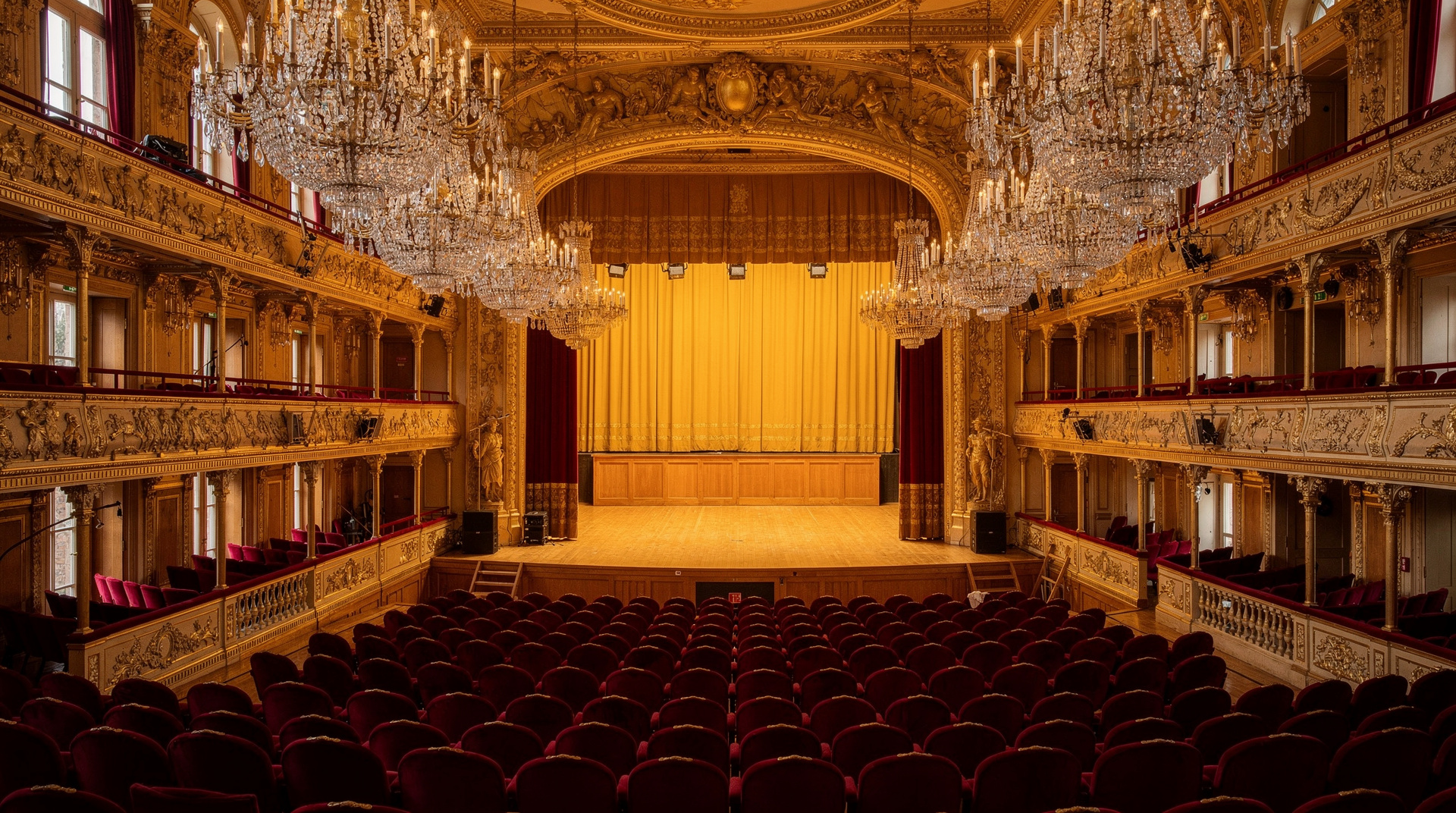
The Vienna State Opera has a reputation for exclusivity — expensive tickets, formal dress codes, an intimidating institutional grandeur. The reality is more democratic. The world’s most active opera house admits visitors from €3 for standing room and from €10 for seated positions, accepts visitors in smart casual dress, and provides surtitles in multiple languages for every opera.
This guide explains how to actually attend the Staatsoper, what to expect inside, and how to navigate the ticket system without overpaying.
| Where | Opernring 2, 1010 Wien (Innere Stadt) |
| Cost | €3–4 standing room; €10–250+ seated |
| Time needed | 2.5–4 hours per performance, plus 90 min queue for standing room |
| Season | September–June; closed July–August |
| Booking | Online ~2 months ahead for seats; standing room same-day only |
The building
The Staatsoper was built between 1861 and 1869 by Eduard van der Nüll and August von Siccardsburg, opening on 25 May 1869 with a performance of Mozart’s Don Giovanni conducted by Johann Herbeck. The building’s reception was poor — the Vienna press mocked its proportions — and both architects died before the public warmed to it.
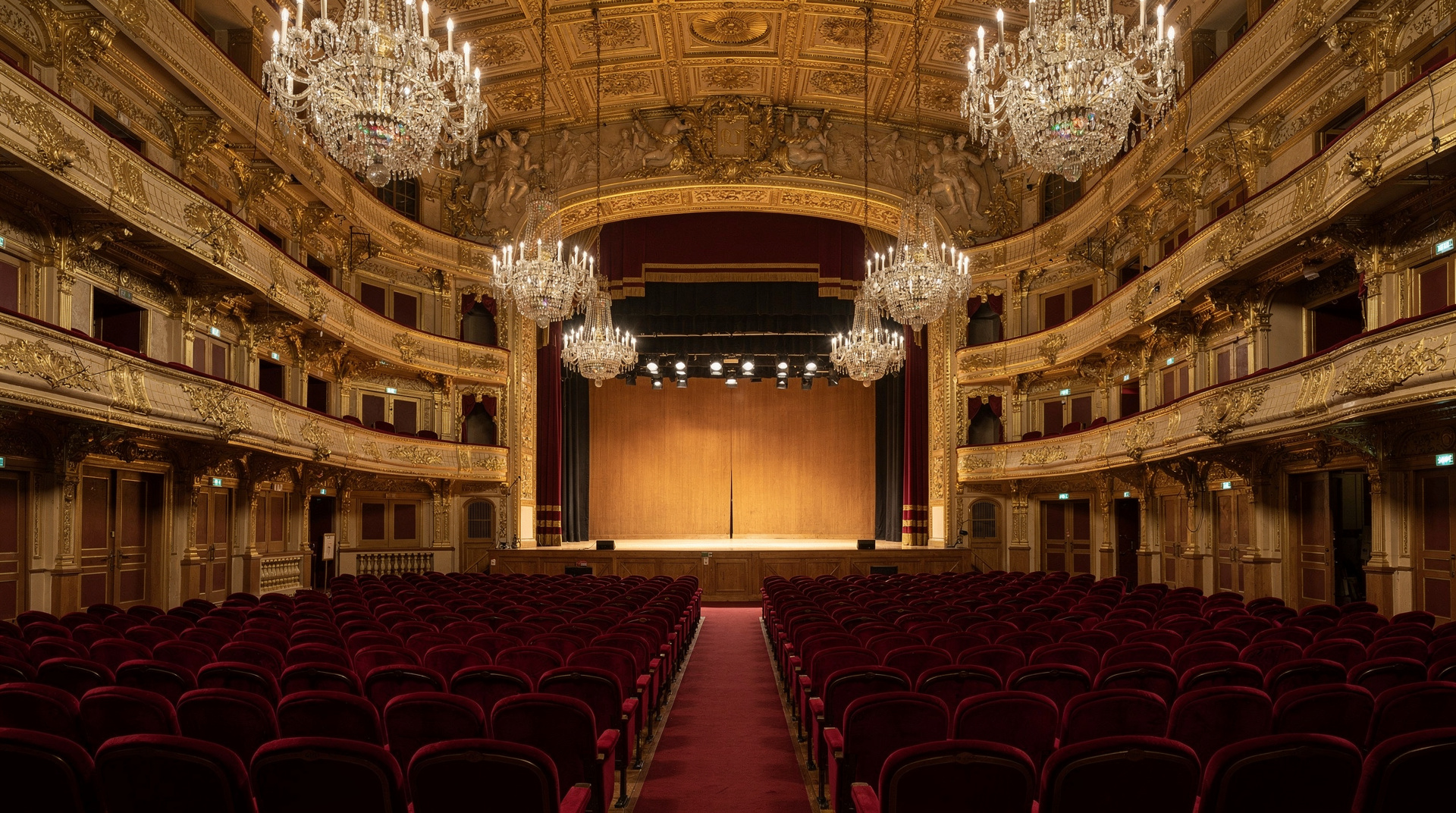
The building was severely damaged by Allied bombing in March 1945 (the auditorium and stage were destroyed; the lobby, grand staircase, and outer walls survived). The rebuilt auditorium, reopened in November 1955 with Beethoven’s Fidelio, is a post-war reconstruction that closely follows the original proportions but is not identical to the 1869 interior.
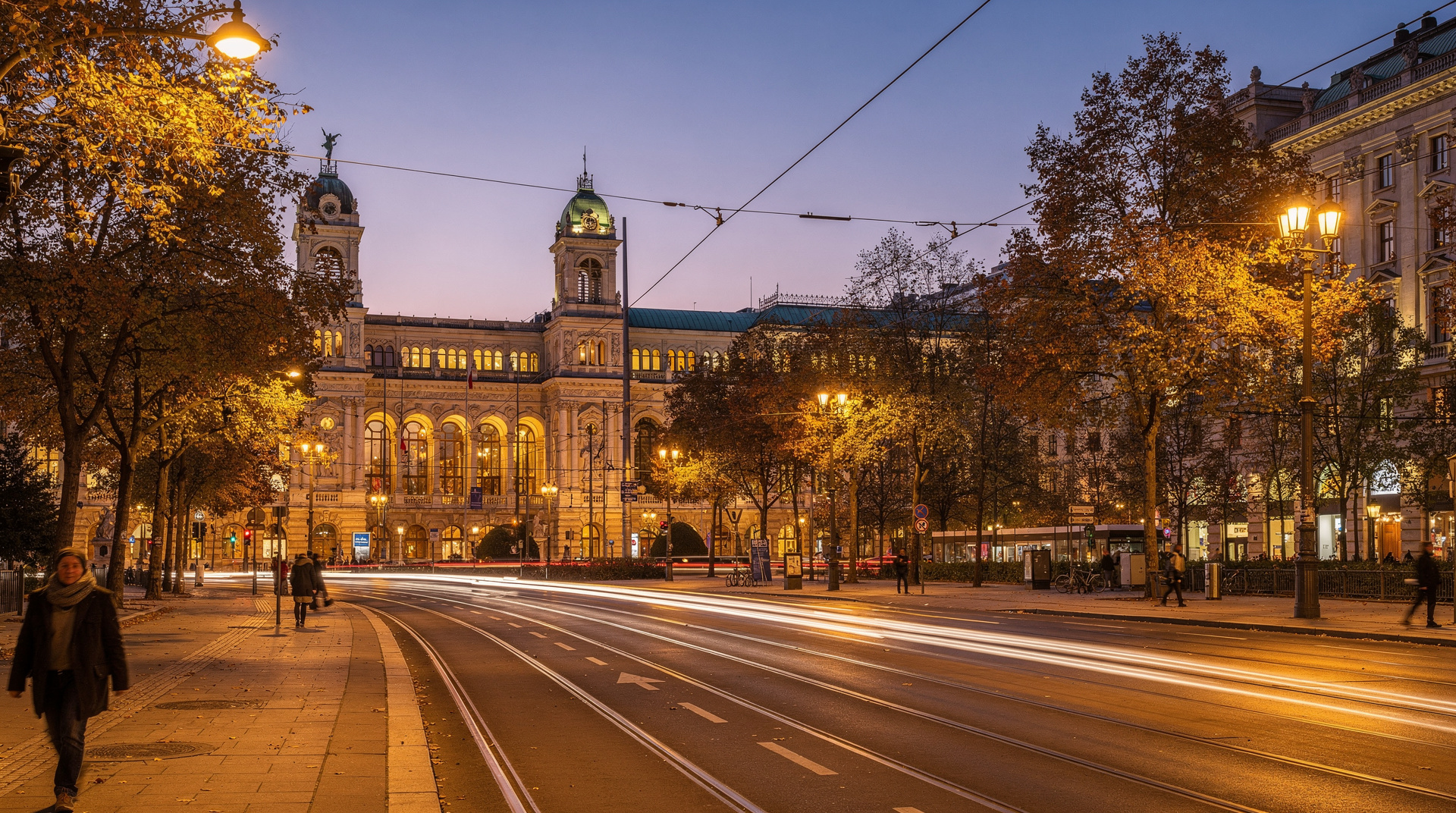
The exterior on the Ringstrasse is one of the most photographed buildings in Vienna. Walking past it at night, when the loggia is lit and the carriages of earlier centuries have been replaced by taxis and tourists, is one of the standard Vienna experiences. See our Ringstrasse walk guide for the broader Ringstrasse context.
The programmes and the season
The Staatsoper performs nearly every night September through June — approximately 300 performances per season — with a different opera or ballet programme each evening. The repertoire spans the standard operatic canon from Baroque to contemporary, with the largest proportion in the core German and Italian repertoire (Mozart, Verdi, Wagner, Puccini, Strauss).
The season’s highlights are typically announced in spring for the following September. Major productions with world-class casts sell out quickly. The safer approach for most visitors is to check what is on during their specific dates and select accordingly — the Staatsoper’s bench is deep enough that even non-flagship productions are performed at a high level.
Ticket options: honest breakdown
Standing room (Stehplatz) — €3–4
The most democratic option. Released at the Abendkasse (evening box office, Operngasse entrance) starting 80 minutes before curtain. The queue forms before the office opens; arriving 90–100 minutes before curtain gives a better position.
Standing areas are in the upper amphitheatre (Galerie) and on the gallery sides. The acoustic is excellent throughout the house — the Staatsoper was designed for it. Standing rail clips allow you to drape your coat and lean. The experience — standing in a world-famous opera house hearing the Wiener Staatsopernorchester — is not meaningfully diminished by the absence of a seat.
Practical notes: Wear comfortable shoes. Opera performances run 2.5–4 hours depending on the programme, with one or two intervals. There are standing positions directly behind the top price stalls seats where the sightline to the stage is clear and close.
Seated tickets — €10–250
The ticket price hierarchy at the Staatsoper:
- Back amphitheatre (Balkon, Galerie): €10–30. Restricted sightlines in some positions; full acoustic. Good value.
- Upper circle and gallery (Galerie, 2. Rang): €30–80. Better sightlines; variable acoustic positions.
- Stalls and dress circle (Parterre, 1. Rang): €100–250. The standard “full experience” seats.
- Boxes (Logen): €120–300+. Historic box seats; some positions have angled sightlines.
Online booking opens approximately 2 months before each performance on wiener-staatsoper.at. Sold-out performances sometimes release returned tickets in the days before the performance.
What to wear
The Staatsoper has no formal dress code. The audience ranges from Viennese opera-goers in evening wear (a significant proportion, especially on opening nights) to international tourists in casual clothes. Smart casual (collared shirt or blouse, no sports shoes or shorts) is appropriate and comfortable for all positions including standing room.
Dress up slightly more for opening nights and major gala performances, where the Viennese audience tends toward formal wear. For regular weeknight performances, smart casual is completely unremarkable.
What to see when you are not at a performance
The Staatsoper building itself is worth a look even without attending a performance.
Guided tours: Available most days, covering the grand staircase, lobby, and auditorium. Duration approximately 40 minutes. Cost: approximately €9. Check the Staatsoper website for schedules — tours do not run on days with morning rehearsals.
The loggia: The public loggia facing the Ringstrasse (the arched arcade ground floor) is publicly accessible and a pleasant shelter from rain. The busts of composers that line it are worth noting.
The Vienna Philharmonic New Year’s Concert broadcast: On 1 January, the Musikverein broadcasts the New Year’s Concert on screens visible from Ringstrasse area public spaces — not the Staatsoper itself, but nearby.
A word about alternatives at the Staatsoper ticket price
Attending the Staatsoper on standing room (€3–4) is genuinely one of the best deals in cultural Vienna. For the same cost as a coffee in a tourist café, you experience the world’s most active opera house at a professional standard that would require considerably more in any other major city.
If the specific programme on your dates does not suit you, the alternatives in our Vienna classical concerts compared guide cover the full spectrum from €3 standing room to €120 palace dinner concerts.
Vienna: musical tickets — The Phantom of the OperaFor visitors who want a theatrical musical experience in Vienna’s Ronacher theatre rather than opera at the Staatsoper, The Phantom of the Opera has been a long-running production in Vienna. It is a different product from opera — a commercial musical — but professionally produced and appropriate for visitors who are not opera enthusiasts.
Vienna: classical concert in the Musikverein (Four Seasons and Mozart)Choosing the right way in for your trip
The best route into the Staatsoper depends less on budget than on what kind of evening you want. If you have one night in the city and are curious rather than devoted, standing room is the natural choice: you give up a seat, not the music, and you keep the rest of your budget for dinner. If the evening is a celebration, such as an anniversary or a honeymoon, a seat in the stalls or a box turns the night into the occasion itself. Our Vienna honeymoon guide and Vienna luxury guide both place an opera evening in that kind of trip.
Travellers on a tight budget will find that the opera sits comfortably alongside the advice in our Vienna on a budget guide. A standing ticket costs about the same as a snack, which makes it one of the few headline Vienna experiences that does not strain a daily allowance.
If you are travelling alone, the opera is also one of the easiest evenings to enjoy without company. Nobody questions a single person in the queue or at the rail, and the shared concentration of the audience means you never feel out of place. The solo travel in Vienna guide covers other evenings that work in the same way.
Making an opera evening of it
An evening at the Staatsoper rewards a little planning around the performance itself. Because the queue for standing room forms well before the box office opens, it makes sense to eat early or to carry something light rather than aiming for a long sit-down dinner beforehand. A relaxed meal after the final curtain is more realistic, and the best restaurants in Vienna guide is a good place to find somewhere suited to a late table. For something lighter, the city’s café tradition is the natural companion to a night out, and the Vienna coffee house guide explains where to linger over a slice of cake before or after.
Think too about how the opera fits your wider sightseeing. The house is on the Ringstrasse, a few steps from the heart of the old town, so a morning at the Hofburg Palace or the Albertina Museum leads easily into an evening performance without crossing the city. Keep the day lighter than usual if you plan to stand: a long performance feels very different after eight hours of walking.
Reading the programme before you go
Opera in the original language can feel daunting if you have never attended one. A few habits make it easier. Read a short synopsis of the plot beforehand so that the surtitles confirm what you already understand rather than demanding your full attention. Listen to a recording of a key aria or two if the work is unfamiliar. And remember that you do not need to follow every line: the music, the staging and the singing carry the story on their own.
Standing room etiquette
Standing room has its own quiet customs. Regular standing-room visitors tend to claim their spot early and respect the spaces held by others, so queue patiently and follow the order of the line. Keep movement and noise low during the performance, silence your phone completely, and save conversation for the intervals. Lean on the rail rather than your neighbour, and be generous with space if the house is full. These small courtesies are part of why standing room is such a pleasant community of its own.
If the Staatsoper does not fit your dates
Plenty of visitors arrive in the wrong month, or find that the programme on their one free evening is not to their taste. That is not a reason to skip Vienna’s musical life. The Musikverein, the Kursalon and several smaller venues offer concerts throughout the year, and our Kursalon Strauss concerts guide and Mozarthaus concert guide describe other settings. For a sense of how the tradition grew, the Haus der Musik guide is a good daytime companion that needs no evening ticket.
Be careful with the concerts that are sold on the street by people in period costume. They are not the same product as the opera house, and our Mozart impersonator concert trap guide explains what to look out for before you hand over any money.
Practical logistics
Address: Opernring 2, 1010 Wien U-Bahn: U1/U2/U4 to Karlsplatz (5-minute walk) or U4 to Stadtpark (8-minute walk) Tram: Trams 1, 2, D, 71 stop at Opernring/Kärntner Ring
On the night: The main entrance is on Opernring. The Abendkasse (standing room and day-of tickets) is on Operngasse. Allow 15 minutes before curtain for coat check (optional) and finding your position.
Intervals: The Staatsoper has a café/bar service during intervals. Prices are high. The interval is typically 20–30 minutes. Champagne in the stalls bar is a Viennese tradition.
Comparing the Staatsoper to Vienna’s other classical venues
The Staatsoper is one of several major classical music venues in Vienna, and it’s worth knowing where it sits before committing an evening. Our Vienna classical concerts compared guide ranks it against the Musikverein concerts — home of the Vienna Philharmonic and generally considered Vienna’s finest acoustic — and the tourist-oriented Sala Terrena–style concerts that cluster around the Innere Stadt.
If classical music is a central reason for your Vienna trip rather than a single evening, the Vienna classical music itinerary sequences the Staatsoper, Musikverein, and Spanish Riding School across several days so you don’t overload any single evening or duplicate repertoire.
One honest note: opera and orchestral concerts are different experiences. The Staatsoper delivers full-scale opera productions with stage direction, costume, and set design; the Musikverein delivers concert performance without staging. Both use largely the same musicians (the Staatsopernorchester and the Wiener Philharmoniker overlap), so the choice comes down to whether you want the theatrical or the purely musical experience on a given night.
Frequently asked questions about the Vienna State Opera
What is the Vienna State Opera?
The Wiener Staatsoper is one of the world’s foremost opera houses, performing nearly every night September through June with a different programme each evening.
How much do Staatsoper tickets cost?
Standing room: €3–4 (released 80 min before curtain). Amphitheatre seats: €10–30. Stalls and boxes: €100–250+.
When does the Staatsoper season run?
The main season runs September through June. The opera house is closed in July and August.
Is the Vienna State Opera the same orchestra as the Vienna Philharmonic?
Yes — the Wiener Staatsopernorchester and the Wiener Philharmoniker are the same musicians, performing under two different institutional identities.
How does the standing room work at the Staatsoper?
Standing room (Stehplatz) tickets are sold at the Abendkasse 80 minutes before curtain. Queue on the Operngasse side. Cost €3–4. Standing rail clips are available.
Can I take a guided tour of the Staatsoper without attending a performance?
Yes — guided tours run daily (when no rehearsal conflicts). Duration approximately 40 minutes; cost approximately €9.
Top experiences
Bookable activities with verified prices and instant confirmation on GetYourGuide.