Kunsthistorisches Museum Vienna guide: what to see and how to visit
Vienna Kunsthistorisches Museum Day Admission Ticket
Is the Kunsthistorisches Museum worth visiting?
Yes — the KHM holds one of the world's greatest collections of Old Master paintings, assembled by the Habsburg dynasty over three centuries. Bruegel the Elder's Seasons cycle, Vermeer's Art of Painting, Velázquez's Infanta portraits, Raphael, Caravaggio and Titian are all here. Allow 3–4 hours; tickets are €21.
The KHM: what makes it exceptional
The Kunsthistorisches Museum (Art History Museum) is not simply Vienna’s art museum. It is one of the half-dozen greatest art museums in the world, holding a collection assembled by the Habsburg dynasty over roughly 350 years, during which the family controlled much of Europe and could commission or acquire essentially anything they wanted.
The result is a collection of exceptional depth: not three Bruegels but eleven, not one Titian but thirty, not the occasional Velázquez but a sustained collection of his most ambitious works. Unlike many great collections that were built through purchases and donations, the KHM holdings were accumulated by one family over generations, with a consistent aesthetic and political vision behind the acquisitions.
This guide tells you what to see and how to approach the building efficiently.
| Where | Maria-Theresien-Platz, Innere Stadt |
| Cost | Around €21 adults |
| Time needed | 3–4 hours for a thorough visit; 2 hours focused |
| Getting there | U2 to Museumsquartier or U3 to Volkstheater |
| Best time | Thursday evenings (open until 9 pm, lighter crowds after 6 pm) |
What you need to know before you go
Address: Maria-Theresien-Platz, 1010 Wien Opening hours: Tuesday–Sunday 10 am–6 pm; Thursday 10 am–9 pm. Closed Monday. Admission: €21 adults; free under 19; audio guide extra Getting there: U2 to Museumsquartier or U3 to Volkstheater (5 minutes walk); tram D to Burgring
Size: The KHM has four main departments. The Picture Gallery alone occupies 40 rooms on two main floors. A single visit cannot cover everything.
Photography: Permitted in permanent galleries without flash; not permitted in temporary exhibitions.
How to use your time: the Picture Gallery
The Bruegel room (Room X, first floor)
This is the most important single room in the KHM. Pieter Bruegel the Elder (active 1550s–1569) was the greatest Netherlandish painter of the 16th century, and Vienna holds more of his works than anywhere else in the world — specifically the six surviving panels from his series of Seasons paintings (commissioned for a merchant’s Antwerp townhouse) and the two versions of the Tower of Babel.
The Seasons cycle is remarkable: Hunters in the Snow (January), The Gloomy Day (February–March), Haymaking (July), The Harvesters (August), The Return of the Herd (November). Together they constitute the most complete early landscape cycle in Western painting, with a vision of human activity integrated into seasonal natural rhythms that prefigures landscape painting by a century. The peasants, animals, and weather are observed with a specificity that makes these 460-year-old paintings feel physically present.
Allow 20–30 minutes in this room alone.
Vermeer’s Art of Painting (Room 22)
Vermeer’s Art of Painting (c. 1666–1668) is one of the most technically extraordinary paintings in Western art. Vermeer owned it himself and never sold it — it was treated as a demonstration piece of his skill rather than a commissioned work. The way light enters from the left window and falls across the draped curtain, the map, the model’s white garment, and the chandelier is a masterclass in optical observation and its translation into paint.
It is generally not as immediately striking as the Bruegel room — viewers unfamiliar with Vermeer sometimes walk past it. Give it five minutes and a careful look at the rendering of the chandelier particularly.
The Spanish school: Velázquez and Titian
Room XIV holds the Habsburg collection’s Velázquez portraits — several of the Infanta Margarita in different dresses, painted at intervals between 1653 and 1659, along with the Infanta Maria Teresa. These were dynastic images sent from the Spanish to the Austrian branch of the Habsburgs. The technical virtuosity and the way Velázquez constructs the appearance of elaborate fabric through economical brushwork is among the highest achievements of European portraiture.
The Titian rooms (Rooms I and II) hold the Venus of Pardo and several mythological works, part of the “Poesie” cycle painted for Philip II of Spain and later acquired by the Habsburgs.
Raphael, Caravaggio, and the Italian collection
Rooms 1–9 on the first floor hold the Italian painting collection. Key works include Raphael’s Madonna of the Meadow (1505–06), Caravaggio’s Madonna of the Rosary (1606–07), and Correggio’s Jupiter and Io. The Italian collection is not as deep as the Flemish but includes essential works.
The other departments
Egyptian and Ancient Near Eastern Collection
One of the ten most important Egyptian collections in the world, assembled partly through the 19th-century Habsburg acquisition and partly through the purchase of the Miramare collection. Highlights include an intact burial chamber with inscribed walls (the grave of Ka-ni-nisut, c. 2400 BC), significant Middle Kingdom statuary, and a large collection of Faience and ushabti figures.
Allow 1–1.5 hours if Egyptian antiquity is of interest.
Kunstkammer (chambers of art and wonder)
The Kunstkammer on the first floor is the reconstituted Habsburg Kunstkammer — the cabinet of curiosities that was one of the fundamental institutions of Renaissance courtly culture. The collection includes goldsmith work, rock crystal vessels, automata, scientific instruments, and the Cellini Salt Cellar (Benvenuto Cellini, c. 1543) — one of the most famous Renaissance goldsmith works in existence.
The Kunstkammer requires a separate entry ticket or the combined admission. Allow 1 hour.
Tickets and booking
Vienna Kunsthistorisches Museum day admission ticket Standard day admission covers the Picture Gallery and the Egyptian, Greek-Roman, and Kunstkammer departments. Audio guides are available at an additional cost and are useful for navigating the large collection.
Thursday evening: The KHM is open until 9 pm on Thursdays with reduced crowds after 6 pm. This is the best time for visitors who want to spend significant time in the Bruegel room without competition.
The building itself: Klimt’s early paintings
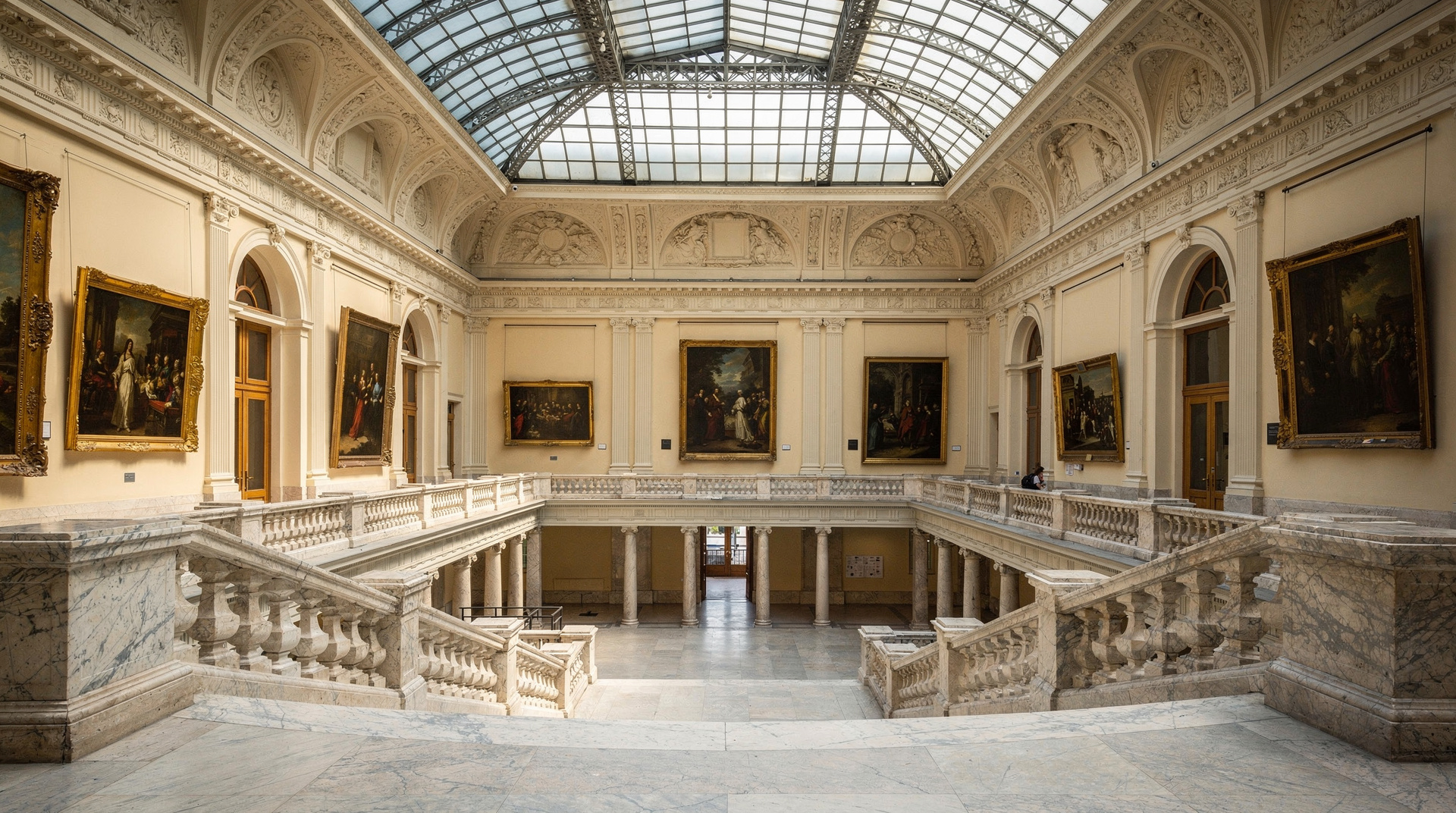
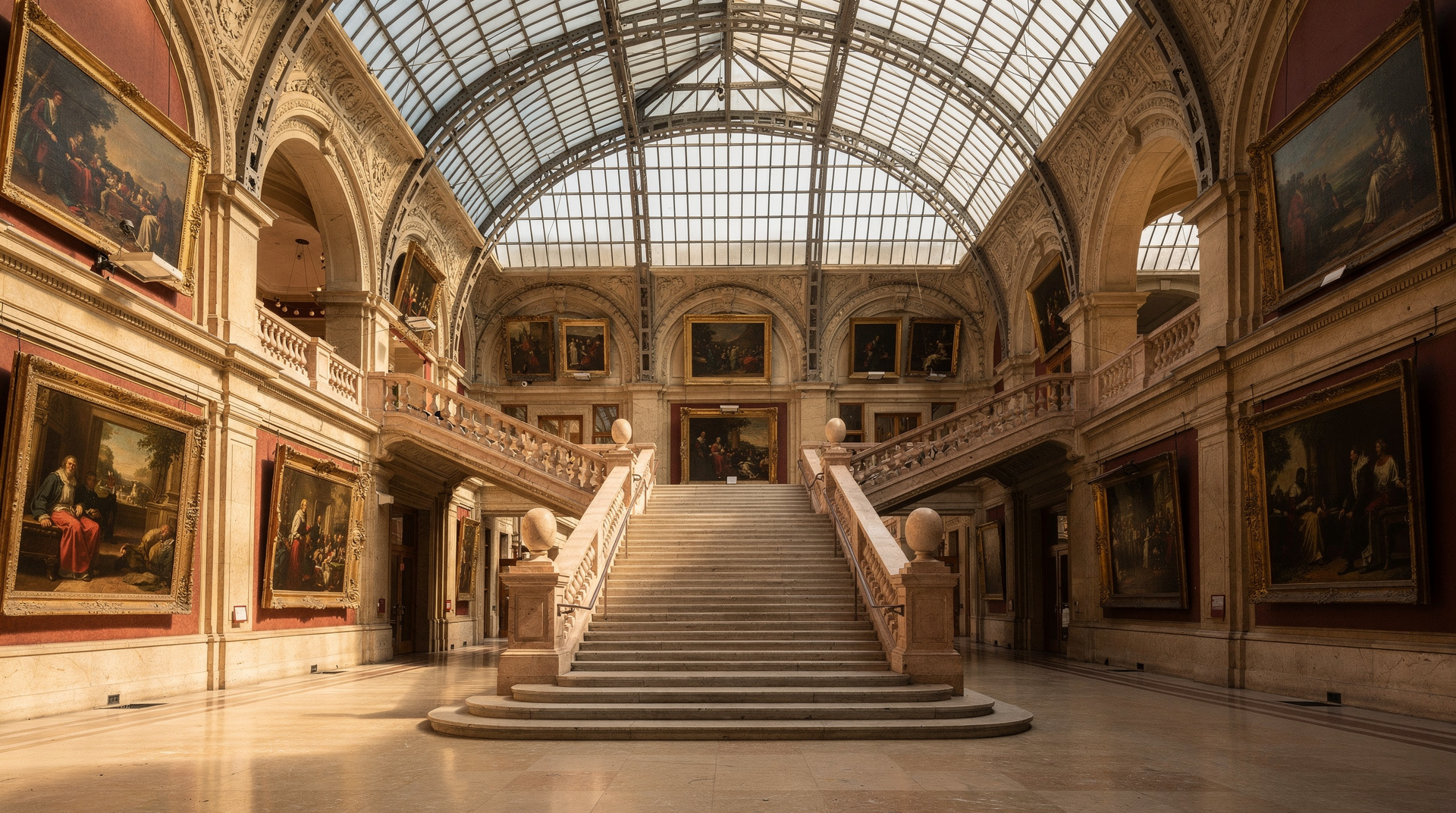
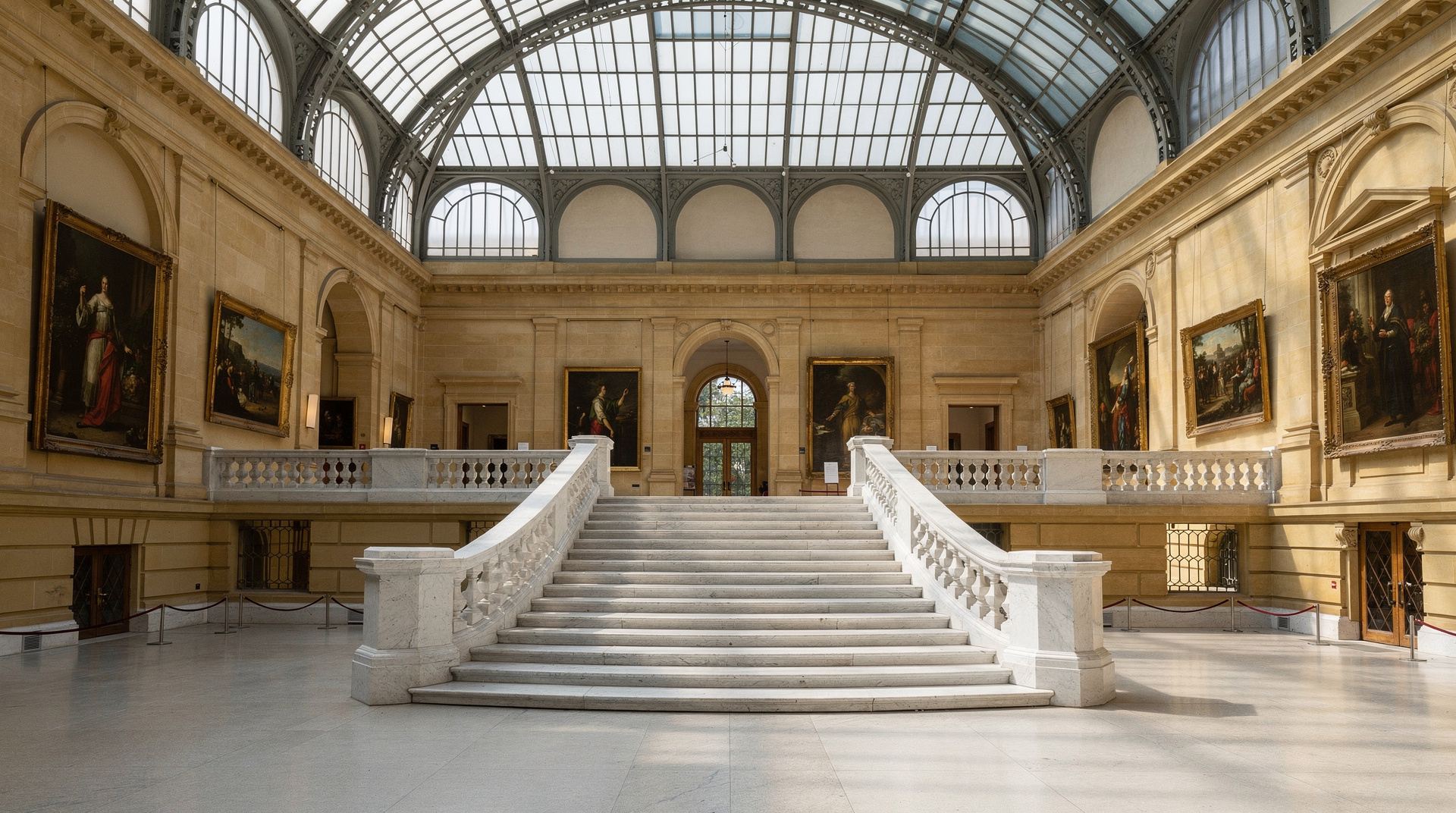
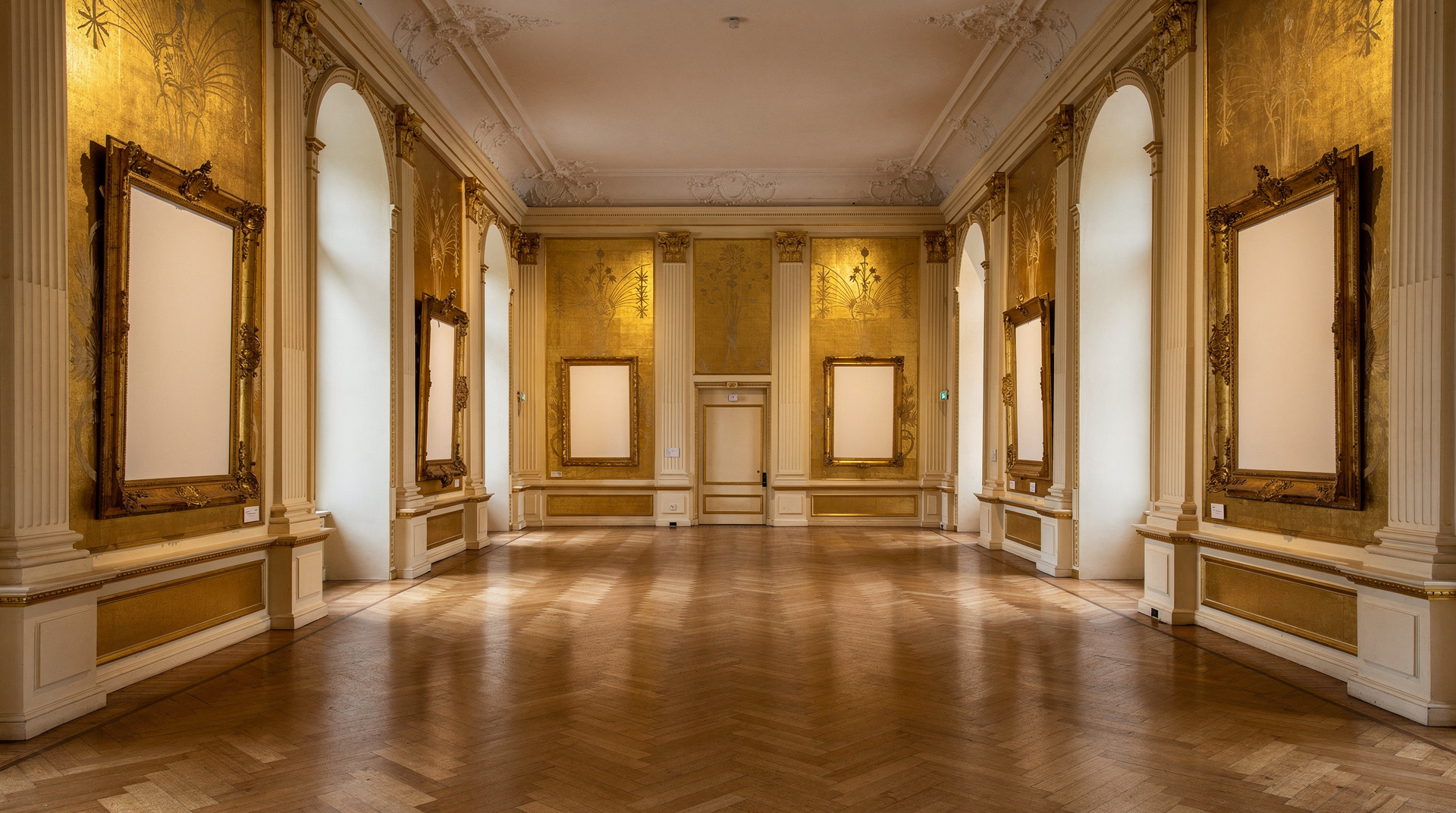
The KHM building — designed by Gottfried Semper and Carl von Hasenauer, completed in 1891 — is worth examining before you enter. The main staircase interior has ceiling lunettes and intercolumnar spaces painted in 1890–91 by a 28-year-old Gustav Klimt (with his brother Ernst and Franz Matsch). These early Klimt works are rarely discussed in Klimt guides focused on his mature golden style — they are academic and allegorical rather than Secessionist — but they are his contribution to the building.
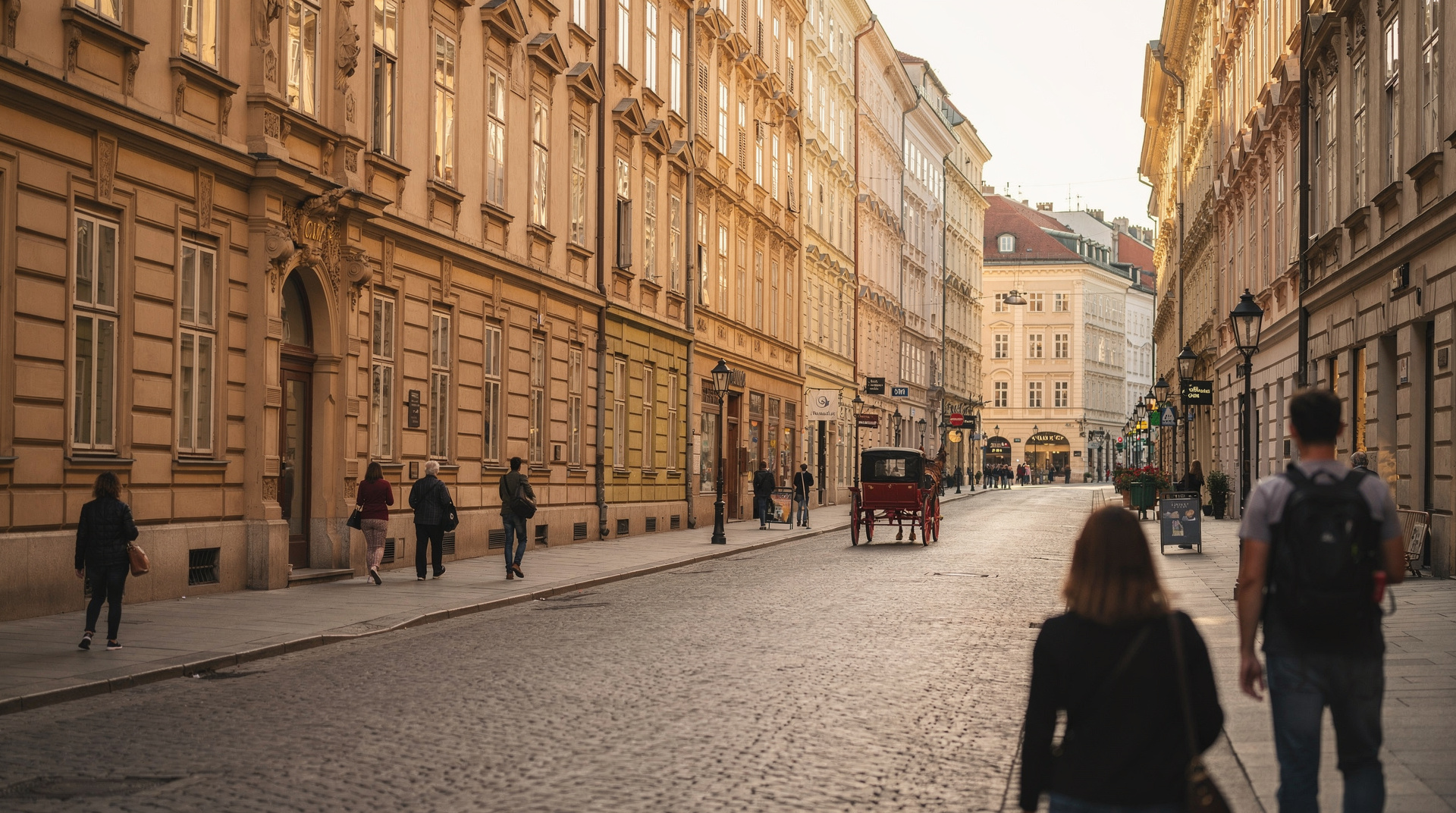
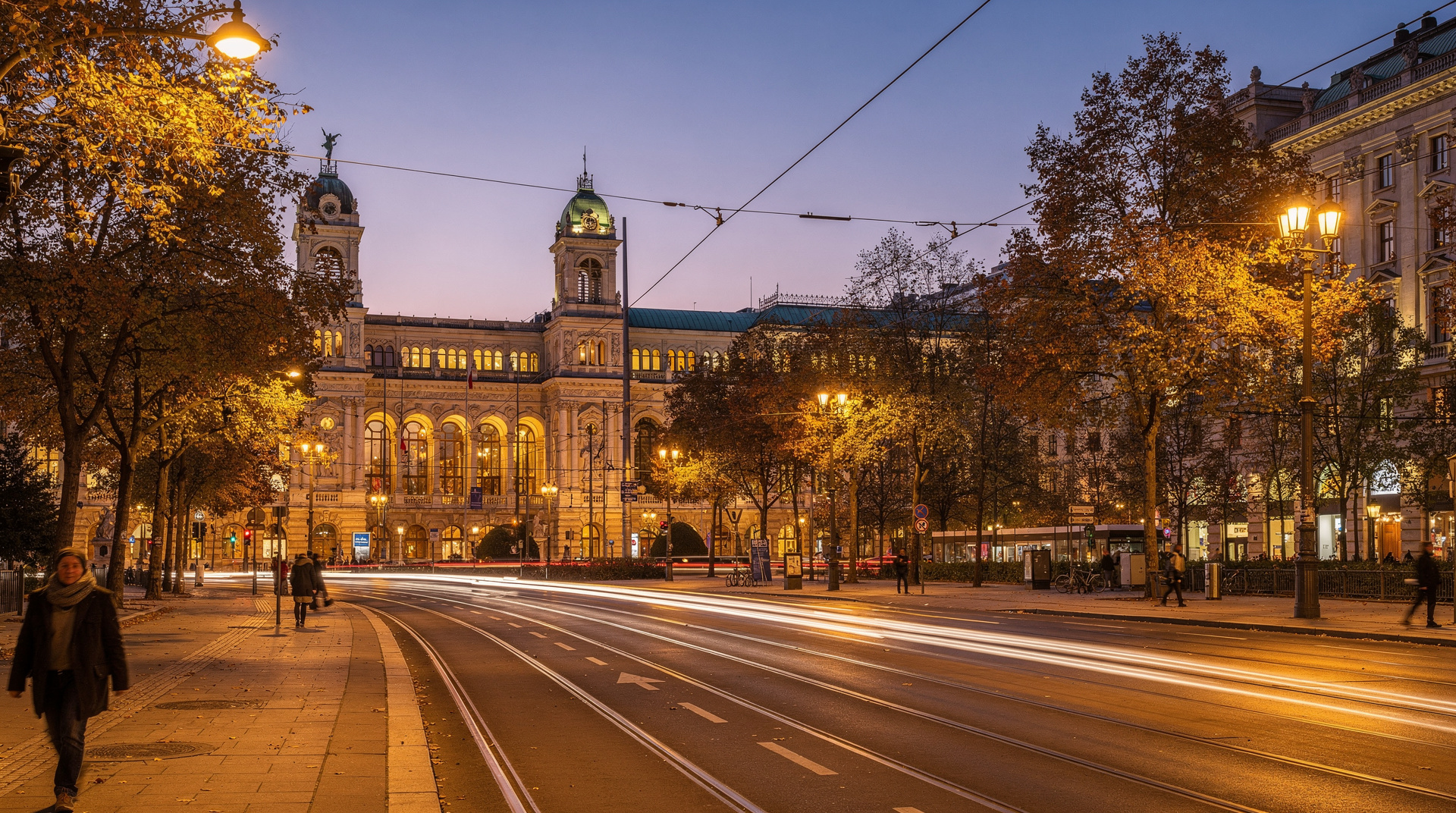
The Maria-Theresien-Platz outside, with the symmetrical pairing of the KHM and its sister building the Naturhistorisches Museum, and the Maria Theresa statue between them, is one of Vienna’s most formally conceived urban spaces. See our Ringstrasse walk guide for the architectural context.
Why the Habsburgs collected like this
Understanding who built the collection makes the rooms easier to read. The paintings were not bought to fill a public museum; they were assembled as dynastic statements, gifts between branches of the family, and trophies of rule. That is why the Spanish portraits hang beside Flemish landscapes and Italian altarpieces: each one travelled along a family route. If the family story interests you, our Habsburg history guide for travelers gives the background, and the Franz Joseph and Sisi guide covers the last generations who used the building’s neighbours as showcases of imperial prestige.
The museum itself was conceived as part of the Ringstrasse project, the great ring of public buildings that replaced the old city fortifications. Seen in that light, the KHM is as much a statement about the empire’s self-image as it is a gallery. For the wider urban story, the Innere Stadt destination page and the Ringstrasse destination page place the museum in its surroundings.
Pacing, rest and what to skip
A museum of this scale defeats most visitors through fatigue, not lack of interest. A few habits help:
- Sit down deliberately. The galleries have seating, and ten minutes on a bench between the Italian and Dutch rooms resets your attention better than pushing on.
- Look at fewer pictures for longer. Choose a handful of works and give each real time; the rest of the walls will still be there if you return.
- Treat the building as part of the visit. The staircase, the domed hall and the decorated ceilings reward a slow look, and they cost nothing extra.
- Decide in advance which department you will drop. For most first-time visitors that is the Greek and Roman material, or the Egyptian collection if paintings are your priority.
If you find yourself craving a break from the Old Masters, the nearby Museumsquartier destination page points to contemporary options a short walk away, and the mumok guide covers the modern art museum there. For a very different kind of collection, the Naturhistorisches Museum guide describes the mirror building on the square.
Who will enjoy it most
Art lovers who want depth will find the Picture Gallery the obvious draw. History readers will enjoy the Kunstkammer, where objects made to astonish a Renaissance court still do so. Families with older children can make the visit work if they pick one or two themes, such as the Egyptian burial chamber, rather than trying to cover everything. Visitors who prefer lighter, more modern art may be happier at the Albertina Modern or the Leopold Museum, both of which have their own guides here.
After the museum, many visitors head for a coffee house to talk through what they saw; our best coffee houses in Vienna guide suggests where to sit down.
Combining the KHM with other museums
Same day: The Naturhistorisches Museum is the mirror building across the square — same opening hours, same scale. Doing both in one day requires early arrival (10 am) and sustained focus. Most visitors find one museum per day more rewarding.
Adjacent day: A KHM morning (10 am–2 pm) + Belvedere afternoon (2–6 pm) covers the two essential art museums in one intensive day, but is tiring. The Vienna 3-day itinerary spaces them more comfortably.
Planning the Belvedere half of that day: if you want to pair the two, book an entry ticket to the Upper Belvedere and its permanent collection ahead of time so the afternoon is not spent in a queue.
Drawings and graphic art: for a quieter follow-up to the Old Masters, tickets for the Albertina exhibitions open a different side of the Habsburg collecting story, centred on works on paper.
Klimt trail: The KHM staircase paintings, the Belvedere collection, the Albertina drawings, the Wien Museum, and the Secession building together constitute the complete Klimt picture. Our Klimt trail guide maps the full route.
Where the KHM ranks among Vienna’s museums
For visitors trying to prioritise among Vienna’s many world-class museums, our best museums in Vienna guide consistently ranks the KHM among the top two or three, alongside the Belvedere. If your time is genuinely limited to a single museum morning, the honest answer is that the KHM’s depth in Flemish and Dutch painting — particularly the Bruegel room — is difficult to match anywhere else in the world, including the Louvre or the Prado.
Practical tips for a focused visit
If you have less than the full 3–4 hours, commit to a route rather than wandering: start at the Bruegel room (Room X) immediately after entering, since it is the single most time-sensitive stop as tour groups arrive through the morning. Then work backward through the Italian and Spanish rooms toward Vermeer’s Art of Painting, finishing with the Egyptian collection only if time allows. This order front-loads the museum’s single greatest concentration of works before fatigue and crowding set in.
Frequently asked questions about the Kunsthistorisches Museum
What is the best painting in the KHM?
The Bruegel room (Room X) is the most important concentration of Bruegel the Elder works anywhere — six Seasons paintings plus the Tower of Babel. Vermeer’s Art of Painting is the other work most often cited as the crown jewel.
How long does the KHM take?
A thorough visit takes 3–4 hours. A focused 2-hour visit covering only the Flemish and Dutch painting galleries is a valid strategy for visitors with limited time.
What collections are in the KHM?
Picture Gallery (paintings); Egyptian and Ancient Near Eastern Collection; Greek, Etruscan and Roman Antiquities; and the Kunstkammer. Each requires 1–2 hours for a focused visit.
Did Klimt paint anything in the KHM?
Yes — the staircase ceiling and intercolumnar paintings were executed by a young Gustav Klimt (with his brother Ernst and Franz Matsch) in 1890–1891.
Is the KHM included in the Vienna PASS?
Yes — the KHM is included in both Vienna PASS and FLEXI versions.
When does the KHM close?
Closed Mondays. Open Tuesday–Sunday 10 am–6 pm; Thursday until 9 pm.
Top experiences
Bookable activities with verified prices and instant confirmation on GetYourGuide.