Vienna in 3 days: a first-timer's classic itinerary
Vienna: Schönbrunn Palace & Gardens Skip-the-Line Tour
Three days is the minimum to do Vienna justice without feeling you’ve sprinted past everything. This itinerary covers the imperial core — Schönbrunn, the Hofburg, Stephansdom, the Belvedere — alongside a classical concert and a proper Viennese coffee house. Logistics are built around public transport: the U-Bahn is fast, cheap, and reaches every sight on this list. If three days turns out to be too tight, our how many days in Vienna guide and the 4-day itinerary show what a day trip adds to this same core.
At a glance
| Duration | 3 days |
| Pace | Full but not rushed — one major sight per half-day |
| Best for | First-timers, couples, culture lovers |
| Transport | U-Bahn and trams only, no car needed |
| Budget | Mid-range, roughly 180–230 € per day per couple |
| Best season | April–June or September–October |
Day-by-day summary
| Day | Morning | Afternoon | Evening |
|---|---|---|---|
| 1 | Stephansdom, Hofburg | Café Central, Ringstrasse, Albertina | Figlmüller dinner |
| 2 | Schönbrunn Palace, Gloriette | Naschmarkt, MuseumsQuartier | Musikverein concert |
| 3 | Upper Belvedere | Naschmarkt lunch, free time | Plachutta farewell dinner |
Day 1: the imperial core — Hofburg and Innere Stadt
Morning (9:00–12:30)
Start at Stephansdom (St. Stephen’s Cathedral) when it opens at 9:00. Climb the South Tower for views over the rooftops — 343 steps, about 30 minutes round trip. The cathedral itself is free; the tower costs around 6 €. Avoid the catacombs tour at 9:00 when groups cluster; come back at 14:00 if interested.
Walk west along the Graben — Vienna’s pedestrian showpiece — and pause at the Pestsäule (Plague Column), a flamboyant 17th-century marble monument most visitors photograph and walk past without stopping. Worth 5 minutes.
By 10:00, turn onto Kohlmarkt toward the Hofburg Palace complex. Book the Hofburg and Empress Sisi Museum guided tour for the 10:30 departure — this covers the Sisi Museum, Imperial Apartments, and Imperial Silver Collection with a knowledgeable guide who puts the Habsburg story in context. Allow 2.5 hours.
If the palace story grabs you, the Hofburg Palace guide and the Imperial Apartments guide go deeper into the rooms, and Franz Joseph and Sisi gives the human story behind them.
Tip: Do not confuse “Hofburg entrance for tourists” with the Spanish Riding School entrance — they are different gates. The Michaelertor (the big dome entrance on Michaelerplatz) is yours.
Afternoon (12:30–18:00)
Lunch at Café Central on Herrengasse — yes, it is touristy, but the architecture (former stock exchange, vaulted ceilings, marble columns) is genuinely spectacular and the Tafelspitz is honest. Budget 20–30 € per person with a glass of wine. Alternatively, cross the Ring to Café Landtmann on the Ringstrasse, preferred by Sigmund Freud and still excellent.
If you would rather pick your coffee house with care, Café Central vs Landtmann vs Sacher compares the classics, and the coffee house etiquette guide explains how to order and how long you can linger.
After lunch, walk the Ringstrasse — Vienna’s grand 19th-century boulevard — past the Parliament, Rathaus, and Burgtheater. This is one of Europe’s great urban set-pieces and it costs nothing. The city center walking tour departs at 14:00 from Albertinaplatz and covers this and more in two hours.
At 16:00, walk to Albertinaplatz and visit the Albertina Museum (Monet, Picasso, Dürer — consistently good temporary exhibitions). Allow 1.5 hours.
Evening (19:00 onwards)
Dinner at Figlmüller Wollzeile — the Wiener Schnitzel here is the size of a small planet, veal (not pork), and genuinely good. Book ahead; walk-ins wait. Budget 25–35 € per person.
After dinner, consider an evening walk along the illuminated Graben — Vienna’s street lighting is intentionally low-key and flattering.
Day 2: Schönbrunn Palace and the museum quarter
Morning (8:30–13:00)
Head to Schönbrunn first thing — take U4 to Schönbrunn station (from the center, about 12 minutes). Arrive by 8:45 to beat the groups. Book the Schönbrunn Palace skip-the-line tour in advance: between May and September, walk-up queues exceed 90 minutes by 10:00.
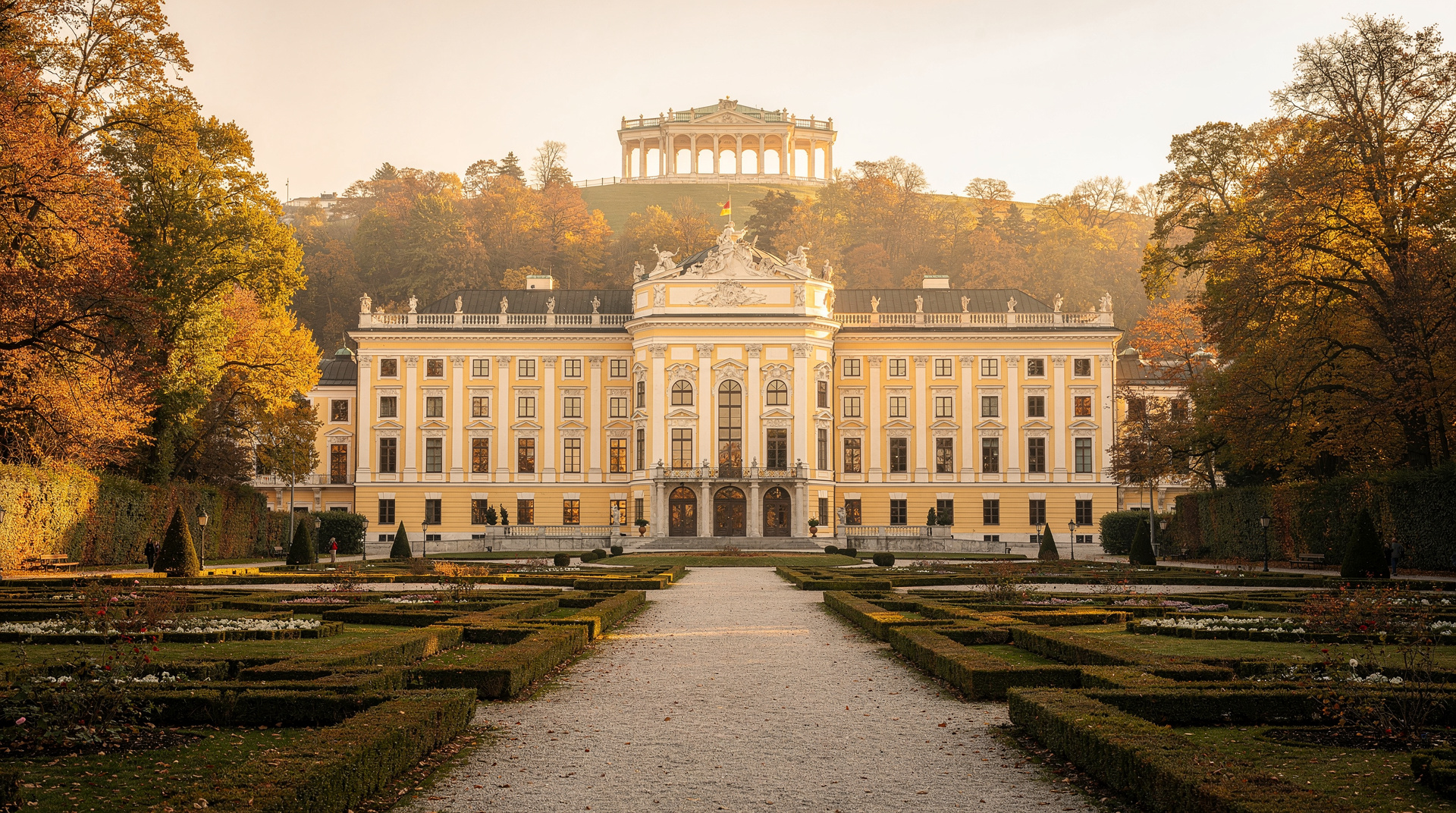
The Grand Tour (45 rooms, about 55 minutes self-guided audio) covers the Imperial Apartments from Maria Theresa’s era through Franz Joseph’s simple iron bed — a quiet rebuke to Versailles-style excess. For room-by-room detail before you go, read the Schönbrunn Palace guide, and see Schönbrunn vs Hofburg if you are unsure which palace deserves more of your time. The Schönbrunn destination page covers the grounds beyond the palace itself.
After the palace, walk up to the Gloriette for the view over Vienna (free). Allow 30 minutes each way uphill.
Afternoon (13:30–18:00)
Return to the city center. Lunch near Naschmarkt — try Café Schwarzenberg or grab Käsekrainer from one of the Würstelstände (sausage stands) that locals actually use on Schleifmühlgasse.
Spend the afternoon in the MuseumsQuartier — the Kunsthistorisches Museum (KHM) alone deserves two hours: Vermeer, Raphael, Velázquez, and the world’s largest Bruegel collection. Or split: one hour in the Albertina annex (Albertina Modern) for 20th-century Austrian art (Schiele, Kokoschka).
At 17:00, walk up Mariahilfer Strasse — Vienna’s main shopping street, good for a coffee break at Café Ritter — or head back toward the center.
Evening (19:30 onwards)
Tonight: a classical concert at the Musikverein. The Vienna: classical concert in the Musikverein offers Vivaldi’s Four Seasons and Mozart works in the famous Golden Hall — this is the real hall where the Vienna Philharmonic plays its New Year’s Concert. Tickets 45–65 €, book at least a week ahead in summer.
Honest note: These are not the Vienna Philharmoniker (who sell out 12 months in advance). They are professional chamber ensembles performing in the same hall. The acoustic alone justifies the price.
Day 3: Belvedere, Naschmarkt, and farewells
Morning (9:00–12:30)
Walk or take tram D to the Upper Belvedere — it opens at 9:00 and crowds are thin before 10:30. Gustav Klimt’s “The Kiss” (1908) is here, along with Schiele, Kokoschka, and a magnificent Baroque garden. The Upper Belvedere entry ticket covers the permanent collection; book ahead to skip the ticket line.
The Belvedere Palace guide explains how the collection is laid out, and the Klimt trail is a good companion if “The Kiss” leaves you wanting more of his work.
Allow 2 hours for the galleries, then 30 minutes in the garden between the Upper and Lower Belvedere palaces — the fountain axis and clipped hedgerows are at their best in morning light.
Afternoon (12:30–17:00)
Lunch at Naschmarkt — Vienna’s open-air market, a 15-minute walk west from the Belvedere. On Saturdays a flea market extends from Kettenbrückengasse to Zieglergasse. Explore the stalls (Turkish, Austrian, Japanese, Greek) and eat at one of the sit-down restaurants on the market edges — Zum Wohl for Austrian, Umar for fish.
After lunch, revisit anything you missed: the Spanish Riding School (check the schedule — it is closed July and August), the Imperial Treasury (the Habsburg crown jewels, undervisited), or just wander the 7th district (Neubau) for independent shops and coffee at Café Phil.
Evening (18:00 onwards)
Final dinner at Plachutta Wollzeile for Tafelspitz (boiled beef in broth — the Viennese dish that politicians and professors have eaten for 150 years). Reserve ahead. Budget 35–45 € per person.
For a nightcap, try a glass of Grüner Veltliner at a wine bar on Bäckerstrasse — Vinothek W has good by-the-glass selection.
How to adapt this itinerary
For music lovers: Add the Haus der Musik (interactive museum, 1–2 hours) on day two afternoon, and consider an evening at the Kursalon in the Stadtpark for a Strauss-and-Mozart programme.
For families with children: Swap the Belvedere on day three for Schönbrunn Zoo (the world’s oldest, open since 1752) — combine with the palace visit on day two. Add the Riesenrad (Giant Ferris Wheel) in the Prater for a 20-minute ride over the city.
On a budget: Replace the guided Musikverein concert (45–65 €) with a free standing-room ticket at the Vienna State Opera (available 80 minutes before curtain, 4 €) or a concert at St. Stephen’s Cathedral (20–25 €). Skip the Albertina and focus on the free sections of the Kunsthistorisches Museum atrium.
In winter (November–January): Add the Rathausplatz Christmas Market to the day one evening walk — it runs late November to 23 December and is genuinely atmospheric. Adjust day three afternoon to include Schönbrunn Christmas Market (less crowded than Rathausplatz).
Costs and logistics
Transport: A 72-hour Wiener Linien ticket covers U-Bahn, trams, and buses for 17.10 €. Buy at any U-Bahn ticket machine on arrival. Validate once on first use.
Average daily spend (mid-range couple): Transport (3.50 €/day shared), sights (25–35 €/person), lunch (20–30 €/person), dinner (35–50 €/person), concert (50–65 €/person) = roughly 180–230 € per day for two people.
Getting from the airport: Take the ÖBB Railjet or S-Bahn S7 from Vienna Airport to Wien Mitte (16 minutes, 4.40 €) — not the CAT (same journey, 15 €). The CAT is faster to buy but identical journey time. Taxis to the center cost 35–45 € (metered) — avoid unlicensed touts offering “flat rates” at arrivals.
Best season: April–June and September–October for mild weather and manageable crowds. July–August: 30°C+ and Schönbrunn queues are brutal without skip-the-line booking.
Where to stay for this itinerary
The Innere Stadt (1st district) puts every sight on this itinerary within 20 minutes on foot or one U-Bahn stop — worth the premium if your budget allows. The 7th district (Neubau), covered in our Vienna on a budget guide, is 10–15% cheaper and still a short tram ride from everything. Avoid basing yourself near the airport or in the outer districts (20th–23rd) purely to save on accommodation — the daily transit time erodes the point of a tightly-paced 3-day visit.
If you only have time for one museum
Vienna has an unusual density of world-class museums, and this itinerary already includes the Albertina and the Belvedere. If a scheduling conflict forces a choice, the Kunsthistorisches Museum — not on this itinerary by default — is worth swapping in for the Albertina on day one; our best museums in Vienna guide ranks all of the city’s major collections by what a first-time visitor actually gets out of each one.
Frequently asked questions about this itinerary
Q: Is 3 days enough for Vienna?
Three days covers the highlights at a reasonable pace without rushing. You will see Schönbrunn, the Hofburg, the Belvedere, and at least one major museum. For a deeper visit — Wachau Valley, Hallstatt, the Vienna Woods — budget five to seven days.
Q: Do I need to book everything in advance?
Book Schönbrunn skip-the-line and the Musikverein concert at least a week ahead in summer. The Hofburg and Belvedere can often be done same-day in shoulder season (April–May, September–October) but advance booking saves queuing.
Q: Is the Musikverein concert worth the price?
For the hall alone, yes — the Golden Hall’s acoustics and gilded interior are extraordinary. The ensembles performing tourist programmes are professional, not the Vienna Philharmoniker, but the standard is high. Read our Vienna classical concerts compared guide before booking.
Q: What is the best way to get between Schönbrunn and the city center?
U4 line from Schönbrunn station to Karlsplatz takes 10 minutes. Taxis exist but are unnecessary — the U-Bahn is faster than road during the day.
Q: Are there tourist traps I should know about?
Mozart-impersonator concert touts operate outside the Staatsoper and Albertina in costume — they sell seats to mediocre private concerts for 65–80 €. The Musikverein concert linked above is a legitimate venue with real artists. Also: restaurants on Kärntner Strasse and Graben charge tourist premiums — walk one or two streets off the main drag for better value.
Q: Is the Belvedere worth it if I’m short on time?
Yes, if you have any interest in Klimt — “The Kiss” alone justifies the visit, and the Baroque garden between the Upper and Lower Belvedere is one of the best free spaces in the city. If day three is genuinely tight, prioritise the Upper Belvedere over the Naschmarkt browsing and treat lunch there as a quick stop rather than a lingering one.
Q: What’s the best day to fit in the Imperial Treasury or Spanish Riding School?
Neither is on this itinerary by default because three days is tight, but both fit well as a substitute for the Albertina on day one if you’re not a painting person. Check the Spanish Riding School schedule before booking — it’s closed in July and August and performances run on fixed days the rest of the year.
Top experiences
Bookable activities with verified prices and instant confirmation on GetYourGuide.