Schönbrunn
Everything about visiting Schönbrunn Palace: tickets, the zoo, the evening concert, the gardens and the Gloriette. Skip queues and plan smart.
Vienna: Schönbrunn Palace & Gardens Skip-the-Line Tour
Quick facts
- District
- Hietzing (13th)
- Nearest U-Bahn
- Schönbrunn (U4)
- Grand Tour ticket
- Around 32€ (adult)
- Gardens
- Free, open daily
Why Schönbrunn deserves more than a morning
Austria’s most-visited attraction is also the one most travellers underestimate. The usual visit — Grand Tour of the state rooms, photographs in the garden, done by lunchtime — misses three things worth staying for: the zoo (the world’s oldest continuously operating zoo, and still excellent), the Gloriette viewpoint on the hill above (far more revealing than any garden photograph), and the Orangery evening concert, which takes place in what feels like a private imperial sitting room and is consistently the best-value classical music experience in Vienna.
Schönbrunn is the Habsburg answer to Versailles — and the comparison is not merely boastful. Both palaces share the same design philosophy (the formal garden axis running from the palace façade to a terminal viewpoint on a hill), and both were built to express imperial power through architecture and landscape. The difference is scale: Versailles is larger; Schönbrunn is more human, more liveable, and — despite the crowds — more legible as a place where people actually ran an empire rather than just staged one. The Schönbrunn vs Versailles comparison goes through the specifics for visitors deciding between the two, or wondering whether Schönbrunn will feel like a lesser copy — it doesn’t.
| Where | Hietzing (13th district), U4 to Schönbrunn |
| Cost | Gardens free; Grand Tour around 32€ adult |
| Time needed | Half a day minimum; full day with zoo |
| Getting there | U4 to Schönbrunn station, or tram D from Ringstrasse |
| Best time | Opening time (08:30–09:00) to beat tour groups |
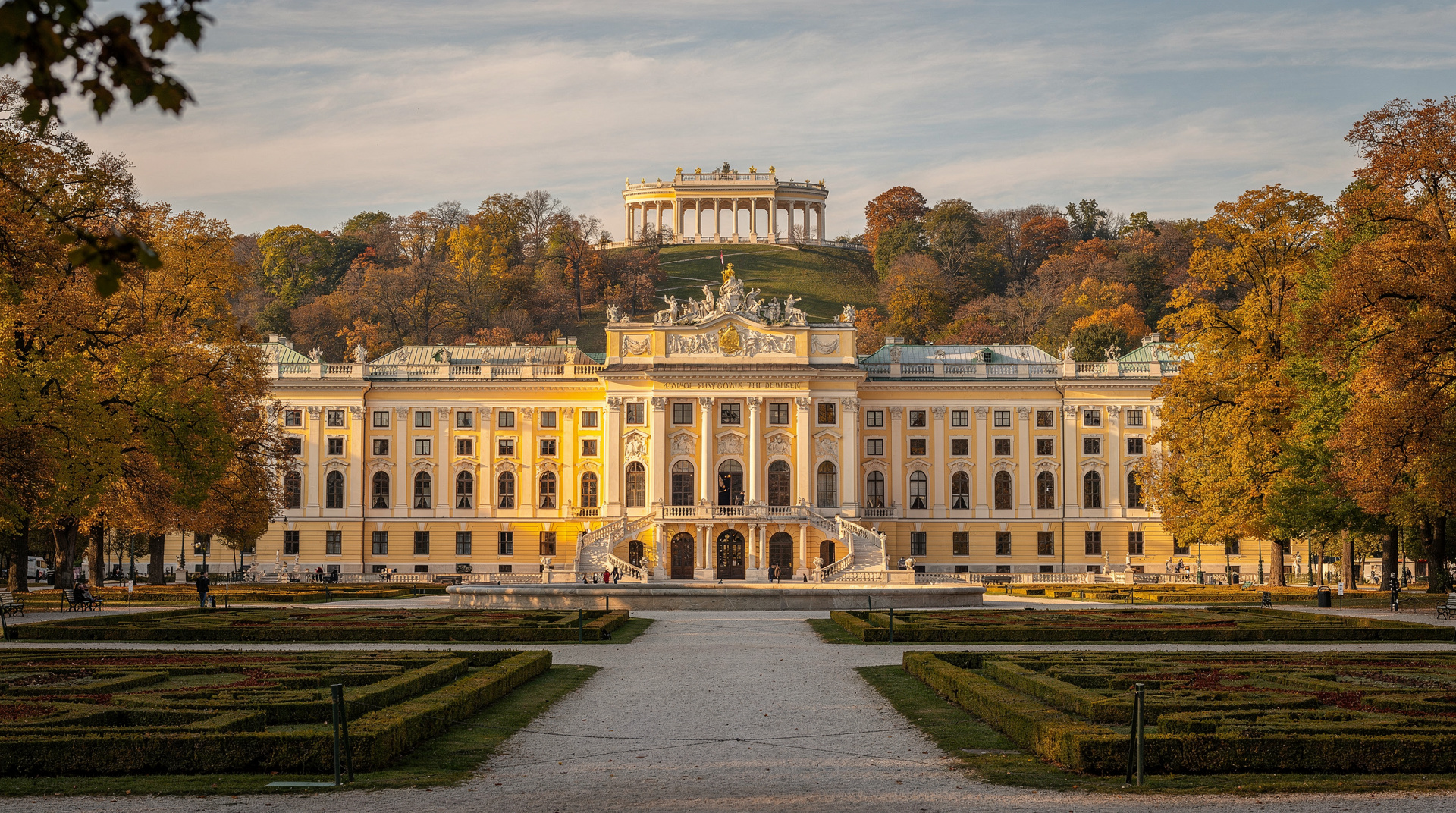
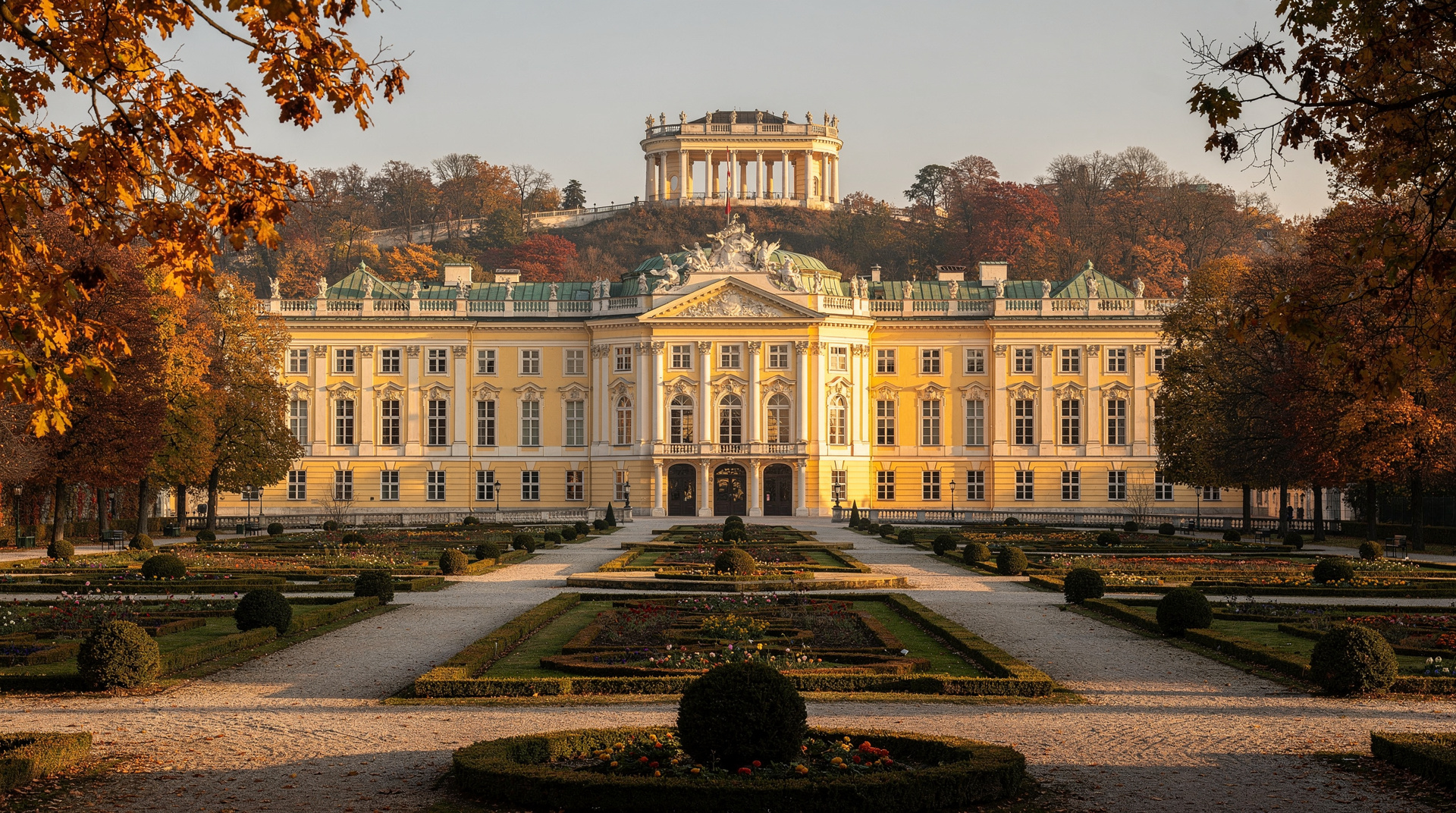
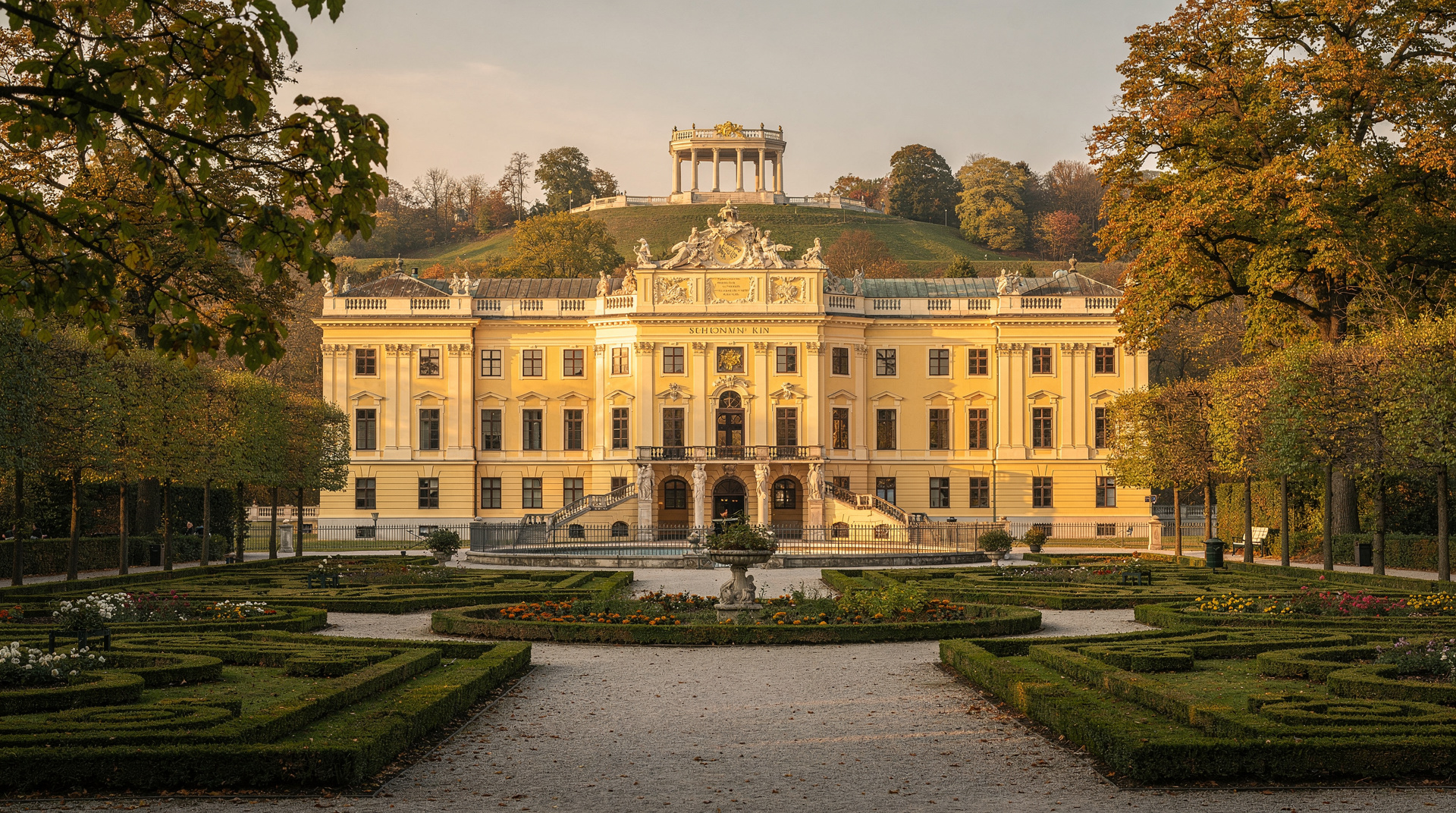
The yellow-ochre facade (Schönbrunner Gelb — the specific shade became so associated with the Habsburgs that it spread to imperial buildings across the empire) became the defining colour of Austrian official architecture. The palace served as the Habsburg summer residence for three centuries and was the birthplace of Franz Joseph I, who was born here in 1830, reigned for 68 years, and died at Schönbrunn in November 1916 — still working, still refusing to abdicate, still signing documents while Europe tore itself apart outside.
Tickets and what to see inside
The palace interior is split into ticket options that reflect different amounts of time and money:
The Imperial Tour (20 rooms) covers the most visited apartments — the Great Gallery with its enormous crystal chandeliers, the Empress Sisi’s private rooms with their characteristic combination of grandeur and personal obsession (the rings and exercise equipment she had installed are the most revealing objects in the palace), the bedroom where Napoleon briefly slept during his 1809 occupation, and the breakfast room where the family gathered. Allow 60–90 minutes.
The Grand Tour (40 rooms) adds Franz Joseph’s study (notable for its plainness — he worked at a simple desk and refused many of the luxuries available to him), the Archduchess Sophie’s rooms, the Napoleon Room with its portrait of the King of Rome, and the Bergl Rooms (painted with extravagant exotic garden scenes). Allow 90–120 minutes.
Book skip-the-line entry to Schönbrunn Palace — the queue without pre-booking can reach 90 minutes on summer mornings. Timed entry tickets are the standard approach; the palace manages visitor flow well once you’re inside.
The gardens are free and open daily from around 06:30 until dusk, making them accessible even without a palace ticket. The main garden axis leads from the palace front through the formal parterre (box hedges, fountain, flower beds) to the Gloriette on the hill — a colonnaded neoclassical structure built in 1775 as a triumphal arch marking Austria’s victory at the Battle of Kolin. The view from the Gloriette terrace (small admission fee for the interior; the terrace itself is accessible) looks back over the palace roof to Vienna’s skyline, with the Stephansdom spire visible on clear days. Allow 20 minutes for the uphill walk, more if you stop for the views on the way up.
The Privy Garden (Kronprinzengarten, adjoining the palace west wing) is a more intimate garden space that was reserved for imperial family use. The Palm House (a large Victorian greenhouse covering tropical plants) and the Desert House (succulents and desert landscapes) are both worth adding for visitors who want to extend the garden visit beyond the main parterre.
Schönbrunn Zoo
The Tiergarten Schönbrunn, opened in 1752 as the imperial menagerie, is the world’s oldest continuously operating zoo. It sits directly within the palace gardens and was redesigned in the late 20th century to give animals considerably more space than the original Baroque enclosures. The giant panda pair (Schönbrunn is one of only a small number of European zoos with a breeding pair) are consistently the most-photographed residents; the polar bears, koalas, and the enormous free-flight bird aviary are also highlights. The children’s zoo section is particularly good for families with small children.
A full zoo visit takes 3–4 hours — plan for a full day if you want both the palace interior and the zoo without rushing either.
Buy skip-the-line zoo tickets for weekends and school holidays, when queues form at the main zoo entrance and can add significant time to the visit.
The Schönbrunn evening concert
The Orangery at Schönbrunn — the long glass building along the east wing of the palace that was used for imperial winter banquets and early spring festivities — hosts classical concerts most evenings throughout the year. The programme centres on Mozart and Johann Strauss, performed by musicians in period costume in a long hall with frescoed ceilings and gilded chandeliers. Combined dinner-and-concert packages make this one of the most popular evening options in Vienna.
Book the Schönbrunn Palace evening dinner and concert — the combination of baroque hall, live chamber music, and three-course dinner in the imperial Orangery is genuinely memorable. It is one of the few “tourist evening events” in Vienna that earns its price honestly rather than coasting on the setting alone.
How long to spend
Half-day: Palace interior (Grand Tour, 90 minutes) and garden walk to the Gloriette (40 minutes up and down). This is the minimum for a meaningful visit.
Full day: Add the zoo (3–4 hours), the Palm House, the Privy Garden, and lunch at one of the palace restaurants. This is the right plan for families.
Two-visit approach: Morning at Schönbrunn for the palace and gardens, evening return for the concert. This makes a full Habsburg-themed day when combined with a morning at the Hofburg and Sisi Museum.
Getting there
From central Vienna: U4 line to Schönbrunn station (exit directly at the palace east gate). Journey time from Karlsplatz is about 10 minutes. Tram D from the Ringstrasse also connects, stopping near the main palace entrance on Schönbrunner Schlossstrasse. By foot from the Naschmarkt through the Mariahilfer district is a pleasant 20-minute walk if the weather is good.
When to visit
Arrive when the palace opens (around 08:30 for ticket collection, 09:00 for first entry) to beat the peak crowds. By 11:00 the main courtyard is full of tour groups. July and August are most crowded; spring and autumn visits are considerably more comfortable and the garden colours are better.
The Christmas market at Schönbrunn (late November to 26 December) is smaller and more atmospheric than the Rathausplatz market, with craft stalls and mulled wine in the palace forecourt. The contrast between the warm lights, the winter crowds, and the Schönbrunner Gelb facade is one of Vienna’s best winter scenes.
The gardens in April — tulips, crocuses, and the first formal plantings of the season — are the most colourful. October brings the chestnut alleys into their full bronze-and-gold autumn colour, and the Gloriette view at that time of year rewards the climb emphatically.
Pairing Schönbrunn with the rest of your trip
Schönbrunn sits on the western edge of the city, so it works best as an anchor for one day rather than a quick detour squeezed between other sights. Most visitors find the day flows more easily when the palace comes first and the afternoon is left loose, since the gardens invite wandering and the zoo rewards patience. If you are building a longer stay, the 3-day Vienna itinerary and the 4-day itinerary both slot Schönbrunn into a sensible rhythm alongside the Innere Stadt, while the weekend itinerary shows how to fit the essentials into a shorter trip. Not sure how much time the whole city needs? The how many days in Vienna guide helps you decide whether Schönbrunn deserves a full day or a half.
Because the palace is so closely tied to the story of Franz Joseph and Sisi, it helps to arrive with some background. The Franz Joseph and Sisi guide explains the personalities behind the rooms, and the Habsburg history for travelers primer gives the wider dynastic context that makes the Great Gallery and the study feel less like furniture and more like a working court. For the human side of the empress, the Sisi Museum guide pairs well with the apartments you see here, and the blog’s Sisi myth and museum reflection is a good read before or after your visit.
Making the most of a Schönbrunn day
A few small habits make the visit noticeably smoother. Wear comfortable shoes: between the palace corridors, the parterre and the uphill path to the Gloriette, this is a walking day even if you never enter the zoo. Take the interior first while you are fresh, then use the gardens as a breather rather than an obligation. If the weather turns, the glasshouses and the palace rooms give you somewhere dry to continue, and the zoo has plenty to see on cooler days when the animals are often more active.
Families should think about pacing before anything else. Younger children usually tire of long palace rooms quickly, so many parents split the day: a shorter tour of the state rooms, a long picnic-style break in the gardens, then the zoo at a relaxed pace. The Vienna with kids guide collects more ideas for keeping a family day enjoyable, and the dedicated zoo family visit guide goes into how to organise the animal side of the day.
If music is the reason you are here, the evening concert gets its own deeper treatment in the Schönbrunn evening concert guide, and the classical vs touristic concerts comparison helps you judge how a palace performance sits against the Musikverein and other venues. Visiting in winter changes the whole mood of the place, and the Schönbrunn Christmas market page explains what to expect among the lights in the forecourt.
Finally, remember that Schönbrunn is a place where an unhurried approach pays off. The palace was built as a summer retreat, and it still rewards visitors who treat it that way: a slow morning inside, a long stretch outdoors, and a return trip in the evening if the concert appeals. Rushing it turns a remarkable site into a checklist, whereas giving it room lets the scale, the colour of the façade and the formal geometry of the gardens settle in properly.
Schönbrunn or Hofburg first?
Visitors with limited time often ask which Habsburg palace to prioritise. They serve different purposes: Schönbrunn is the summer residence, spacious and garden-centred, with the zoo and Gloriette adding a full day’s worth of activity; the Hofburg in the Innere Stadt was the winter seat of government, denser and more central, and pairs naturally with a walking tour of the old city. The Schönbrunn vs Hofburg comparison guide breaks down which to choose with only one day, and how to combine both if you have two. For most first-time visitors, Schönbrunn wins the single-choice question — the gardens alone are worth the U4 ride, whereas the Hofburg’s Sisi Museum is excellent but self-contained.
| Ticket option | Rooms/access | Time | Best for |
|---|---|---|---|
| Gardens only | Parterre, Gloriette exterior, Palm House area | 1–2hrs | Budget visits, quick stopover |
| Imperial Tour | 20 rooms | 60–90min | First-time visitors, tight schedules |
| Grand Tour | 40 rooms | 90–120min | Full palace experience |
| Grand Tour + Gloriette + zoo | Everything | Full day | Families, repeat visitors |
The Schönbrunn Palace guide has the fullest room-by-room detail for visitors deciding between the Imperial and Grand Tour options, and the Schönbrunn Zoo guide covers the animal enclosures and feeding times in depth if the zoo is your priority. For a broader first-day plan that fits Schönbrunn alongside the rest of the city, see the main Vienna destination guide.
Top experiences
Bookable activities with verified prices and instant confirmation on GetYourGuide.