Klimt trail Vienna: where to see all his major works in the city
Vienna: Belvedere & The Best of Gustav Klimt Private Tour
Where can I see Klimt's work in Vienna?
Klimt's major works are distributed across five Vienna institutions: the Upper Belvedere (The Kiss and major paintings), the Secession building (Beethoven Frieze), the Albertina (largest collection of drawings), the Kunsthistorisches Museum (early allegorical ceiling paintings), and the Wien Museum (early symbolic paintings). A one-day Klimt trail covers the three most important sites.
Why Klimt’s work is distributed across Vienna
Gustav Klimt (1862–1918) was not a museum painter in the traditional sense. He worked on commission — public murals, private portraits, decorative schemes, and independent paintings — and his works ended up in different hands and institutions through a complex series of sales, inheritances, and confiscations. Unlike an artist whose work went directly into a single museum collection, Klimt’s Vienna legacy is spread across several institutions, each of which holds a different aspect of his output.
A Klimt trail through Vienna is therefore not optional for Klimt enthusiasts — it is the only way to see the full picture of what he made and how it developed.
The trail also works as a way to see the city itself. Each stop sits in a different corner of the centre, so the route takes you past palace gardens, the edge of the Ringstrasse, and the cafés and markets that fill the gaps between museums. If you want the wider historical backdrop first, our Habsburg history for travelers explains the world of commissions, court taste and rebellion that Klimt grew up in, and the Ringstrasse architecture walk shows the Historicist boulevard that his early generation of painters decorated before the Secession broke away.
| Where | Belvedere, Secession, Albertina, KHM, Leopold Museum |
| Cost | Around €10–24 per site; no combined multi-site ticket exists |
| Time needed | Full day (6 hours) for all five sites; half-day for the top three |
| Getting there | Tram/U-Bahn between sites — all within the 1st–4th districts |
| Best time | Weekday mornings, starting at the Belvedere’s 9 am opening |
Site 1: Upper Belvedere (the essential stop)
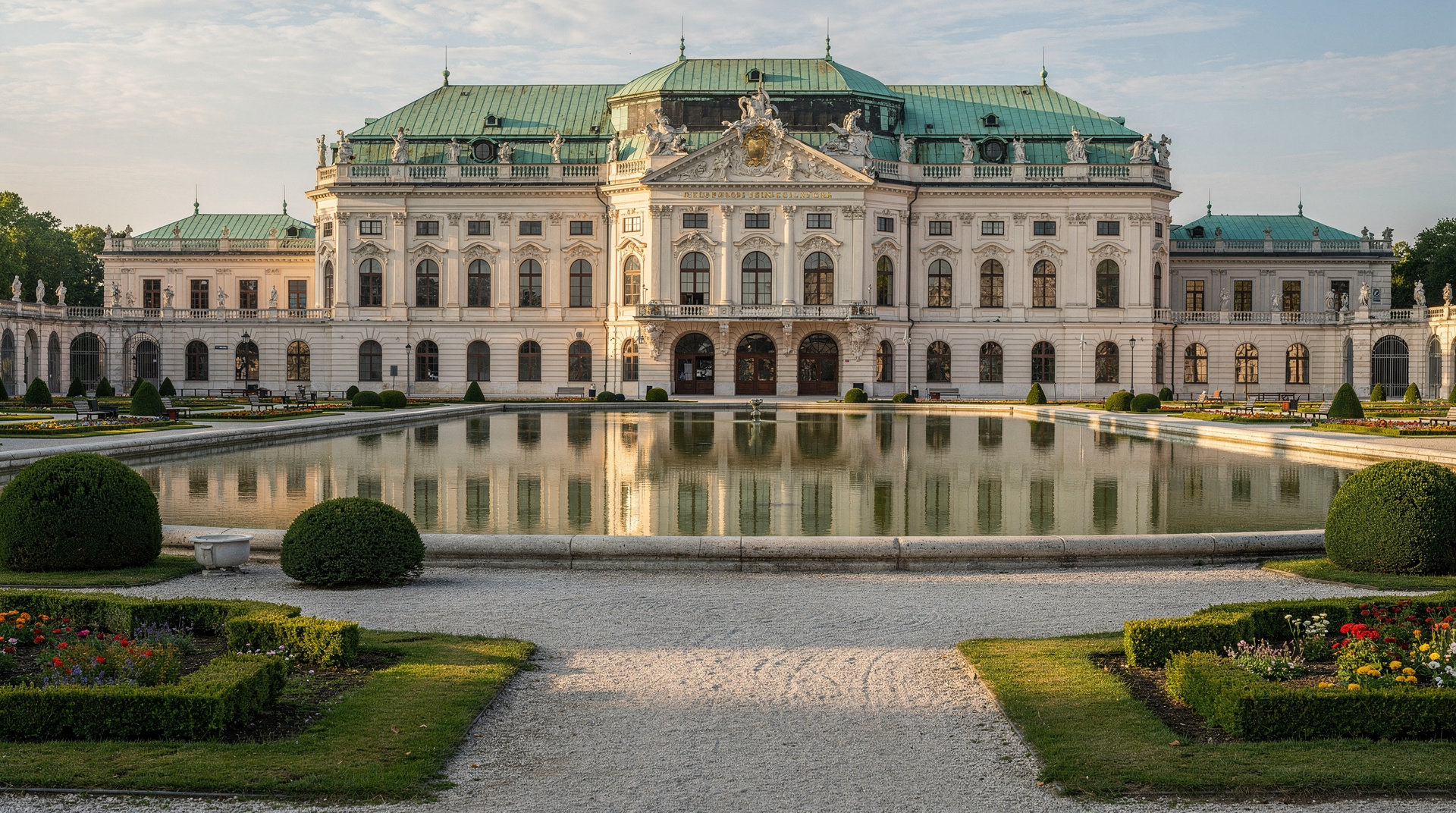
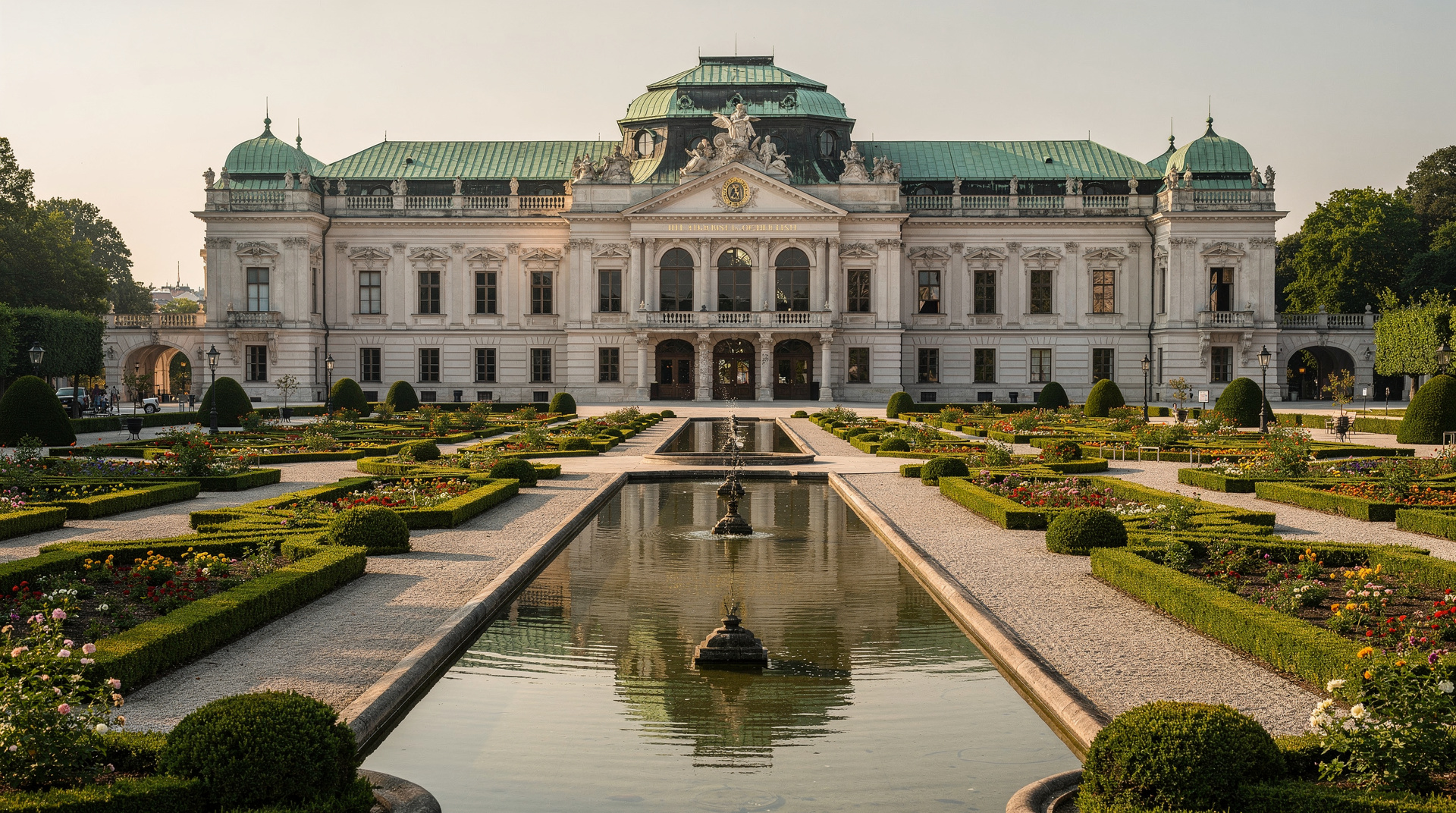
The Upper Belvedere holds the core of the Klimt painting collection in Vienna: The Kiss (1907–08), Judith I and II, several portraits from his mature golden period, and approximately 20 other works across the first-floor permanent galleries.
The Kiss (Room 30): 180 × 180 cm, oil and gold leaf on canvas. The work that defined Klimt’s mature style and became one of the most reproduced images in Western art. In person, the gold leaf — which photographs as flat — changes quality with the viewing angle and light. The scale is larger than most reproductions suggest.
Judith I (1901): One of the most psychologically charged Klimt paintings — a post-coital Judith holding the head of Holofernes with an expression that is simultaneously sensual, triumphant, and slightly disengaged. The gold collar around her neck connects her to his later decorative style; the raw flesh rendering of Holofernes’ head is startlingly direct.
Allow 1.5–2 hours for the Belvedere visit.
A few practical habits make the visit better. Go to The Kiss first, while the room is at its quietest, then work backwards through the other galleries rather than following the crowd. Stand to the side of the painting as well as in front of it: the gold leaf reads very differently as you move, and a minute of slow looking tells you more than a dozen quick photographs. After the Klimt rooms, the rest of the permanent collection is worth a short, unhurried pass, and the palace gardens outside make a pleasant place to rest before the next stop. The wider district, with its palaces and quiet streets, is described in our Belvedere district guide, and the building itself is covered in the Belvedere Palace guide.
If you are travelling with someone who is less interested in art, the Belvedere is the easiest sell on the trail: the architecture, the views over the gardens and the single great painting give a satisfying visit even to a casual visitor.
Vienna: Belvedere and the best of Gustav Klimt private tourA private Klimt tour at the Belvedere gives the biographical and art-historical context — Klimt’s relationship to the Vienna Secession, the development of his gold technique, the symbolic programme of his major works — that the wall labels cannot compress into brief form.
Vienna: Upper Belvedere and permanent collection entry ticketSite 2: The Vienna Secession (the Beethoven Frieze)
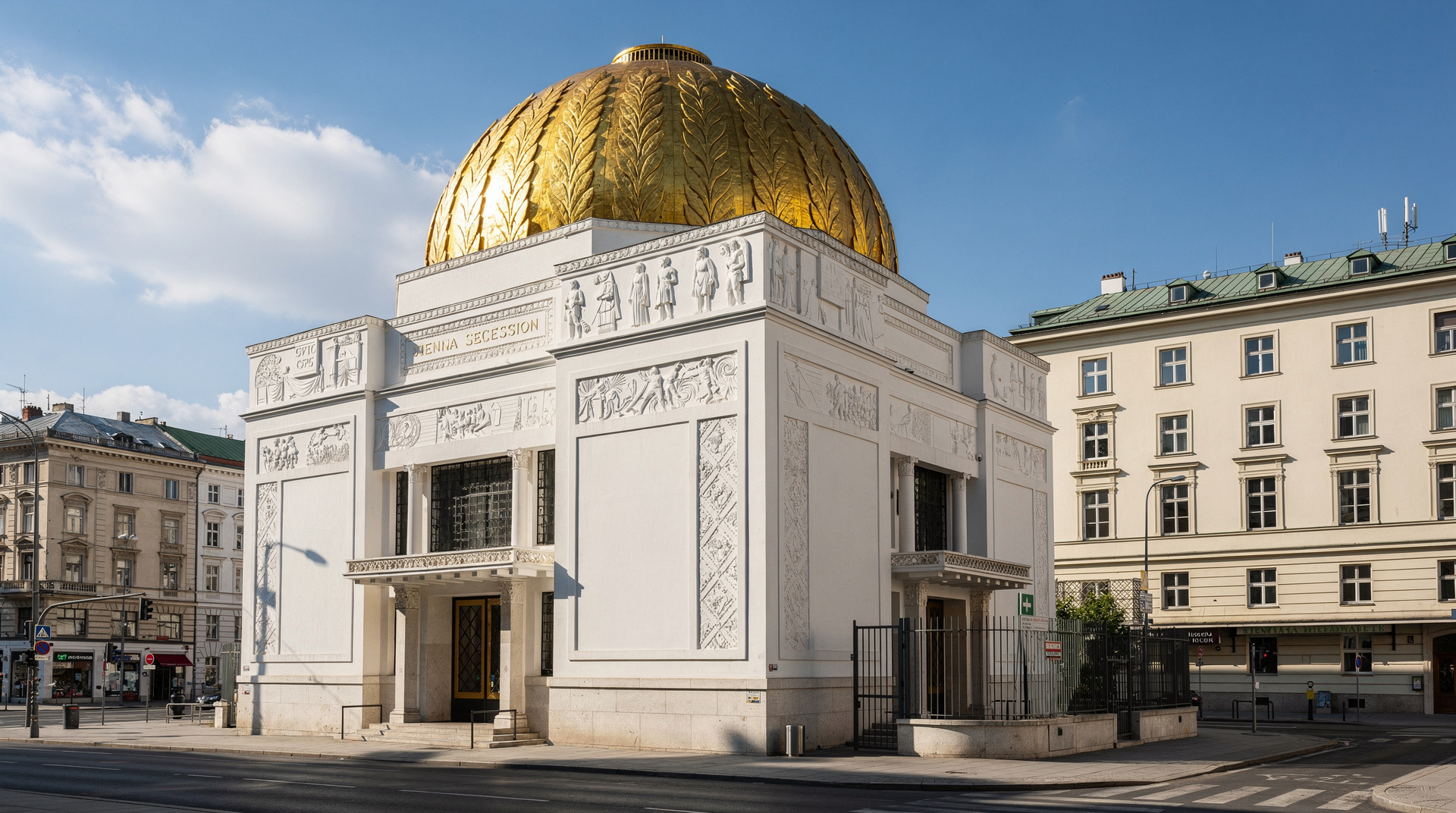
The Vienna Secession building on Friedrichstraße is a 10-minute walk from the Belvedere along Prinz-Eugen-Straße, through Schwarzenbergplatz. The building — designed by Joseph Maria Olbrich in 1897–98, with the famous inscription “Der Zeit ihre Kunst, der Kunst ihre Freiheit” (To the age its art, to art its freedom) — is immediately recognizable by its gilded dome of 3,000 laurel leaf forms.
The Beethoven Frieze is permanently installed in the basement. Klimt painted it in 1902 for the 14th Secession exhibition, which was dedicated to Beethoven. The frieze runs 34 metres around three walls of the basement and depicts an allegorical progression loosely based on Schiller’s “Ode to Joy” from Beethoven’s Ninth Symphony: the weak imploring the strong hero to fight against hostile forces and find redemption through art.
The frieze is monumental and technically extraordinary — it was painted directly on the plaster of the walls and is the largest original Klimt work you can stand close to and examine at length. The “hostile forces” panel — with distorted figures, snakes, and the gorilla-like Typhon — is the most formally innovative section.
Admission to the Secession is approximately €10. Include 30–45 minutes for the Beethoven Frieze.
The frieze rewards a slow, deliberate reading. Start at the left wall and follow the sequence in order, since the narrative of longing, struggle and resolution is meant to be read as a continuous procession rather than as separate panels. The basement is quiet and the lighting is subdued, so give your eyes a moment to adjust before you judge the colours. Notice the contrast between the delicate, linear passages and the heavily ornamented ones: the frieze mixes gold, mother-of-pearl-like inlay and pencil lines on the plaster, and the variety of surface is part of its power. Because it was conceived as a temporary tribute to Beethoven, it is a good companion to a concert evening; see our Vienna classical music itinerary if you want to pair the two, and our Beethoven in Vienna diary for a traveller’s view of the composer’s city.
The Secession is also a short walk from the market district, so it fits naturally before a lunch stop at the Naschmarkt.
Site 3: Albertina (drawings and works on paper)
The Albertina holds the world’s largest collection of Klimt works on paper — preparatory studies for his major paintings, life drawings, finished drawings as independent works, and his late landscape studies. When on display (the collection rotates due to light sensitivity), these give a different view of Klimt from the finished oil paintings: how he worked through compositional ideas, his drawing from the figure, his use of pencil and chalk.
The preparatory studies for The Kiss are among the most interesting — seeing how the composition evolved toward the final work illuminates the apparently spontaneous finished image.
Because works on paper rotate, the Klimt drawings are the one part of the trail you cannot plan with certainty. Check what is on view before you commit time to this stop, and treat it as a flexible slot: if the Klimt display is thin on the day, the Albertina’s other collections and its famous state rooms still make the visit worthwhile. The neighbouring Albertina Modern guide covers the sister venue for later art, which can be a useful alternative if you want more twentieth-century context. The Albertina sits close to the Hofburg, so the Hofburg Palace guide is a natural pairing for the same afternoon.
See our Albertina Museum guide for opening hours and what to expect.
Vienna: Belvedere Palace skip-the-line tour with official guideSite 4: Kunsthistorisches Museum (early Klimt)
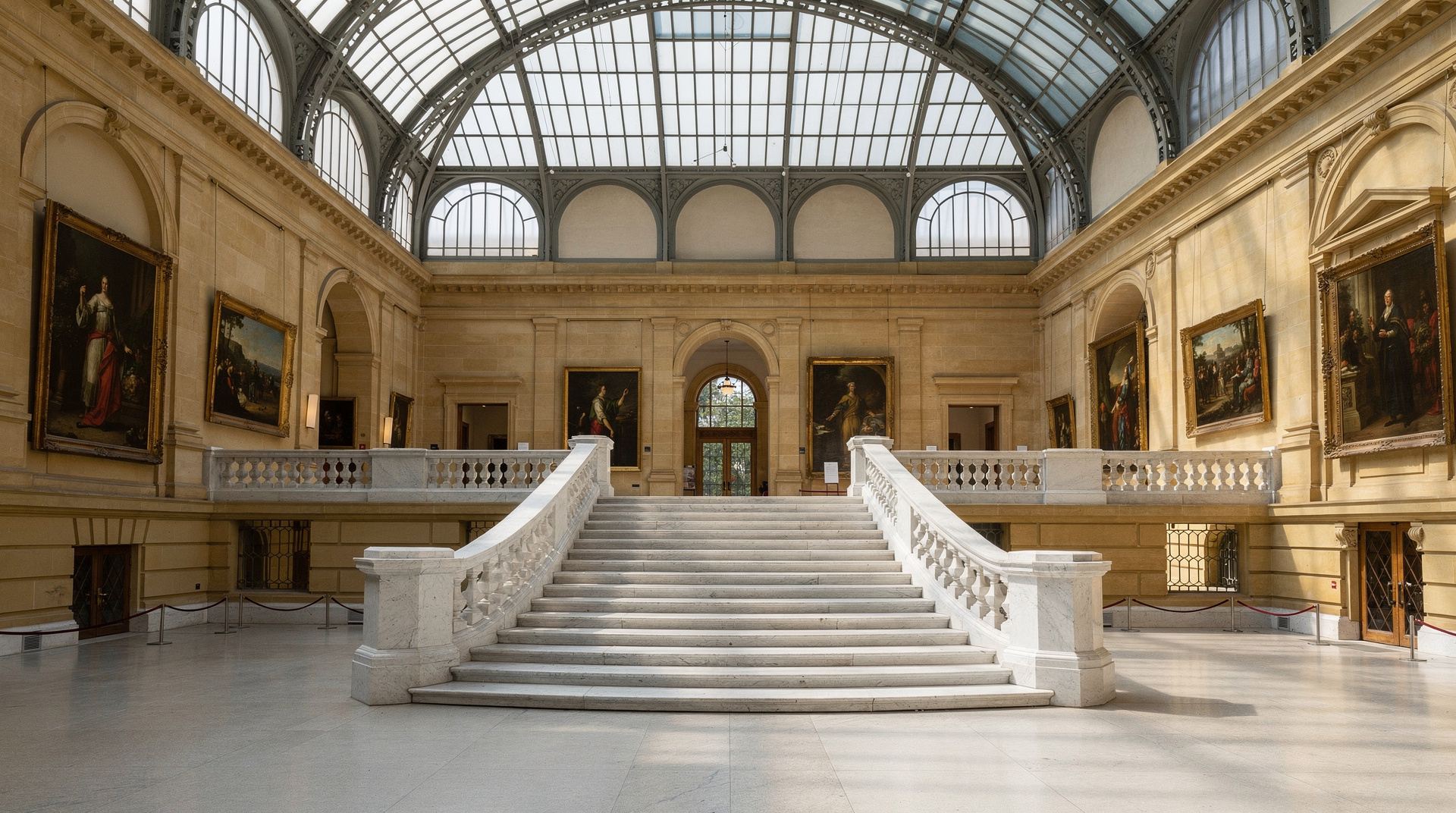
Before Klimt became the golden, symbolist, Secessionist painter of mature fame, he was an academic painter of considerable technical accomplishment working in the Historicist tradition. In 1890–91, he and his brother Ernst Klimt, along with Franz Matsch, painted the ceiling lunettes and intercolumnar spaces of the Kunsthistorisches Museum’s staircase and grand hall.
These paintings are the antithesis of everything Klimt is later famous for — they are allegorical, representational, technically accomplished academic painting — but they reveal the level of conventional mastery from which he deliberately broke. Entering the KHM through the main staircase with knowledge of Klimt’s later development turns these early works into a fascinating origin document.
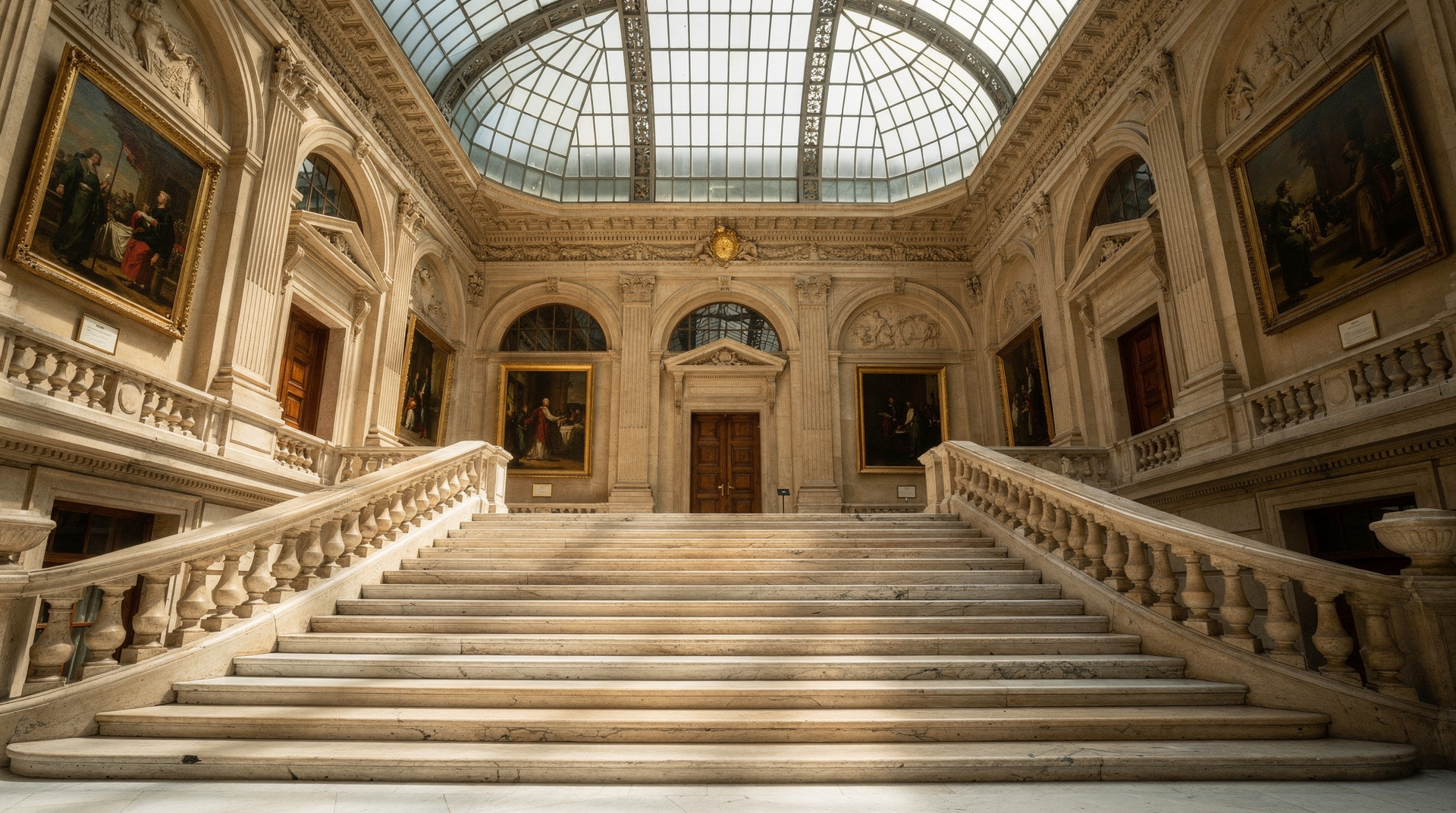
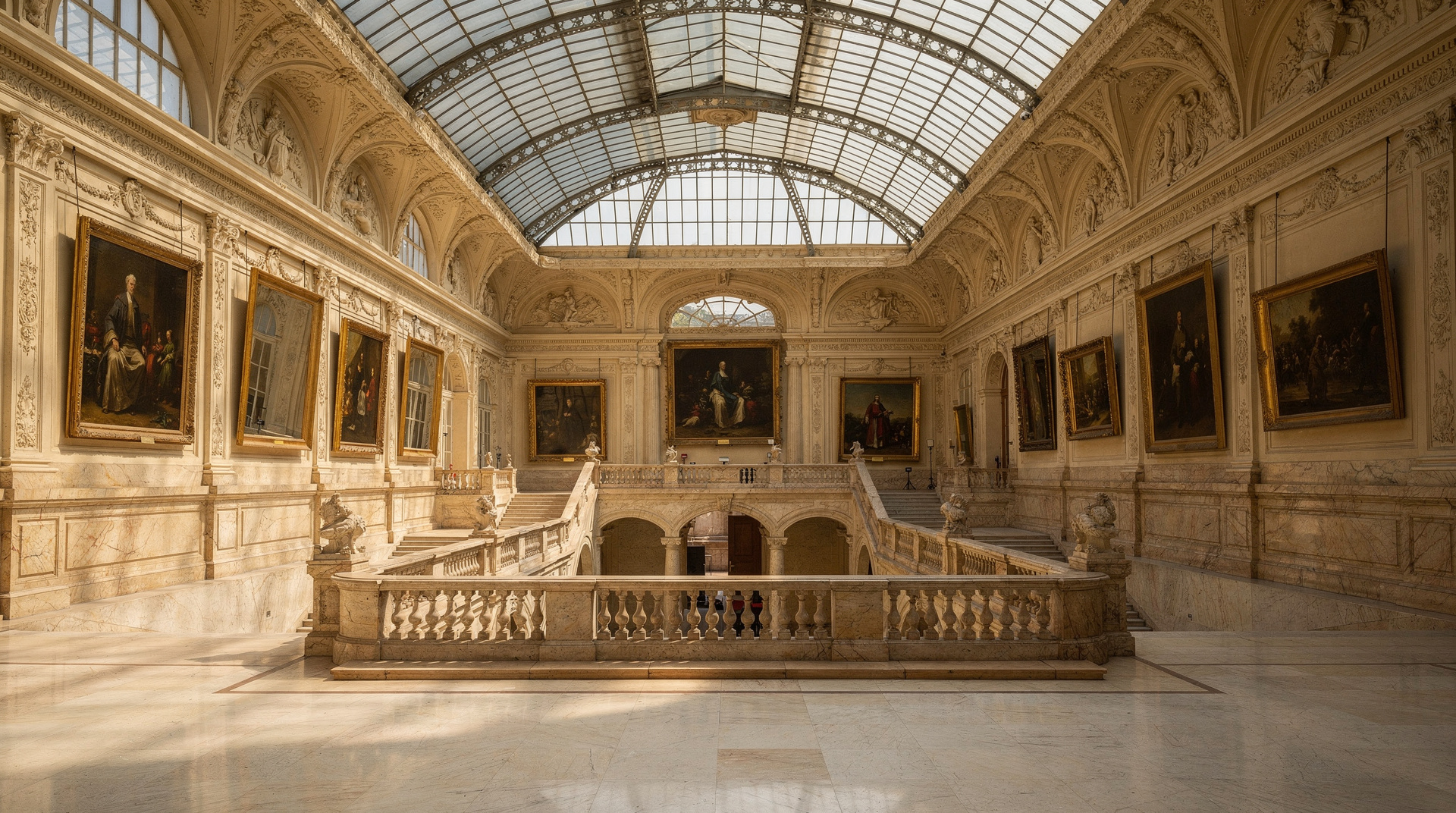
Look up as well as around you. The staircase is one of the most opulent interiors in the city, and the painted decoration is designed to be seen as part of the architecture rather than as separate pictures. Taking a few minutes here before heading into the galleries gives the whole building context, and if you decide to continue into the collection, our Kunsthistorisches Museum guide helps you choose what to prioritise. For a broader view of the city’s museums and how to combine them, see the best museums in Vienna.
Site 5: Leopold Museum (Klimt paintings and the Vienna Secession context)
The Leopold Museum holds Death and Life (1910–15) and The Virgin (1912–13), two major Klimt works from his late period that are distinct from the golden style of The Kiss. Death and Life in particular — the confrontation between a mass of living figures and a skull-marked death figure — shows a different and darker aspect of Klimt’s symbolic imagination.
The Leopold Museum’s Vienna Secession and Wiener Werkstätte applied arts collection provides the decorative arts context for Klimt’s cultural world — the furniture, glass, ceramics, and graphic design that surrounded and influenced his development.
See our Leopold Museum guide.
The Leopold Museum sits in the Museumsquartier, a lively courtyard complex where you can sit down, eat and rest between galleries. Our Museumsquartier destination page describes the area, and the mumok guide covers the modern art museum next door. Pairing the Leopold with Schiele’s work, which the museum is known for, rounds out the story of what came after Klimt; our Klimt trail diary records how one traveller experienced the route in practice.
A one-day Klimt trail
If you have a single day for the Klimt trail:
9:00 am: Upper Belvedere (open at 9 am) — 2 hours for the Klimt rooms 11:00 am: Walk via Schwarzenbergplatz to the Secession (15 minutes) 11:30 am: Vienna Secession, Beethoven Frieze — 45 minutes 12:30 pm: Lunch near Karlsplatz or Naschmarkt (10 minutes from Secession) 2:00 pm: Albertina (5 minutes from Karlsplatz) — 1.5 hours if Klimt drawings are on display 4:00 pm: Optional: Kunsthistorisches Museum staircase (15 minutes walk) — 30 minutes if closing time permits
Total: approximately 6 hours
Treat this timetable as a skeleton rather than a contract. The most common way the day goes wrong is spending too long at the first stop and arriving at the last one tired. If you notice that happening, drop the KHM staircase or shorten lunch rather than rushing the Beethoven Frieze. Wear comfortable shoes, carry water, and use the tram and U-Bahn rather than walking every transfer; our Vienna public transport guide explains how to move between the sites without fuss. If you are building the trail into a longer stay, the 3-day Vienna itinerary shows where a Klimt day can slot in alongside the other highlights.
If you only have half a day
Prioritise the Belvedere and the Secession — together they cover The Kiss and the Beethoven Frieze, the two most essential Klimt works in Vienna, in about 3 hours including transfer time. If a third stop fits, choose the Albertina for the drawings over the KHM or Leopold Museum, since drawings show a side of Klimt’s process the finished paintings cannot. Our Belvedere Palace guide and Albertina Museum guide both cover ticket logistics and current opening hours in more detail than this trail overview.
Klimt in context: the Vienna Secession movement
Understanding Klimt fully means understanding the movement he founded and eventually left. Our Schiele and Vienna Secession guide traces how the Secession’s founding principles — art free from academic jury and market pressure — shaped not just Klimt’s own late work but the entire generation of Austrian Expressionists who followed him, including Egon Schiele and Oskar Kokoschka. Visiting the Leopold Museum after the core Klimt trail gives you that generational context in a single afternoon.
Frequently asked questions about the Klimt trail in Vienna
Where is Klimt’s The Kiss?
The Kiss (1907–08) is in Room 30 of the Upper Belvedere museum, Prinz-Eugen-Straße 27. It is NOT at the Albertina.
What is the Beethoven Frieze by Klimt?
A 34-metre allegorical frieze painted in 1902 for the 14th Secession exhibition, permanently installed in the basement of the Vienna Secession building on Friedrichstraße.
How many Klimt paintings are in Vienna?
Approximately 25–30 oil paintings in public collections, with the Upper Belvedere holding the most (including The Kiss). The Albertina holds the world’s largest collection of Klimt works on paper.
Where did Klimt live and work in Vienna?
Klimt maintained a studio at Feldmühlgasse 11 in the 13th district from 1911 until his death in 1918. He died there on 6 February 1918 of a stroke complicated by the Spanish flu.
What is the Vienna Secession and its connection to Klimt?
The Vienna Secession was founded in 1897 by Klimt and 18 other artists who broke from the conservative Künstlerhaus to establish an independent exhibition space for modern art. Klimt was the founding president.
Is there a Klimt museum in Vienna?
No dedicated Klimt museum exists, but the Upper Belvedere (paintings), Albertina (drawings), and Secession (Beethoven Frieze) serve as the primary Klimt centres.
Top experiences
Bookable activities with verified prices and instant confirmation on GetYourGuide.