Vienna pastry tour: Apfelstrudel, Kaiserschmarrn and the Mehlspeisen
Vienna: Typical Austrian Food Tour with Coffee House Visit
What are the best pastries to eat in Vienna?
Apfelstrudel at Café Central, Sachertorte at Hotel Sacher or Demel, Kaiserschmarrn at Zum Wohl or any traditional Gasthaus, and Topfenstrudel wherever it's freshly baked. The general rule: eat at a proper Kaffehaus, not a tourist café.
The Viennese sweet tooth: a serious tradition
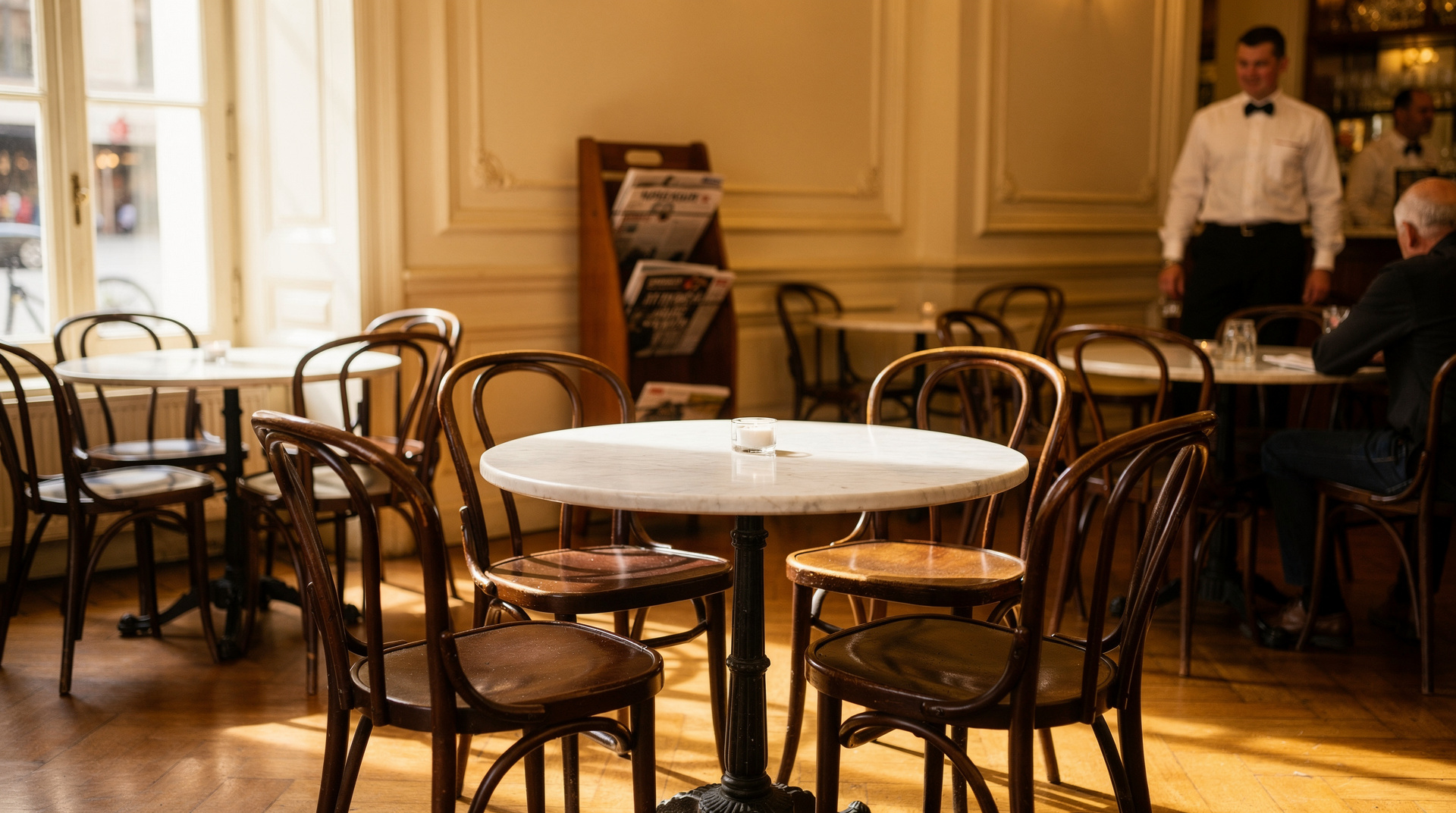
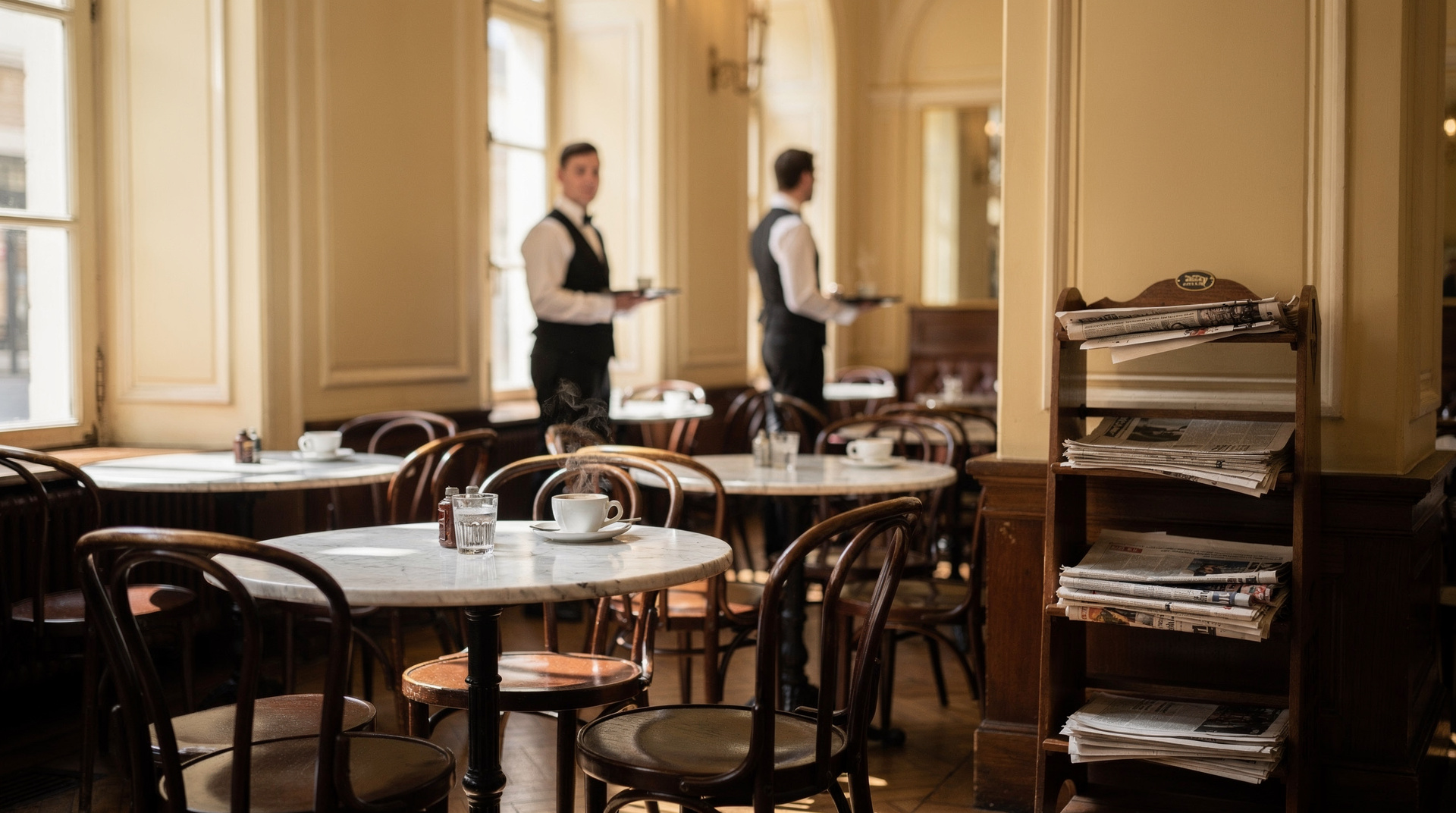
Vienna has one of the most developed pastry cultures in the world. The Mehlspeisen (flour-based sweets) tradition grew from imperial kitchen excess — the Habsburg court employed dozens of pastry chefs, and their creations filtered down through coffeehouse culture into the city’s everyday repertoire. Today, a great Kaffehaus functions as much as a pastry showcase as it does a coffee destination.
This guide covers the essential Viennese pastries and desserts, where to find the best versions, and how to make sense of a tradition that takes most visitors several days to fully appreciate.
| Where | Kaffehäuser in the Innere Stadt (Café Central, Demel, Landtmann) and Naschmarkt bakery stalls |
| Cost | Around €5–9 per slice; a full Kaffehaus stop with coffee runs €10–14 |
| Time needed | 45–90 minutes per Kaffehaus stop |
| Best time | Mid-morning (9–11am) for freshly restocked cakes, or late afternoon before dinner |
| Booking | Not required, though Demel and Sacher queue at peak hours |
The essential Viennese pastries and desserts
Apfelstrudel
Vienna’s most beloved pastry and arguably its most technically demanding. A proper Apfelstrudel begins with strudel dough — a simple mixture of flour, water, oil and salt — that is kneaded, rested, and then stretched by hand over a tablecloth until it is thin enough to read newsprint through. The dough cannot tear during stretching; it takes years to master.
The filling: tart cooking apples (Boskoop or Granny Smith equivalents), cinnamon, sugar, raisins, and breadcrumbs toasted in butter. The breadcrumbs absorb the apple juice during baking and prevent the dough from becoming soggy. The strudel is rolled using the tablecloth to lift the dough without tearing, then baked until golden.
Served warm, dusted with icing sugar, with a small jug of Vanillesauce (vanilla custard sauce) or Schlagobers (unsweetened whipped cream). The first bite should release steam — if it doesn’t, it’s been pre-made and sitting around.
Where to eat it: Café Central (Herrengasse) makes one of Vienna’s finest. Café Landtmann is reliable. Some of the best are at traditional Gasthäuser in outer districts, where strudel is baked fresh daily rather than purchased from a wholesale bakery.
What to avoid: Pre-sliced strudel in refrigerated display cases, or slices that are cold and solid. These have been sitting for hours.
Sachertorte
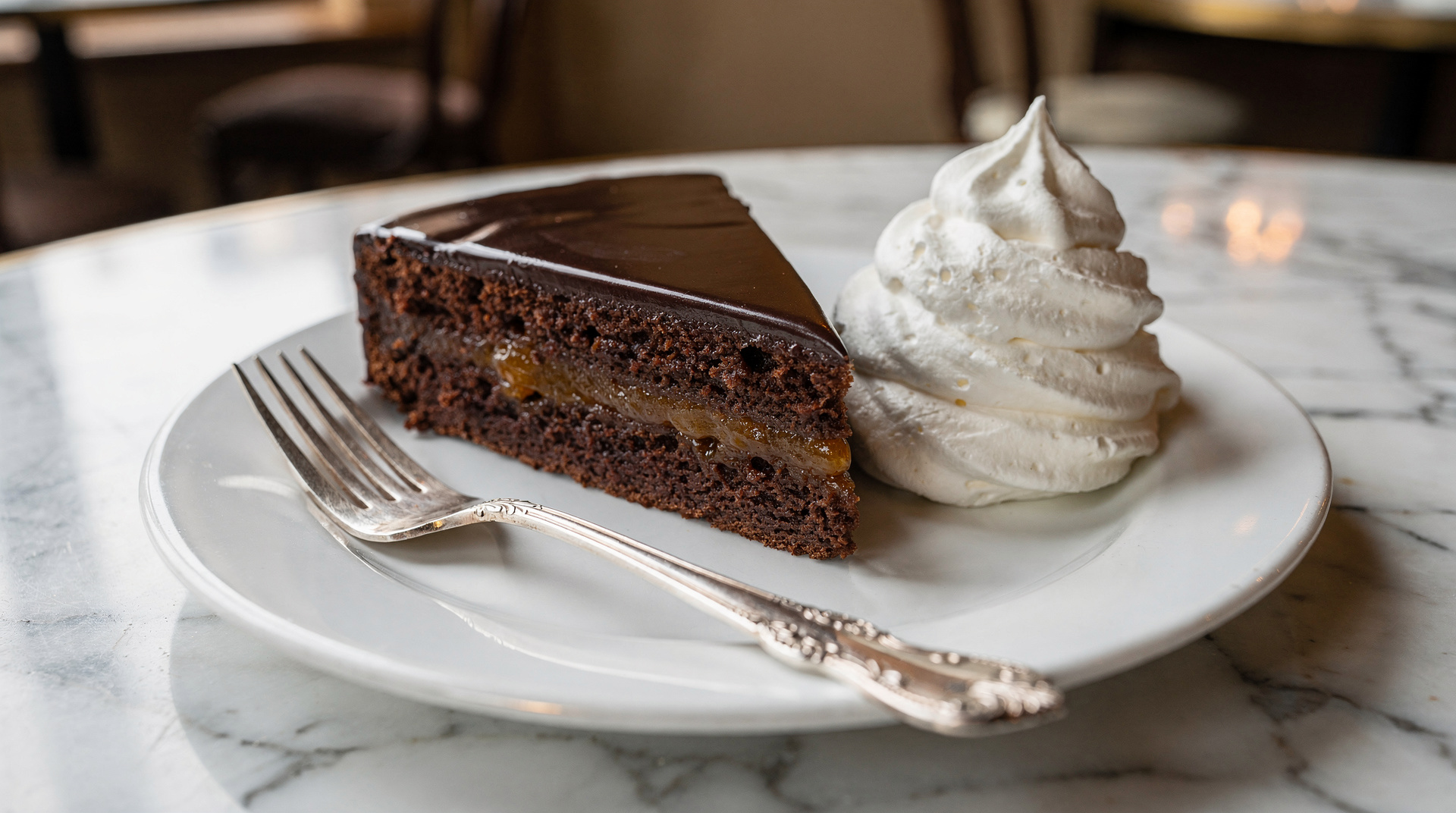
The full story is in the Sachertorte guide, but the short version: this dense chocolate sponge with apricot jam and chocolate glaze is Vienna’s most famous cake, the subject of a historic legal dispute between Hotel Sacher and Demel. Both make excellent versions. Tourist cafés make inferior versions. Eat it at Hotel Sacher (Café Sacher) or Demel, at room temperature, with an Einspänner.
Kaiserschmarrn
The most theatrical of the Viennese desserts: a thick, fluffy omelette-style batter is cooked in a pan, then torn apart with two forks into rough pieces while continuing to cook, caramelising the torn surfaces in butter and sugar. The result is a pile of irregularly shaped golden-brown pieces with crisp exterior and custardy interior, dusted with icing sugar and served with Zwetschkenröster (stewed plums) or apple compote.
Named after Kaiser Franz Joseph I, who was reportedly served it by accident by a nervous cook who dropped the pancake while flipping it. Whether true or apocryphal, it’s a better story than most food names.
Where to eat it: Most traditional Viennese restaurants and Kaffeehäuser. Café Central, Zum Wohl (Naschmarkt area), and any honest Gasthaus. Allow 15–20 minutes for preparation — this is not a fast dessert.
Topfenstrudel
The Topfenstrudel (curd cheese strudel) is the Apfelstrudel’s richer sibling. Same thin strudel dough technique, but the filling is Topfen (Austrian quark/curd cheese, firmer than French fromage blanc), egg, sugar, and sometimes raisins. Richer, more filling, and often more impressive when well-made.
Available at most coffeehouses. Best when served warm. Underrated relative to its apple counterpart.
Palatschinken
Thin Austrian pancakes — between a French crêpe and a slightly thicker British pancake. Served as dessert with Marmelade (jam), Topfen (curd cheese), or Nuss-Fülle (hazelnut cream). Often dusted with icing sugar. Also served savoury (filled with spinach, cheese, or mushrooms) as a starter.
The dessert version at Café Central or any good Kaffehaus is straightforward, satisfying, and correctly priced.
Guglhupf
The ring-shaped cake that sits under glass domes on café counters throughout Vienna. A yeast-leavened version (more bread-like, often flavoured with rum and raisins) and a pound-cake version (denser, butter-based) both exist. The Viennese Guglhupf is typically lighter and more aromatic than its German equivalents.
Best with a morning Melange. Not usually the first thing tourists order, but genuinely excellent.
Kipferl
The ancestor of the French croissant — a crescent-shaped yeasted pastry, denser and less buttery than its French descendant. Legend connects it to the 1683 Siege of Vienna (bakers supposedly shaped it to mock the Ottoman crescent moon). More likely just a very old Central European pastry shape.
Eat one fresh from a bakery (Bäckerei) in the morning with butter and jam. Completely different from a croissant — more substantial, slightly bread-like, with a fine crumb.
Punschkrapfen
A peculiarly Viennese confection: small pink cubes of rum-soaked sponge, almond paste, and jam, coated in bright pink fondant. Found in every Viennese bakery and supermarket. Not usually served in upmarket coffeehouses. The pink colour is distinctive and slightly alarming until you taste one.
Linzer Torte
Originally from Linz (Austria’s third city), but thoroughly embedded in Viennese café culture. The world’s oldest cake recipe (documented from 1653): a crumbly, almond-enriched short pastry filled with redcurrant or raspberry jam, lattice-topped. Excellent at Demel or any traditional pastry shop.
Where to eat Vienna’s pastries
The coffeehouse route
The Viennese coffee house guide covers this in full, but the headline options:
Café Central (Herrengasse 14): Excellent Apfelstrudel, Guglhupf, Mehlspeisen selection. Beautiful setting in a former Palais. More touristy than it once was, but the pastry quality remains high.
Café Demel (Kohlmarkt 14): The most serious pastry shop in Vienna. Glass cases with rotating seasonal creations. The cake counter is worth 20 minutes of study before ordering. Superior if you want variety beyond the standards.
Café Landtmann (Dr.-Karl-Lueger-Ring 4): Reliable, less crowded than Sacher, slightly more local clientele. Good Strudel and Guglhupf. More food-restaurant feel than pure coffeehouse.
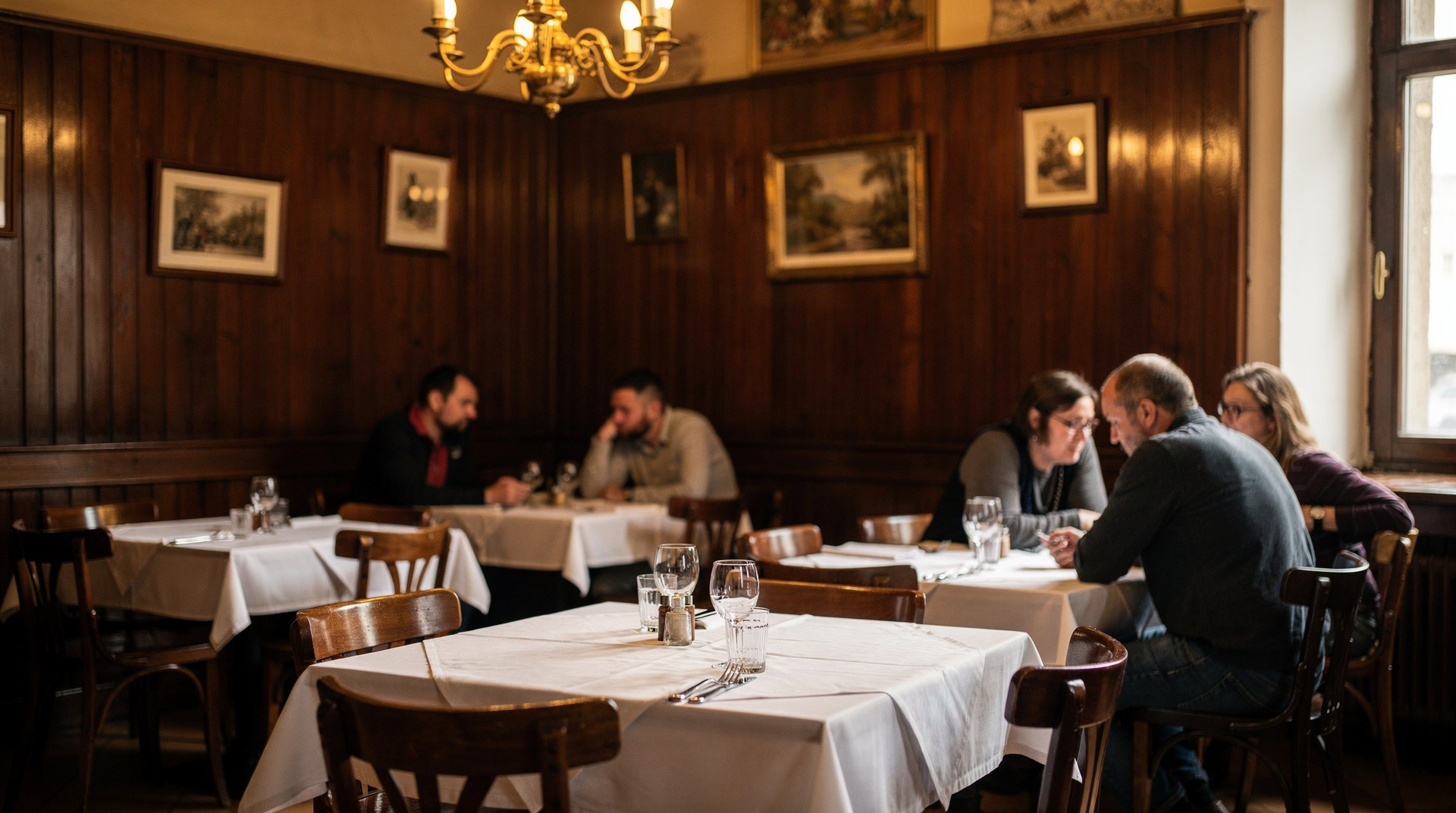
Café Sperl (Gumpendorfer Strasse 11): Atmospheric, less touristy, unchanged since 1880. Excellent Guglhupf. The chess regulars in the corner are permanent fixtures.
The bakery option
Vienna’s traditional Bäckereien (bakeries) — particularly the independent family-run ones — are often better for fresh pastry than some coffeehouses. Look for ones baking on premises (the smell is the giveaway). The chains (Anker, Joseph Brot) are also good but slightly more standardised.
Tickets and tours
A guided food tour with coffeehouse focus gives you both the pastry context and introduces you to the best specific options.
The Austrian food and coffee house tour includes extended time in a traditional Kaffehaus with explanation of the Mehlspeisen tradition — the best structured introduction to Viennese pastry culture.
The Vienna food tour includes a pastry stop as part of a broader culinary overview — good if you want pastry alongside Schnitzel, Würstelstand, and market experience in one session.
Honest tips
Order pastry at room temperature. A refrigerated Sachertorte or strudel is a diminished experience. If the case is chilled, ask whether it can be brought to temperature. A good café will warm a slice briefly; a tourist café won’t bother.
Share the Kaiserschmarrn. It’s large, rich, and better in company. Two people, one Kaiserschmarrn, two coffees — the ideal Kaffehaus afternoon.
The cake counter at Demel is worth a visit even without ordering. The selection changes daily and includes things not on the standard menu. It’s a pastry education in miniature.
Don’t eat pastry after 3pm on an empty stomach and expect to want dinner. A proper slice of Sachertorte with Schlagobers at Café Sacher is a substantial sugar-and-fat intake. Plan accordingly.
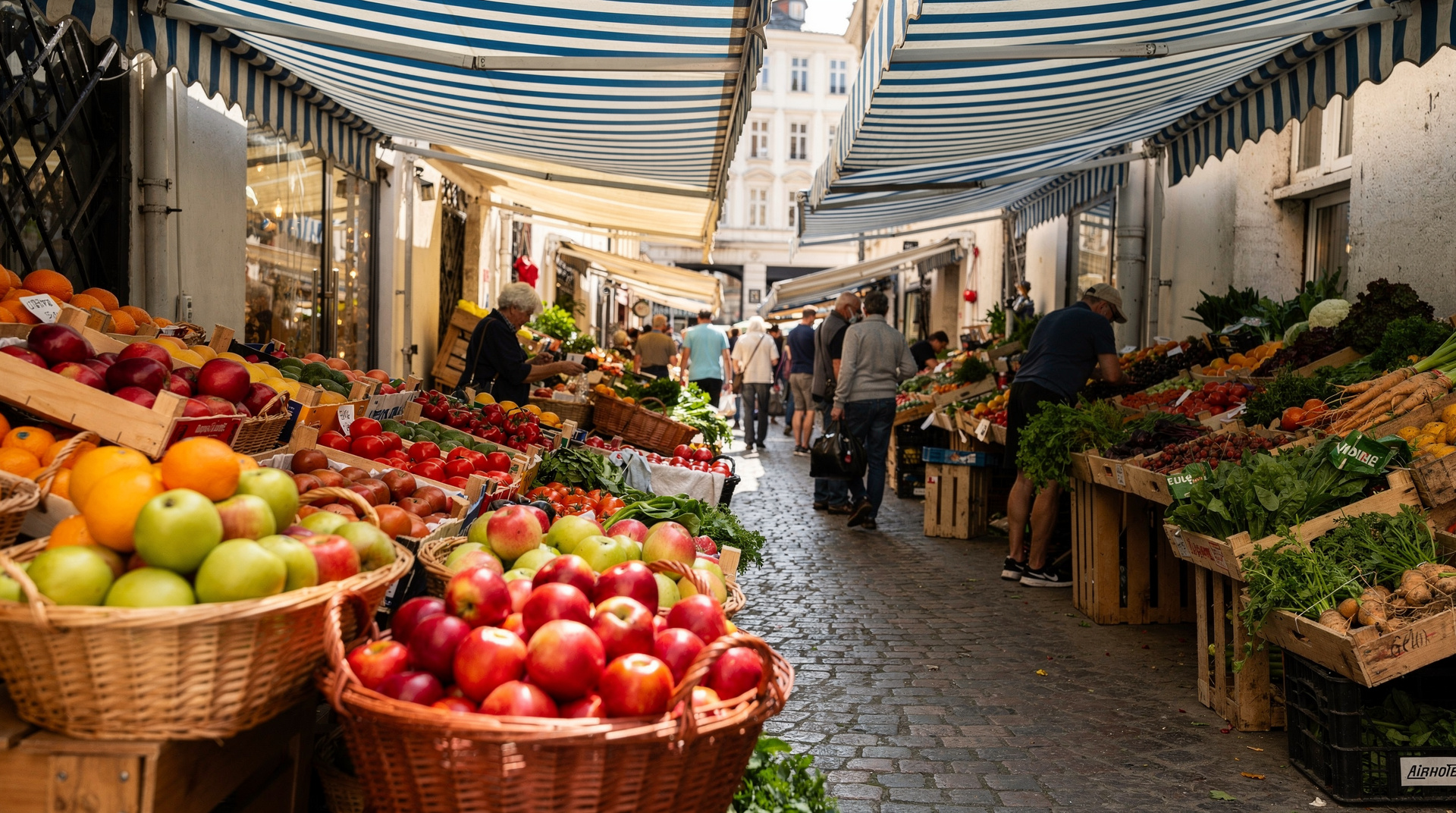
The Naschmarkt has fresh strudel from specific stalls — look for the ones baking on-site and with a queue of locals. These are often the most reasonably priced high-quality options in the city.
Pairing pastry with the rest of your food day
Pastry rarely stands alone in Vienna — it’s one course in a wider culinary rhythm. Start with a savoury breakfast or lunch (the Vienna food guide covers Schnitzel, Tafelspitz and Würstelstand culture), save the Mehlspeisen stop for mid-afternoon, and treat coffeehouse cake as its own event rather than a dessert tacked onto dinner. If you’re comparing where to actually sit down, the best coffee houses in Vienna guide ranks the classic Kaffehäuser by atmosphere as well as pastry quality, and the head-to-head Café Central vs Landtmann vs Sacher comparison is useful if you only have time for one.
For a more market-driven pastry crawl, the Naschmarkt eating guide points to the specific stalls baking strudel on-site rather than trucking it in — often better value than a formal Kaffehaus for the same quality. And if you’re building pastry into a full day of eating rather than a single stop, the best restaurants in Vienna guide helps balance a rich Mehlspeisen afternoon against a lighter dinner.
Fitting pastry into your trip
Most of the classic Kaffehäuser sit in the Innere Stadt, so a pastry stop slots naturally between sights in the old centre. The market side of the tradition lives around the Naschmarkt area, which makes a good counterpoint to the grand cafés. If you are still shaping your days, the 3-day Vienna itinerary leaves room for an unhurried coffeehouse afternoon.
A few reading suggestions before you sit down. The coffee house etiquette guide explains how to order, how long you can stay and why the waiter will not rush you. The guide to Viennese coffee types helps you choose what to drink alongside your slice, since a Melange and an Einspänner suit different cakes. For cake that is actually worth the money, the real versus tourist Sachertorte comparison and the Vienna tourist traps guide show how to spot a place that trades on its address rather than its baking.
Sweets also change with the seasons. In colder months, the Vienna in winter guide is a good companion, because a warm strudel in a heated coffeehouse is one of the best ways to wait out a grey afternoon. If you would rather taste several specialities in one outing, the comparison of Vienna food tours lays out the options.
Frequently asked questions about Viennese pastries
Is Strudel difficult to make at home?
Apfelstrudel made with proper hand-stretched dough is genuinely difficult — the dough technique takes significant practice. Using commercial filo pastry produces a reasonable approximation. Many Vienna cooking classes focus specifically on strudel technique — worth doing if cooking is your primary interest.
What is the difference between Topfen and ricotta?
Topfen (Austrian quark) is drier and more acidic than Italian ricotta. In baking, they’re sometimes substituted for each other but the results differ — Topfen produces a firmer, tangier result. Austrian Topfen is increasingly available in specialist food shops outside Austria.
Do Viennese coffeehouses ever run out of Guglhupf?
The glass-dome cakes are typically restocked once or twice daily. If the case is empty or you see only the cut remains of a cake, ask the waiter — there may be a fresh one in the kitchen. The best time for fresh pastry is mid-morning (9–11am) when the day’s baking is complete.
Can I take Viennese pastry home?
Fresh pastry (Strudel, Kaiserschmarrn) doesn’t travel well and should be eaten the same day. Sealed Sachertorte in the Sacher wooden box lasts 3 weeks and travels well. Manner wafers and packaged Guglhupf mixes travel easily. Demel sells sealed tins of butter biscuits and chocolates designed for travel.
What is Buchteln?
Buchteln are yeast-raised sweet rolls baked together in a pan, filled with jam or Topfen, and typically served with vanilla custard. A traditional Austrian Sunday dessert, less common in coffeehouses but appearing on Gasthaus dessert menus. Dense, sweet, comforting — an acquired taste for those used to lighter European pastry.
Top experiences
Bookable activities with verified prices and instant confirmation on GetYourGuide.