Coffee house etiquette in Vienna: the unwritten rules explained
Vienna: Typical Austrian Food Tour with Coffee House Visit
What is the etiquette in a Viennese coffee house?
Sit as long as you like on a single coffee. Order by specific name (Melange, Einspänner). Don't rush the waiter — flag them when you're ready. A glass of water comes automatically. Tip by telling the total you want to pay when handing cash. Newspapers on the rack are for everyone.
The rules that aren’t written anywhere but everyone knows
The Viennese Kaffehaus has its own code. None of it is posted on the wall. Some of it runs entirely counter to what visitors from faster-paced café cultures expect. Getting it wrong doesn’t lead to expulsion or public embarrassment — Viennese waiters are professionals — but getting it right makes the experience significantly better.
This guide explains the full set of unwritten rules, from the moment you walk in to the moment you pay and leave.
| Seating | Seat yourself, no host required |
| How long to stay | As long as you like on a single coffee |
| Ordering | By name (Melange, Einspänner) — see coffee types guide |
| Tipping | State the total you want to pay, around 10% |
| Where to try it | Any traditional Kaffeehaus — see best coffee houses |
What you need to know
The foundational principle
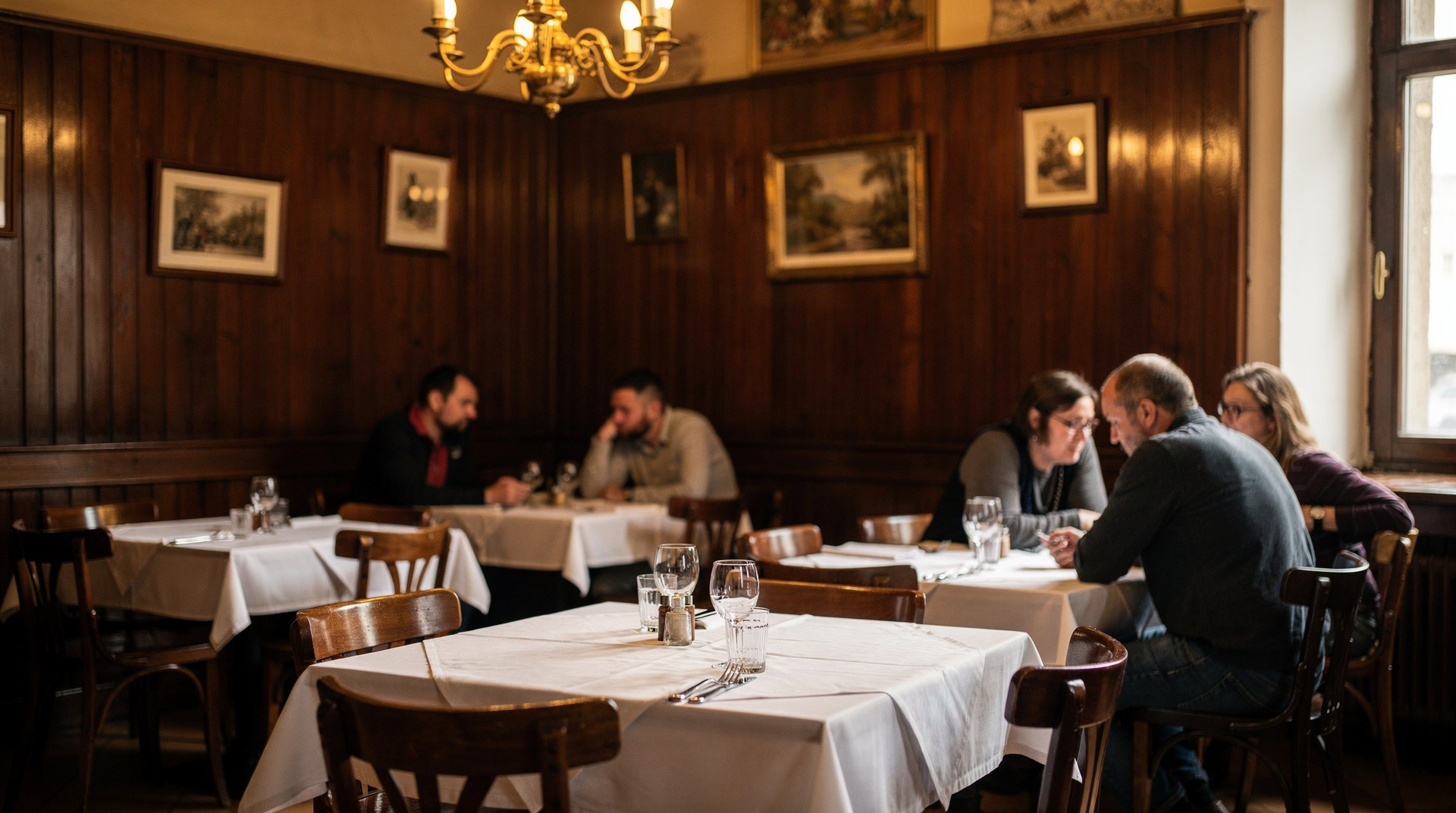
The Viennese coffeehouse exists for the guest’s benefit, not the establishment’s convenience. The “guest shall feel that the waiter doesn’t need him” — this line, attributed to various sources, captures the spirit perfectly. You are not a transaction. You are not expected to consume as much as possible as quickly as possible. You are expected to sit down, order something, and occupy yourself at leisure for as long as you choose.
This requires an adjustment for visitors used to being asked “are you still working on that?” every 15 minutes.
The profession of the waiter
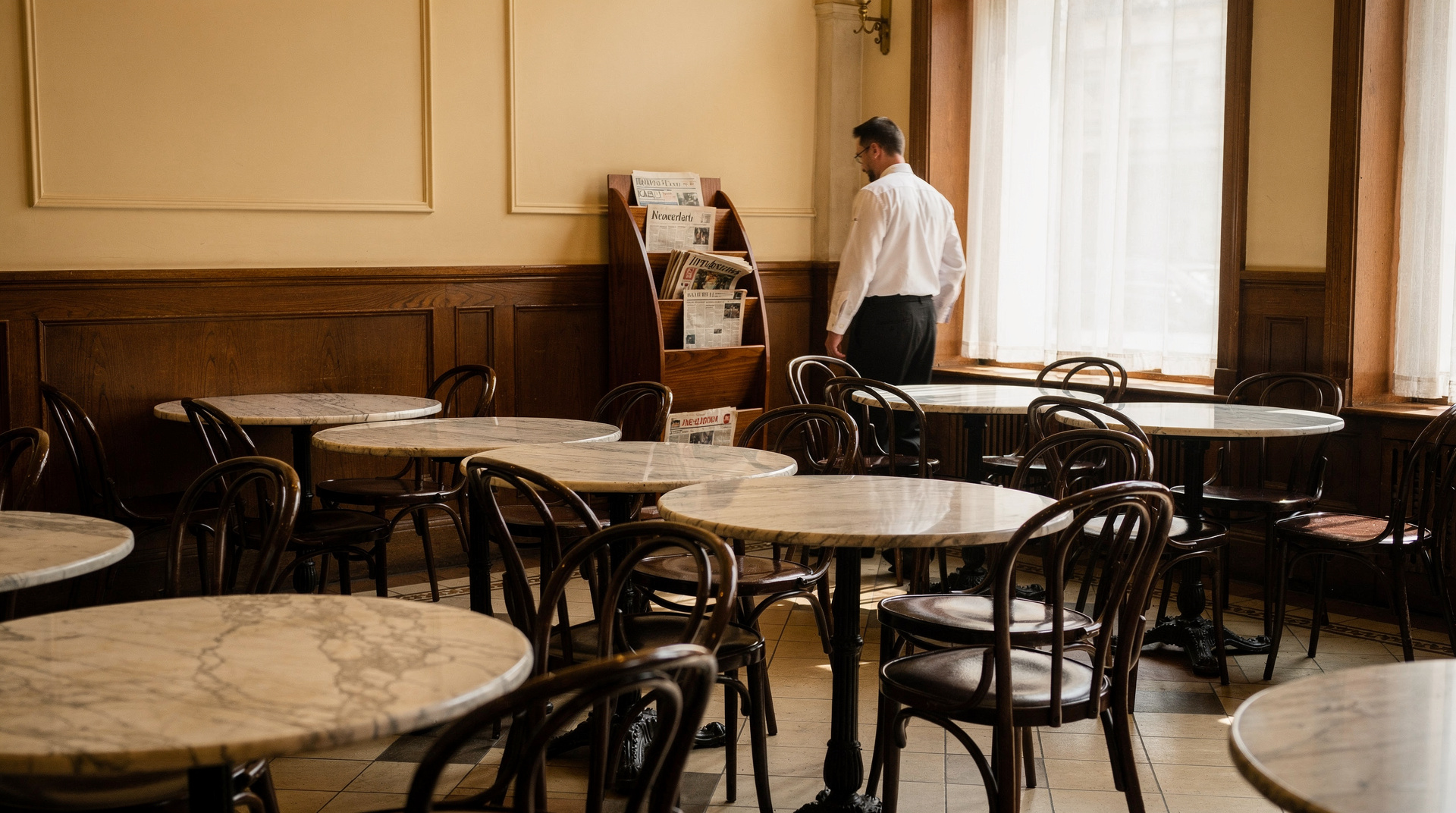
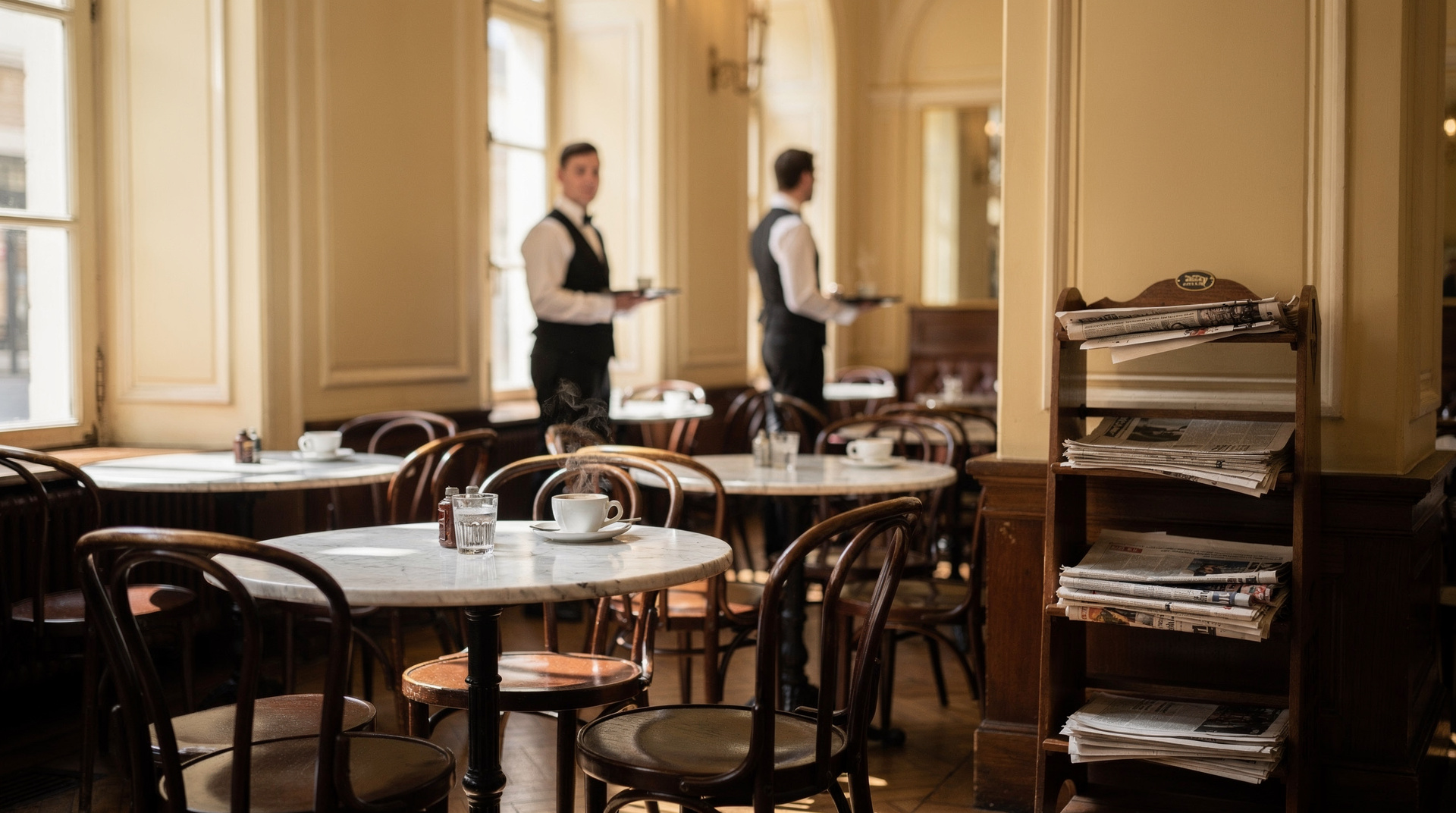
Viennese café waiters (the Herr Ober, for male; Frau Kellnerin for female) consider their role a skilled profession, not a temporary job. Many have worked in the same establishment for decades. Their manner — slightly formal, efficient without warmth, not personally engaging unless invited to be — reflects this professional distance. They’re not unfriendly. They’re professional.
The correct forms of address: “Herr Ober” for a male waiter, “Frau Kellnerin” for female. “Entschuldigung” (excuse me) to get attention.
Entering and being seated
Seat yourself. In the vast majority of Viennese coffeehouses, there is no host to seat you. Walk in, find a table you like, and sit down. If the place is very crowded (peak Saturday morning at a famous café), scan for available spots before sitting down — but no one will direct you.
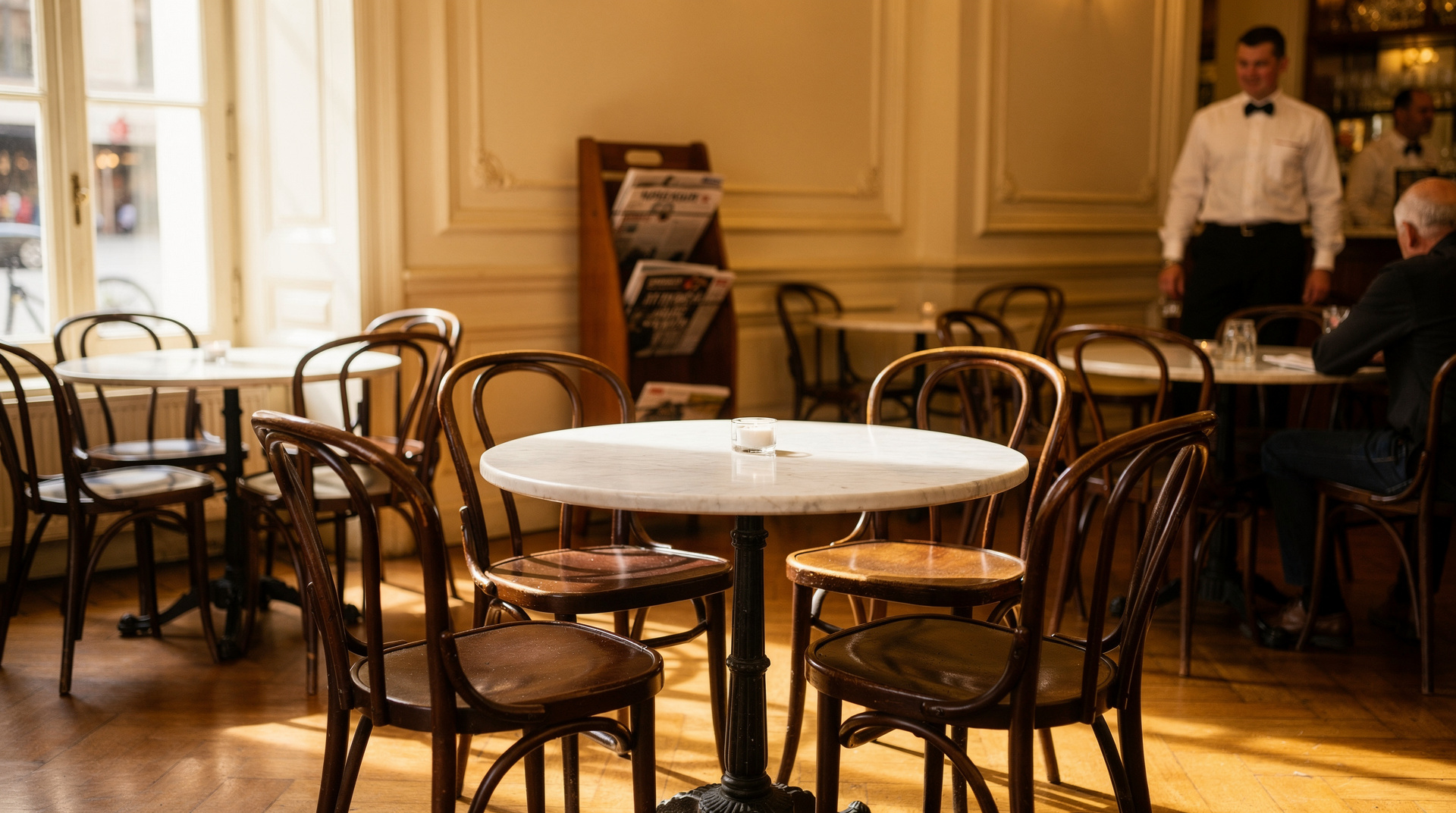
Choose your table wisely. You’ll be there a while. Consider: proximity to the window (good for watching the street), proximity to the newspaper rack (if you want a paper), distance from the entrance (less draft in winter). Regulars have their specific tables — if you accidentally sit in one, you’ll never know.
Remove your coat. Coats and bags are hung on the coat hooks or placed on the rack beside each table (many have a dedicated rack or hooks attached to the bench). Leaving a coat over the back of your chair is considered slightly informal.
Ordering
Order by name. “A coffee with milk” will likely result in a Melange, but the correct approach is to know what you want and ask for it: “Einen Melange, bitte.” If you need help deciding, say “Was empfehlen Sie?” (what do you recommend?) and the waiter will suggest. See the Viennese coffee types guide for the full menu.
Order food and drink together if possible. If you want a Strudel and a Melange, order both at once. This is more efficient and considerate.
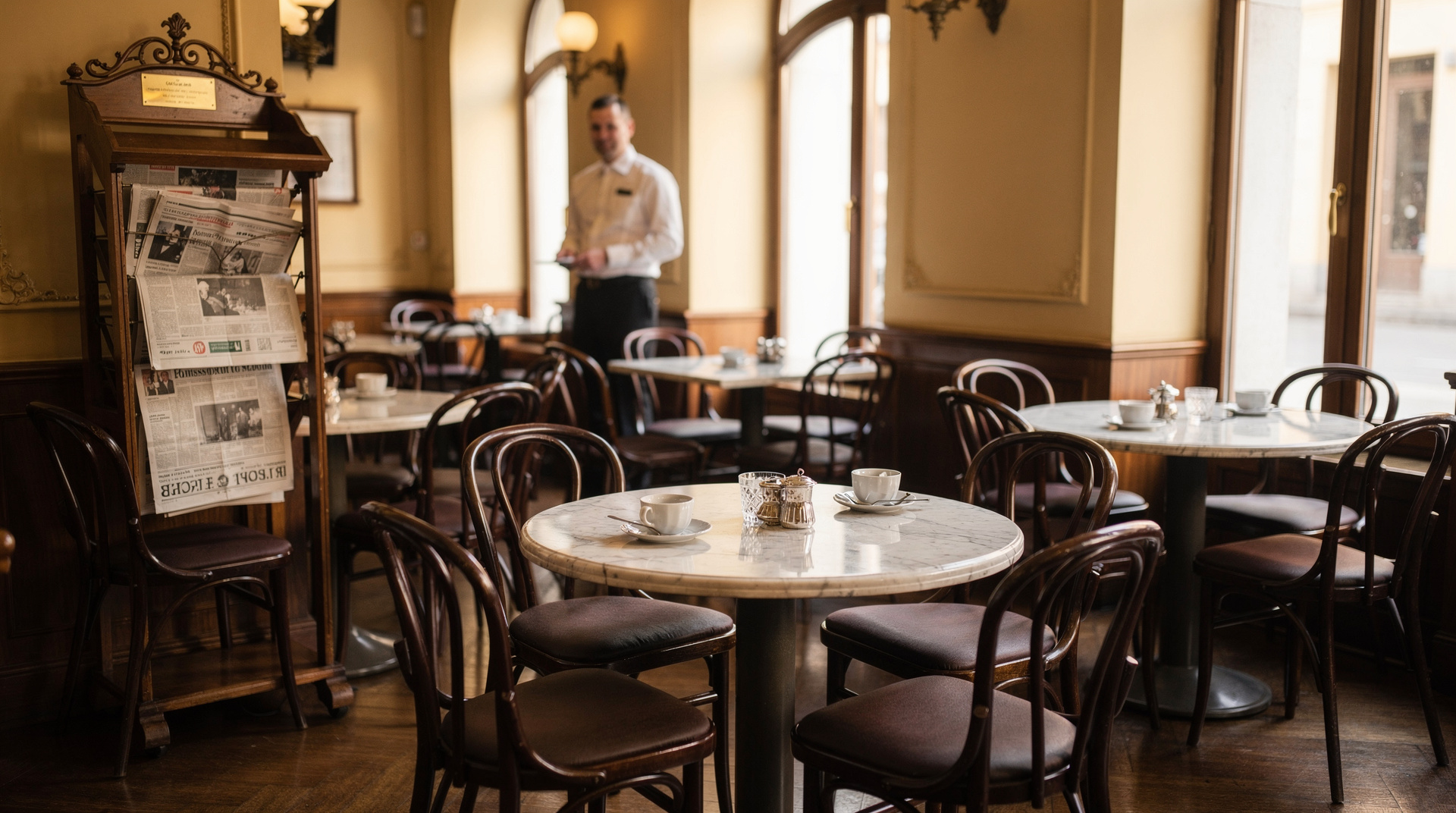
The water glass. A small glass of still water (Leitungswasser — tap water) arrives alongside your coffee without being asked. It’s not a hint to pay and leave. It’s an automatic courtesy. It will be replenished without being asked.
Don’t order a “latte” or a “flat white.” Some modern coffeehouses now offer these. In a traditional Kaffehaus, they’re either not on the menu or cause a mild confusion. A Melange is the functional equivalent and will taste better in this context.
During your stay
Use the newspaper rack freely. The wooden newspaper rods (Zeitungshalter) near the entrance hold the day’s papers, provided by the café for guest use. Take one to your table, read it, and return it when you’re done. This is exactly what they’re there for.
Do not summon the waiter unnecessarily. Once your order has arrived, the waiter will not return unless you signal them. If you need more water, another coffee, or something from the cake trolley, make eye contact or raise your hand gently. You don’t need to call out.
Laptops and books are welcome. Working, reading, writing, or simply observing are all appropriate. The coffeehouse was designed as a second office. No one will give you a pointed look for having a notebook and a Melange for an hour.
Keep the noise level civilised. Viennese coffeehouses are not quiet, but they’re not loud. Conversations at normal volume are fine. Loud phone calls, speakerphone, or extended laughter are subtly out of key.
Photography. Photographing the interior is fine. Photographing your food and coffee is fine. Directing fellow patrons to stop being in your shot is not.
Traveling with children. Children are welcome in most traditional Kaffeehäuser, and it’s normal to see families having an afternoon Melange and Strudel together. Keep the same volume expectations that apply to adults — a coffeehouse is not a playground, and boisterous noise draws the same quiet disapproval it would from a loud adult table.
The cake trolley
Some coffeehouses (particularly traditional ones) have a pastry trolley brought around by a pastry chef or waiter. If one approaches your table, you can accept, decline, or ask what’s on offer. There’s no obligation to order from it. If you do want something from it, this is often the best way to get the freshest pastry of the day.
Staying for a long time
You don’t need to justify staying. The entire culture of the Kaffehaus is built around the right to occupy a table indefinitely. No one will approach you to suggest you should be done by now. If you’ve been there 90 minutes on a single Melange and a Sunday newspaper, you’re doing exactly what the institution was designed for.
If the café is very crowded and people are standing waiting for tables, consider whether you genuinely need to stay indefinitely. This is a judgement call — not a rule — but being mindful of others is generally part of considerate café behaviour.
Order a second round occasionally if you’re staying for an extended session. Not obligatory, but a second Melange or a piece of cake after an hour demonstrates goodwill toward the establishment.
Paying the bill
Catch the waiter’s eye and say “Zahlen, bitte” (pay, please). In a busy café, this may take a minute — don’t wave urgently or become anxious. The waiter is aware of every table and will come when possible.
The Viennese cash tipping method: When handing over cash, state the total you want to pay. The bill is €11.20; you hand over €20 and say “dreizehn” (thirteen) — the waiter returns €7 change. The €1.80 tip is contained in your stated amount. Never leave coins on the table (considered rude). Never ask for change back on coins you intend as a tip — state the round number you want to pay.
Card payments: The machine is brought to your table. Tip by telling the waiter the total before they enter it, or add the tip on screen if the machine allows.
Don’t rush out immediately after paying. In many restaurant cultures, paying the bill is a signal to leave immediately. In Vienna, paying means you’re ready to leave when you’re ready — not that you must leap up the moment the change is counted.
What not to do
Don’t snap your fingers at a waiter. This is considered rude anywhere in Austria. Eye contact or a raised hand is the correct signal.
Don’t ask “is this table free?” without looking. If there’s no coat, bag, or items on the table, it’s available. You don’t need permission to sit.
Don’t take a newspaper and not return it. The rack papers are for everyone. Taking one and folding it into your bag is considered inconsiderate.
Don’t ask for a “to go” coffee. Traditional coffeehouses don’t do takeaway cups — the coffeehouse experience is explicitly an in-house one. Modern cafés adjacent to or imitating coffeehouses often do takeaway; Kaffeehäuser typically don’t.
Don’t bring outside food. This should be obvious but occasionally needs stating.
Etiquette differences by time of day
Morning (before 10am): The quietest, most local window — regulars reading newspapers, fewer tourists, a more relaxed pace from the waiters themselves since the day hasn’t filled up yet. A good time for a first, low-pressure visit to practise the ordering ritual.
Midday and lunch: Coffeehouses with a kitchen shift into a more restaurant-like rhythm — tables turn over faster because people are eating a meal, not just having coffee. It’s still acceptable to linger after eating, but be aware the room’s energy is different from a pure coffee-and-cake sitting.
Late afternoon and evening: The classic Kaffeehaus hour — cake, a Melange or an Einspänner, unhurried conversation or reading. This is when the “sit as long as you like” convention is most visibly in effect, and when locals are most likely to be at their usual table.
Guided introduction to the culture
The best way to absorb these rules is to observe someone who already knows them. A food tour that includes a Kaffehaus stop provides exactly this.
The Austrian food and coffee house tour spends extended time in a traditional Kaffehaus, with a guide who explains the ordering, service, and cultural customs in real time — far more effective than reading about them in advance.
The Vienna food tour includes a coffeehouse stop as part of a broader culinary experience — useful for understanding the coffeehouse in the context of Viennese food culture generally.
Honest tips
The “slow service” complaint is a misunderstanding. Visitors who’ve never been to a traditional Kaffehaus often leave reviews complaining about slow service. What they’re experiencing is intentional — the waiter has left you alone on purpose. This is the correct and expected behaviour.
First visit: sit near the newspaper rack. Taking a paper to your table is a natural and unforced way to slide into Kaffehaus culture on your own terms.
Don’t arrive hungry and expect fast food. A coffeehouse runs at a deliberate pace. If you need lunch quickly before a concert, a restaurant or Würstelstand is better suited. The Kaffehaus is for time you can spend.
The outside terrace is less formal. The Schanigarten (outdoor terrace) of many coffeehouses operates with slightly relaxed rules — table service is slower, newspapers may not extend outside, and the atmosphere is more casual. Interior is the correct Kaffehaus experience.
Fitting a coffeehouse into your days
A Kaffeehaus works best as a deliberate pause rather than a box to tick. It pairs naturally with a slow morning before a palace visit, such as the Schönbrunn Palace guide, or with a rest after a museum, whether that is the Kunsthistorisches Museum or the Albertina. If you are planning your whole stay, the 3-day Vienna itinerary leaves natural gaps where a long coffee fits without feeling like lost time.
Some places are better than others at teaching you the ropes, and some are simply there to catch tourists. If you want to avoid the second kind, the Viennese coffee tourist traps guide explains what to watch for, and the Innere Stadt district page shows where many of the classic houses cluster.
Putting it into practice
Once the rules feel comfortable, the natural next question is where to try them. The Viennese coffee house guide covers the tradition’s history in more depth, while the best coffee houses in Vienna round-up tells you which specific addresses reward a long, unhurried visit.
If you’re deciding between the city’s three most famous names, Café Central vs Landtmann vs Sacher applies exactly this etiquette to each in turn. Pair a coffeehouse stop with the right food — our Vienna food guide and pastry tour guide both assume the etiquette covered here as a baseline.
Frequently asked questions about coffee house etiquette
What if I accidentally sit at a regular’s reserved table?
You’ll only know this has happened if the regular arrives, points out the situation, and asks (usually politely) if you’d mind moving. Simply apologise and relocate — they’ll have been coming to that specific table for years and the convention is understood by all parties. The waiter may also quietly direct you elsewhere on arrival.
Is it appropriate to conduct a business meeting in a Kaffehaus?
Yes, absolutely — the coffeehouse has historically been a business meeting venue for Vienna’s professionals. Lawyers, journalists, academics, and artists have always used the coffeehouse as an extension of their workplace. One coffee per person, quiet conversation, and no disruption to other guests. Video calls are less appropriate — the audio spills and breaks the atmosphere.
Can I ask the waiter what they recommend?
Yes. “Was empfehlen Sie?” is always appreciated. In a good Kaffehaus, the waiter knows the menu intimately and will give you a genuine recommendation rather than pointing to the most expensive item.
What do I do if I don’t speak German?
All major Viennese coffeehouses serve English speakers without issue. Starting with “Sprechen Sie Englisch?” (do you speak English?) is courteous but essentially unnecessary — the answer is always yes. Attempting a few German words (the coffee type name, “bitte,” “danke,” “Zahlen, bitte”) is appreciated regardless.
What is the single biggest etiquette mistake first-time visitors make?
Assuming the waiter’s absence after serving you means poor service. In a Viennese Kaffeehaus, being left alone is intentional and considered respectful — you are expected to signal, with eye contact or a raised hand, whenever you want something. Waving urgently or snapping fingers reads as rude; a calm “Entschuldigung” works everywhere.
Top experiences
Bookable activities with verified prices and instant confirmation on GetYourGuide.