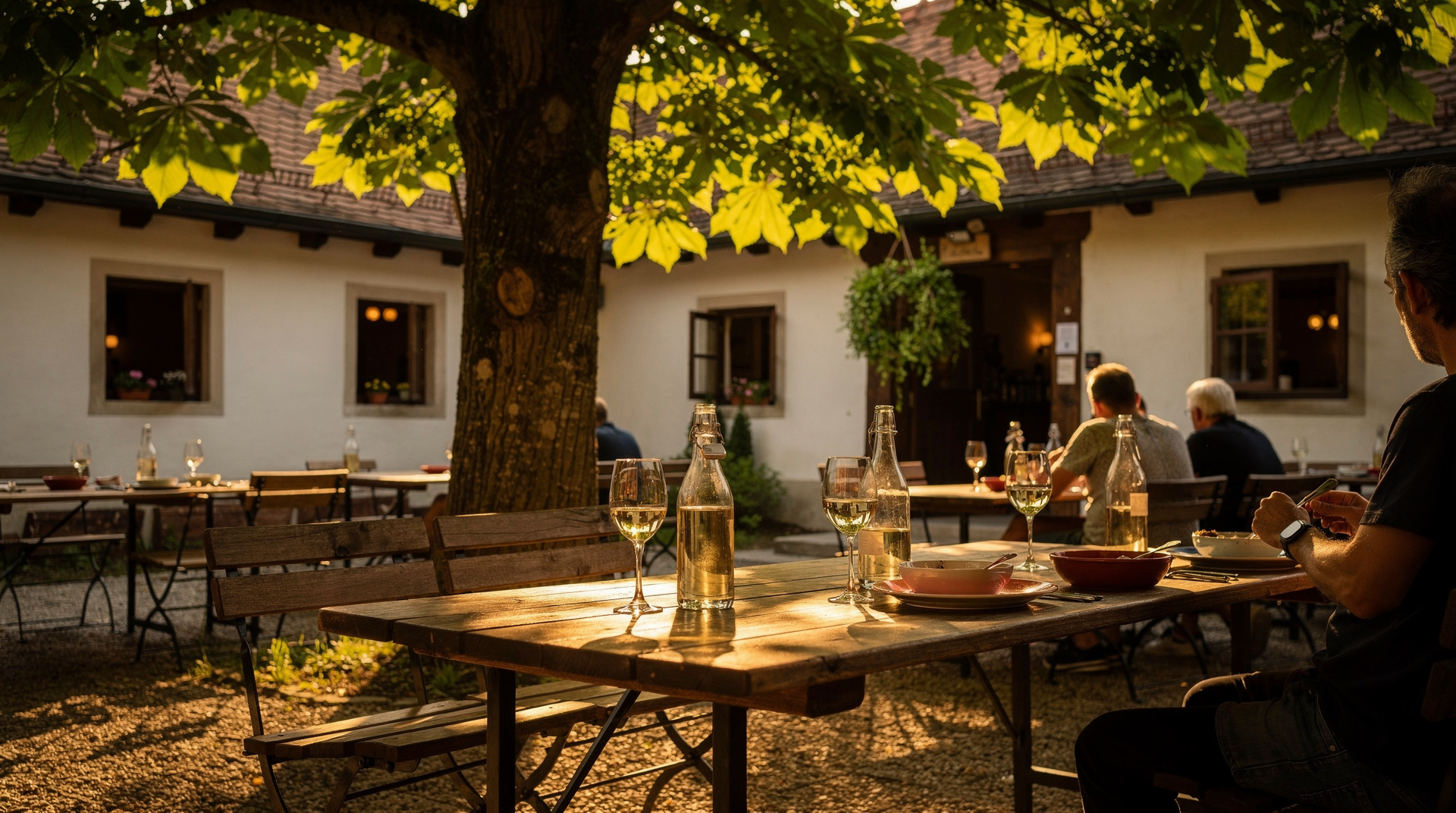
Burgenland wine route guide: Blaufränkisch, reds and lakeside wines
Schloss Esterházy Ticket: In the Steps of Joseph Haydn
What wine is Burgenland famous for?
Burgenland is Austria's red wine heartland — primarily Blaufränkisch (a peppery, full-bodied red) and Zweigelt (lighter, cherry-fruited). The Neusiedlersee region also produces extraordinary sweet wines (Trockenbeerenauslese) from noble rot. Very different from the Wachau's white wine focus.
Austria’s red wine country
Most international visitors to Vienna discover the Wachau Valley and its celebrated white wines. Fewer make the 60km journey east to Burgenland — Austria’s smallest and easternmost state — where the wine culture is entirely different: warmer, flatter, steppe-influenced, and fundamentally built on red grapes and sweet wines.
Burgenland shares a border with Hungary and maintains a partly Hungarian-influenced culture (the state was Hungarian until 1921). The wine tradition runs deep on both sides of the border: Blaufränkisch is also Hungary’s Kékfrankos; the Neusiedlersee sweet wine tradition connects to Hungarian Tokaji on the other side of the lake.
This guide covers what Burgenland wine is, where to find it, and how to visit the wine route from Vienna.
| Where | Neusiedlersee/Eisenstadt, 50–70km east of Vienna |
| Cost | Tastings roughly €10–25; TBA half-bottles €60–300+ |
| Time needed | Half day from Eisenstadt, full day for lake villages |
| Getting there | Train to Neusiedl am See or Eisenstadt (~50min) |
| Best time | September–October harvest for reds and sweet wine; May–June for cycling |
Best time to visit for wine
| Season | What’s happening | Good for |
|---|---|---|
| Spring (Apr–May) | Vines budding, cellars quieter | Tastings without crowds, cycling |
| Early summer (Jun) | Green, warm, lake at its calmest | Cycling the Neusiedlersee loop |
| Harvest (Sep–Oct) | Red grape and botrytis harvest, Sturm (new wine) available | Seeing the vineyards worked, Heuriger visits |
| Winter (Nov–Mar) | Quiet, some Heuriger closed | Cellar visits by appointment, avoid for cycling |
What you need to know
The climate and landscape
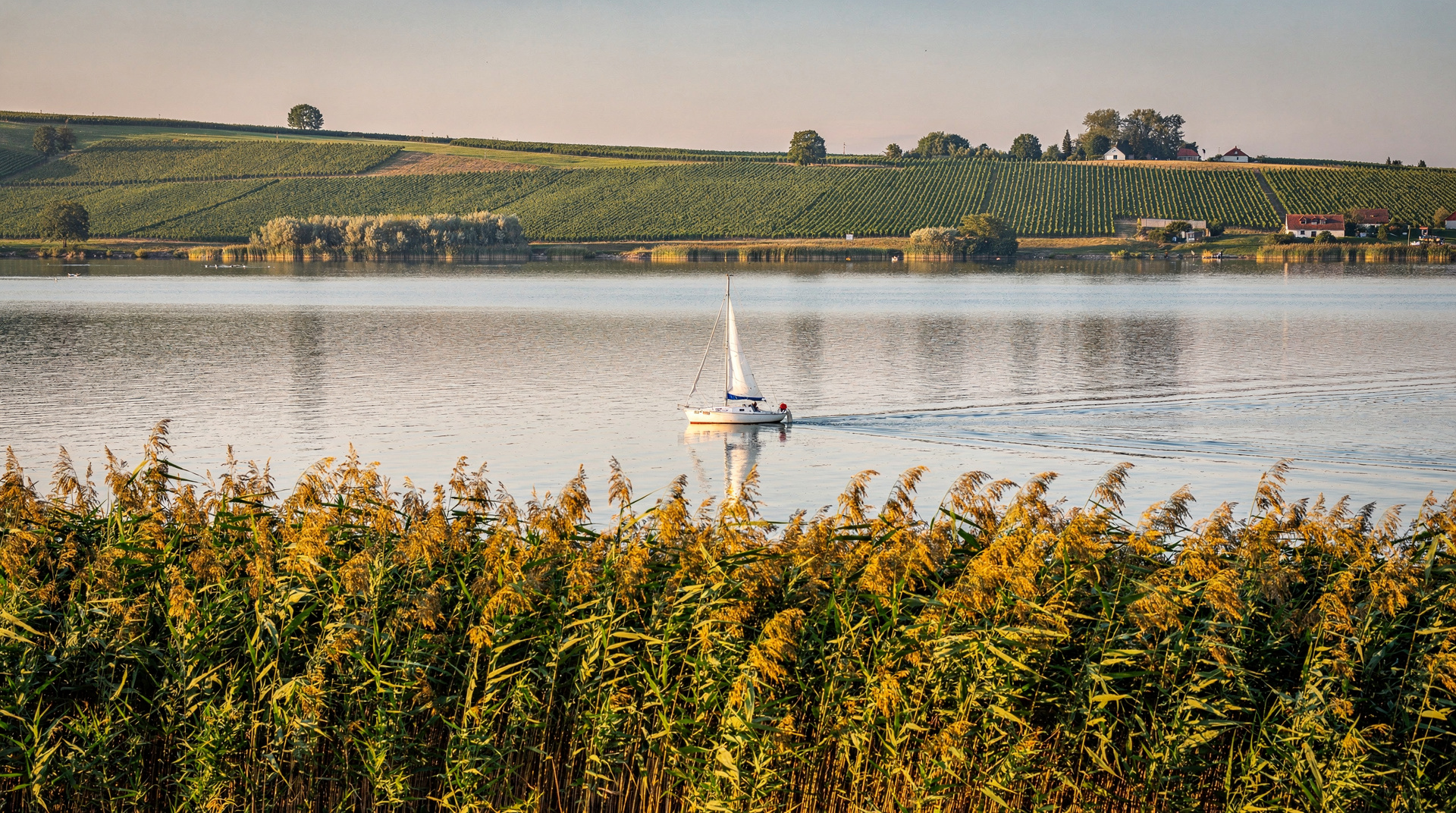
Burgenland occupies the eastern edge of Austria where the Alps give way to the Pannonian Plain — flat, dry, warm, with continental rather than Alpine influences. The Neusiedlersee (Lake Neusiedl) is a massive shallow lake (about 320 square kilometres but only 1–2 metres deep) that moderates temperatures, creates morning mists, and generates the humidity that encourages botrytis on the lake’s western shores. This combination produces conditions uniquely suited to sweet wine.
Away from the lake, Mittelburgenland has clay and limestone soils that produce the most serious Blaufränkisch in Austria.
The red wine grapes
Blaufränkisch: Austria’s most important red variety. Medium to full body, naturally high acidity (making it food-versatile), dark fruit character (blackberry, plum), spice, and an earthy backbone. At its best in Mittelburgenland (the Hochkultur-Pannonian zone between Neckenmarkt and Horitschon). Top producers: Ernst Triebaumer, Moric, Krutzler, Paul Achs.
Zweigelt: Austria’s most widely planted red grape — a crossing of Blaufränkisch and St. Laurent, created in 1922. More approachable and fruit-forward than Blaufränkisch: cherry, raspberry, smooth tannins, accessible young. Often served slightly chilled. Found in every Austrian wine region.
St. Laurent: A darker, more intense relation of Pinot Noir — sometimes described as Pinot Noir with more grip and darker fruit. From Neusiedlersee and Thermenregion. Increasingly valued internationally.
Pinot Noir: Also present in Burgenland (particularly Leithaberg) in a more structured style than Burgundy.
The sweet wine tradition
The Neusiedlersee is one of the world’s most reliable sites for noble rot (botrytis cinerea). The shallow lake creates persistent autumn morning mists that encourage the fungus, followed by afternoon sunshine that concentrates the sugars. The result: Austria produces extraordinary sweet wines in Auslese, Beerenauslese, and Trockenbeerenauslese categories with remarkable consistency.
Trockenbeerenauslese (TBA): The apex — raisin-shrivelled berries individually selected, pressed to produce tiny quantities of extraordinarily sweet, complex wine. Austrian TBA from producers like Kracher, Feiler-Artinger, and Willi Opitz are internationally collected. A 375ml half-bottle from a premium producer costs €80–300+ at release.
Beerenauslese (BA): The step below TBA — individually selected botrytis-affected grapes, very sweet but slightly less concentrated than TBA.
Auslese: Selected late-harvest grapes, sweet but with more balance and freshness. More accessible price-wise.
The Burgenland wine sub-regions
Neusiedlersee
The northern and eastern shore of Lake Neusiedl. Main towns: Neusiedl am See, Podersdorf am See, Illmitz. Primary reputation: sweet wines from the Seewinkel area (south-eastern shore). Red wine also produced, particularly from Zweigelt.
Key producers: Alois Kracher (the most internationally celebrated sweet wine producer — his TBA wines are collector’s items), Feiler-Artinger, Willi Opitz.
Leithaberg
The western shore of Neusiedlersee, sheltered by the Leitha Hills. More elegant wines than the east shore — Chardonnay and Pinot Blanc from limestone soils, structured reds. The Leithaberg DAC designation specifically covers limestone-influenced wines.
Key producers: Paul Achs, Ernst Triebaumer, Prieler, Hillinger.
Mittelburgenland (Blaufränkisch country)
The region between Sopron (Hungary) and the Neusiedlersee, centred on Neckenmarkt and Horitschon. Austria’s most serious Blaufränkisch territory: clay-rich soils, warm and dry climate, producing dense, structured reds with 10–20 year ageing potential.
Key producers: Moric (Hans Nittnaus and Roland Velich — the most internationally celebrated Blaufränkisch), Krutzler, Gsellmann, Igler.
Eisenberg
The southernmost Burgenland sub-region, near the Styrian and Hungarian borders. Produces the most powerful and mineral Blaufränkisch, from iron-rich soils (Eisenberg means iron mountain). Less well-known but producing excellent wines.
How to visit from Vienna
By train
Wien Hauptbahnhof → Neusiedl am See: approx. 50 minutes by ÖBB (hourly). From Neusiedl, local buses or cycling reach the lake villages. Eisenstadt: Hauptbahnhof → Eisenstadt, 40–50 minutes (change at Wulkaprodersdorf or direct on some services).
Combined wine and culture visit
Eisenstadt is the best base for a day trip that combines wine country with culture. The Esterházy Palace (where Joseph Haydn served as court composer for 30 years) is one of Austria’s most impressive Baroque palaces, surrounded by the wine country that Haydn would have known.
The Esterházy Palace ticket — in the steps of Joseph Haydn covers the palace visit with context for Haydn’s life there — a good pairing with the wine region exploration.
See the Eisenstadt day trip guide for the full cultural itinerary.
Wine-focused excursion
The half-day countryside wine tour with meal provides a guided introduction to Austrian wine country from Vienna — combining the wine experience with a meal and transport.
For a full wine-focused Wachau comparison, see the Wachau wine route guide — the two regions represent opposite ends of the Austrian wine spectrum (white vs. red, Alpine vs. Pannonian).
Planning a wine day without a car
A car is not essential. The easiest approach is to choose one anchor and let the day grow around it. If you pick Eisenstadt, you can combine the palace, a lunch with a glass of local red and an afternoon cellar visit without much backtracking. If you pick the lake, stay close to one or two villages rather than trying to cover the whole shore. Burgenland rewards a slow pace, and the distances between producers look short on a map but add up once you factor in appointments, lunch and the walk back to a station.
Think about who is driving before you commit to a tasting itinerary. Tastings add up faster than most visitors expect, so a day built around trains, buses or bikes is more relaxed than one built around a hire car and a designated driver. If you are travelling as a couple or a group, a guided half-day tour takes the logistics off your hands, and the wine-focused option described above is the simplest way to do that.
How to taste like a local
At a smaller estate, expect a short, informal tasting rather than a formal flight. Start with the lighter wines, move to the structured reds, and keep any sweet wine for the end. Ask the producer which vintage they are proudest of and which wine they would pour with dinner; the answers tell you more than a tasting sheet. Spit buckets are normal in a cellar, and nobody will think less of you for using one if you have more stops planned.
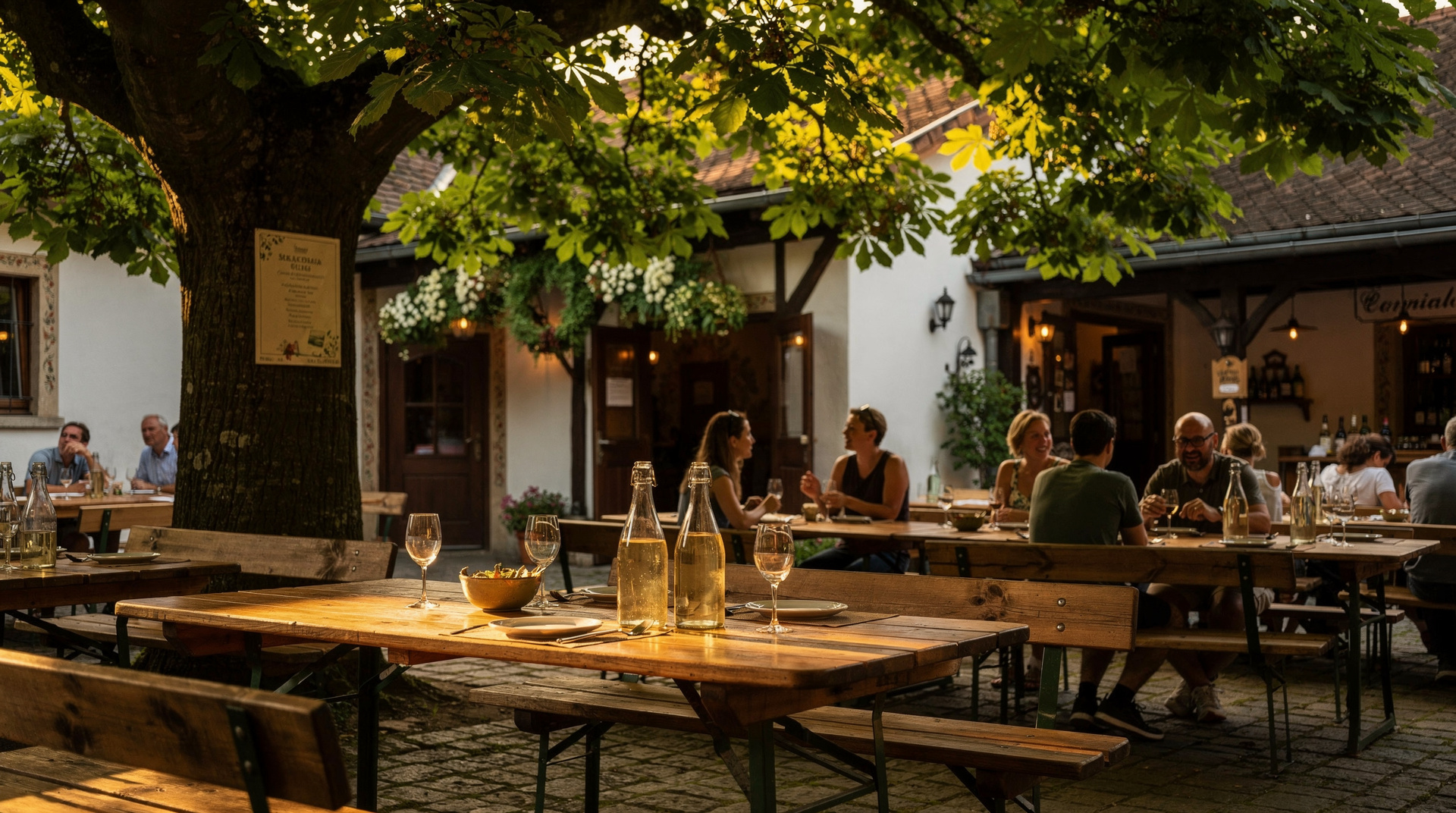
Pair what you taste with what the region eats. Hearty dishes, cured meats and simple farmhouse food are the natural partners for Blaufränkisch, while lighter Zweigelt suits a casual lunch. Our Heuriger guide explains how the wine-tavern tradition works, and the same etiquette applies in Burgenland: order a plate of cold cuts, sit down, and take your time. For a broader view of Austrian dining, the Vienna food guide shows how regional wine fits into the country’s cooking.
Pairing Burgenland with other days
Because the region is a day trip rather than a base, it fits comfortably into a longer stay. A visitor with a few days in the capital can slot it between museum days and a concert evening; the 3-day Vienna itinerary and the 5-day itinerary both leave space for exactly this kind of countryside break. If you are still deciding how long to stay, the how many days in Vienna guide helps you weigh a wine excursion against the city’s big sights.
For another outing in the same spirit, the best day trips from Vienna round-up compares the options side by side, and the Burgenland wine route destination page collects the region’s places in one spot. Wine lovers who want to compare styles can follow up with the Wachau wine route guide on another day.
Where to drink Burgenland wine in Vienna
You don’t need to travel to Burgenland to taste these wines:
Wine bars: The better Vienna wine bars (Vinothek W, Weinschanke, specialist shops in the 7th and 8th districts) stock selections from key Burgenland producers. Ask specifically for Moric Blaufränkisch or Kracher sweet wines.
Restaurants: Better Vienna restaurants with Austrian wine lists include Burgenland reds. Ask for a “Burgenland Blaufränkisch” and you’ll typically be pointed toward something between a Mittelburgenland and a Leithaberg example.
Naschmarkt wine stalls: Some stalls at the Naschmarkt carry Burgenland wine for purchase — ask around.
Honest tips
Blaufränkisch requires food. The high acidity and tannin of a serious Mittelburgenland Blaufränkisch can be astringent on its own. With red meat (Tafelspitz, Gulasch, Rindsbraten), it transforms — the acidity cuts through the fat and the flavours align. Order it with food, not as an aperitif.
Kracher TBA is a collector’s wine. If you see it on a wine list or in a shop, it’s worth buying a half-bottle. The price looks alarming (€60–200 for 375ml) but the wine is genuinely extraordinary — one of the world’s great sweet wines, comparable to Sauternes and German TBA but with its own distinctive character.
Zweigelt served chilled is a revelation. Young, fresh Zweigelt at 14–15°C (slightly below normal red wine serving temperature) is excellent with lighter Austrian food — particularly cold cuts, Wurst, and pork. Order it lightly chilled in summer.
The Neusiedlersee cycling route is excellent. A flat 25km loop around part of the lake, through reed beds, salt pans (the lake is slightly saline), and vineyards, is a wonderful half-day combined with lunch at a Heuriger in Podersdorf or Illmitz. Bikes available at the Neusiedl am See train station.
If you’d rather taste Burgenland wine without leaving Vienna first, our Heuriger guide and the best Heurigen in Grinzing and Nussdorf round-up both cover which wine taverns pour a genuine Blaufränkisch. For the other end of the Austrian wine spectrum, the Grüner Veltliner guide explains why the Wachau went white while Burgenland went red. And if you want to base yourself lakeside rather than day-tripping, the Neusiedlersee destination page has village-by-village detail beyond the wine.
Frequently asked questions about Burgenland wine
Can I combine Burgenland and Wachau on the same day?
Logistically difficult — Wachau is northwest of Vienna (train, 1h15 to Melk) while Burgenland is east (train, 50 minutes). A same-day visit to both would require very early starts and significant rushing. Better to dedicate a day to each, or choose based on your wine interest (whites vs. reds).
Is Burgenland wine available outside Austria?
Yes, increasingly. Moric Blaufränkisch and Kracher sweet wines are exported to the US, UK, Germany, and Scandinavia. Austrian wine specialist importers carry a range. Look for: Moric, Kracher, Feiler-Artinger, Paul Achs, Prieler.
What Austrian red wine should I try if I like Pinot Noir?
St. Laurent is the closest Austrian equivalent — dark fruit, similar structure, softer tannins. Also try a more elegant Blaufränkisch from Leithaberg (lighter body, red fruit) rather than the more powerful Mittelburgenland examples.
Is the Neusiedlersee a tourist destination beyond wine?
Yes. The lake is a UNESCO World Heritage Site for its steppe and wetland ecology — a major bird watching destination with 340+ species recorded. The National Park Neusiedler See-Seewinkel on the eastern shore has cycling routes through reed beds and open steppe. The lake itself is shallow enough for swimming (1–2m deep) and popular with windsurfers and sailors.
When is the best time to visit Burgenland for wine?
September–October is best for seeing the red grape and botrytis harvest and tasting new Sturm wine at a Heuriger. May–June is ideal for cycling the Neusiedlersee loop in mild weather. Winter is quiet, with some Heuriger closed, so cellar visits should be booked ahead.
Top experiences
Bookable activities with verified prices and instant confirmation on GetYourGuide.