Burgenland wine route
The Burgenland wine route: touring Austria's red wine heartland, Blaufränkisch at its source, the Pannonian wine villages and combining with Neusiedlersee.
Schloss Esterházy Ticket: In the Steps of Joseph Haydn
Quick facts
- Region
- Burgenland, southeast of Vienna
- Main varieties
- Blaufränkisch, Zweigelt, St. Laurent (reds)
- Key villages
- Rust, Neckenmarkt, Deutschkreutz, Horitschon
- Best season
- September–October (Leithaberg harvest)
Austria’s red wine country
Burgenland produces around 70% of Austria’s red wine — a near-total reversal from the Wachau and Kamptal to the north, which are primarily white wine regions. The difference comes down to climate and geography: Burgenland sits on the eastern edge of the Alps, opening onto the vast Hungarian plain (the Pannonian steppe) that brings hot, dry summers and long autumn hang-times to the vineyards.
The Neusiedlersee — Austria’s largest lake, shallow and warm — moderates temperatures and promotes botrytis (noble rot) for sweet wine production while also storing heat and releasing it through the autumn nights, extending the growing season. The result is conditions where Blaufränkisch, Zweigelt, and St. Laurent produce reds of a weight and structure that Austrian white wine regions simply cannot replicate.
| Where | Burgenland, southeast of Vienna, along the Neusiedlersee |
| Cost | Tastings typically a small fee per estate; car essential |
| Time needed | A full day by car |
| Getting there | Self-drive from Vienna, around 1 hour via the A3 |
| Best time | Late September–October (harvest) or May–June |
The Burgenland wine route (Burgenländische Weinstraße) runs from the northern shore of the Neusiedlersee south through the Leithaberg, Mittelburgenland, and Eisenberg wine regions — more than 150 kilometres from Neusiedl am See to the Slovenian border, passing through a sequence of wine villages, baroque estate wineries, and open cellar doors that make it one of Austria’s most rewarding wine-focused drives.
The main wine regions
Leithaberg — the range of limestone hills along the Neusiedlersee’s western shore. The name refers to the distinctive Leithaberg limestone that defines the soils: white limestone for the whites (Grüner Veltliner and Pinot Blanc of real mineral character), heavier clay for the reds. Blaufränkisch from Leithaberg has a fresh, mineral quality that distinguishes it from the richer Mittelburgenland style. Producers to know: Kollwentz in Großhöflein (one of Austria’s most respected estates, red and white), Preisinger in Purbach (biodynamic, superb Pinot Noir), Wenzel in Rust (fine Ruster Ausbruch sweet wine and dry reds).
Mittelburgenland — this is the heartland of Austrian Blaufränkisch, centred on the villages of Deutschkreutz, Neckenmarkt, and Horitschon. The warm Pannonian summers produce powerful, structured, full-bodied reds from old Blaufränkisch vines — wines that can age for 10 or more years from top producers. Weingut Gesellmann in Deutschkreutz, Weingut Paul Kerschbaum in Horitschon, and Heinrich in Gols are consistently excellent. The landscape here is flatter and more agricultural than the Leithaberg hills — open skies, isolated farmsteads, vineyards stretching to the horizon.
Eisenberg — the southernmost Burgenland wine region, named for the iron (Eisen) in its volcanic soils that gives the Blaufränkisch here a mineral, almost savory quality distinct from anything grown in Mittelburgenland or the Leithaberg. Production is smaller and the estates less well-known internationally, but the wines are worth seeking out. Krutzler and Wachter-Wiesler are among the producers whose names recur in serious Austrian wine conversations.
Driving the route
A well-structured full wine-route day from Vienna requires a car — public transport reaches the main towns but not the individual cellar doors. A logical sequence:
- Morning: Eisenstadt and Schloss Esterházy (see Eisenstadt guide) — a baroque palace visit with a Haydn connection is as good a starting context as any for a day in Burgenland
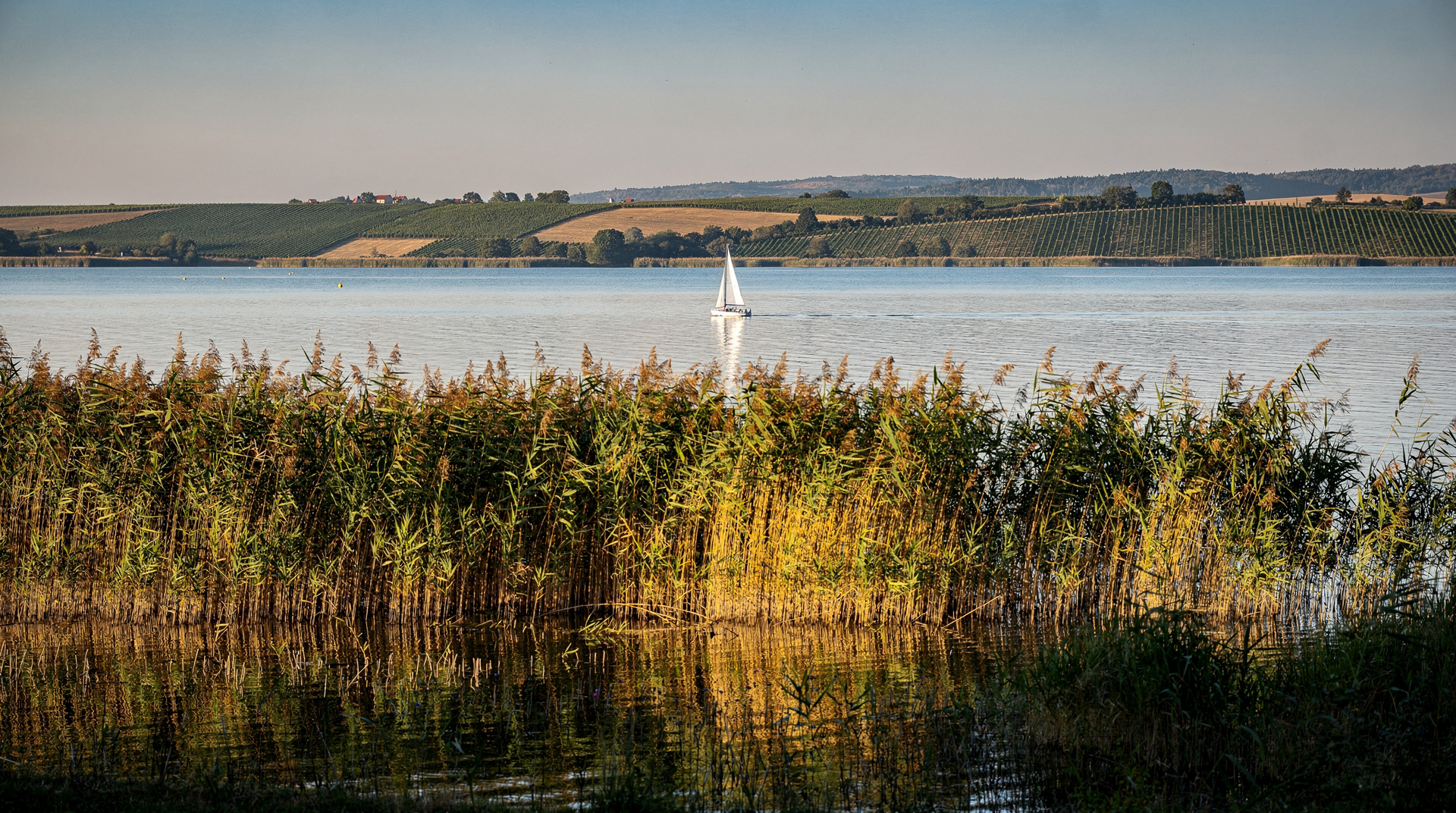
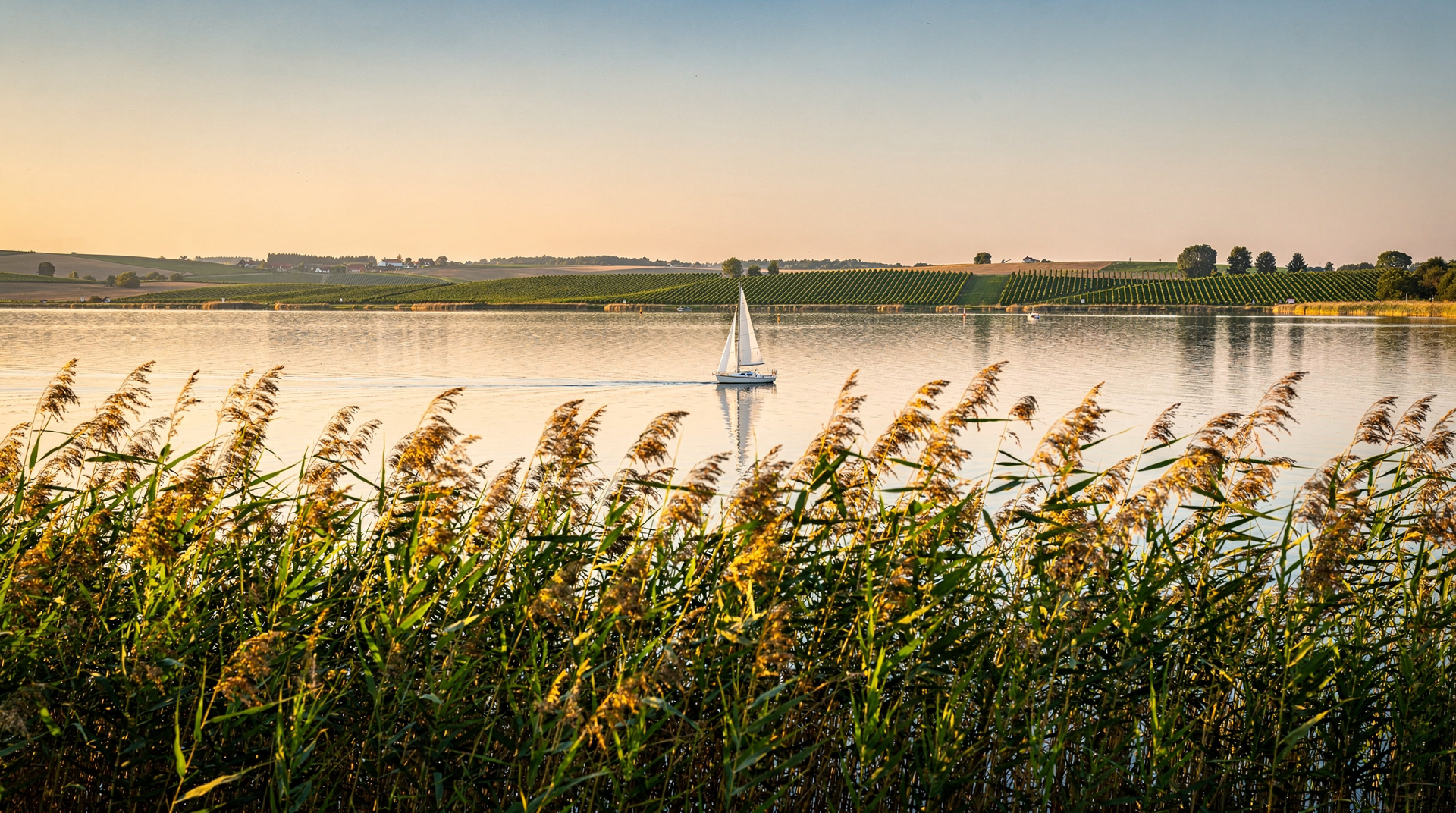
- Midday: Drive south through Rust and Mörbisch on the western Neusiedlersee shore — the road runs between the water and the vineyards in a narrow strip, with storks on the rooftops and lake views through the reed beds
- Afternoon: Continue south to Neckenmarkt or Deutschkreutz for winery tastings — call ahead, as many estates are appointment-based for visitors
- Evening return to Vienna: approximately 1 hour on the A3 motorway
The Esterházy palace and Haydn steps tour works well as a morning anchor in Eisenstadt before exploring the wine villages independently by car in the afternoon.
Before your first cellar door
Tasting at an estate is a slower, more personal affair than a tasting room in a big city. Many of the smaller producers are family operations: the person pouring is often the person who made the wine, and a short visit easily turns into a long conversation about the vintage, the vines and the soil. Build in more time than you think you need, and resist the urge to fit in five or six estates. Two or three well-chosen visits, each with proper attention, tell you far more about Blaufränkisch than a rushed sprint along the whole route.
Ask to taste the entry-level wine first and then step up to the single-vineyard bottlings. The difference between the two is the quickest way to understand what a village, a slope or a soil type does to the grape. If you only know Austrian wine through the whites of the Wachau, this is where the contrast becomes obvious: our Wachau wine route guide covers the other side of the country, and tasting both in the same season makes the difference very clear.
Buying a bottle or two at the cellar door is the polite way to thank a producer for their time. Pack something to cushion the bottles in the boot, and keep them out of the summer sun in a parked car.
Eating and slowing down
A day of tasting needs food. Burgenland’s village inns and wine taverns serve straightforward regional cooking designed to go with the local wines, and a proper lunch between the morning and afternoon tastings keeps the day enjoyable rather than exhausting. If the Viennese side of the story interests you, the Heuriger guide explains the tavern tradition that the wine villages around the capital share with Burgenland, and the Vienna food guide helps you plan the rest of your eating once you are back in the city.
Plan the day with a gap in the middle. A walk around Rust, a coffee on the square or a pause by the reed beds resets the palate and gives the designated driver a real break. The point of the route is the unhurried pace; if you find yourself checking the clock at every stop, you have booked too much.
Choosing your base
Most visitors return to Vienna the same evening, which works well in harvest season when the light stays good for the drive. If you would rather not rush, an overnight in the wine villages changes the experience entirely: evenings in Rust are quiet, the lake and the vineyards are at their best in early and late light, and you can take a second day for the lake or the bike paths. Our Burgenland wine weekend trip diary shows how a two-day version feels, and the Neusiedlersee guide is the natural companion for the second day.
For a fuller trip around the capital, the best day trips from Vienna guide places the wine route alongside the other options, and the Vienna 5-day itinerary shows where a day in Burgenland can slot into a longer stay without stealing time from the city’s major sights.
Rust and the Ruster Ausbruch
The wine town of Rust on the Neusiedlersee’s western shore is Burgenland’s most atmospheric wine village. The main square is surrounded by burgher houses whose owners hold the right to display their own wine seal — Rust received the formal right to put its civic seal on wine barrels in 1681, one of the oldest such designations in Europe. Multiple cellar doors open directly onto the square, selling the town’s wines directly to visitors.
The prestige wine of Rust is Ruster Ausbruch — a sweet wine made from botrytis-affected (noble rot) grapes, comparable in style to Tokaji Aszú from Hungary across the border. The lake’s warm, misty autumn mornings create ideal conditions for botrytis to develop on the Welschriesling and Furmint grapes traditionally used for Ausbruch. The best examples are wines of extraordinary complexity — honeyed, waxy, with an acidity that keeps them fresh despite the sweetness. Welcoming alongside dry reds and whites at most cellar doors.
The storks are the other reason to visit Rust in late spring and summer. The town has the highest density of white stork (Ciconia ciconia) breeding pairs of any place in Austria — nests on chimneys, church towers, and roof ridges throughout the village. In May and June, chicks are visible above the nest edges. By August the young storks are preparing for migration south to Africa — Rust’s rooftops function, briefly, as a staging ground for one of Europe’s great bird migrations.
When to visit
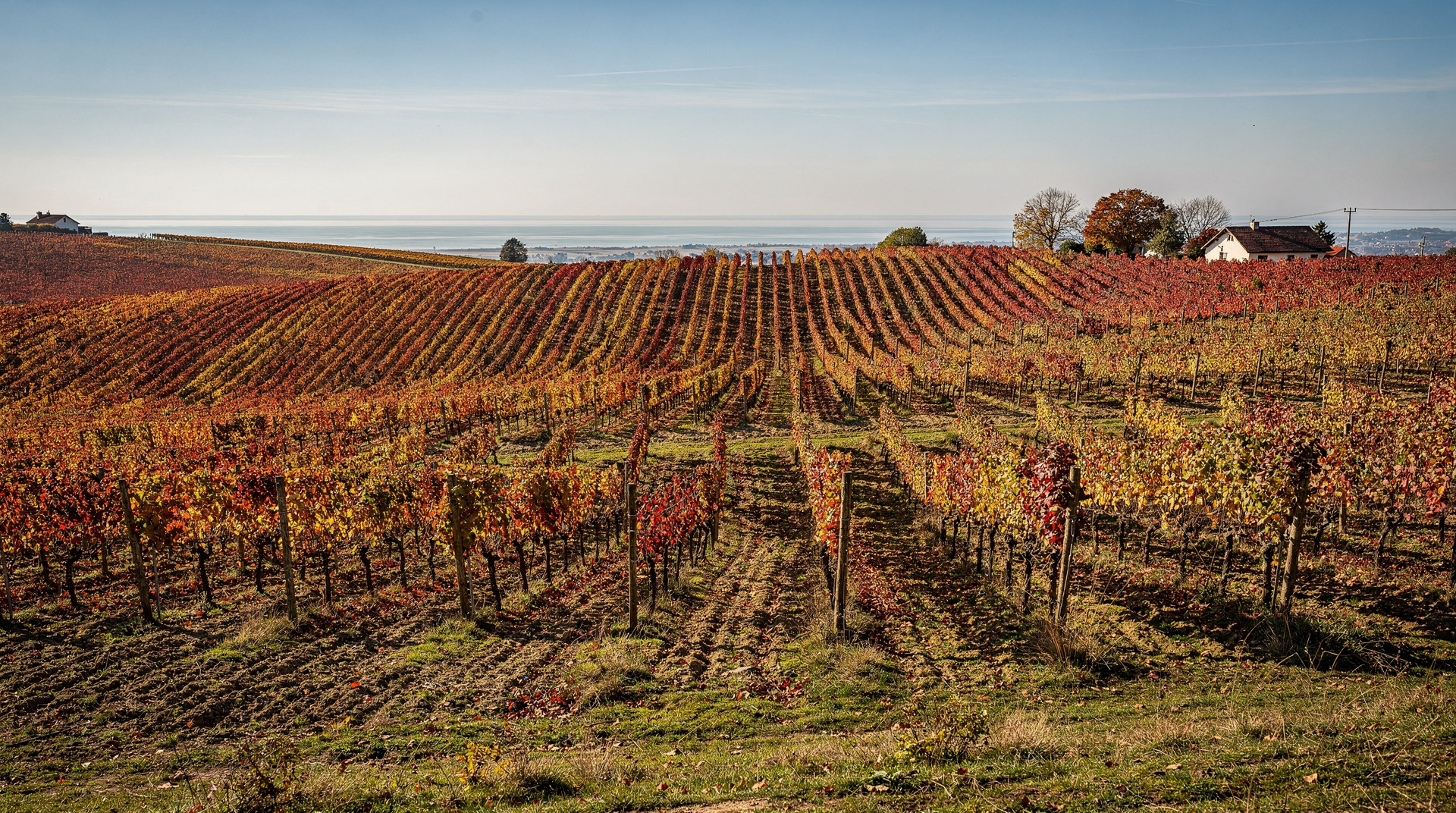
Harvest season — late September to mid-October — is the most atmospheric time on the Burgenland wine route. Wine events and open-cellar days (Kellergassenfeste) bring the villages to life; the smell of fermenting must drifts from cellar doors; the vine terraces on the Leithaberg slopes turn from green to gold and copper. The Mittelburgenland open cellar day, held annually in autumn, gives access to dozens of producers who are otherwise appointment-only.
Spring (May–June) is less crowded and has its own pleasures: the storks are nesting in Rust, the reed beds are full of birdsong, and the vineyards are green rather than the harvest gold. Lake Neusiedl is swimmable by June in a warm year — a combination of wine tasting, lake swimming, and a morning at the Esterházy palace makes a full and varied day.
Summer (July–August) is hot — often very hot — and the vineyards are a deep mid-season green. The lake at Rust and Podersdorf is busy with Austrian holidaymakers. Wine tourism is less oriented toward the cellar during this period; the focus shifts to sailing, cycling, and the beach.
Burgenland by season
| Season | Vineyard conditions | Highlight |
|---|---|---|
| Late Sept–Oct (harvest) | Vines turning gold and copper, active picking | Kellergassenfeste open-cellar days |
| May–June | Green vines, storks nesting in Rust | Fewer visitors, lake starting to warm |
| July–Aug | Deep green, hot | Sailing and beach at Rust/Podersdorf outshine wine tourism |
| Nov–March | Dormant vines | Mostly closed; not recommended for a wine-focused visit |
Planning and combining with Neusiedlersee
The route sits alongside Austria’s largest lake, and most one-day visitors pair the two: see the Neusiedlersee guide for the lake’s birdwatching and cycling side, and the Neusiedlersee cycling guide if a bike day appeals more than a driving day.
For the Grüner Veltliner and white-wine side of Austria further north, the Grüner Veltliner guide explains how the Wachau’s whites differ from Burgenland’s reds. The fuller Burgenland wine route guide has estate-by-estate detail beyond what fits here, and the Burgenland wine weekend trip diary gives a first-person account of a two-day version of this route.
Pairing the wine route with other trips
The wine route works best as one chapter in a wider exploration of eastern Austria rather than as an isolated outing. Travellers who enjoy the landscape and the slower rhythm often combine it with the Wachau valley on a different day, where the river, the abbeys and the terraced vineyards offer a very different expression of Austrian wine culture. The Wachau day trip from Vienna is the usual way to see it, and a guided day tour of the Wachau with wine tasting suits anyone who would rather not drive after tasting.
If you want a quieter, more local counterpart close to the capital, the wine taverns of Grinzing offer an easy evening without needing a car at all, and a small-group wine tasting tour with visits to Heurigen is a simple way to do it if you prefer a guide. That makes a good pairing: a driving day in Burgenland, then a relaxed tavern evening in the city on another day, with no driving involved. For a more general overview of the best season for any of these trips, see the best time to visit Vienna guide, and for the autumn atmosphere that suits the harvest period, the Vienna in autumn guide.
A last practical point: because the route depends on weather and on estates’ own opening habits, treat the plan as flexible. Keep one or two backup stops in mind, such as the palace in Eisenstadt or a lakeside walk, so that a closed cellar door never ruins the day. Arriving with curiosity rather than a rigid checklist is the best preparation for a region whose pleasures are small, local and unhurried.