Eisenstadt
Day trip from Vienna to Eisenstadt: Esterházy Palace, the Haydn Museum and the Haydnsaal where Haydn composed. Burgenland's capital in half a day.
Eisenstadt: Esterhazy Palace Admission Ticket
Quick facts
- Distance from Vienna
- 55 km (45 min by train)
- Train
- Wien Meidling → Eisenstadt (via Neusiedl/Wulkaprodersdorf), 45–55 min
- Key attraction
- Schloss Esterházy, Haydnsaal, Haydn Museum
- Currency
- Euro (€)
Haydn’s palace town
Eisenstadt is the capital of Burgenland — Austria’s easternmost and youngest state, a flat, wine-producing province that borders both Hungary and Slovakia, only transferred to Austria from Hungary in 1921. The town itself is modest in scale, a working Austrian market town rather than a showpiece city. But its cultural significance is outsized and specific: this is where Joseph Haydn spent the central 30 years of his professional life in service to the Esterházy family, composing in the Haydnsaal of Schloss Esterházy, and where his tomb remains in the Bergkirche above the old town.
| Where | Burgenland’s capital, 55 km southeast of Vienna |
| Cost | Palace admission around 15€; Bergkirche modest separate fee |
| Time needed | Half a day; a full day combined with Neusiedlersee |
| Getting there | Train from Wien Meidling, 45–55 min |
| Best time | April–October; September for the Haydn Festival |
For visitors from Vienna, Eisenstadt is a 45-minute train journey that delivers the full Esterházy palace experience plus a Haydn immersion that goes well beyond what any Vienna museum can offer. The Haydnsaal is not a recreation or a facsimile — it is the actual concert hall where the symphonies were first performed, and it still sounds as Haydn designed it to sound.
Schloss Esterházy
The Esterházy family were the wealthiest and most powerful magnate dynasty of the Habsburg Empire — wealthier, at various periods, than the Emperor himself. Their primary palace in Eisenstadt was built on the foundations of a medieval castle and progressively rebuilt: the main baroque transformation happened in 1663 under Paul I Esterházy, and further empire-style modifications followed in the early 19th century. The result is one of the finest aristocratic residences in Austria — a palace town within a town, with wings and courtyards and gardens covering a substantial part of central Eisenstadt.
Book Esterházy Palace admission tickets for access to the state rooms, the portrait gallery, and the Haydnsaal — the concert hall where Haydn conducted the Esterházy court orchestra for three decades.
The Haydnsaal is the undisputed highlight of the palace and one of the most significant musical rooms in Europe. This 18th-century baroque hall — with a frescoed ceiling, gilded gallery, and acoustics that Haydn himself designed the orchestra layout to exploit — is where Haydn premiered many of the symphonies that are now performed in the concert halls of London, New York, and Tokyo.
The proportions are intimate by the standards of later concert halls, seating only a few hundred, which gives even a spoken explanation of the room an unusual resonance. Concerts still take place here regularly, most notably during the Haydn Festival each September, and the hall is widely regarded as one of the finest small-scale performance spaces in Austria.
How to read the palace
It helps to arrive with a simple idea of what you are looking at. Schloss Esterházy is not a museum assembled from scattered objects; it is a residence that stayed in use by one family across generations, and its layers show it. The baroque rebuilding gave it its grand silhouette, the later empire-style changes softened some interiors, and the result is a building that rewards slow looking more than a quick checklist visit.
Compare it with the imperial palaces in the capital and the difference is instructive. In Schönbrunn and the Hofburg you see how the ruling dynasty presented itself to the empire; here you see how its richest subjects presented themselves, with a confidence that sometimes outdid the court. If you enjoy that contrast, the Schönbrunn Palace guide and the comparison in Schönbrunn vs Hofburg make a good companion read before or after the trip.
A few habits make the visit better:
- Go through the state rooms and portrait gallery first and keep the Haydnsaal for last, so the music hall lands as the climax rather than an early stop.
- Stand still in the Haydnsaal for a minute. The ceiling, the gallery and the proportions explain the room’s reputation far better than any caption.
- Leave time for the courtyards and gardens around the palace; the building is part of the town’s fabric and the surroundings are part of the experience.
In the steps of Haydn
The Schloss Esterházy tour “In the Steps of Joseph Haydn” is the most immersive way to experience the palace — following Haydn’s working day through the rooms he used, from the composition room to the performance hall, with audio and musical accompaniment in the Haydnsaal itself.
Joseph Haydn (1732–1809) joined the Esterházy household as Vice-Kapellmeister in 1761, working under the ageing Gregor Werner. When Werner died in 1766, Haydn became Kapellmeister and remained in that role until his death — first serving Prince Paul Anton, then the demanding and music-obsessed Prince Nikolaus I who was his true patron, and subsequently the later princes. He composed at both Eisenstadt and the family’s summer palace at Esterháza (in present-day Hungary), largely cut off from the broader musical world, which proved, as he famously acknowledged, to be a creative condition: “I was cut off from the world, there was nobody in my vicinity to confuse and annoy me, and I was forced to become original.”
The originality that resulted changed music permanently. The symphonic form as Beethoven and Mozart inherited it — with its balance of structure and surprise, its emotional range, its formal architecture — was substantially Haydn’s creation, worked out in these rooms across 30 years of productive isolation.
His Haydnhaus on Haydngasse — the house he owned and lived in during much of his Eisenstadt residence — is a small museum. The larger Haydn Museum in the town covers his life and work in broader context with instruments, manuscripts, and the full biographical narrative from Rohrau (where he was born) to the late London symphonies.
The Bergkirche and Haydn’s tomb
The Bergkirche (Mountain Church) on the hill above Eisenstadt’s old town contains Haydn’s tomb — or most of it. The composer died in Vienna in 1809 and his body was initially buried there. It was returned to Eisenstadt in 1820. But his skull, removed shortly after death by phrenologists curious about the cranial structure of genius, had a separate trajectory: it passed through several hands, was long displayed at the Society of Friends of Music in Vienna, and only finally rejoined the body in 1954 — 145 years after the composer’s death. The tomb is complete, if belatedly.
The church contains the extraordinary Kalvarienberg — a life-sized three-dimensional representation of the Passion narrative built through the interior of the church building, with carved stone and plaster figures depicting the stations of the cross in chapels that visitors walk through. It was built in the early 18th century at the commission of the Esterházy family and is one of the most unusual devotional spaces in Austria: part church, part sculpted environment, entirely extraordinary.
Planning your half-day
A sensible rhythm for the visit runs from palace to tomb to table. Start at Schloss Esterházy while you are fresh, since the state rooms and the Haydnsaal deserve your full attention. Move on to the Haydn Museum and the Haydnhaus to put the music in the context of a working life. Finish at the Bergkirche, where the tomb and the Kalvarienberg give the day a quieter, more reflective end. Between stops, the old town is small enough to wander without a plan, and a slow coffee in a local café is a fair reward after the palace.
If the day is mostly about Haydn, it pairs naturally with the wider story of music in the capital. The Vienna classical music itinerary threads Eisenstadt’s legacy into a longer programme, while the Haus der Musik guide and the Musikverein concerts guide show where that tradition continues in Vienna itself. Anyone comparing concert options will also find the classical vs touristic concerts guide useful, because the Haydnsaal is the opposite of a tourist-trap performance: a real hall with a real history.
Combining with Neusiedlersee
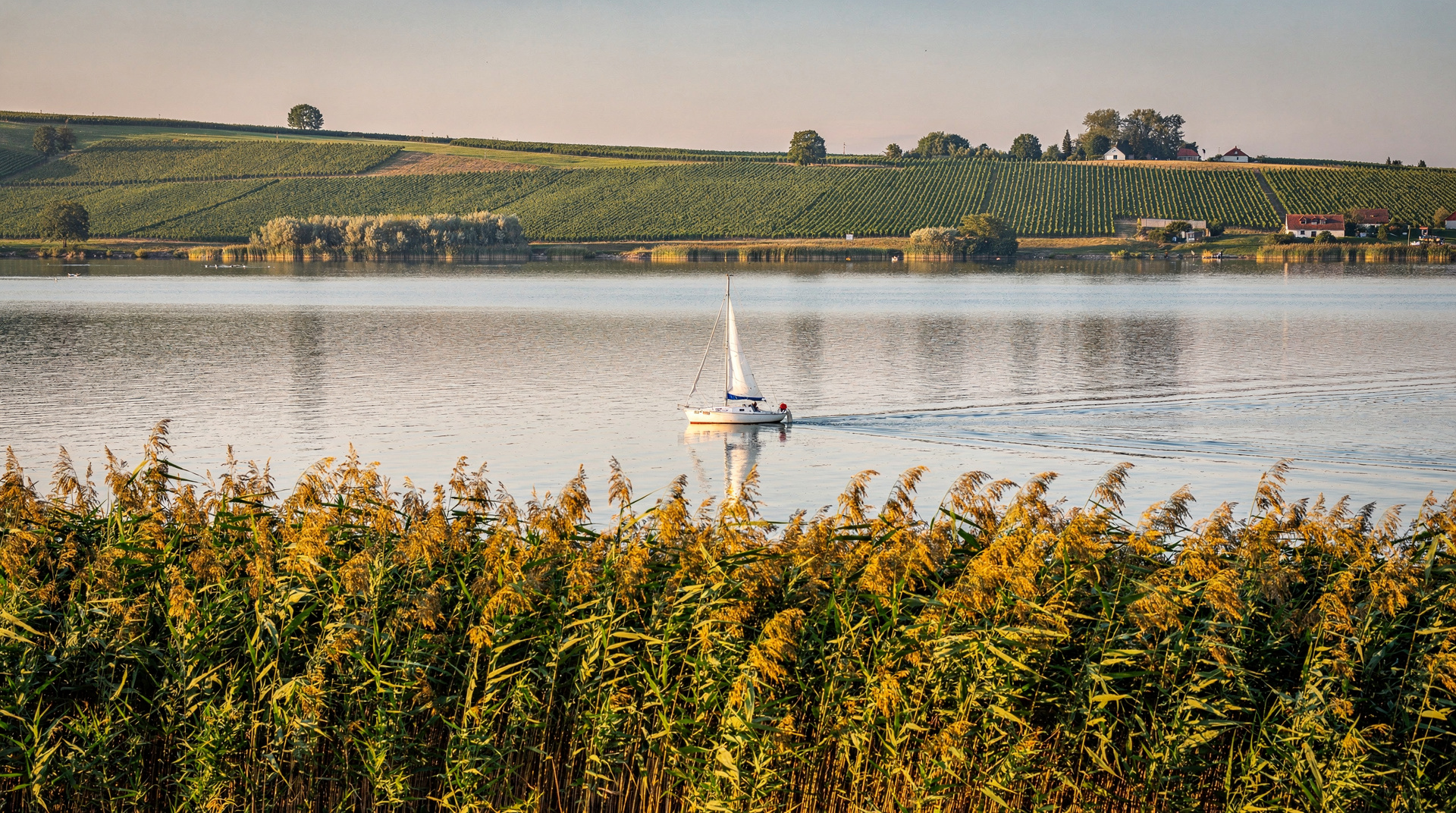
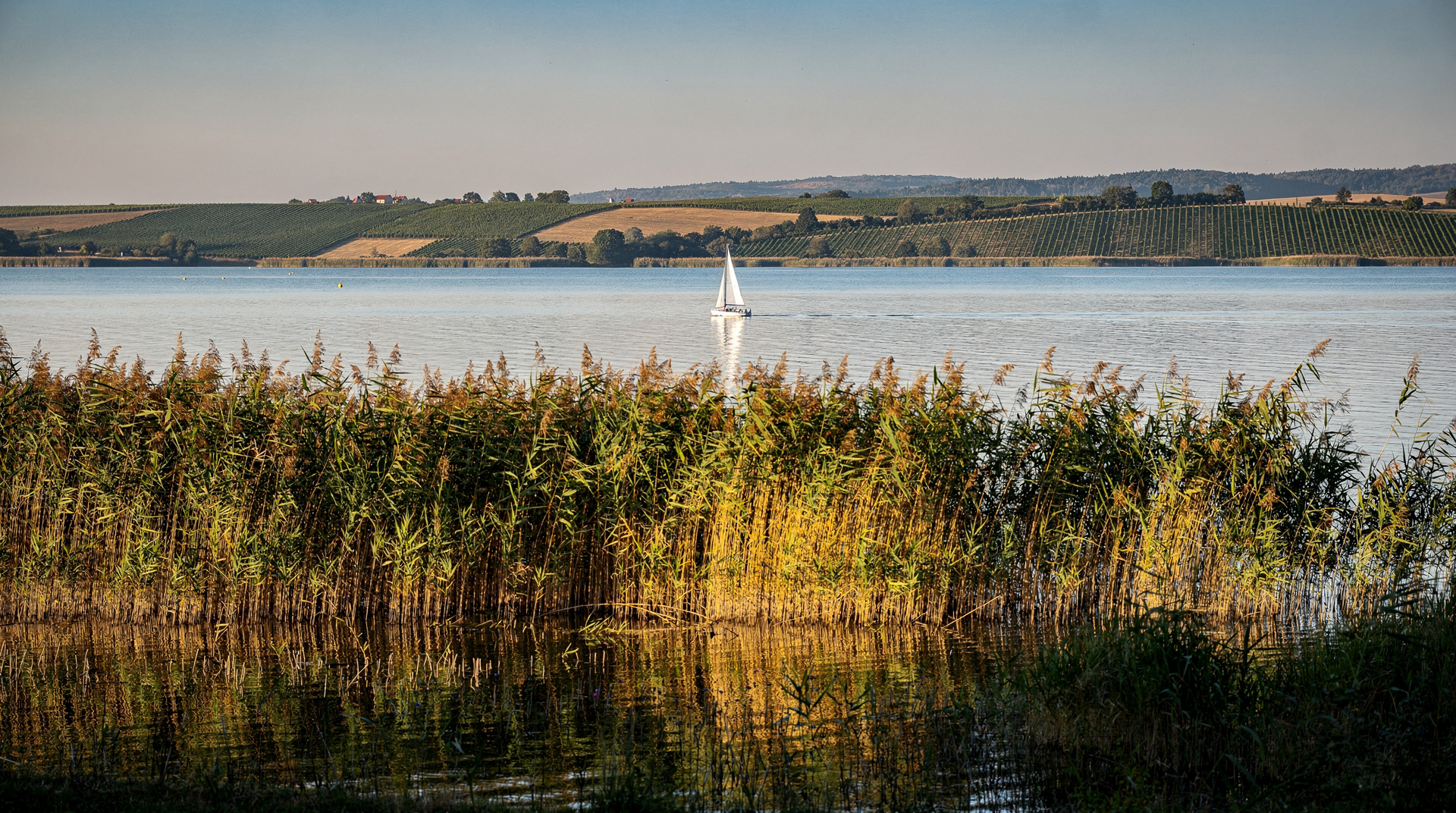
Eisenstadt is the ideal starting point for an afternoon visit to the Neusiedlersee — 15 km south by car or regional bus. The lake is one of Central Europe’s great birdwatching sites, a UNESCO World Heritage landscape, and the source of Burgenland’s remarkable sweet wines (see Neusiedlersee). A half-day in Eisenstadt combined with an afternoon cycling or walking along the lakeside makes a full and varied day trip from Vienna.
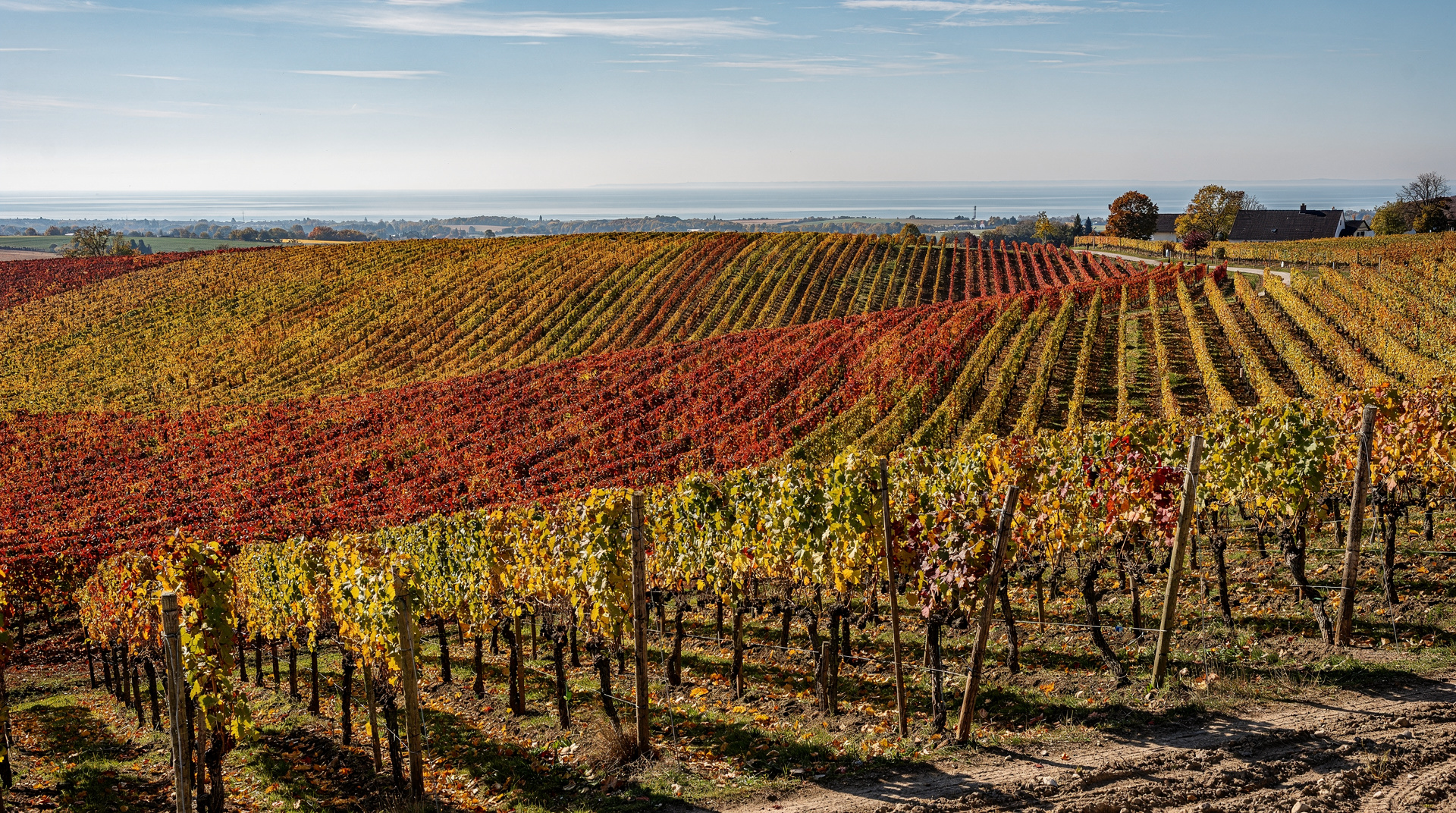
The wider Burgenland wine route also starts logically from Eisenstadt, with Schloss Esterházy as a natural morning anchor before an afternoon of driving south to the Blaufränkisch villages of Mittelburgenland — see the Burgenland wine route guide for the full itinerary if wine tasting is part of the day.
Where Eisenstadt fits in a Vienna trip
Eisenstadt works best as a quiet counterweight to the busier days of a Vienna stay. If you are planning the whole trip, how many days in Vienna and the best day trips from Vienna help you decide where a half-day in Burgenland belongs. For a longer stay, the 7-day Vienna itinerary leaves room for a day out of the city, and Eisenstadt suits the days when you want music and history without a long journey.
It also contrasts well with the bigger excursions. Where the Wachau day trip is about river scenery and abbeys, Eisenstadt is compact, indoors-friendly and focused on one story, which makes it a reasonable choice when the weather is uncertain. Wine lovers can extend the theme with the Grüner Veltliner guide, and anyone drawn to the region’s landscapes can look at the wider Burgenland options before deciding how long to stay.
Why the small scale is the point
Visitors who arrive expecting a second Vienna sometimes feel the town is quiet, and that is exactly its character. Eisenstadt does not compete with the capital’s museum quarter or its grand boulevards; it offers a single, coherent story told in the actual rooms where it happened. That focus is why a short visit can feel more memorable than a hurried day of ticking off sights. You hear the music in the space it was written for, you stand at the tomb of the man who wrote it, and you walk back through streets that have served the same household of palace, church and market for centuries.
For travellers who like to understand a place before they arrive, the Habsburg history guide sets the wider imperial background in which the Esterházys rose, and the Vienna food guide is a useful companion for planning where to eat once you are back in the city that evening.
Getting there
By train from Vienna: Wien Meidling to Eisenstadt, approximately 45–55 minutes depending on the service, changing at Wulkaprodersdorf or using the direct service when available. Eisenstadt station is about 20 minutes’ walk from the palace, or a short local bus ride along the main road. The train frequency is reasonable on weekdays and reduced on weekends — check the ÖBB timetable before setting out.
For the full range of transport and timing options, see the Eisenstadt day trip guide.
Top experiences
Bookable activities with verified prices and instant confirmation on GetYourGuide.