Neusiedlersee
Lake Neusiedl (Neusiedlersee): Austria's largest lake, cycling circuits, birdwatching, Burgenland wine and how to combine it with Eisenstadt from Vienna.
Schloss Esterházy Ticket: In the Steps of Joseph Haydn
Quick facts
- Size
- 320 km² — largest lake in central Europe (steppe lake)
- Depth
- Averages just 1.2m deep
- Distance from Vienna
- 65 km (1h by train to Neusiedl am See)
- UNESCO status
- National Park since 1993, World Heritage Site (2001)
Europe’s westernmost steppe lake
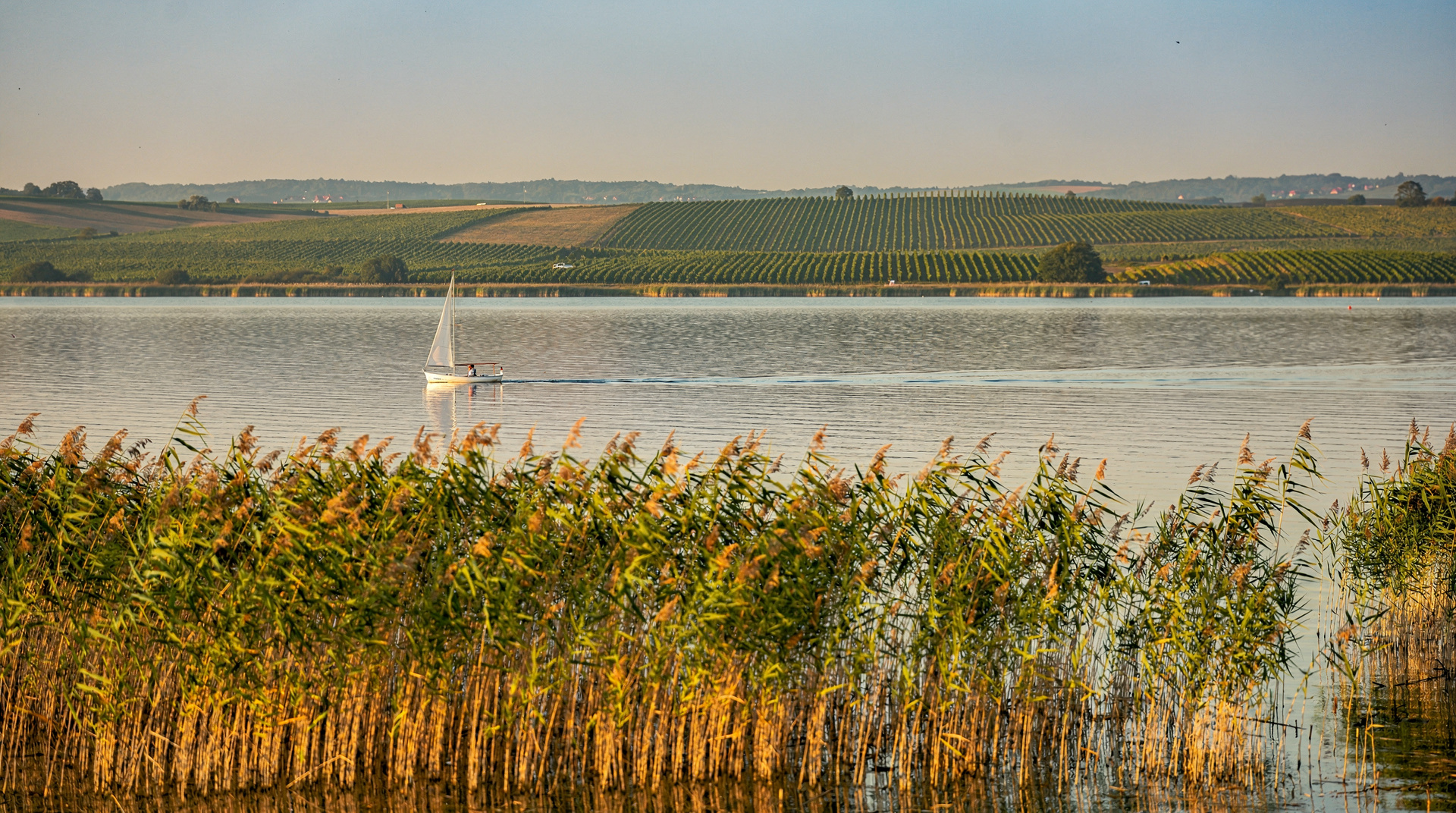
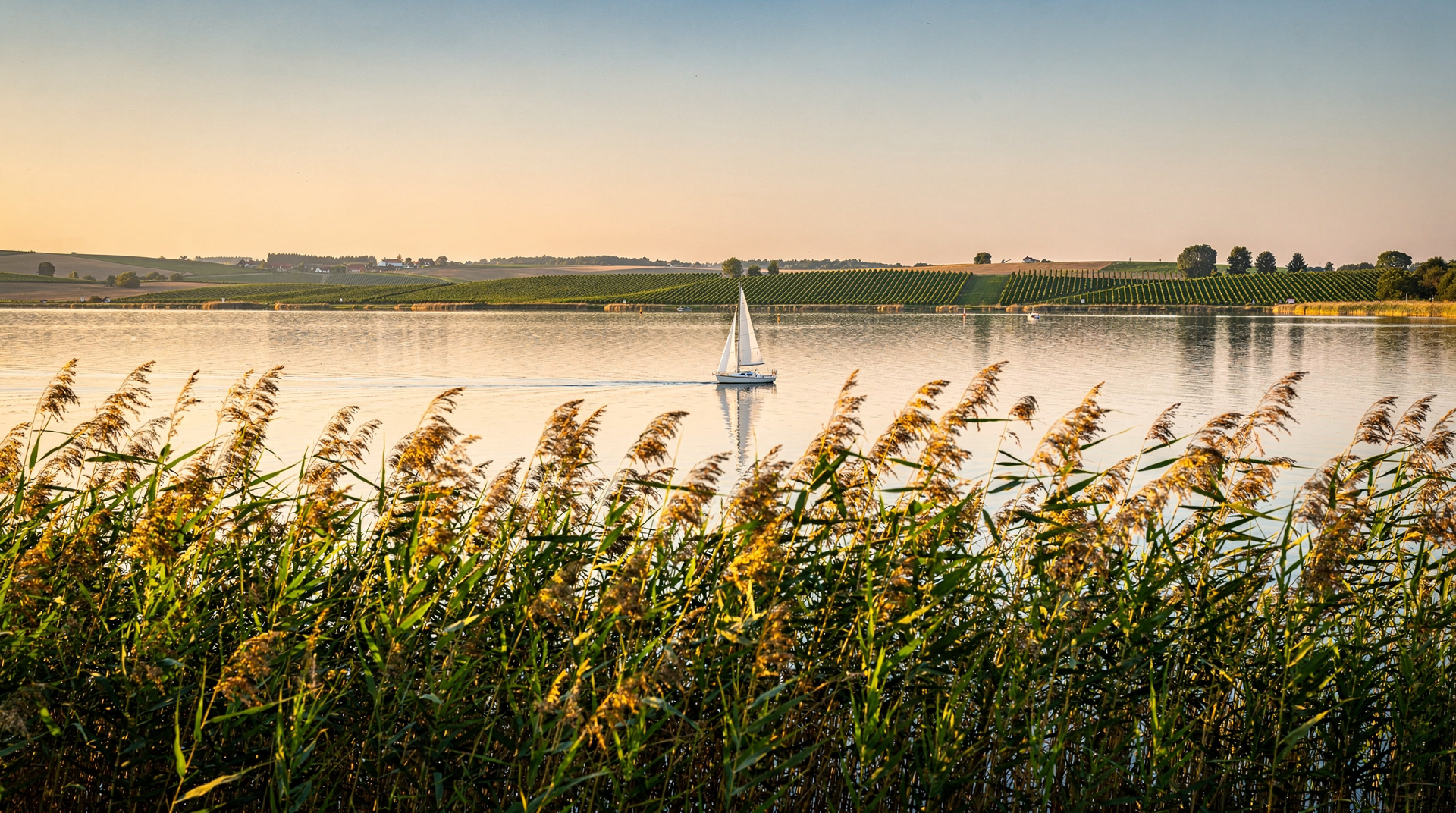
The Neusiedlersee (Lake Neusiedl) is one of central European geography’s genuine peculiarities: a vast, shallow, reedy lake on the boundary between the Eastern Alps and the Hungarian puszta — the great steppe that extends east from here all the way to the Urals. It averages just 1.2 metres deep, so shallow that it periodically evaporates in prolonged droughts (the lake disappeared entirely in 1866 and again in the early 20th century, returning in the 1870s when rainfall resumed) and is bordered by extensive reed beds — the largest inland reed belt in Europe, covering about a third of the lake’s total surface area — that make it one of the most important wetland ecosystems on the continent.
| Distance from Vienna | 65 km (1h by train to Neusiedl am See) |
| Cost | Train around €15–20 return; bike rental around €15–25/day |
| Time needed | A full day; longer if combining with Eisenstadt or cycling the full circuit |
| Getting there | Train to Neusiedl am See, then bus or bike onward to Rust |
| Best time | April–October for cycling and birdwatching; June–August for swimming |
The lake straddles the Austrian-Hungarian border. The Austrian section is designated a national park and, jointly with the Hungarian Fertő section, a UNESCO World Heritage Site since 2001 — the first transnational World Heritage landscape in Europe. Sixty-five kilometres east of Vienna and just over an hour by train, it is the capital’s most complete contrast: a flat, open, sky-dominated landscape where the light behaves differently and the air smells of reed and water rather than urban stone.
The storks of Rust
Before getting to cycling routes and wine, it is worth mentioning what many visitors remember longest about the Neusiedlersee: the white storks. Rust, on the western shore, is the stork capital of Austria — not a marketing claim but a verifiable ecological fact. Over forty breeding pairs nest on the chimneys and rooftops of the village each spring, arriving from sub-Saharan Africa in late March and raising their young through the summer.
The clatter of stork bills from the nests (their primary communication — they have no song) is the sound of Rust from April onward. The main square, surrounded by wine cellars, has stork nests on most of the older buildings, and the spectacle of a stork landing on a 300-year-old roof with its legs dangling forward like a landing aircraft is one of the more improbable rural European experiences within an hour of Vienna.
Cycling around the lake
The Neusiedlersee Radweg — the cycle path around the lake — is one of Austria’s most popular leisure cycling routes. The full circuit covers approximately 120 km and crosses into Hungary at the Andau border crossing (passport required, or Austrian/EU ID card for EU nationals). Most visitors cycle the Austrian section — roughly 75 km from Neusiedl am See via Mörbisch to Rust and back — a pleasantly flat route through the lakeside wine villages, with the reed beds to one side and the vine-covered slopes of the Leitha hills to the other.
The terrain is entirely flat throughout, making this one of the most accessible cycling routes in Austria for visitors of any fitness level. Bikes can be rented at Neusiedl am See train station (10 minutes’ walk from the town centre) and at several villages around the lake; electric bikes are available at most rental points and make the full-day circuit manageable without particular effort.
The southern section, through Mörbisch to the Hungarian border and back via Illmitz, is the most varied — the reed beds are widest here, and the reed-cutting operations visible in autumn give the landscape a working-country quality that the more curated northern shore lacks. The Neusiedlersee cycling guide has route maps, distance breakdowns and bike rental locations for anyone planning to ride rather than drive or bus around the lake.
Birdwatching
The Neusiedlersee is on the Via Pannonica migratory flyway and has been recorded with over 300 bird species — more than half the bird species recorded in Austria in a single location. The reed beds are breeding habitat for the purple heron, great white egret, great bittern, spoonbill, and marsh harrier. The open water attracts enormous flocks of greylag geese and surface-feeding ducks during autumn migration (September–October). Bearded tits nest deep in the reeds and can occasionally be seen clinging to reed stems at the edge of the path.
The observation towers at Podersdorf am See and Illmitz are the best platforms for lakeside views, and the boardwalks that extend into the reed beds from several points around the shore bring you close to the reed habitat without disturbing it. The national park visitor centres at Illmitz and Apetlon run guided birdwatching walks, particularly productive in spring (April–May for breeding species) and autumn (September–October for migration). A serious birdwatcher could easily spend a full day at Illmitz alone.
Wine villages
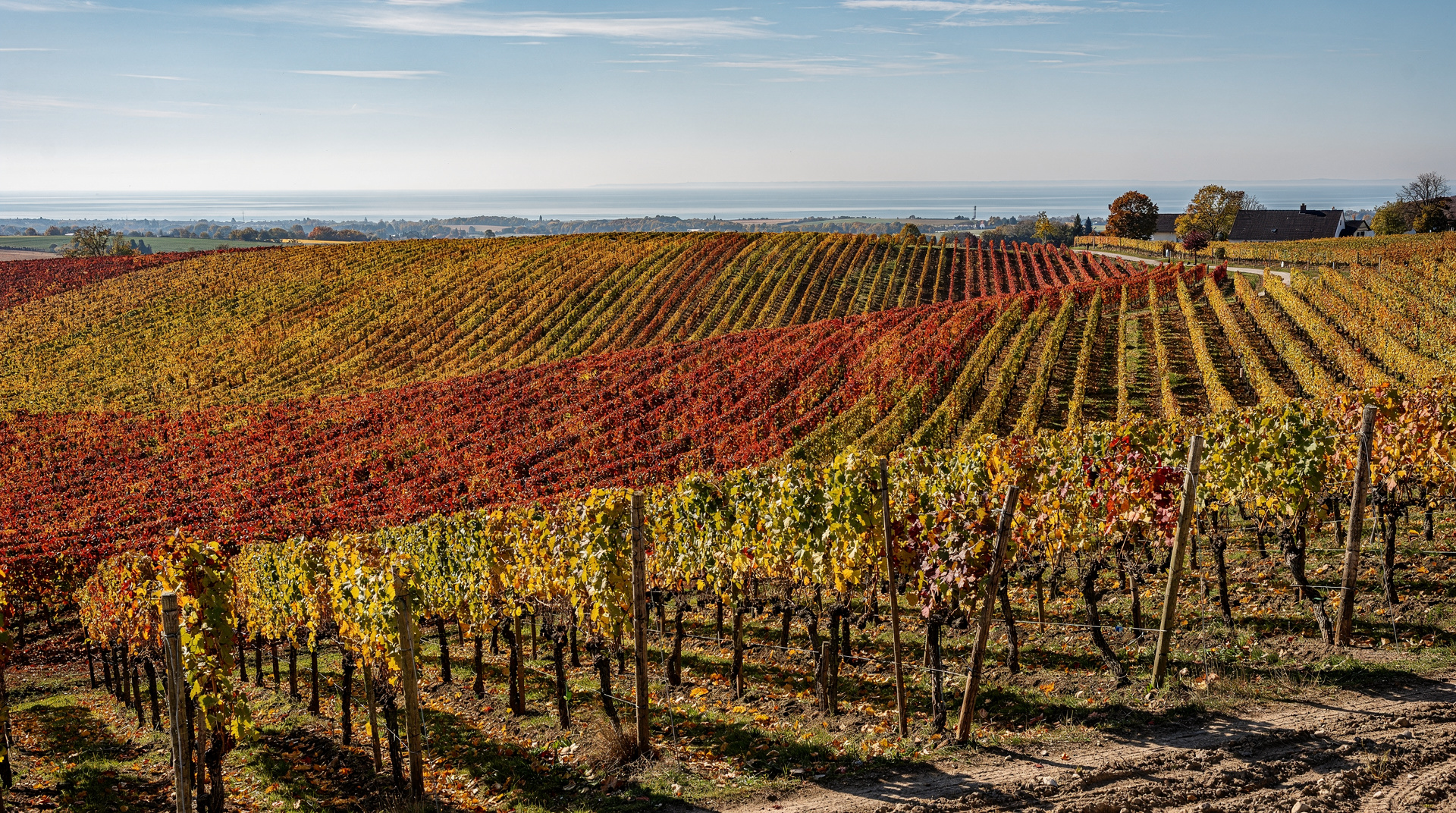
The lakeside villages of the western shore — Rust, Mörbisch, Oggau, Donnerskirchen, Purbach — produce the red wines of Burgenland from vineyards on the slopes above the lake. The primary varieties are Blaufränkisch (the great red grape of Burgenland, producing wines of considerable structure and character) and Zweigelt (easier, more approachable). A generation of young winemakers has transformed the region’s reputation from bulk producer to serious fine wine territory.
Rust carries a special appellation — the Ruster Ausbruch — for its sweet wine made from botrytized grapes (noble rot), a style comparable in method to Hungarian Tokaji, though the flavour profile is distinctly its own. The village has a remarkable concentration of wine cellars facing the main square, most offering direct tasting with no appointment required. The combination of excellent sweet wine, forty stork nests, and a square that looks essentially unchanged from the 18th century makes Rust the most rewarding single village on the western shore.
The Schloss Esterházy Haydn steps tour in nearby Eisenstadt pairs well with a Neusiedlersee afternoon — visit Eisenstadt in the morning (the Esterházy Palace where Joseph Haydn spent most of his working life is one of Austria’s most underrated music-history experiences) and cycle or bus to the lake for the afternoon. The Eisenstadt destination page and the Eisenstadt day trip guide cover the palace and the town in more detail, and the Burgenland wine route guide profiles the Blaufränkisch and Zweigelt producers along the lake’s western shore if wine is the main draw.
Getting there
By train: Wien Meidling or Wien Hauptbahnhof to Neusiedl am See, approximately 1 hour. Neusiedl am See is the main hub for the northern part of the lake, with bicycle rental and boat hire close to the station.
For Rust and the wine villages on the western shore: bus from Neusiedl am See to Eisenstadt (around 20 minutes), then bus to Rust (around 20 minutes). The bus frequency is limited, so check the current timetable. By car, the A3 motorway from Vienna (exit Eisenstadt) puts you on the western shore in about an hour, with Rust a further 15 km south.
Shaping your day at the lake
The Neusiedlersee rewards a loose plan more than a tight one. The landscape is open and the pace is slow, so the most common mistake is trying to stack too many stops into a single day. Pick one anchor — the bike ride, the birdwatching boardwalks, or the cellars of Rust — and let the other two fill the gaps around it.
For cyclists, the logical rhythm is an early train, bikes collected at the station, a long morning in the saddle along the reed edge, a lunch stop in one of the wine villages and a gentle return in the afternoon light. For birdwatchers, the early hours matter most: the reed beds are quietest and most productive before the day-trippers arrive, and the observation towers are far more pleasant when you have them to yourself. For wine lovers, the pattern flips — take the bus to Rust, walk the square, taste at one or two cellars and leave the second half of the day open for a stroll along the lakeside rather than a checklist of producers.
If you are building a longer stay around Vienna, the lake works well as the quiet counterweight to museum days. The how many days in Vienna guide helps you decide whether a full day away from the city fits your schedule, and the best day trips from Vienna puts the Neusiedlersee alongside the other options so you can compare effort and reward honestly. Anyone who prefers river scenery and abbeys to reeds and storks may find the Wachau day trip from Vienna a better match; the two outings suit very different moods.
Practical habits that make the day easier
- Carry water and sun protection. The lake is open and exposed, and there is very little shade along the reed-side paths, so a hat matters as much in spring as in summer.
- Bring a light layer. The wind across a large shallow lake can change how the day feels, even when the sky is clear.
- Pack binoculars if you have them. Even a modest pair transforms the reed edge from a green wall into a place full of movement.
- Check the timetable before you leave Rust. Bus services are limited, so know your return connection before you settle into a long tasting.
- Use public transport for getting around Vienna on either end. The Vienna public transport guide explains how to reach the mainline stations comfortably.
Making it a food and wine afternoon
The villages around the lake are working wine communities rather than polished tourist set pieces, and that is much of their appeal. Tastings tend to be relaxed, conversational affairs, and the best ones happen when you are curious rather than in a hurry. Ask about the vineyards above the village, about how the lake influences the grapes, and about what the winemaker drinks at home; the answers are usually more memorable than any tasting note.
If the cellar culture of the Vienna hills has already won you over, the lake offers a rural counterpart. The Heuriger guide for Vienna explains the tavern tradition on the city’s own edge, and comparing it with a Burgenland cellar afternoon makes for an instructive contrast. Readers curious about the white-wine side of Austrian drinking can start with the Grüner Veltliner guide before heading east to the red-wine villages.
Travellers who would rather not manage timetables and designated drivers can leave the logistics to someone else with a half-day countryside wine tour from Vienna that includes a meal, which gives a taste of the same wine-growing landscape without the bus connections.
A first-hand account of a wine-focused trip to the region is in the blog post Burgenland wine weekend, which captures the unhurried feel of cellar-hopping better than any itinerary can. And if you are travelling on a tight budget, the Vienna on a budget guide is a useful reminder that a day of cycling, swimming and simple lakeside meals is one of the least expensive ways to spend time outside the city.
Travelling with family or in a group
The flat terrain makes the lake one of the friendlier outings for mixed groups. Faster and slower riders can stay within sight of one another, and an electric bike can even out differences in fitness without anyone feeling left behind. Children who are comfortable on a bike can manage shorter sections of the path, and the boardwalks into the reeds are a gentle introduction to wildlife for younger visitors, who often remember the storks long after the museums have blurred together. The Vienna with kids guide has wider ideas for organising days with younger travellers, and the lake slots in well as a change of pace between city sights.
For groups with different interests, the lake is forgiving: one person can bird, another can cycle, a third can sit with a glass of wine on the square in Rust, and everyone meets again for the train home. That flexibility is one of the quiet strengths of the place.
When to go
April and May bring spring bird migration and the first warm days on the water, with wildflowers on the Leitha slopes and the storks arriving at their rooftop nests.
June to August is swimming season — the shallow lake warms to around 26°C by midsummer, making it unusual among central European lakes for its bathwater quality. The lakeside villages hold regular wine-and-food events through the summer. This is also the best time to see the stork chicks.
September and October are the highlight for birdwatchers (autumn migration), wine enthusiasts (harvest season, open cellar days across Burgenland), and anyone who prefers the lake without summer crowds.
Winter — the lake occasionally freezes solid in cold years, and the flat reed landscape under a January fog is unexpectedly beautiful. Skating on the ice when it is thick enough is a Burgenland tradition. Bird activity drops sharply but the silence is notable.
| Season | Highlight | Note |
|---|---|---|
| April–May | Spring migration, storks arriving | Wildflowers on the Leitha slopes |
| June–August | Swimming (lake reaches ~26°C) | Wine-and-food events in the villages |
| September–October | Autumn migration, harvest | Open cellar days across Burgenland |
| Winter | Occasional ice skating | Bird activity low, landscape quiet |
Choosing the right season
Each season gives the lake a different character, and the right choice depends on what you came for. Spring suits those who want wildlife and mild riding conditions; the Vienna in spring guide helps you pair a lake day with the rest of a spring trip. Summer is for swimming and long evenings, and the Vienna in summer guide covers how to balance city heat against a day by the water. Autumn is the most atmospheric time for birds and wine alike, and the Vienna in autumn guide shows how to fold a harvest-season excursion into a longer visit.
Beyond Neusiedlersee: the rest of Burgenland
Rust and the western shore are only one part of Burgenland’s wine country. The Burgenland wine route covers the wider red-wine region beyond the lakeside villages, useful if a single afternoon of tasting in Rust leaves you wanting more. Combined with Eisenstadt, the lake, and the wine route, Burgenland can easily fill two full days from Vienna rather than a single rushed one. If you want to see the interiors of the Esterházy residence in Eisenstadt before heading to the water, an admission ticket for the Esterházy Palace keeps the morning simple.