Habsburg history for travellers: what you need to know before visiting Vienna
Vienna: Hofburg and Empress Sisi Museum Guided Tour
Who were the Habsburgs and why does Vienna still show their influence everywhere?
The Habsburgs were a European dynastic family who ruled the Holy Roman Empire for most of 1438–1806 and the Austro-Hungarian Empire until 1918. They governed from Vienna for over 650 years, commissioning everything from the Hofburg and Schönbrunn to the Ringstrasse and the Staatsoper. Understanding them transforms a Vienna visit from a tour of beautiful buildings into a comprehensible story.
Why Habsburg history matters for your Vienna visit
Vienna is often described as a city living in its past. The description is partly accurate — the café culture, the musical institutions, the architectural scale, and the bureaucratic formality of Austrian public life all trace directly to the Habsburg era. But it is more useful to think of it this way: the Habsburgs gave Vienna its physical form, and understanding them makes the city legible in a way that looking at beautiful buildings alone cannot.
This guide is not an academic history. It is a working primer for travellers — the essential context that transforms a tour of palaces and museums into a coherent story.
| Span | c. 1273–1918, ruling Vienna for roughly 650 years |
| Key sites | Hofburg, Schönbrunn, Kapuzinergruft, Ringstrasse, Kunsthistorisches Museum |
| Time needed | A half day for the Hofburg core sites; a full day to add Schönbrunn |
| Best starting point | Hofburg (Sisi Museum + Imperial Apartments) for the human story |
| Cost | Hofburg combined ticket around €17.50; Schönbrunn separate |
The dynasty in brief: who they were
The Habsburg family originated in the Argau region of what is now Switzerland. Their name comes from the Habichtsburg (Hawk’s Castle), a fortress built around 1020. The family’s European importance began with Rudolf I, who was elected Holy Roman Emperor in 1273 and secured control of the Duchy of Austria the following year. Vienna became the dynasty’s primary residence under Rudolf IV (the Founder) in the 14th century.
Their rise to continental dominance came through marriage rather than conquest — a strategy so consistent that the family motto became Bella gerant alii, tu felix Austria nube (Let others wage war; you, happy Austria, marry). The marriage of Maximilian I to Mary of Burgundy in 1477 brought the Low Countries, the duchy of Burgundy, and the financial resources of northern Europe into Habsburg hands. His grandson Charles V briefly controlled Spain, the Low Countries, Austria, and territories in the Americas — the largest domain under one ruler since the fall of Rome.
The family divided in 1556: the Spanish line went to Charles’s son Philip II; the Austrian line (and Holy Roman Emperorship) went to his brother Ferdinand I. Vienna is the capital of the Austrian line’s story.
Key rulers and what they built
Rudolf IV “The Founder” (r. 1358–1365)
Founded Stephansdom (began the expansion of the Romanesque cathedral into the Gothic structure you see today), established the University of Vienna in 1365 (one of the oldest universities in the German-speaking world), and forged a document called the Privilegium Maius — a fabricated charter asserting Habsburg rights — which went undetected for nearly a century. He died at 26 but defined Vienna as the Habsburg capital.
Frederick III (r. 1452–1493)
The last Holy Roman Emperor to be crowned in Rome (1452), Frederick consolidated Habsburg control of Austria and added the enigmatic motto AEIOU (Austriae Est Imperare Orbi Universo — It Is Austria’s Destiny to Rule the World). The motto is engraved on the Stephansdom and on objects throughout Vienna.
Maximilian I (r. 1493–1519)
The “Last Knight” — armoured, tournament-loving, Renaissance-educated. He organised the double marriage of 1515 (Maximilian’s grandchildren to the children of the King of Bohemia and Hungary) that eventually brought Bohemia and Hungary into the Habsburg sphere after 1526. He commissioned Albrecht Dürer for portraits and understood art as political communication.
Maria Theresa (r. 1740–1780)
The only woman to rule the Habsburg domains in her own right (as Archduchess of Austria and Queen of Hungary and Bohemia — she could not hold the title of Holy Roman Empress, which was elective). She inherited an empire on the verge of dissolution: in 1740, Frederick the Great of Prussia immediately invaded Silesia. She spent her reign fighting to hold the empire together.
Her domestic legacy in Vienna is profound: Schönbrunn was transformed from a hunting lodge into a 1,441-room summer palace under her patronage; the Prater was opened to the public in 1766; educational and administrative reforms were imposed from the centre; the Burgtheater was founded. She had 16 children, all of whom she used as diplomatic tools. Marie Antoinette, the youngest daughter, was married off to the French Dauphin at 14.
Joseph II (r. 1780–1790)
Maria Theresa’s son and co-regent from 1765, sole ruler from 1780. Joseph II was the Enlightenment emperor: he abolished serfdom, imposed religious tolerance (the Edict of Toleration 1781 extended rights to Lutherans, Calvinists, and Jews), dissolved monasteries, and reformed the legal code. He also closed the Burgtheater as an opera house and made it a German-language drama stage. He employed Mozart as an imperial composer. He died convinced that most of his reforms had failed; several of them outlasted him.
Franz Joseph I (r. 1848–1916)
Franz Joseph was 18 when the 1848 revolutions swept across Europe and forced his predecessor Ferdinand I to abdicate. He ruled for 68 years, surviving assassination attempts, the loss of wars against Prussia and France, and the assassination of his wife Elisabeth in 1898. His reign oversaw the construction of the Ringstrasse (1857–1900): the medieval city walls were demolished and replaced with the grand boulevard lined with the Opera House, the Parliament, the Rathaus, the Burgtheater, and two major museums. Vienna’s current centre is largely his.
His death in November 1916, during World War I, effectively ended the Habsburg era. His successor Karl I signed the withdrawal from government in November 1918; the Republic of Austria was proclaimed the same day.
Where to see the Habsburg legacy in Vienna
The complete Habsburg story is distributed across Vienna in specific sites:
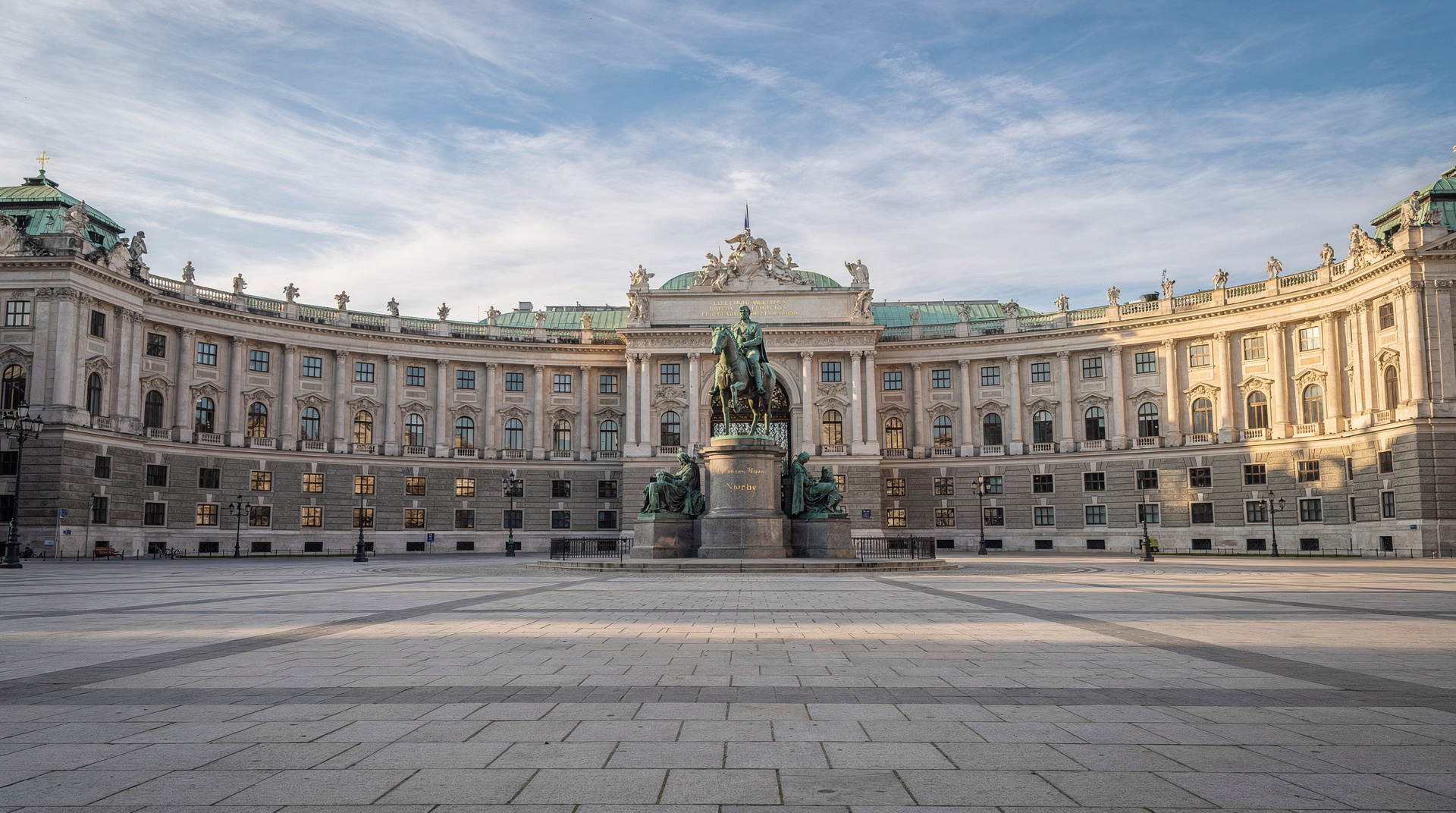
For political and personal history: Hofburg Palace — the winter residence; Sisi Museum — the myth and reality of Empress Elisabeth; Imperial Apartments — Franz Joseph’s and Elisabeth’s daily lives.
For summer residence: Schönbrunn Palace — Maria Theresa’s transformation of a hunting lodge into a palace; the gardens; the Orangery.
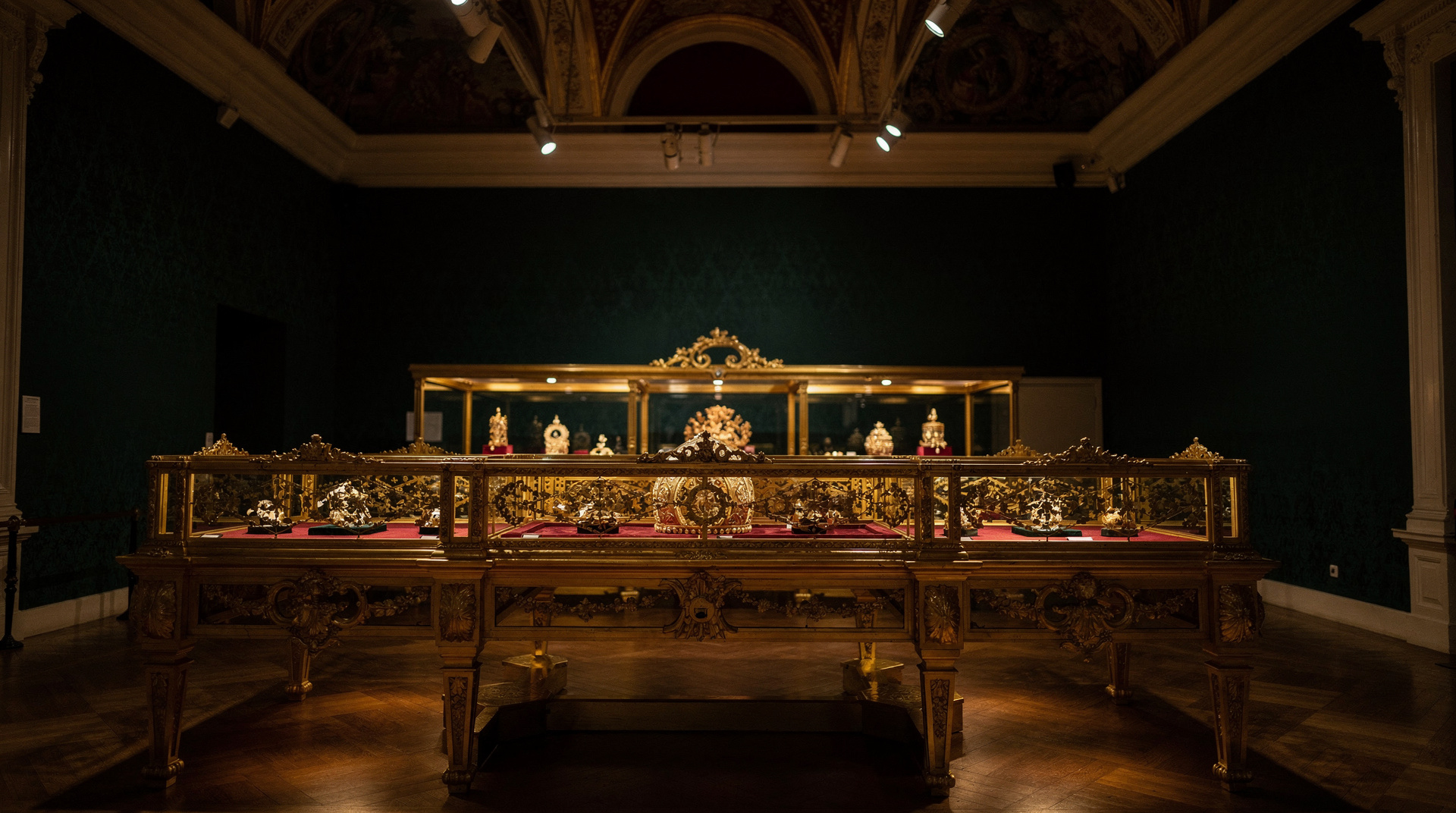
For dynastic power objects: Imperial Treasury — the crowns, the Holy Lance, the Order of the Golden Fleece.
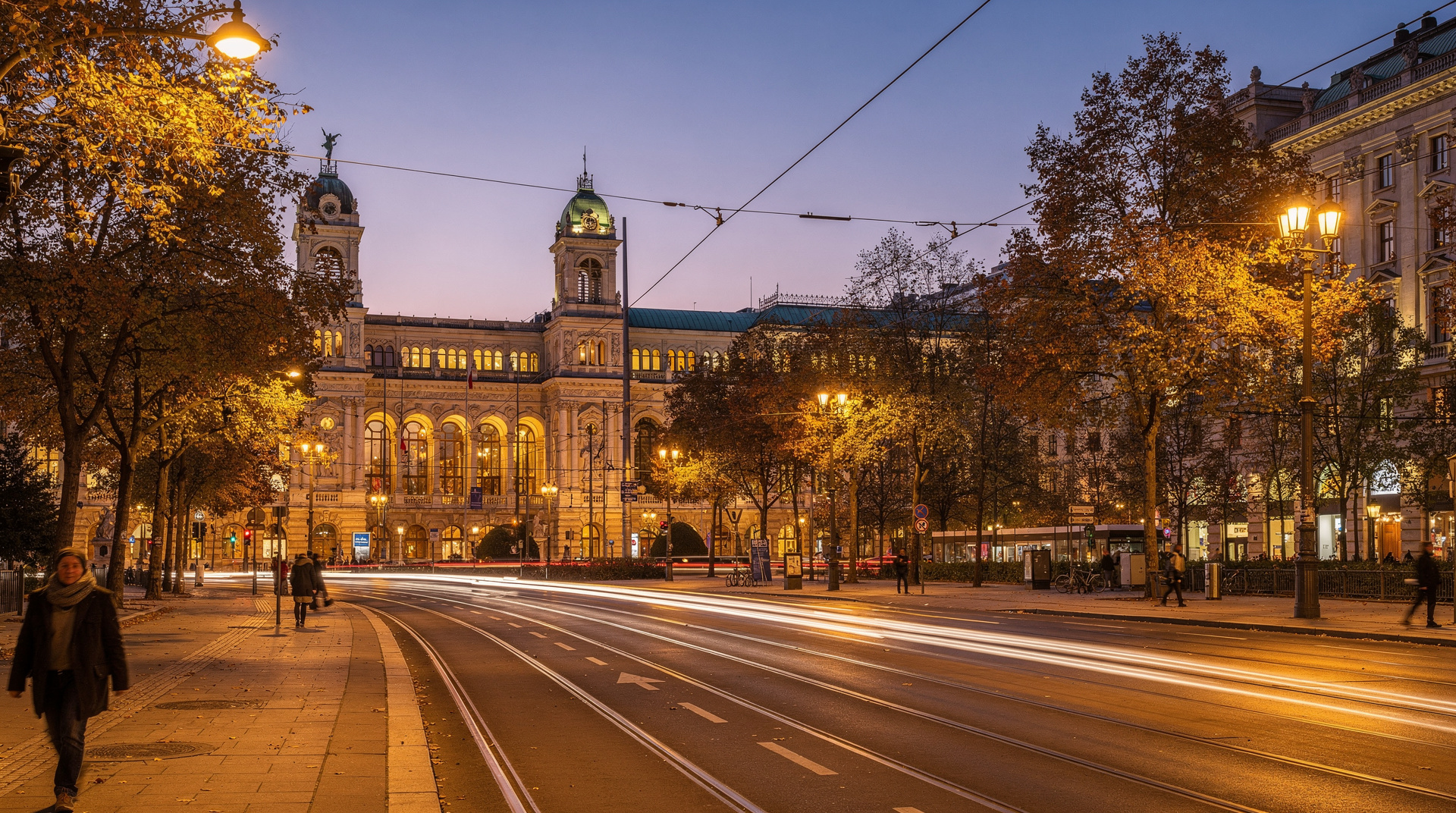
For the imperial city they shaped: Ringstrasse walk — the 19th-century boulevard as urban manifesto; Stephansdom — the cathedral as Habsburg parish church and dynastic marker.
For the burial sites: Kapuzinergruft beneath the Kapuzinerkirche on Neuer Markt (imperial bodies); Augustinerkirche near the Hofburg (hearts); Stephansdom catacombs (internal organs). Vienna is the only city in the world where a royal dynasty is buried in three separate locations.
Vienna: Hofburg and Empress Sisi Museum guided tourA guided tour that covers multiple Hofburg sites gives the dynastic narrative in a compact and efficient form, particularly valuable for visitors who want context before exploring independently.
Vienna: guided walking tour of city center highlightsThe end of the empire: 1914–1918
World War I was the context in which the Habsburg empire dissolved. Franz Joseph died in November 1916, still directing the war effort from his desk at the Hofburg. His great-nephew Karl I succeeded him. By November 1918, the war was lost, the empire’s constituent peoples were declaring independence, and Karl signed his withdrawal from governmental affairs.
The Republic of German-Austria was proclaimed on 12 November 1918. The Habsburgs were expelled by law the following year. The empire’s territory — which had encompassed modern-day Austria, Hungary, Czech Republic, Slovakia, Slovenia, Croatia, Bosnia, and parts of Poland, Romania, and Ukraine — was divided among the successor states by the treaties of Saint-Germain and Trianon.
Vienna, which had been the capital of an empire of 51 million people, became the capital of a small republic of 6.5 million — a dislocation that shaped Austrian culture for the rest of the 20th century and still occasionally surfaces in the city’s relationship with its own grandeur.
A quick Habsburg timeline
| Date | Event |
|---|---|
| 1273 | Rudolf I elected Holy Roman Emperor, family’s rise begins |
| 1358–1365 | Rudolf IV founds Stephansdom expansion and University of Vienna |
| 1477 | Maximilian I marries Mary of Burgundy, dynasty gains Low Countries |
| 1740–1780 | Maria Theresa transforms Vienna into a Baroque capital |
| 1848–1916 | Franz Joseph’s 68-year reign; Ringstrasse built 1857–1900 |
| 1889 | Crown Prince Rudolf dies at Mayerling |
| 1898 | Empress Elisabeth (Sisi) assassinated in Geneva |
| 1918 | Karl I withdraws from government; Republic of Austria proclaimed |
Why the family motto still matters
The Habsburg strategy of marrying into power rather than conquering it left a genuinely unusual physical legacy in Vienna: a city built to project dynastic legitimacy across a patchwork of nations rather than a single ethnic capital. This explains features that otherwise seem odd for a Central European capital — the profusion of Hungarian, Bohemian and Italian references in Hofburg ceremonial rooms, the multilingual court protocol, and the sheer redundancy of ceremonial buildings (multiple throne rooms, multiple treasuries) built to receive delegations from different corners of the empire. Travellers who expect a straightforwardly “Austrian” story sometimes find Vienna’s imperial sites oddly cosmopolitan for exactly this reason.
How to see it efficiently in one visit
Trying to absorb 650 years of dynastic history in a single day is unrealistic, so most first-time visitors do better picking one thread rather than attempting completeness. The personal/human thread (Franz Joseph and Sisi’s marriage, the tragedy of Mayerling, the assassination in Geneva) is covered in depth in our Franz Joseph and Sisi guide and is the most emotionally engaging entry point for visitors without a strong prior history background.
The architectural/civic thread (how the dynasty physically shaped the city) is better followed through the Ringstrasse walk and the Hofburg guide. Visitors with only half a day should default to the Hofburg core (Sisi Museum plus Imperial Apartments) — it delivers the clearest single narrative arc of any Habsburg site in the city, and everything else in this guide builds on the same cast of characters.
Frequently asked questions about the Habsburgs
How long did the Habsburgs rule Vienna?
The Habsburgs established Vienna as their primary capital in the late 13th century and ruled continuously until November 1918. That is roughly 650 years of dynastic presence.
What did Maria Theresa do for Vienna?
Empress Maria Theresa (r. 1740–1780) oversaw the transformation of Vienna from a medieval fortress city into a Baroque capital. She commissioned the renovation of Schönbrunn Palace, established the Prater as a public park, and reformed the educational system. She was the only female Habsburg monarch.
Who was Franz Joseph and how long did he reign?
Emperor Franz Joseph I reigned from 1848 to 1916 — 68 years. He oversaw the construction of the Ringstrasse (1857–1900) and was married to Empress Elisabeth (Sisi).
What happened to the Habsburgs after 1918?
The Habsburg-Lorraine family was expelled from Austria in 1919 and their property confiscated. They were allowed to return after renouncing dynastic claims; Otto von Habsburg died in 2011 and was buried in Vienna’s Augustinerkirche.
Where are the Habsburg emperors buried in Vienna?
The imperial bodies are in the Kaisergruft beneath the Kapuzinerkirche. The hearts are in the Augustinerkirche. The internal organs are in the Stephansdom catacombs.
What is the best museum for Habsburg history in Vienna?
The Sisi Museum and Imperial Apartments at the Hofburg give the most personal view. The Schatzkammer (Imperial Treasury) holds the ceremonial objects of Habsburg power. The Kunsthistorisches Museum contains the Habsburg art collections.
Top experiences
Bookable activities with verified prices and instant confirmation on GetYourGuide.