Imperial Treasury Vienna guide: crown jewels, Holy Lance and what to expect
Vienna: Imperial Treasury and Spanish Riding School
What is in the Vienna Imperial Treasury?
The Schatzkammer (Imperial Treasury) holds the Habsburg Crown Jewels including the Imperial Crown of Austria, the crown of the Holy Roman Empire, the Holy Lance (believed to be the spear used at the Crucifixion), and the insignia of the Order of the Golden Fleece — among the most important objects of European dynastic history. Admission is €14; allow 1.5–2 hours.
What makes the Schatzkammer different
Vienna has two categories of tourist attraction: those you visit because everyone does, and those that genuinely repay the visit. The Schatzkammer (Imperial Treasury) is rare in belonging firmly to the second group. It holds objects that shaped European history — the crown worn at the coronation of Holy Roman Emperors, a lance whose provenance has been claimed and contested for a thousand years, and the complete regalia of the most exclusive chivalric order in the medieval world — yet most visitors to the Hofburg walk past its entrance without realising it is there.
It is undervisited, well-curated, and worth two hours of any trip to Vienna.
| Where | Schweizerhof wing, Hofburg Palace, Innere Stadt |
| Cost | Around €14 adults (combined ticket with Spanish Riding School: around €26) |
| Time needed | 1–1.5 hours, up to 2 for history enthusiasts |
| Getting there | U3 to Herrengasse, 5-minute walk through Michaelertor |
| Best time | Any time — crowds are consistently lighter than the Sisi Museum |
What you need to know before you go
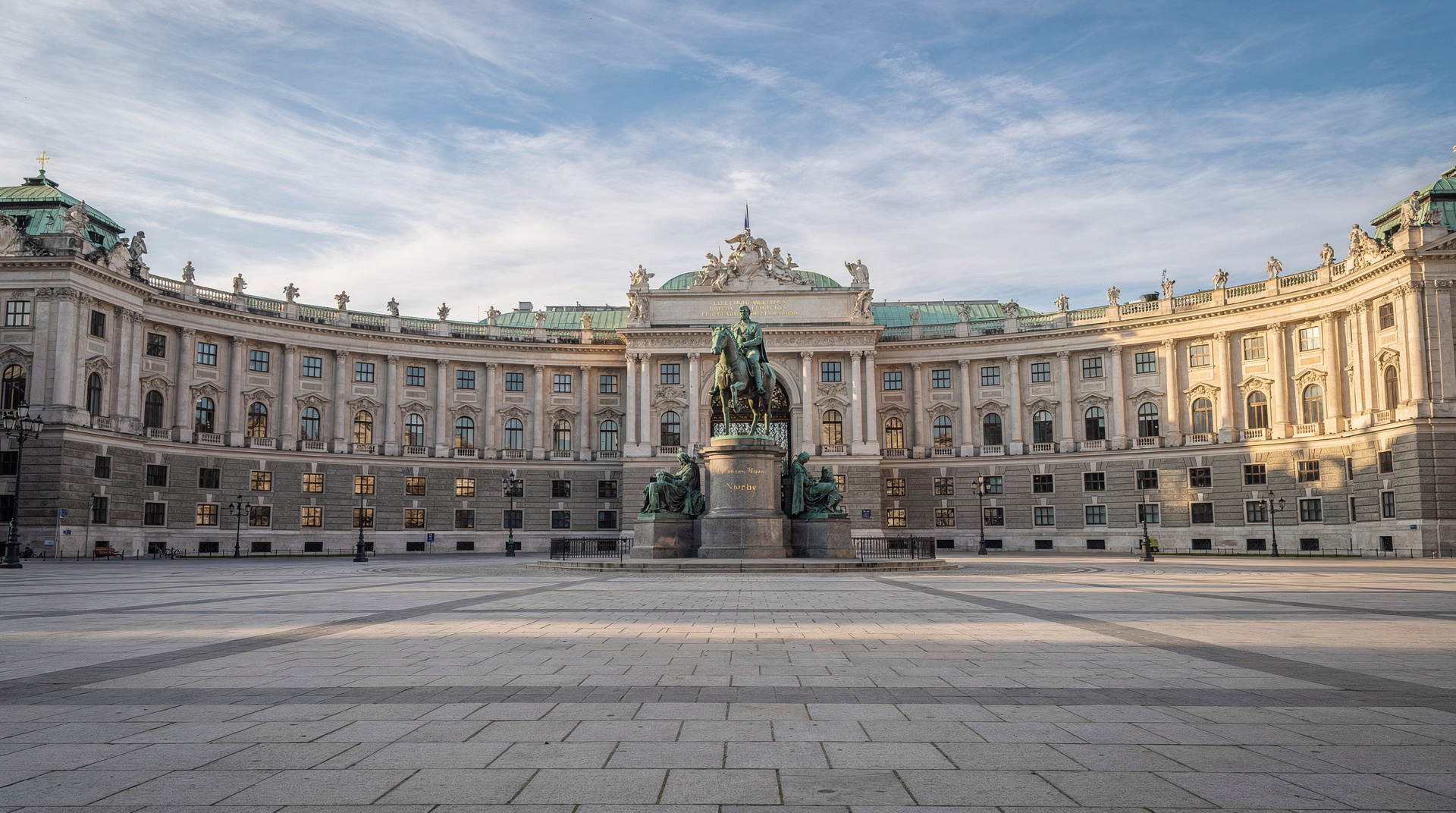
Location: Schweizerhof wing of the Hofburg, entered from the Schweizerhof courtyard. From Michaelerplatz, walk through the Michaelertor gate, cross the In der Burg courtyard, and enter the Schweizerhof through the Swiss Gate (Schweizertor) — a Renaissance gateway from 1552.
Admission: €14 adults, €10 concessions. Children under 19 free. The combined ticket with the Spanish Riding School (€26) is worthwhile if you plan both visits.
Opening hours: Daily 9 am–5:30 pm. Closed Tuesday.
Audio guide: Included in the ticket price.
Crowds: Substantially quieter than the Sisi Museum and Imperial Apartments. You can typically view the major objects at close range without waiting.
The major objects: what to focus on
The Imperial Crown of the Holy Roman Empire
Room 11 contains what is arguably the most important crown in Western European history: the crown of the Holy Roman Empire, crafted in the late 10th century (around 960–980 AD) and used at imperial coronations until the dissolution of the Holy Roman Empire in 1806. It is a masterpiece of Ottonian goldsmithing — enamel plates depicting biblical kings, a central arch added in the 11th century, and gemstones whose individual histories span from the ancient Near East to medieval Europe.
This crown was not made for decoration. It was used in functioning political ceremonies for over eight centuries. The weight you feel looking at it is the weight of that duration.
The Habsburg Crown of Austria
In the same room: the crown made for Emperor Rudolf II in 1602, which became the crown of the Austrian Empire when the Holy Roman title was dissolved. It is a very different object from the medieval crown — High Renaissance in form, elaborately worked in gold, diamonds, and enamel, and about the same size as a large grapefruit.
The Holy Lance
Room 8. The lance is a Roman cavalry weapon, dated to around the 7th century AD, with a nail affixed to its blade that was believed to be from the True Cross. The provenance claim — that this is the spear used to pierce Christ’s side at the Crucifixion — appears in sources from the 8th century onward. Charlemagne carried it into battle. Every Holy Roman Emperor from Otto I onwards held it at coronation. Whether or not the religious claim is accurate, the object’s role as a symbol of legitimate imperial authority is historically documented and extraordinary.
The Order of the Golden Fleece regalia
Rooms 3–5 hold the complete insignia of the Order of the Golden Fleece, founded by Duke Philip the Good of Burgundy in 1430 as a court of chivalry for 30 of the most powerful noblemen in Europe. The Habsburg emperors acquired the Grand Mastership through marriage and maintained it as a critical tool of diplomatic and dynastic politics. The collar — a chain of flint-and-steel fire-strikers linking golden fleeces — is one of the finest pieces of medieval goldsmithing in existence. The accompanying documents, vestments, and regalia make this the most complete surviving record of any medieval chivalric order.
The Infant Jesus of Prague robes
Rooms 1–2 contain a collection of ecclesiastical objects that can seem incongruous — vestments, reliquaries, and the famous collection of robes made for the Infant Jesus of Prague (the wax devotional figure is in Prague; Vienna holds a portion of the historic wardrobe). This section reflects the Habsburg’s self-understanding as a dynasty chosen by God to rule Christendom, which is important historical context for everything else in the building.
Tickets and tours
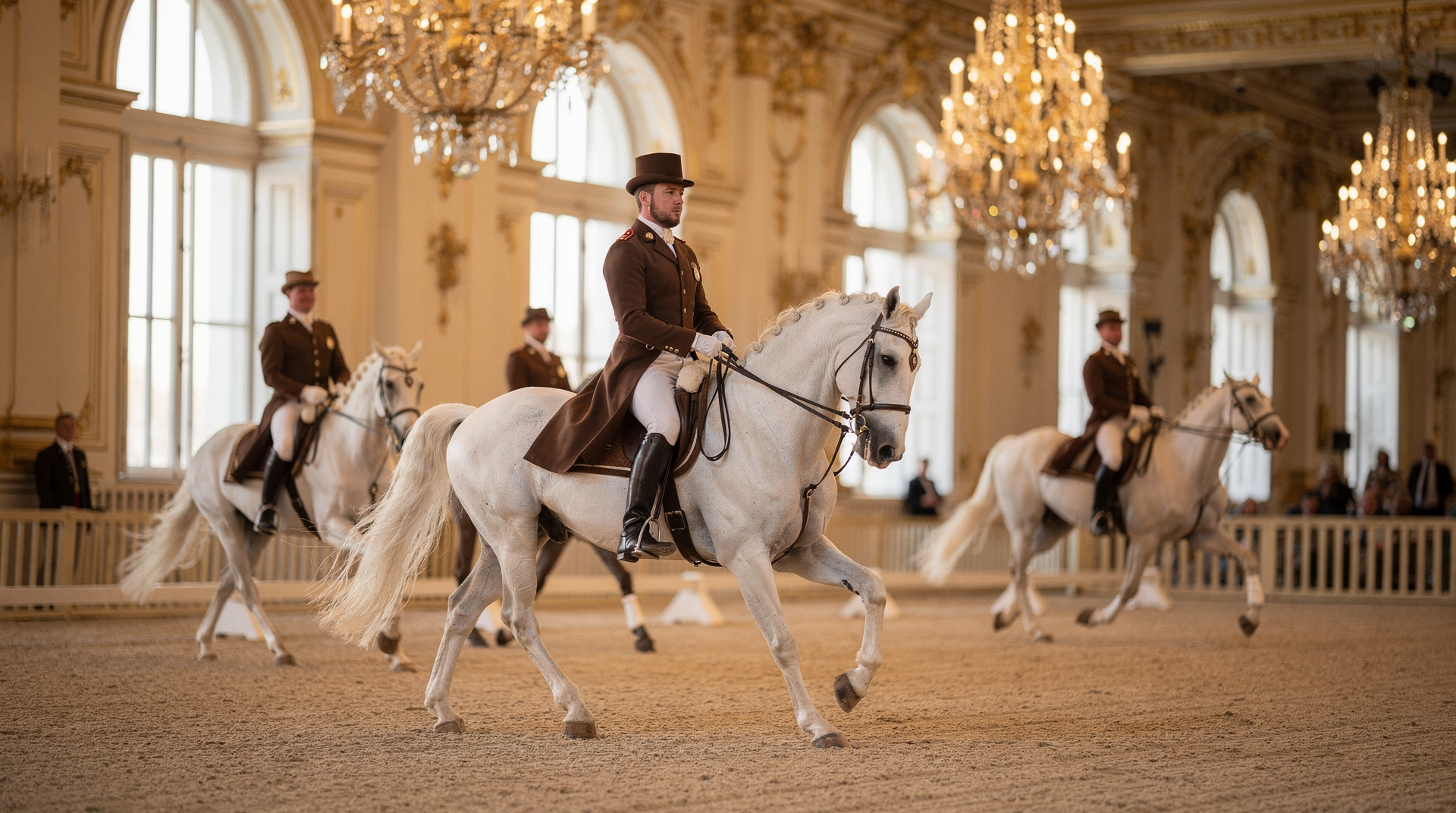
Vienna: Imperial Treasury and Spanish Riding School combined ticket The combined ticket is the most practical option if you want to see both the Schatzkammer and the Spanish Riding School morning exercise on the same visit. Remember that the Spanish Riding School is closed July–August.
For a broader Hofburg context, a guided walking tour of the palace complex covers the Schatzkammer exterior and explains the Habsburg power geography before you enter:
Vienna: Hofburg and Empress Sisi Museum guided tourCombining with other Hofburg sites
The Schatzkammer is physically separate from the main Hofburg tourist complex (Sisi Museum, Imperial Apartments, Silver Collection) but takes about 3 minutes to walk between them. A logical combination is:
Morning: Imperial Treasury (1.5 hours) + Spanish Riding School morning exercise if available (2 hours, starts 10 am most mornings September–June) Afternoon: Sisi Museum and Imperial Apartments (2.5 hours)
This makes for a full Hofburg day. See our Hofburg Palace guide for the combined ticket options and our Spanish Riding School guide for morning exercise booking details.
The Habsburg history for travellers guide provides the dynastic and political context that makes the Treasury’s objects comprehensible beyond their visual spectacle.
Honest tips
What to skip: Room 1’s ecclesiastical robes and reliquaries are historically significant but visually opaque without specialist knowledge. Move through quickly and spend more time in Rooms 3–5 (Golden Fleece) and 8–11 (crowns and lance).
Photography: The regalia are displayed in glass cases, and flash is not permitted. The lighting is good enough for photography without flash; the gold objects photograph reasonably well.
The Swiss Gate: Do not miss the Renaissance Schweizertor (Swiss Gate) in the Schweizerhof courtyard — its gilded inscription and painted decoration make it the oldest surviving part of the Hofburg and one of the few identifiably Renaissance elements in a complex dominated by Baroque and Neoclassical additions.
The Burgundian inheritance: The best single thing you can know going in is that the Habsburgs acquired the wealth and much of the political prestige that made them Holy Roman Emperors primarily through the marriage of Maximilian I to Mary of Burgundy in 1477. The Golden Fleece, the Low Countries, and the concept of dynastic diplomacy-through-marriage all entered Habsburg politics at that point. The Schatzkammer’s collection is largely a record of what that inheritance looked like in objects.
Why the Treasury is undervisited — and why that helps you
Most first-time visitors to Vienna spend their Hofburg time in the Sisi Museum and Imperial Apartments and simply never notice the Schatzkammer entrance in the Schweizerhof courtyard. This is partly a signage problem and partly because “crown jewels” sounds like a lesser attraction than “where the empress lived” — in practice the reverse is often true for anyone with an interest in medieval history. The upside for you: because so many visitors skip it, the rooms holding the Imperial Crown and the Holy Lance rarely feel crowded even in August, unlike the queue-heavy Sisi Museum a few minutes away.
If your time in Vienna is limited, treat the Treasury as equal priority to the Imperial Apartments, not a distant second choice. The two together, entered from the same general Hofburg complex, give you both the dynasty’s ceremonial legitimacy (the Treasury’s crowns and regalia) and its domestic reality (the Apartments’ iron bed and gymnastics rings).
Combining with a wider Hofburg or city day
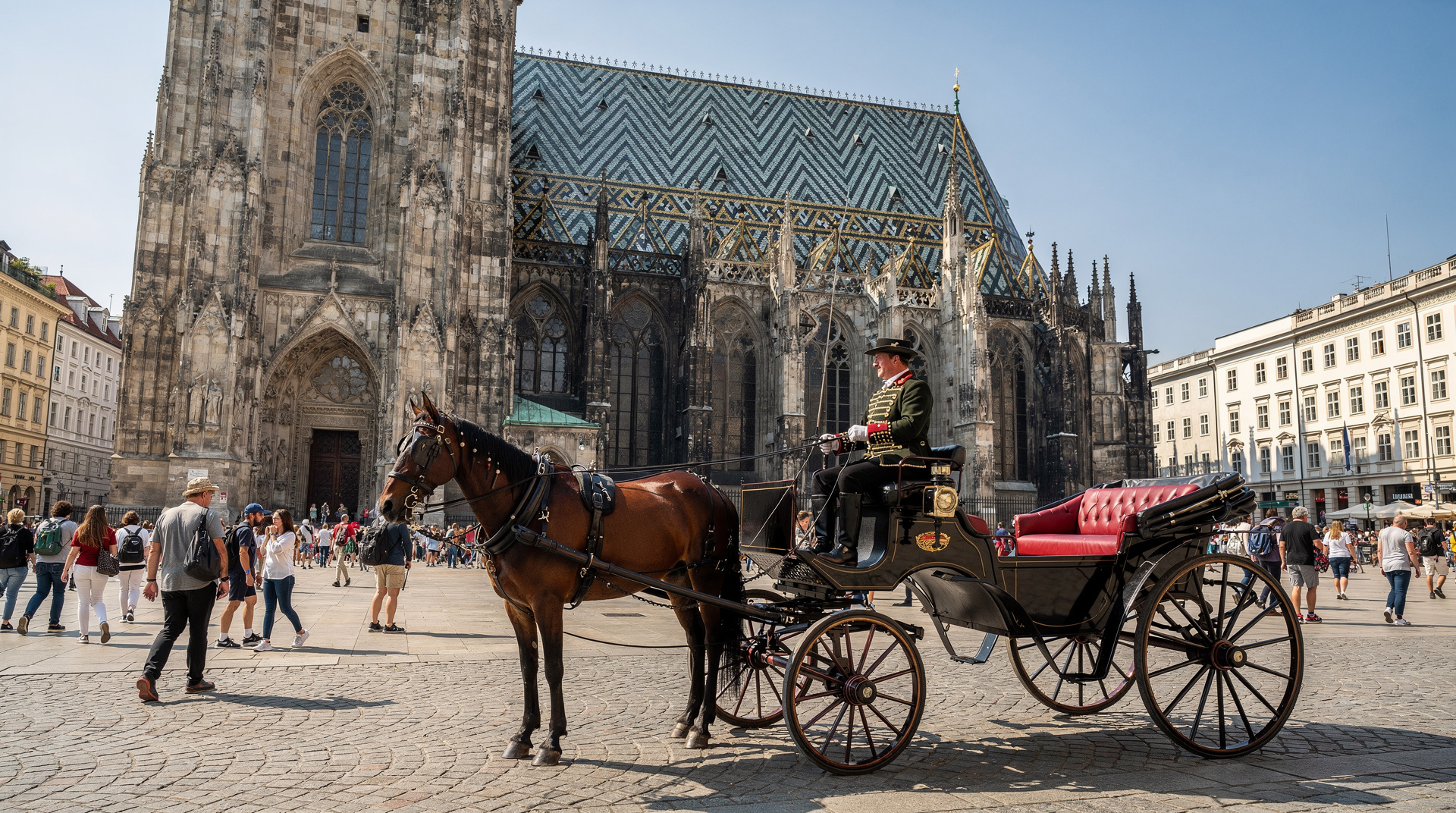
A natural half-day pairing: Imperial Treasury in the morning (quiet, unhurried), then a short walk to Stephansdom for the cathedral and tower climb, followed by lunch on the Graben. Alternatively, combine the Treasury with the Spanish Riding School morning exercise when it runs (September–June) using the combined ticket described above — both sit within the same Hofburg complex and share the historically loaded Schweizerhof and In der Burg courtyards.
How to read the rooms as a story
The Treasury rewards a little preparation. Rather than treating the cases as a sequence of shiny objects, think of the collection as an argument about legitimacy: who had the right to rule, and what physical things could prove it. The crowns, the lance and the Golden Fleece regalia each answer that question in a different way — sacred authority, imperial authority and dynastic prestige. Keep that framing in mind and the rooms stop feeling like a list of treasures and start feeling like a coherent record.
If you want that background before you arrive, read Habsburg history for travellers the evening before, and consider Franz Joseph and Sisi for the later, more human chapter of the same dynasty. The Treasury shows the institution; those pages show the people who inherited it.
Pacing your visit
The audio guide is included, so use it selectively. Listen in the rooms that matter most to you and let the others pass at your own speed rather than trying to complete every track. Stand a little longer at the crown and the lance than feels natural: the details of the enamel, the settings and the nail on the blade are the parts photographs flatten.
If you are travelling with others who are less drawn to medieval history, agree a meeting point in advance. One person can linger in the crown room while the rest move on, and nobody feels hurried. Families should read Vienna with kids for ideas on keeping younger visitors engaged around the heavier historical sites.
Where to go afterwards
After the Treasury, the Hofburg area offers plenty of ways to stay with the Habsburg theme or to change pace entirely:
- For the dynasty’s domestic side, continue to the Imperial Apartments and the Sisi Museum.
- For a broader comparison of the two great imperial residences, see Schönbrunn vs Hofburg.
- For a change of tone, the Ringstrasse architecture walk shows how the later emperors reshaped the city around their palace.
- For a coffee and a sit-down, the Vienna coffee house guide will point you to somewhere calm nearby.
- To fold the Treasury into a longer stay, the 3-day Vienna itinerary and the Innere Stadt destination page show how it fits with the rest of the centre.
Frequently asked questions about the Imperial Treasury
Where is the Imperial Treasury in Vienna?
The Schatzkammer is in the Schweizerhof wing of the Hofburg Palace, entered from Schweizerhof courtyard. It is a 3-minute walk from the main Hofburg tourist entrance at Michaelerplatz.
How long does the Imperial Treasury take to visit?
Most visitors spend 1–1.5 hours. History enthusiasts and those interested in medieval regalia can easily spend 2 hours.
What is the Holy Lance in the Imperial Treasury?
The Holy Lance (Heilige Lanze) is a Roman lance reputed to be the spear that pierced Christ’s side at the Crucifixion. Whether or not the provenance claim is accurate, the object has been a European power symbol since the 8th century and was carried by every Holy Roman Emperor at coronation ceremonies.
Is the combined ticket with the Spanish Riding School worth it?
If you plan to visit both on the same day, the combined ticket saves a few euros and is convenient. Note that the Spanish Riding School closes July–August, so the combination is only possible September–June.
Is the Imperial Treasury included in the Hofburg combined ticket?
No. The standard Hofburg combined ticket (Sisi Museum + Imperial Apartments + Silver Collection) does not include the Schatzkammer. It requires a separate €14 ticket.
What is the Order of the Golden Fleece insignia?
The Order of the Golden Fleece (Orden vom Goldenen Vlies) was founded by Duke Philip the Good of Burgundy in 1430 and became the most prestigious chivalric order of the Habsburg empire. The Treasury holds the full regalia including the golden collar, pendant, and original investiture documents.
Top experiences
Bookable activities with verified prices and instant confirmation on GetYourGuide.