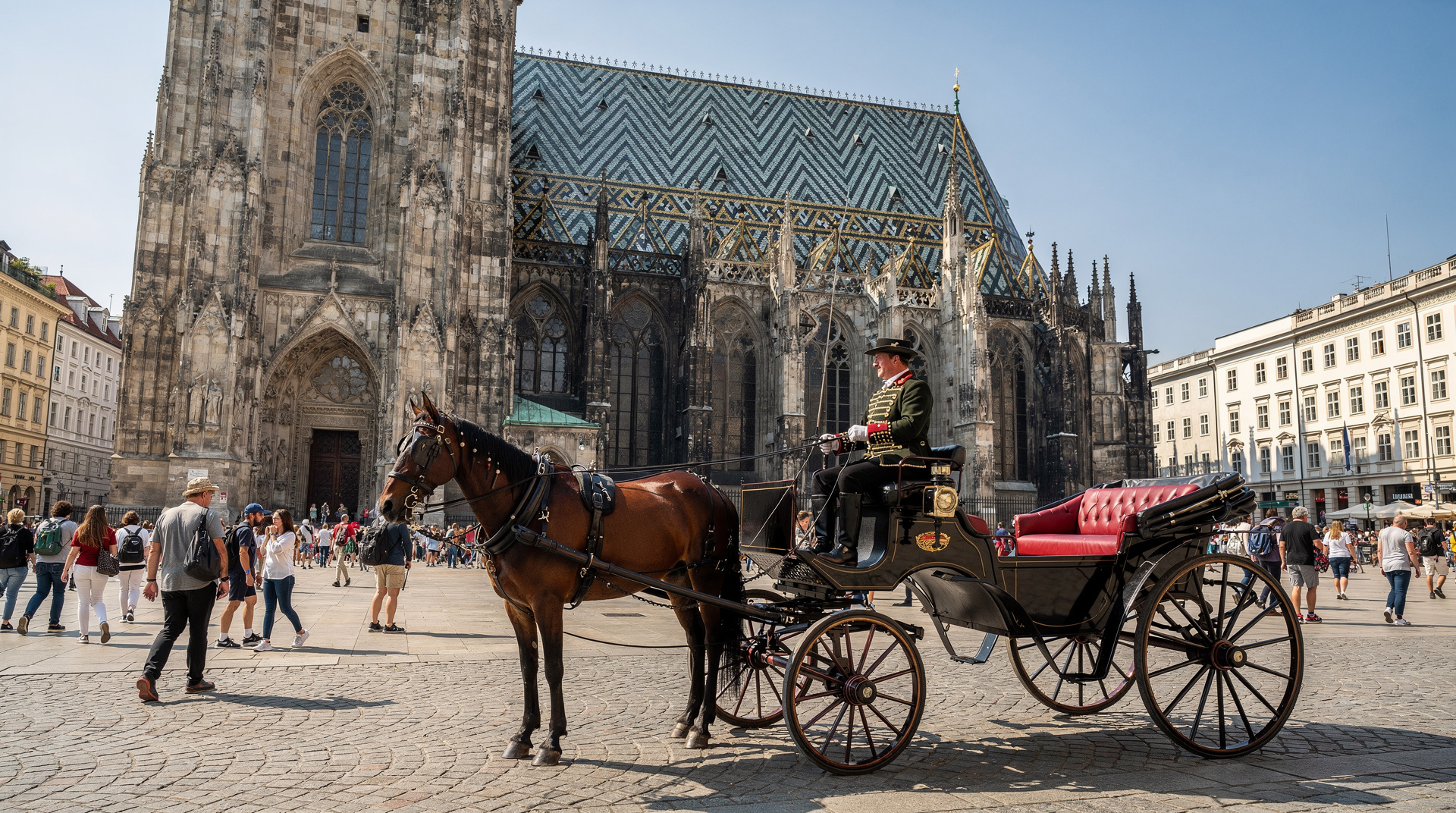
Stephansdom cathedral guide: what to see, tickets and honest tips
Vienna: Guided Walking Tour of City Center Highlights
Is Stephansdom free to visit?
The main nave of Stephansdom is free to enter during non-service hours. The towers, catacombs, treasury, and guided tours all cost extra. The South Tower climb (€5.50) gives Vienna's best central city viewpoint. Total visit with all paid extras: €25–30 and 2.5 hours.
More than a backdrop
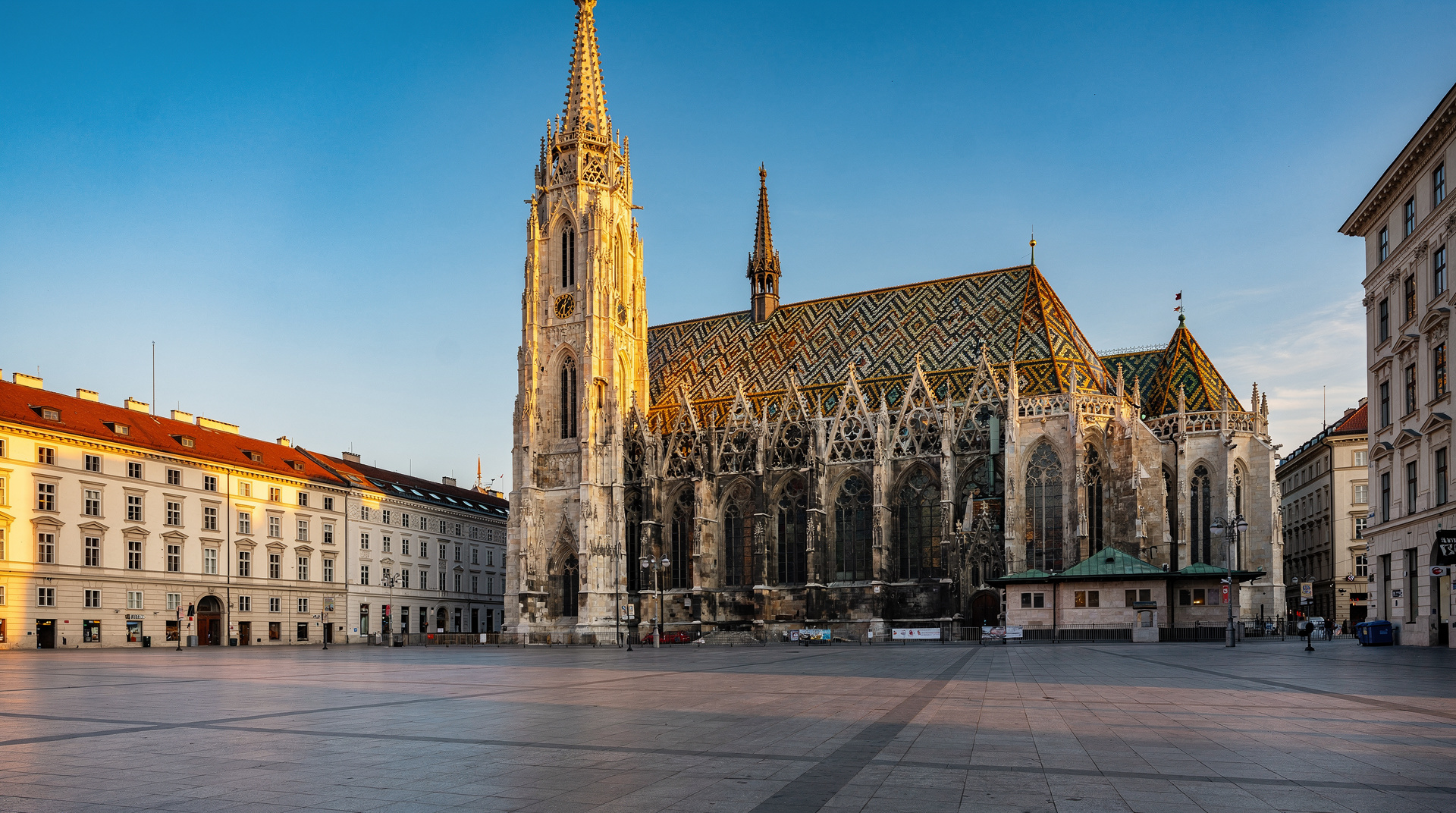
Stephansdom (St. Stephen’s Cathedral) is the visual anchor of Vienna: the Gothic spire on the Stephansplatz that appears in photographs, postcards, and window displays across the city. Most visitors see it from the outside as they navigate between Kohlmarkt and Kärntner Straße. Many walk in, look up at the nave, and walk back out.
This guide is for visitors who want to understand what they are looking at — and decide intelligently between the half-dozen ways to see it.
| Where | Stephansplatz 3, 1st district |
| Cost | Free nave; paid extras around €5.50–25 |
| Time needed | Around 30 minutes (nave only) to 2.5 hours (full visit) |
| Getting there | Directly above Stephansplatz U1/U3 |
| Best time | Weekday mornings, 9–11 am |
What you need to know before you go
Location: Stephansplatz 3, 1st district. The cathedral is directly above the U1 and U3 interchange at Stephansplatz, the central hub of Vienna’s metro network. You cannot miss it.
Free access: The main nave is open for free entry 09:00–16:30 on weekdays and until about 16:30 on Saturdays. Sunday access is limited to Mass times (10:15 and 12:00) and tourist hours in the afternoon.
Paid extras (approximate 2026 prices):
- South Tower climb: €5.50 (343 steps, no lift)
- North Tower with lift: €6.50 (includes access to Pummerin bell)
- Catacombs tour: €7 (runs every 30 minutes)
- Treasury: €6
- Combined ticket (most paid elements): €22–25
Photography: Permitted in the free nave area and on the tower platforms. Not permitted in the catacombs.
Inside the cathedral: what to see in the free zone
The Gothic nave
Stephansdom is one of the largest Gothic cathedrals in Central Europe. Construction began in the 12th century (the Romanesque west facade with its giant doorway and two towers dates from around 1230–1240) and continued through the 14th and 15th centuries under the Dukes of Austria and later the Habsburgs. The distinctive diamond-patterned tile roof — in the colours of Austria (red, white, red) with the Habsburg double-eagle — was added progressively and reconstructed after World War II, when the cathedral was severely damaged by fire in April 1945.
Walking into the nave from the west entrance, the spatial experience is immediately impressive: the central nave runs 110 metres, flanked by aisles and side chapels. The ceiling vaults are some 28 metres high. The light is Gothic light — dim, colored by stained glass, directional.
The carved stone pulpit (1510–1515)
Near the middle of the north nave aisle, look for the stone pulpit carved by Anton Pilgram around 1510–1515. It is one of the masterpieces of late Gothic stone carving: the handrail is decorated with carved toads and lizards, and below the stairs, carved faces of the four Church Fathers (Augustine, Gregory, Jerome, Ambrose) look out in directions representing the four temperaments. Below them, Pilgram carved a self-portrait of himself peering out from a window — one of the earliest known signatures embedded in an architectural work.
The main altarpiece
The high altar (1640s) contains a painted altarpiece of the stoning of St. Stephen by Tobias Pock, flanked by statues of the patron saints of Austria and the Habsburg dynasty. It is elaborate Baroque work in an otherwise Gothic setting — the contrast of periods is part of the cathedral’s texture.
Catacombs
The guided catacombs tour descends beneath the cathedral into a sequence of chambers containing bone deposits from medieval plague victims and later cleared burials (the remains of approximately 11,000 people were brought here in the 18th century when the city ran out of space in its churchyards). The Habsburg connection is specific: the internal organs of the dynasty — hearts, intestines — were stored here separately from the main bodies, which went to the Kapuzinergruft.
The tour is 30 minutes, runs in German and English, and requires a guide (no independent access). Closed spaces, low ceilings, and the presence of actual bones make this unsuitable for young children or those uncomfortable with confined spaces.
What a first-time visitor actually notices
Walking in cold, without prior reading, most first-time visitors are struck first by the darkness and scale of the nave rather than any single detail — the eye needs a minute to adjust before the carved pulpit or the altarpiece register as individual objects rather than part of a general Gothic impression. Give yourself that adjustment period before rushing toward the paid extras; standing still near the west entrance for a minute or two, letting the space settle, genuinely changes how the rest of the visit reads. Visitors who arrive straight from a busy Graben or Kärntner Straße often report this contrast most strongly — the noise of the pedestrian shopping streets drops away almost instantly once the west doors close behind you.
The towers: which one and why
South Tower (Südturm)
At 136.4 metres, the Steffl (as Viennese call the spire) is the tallest structure in Vienna and one of the tallest Gothic spires in the world. The climb to the viewing platform at 72 metres involves 343 steps up a narrow spiral staircase — steep, twisting, and not recommended for those uncomfortable with enclosed spaces at heights. The reward is a panoramic view over the inner city that no other vantage point in central Vienna offers: the Ringstrasse below, the Hofburg to the west, the Belvedere and the Alps visible on clear days to the south.
The South Tower climb is the most rewarding extra at Stephansdom. If you do nothing else beyond the free nave, do this.
North Tower (Nordturm)
The North Tower is unfinished — it was supposed to match the South Tower but construction was stopped in the 16th century, leaving a blunt Renaissance cap that looks quite different from the soaring Gothic southern spire. It is accessible by lift and contains the Pummerin — a bronze bell weighing 20,130 kg, cast from Turkish cannons captured after the 1683 siege of Vienna. It rings on major occasions (New Year’s Eve, major state events). The tower itself offers views but is less impressive than the South Tower platform.
Concerts at Stephansdom
Classical concerts are held in the cathedral on selected evenings throughout the year. The acoustic in the Gothic nave is exceptional — particularly for choral and organ music. The atmosphere of a live classical performance inside this space is quite different from the concert halls. See our St. Stephen’s Cathedral concert guide for programme and booking information.
Vienna: classical concert at St. Stephen’s CathedralSeasonal differences worth knowing
Stephansdom feels different depending on the season, and this affects planning more than most visitors expect. In midsummer, the free nave can feel crowded even mid-morning because tour groups stack up around the same hours as independent visitors; arriving right at opening (09:00) buys meaningfully more breathing room than arriving even 30 minutes later.
In winter, the shorter daylight hours mean the stained glass reads differently — dimmer overall, but the tower views compensate with crisper long-distance visibility on clear cold days, since haze is less common than in summer. Around Christmas, the cathedral sits directly beside some of the city’s Christmas market activity on Stephansplatz, so a daytime visit pairs naturally with market browsing immediately afterward.
Guided tours
Several walking tours of the Innere Stadt include Stephansdom as a key stop. A guide who explains the history — the construction phases, the 1683 siege, the 1945 fire, the postwar reconstruction — adds substantial value to what is otherwise a visually impressive but contextually opaque space.
Vienna: guided walking tour of city center highlights Vienna: river cruise and walking tour with St. Stephen’s CathedralNearby, on the same morning
Because Stephansdom sits at the geographic centre of the Innere Stadt, it pairs naturally with other imperial sights within a short walk. The Imperial Treasury at the Hofburg is around a 10-minute walk via Kohlmarkt and holds the Habsburg crown jewels — a logical follow-on if the cathedral has whetted your appetite for imperial history. Visitors interested in the Vienna Boys’ Choir’s connection to the Hofburg chapel can read our Vienna Boys’ Choir guide for how that Sunday tradition compares to a Stephansdom concert evening.
Fitting the cathedral into a wider Vienna plan
Stephansdom works best as an anchor rather than an all-day commitment. If you are building a first itinerary, the 3-day Vienna itinerary places the cathedral early, while you still have energy for the tower stairs, and the weekend itinerary treats it as a quick morning stop before the larger palaces. If you are still deciding how long to stay in the city, our guide on how many days in Vienna helps you weigh the cathedral against everything else competing for your time.
The streets around the cathedral belong to the Innere Stadt, and it rewards wandering without a fixed plan. Cafés, pastry counters and small shops fill the lanes within a few minutes of the west doors. A coffee break after the tower climb is a sensible way to recover; our Viennese coffee house guide explains how to order and how long you are expected to linger. For more landmarks in the same area, the Hofburg Palace guide and the Habsburg history primer give useful context for the dynasty that shaped so much of what you see inside the cathedral.
If you prefer to see the cathedral through the eyes of a local writer rather than a guidebook, the first-time-in-Vienna diary shows how an ordinary first visit tends to unfold, including where the crowds gather. Travellers who want to avoid the usual pitfalls around the square should also read our Vienna tourist traps guide, which covers the costumed photographers and other pressure tactics in more detail.
A note on scale and preservation
It’s worth remembering while inside that the roof alone required roughly 230,000 glazed tiles to rebuild after the 1945 fire, and that the reconstruction effort — funded partly by donations from ordinary Austrians in the postwar years — is part of why Viennese locals regard the cathedral with genuine attachment rather than simple tourist-brochure pride. The stonework you see today is a mix of medieval original and mid-20th-century replacement, restored again in phases as acid rain and pollution have required ongoing conservation work on the exterior facade.
When to visit and how to structure your time
Quietest: Weekdays 9–11 am Busiest: 11 am–3 pm in summer Best for atmosphere: Early morning or late afternoon, when the light through the west windows fills the nave
A complete Stephansdom visit — free nave, South Tower climb, catacombs tour — takes about 2.5 hours. If you are on a full-day city walk, combine Stephansdom with the Hofburg (15-minute walk via Kohlmarkt) as a morning programme. The Ringstrasse walk begins at the Burgring near the Hofburg and can follow in the afternoon.
Honest tips
The photographers in Habsburg costumes on Stephansplatz charge €10–15 for a photo with you in a heavy velvet outfit. The photos are taken on a cheap camera and printed on site. They are not affiliated with the cathedral or any official Vienna institution.
Sunday logistics: If you want to see the cathedral without crowds and are visiting on a Sunday, arrive before 10 am or after 2 pm. The 10:15 Mass draws a large congregation and the space is genuinely in use as a church — tourist wandering is appropriately curtailed.
The roof tiles: The famous diamond-patterned roof is best seen from the South Tower viewing platform looking down, or from the street-level view from Stephansplatz’s northwest corner where the full south facade is visible. Most photographs of the roof are taken from elevated positions.
Frequently asked questions about Stephansdom
What can you see for free at Stephansdom?
The main nave and Gothic interior are free to enter (09:00–16:30 on weekdays, limited access on Sundays during Mass). The Tirna chapel, main altar, and carved stone pulpit are visible without paying.
Which tower at Stephansdom should I climb?
The South Tower (Südturm) is the taller (136 m) and gives the better view, but you climb 343 steps with no lift. The North Tower is reached by lift and has the Pummerin bell. For views, South Tower; for ease, North Tower.
What are the Stephansdom catacombs?
The catacombs beneath the cathedral contain the remains of some 11,000 people, including Habsburg internal organs. Tours run every 30 minutes and take about 30 minutes.
How long should I plan for Stephansdom?
The free nave takes 20–30 minutes. Adding the South Tower climb, catacombs tour, and treasury covers 2–2.5 hours total.
Is there a concert inside Stephansdom?
Yes — classical concerts are held in the cathedral on selected evenings. See our St. Stephen’s Cathedral concert guide for details.
When is the best time to visit Stephansdom?
Weekday mornings (09:00–11:00) are quietest. Summer midday (11 am–3 pm) is the most crowded. Sunday Masses are genuine services — tour the interior before or after, not during.
Top experiences
Bookable activities with verified prices and instant confirmation on GetYourGuide.