Sisi Museum guide: the real Empress Elisabeth beyond the myth
Vienna: Skip-the-Line Hofburg and Empress Sisi Museum Tour
Is the Sisi Museum worth visiting in Vienna?
Yes — the Sisi Museum is one of the most thoughtfully curated museums in Vienna. It deliberately dismantles the Romy Schneider film mythology and presents Empress Elisabeth through original objects: her court dresses, travel equipment, and the story of her assassination in 1898. Allow 1–1.5 hours and book the combined Hofburg ticket.
Why the Sisi Museum exists — and what it is trying to do
Most museums about famous historical figures celebrate their subject. The Sisi Museum at the Hofburg does something more interesting: it opens with a room devoted to the myth of Sisi — the three Romy Schneider films from the 1950s, the stage musical that has played continuously in Vienna since 1992, the souvenir industry that turns Elisabeth’s face into everything from fridge magnets to pralines — and then systematically replaces that myth with something more complicated.
The curatorial intention is stated clearly at the entrance: this museum aims to show you who Empress Elisabeth actually was, which requires first acknowledging how thoroughly the fiction has displaced the reality. The approach works. Visitors who arrive expecting a romance come away with something more thoughtful.
| Where | Hofburg complex, Michaelerplatz entrance |
| Cost | Around €17.50 (combined Hofburg ticket) |
| Time needed | 45–75 min museum; 2.5–3 hrs with Apartments & Silver |
| Getting there | U3 Herrengasse (3 min) or on foot from Stephansplatz |
| Best time | Weekday mornings, avoid summer afternoons |
What you need to know before you go
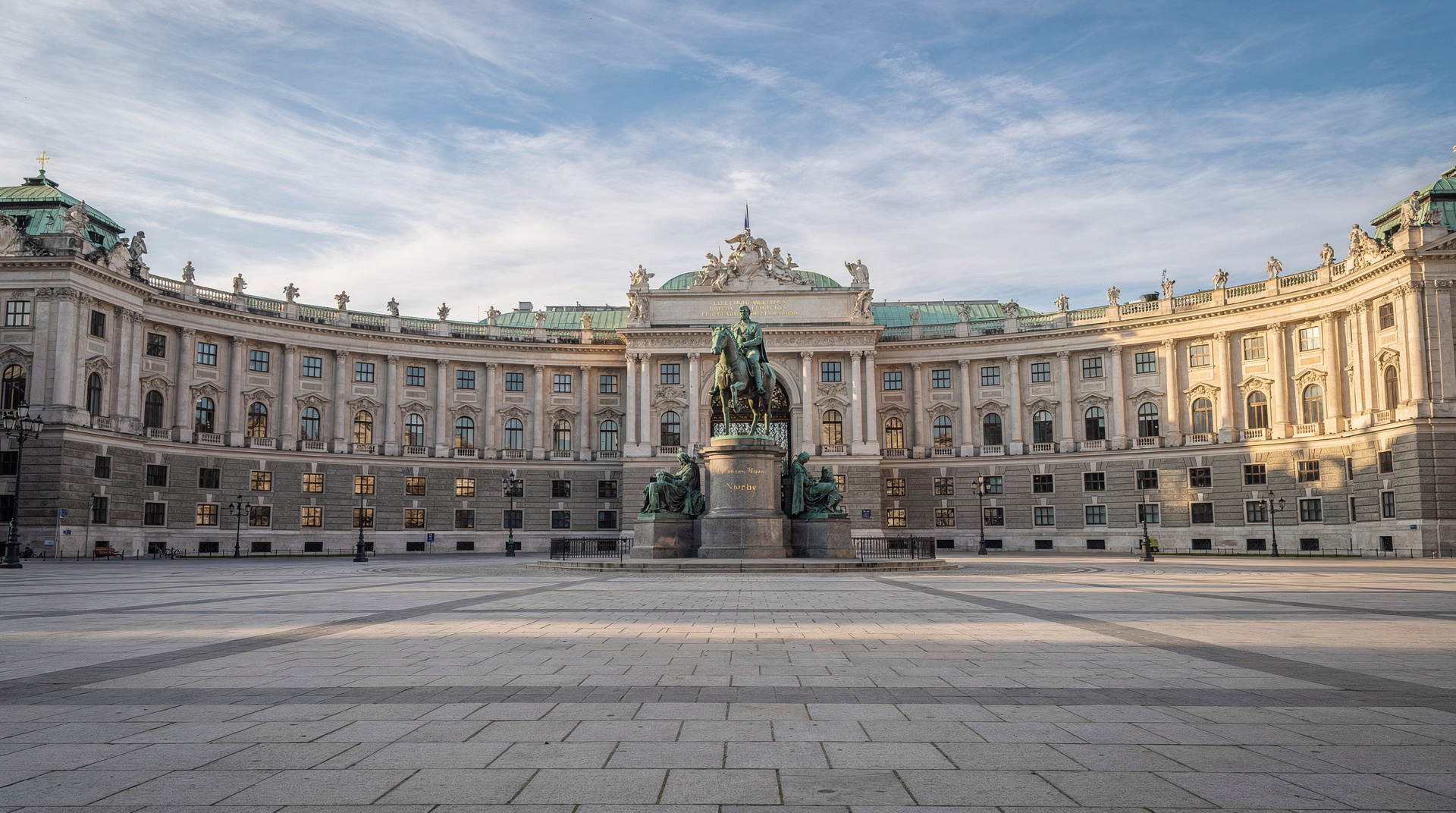
Location: Inside the Hofburg complex, entered from Michaelerplatz. The ticket desk is in the Michaelerkuppel rotunda beneath the green dome. There is no separate Sisi Museum entrance.
Ticket: The Sisi Museum is included in the combined Hofburg ticket (€17.50 adults), which also covers the Imperial Apartments and the Imperial Silver Collection. There is no standalone Sisi Museum ticket.
Opening hours: Daily 9 am–5:30 pm (last entry 4:30 pm). Closed major Austrian holidays.
Audio guide: Included in the ticket price, available in 34 languages.
Crowds: Summer mornings (July–August) are busiest. The museum is indoors and a popular rainy-day destination.
The museum room by room
Room 1: The myth
The opening room confronts you with the commercial Sisi: original film stills from the Schneider trilogy, a copy of the musical programme, examples of the souvenir merchandise. A text panel notes that the museum you are about to enter is itself part of the same commercial ecosystem — the Hofburg Palace charges admission in part because of Elisabeth’s continued popularity. This honesty is unusual and sets a useful tone.
Rooms 2–4: The young Elisabeth
These rooms cover Elisabeth’s childhood in Bavaria (she was born in Munich in 1837, the daughter of Duke Maximilian in Bavaria) and her engagement to Emperor Franz Joseph, which happened when she was 15 and had accompanied her older sister Helene to Bad Ischl for what was meant to be Helene’s introduction to the young emperor. Franz Joseph, then 22, chose Elisabeth instead.
Original objects include a miniature portrait of the young Elisabeth and a copy of her trousseau list — the clothing and goods assembled for her marriage to the most powerful ruler in Central Europe.
Rooms 5–8: Court life and its constraints
The central rooms of the museum deal with the contradiction that defined Elisabeth’s adult life: she was one of the most celebrated women in Europe and one of the most constrained. Court protocol at the Viennese Hofburg determined everything from how she ate (seated, with a rigid time limit on meals) to who she could speak to (only those presented to her through the correct channels).
Original objects on display include: her travelling gymnasium equipment — parallel bars, rings, and a horseshoe magnet — that she insisted on bringing everywhere, including to the Hofburg; her corset, waist-measuring tape, and the records kept of her measurements (her waist remained 51 cm until her late 50s through obsessive exercise); her hair care tools and the log kept by her hairdresser of how many hairs fell out during each session (a number that caused Elisabeth genuine anxiety if it exceeded a certain threshold).
The gymnastics apparatus is particularly striking — a woman of her era and position exercising with parallel bars was genuinely transgressive. The court considered it undignified. She did not care.
Rooms 9–11: Travel as escape
From the 1860s onward, Elisabeth spent increasing amounts of time away from Vienna. She developed elaborate routes through Europe and the Mediterranean, often travelling incognito as the Countess of Hohenembs. She visited Madeira, Corfu (where she built the Achilleion palace), Hungary (where she was genuinely popular and learned Hungarian), and England (for fox-hunting).
The museum gives significant space to this wandering, presenting it as a form of self-preservation rather than eccentricity. Vienna, for Elisabeth, had become a place of surveillance and grief — her son Crown Prince Rudolf died at Mayerling in 1889 in a double suicide that the court tried to cover up. After Rudolf’s death, she wore black for the rest of her life.
Room 12: The assassination
The final room covers the assassination in Geneva on 10 September 1898. An anarchist named Luigi Lucheni stabbed Elisabeth with a filed sharpened file as she walked along the lakefront toward a steamship. She died within the hour, unaware of the severity of her wound because the weapon left such a small entry point.
On display: a replica of the weapon, the schedule of her final days in Geneva, and documentation of Lucheni’s subsequent trial (he received life imprisonment; Austria requested extradition, which Switzerland refused). The room is factual and restrained.
After the Sisi Museum: the Imperial Apartments
The combined ticket continues directly into the Imperial Apartments — 22 rooms covering the private quarters of Franz Joseph and Elisabeth in the same building. The contrast between Franz Joseph’s spartan study (iron camp bed, minimal decoration) and Elisabeth’s more elaborate rooms illuminates the marriage better than any text: two people who lived very different internal lives within an institution that required them to perform togetherness in public.
The Imperial Apartments guide covers this section in more detail.
Tickets and booking
Vienna: skip-the-line Hofburg and Empress Sisi Museum tour Skip-the-line access is worth the additional cost in summer. The ticket desk queue at Michaelerplatz reaches the courtyard by 10 am in July and August.
Vienna: Hofburg and Empress Sisi Museum guided tourA guided tour adds historical context to the museum rooms that the audio guide cannot provide within its time constraints — particularly for the political context of the Habsburg court in the 1850s–1880s.
The Franz Joseph and Sisi story in context
If the museum leaves you wanting more, our guide to Franz Joseph and Sisi covers the broader arc of their marriage and reign in the context of Habsburg history. The relationship between these two people — one who found the court’s constraints entirely natural, one who found them suffocating — is one of the more illuminating windows into how imperial power actually felt from the inside.
For the full Habsburg context, see our Habsburg history for travellers primer, which covers the dynasty from the 13th century to 1918 without requiring any prior knowledge.
Where the Sisi story continues in Vienna
Elisabeth’s presence in Vienna extends well beyond the Hofburg. At Schönbrunn Palace, her apartments show a more theatrical, summer-residence version of the same daily life documented in the Sisi Museum, and comparing the two is one of the more revealing ways to understand the gap between imperial display and private discomfort — our Schönbrunn vs Hofburg guide sets out how to sequence both.
If it’s your first time putting together a Hofburg visit at all, the Hofburg Palace guide is the place to start, and the Innere Stadt destination page gives broader orientation to the surrounding 1st district — the Graben, Kohlmarkt and Michaelerplatz that Elisabeth herself would have known.
Honest comparison: Sisi Museum vs Imperial Treasury
Visitors with limited Hofburg time sometimes have to choose between the Sisi Museum and the separately ticketed Imperial Treasury (Schatzkammer). They serve different purposes: the Sisi Museum is a biographical, emotionally engaging portrait of one person, while the Imperial Treasury is a room-after-room display of crown jewels and dynastic regalia spanning centuries. If you can only do one, the Sisi Museum is more accessible for first-time visitors with no prior Habsburg knowledge; the Treasury rewards those with a specific interest in decorative arts or medieval history. Ideally, budget time for both — they complement rather than duplicate each other.
How to read the museum without getting overwhelmed
The museum is dense with objects and text panels, and it is easy to reach the later rooms already tired. A simple approach helps: decide before you enter which two or three themes matter most to you, whether that is the constraints of court life, the travel years or the construction of the myth, and slow down in those rooms. Let the others be a quicker pass. The audio guide rewards selective listening, so you do not need to press every number on the way round.
It also helps to notice how the rooms are ordered. The route moves from the public image to the private person, and then to the end of her life, so the emotional weight builds gradually. Reading the opening room carefully pays off later, because every object that follows quietly answers a claim made by the film-and-souvenir version of Sisi.
Who the museum suits best
Readers of history will enjoy the way the displays are tied to original objects rather than to atmosphere alone. Travellers who came mainly for the romance of the films may find it a surprise, but most come away glad of it. If you want a gentler introduction to the people involved before you go, our blog piece on the Sisi myth and the museum shows how one visitor’s expectations shifted during the visit.
If you are weighing it against other indoor options, our overview of the best museums in Vienna puts the Sisi Museum next to the big art and natural-history collections, and the Belvedere Palace guide is the natural choice if you would rather spend your imperial-era day among paintings than personal belongings.
Fitting the museum into a wider Vienna plan
The museum sits comfortably inside a first-timer’s route through the old centre. In our 3-day Vienna itinerary it belongs to the day built around the Hofburg and the Innere Stadt, and the Vienna weekend itinerary uses it as a rainy-weather anchor. If you are deciding whether a city pass makes sense for several palaces and museums, read our Vienna Pass review before buying, and check the best time to visit Vienna guide to choose a season that suits indoor sightseeing.
For travellers who want to follow the story outside the city, the Mayerling and Heiligenkreuz page covers the place tied to the death of Crown Prince Rudolf that the museum describes in its travel-and-grief rooms. It is a thoughtful follow-up for anyone who found that part of Elisabeth’s life the most affecting.
Visiting with family or with extra needs
Families should read our Vienna with kids guide for ideas on balancing a serious museum with livelier stops, and the accessible Vienna guide goes further on step-free routes across the city. A short break at a nearby café after the final room is a good way to let the assassination display settle, particularly for younger visitors.
Accessibility and practical notes
The Sisi Museum route is largely step-free, with lifts covering the sections that would otherwise require stairs; ask at the ticket desk for the accessible route if needed, since the standard visitor flow includes a couple of short staircases that can be bypassed. Audio guide units are available with volume boost and there is a hearing-loop option at the entrance desk on request. Photography without flash is permitted throughout the museum, though tripods are not allowed given the crowded rooms. Bag storage lockers near the Michaelerplatz entrance handle luggage too large to carry through — useful if you’re visiting on an arrival or departure day.
Frequently asked questions about the Sisi Museum
What does the Sisi Museum ticket include?
The Sisi Museum ticket is sold as part of the combined Hofburg ticket (€17.50), which also covers the Imperial Apartments and the Imperial Silver Collection. There is no separate Sisi Museum-only ticket.
How long does the Sisi Museum take?
The museum itself takes 45–75 minutes. Combined with the Imperial Apartments and Silver Collection in the same building, allow 2.5–3 hours total.
Where is the Sisi Museum in Vienna?
The Sisi Museum is inside the Hofburg Palace complex, accessed from the main visitor entrance at Michaelerplatz. The entrance is in the Michaelerkuppel rotunda.
Who was Empress Sisi?
Empress Elisabeth of Austria (1837–1898) was the wife of Emperor Franz Joseph I. She is the most mythologised figure in Austrian popular culture, partly through the Romy Schneider film trilogy and the stage musical. The real Elisabeth was deeply unhappy at court, obsessively athletic, and spent most of her adult life travelling. She was assassinated by an anarchist in Geneva in 1898.
Is the Sisi Museum appropriate for children?
Generally yes, though the room covering her assassination includes graphic details. Children aged 10 and above handle it well; younger children may need guidance. The ceremonial dresses and hair care ritual are usually fascinating for all ages.
What is the best time to visit the Sisi Museum?
Weekday mornings from 9 am are the quietest. Summer afternoons (July–August) are the busiest. Book tickets online to skip the queue at the Michaelerplatz entrance.
Top experiences
Bookable activities with verified prices and instant confirmation on GetYourGuide.