Franz Joseph and Sisi: the Habsburg marriage that shaped modern Vienna
Vienna: Hofburg and Empress Sisi Museum Guided Tour
What is the real story of Franz Joseph and Empress Sisi?
Franz Joseph I (1830–1916) and Empress Elisabeth of Austria (1837–1898) were married for 44 years in a relationship defined by devotion on his side and a profound need for escape on hers. He built the empire's bureaucracy; she fled it. Their story shaped the Hofburg apartments, the Sisi Museum, the myth of imperial Vienna, and an entire commercial industry that shows no sign of slowing down.
The myth and the marriage
Few relationships in European history have generated as much commercial mythology as that of Emperor Franz Joseph I and his wife Empress Elisabeth of Austria. The three Romy Schneider films (1955–1957), the stage musical that has run continuously in Vienna since 1992, and an entire souvenir industry have collectively produced a version of the story that emphasises romance, beauty, and freedom against imperial constraint.
The real story is more interesting and considerably darker. It involves a young woman genuinely trapped by one of the most rigid institutional structures in 19th-century Europe, a death at Mayerling that the church helped cover up, and an assassination that the entire Habsburg court was quietly relieved to have attributed to an anarchist rather than a personal failure of the institution.
This guide gives you the actual story — useful both for understanding the Sisi Museum at the Hofburg and for making sense of the broader Vienna visit.
If you want the wider dynasty behind the couple, our Habsburg history for travelers sets the long run of emperors in context, and the 3-day Vienna itinerary shows where the imperial sites fit into a realistic first visit. For a more personal take on the same material, the blog piece on the Sisi myth and the museum records how the story lands once you are standing in the rooms.
| Where to see it | Hofburg (Sisi Museum, Imperial Apartments), Schönbrunn, Kapuzinergruft |
| Time needed | 1.5–2hrs for the Hofburg sites; add Mayerling (70km) for a half-day extension |
| Cost | Hofburg combined ticket around €17.50; Mayerling entry a few euros |
| Best for | Habsburg history, tragic royal biography, museum context before Schönbrunn |
| Key dates | Married 1854; Rudolf’s death 1889; Elisabeth assassinated 1898; Franz Joseph died 1916 |
Elisabeth: the early years
Elisabeth (Elisabeths Amalie Eugenie in Possenhofen, Bavaria, 24 December 1837) was the daughter of Duke Maximilian in Bavaria, a Wittelsbach minor noble known more for his circus performances and zither-playing than for courtly ambition. She grew up in an informal household by the standards of the era, spending summers at the Possenhofen estate on Lake Starnberg, riding and reading, largely outside the rigid social structures of Munich court life.
She was 15 when she met Franz Joseph at Bad Ischl in August 1853. Her older sister Helene had been the intended match — their mother Princess Ludovika had arranged the meeting with that purpose. Franz Joseph chose Elisabeth instead, apparently on sight. They were engaged within days and married in Vienna in April 1854.
The arrival in Vienna
Elisabeth’s first experience of the Viennese court was the journey itself: she was seasick on the Danube passage and arrived feeling ill at a sequence of formal receptions she was unprepared for. The court she entered was governed by Archduchess Sophie — Franz Joseph’s mother — who ran the Hofburg household with an institutional precision that left essentially no space for a 16-year-old from Bavaria to find her feet.
Sophie decided on the names of Elisabeth’s children (the first daughter was named Sophie, not the name Elisabeth had chosen). She took over the management of the imperial nurseries when Rudolf was born in 1858. She determined Elisabeth’s schedule, her public appearances, and the protocol she was required to follow. The relationship between Elisabeth and her mother-in-law was the central drama of the first decade of the marriage.
Franz Joseph: the emperor’s life
Franz Joseph became emperor in December 1848 at age 18, following the abdication of his uncle Ferdinand I during the revolutions of 1848. He came to power in a crisis and never really left it: the 1848–1849 period involved suppressing revolts in Vienna, Budapest, and across the empire with Russian military assistance. The 1850s saw the loss of a war with France and Piedmont (1859) that stripped Austria of Lombardy. The 1860s brought defeat by Prussia at Königgrätz (1866) that ended Austrian influence in German affairs and forced the Compromise (Ausgleich) with Hungary in 1867, creating the Dual Monarchy of Austria-Hungary.
Through all of this, Franz Joseph maintained a personal routine of extraordinary consistency: he rose at 4 am, began work at 5 am, received audiences from 5 am to 8 am, attended to paperwork for the rest of the morning, and worked seven days a week without interruption. He slept on an iron camp bed in his study. He ate quickly, standing up when possible. He considered elaborate meals a waste of time.
His relationship with Elisabeth was genuine and, on his side, devoted. Her absences caused him pain. Her assassination in 1898 — he was 68 at the time — appears to have confirmed a kind of stoic resignation: he continued his routine, continued the work, and died in his Schönbrunn study 18 years later, in November 1916, while the war he had begun in 1914 was still going on.
The marriage: devotion and distance
From the mid-1860s onward, Elisabeth spent increasing amounts of time away from Vienna. She developed a passion for Hungary (where the Hungarian aristocracy adored her and she learned the language) and spent long periods in Budapest, Gödöllő (the Hungarian royal palace where she felt more at home than anywhere in the empire), Corfu, Madeira, and England.
Her absences were a source of public criticism — the Viennese expected their empress to be present — and of private relief. Court protocol at the Hofburg was genuinely oppressive: she could not eat without a ceremony, could not move without a lady-in-waiting, could not speak without a formal introduction to the speaker. Travel, and the incognito personas she adopted on it, were the only space in which she could function as something close to herself.
Franz Joseph wrote to her almost daily when she was away. She wrote back less frequently. She returned when she had to — for court functions, for family events — and left as quickly as she could. He seems to have understood this as an aspect of who she was and accepted it.
Her attachment to Hungary is one of the more rewarding threads to follow if you plan to travel beyond Vienna. The Budapest destination page and the Budapest day trip from Vienna give you a way to see the city that welcomed her so warmly, and the Vienna to Budapest train guide covers the practical side of getting there.
Rudolf’s death at Mayerling
Crown Prince Rudolf (born 1858) was their only son and the heir to the empire. He was brilliant, liberal, and increasingly despairing: his political views (he supported a more democratic constitutional structure) were incompatible with his father’s conservatism, and his personal life was chaotic. In January 1889, he retreated to the imperial hunting lodge at Mayerling in the Vienna Woods with his 17-year-old mistress Mary Vetsera.
On the morning of 30 January 1889, both were found dead.
The court’s response was rapid and systematic. Mary Vetsera’s body was removed from Mayerling in secret that same night — dressed and propped upright between two relatives in a carriage to avoid detection — and buried hastily in Heiligenkreuz. The official account, maintained by Franz Joseph and endorsed by the Vatican (to allow Rudolf a Catholic burial), described the deaths as an accident. The evidence — the positions of the bodies, the gunshot wounds, the prior correspondence — points overwhelmingly to a suicide pact.
Elisabeth never recovered. Rudolf’s death marked a turning point after which she wore black exclusively, accelerated her travelling, and became increasingly melancholic in her recorded conversations.
The places connected to this episode are covered on the Mayerling and Heiligenkreuz destination page, which is the best starting point if you want to see the setting for yourself rather than only read about it.
The assassination in Geneva, 1898
On 10 September 1898, Elisabeth was walking along the lakefront in Geneva with her lady-in-waiting, about to board a steamship to Montreux. A 25-year-old Italian anarchist named Luigi Lucheni had come to Geneva specifically to kill a member of the European aristocracy. His first target, the Duke of Orleans, was not in Geneva. He chose Elisabeth instead.
Lucheni stabbed her with a sharpened file — the wound was so small and the entry so clean that Elisabeth walked onto the steamship and only then collapsed. She died within the hour, unaware of the severity of what had happened. Her last words, according to her lady-in-waiting, were “What happened to me?”
Franz Joseph received the news at Schönbrunn. His recorded response: “Is nothing to be spared to me on this earth?” He lived for another 18 years.
Where to experience their legacy in Vienna
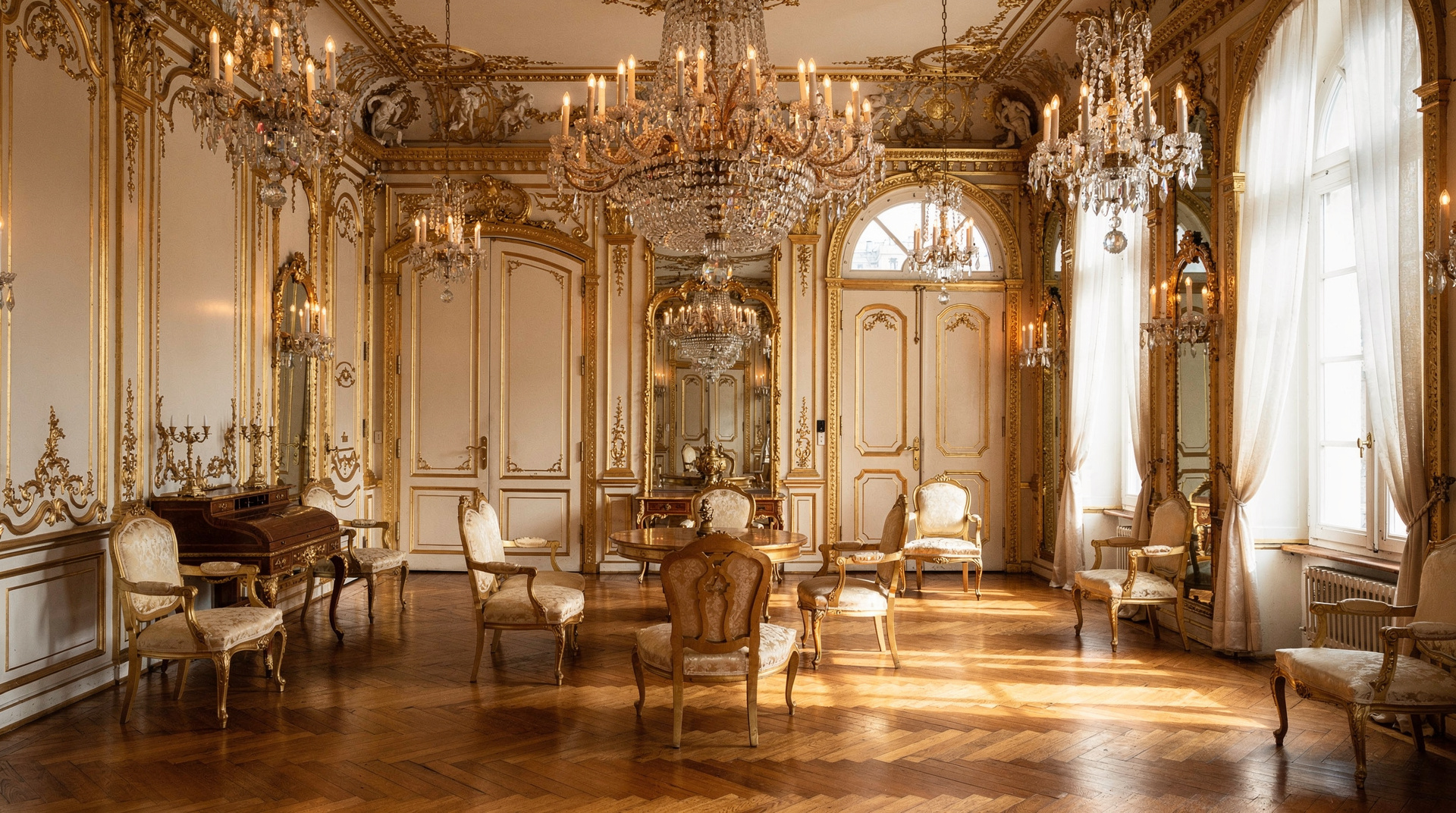
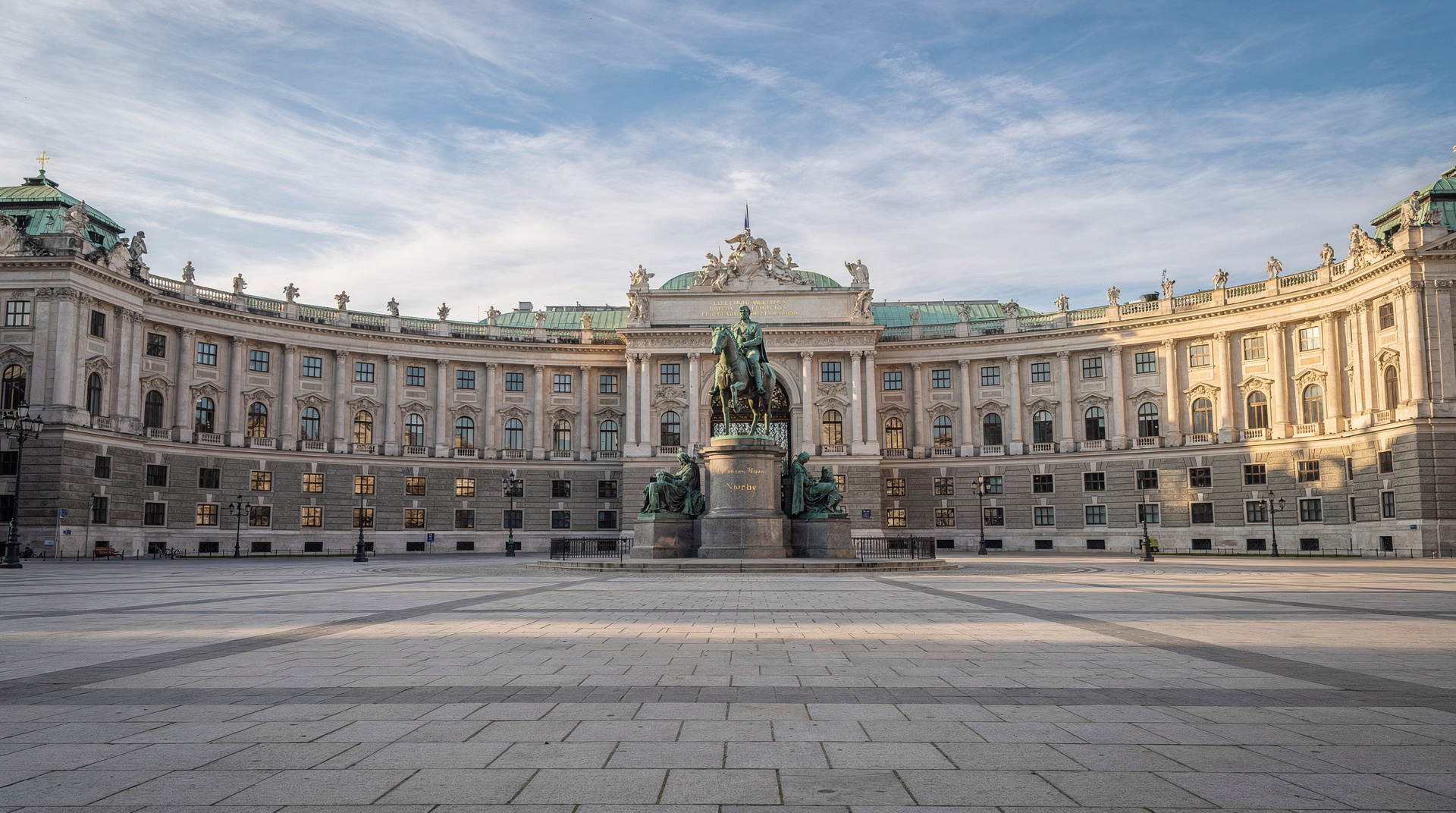
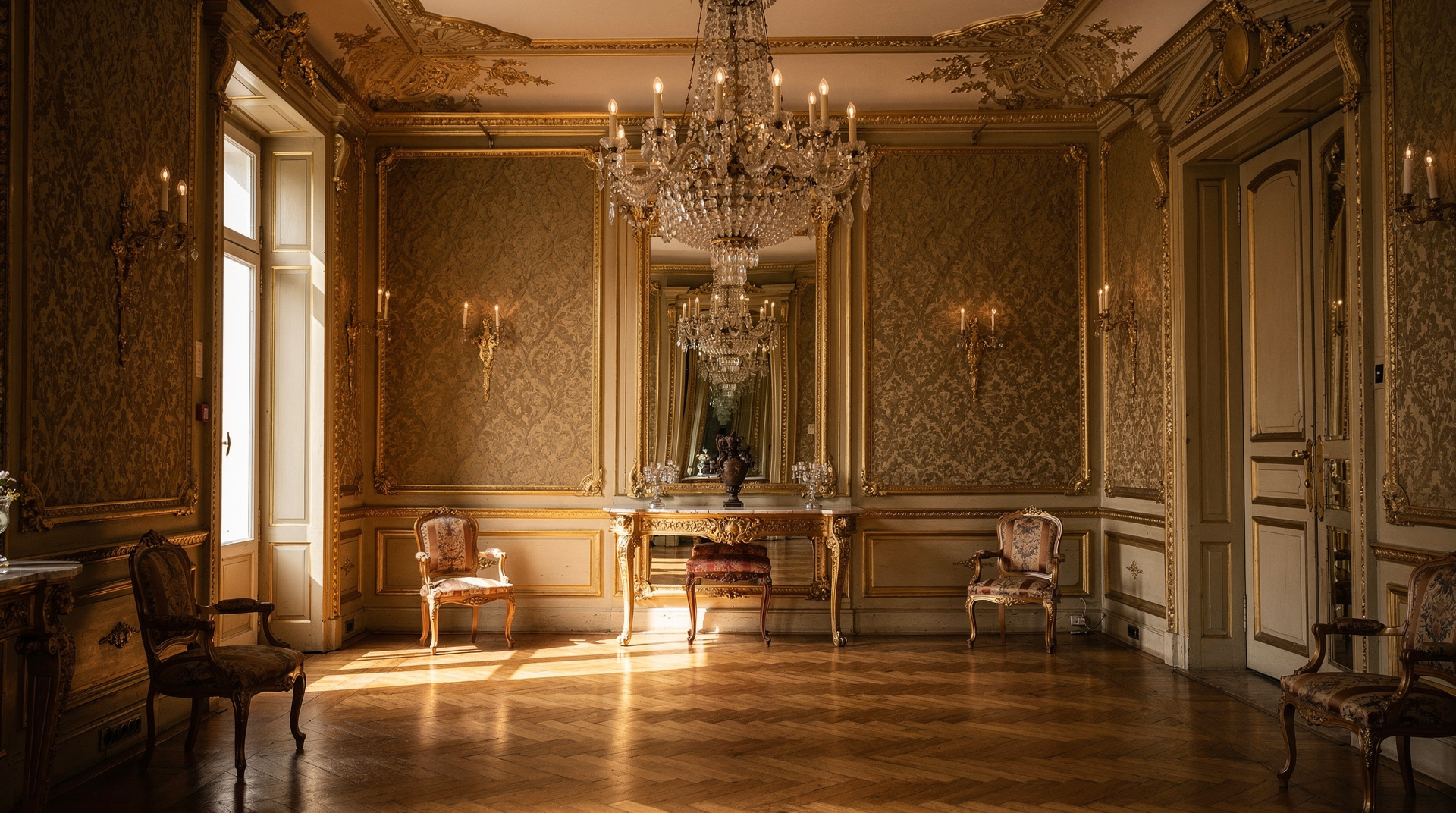
Vienna: Hofburg and Empress Sisi Museum guided tour The Sisi Museum at the Hofburg is the essential starting point — it deliberately confronts the commercial myth and then presents the real Elisabeth through original objects. The Imperial Apartments show how Franz Joseph and Elisabeth actually lived in the same building.
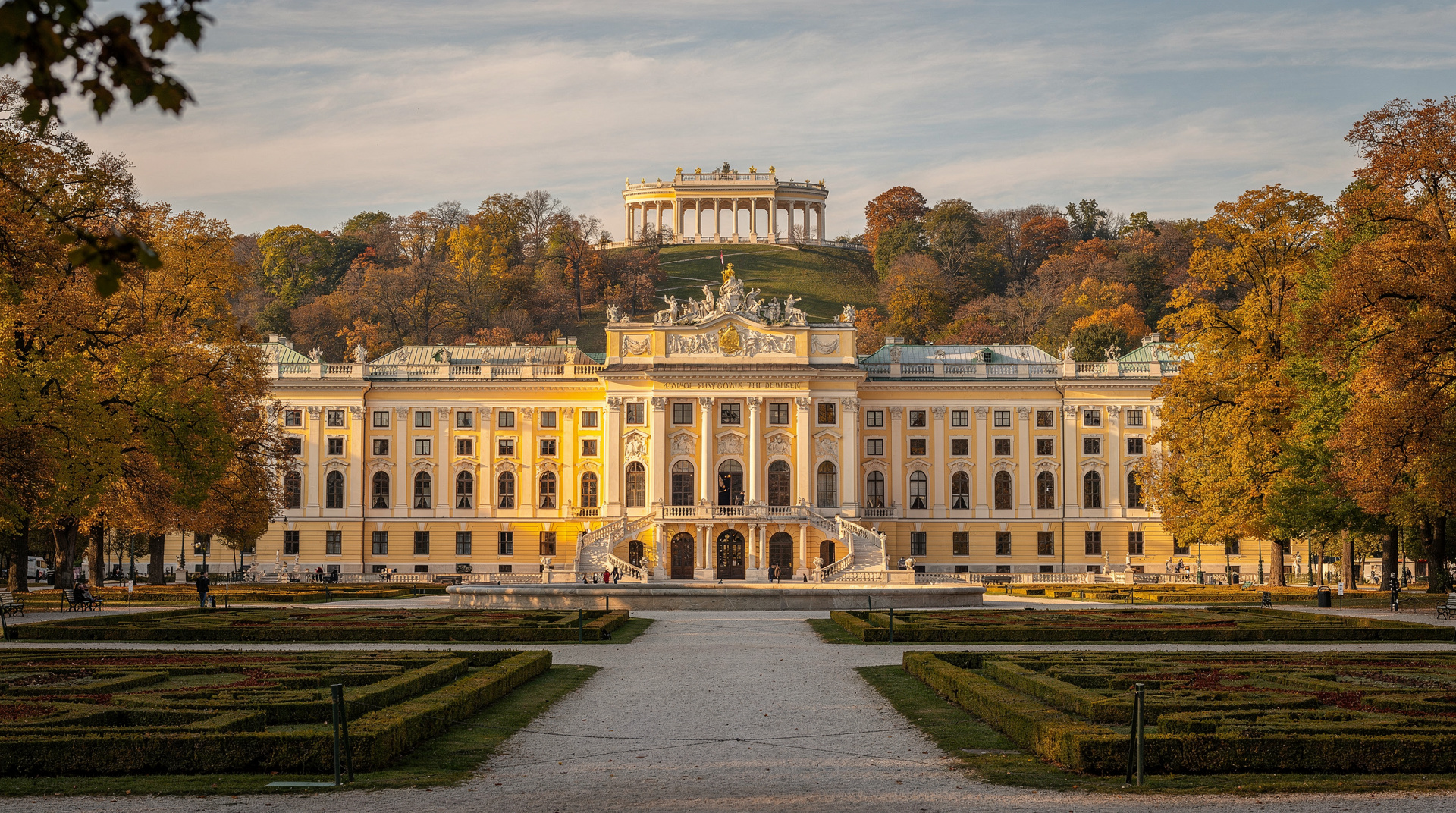
Vienna: Sisi Museum, Imperial Apartments and Hofburg tourSchönbrunn Palace was where Franz Joseph was born (1830) and where he died (1916). The palace also hosted the couple’s early married life. For the Mayerling story, the hunting lodge is now a Carmelite convent 70 km from Vienna, accessible by car or as part of a Vienna Woods tour.
The Kapuzinergruft on Neuer Markt (a 10-minute walk from the Hofburg) holds both tombs: Elisabeth in a lead coffin decorated with symbols of mourning, Franz Joseph in the largest sarcophagus in the crypt. Rudolf is also interred here.
Because the Hofburg and Schönbrunn tell different halves of the story, it helps to read Schönbrunn vs Hofburg before deciding how to split your time. The surrounding Innere Stadt district keeps the Hofburg, the crypt and the old court quarter within easy reach of one another, and the Schönbrunn destination page covers the palace grounds where Franz Joseph spent so much of his life. Franz Joseph’s reign also reshaped the city itself, a theme you can follow on the Ringstrasse architecture walk.
Visiting Mayerling today
The hunting lodge where Rudolf died no longer exists in its original form — Franz Joseph had it demolished and rebuilt as a Carmelite convent, a gesture of penance that also conveniently removed the physical scene of the scandal. The small museum inside covers the events of January 1889 with a restrained, factual tone rather than the sensationalism the story tends to attract elsewhere.
It sits in the Vienna Woods roughly 70 km southwest of the city, usually visited by car or as part of a wider Vienna Woods day trip rather than independently by public transport, since connections are slow and infrequent — this is one of the rare Vienna day excursions where an organised tour genuinely outperforms doing it yourself. Most visitors pair it with the nearby Cistercian abbey at Heiligenkreuz, where Mary Vetsera was hastily reburied — her grave, unlike the imperial tombs in the city, is a simple and rather sobering stop.
The commercial Sisi industry, and how to see past it
It is worth being upfront about the scale of the Sisi commercial industry before you visit any of the sites: Vienna sells Sisi tea tins, Sisi chocolate, Sisi soap, and an entire museum shop’s worth of merchandise built on an idealised 19th-century beauty rather than the more difficult woman the historical record describes.
The three Romy Schneider films and the long-running Vienna stage musical both lean hard into the romance and away from the depression, the eating disorder scholars now widely infer from contemporary accounts of her diet and exercise regime, and the years of genuine estrangement from her husband and children. None of this makes the sites not worth visiting — if anything, the Sisi Museum guide does a better job than most European royal museums of naming the myth directly rather than perpetuating it. Go in aware of the marketing, and the visit becomes considerably more interesting.
Frequently asked questions about Franz Joseph and Sisi
Where did Franz Joseph and Sisi meet?
They met at Bad Ischl in the Austrian Salzkammergut in August 1853. Elisabeth had accompanied her older sister Helene, who was the intended match. Franz Joseph chose Elisabeth instead. She was 15.
Why was Empress Sisi so unhappy at the Viennese court?
The Habsburg court governed every aspect of life by protocol that left no room for personal expression. Elisabeth’s mother-in-law Archduchess Sophie effectively ran the household and took over the raising of Elisabeth’s children, which caused profound distress.
What happened to Crown Prince Rudolf?
Rudolf died at the Mayerling hunting lodge on 30 January 1889 in what the evidence strongly indicates was a suicide pact with his mistress Mary Vetsera. The official account described it as an accident, endorsed by the Vatican to allow a Catholic burial.
How did Empress Sisi die?
Elisabeth was assassinated in Geneva on 10 September 1898 by Luigi Lucheni, an Italian anarchist who stabbed her with a sharpened file as she walked to a steamship.
Was Franz Joseph devastated by Sisi’s death?
Yes. Despite her long absences, his devotion to her was genuine. He lived for 18 more years in essentially the same routine, working from 5 am and dying in his study in November 1916.
Where can I see the Sisi and Franz Joseph legacy in Vienna?
The Sisi Museum and Imperial Apartments at the Hofburg are the primary sites. Schönbrunn was Franz Joseph’s birthplace and place of death. Both are buried in the Kapuzinergruft on Neuer Markt.
Top experiences
Bookable activities with verified prices and instant confirmation on GetYourGuide.