Naschmarkt area
Vienna's Naschmarkt: what to eat, when to go, the Saturday flea market, and the best cafés and restaurants in the surrounding 4th-6th districts.
Vienna: Naschmarkt Food Tasting Tour
Quick facts
- Location
- Along Linke Wienzeile, 4th/6th district
- Nearest U-Bahn
- Kettenbrückengasse (U4) or Karlsplatz (U1/U2/U4)
- Market hours
- Mon–Fri 06:00–19:30, Sat 06:00–18:00 (closed Sundays)
- Flea market
- Saturday from 06:30 (Kettenbrückengasse end)
Vienna’s daily food market
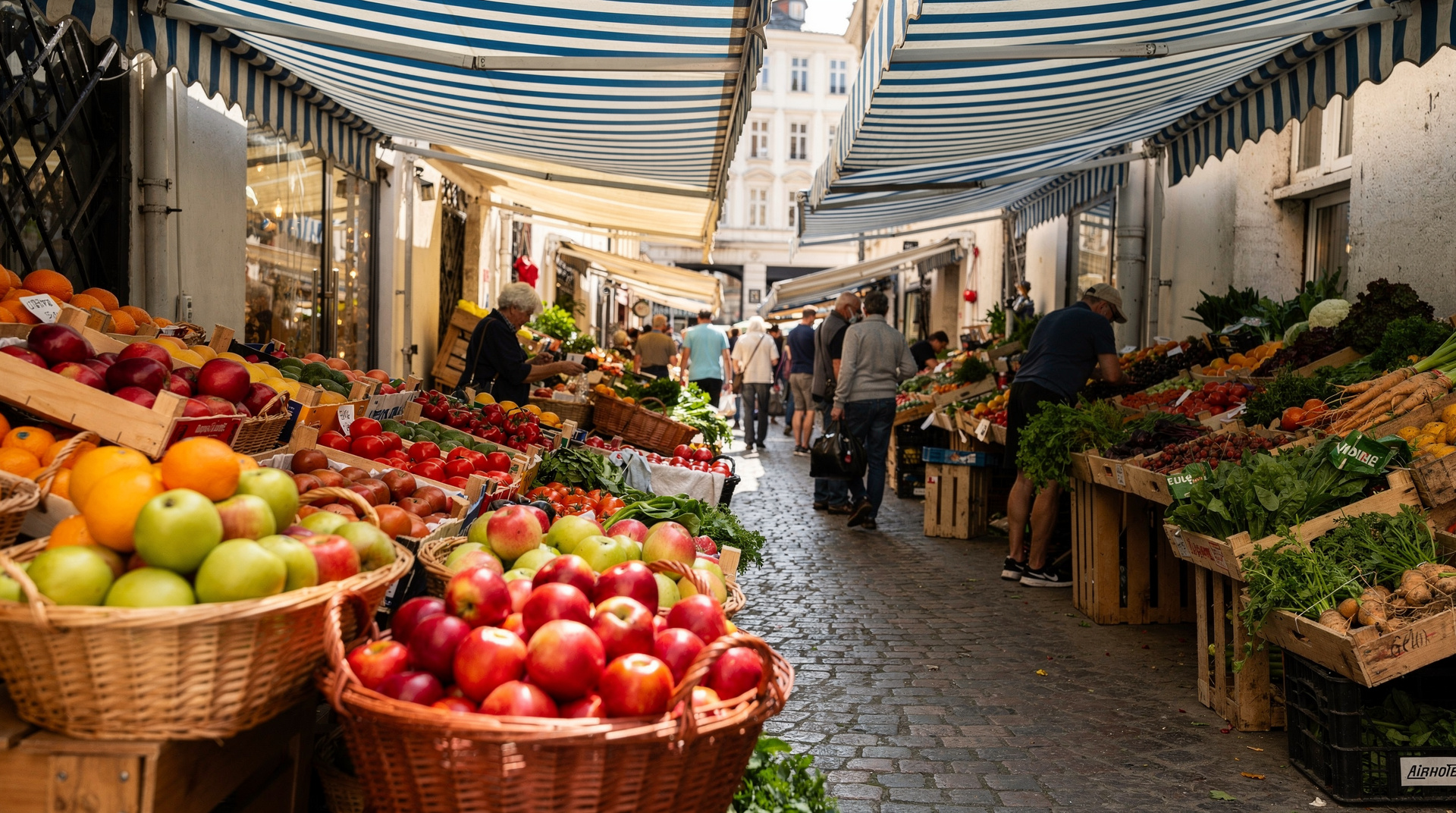
The Naschmarkt runs for 1.5 kilometres along the Linke Wienzeile in a narrow strip between the 4th and 6th districts, built above the covered section of the Wien river — a piece of late 19th-century engineering that converted a seasonal flood risk into a market site. Roughly 120 permanent market stalls sell produce, spices, cheese, cured meats, olives, pickles, fresh fish, and prepared food. About a third of the vendors are Austrian or central European in origin; the rest represent the city’s Turkish, Middle Eastern, Asian and Balkan communities, a demographic mix that has been part of the market since the early 20th century when Vienna was the capital of an empire with twelve nationalities.
| Location | Linke Wienzeile, 4th/6th district |
| Cost | Free to browse; a stall lunch around €8–15, guided food tour from around €50–70 |
| Time needed | 2–3 hours; a full morning on Saturday with the flea market |
| Getting there | U-Bahn Kettenbrückengasse (U4) or Karlsplatz (U1/U2/U4) |
| Best time | Tuesday–Friday morning for the market alone; Saturday for the Flohmarkt |
The market operates Monday to Friday from 06:00 and Saturday until 18:00. Sunday is closed — and conspicuously quiet along what is otherwise one of the city’s busier streets. The best time to visit is Saturday morning: the flea market (Flohmarkt) extends from the Kettenbrückengasse U-Bahn south, with antique dealers, second-hand books, vintage clothing, record collections, and household goods mixing with the regular produce stalls. The Flohmarkt begins as early as 06:30 and the best pieces go fast; serious browsers arrive before 08:00.
What to eat at the Naschmarkt
The market is both a shopping destination and a place to eat. It functions less as a weekend brunch spot (those are the restaurants that have moved in along the edges) and more as a working market where the best approach is to graze between stalls. A few reliable anchors:
Stall 76 (Radatz) — Vienna’s most established butcher with a Naschmarkt presence going back generations. Leberkäse (a Viennese meat loaf, baked and served in thick slices) is the classic on-foot order; also cured sausages, Liptauer cheese spread, and Viennese deli classics in portions designed for eating standing at the counter.
The Turkish spice and mezze stalls in the middle section of the market are some of the best in Vienna — better than the tourist-facing stalls near the Karlsplatz end. Dried fruit, pistachios, preserved lemons, and za’atar mixtures that you will not find in Austrian supermarkets.
Stomach — a tiny restaurant at the edge of the market, wedged into a gap between stalls, with an excellent short daily menu using what the market provides. Book ahead for lunch; it fills quickly and the tables outside are among the most pleasant in the district.
Zum Wohl — on Schleifmühlgasse a few streets from the market, a neighbourhood wine bar with an outstanding Austrian wine list (Burgenland reds, Wachau and Kamptal whites, rotating cellar selections) and food to match. This is the place to sit down after the market and understand what Austrian natural wine culture actually looks like.
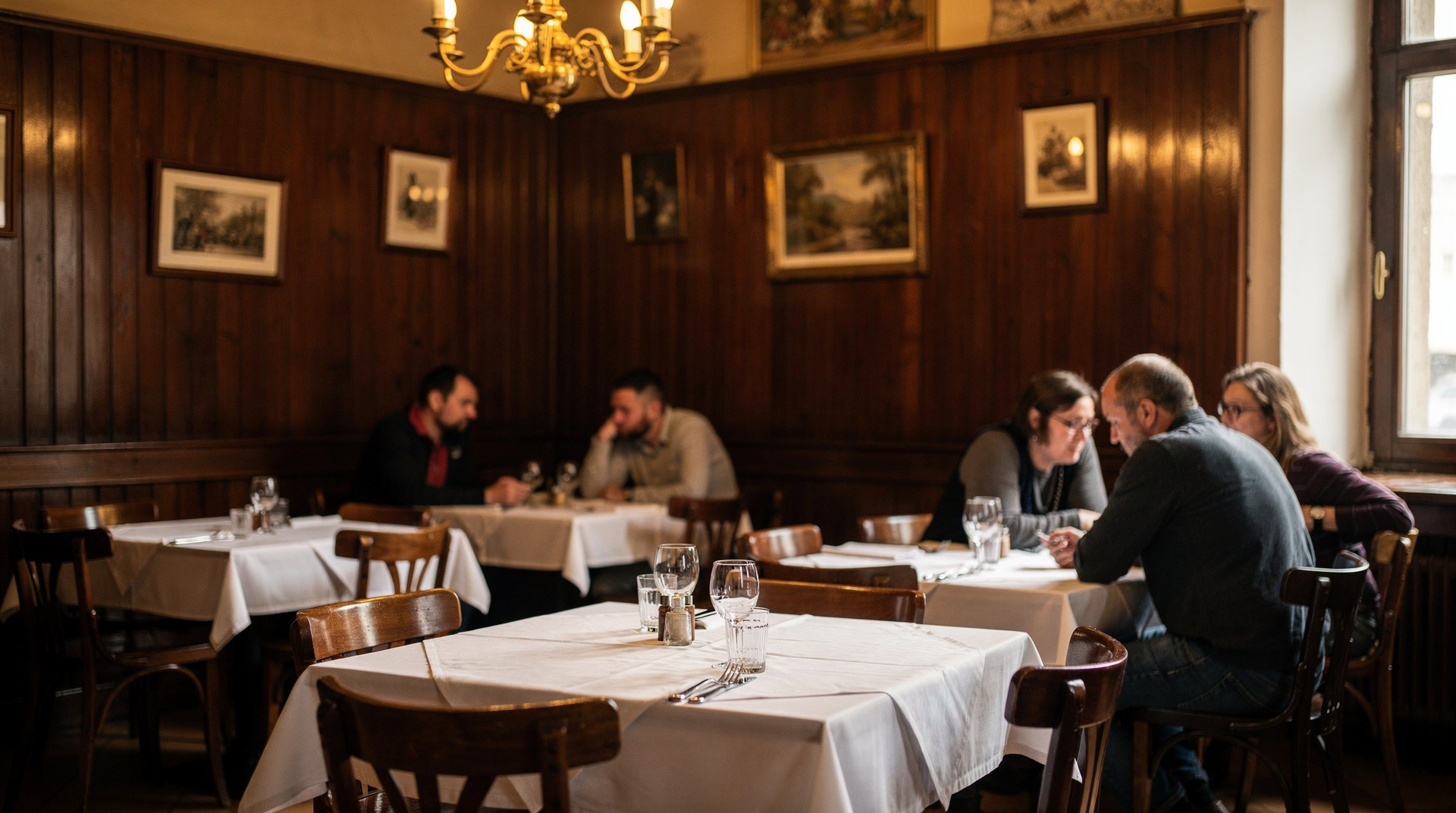
Café Drechsler — on the market itself, a classic Kaffeehaus that stays open through the night on weekends (until around 05:00 on Saturday and Sunday mornings), making it the natural last stop for night-owls and the first stop for market vendors setting up at dawn. Art Nouveau interior, good Viennese breakfast, strong coffee, and a window seat that is perfect for watching the market come to life.
A guided Naschmarkt food tasting tour takes you through the stalls with a guide who explains the provenance of the produce, the history of individual vendors, and the way the market has changed over the past generation — and lets you sample things you might otherwise walk past. The best way to understand the market’s geography and character in an hour, particularly for a first visit. The Naschmarkt eating guide has a longer stall-by-stall rundown for a self-guided visit.
How to graze the market without wasting it
The easiest mistake is to treat the Naschmarkt like a restaurant street and sit down at the first table you see. The market rewards a slower, more curious approach. Walk the whole length once without buying anything, then turn around and shop on the way back. You will have seen which stalls are busy with local shoppers, which counters have the freshest-looking produce, and which stands are mostly selling to people carrying cameras. Locals tend to buy their cheese, olives and bread in small amounts, so do the same: ask for a taste, buy a little, and move on.
Come hungry but not starving, and pace yourself. A bite of Leberkäse at one counter, a handful of dried fruit at another, a few olives and a piece of cheese to follow — that is a better lunch than a single large plate. If you want to understand the Austrian side of what you are eating, the Vienna food guide explains the dishes behind the names on the chalkboards, and the Naschmarkt eating guide is useful when you want a plan rather than improvisation.
Ask questions. Vendors who are not rushed will usually tell you where something comes from, how to store it and what it goes with. This is part of the pleasure of a working market, and it is the reason a weekday morning, before the lunch crowd, is often more rewarding than a packed Saturday. If you are curious about the wine that goes with a market picnic, the Grüner Veltliner guide and the Heuriger guide will point you towards bottles worth looking for, and the guide to Vienna’s pastry traditions is the natural next step if you find yourself craving something sweet after all that savoury grazing.
Coffee and a proper sit-down
Between stalls, a coffee break is part of the rhythm. Café Drechsler is the obvious choice on the market itself, but the wider district has plenty of other options. If you are new to Viennese coffee culture, read the Viennese coffee house guide and the notes on coffee house etiquette before you go: knowing how to order, and that nobody will hurry you out of your seat, makes the experience far more relaxing. For a broader list of places worth a detour, the best coffee houses in Vienna is a good companion to a market morning.
Buying things to take home
Spices, dried fruit, nuts, preserved goods and cheese are the obvious souvenirs, and they travel better than most things sold in the centre. Think about what will survive your journey and what you are allowed to carry across a border, and buy the delicate items last. Vendors are used to visitors asking for smaller portions, so you do not need to commit to a large bag of anything. If you are tempted by the souvenir sweets you see in the tourist-oriented shops, compare them with the advice in the Mozartkugel guide before spending money.
Food tours in the broader area
The Naschmarkt is a natural starting point for broader food walks through the 4th-6th districts. The best of Vienna food tour often begins or ends here and covers the surrounding streets’ restaurants, coffee houses, and the bakery culture that is distinct to this part of the city. For a wider comparison of Vienna’s food tour options beyond the Naschmarkt itself, see the Vienna food tours compared guide and the general Vienna food guide.
Otto Wagner architecture
The Naschmarkt sits between two Otto Wagner buildings from 1898 that are among the finest examples of Viennese Jugendstil residential architecture — the Majolikahaus (Majolica House) and the Haus mit den Medaillons (Medallion House), both on Linke Wienzeile.
The Majolikahaus is covered in flower-pattern ceramic tiles in pink and green, designed by Wagner with the Secession artist Kolo Moser; the Medallion House next door is plainer but decorated with gilded medallion roundels at each floor level. They were designed as a pair, intended as a statement about what modern Viennese apartment architecture could look like if it abandoned historicism. Stand on the market side and look up: few 19th-century apartment facades in Vienna are more immediately arresting.
The Secession building is a short walk north from the market — the exhibition hall built in 1897 by Joseph Olbrich with the famous gilded sphere on the roof (Viennese critics called it the “golden cabbage”) and Klimt’s Beethoven Frieze in the basement. Admission is reasonable; the Klimt frieze alone is worth the detour.
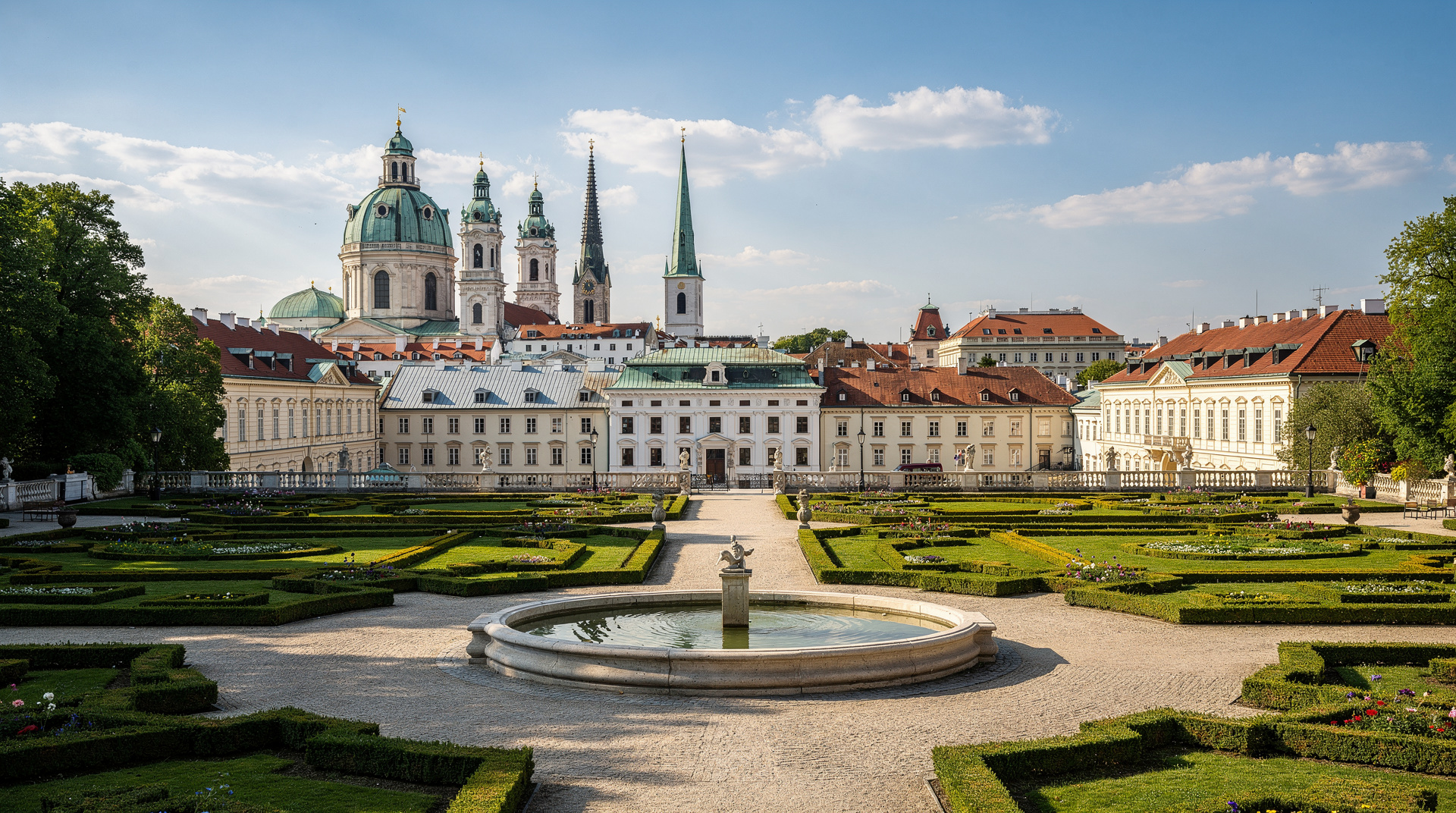
The Karlskirche (St. Charles’s Church, 1737) stands east on Karlsplatz — a baroque masterpiece by Fischer von Erlach, combining a Greek temple facade with twin columns modelled on Trajan’s Column in Rome. A panoramic lift runs inside one of the columns to the dome level, providing a close view of Johann Michael Rottmayr’s ceiling fresco and a rooftop panorama over the Ringstrasse.
Turning the architecture into a walk
The buildings near the market make a short, satisfying walk in themselves, and they connect naturally to the rest of Vienna’s turn-of-the-century story. If the Secession building catches your interest, the Klimt trail follows the painter across the city, and the Schiele and Vienna Secession guide sets the movement in context. A first-hand account of walking that route is in the Klimt trail diary. For the grander nineteenth-century buildings that Wagner and his generation were reacting against, the Ringstrasse architecture walk and the Ringstrasse destination page show you what modern Vienna was arguing with.
Take your time looking up. Most visitors keep their eyes on the stalls and miss the facades entirely, so a few minutes standing across the street with your head tilted back is the cheapest way to add depth to a market visit. Photographers will find that the light on the tiles changes the character of the Majolikahaus through the day, and the market itself, with its colours and awnings, is among the easiest places in the city to take good pictures. The Vienna photography spots guide lists other places worth pairing with it.
The surrounding districts
The 4th district (Wieden) and 6th district (Mariahilf) either side of the market are more residential and less relentlessly touristy than the Innere Stadt. Mariahilfer Strasse, running north from the Naschmarkt toward the Museumsquartier, is Vienna’s main high-street shopping corridor — practical and unspectacular. The streets behind Mariahilfer — Zollergasse, Schottenfeldgasse, Amerlingstrasse, Theobaldgasse — have the independent cafés, bookshops, and neighbourhood restaurants that make the 6th district worth spending time in rather than simply passing through.
The Freihausviertel — the lanes south of the Naschmarkt around the old Freihaus complex — is one of Vienna’s more distinctive urban pockets: a network of courtyards and former working-class housing that has gradually filled with galleries, wine bars, and a quietly excellent restaurant scene that doesn’t heavily market itself to tourists.
Combining with the rest of Vienna
Mariahilfer Strasse leads directly north to the Museumsquartier, making a Naschmarkt morning and an MQ afternoon a natural full-day pairing. The market is also a short walk from the Innere Stadt via Karlsplatz, so it fits easily into a walking day that starts or ends in the historic centre. See the Vienna destination overview for how the Naschmarkt area fits into a first-time visitor’s overall itinerary.
Planning the visit around your trip
The Naschmarkt works best as a half-day, so think of it as a block you slot into a larger plan rather than a destination that fills a day. It suits a first morning, when you want something lively and informal while you adjust to the city, and it suits a last morning too, when you want to buy food to take home. Because the market is free to wander and has no ticket queue, it is also a reliable fallback when weather or tiredness has ruined another plan.
If you are building a schedule, the 3-day itinerary and the weekend itinerary both leave room for a market morning, and the 5-day itinerary gives you the breathing space to do it on a Saturday. The how many days in Vienna guide helps you decide whether the market earns a slot at all on a short stay.
Season changes the feel of the place. The best time to visit Vienna covers the broader picture, while the Vienna in autumn guide is especially relevant if you like seasonal produce and the market’s harvest atmosphere. On a cold day, plan more time in the cafés and less outdoors; on a warm one, linger at the outdoor tables.
Getting there is simple. Both nearby U-Bahn stations are covered in the Vienna public transport guide, which explains how the network works if you are still deciding which ticket to buy. For a personal account of a Saturday spent here, see the Naschmarkt Saturday morning diary, which captures the mood better than any list of stalls can.
Going with company
The market suits almost any travelling style. Couples can treat it as a relaxed shared tasting session, groups can split up and reconvene with different things to try, and solo visitors will find the counters friendly and easy to join; the solo travel guide has more on how comfortable the city is on your own. Families with children usually enjoy the colours and the chance to sample, though the narrow aisles get crowded at peak times, so keep younger children close. If you are travelling with a budget in mind, grazing at the stalls is one of the more affordable ways to eat well, and the Vienna on a budget guide shows where else the savings are.
Top experiences
Bookable activities with verified prices and instant confirmation on GetYourGuide.