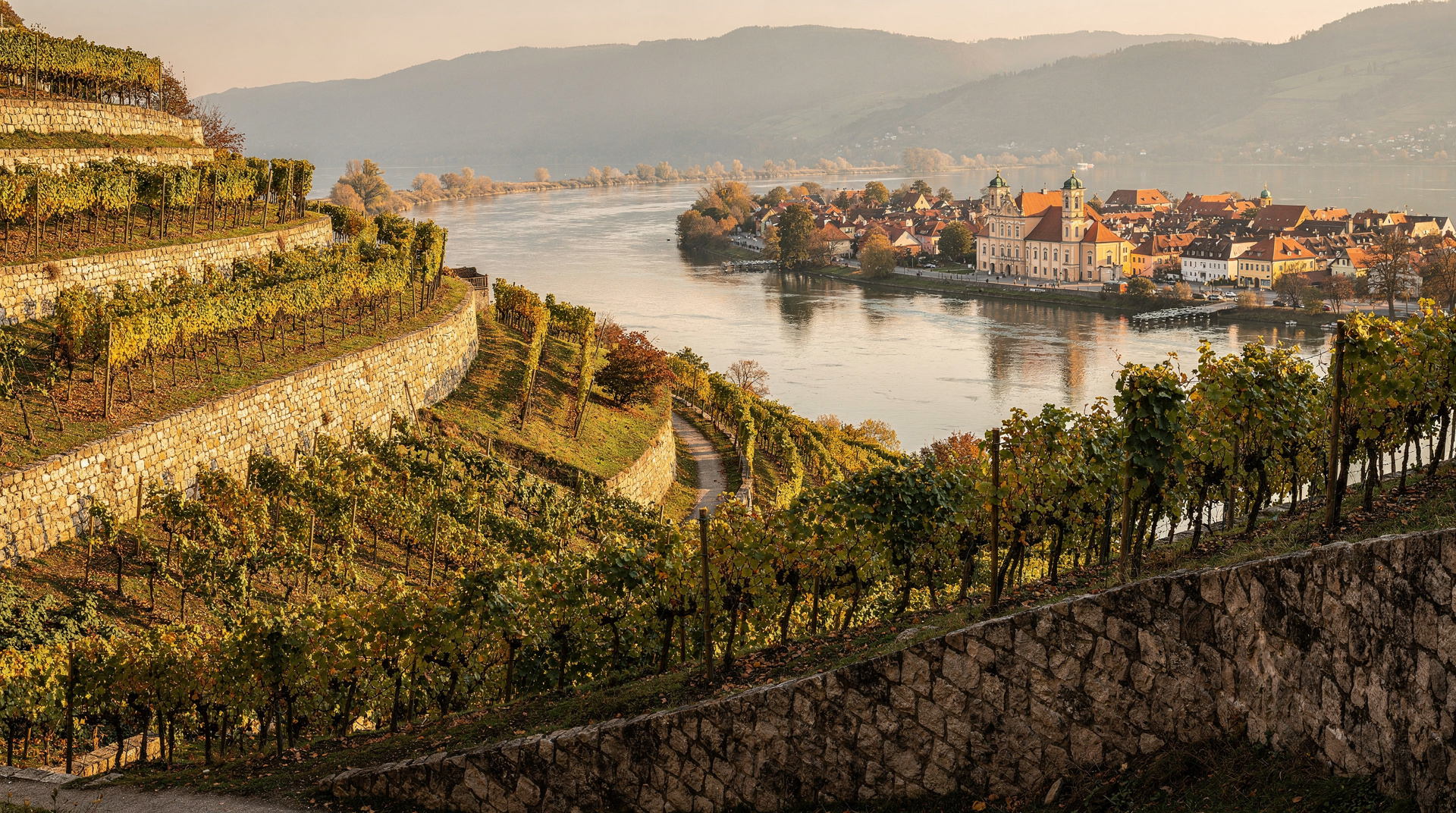
Krems
Krems an der Donau: the Wachau's wine capital, medieval old town, boat terminus and starting point for the valley's best wine routes. Day trip from Vienna.
Vienna: Day Tour to Wachau Valley
Quick facts
- Distance from Vienna
- 75 km (1 hour by train)
- Train
- Wien Franz-Josefs-Bahnhof → Krems, hourly, 1h
- Main draw
- Wine, medieval old town, boat arrival from Melk
- Currency
- Euro (€)
Wachau’s wine capital
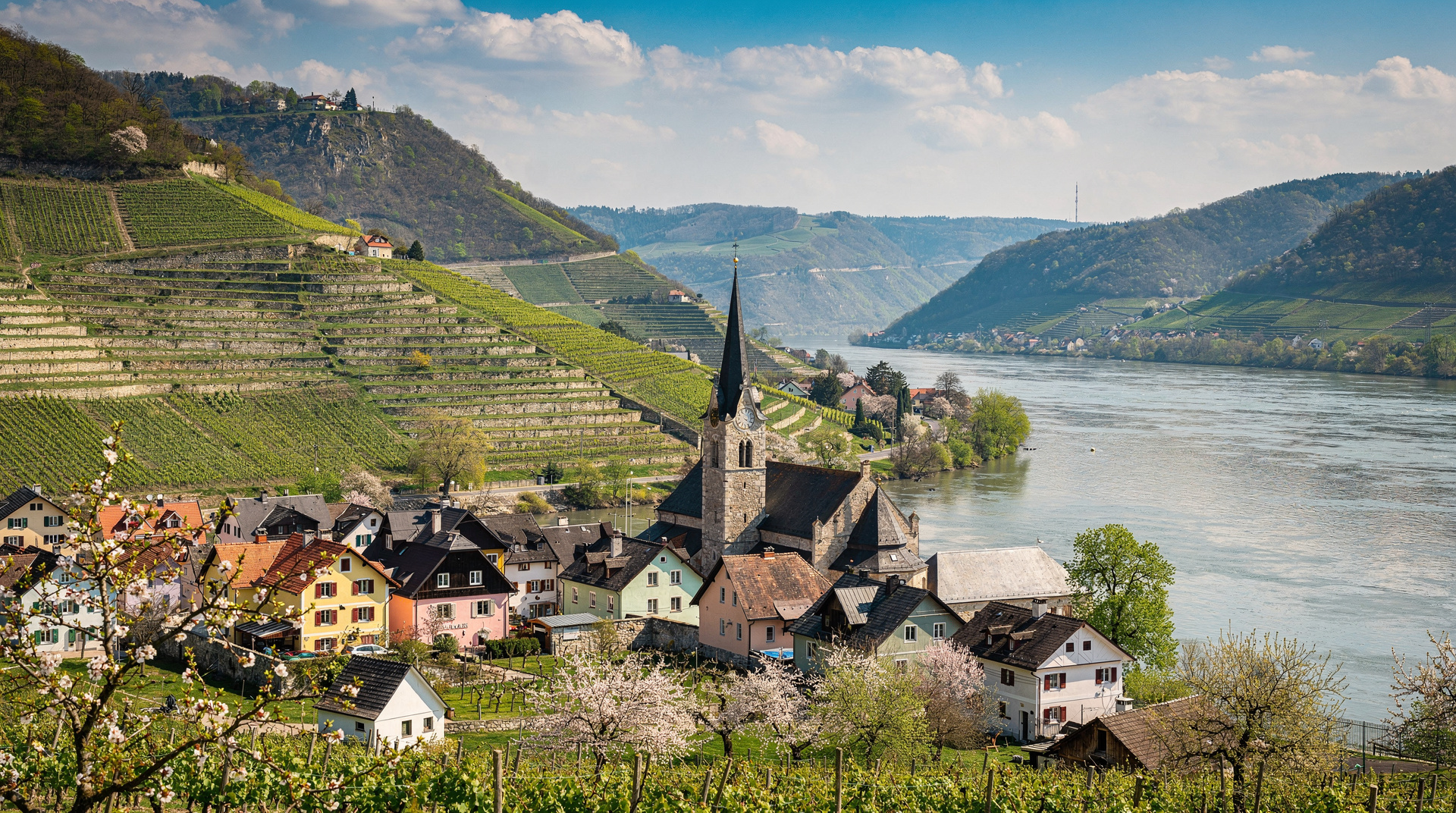
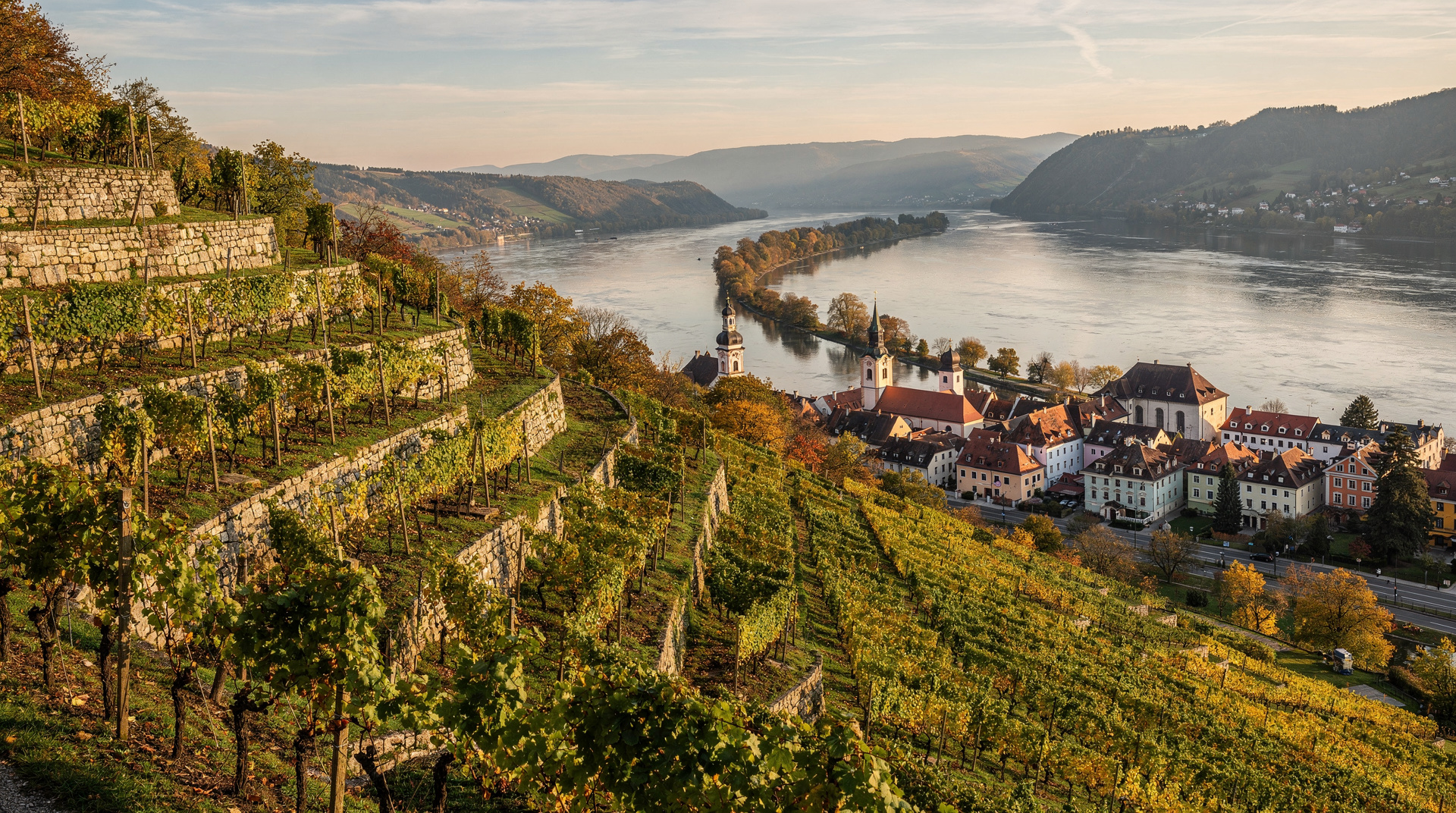
Krems an der Donau sits at the eastern end of the Wachau Valley, where the river breaks out of the narrow gorge and broadens into the flat Danube plain east of Vienna. It is the Wachau’s largest town — a working city of some 25,000 people rather than a picture-postcard village — and the place where the valley’s wine industry has its commercial centre, its schools, and its largest cooperative winery. For visitors doing the classic Wachau day trip, Krems is almost always the final destination: the eastern terminus of the Danube boat from Melk, the place where lunch happens, where a glass of Grüner Veltliner is drunk in a courtyard with the medieval gate in view, and where the train back to Vienna departs.
For visitors arriving by boat from Melk, the approach to Krems from the water is the best version of the town — the Danube widening, the rooflines of the Altstadt visible through the trees on the bank, the medieval tower of the Steiner Tor framing the skyline. Arriving by train is perfectly serviceable but misses this geography.
| Distance from Vienna | 75 km (1 hour by train, or by boat from Melk) |
| Cost | Train around €15–20 return; wine tastings from around €10–15 |
| Time needed | Half a day; a full day if combined with Melk and the boat |
| Getting there | Train from Wien Franz-Josefs-Bahnhof, or boat from Melk |
| Best time | September–October harvest, or any weekday for a quieter old town |
Getting there
By train: Wien Franz-Josefs-Bahnhof (note: not Hauptbahnhof — the relevant station is in the 9th district near the Ring) to Krems Bahnhof, approximately 1 hour, with hourly departures. The station is about 15 minutes’ walk from the old town, or a short local bus ride. The Franz-Josefs-Bahnhof itself is a fine piece of late 19th-century railway architecture, worth a moment’s attention before boarding.
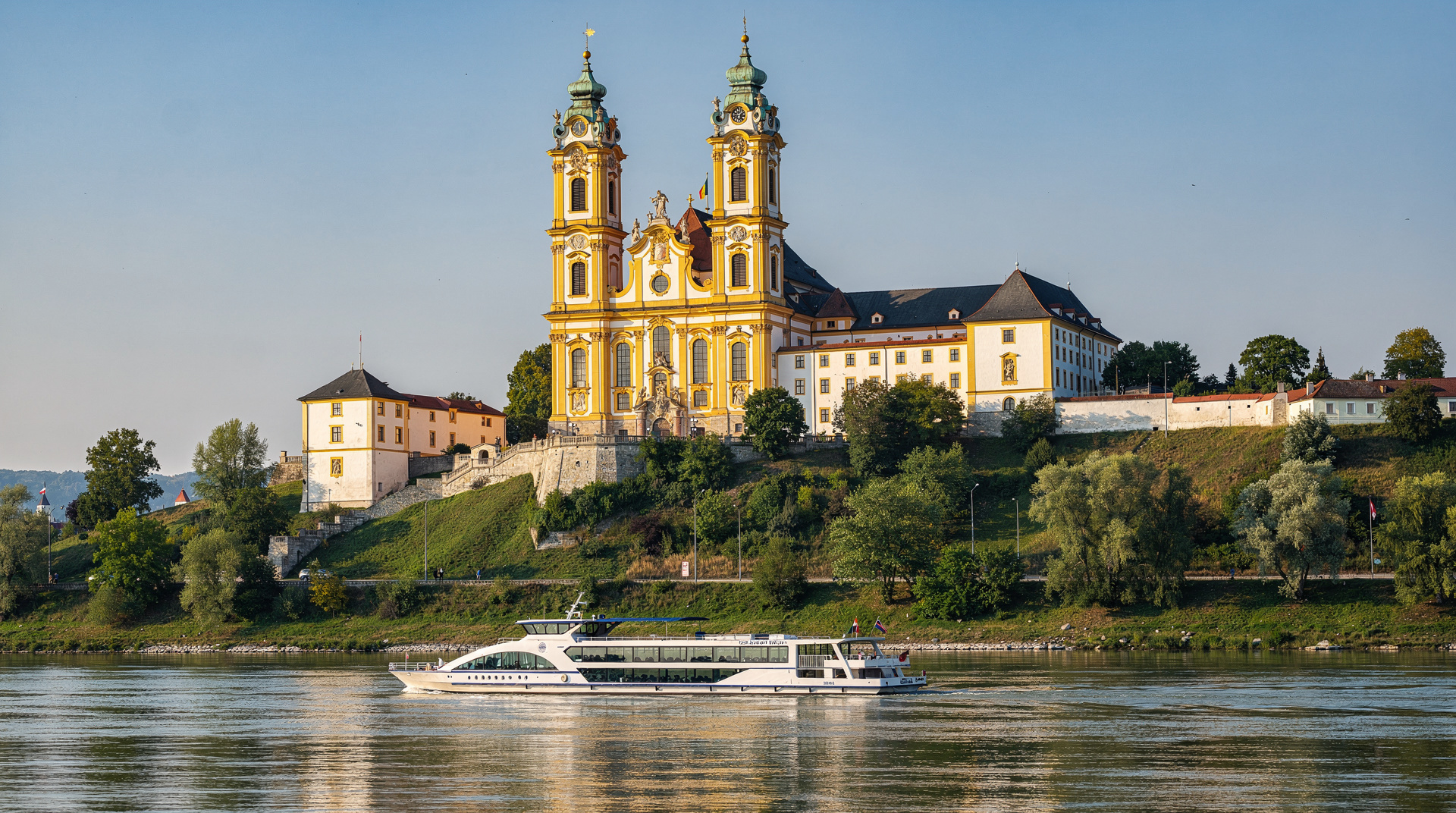
As part of the Wachau circuit: Most visitors arrive in Krems by Danube boat from Melk — the downstream journey takes approximately 1h45 through the most scenic stretch of the entire valley. See Melk for the circuit logistics and boat booking details.
The Vienna day tour to Wachau Valley includes Krems as part of a broader valley circuit, covering the highlights without requiring self-organisation of train and boat connections. For the classic self-guided version of the route, the Wachau day trip from Vienna guide walks through the train/boat combination step by step, and Melk has the practical detail on the boat schedule from the other end of the circuit.
The old town
The Altstadt of Krems is compact and walkable in 45 minutes at an easy pace. The main axis, Landstrasse, is lined with baroque facades from the 17th and 18th centuries — some restored, some pleasingly worn — and leads from the Steiner Tor (the medieval town gate, 1480, with its distinctive stepped gable) at the west end to the Piaristenkirche at the east. The Steiner Tor is Krems’s most-photographed landmark and looks best from a slight distance, framed by the townhouses on either side.
The Dominikanerkirche — a 13th-century Dominican church that was dissolved under Joseph II in 1785 and subsequently converted into Krems’s municipal art gallery (Kunstmeile Krems) — is one of the more unusual gallery spaces in Austria: a Gothic hall with the original stone vaulting intact, now hosting contemporary art exhibitions. The combination of medieval architecture and contemporary Austrian art is more successful than it sounds.
Stein an der Donau, technically a separate municipality but merged administratively with Krems in 1938, lies 1 km west along the Danube shore and has a quieter, more residential character. The walk along the waterfront between Krems and Stein takes 20 minutes and passes the best of the riverfront architecture — including the 15th-century Mauthaus (toll house) and the Pfarrkirche St. Nikolaus with its detached Romanesque charnel house. Stein feels like a smaller, less visited version of Krems, which makes it pleasant to walk if you have time after the main old town circuit.
How to walk it
Treat the old town as a loose loop rather than a checklist. Start at the Steiner Tor, drift along Landstrasse with your eyes on the upper storeys rather than the shop windows, and let the side lanes pull you off the main axis whenever a courtyard door stands open. Many of the most rewarding details in Krems are small: a carved doorframe, a worn stair, a vine trained across a wall. None of them has a sign, and that is part of the pleasure. The town rewards slowness, and a visitor who treats it as a quick photo stop will leave with the impression of a pleasant but ordinary Austrian town, while one who lingers picks up how much of the Wachau’s trading history is still legible in the stonework.
It also helps to remember that Krems is a living town, not a museum. Locals shop, bank and drink coffee here, which gives the streets an easy, unperformed atmosphere that the smaller, more tourist-oriented villages upstream sometimes lack. If you enjoy the café culture of the capital, the Viennese coffee house guide will have you in the right frame of mind for a slow coffee before the wine begins.
Wine in Krems
Krems is the commercial heart of both Wachau and Kremstal wine production — two distinct DAC wine regions that share the Danube landscape but produce different wine styles from different soils. The Winzer Krems cooperative winery, established in 1938, is based just outside the old town and offers tastings, cellar tours, and a large wine shop that functions as the easiest entry point for visitors without a specific producer in mind. Their range spans the full spectrum from crisp Steinfeder to rich Smaragd, and the prices at the cooperative are typically more accessible than at the boutique estates.
The Nikolaihof winery — claimed to be the oldest winery in Austria, with origins going back to the Roman period on the same site — is in Mautern, directly across the Danube from Krems (accessible by the local ferry). It is a biodynamic estate of considerable reputation, and its wines are among the most philosophically serious in the Wachau — concentrated, mineral, age-worthy. Visits are possible by arrangement.
Lenz Moser — the family associated with the High Culture (Hochkultur) training system used in many Austrian vineyards — also has a presence in the Kremstal; the wider region includes producers whose names appear consistently in top Austrian wine lists.
The Wachau Valley day tour with wine tasting pairs the valley’s historic sites with organised winery visits — the practical choice if wine is the primary motivation for the day trip and you want to access producers that are otherwise difficult to visit without a car or appointment. The Wachau wine route guide profiles the DAC categories and top producers in more depth than fits here.
Tasting without losing the afternoon
A good tasting is a matter of pacing. Begin with the lighter, fresher wines and work toward the richer ones, drink water between pours, and eat something substantial before the second or third winery rather than after. If you are curious about the grape that defines the valley, the Grüner Veltliner guide explains what to look for in the glass, and the Wachau wine route guide helps you decide which style to prioritise. Visitors who want to see how the same grape is celebrated closer to the capital can compare notes later with the heuriger guide for Vienna, while those drawn to a different wine landscape entirely should look at the Burgenland wine route guide.
Remember that you still have a journey home. Whether that is the train to Franz-Josefs-Bahnhof or a bus-and-train combination, build in a margin so that a final glass never turns into a missed connection. The Vienna public transport guide covers how to get from the station back to your accommodation once you arrive.
Krems as a base for the wider Wachau
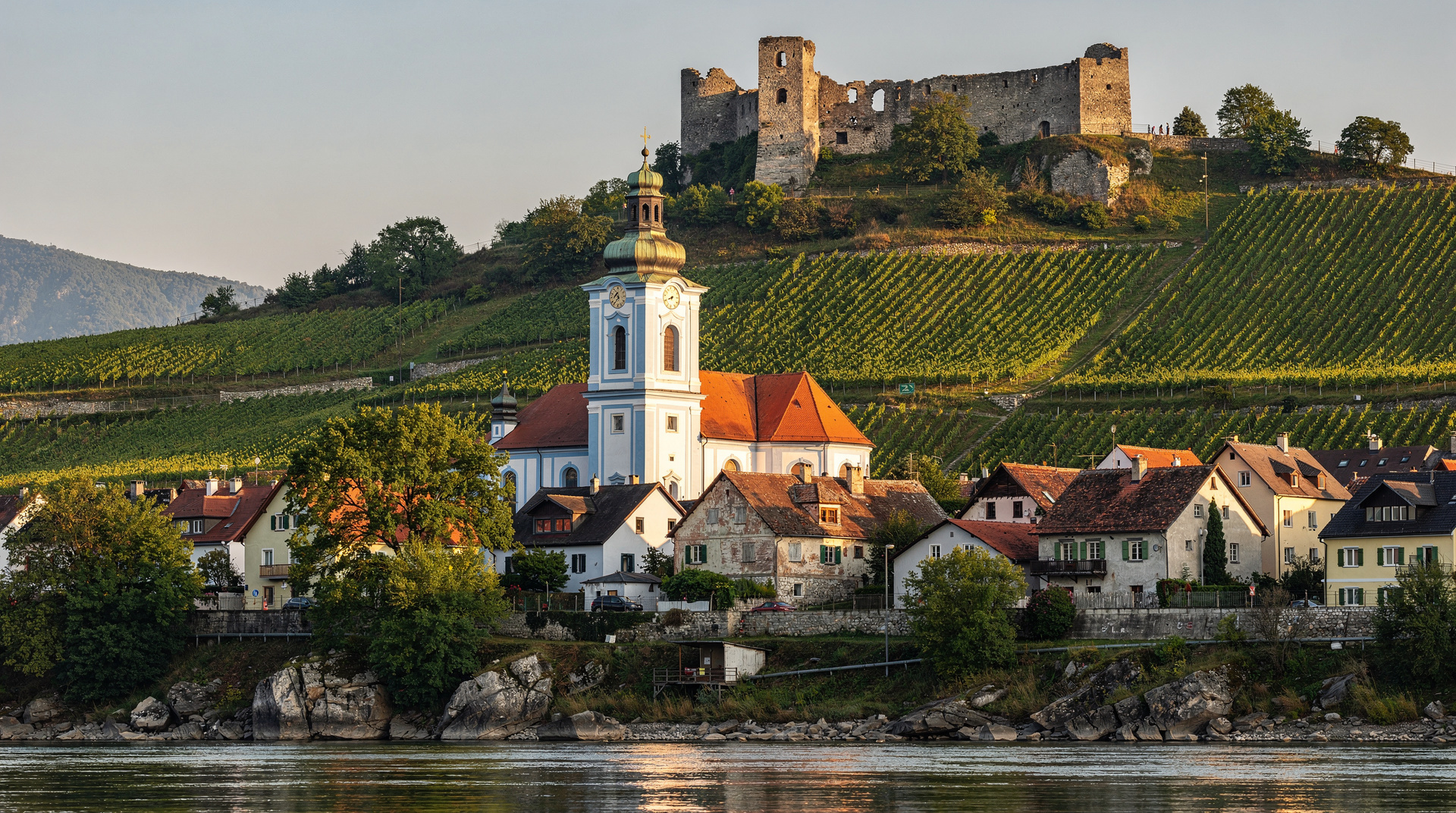
Krems makes a practical base or starting point for the rest of the valley. Dürnstein, with its blue-towered abbey church and the ruined castle associated with the imprisonment of Richard I of England, is a short boat or bus ride upstream and is the single most photographed village in the Wachau. Aggstein, further along the valley, has the most dramatic ruined castle on the Danube, perched on a cliff above the river.
Both fit naturally into a day that starts or ends in Krems. For the fuller picture of the valley as a whole — vineyards, castles, and the boat and cycling routes that connect them — the Wachau Valley destination overview is the best starting point, and the Melk to Krems boat trip guide has the specific timetable logic for combining the two towns in one day.
Shaping your day
The shape of a Krems visit depends on how you arrive and what you want from it. Three versions work well.
The boat-and-lunch day. Take the river from Melk, arrive in Krems with the town spread along the bank, walk the old town, eat a long lunch, and take the train back. This is the classic version, and the Wachau Danube cruise guide and the broader Danube river cruise guide explain how the boat fits into the rest of the valley. If you begin at the abbey, the Melk Abbey day trip guide is the natural companion.
The wine-first half-day. Skip the early sights, go straight to the cooperative or a smaller estate, and spend the rest of the time in the courtyards and wine bars of the Altstadt. This suits travellers who already know they care more about the glass than the monuments.
The slow autumn visit. The harvest season gives the valley its richest atmosphere. The blog account of autumn in the Wachau and the guide to Vienna in autumn capture the mood, while when to visit Vienna helps you weigh the seasons. Spring has its own appeal, described in Vienna in spring.
Travellers who prefer to move under their own power should read the Wachau by bike diary, which shows how the valley feels at cycling pace, with Krems as a natural start or finish.
Fitting Krems into a longer stay
Krems sits comfortably inside a wider Vienna trip. Anyone choosing between excursions will find the best day trips from Vienna useful for comparison, and the Vienna 3-day itinerary shows where a valley day can slot in without exhausting you. If you are still deciding how long to stay in the capital, how many days in Vienna puts the question in context. Budget-minded readers can pair the trip with the Vienna on a budget guide to keep the cost of the day under control.
Where to eat and drink
Zum Wachauer on Untere Landstrasse is the obvious choice for traditional Wachau cooking — Marillenkuchen (apricot cake, the regional speciality), apricot dumplings, and Wachau fish dishes from the Danube, with a wine list focused on local producers. The atmosphere is straightforwardly Austrian; this is where boaters and cyclists end their day.
Restaurant Jell in Stein an der Donau is the most respected kitchen in the area — using Wachau produce with precision and pairing with local wines from a carefully curated list. Worth the 20-minute walk along the waterfront from Krems.
The Gozzoburg — a 13th-century merchant’s palace in the centre of the old town, now partly converted — has a wine bar in its courtyard that is one of the most atmospheric settings in the valley for an afternoon glass of Grüner Veltliner. The courtyard walls date from the medieval trading city at its peak; the wine in the glass comes from vines on the slopes visible above the rooftops. Few places in Austria make the connection between landscape and liquid as directly legible.
Top experiences
Bookable activities with verified prices and instant confirmation on GetYourGuide.