Baden bei Wien
Baden bei Wien: Beethoven's summer retreat, imperial thermal baths, the Kurpark, and Helenental valley. A relaxed half-day from Vienna by suburban train.
Vienna Woods and Mayerling Half-Day Tour from Vienna
Quick facts
- Distance from Vienna
- 25 km (30 min by S-Bahn S1)
- Train
- Wien Oper/Karlsplatz → Baden, Badner Bahn, 60 min
- Main draw
- Thermal spa, Kurpark, Beethoven house, Helenental
- Currency
- Euro (€)
Baden: Vienna’s thermal retreat
Baden bei Wien — not to be confused with Baden-Baden in Germany, nor the Swiss canton of Aargau — was the summer capital of the Habsburg court for well over a century. Emperor Franz I moved his court here every summer from 1803 onward, and the entire Viennese aristocracy followed in his wake, turning this small spa town into a seasonal second Vienna. The architecture of the town reflects that extraordinary period: the formal Kurpark, the casino (Austria’s oldest, founded 1812), the neoclassical townhouses lining the streets between the Kurpark and the old centre — all built or rebuilt in the early 19th century when Baden was simultaneously a spa resort and the seat of imperial power.
| Where | 25 km south of Vienna, edge of the Vienna Woods |
| Cost | Free town centre; thermal pool entry has a separate fee |
| Time needed | Half a day; a full day with the Helenental walk |
| Getting there | Badner Bahn from Wien Oper/Karlsplatz, around 60 min |
| Best time | May–September for the outdoor pools; October for the Helenental colours |
Ludwig van Beethoven spent 15 successive summers here, renting apartments in over 30 different Baden houses during visits that stretched from the 1800s to the 1820s. He composed the Ninth Symphony during his stays — working through the deafness that meant he could hear the music only in his imagination, walking the paths through the Helenental valley that are still walkable today. Mozart, Schubert, Grillparzer, and Brahms all passed through on shorter visits; Baden’s association with Viennese high culture is as deep as any small town in Austria.
The thermal springs that underlie Baden’s appeal have been used since Roman times. The town was known as Aquae Pannoniae in the Roman period — warm sulphurous water emerging naturally at around 36°C from a depth of several hundred metres below the surface. The modern facilities at the Thermalstrandbad and the Römertherme are immeasurably more comfortable than anything Roman legionaries knew, but the water itself is chemically unchanged — the same sulphurous warmth that drew the first bathers two thousand years ago.
Getting there
The Badner Bahn — a regional tram-train line with its own dedicated tracks — departs from a stop directly adjacent to the Wien Oper/Karlsplatz in the city centre and runs non-stop (with suburban stops en route) to Baden’s main station in approximately 60 minutes. It’s a direct service with departures every 15–30 minutes, making it by far the most convenient option from the city centre. The line’s southern terminus is right in Baden’s pedestrian zone, a short walk from the Kurpark.
The S-Bahn S1 from Wien Mitte/Landstrasse runs to Baden in roughly 30 minutes — faster, but it departs from an S-Bahn station rather than the city centre, which means the total journey time is comparable. For most visitors staying centrally in Vienna, the Badner Bahn is the more convenient choice.
The Vienna Woods and Mayerling half-day tour can be extended or adjusted to include Baden; it covers the southwestern Vienna region and makes a natural pairing with a Baden afternoon.
What to do
The Kurpark is the spatial and social heart of Baden — a formal park running along the Schwechat river with a pleasant 2 km promenade through mature trees, manicured flower beds, and the principal civic buildings of the spa era. The Casino Baden at the park’s edge is Austria’s oldest casino, in continuous operation since 1812 and still worth a look for the interior alone. The Congress House beyond it hosts concerts and events year-round. The Beethovendenkmal — a bronze statue of the composer in typically dramatic pose — stands near the park’s central fountain, and the bench-lined paths around it are where Beethoven himself would have walked on his daily constitutional.
Beethoven Museum (Rathausgasse) — the house on Rathausgasse where Beethoven stayed during multiple summers and worked on the Ninth Symphony is now a small but genuinely atmospheric museum. The rooms have been restored to approximate their appearance in the early 19th century, and the exhibits cover his specific connection to Baden with letters, manuscripts, and personal objects. For anyone who has visited the larger Beethoven memorials in Vienna, this is the more intimate and focused complement — the place where the work actually happened rather than a general biography museum.
Thermalstrandbad — the outdoor thermal pool complex, open from late spring through to early autumn (the exact season varies). This is the largest outdoor thermal pool in Austria, with a main pool held at a comfortable 34°C, a children’s section with water slides, and a generous sun terrace. A full morning or afternoon here — swimming in genuinely warm mineral water in the open air — pairs extremely well with a light lunch at one of the cafés along the Kurpark. The atmosphere is resolutely unhurried: Austrian families on weekend breaks, retired Viennese couples, the occasional athletic visitor swimming lengths in the cooler competition pool beside the main thermal water.
Römertherme — the year-round indoor thermal spa in the town centre, housed in a purpose-built modern facility a short walk from the Kurpark. More wellness-focused than the outdoor Thermalstrandbad, with a full range of treatment rooms, saunas, and steam rooms alongside the main pool areas. This is the option in colder months, when the outdoor facility is closed.
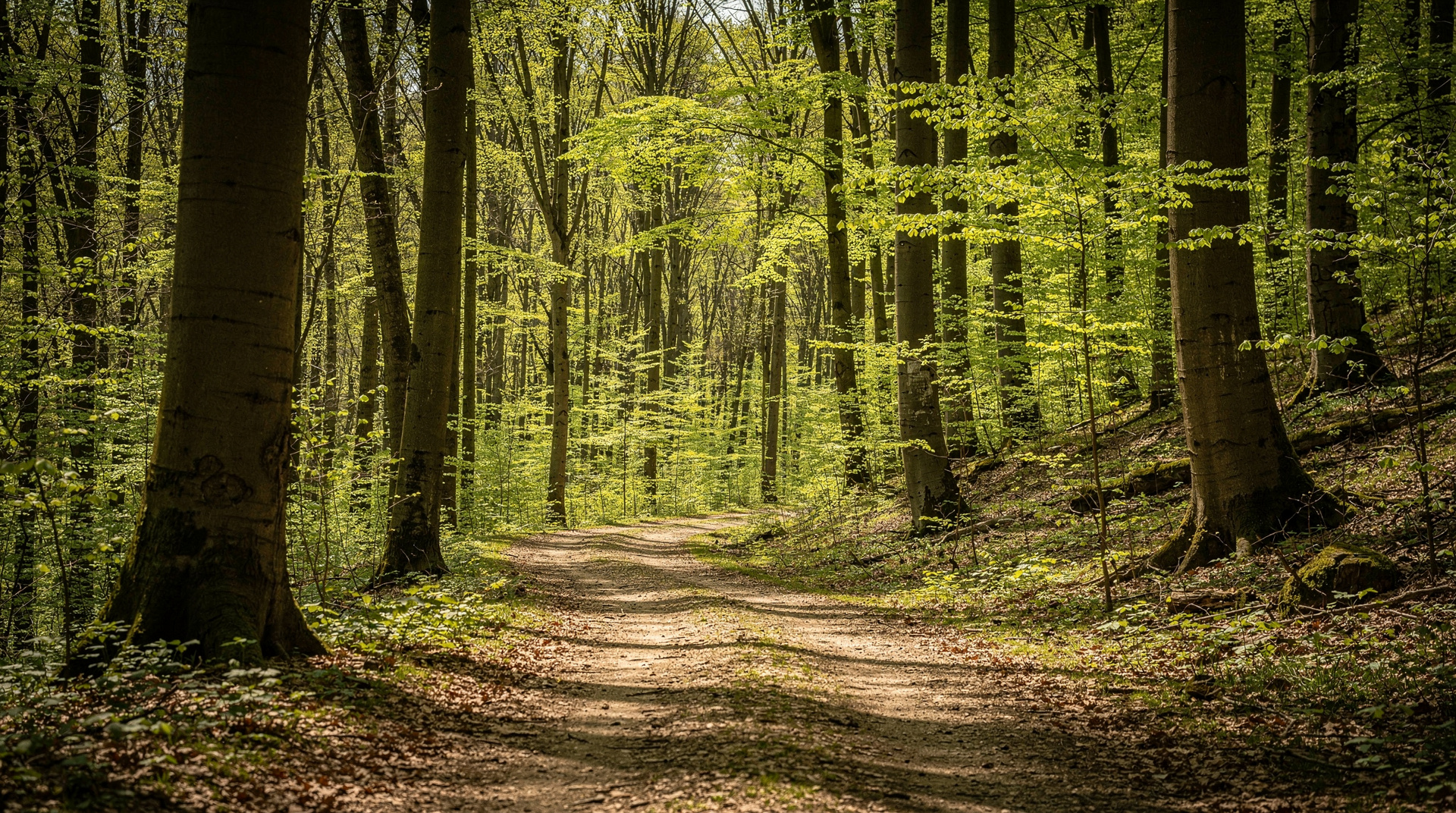
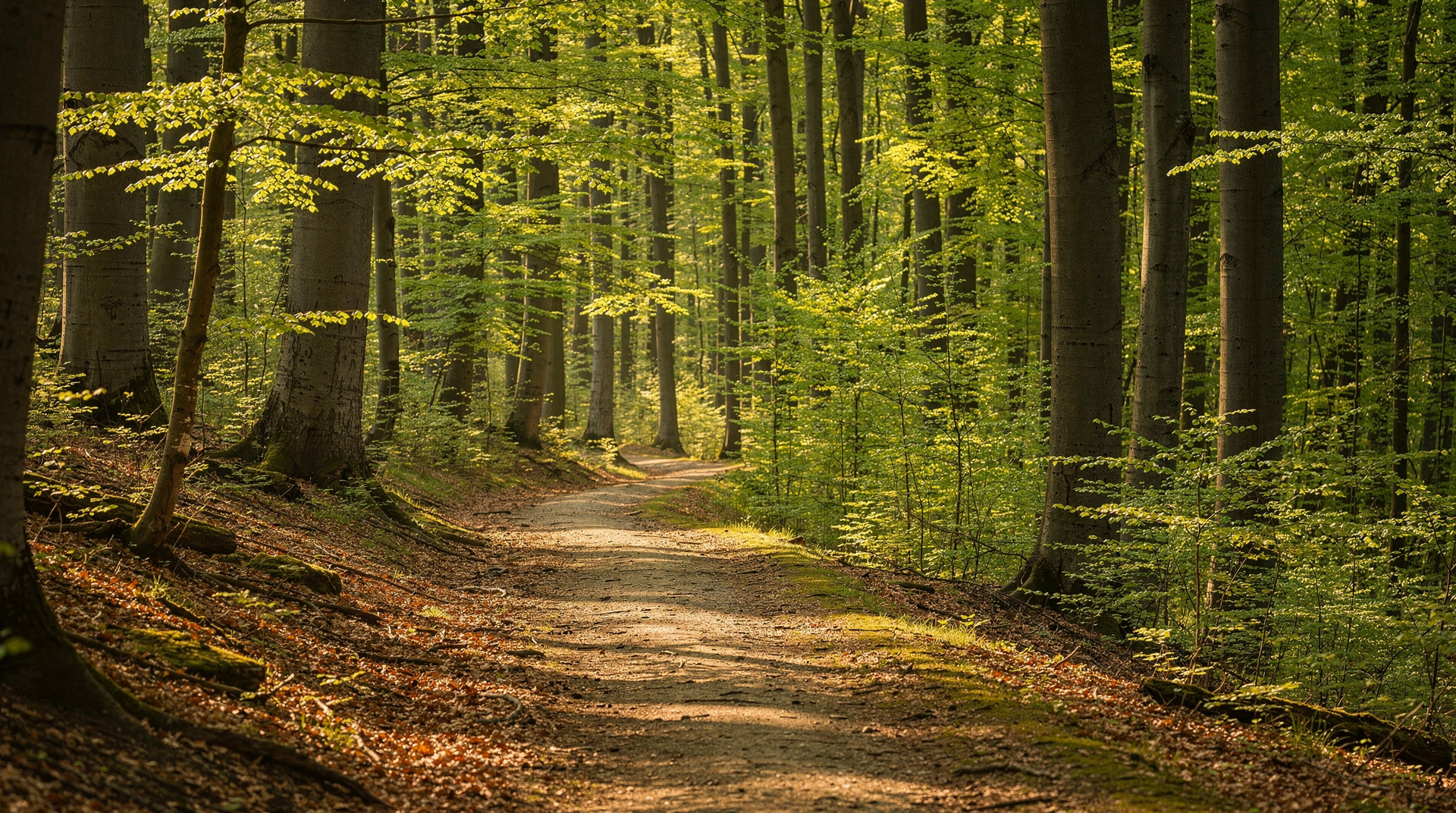
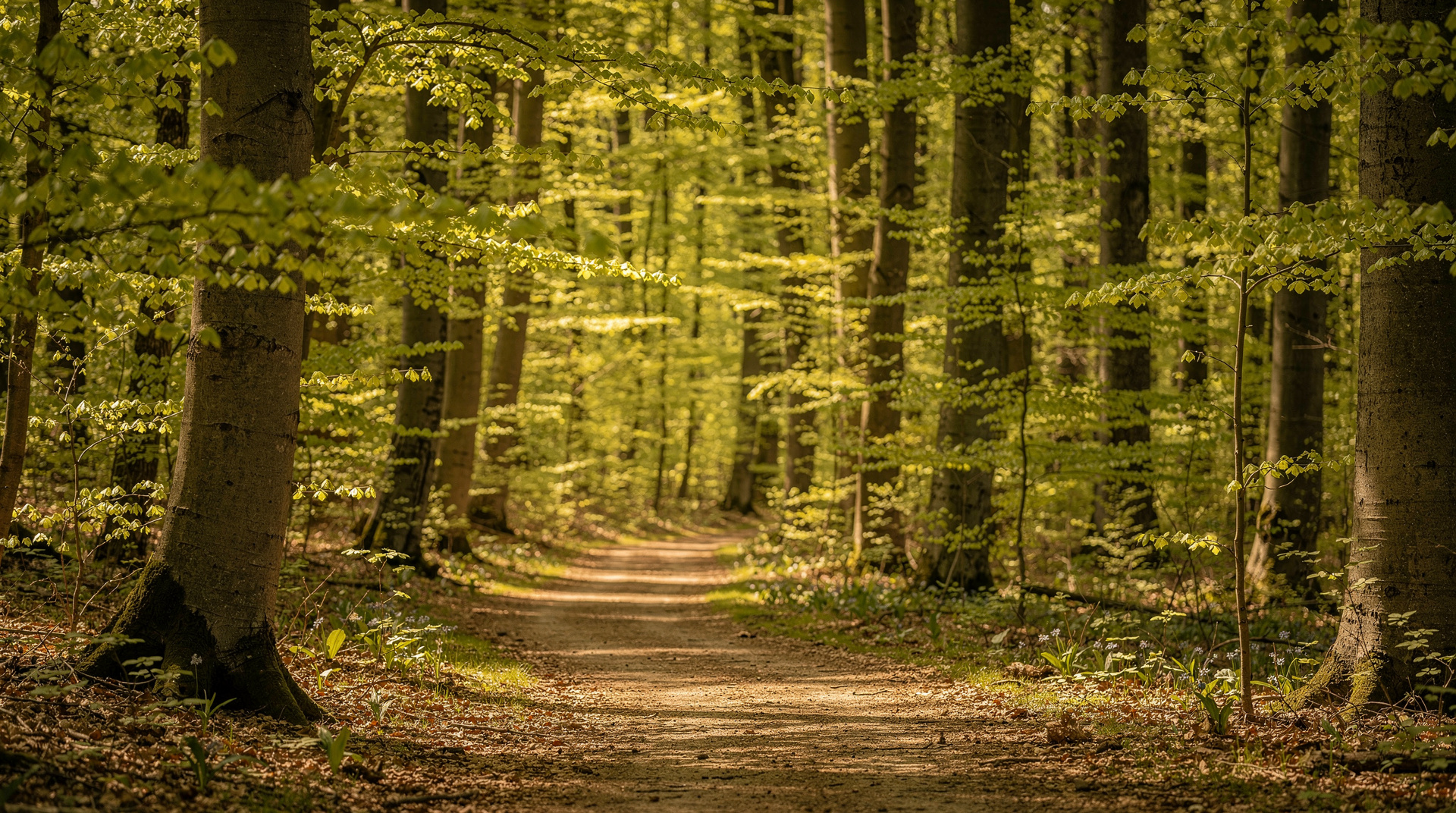
Helenental valley — perhaps the finest easy walk in the Vienna region. The Helenental is a gorge carved by the Schwechat river, beginning at the edge of Baden’s built-up area and extending several kilometres into the forested hills to the southwest.
The path along the river (roughly 1.5–2 hours return at an easy pace) passes through woodland with the water audible throughout, and along the way reveals two ruined medieval castles on the slopes above the gorge: Rauheneck on a crag directly above the path, and Rauhenstein further in, both visible through the trees and both dating from the medieval period. Neither is open or accessible, but they frame the walk beautifully — exactly the combination of natural scenery and romantic ruin that drew Beethoven and Schubert to Baden in the first place.
The town itself
Baden’s old town centre — the pedestrianised Hauptplatz and the streets radiating from it — is modest in scale but architecturally coherent, most of it dating from the rebuilding that followed a major fire in 1812. The neoclassical facades that line Pfarrgasse and Kaiser-Franz-Ring are unusually consistent and well-maintained for a small Austrian provincial town. The Pfarrkirche St. Stephan on the main square has a Romanesque core but was largely rebuilt in baroque style; the interior is calmer and less ornate than comparable Vienna churches, which makes it a pleasant stop.
The town’s wine culture is less celebrated than the thermal baths but worth noting: Baden sits at the northern edge of the Thermenregion, one of Lower Austria’s principal wine regions, and the area produces decent Pinot Noir (Blauburgunder) and the local Badener Gemischter Satz (a field blend equivalent to Vienna’s Gemischter Satz). Several wine shops and Heurigen (wine taverns) in the surrounding villages serve local wines alongside the inevitable Apfelstrudel. If you would rather have the tasting arranged for you, a half-day countryside wine tour with a meal from Vienna covers similar ground without any planning on your side.
When to visit
The outdoor thermal pool (open roughly May to September) is the main seasonal draw and the principal reason most visitors choose summer. But Baden rewards visits at almost any point in the year. In autumn, the Helenental walk is at its most beautiful — the beech and oak canopy turns yellow-orange in October and the valley light filters through at angles that make the ruined towers look painted. Baden’s casino and concert hall operate year-round, providing cultural programming through the winter months. The Christmas market on the Hauptplatz is modest but authentic — a local market rather than a tourist spectacle — and the town in December has a calm, slightly faded elegance that the summer crowds tend to obscure.
Spring arrivals in April and May find the Kurpark in full flower and the Helenental path free of summer heat. For spa visitors, the shoulder months are the most relaxed: the Römertherme is far less busy on a Tuesday in October than on a Saturday in July, and the unhurried pace is really the point of Baden.
Combining Baden with the wider Vienna Woods
Baden sits at the southern edge of the Vienna Woods (Wienerwald), and it pairs naturally with a longer loop through the region rather than standing alone. The Vienna Woods overview covers the forested hills and villages surrounding Baden, and the Mayerling and Heiligenkreuz sites — the Habsburg hunting lodge where Crown Prince Rudolf died and the Cistercian abbey nearby — are a short drive further into the hills, easily combined with a Baden morning.
For visitors without a car, the Vienna Woods day trip guide lays out a realistic public-transport route linking Baden with the surrounding villages, and the Vienna Woods hiking guide covers trail options for anyone who wants more walking than the Helenental alone provides.
Anyone building a broader Habsburg-themed day should also read Habsburg history for travellers before setting out — Baden’s role as the imperial summer capital makes considerably more sense once the wider dynastic context is in view. For a different composer’s Vienna connections after Baden, the Beethoven in Vienna piece traces his city addresses, and the best day trips from Vienna guide places Baden among the region’s other realistic half-day options.
Shaping the day
Baden works best when you let it set the pace. A sensible rhythm is a late-morning arrival, a slow loop through the Kurpark, lunch at a café near the park, and then a choice between the baths and the Helenental. Trying to do both the Beethoven house and a long soak and the valley walk in a single afternoon turns a gentle town into a checklist, which is exactly the wrong mood for a spa destination. Pick two, leave the third for another visit, and you will leave feeling rested rather than rushed.
If Vienna’s museums have worn you out, Baden is the antidote. After a heavy run through the Kunsthistorisches Museum or the crowds at Schönbrunn, a day where the main decision is which bench to sit on feels almost indulgent. The contrast is the point: the capital is built to impress, while Baden was built to relax.
Baden for different travellers
Music lovers will want to read up on the composer first. The Beethoven in Vienna blog piece and the Vienna classical music itinerary set the scene, and the Musikverein concerts guide is the natural next step for an evening back in the city. Standing in a room where music was written, then hearing it performed that night, is a pairing worth planning on purpose.
Families will find the outdoor pool the easiest sell, since the children’s section keeps younger visitors busy while adults float. For other family-friendly days around the capital, the Vienna with kids guide and the Vienna with kids itinerary are good companions.
Couples looking for a calm interlude can fold Baden into a slower trip; the Vienna honeymoon itinerary leaves room for exactly this kind of unhurried day. A walk in the Helenental followed by a quiet glass of local wine in the evening light needs no schedule at all.
Walkers should treat Baden as a gateway rather than a destination. The valley path is gentle, but the wooded hills beyond invite longer routes, and the Vienna Woods hiking guide shows how to stretch the day if the weather cooperates.
Practical habits that make the day easier
Bring a swimsuit and a towel if there is any chance you will bathe, and pack comfortable shoes regardless, because even the easy valley path is a proper walk on uneven ground. Carry a light layer: the gorge is shadier and cooler than the town, even on a warm day. Keep your Vienna ticket arrangements in mind too. Whether the line is covered by your pass or fare depends on the product you hold, so check the Vienna public transport guide and the Vienna City Card review before you assume anything, and look at the Vienna Pass review if you are weighing a sightseeing pass for the wider trip.
Eating is straightforward. Café terraces near the park suit a long lunch, and the surrounding wine villages reward anyone who wants a proper tavern evening. If that appeals, the Heuriger guide explains how the taverns work, and the Grinzing Heuriger district is the in-city alternative when you would rather stay in Vienna for dinner. For the dessert side of Austrian cafe life, the best coffee houses in Vienna will help you compare what Baden offers with the capital’s institutions.
Where Baden fits in a longer stay
Baden is a good use of a spare half-day rather than a reason to restructure a trip. On a short visit, such as the Vienna 3-day itinerary, there is rarely room for it. On a longer stay, like the Vienna 5-day itinerary or the Vienna 7-day itinerary, it slots in neatly as the recovery day between busier ones. If you are still deciding how long to stay overall, the how many days in Vienna guide will help you judge whether a spa afternoon is affordable in your schedule. And if you want a bigger excursion instead, the Wachau valley offers a very different, more dramatic day out, and a guided full-day tour to the Wachau valley takes the logistics off your hands.