Spanish Riding School: is it worth it? Morning vs performance
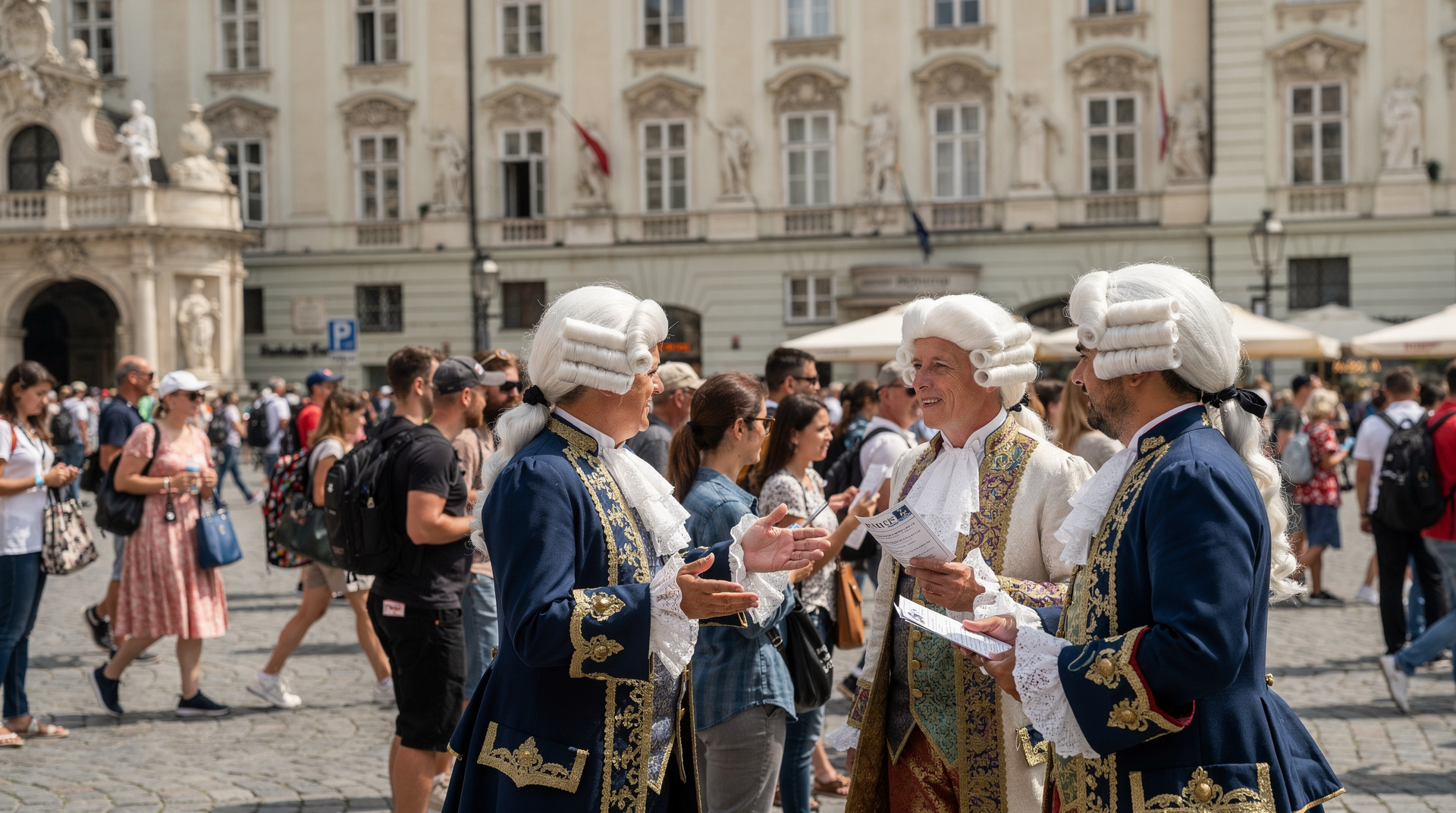
Vienna: Spanish Riding School 2-Hour Morning Exercise
Is the Spanish Riding School worth visiting in Vienna?
Yes — but the morning exercise (€16) beats the full performance (€36–256) on value. Same horses, same music, same extraordinary Winter Riding Hall — for a third of the price. The performance is worth it for serious horse enthusiasts or once-in-a-lifetime imperial spectacle. Critical: completely closed July–August when the Lipizzaners are at stud farm.
The Spanish Riding School: honest assessment
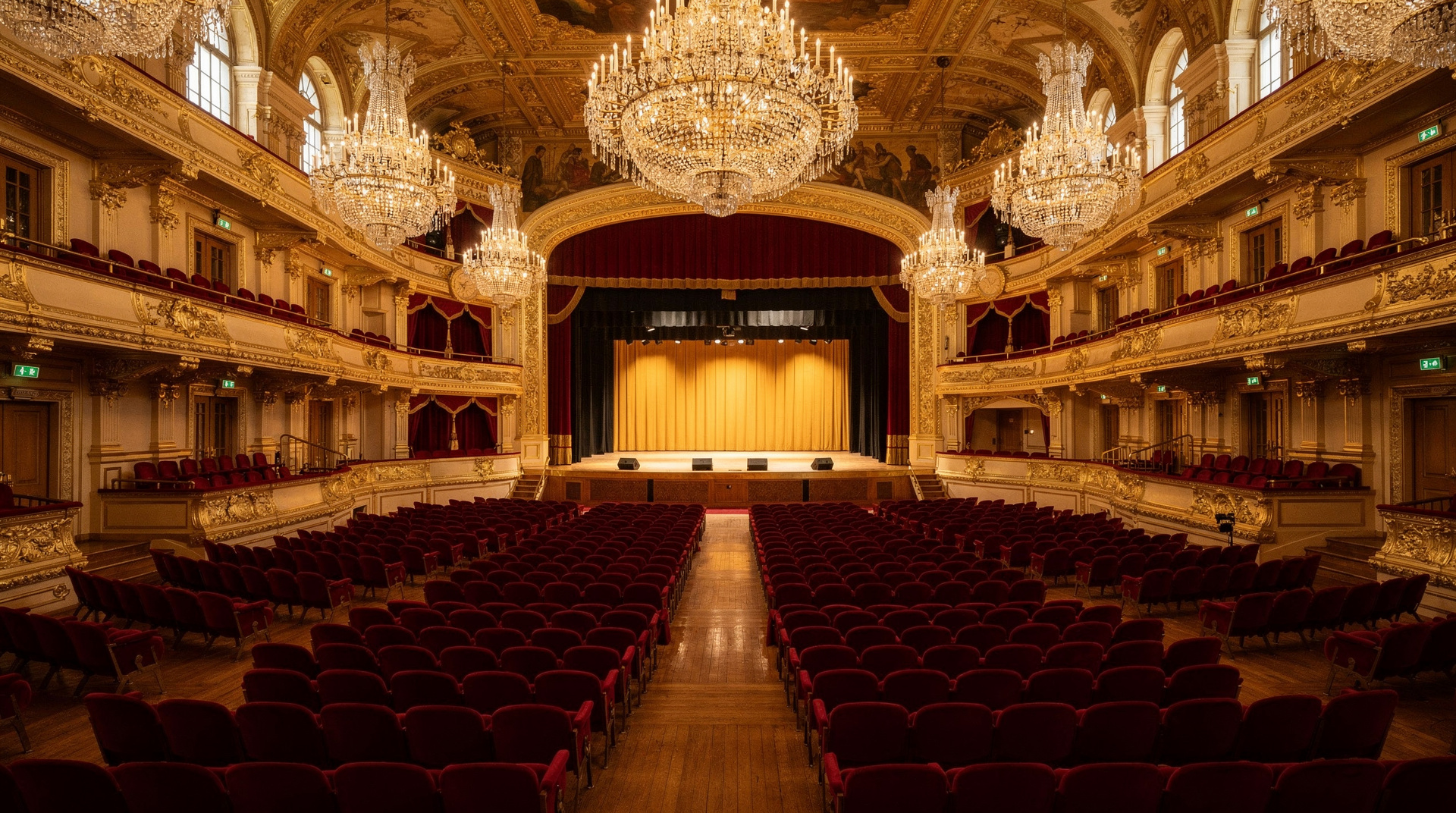
The Spanish Riding School is genuinely extraordinary. The Imperial Winter Riding Hall — designed by Josef Emanuel Fischer von Erlach in 1735 — is one of the most beautiful baroque interiors in the world: white marble columns, a vaulted ceiling with painted allegories, the imperial box where Franz Joseph once watched, and the long central arena where white horses perform classical dressage that has been practised here for 450 years.
The question is not whether the experience is worth having. It is which format to choose, when to visit, and how to manage expectations — particularly regarding the significant July–August closure.
| Where | Michaelerplatz 1, Hofburg complex |
| Cost | Around €16 morning exercise, €36–256 performance |
| Time needed | 2 hrs (exercise) or 45–80 min (performance) |
| Getting there | U3 Herrengasse (3 min) |
| Best time | September–June; book 2–4 weeks (exercise) or 4–12 weeks (performance) ahead |
The critical fact: CLOSED JULY–AUGUST
Before anything else: if you are planning a Vienna trip in July or August and the Spanish Riding School is on your must-see list, restructure your dates.
The Lipizzaner stallions spend approximately mid-July to mid-September at the Piber stud farm in Styria, where they breed and rest during the summer. The Spanish Riding School is completely closed during this period — no performances, no morning exercises, no way to see horses in the Winter Riding Hall.
The museum exhibits (history, tack, historic photos) remain accessible through the foyer, but you cannot watch horses. This is absolute. There are no exceptions.
Full calendar: The school is open September–June, with a short break in early January. The specific annual schedule (some weeks may have no performances due to training cycles or events) is published on srs.at.
The two main options
Morning exercise (strongly recommended)
Price: €16 Duration: 2 hours (typically 10 am–12 pm, Monday excepted) Advance booking: 2–4 weeks typically sufficient
The morning exercise is the daily training session. The horses work through their individual movements — piaffe (trot on the spot), passage (elevated trot), levade (horse rearing on bent haunches), and the spectacular “Airs Above the Ground” (capriole, courbette, croupade) — at their own pace, supervised by the riders in full imperial uniform (white breeches, brown tailcoat, cocked hat).
You watch from the gallery above the arena. Classical music plays. Riders occasionally speak to each other in quiet commands. Trainees on younger horses work through basic movements while the more advanced stallions perform the spectacular movements.
What makes it better than the performance: The training context reveals what the performance conceals — this is a process of decades, not a rehearsed show. The relationship between rider and horse is visible in a way it isn’t when the choreography takes over. Many visitors find the morning exercise more moving than the performance precisely because it shows the discipline and patience the dressage represents.
Vienna: Spanish Riding School 2-hour morning exerciseThe formal performance
Price: €36–256 depending on seat category Duration: 45–80 minutes Advance booking: 4–12 weeks in advance for best availability
The performance is a formal choreographed show with the full company of Lipizzaners performing in set patterns. The music is specific to each movement; the riders’ uniforms are the full ceremonial dress; the sequences are polished to a high performance standard.
What the performance delivers: A complete, theatrical experience where every movement is intentional and every transition is part of a composed whole. The capriole (horse leaping into the air and kicking out with its hind legs) performed simultaneously by multiple horses is genuinely spectacular. The levade (front legs raised, balanced on bent haunches) held for several seconds is the movement that most visually encapsulates centuries of breeding and training.
The honest caveat: 45 minutes is a short performance for the price. At €36 for the cheapest seat, this is excellent value. At €150–256 for the premium boxes closest to the floor, the price comparison to morning exercise (€16, 2 hours) becomes uncomfortable for non-specialist visitors.
Performance of the Lipizzaner stallions at the Spanish Riding SchoolWho should book the performance: Visitors with a genuine interest in classical horsemanship or equestrian sport; visitors for whom a polished formal performance is the priority over the training insight; those making a special occasion of the visit (anniversary, birthday).
The verdict by visitor type
| Visitor type | Recommended option |
|---|---|
| General tourist, first visit | Morning exercise (€16) |
| Horse enthusiast | Performance (€36–256) |
| Budget-conscious visitor | Morning exercise always |
| Special occasion | Performance (best seats) |
| Visitor with limited time | Morning exercise (same length of experience per euro) |
The Winter Riding Hall: what to expect
Regardless of which format you choose, you will experience the Winter Riding Hall — one of Vienna’s finest interior spaces. The hall is:
- 55 metres long, 18 metres wide
- Illuminated by chandeliers and large arched windows
- Framed by white marble columns on three sides
- The gallery above runs the full perimeter and is where morning exercise visitors stand
- The imperial box with the portrait of Charles VI (founder of the hall) is visible opposite the main entrance
The hall is not heated to modern standards — dress warmly for a November–March visit, as the gallery can be cold during the 2-hour morning exercise.
Practical booking information
Official website: srs.at — the only source for official Spanish Riding School tickets. All performance and morning exercise dates and availability are listed here.
GetYourGuide: Also lists official Spanish Riding School bookings through our affiliate link above — the same tickets at potentially different pricing structures.
Photography: Photography and video (without flash) are permitted during the morning exercise. During performances, check current rules — restrictions on flash are always in place.
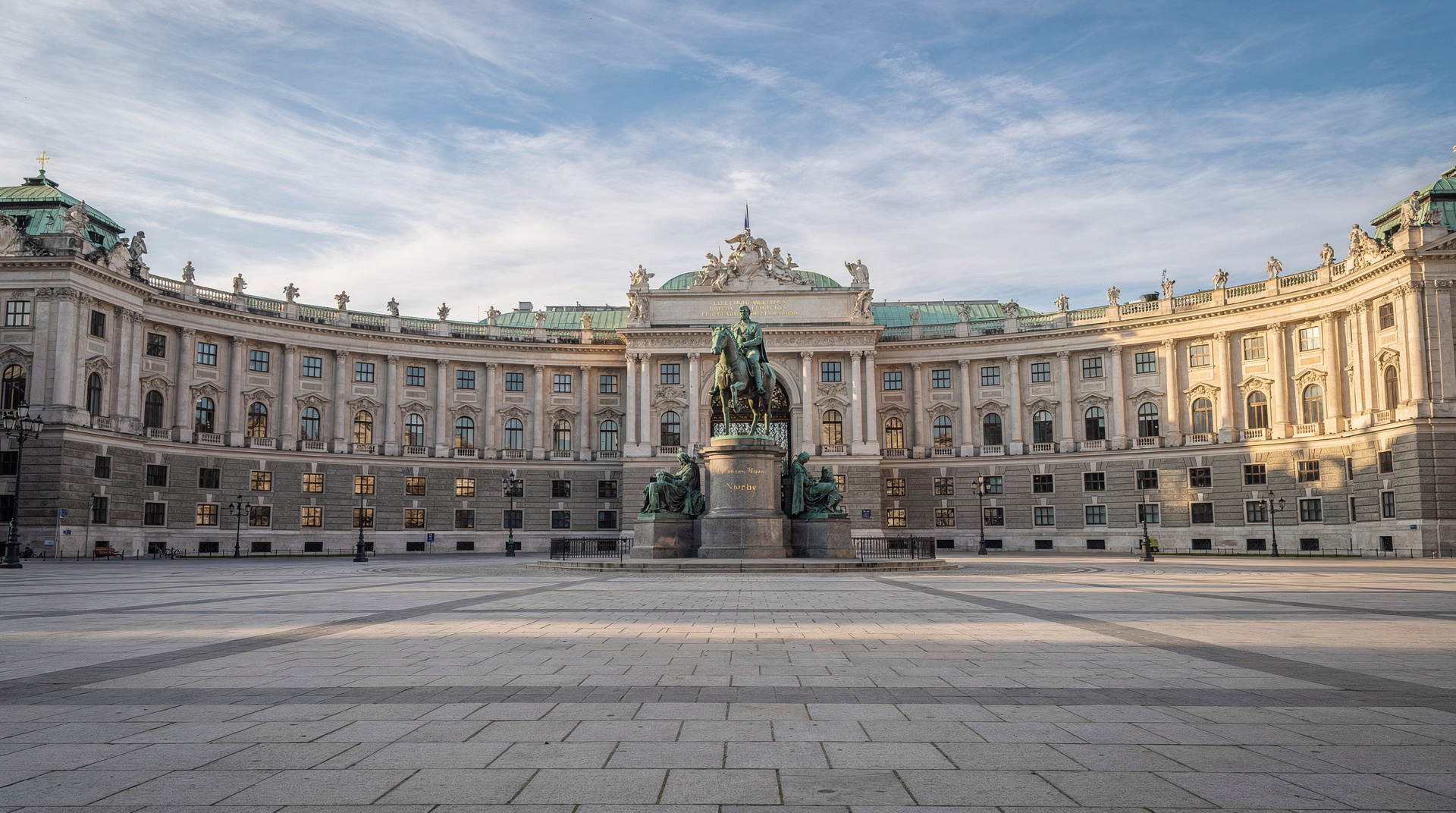
Access: The Spanish Riding School entrance is at Michaelerplatz 1, within the Hofburg complex. The address is accessible on foot from the Herrengasse U3 station (3 minutes) or from Stephansplatz (10 minutes on foot).
The combined Hofburg visit
The Spanish Riding School is within the Hofburg complex. A morning exercise visit pairs naturally with the Sisi Museum and Imperial Apartments afterwards (or before, if the exercise starts at 10 am):
- 10 am–12 pm: Spanish Riding School morning exercise
- 12:30 pm: Lunch in the Hofburg area (Café Hofburg or nearby)
- 1:30–4:30 pm: Sisi Museum + Imperial Apartments + Hofburg Treasury
This is one of the better single-day Hofburg itineraries — the morning exercise gives you the horses and the hall, the afternoon gives you the Habsburg family story. See our Hofburg Palace guide for the full visit plan.
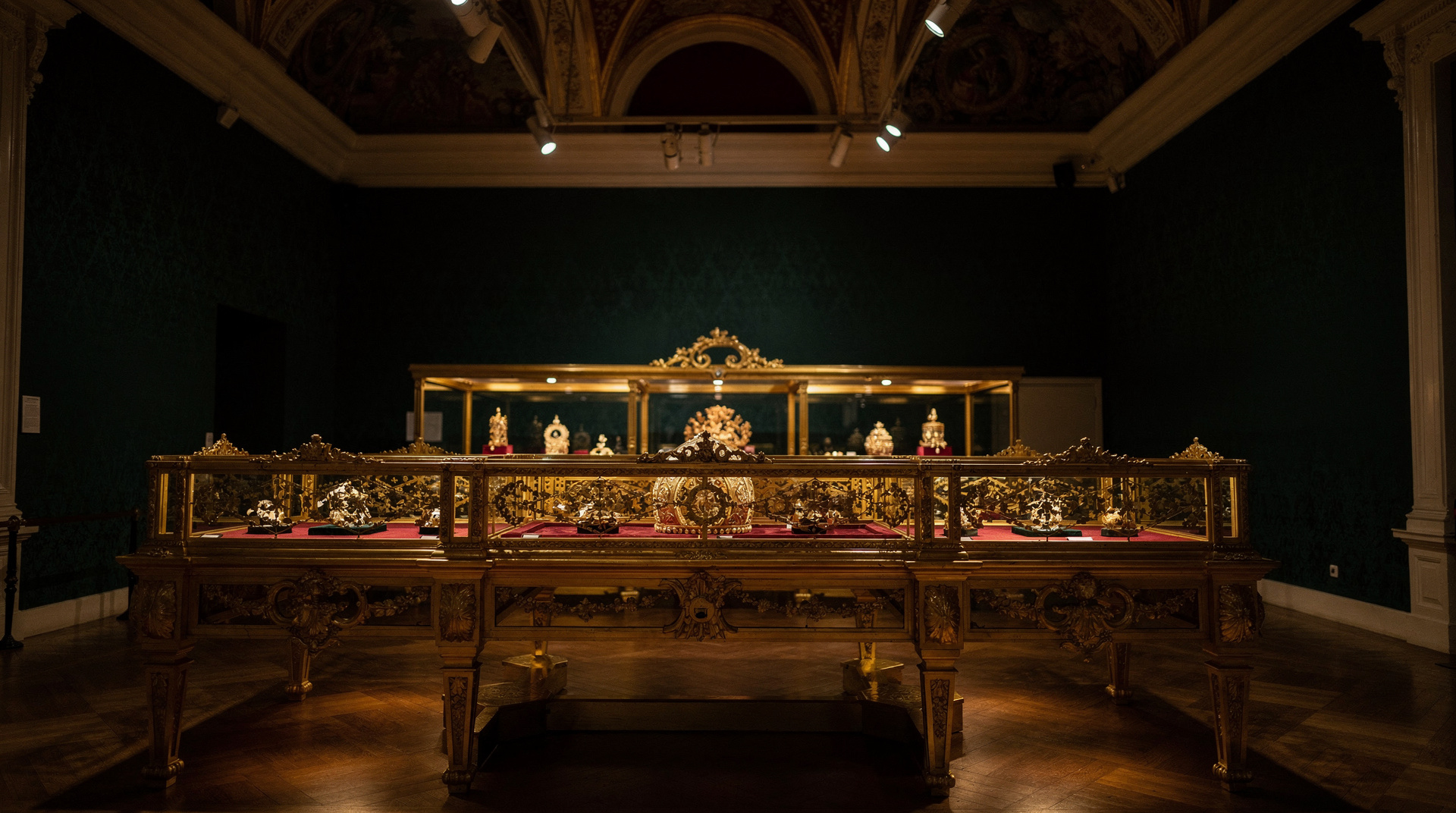
Vienna: Imperial Treasury and Spanish Riding School combinedA combined ticket covering both the Imperial Treasury and Spanish Riding School access is available and good value if both are on your agenda.
For the fuller logistics, tickets and history
This page focuses on the value decision. For a complete walk-through of the school’s history, the Winter Riding Hall’s architecture, and the Lipizzaner breeding programme in more depth, see our companion Spanish Riding School guide.
If honest “worth it” verdicts on nearby Hofburg attractions are useful for planning the rest of your day, the Vienna Boys’ Choir: worth it? guide applies the same value-first approach to another Hofburg institution, and our broader Vienna tourist traps guide covers the ticket touts around Michaelerplatz in more detail. For seasonal planning around the July–August closure, check when to visit Vienna for how that gap affects a summer trip overall.
What you’re actually paying for
The price difference between morning exercise and performance isn’t arbitrary — it reflects genuinely different production costs. A full performance requires the entire company of riders and horses, full ceremonial uniforms, a live orchestra or recorded score synced to specific movements, and weeks of choreography rehearsal beyond the horses’ daily training.
Morning exercise uses the same horses and hall but none of the additional staging: it’s the school’s actual working routine, opened to paying visitors rather than a production built for an audience. Understanding this helps explain why the value gap is so wide — you’re comparing a full theatrical production against a behind-the-scenes look at the same institution’s daily work, not two versions of the same show at different price points.
A note on booking through GetYourGuide vs directly
Booking through GetYourGuide (linked throughout this guide) typically costs the same as booking directly through srs.at, with the advantage of a single platform if you’re already booking other Vienna activities there, and often more flexible cancellation policies than the official site. If you want the absolute lowest price and don’t need flexible cancellation, comparing both before booking takes only a few minutes and can occasionally save a few euros, particularly for premium performance seats.
Fitting the school into your Vienna days
The riding school sits in the heart of the old city, so it slots easily into a first-timer’s plan. If you are still deciding how long to stay, our guide on how many days in Vienna helps you see where a morning at the Hofburg fits, and the 3-day itinerary shows one way to place it next to the other big sights. The surrounding streets are covered in the Innere Stadt district guide, which is useful if you arrive early and want somewhere to wander before the doors open.
Because the morning exercise is an easy, unhurried visit, it works well on a day when you want one cultural anchor and plenty of free time around it. The performance is more of an event: treat it as the centrepiece of an evening or a special day rather than something to squeeze in between other tickets.
Why the horses matter to Habsburg history
The school is not a stand-alone attraction. It is part of the story of the dynasty that built the Hofburg around it, and the riding hall was created as a place of imperial prestige. If you want the wider background, Habsburg history for travelers gives the context, while Franz Joseph and Sisi puts a human face on the court that once watched from the imperial box. Visitors who enjoy the riding school often go on to the Sisi Museum guide and the Imperial Apartments guide, because the same palace complex holds the rooms where that court actually lived.
Seeing the horses first makes those rooms easier to read. The discipline, ceremony and attention to detail you notice in the hall are the same values that shaped court life, so the afternoon feels like a continuation of the morning rather than a separate sight.
Choosing between the school and other Vienna performances
Visitors weighing the riding school against other performance-based tickets should think about what they actually want to experience. The horses offer something visual and silent, close to sport and craft, while a concert offers something musical. If music is your priority, classical vs touristic concerts explains how to tell a serious programme from a tourist-oriented one, and the Vienna State Opera guide covers the city’s best-known stage.
In winter the calculation changes a little, because the hall is cool and the days are short, which makes an indoor morning attractive. Our Vienna in winter guide shows how to build a cold-weather trip around indoor highlights like this one.
Making the most of your visit
A few simple habits make either format more rewarding:
- Arrive early so you can settle in and take a moment to look at the hall itself before the horses appear. The architecture rewards a slow look.
- Pay attention to the details rather than waiting only for the dramatic movements. The small corrections between horse and rider are where the skill is most visible.
- Keep your expectations realistic. The morning exercise is a working session, so the pace is calmer and less predictable than a formal show. That is part of its charm.
- Plan something relaxed afterwards. A coffee house stop works well, and the Vienna Boys’ Choir guide and the Stephansdom guide point to other nearby highlights if you still have energy.
For a first-hand account of how the morning feels in practice, the blog post a morning visit to the Spanish Riding School describes the experience from a visitor’s point of view and can help you decide whether the format suits you.
Frequently asked questions about the Spanish Riding School
Is the Spanish Riding School worth visiting in Vienna?
Yes — the morning exercise (€16) is outstanding value. The Winter Riding Hall alone justifies the visit. The performance (€36–256) is excellent for horse enthusiasts.
What is the difference between the performance and morning exercise?
Performance: 45–60 min, €36–256, choreographed formal show. Morning exercise: 2 hours, €16, daily training session in the same hall with the same horses. Morning exercise wins on value for most visitors.
When is the Spanish Riding School closed?
Completely closed mid-July to mid-September when the Lipizzaners are at Piber stud farm. No exceptions.
How far in advance should I book?
Performances: 4–12 weeks. Morning exercises: 2–4 weeks. Book at srs.at or GetYourGuide.
Who are the Lipizzaner stallions?
A distinctive breed developed in the 16th century in Lipica (now Slovenia). Vienna’s horses are exclusively white (born dark, turning white by age 7–10) stallions trained from age 4 in classical dressage over 8–12 years.
Top experiences
Bookable activities with verified prices and instant confirmation on GetYourGuide.