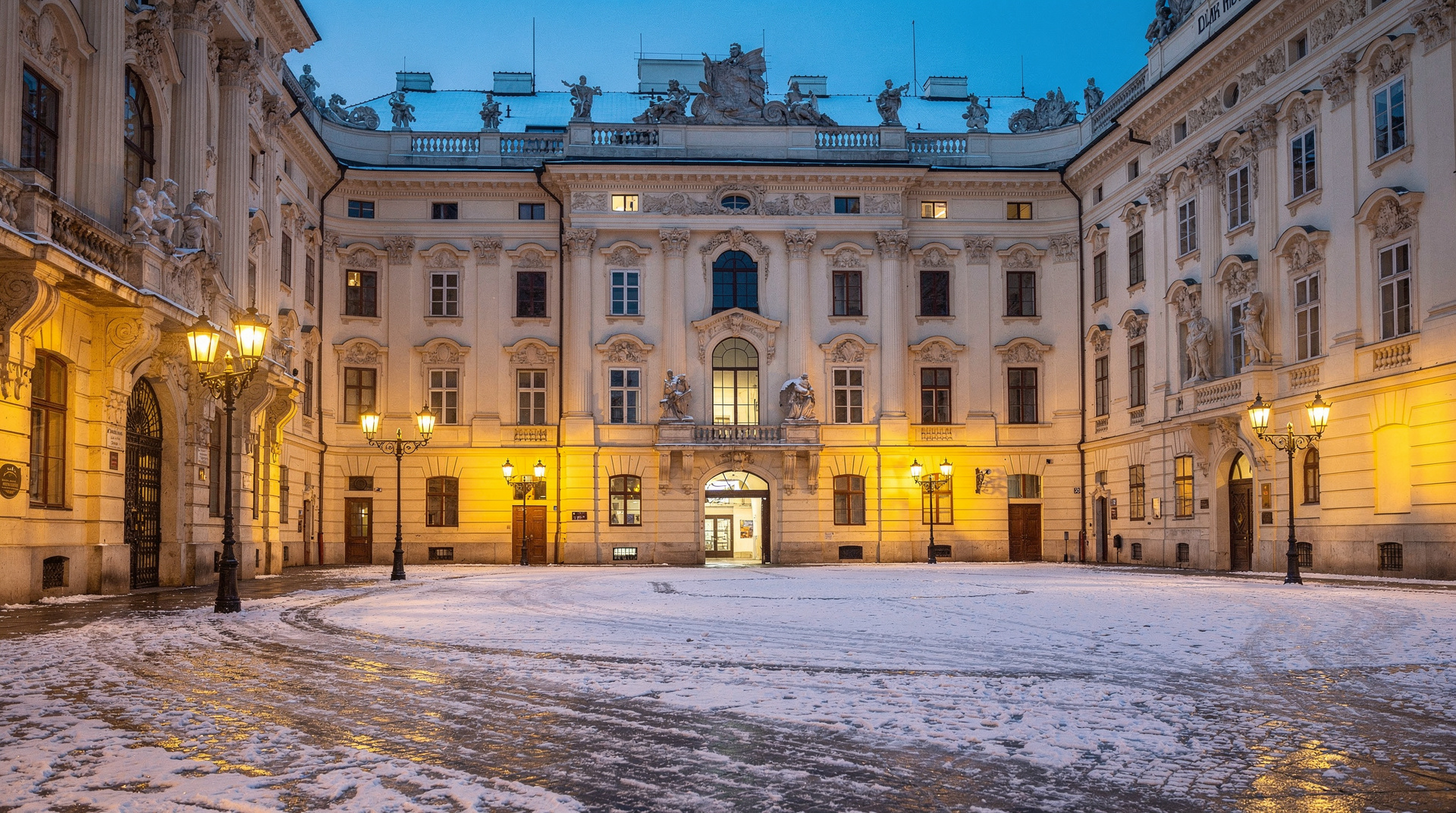
Rathausplatz Christmas market: Vienna's biggest Advent market
Christmas in Vienna: Markets and Vintage Shops Walking Tour
What is the Rathausplatz Christmas market like?
It's Vienna's largest Christmas market — 150+ stalls, Europe's largest seasonal outdoor ice rink, and the spectacular neo-Gothic City Hall as backdrop. Extraordinarily busy at weekends. Best experienced on weekday afternoons. The scale is impressive but the craft quality is uneven.
Vienna’s flagship Christmas market
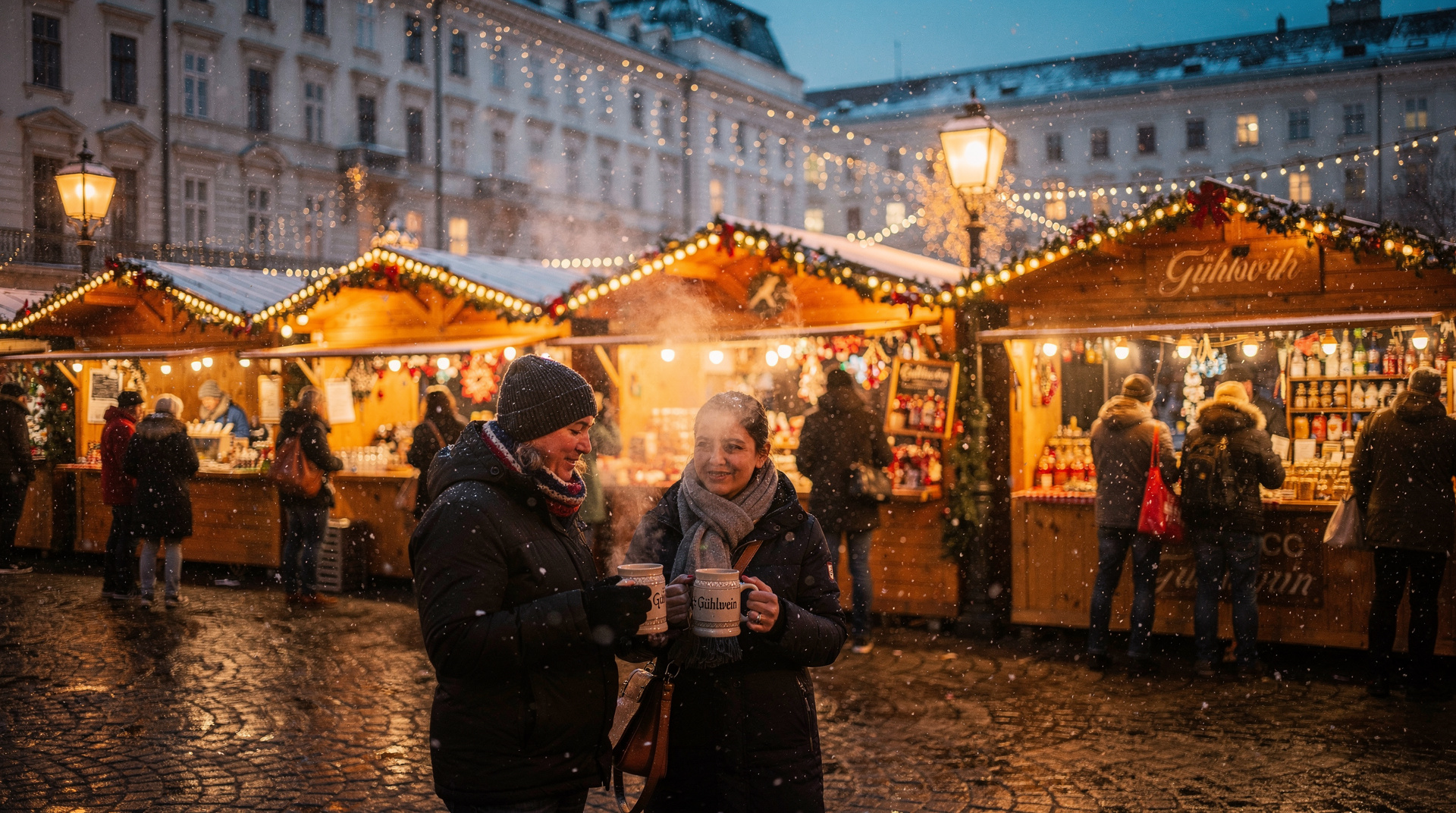
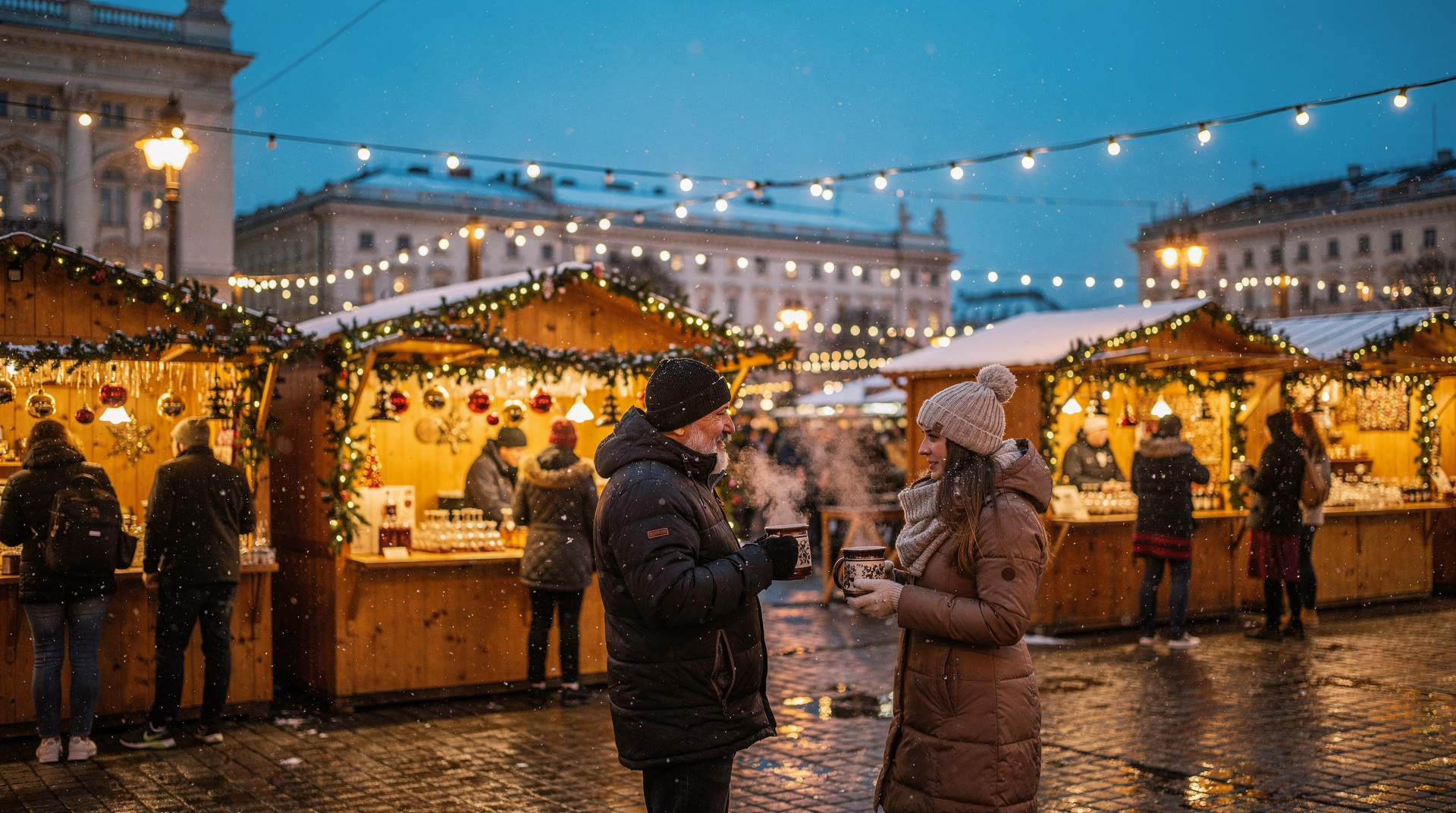
The Rathausplatz Christmas market is the one that appears in every Vienna winter photograph: the neo-Gothic City Hall — a 19th-century architectural marvel modelled on Brussels’ Gothic town hall — rising over a sea of illuminated stalls, with ice skaters circling in the foreground and the smell of Punsch and roasted chestnuts on the cold air.
It’s the largest Christmas market in Austria and one of the largest in Europe. It’s also the most crowded. This guide explains what’s genuinely worth your time here, what to skip, and how to navigate it without feeling overwhelmed.
| Where | Rathausplatz, on the Ringstrasse, U2 Rathaus station |
| Cost | Entry free; ice rink around €10–14; food and Punsch €3–8 per item |
| Time needed | 2–3 hours for a full visit |
| Getting there | U2 to Rathaus, or Ring trams 1/2, or 15-min walk from Stephansdom |
| Best time | Weekday afternoon (Tue–Thu, 3–6pm), first two weeks of December |
What you need to know
The setting
The Rathausplatz (City Hall Square) on the Ringstrasse is the epicentre. The neo-Gothic Rathaus (City Hall), designed by Friedrich von Schmidt and completed in 1883, provides a backdrop that changes from dignified daytime grey to warm amber illumination at night — one of the most dramatic settings for any Christmas market in Europe.
The market occupies the entire large square in front of the Rathaus, with stalls arranged in rows across the paved surface and the ice rink installed in the central area between the stalls and the building’s main entrance.
What’s here
The stalls (150+): Mixed quality. The outer rows tend to have the craft and food stalls that are better quality. The inner rows closer to the building have a mix of souvenir stalls, gift wrap and Christmas tree ornament sellers, and Austrian craft items. Look for stalls with handmade signs and the maker visibly present — these are more likely to be genuine Austrian craft.
The ice rink: One of the largest seasonal ice rinks in Europe, set against the City Hall backdrop. Ice skate rental available. The rink also runs on into winter (typically through February) as a standalone attraction after the market closes.
The Märchenbahn: A children’s miniature train that runs through a fairy-tale-themed route. A highlight for families with younger children.
Food stalls: The greatest variety of any Vienna Christmas market. Käsekrainer, Germknödel, Langos, Strudel, roasted chestnuts, mulled wine, Punsch (multiple varieties), hot chocolate, gingerbread Lebkuchen, Maroni, and a range of international food stalls.
Concert stage: Live music and performances throughout the market period. Programme includes classical music, carol singers, traditional Austrian folk, and children’s performances.
The crowd reality
The Rathausplatz market is genuinely very crowded from mid-December onward. On the final two weekends before Christmas (typically the weekend of December 12–14 and December 19–21), the crowd density between stalls can be uncomfortable and moving through the market at your own pace becomes difficult.
The solution: Go on a weekday afternoon in the first two weeks of December. The market is fully operational, the atmosphere is excellent, the lights are on from around 4pm, and the crowd is perhaps 30% of what it is on a busy Friday evening. The difference is significant.
What to skip
Generic souvenir stalls: Stalls selling “I Love Vienna” ornaments, mass-produced snow globes, and generic Christmas tree decorations are present throughout the market. These items are identical to what’s sold in souvenir shops at half the price. Skip them.
Burger and pizza stalls: A few stalls sell burgers and pizza because some visitors apparently want them. They’re overpriced and not particularly good. The Austrian food is better.
The queue at the ice rink on weekends: Skate rental queues can be 30–45 minutes on busy weekends. Either go on a weekday or accept the wait — it’s worth it once you’re on the ice with the Rathaus illuminated above.
A short history of the market
The tradition of a Christmas market on the Rathausplatz dates back further than most visitors assume — Vienna’s “Christkindlmarkt” tradition traces to the 18th century, though the current Rathausplatz incarnation in its modern large-scale form developed mainly after the 1970s, once the ice rink and the expanded stall footprint became fixtures.
The neo-Gothic Rathaus itself, completed in 1883 after a competition won by the architect Friedrich von Schmidt, was never intended as a market backdrop — it is Vienna’s seat of municipal government, still in active use, which is part of why the square in front of it is large enough to host an event of this scale. Comparing it with the older, more intimate markets covered in the Christmas markets guide makes clear how much of Rathausplatz’s identity comes from scale rather than tradition.
When it’s genuinely crowded — a closer look
| Period | Crowd level | Notes |
|---|---|---|
| Weekday mornings (10am–2pm) | Low | School groups occasionally, otherwise quiet |
| Weekday afternoons (3–6pm) | Moderate | The sweet spot — atmosphere without the crush |
| Weekday evenings (after 6pm) | High | Commuters stop after work |
| Friday/Saturday evenings | Very high | Avoid unless you enjoy dense crowds |
| Dec 12–14 and 19–21 weekends | Extreme | The two worst weekends of the season |
| Christmas Eve/Day | Low–moderate | Many stalls close early or entirely |
Getting there
By U-Bahn: U2 to Rathaus station, which opens directly onto the Rathausplatz. By tram: Ring trams 1 and 2 stop on the Ringstrasse adjacent to the market. By foot: 15 minutes from Stephansdom along the Ringstrasse or through the Innere Stadt.
Avoid driving: Parking is difficult and expensive near the Rathausplatz during the Christmas season. Public transport is the correct approach.
Planning your visit
Ideal first-timer schedule
- Arrive at the Rathaus U-Bahn exit at 3:30pm on a Tuesday or Wednesday
- Walk through the market from south to north, sampling Maroni (chestnuts) from a roasting drum
- Get a Punsch from one of the stands toward the middle of the market (not the first stand you see — prices and quality vary)
- Watch the 4pm concert on the stage (free, no ticket)
- Visit the ice rink (arrive at 4:30pm after the after-school rush clears)
- End with a Germknödel
Total time: 2–3 hours.
Combining with other markets
The Freyung market and Am Hof market are 10–15 minutes’ walk east from Rathausplatz. Both are smaller and calmer. A good evening itinerary: Rathausplatz first (most impressive scale, busy), then walk to Am Hof and Freyung (quieter, more traditional). See the best Christmas markets comparison.
Making an evening of it
Rathausplatz works best as the opening act rather than the whole night. Once the cold starts to settle into your hands and feet, the Ringstrasse gives you easy ways to keep going. The Ringstrasse architecture walk picks up right outside the square, and seeing the grand façades lit up after dark is a quiet contrast to the bustle of the stalls. If you would rather end somewhere warm and unhurried, a traditional café is the natural next stop — the Vienna coffee house guide helps you choose one that suits the mood.
Visitors staying only a few days often wonder where a market like this fits in. It pairs comfortably with a classic first-time route, and the Vienna winter itinerary shows how to slot a Rathausplatz visit between museums, concerts and cafés so that you are not standing in the cold all day.
Eating and drinking well
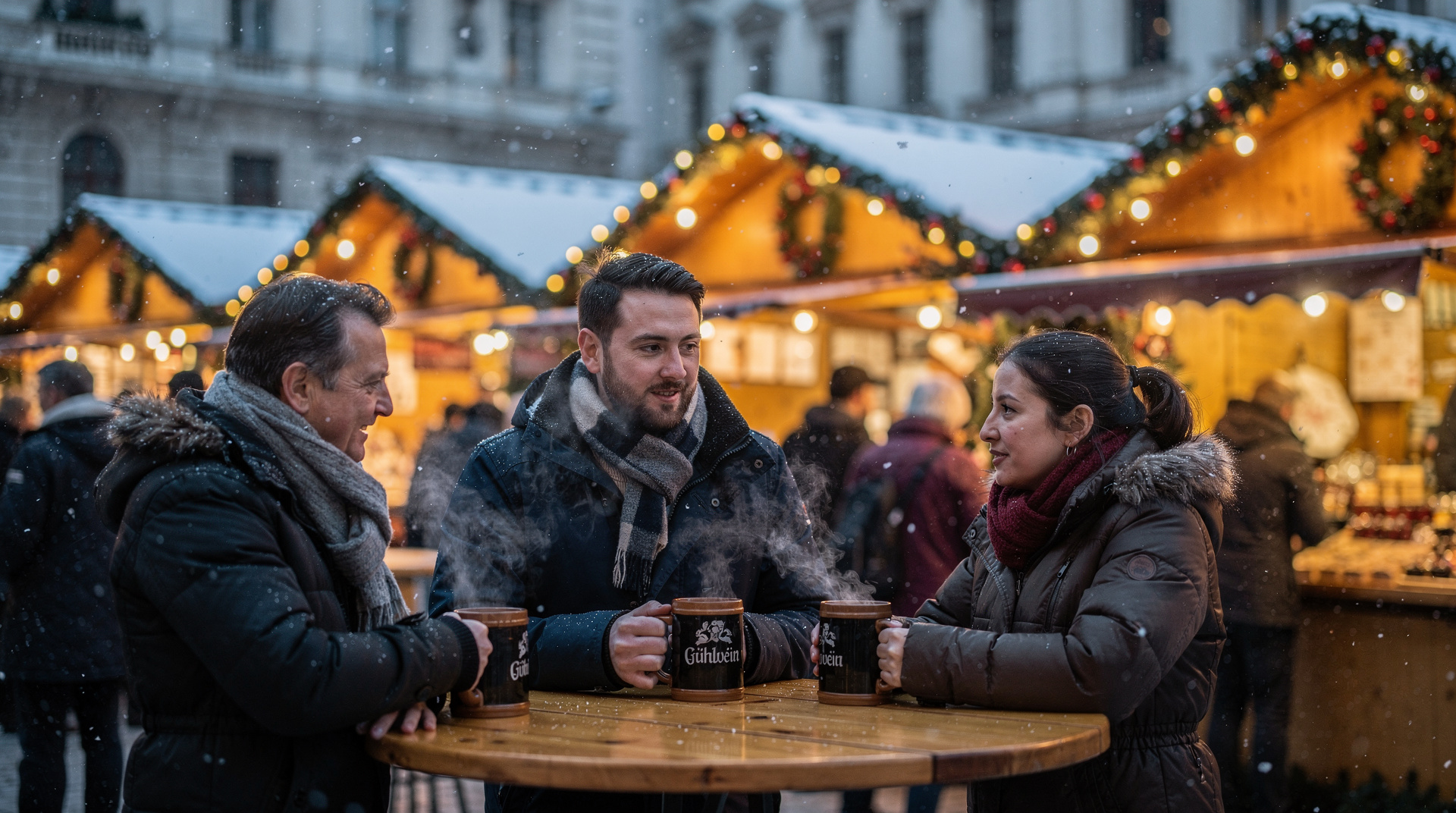
The sheer number of food stalls can make choosing difficult. A sensible approach is to walk one full loop before buying anything, noting which stalls have a steady line of locals rather than only tourists. Share a few small items rather than committing to a large portion at the first stall; that way you can taste more of what the market does well, from the sweet to the savoury. Warm drinks are as much about holding something hot as about the taste, so keep your cup in both hands while you watch the stage.
If you want a more substantial meal after the market, the Vienna food guide covers where to sit down properly, which is often a better option than a full dinner eaten standing in the open air.
Photographing the square
The Rathaus is at its most dramatic as daylight fades and the illumination takes over, so aim to be in position as the afternoon turns to dusk. Step back from the stalls to frame the building with the rink and the lights in the foreground, and be patient — crowds ebb and flow, and a short wait often clears the shot. For more ideas on where to point a camera across the city, see the Vienna photography spots guide.
Guided tours
The Christmas Markets and Vintage Shops tour includes the Rathausplatz market alongside Vienna’s vintage shopping culture — a good combination for visitors interested in both.
The Vienna Christmas Markets Tour typically includes Rathausplatz as part of a multi-market evening tour — efficient if you want to see several markets in one session.
The 2.5-hour magical festive tour provides a longer guided experience covering multiple markets with explanation of Advent traditions.
Honest tips
The best stalls are toward the back (north end, near the Rathaus entrance). Most visitors enter from the south (Ringstrasse) and cluster around the first stalls. Walking through to the north end — closer to the building — typically reveals better-quality craft stalls with fewer people.
The Punsch cups are collectible. Rathausplatz typically has a specially designed annual cup with the Rathaus image. Keeping it costs you the deposit (€2–3) but the cup is a genuine souvenir rather than a generic purchased item.
Ice skating is best on weekday mornings. The rink opens at 10am, and the first few hours are significantly less crowded than the evening peak. Schools use it for group visits which can create short busy periods — ask the rental desk for the least crowded times.
Dress for cold. The Rathausplatz is an open square with no natural wind protection. In December, wind chill can make it feel significantly colder than the ambient temperature. A proper winter coat, scarf, and hat are essential. Hand warmers are available from stalls if you forget.
Children need extra layers. The Märchenbahn and ice rink are excellent for children, but the cold hits small children faster than adults. Multiple layers and waterproof outer layers are sensible precautions.
If Rathausplatz feels like too much
If the scale and crowds don’t appeal, the smaller Spittelberg Christmas market offers a genuinely different, calmer atmosphere with better craft quality, a 20-minute walk or two U-Bahn stops away. Families in particular sometimes find Spittelberg’s narrow cobbled lanes easier to navigate with a stroller than Rathausplatz’s open square on a packed evening. See our broader Vienna in winter guide for how to build a full winter itinerary around both.
Frequently asked questions about the Rathausplatz market
Is the Rathausplatz market the best Christmas market in Vienna?
It’s the largest and most spectacular. Whether it’s the “best” depends on priorities: for scale and the ice rink, yes. For artisan craft quality, no — Spittelberg is better. For the most beautiful setting, Schönbrunn is arguably equal. See the full comparison guide.
Does the market have a separate section for children?
Yes — the Märchenbahn and children’s programme are specifically for younger visitors. The children’s programme (concerts, fairy-tale performances on the stage) runs throughout the market period. Times are posted daily at the stage.
Can I visit the Rathausplatz market and the Ringstrasse on the same day?
Easily — the Ringstrasse runs immediately adjacent to Rathausplatz. The Kunsthistorisches Museum, Naturhistorisches Museum, the Parliament (currently being rebuilt), and the Burgtheater are all within a 10-minute walk. See the Ringstrasse guide for the full architectural walk.
Is there somewhere to sit and eat at the Rathausplatz market?
Yes — the main food stalls have standing tables with heat lamps, and there are several larger seating areas with benches and table-height counters. The heated tent areas in the middle of the market are particularly useful on cold or wet evenings. Seating fills quickly on busy evenings — arrive early and claim a spot before getting food and drinks.
Top experiences
Bookable activities with verified prices and instant confirmation on GetYourGuide.