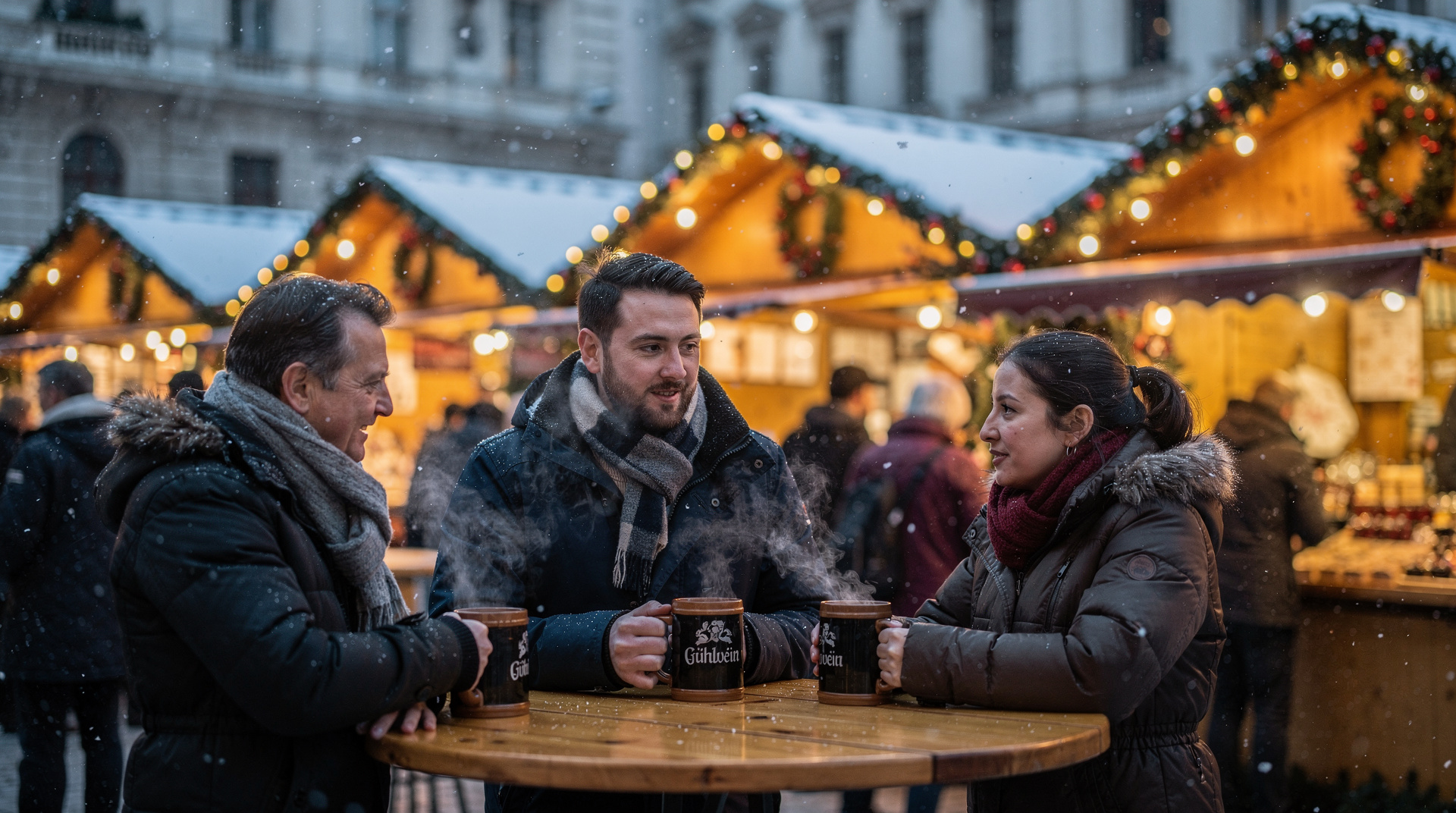
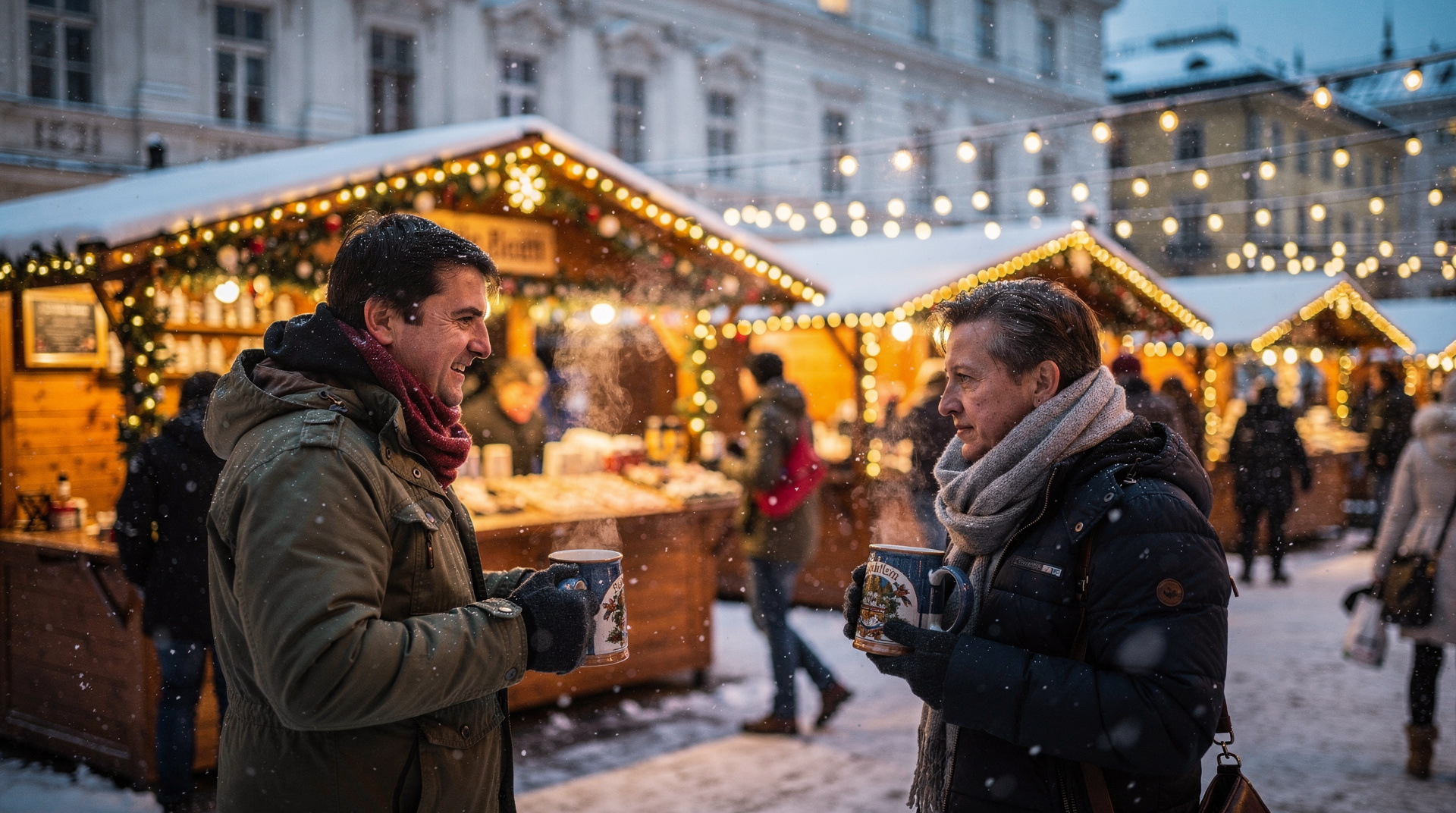
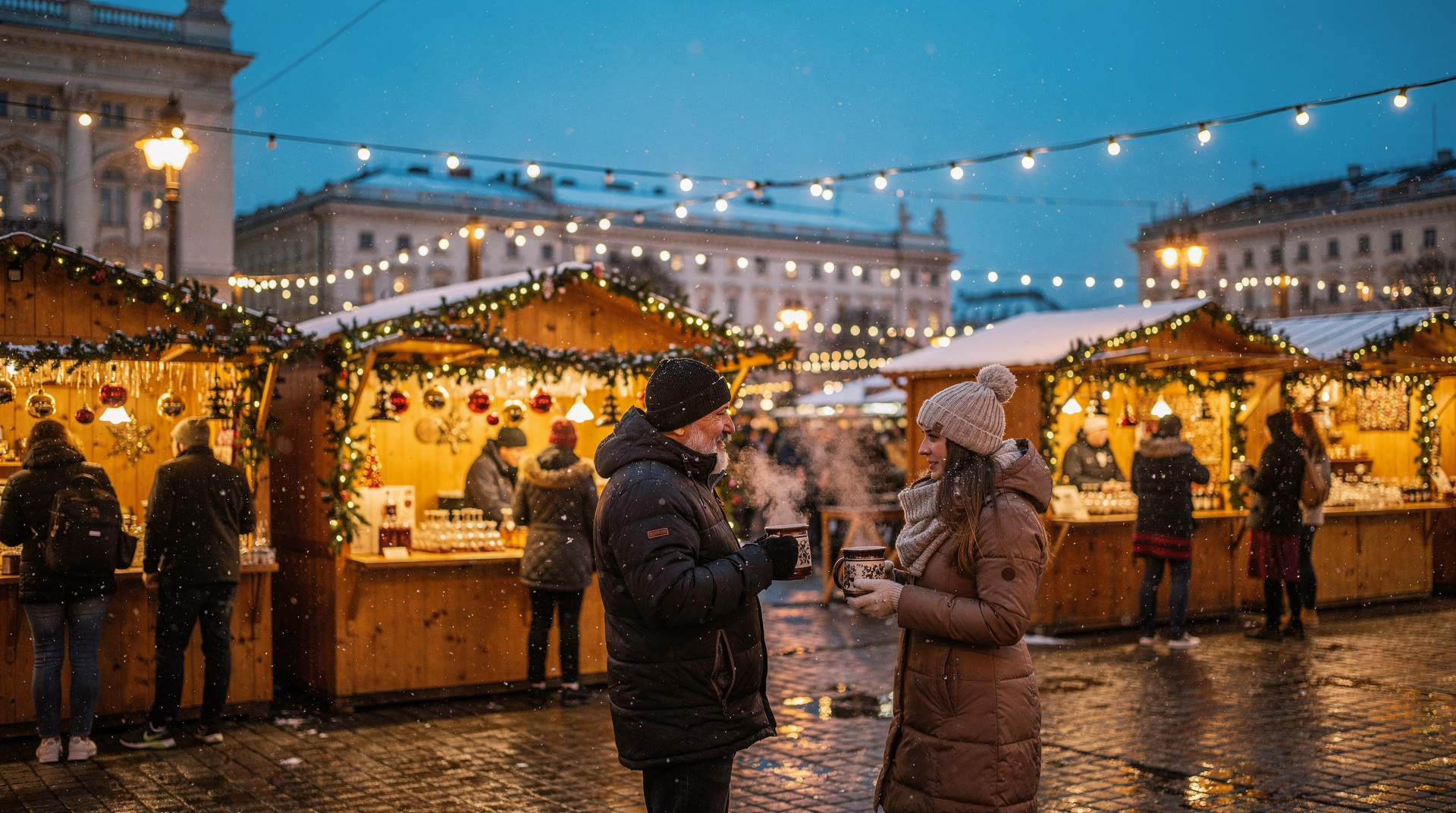
Best Christmas markets in Vienna compared: which one to visit
Vienna: Christmas Markets Tour
Which is the best Christmas market in Vienna?
Schönbrunn for the most beautiful setting; Spittelberg for the best crafts and most local atmosphere; Rathausplatz for the largest scale and ice rink. Avoid the Rathausplatz on weekend evenings if crowds aren't your thing — go on a weekday afternoon instead.
Vienna has 20+ Christmas markets. Here’s how to choose.
Vienna’s Christmas market season runs from mid-November through late December (sometimes into January), with over 20 distinct markets operating simultaneously. They vary enormously in size, character, atmosphere, and tourist density — from the massive Rathausplatz market with 150+ stalls and an ice rink to tiny neighbourhood markets with 15 stalls serving local residents.
Choosing intelligently between them — based on what you actually want rather than what appears first in a Google search — makes a significant difference to the quality of your experience. See the Vienna Christmas markets guide for season dates and general planning, and winter in Vienna for what else to combine the season with.
| Season | Mid-November to late December (some into January) |
| Best setting | Schönbrunn or Rathausplatz |
| Best crafts | Spittelberg |
| Least crowded | Spittelberg, Freyung, Am Hof |
| Combine well | Rathausplatz + Freyung + Am Hof (15 min walk apart) |
Market comparison at a glance
| Market | Setting | Crafts | Food | Authenticity | Crowd |
|---|---|---|---|---|---|
| Rathausplatz | 5/5 | 3/5 | 3/5 | 2/5 | Highest |
| Schönbrunn | 5/5 | 4/5 | 3.5/5 | 3/5 | High |
| Spittelberg | 4/5 | 5/5 | 3.5/5 | 5/5 | Low |
| Freyung | 3.5/5 | 3.5/5 | 3/5 | 4/5 | Moderate |
| Am Hof | 4/5 | 3.5/5 | 2.5/5 | 4/5 | Low |
| Karlsplatz | 3.5/5 | 4/5 | 3/5 | 3.5/5 | Moderate |
Read the scores alongside your own priorities: a family after the ice rink wants Rathausplatz regardless of its lower authenticity score; a couple after a quiet, photogenic evening should weight Spittelberg’s authenticity and craft scores much higher.
What you need to know
The market categories
Flagship tourist markets: Rathausplatz (City Hall), Schönbrunn Palace. These are the most visited, most photogenic, and most crowded. They’re also genuinely excellent — the tourist density is the price of the extraordinary setting.
Mixed markets: Freyung, Am Hof, Maria-Theresien-Platz. Significant but not overwhelming tourist presence alongside local Viennese. Good for an authentic experience that doesn’t require leaving the centre.
Artisan/neighbourhood markets: Spittelberg (7th district), Karlsplatz, Naschmarkt Advent. More local, more curated, less crowded. Spittelberg in particular is where Viennese who care about craft quality go.
Outer-district markets: Ottakring, Floridsdorf, and various suburban markets. Genuinely local, no tourists, smaller range. Worth visiting if you’re based in those areas.
The market-by-market comparison
Rathausplatz (City Hall market)
Location: Rathausplatz, 1010 Vienna (U2 Rathaus) Size: 150+ stalls, Europe’s largest seasonal ice rink Crowd level: Maximum at weekends; moderate on weekday afternoons Setting: The neo-Gothic City Hall illuminated against the night sky is spectacular Best for: First-time visitors, families with children (ice rink, Märchenbahn miniature railway), maximum atmosphere Weaknesses: The worst crowd density, food quality is uneven, some stalls are mass-market commercial
The largest single Christmas market in Vienna. The ice rink (open from mid-November through February) is a genuine attraction — the City Hall lit up as backdrop, with skaters circling in the foreground, is a genuinely iconic image. The food is plentiful though not distinguished. The crafts range from genuinely handmade to commercially produced with a handmade aesthetic.
For full detail, see the Rathausplatz Christmas market guide.
Score: Setting: 5/5 | Crafts: 3/5 | Food: 3/5 | Authenticity: 2/5
Schönbrunn Palace Christmas market
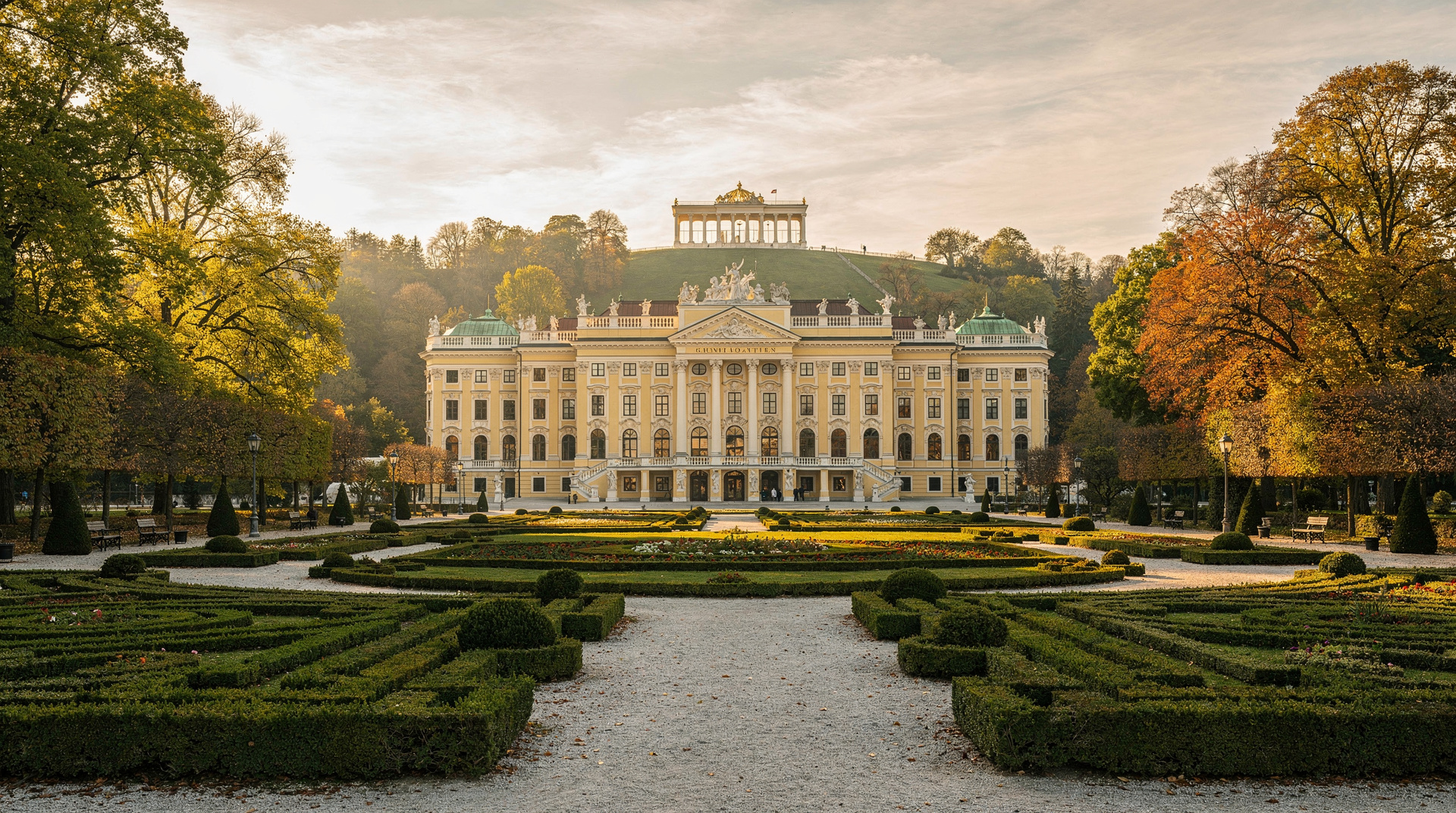
Location: Schönbrunn Palace courtyard, 1130 Vienna (U4 Schönbrunn) Size: Medium (60–80 stalls) Crowd level: High but more manageable than Rathausplatz Setting: The Baroque yellow palace as backdrop, concert stage, vin chaud Best for: The most beautiful setting in Vienna, couples, photography Weaknesses: Higher prices than average; requires 15-minute journey from the centre
The Schönbrunn market wins on setting — the 18th-century Baroque palace illuminated in warm light, the Neptunbrunnen (Neptune Fountain) as centrepiece, the stalls arranged in neat rows through the palace forecourt. It has a more refined character than Rathausplatz — better crafts on average, more focus on Austrian artisanship.
Also notable: live classical concerts in the palace courtyard (free entry for market visitors) and a heated tent for warming up.
For full detail, see the Schönbrunn Christmas market guide.
Score: Setting: 5/5 | Crafts: 4/5 | Food: 3.5/5 | Authenticity: 3/5
Spittelberg
Location: Around Spittelberggasse, Gutenberggasse, 1070 Vienna (U2 Volkstheater, 10 min walk) Size: Small (30–40 stalls in a network of alleyways) Crowd level: Lower than the main markets, manageable even on weekends Setting: The 18th-century Biedermeier neighbourhood alleyways, lanterns, fairy lights Best for: Craft quality, local atmosphere, couples wanting a quieter experience, anyone who prioritises handmade over commercialised Weaknesses: Small, limited food options, requires navigating to the 7th district
Spittelberg is the market that Viennese who care about quality consistently recommend. The neighbourhood — a preserved Biedermeier residential area with narrow alleyways and lantern-lit streets — creates a cosy (gemütlich) atmosphere unlike the open plazas of Rathausplatz or Schönbrunn. The stalls prioritise handmade Austrian crafts: ceramics, glass, textiles, woodwork, jewellery. Quality control appears to be stricter than at the large markets.
Also: the Punsch at Spittelberg is noticeably better-quality than at many of the main markets.
For full detail, see the Spittelberg Christmas market guide.
Score: Setting: 4/5 | Crafts: 5/5 | Food: 3.5/5 | Authenticity: 5/5
Freyung (Wiener Advent)
Location: Freyung square, 1010 Vienna Size: Medium Crowd level: Moderate — calmer than Rathausplatz Setting: Baroque palaces surrounding the square Best for: A more traditional market experience within the Innere Stadt
The Freyung market occupies a beautiful Baroque square five minutes from the Hofburg. More traditional in feel than Rathausplatz, with a focus on Austrian regional products. Good for purchasing Austrian specialty foods (Honig, Schnapps, regional cheese). Not as spectacular as Schönbrunn or as cosy as Spittelberg, but the central location makes it an easy add to any Innere Stadt itinerary.
Am Hof (Old Vienna Traditional Christmas Market)
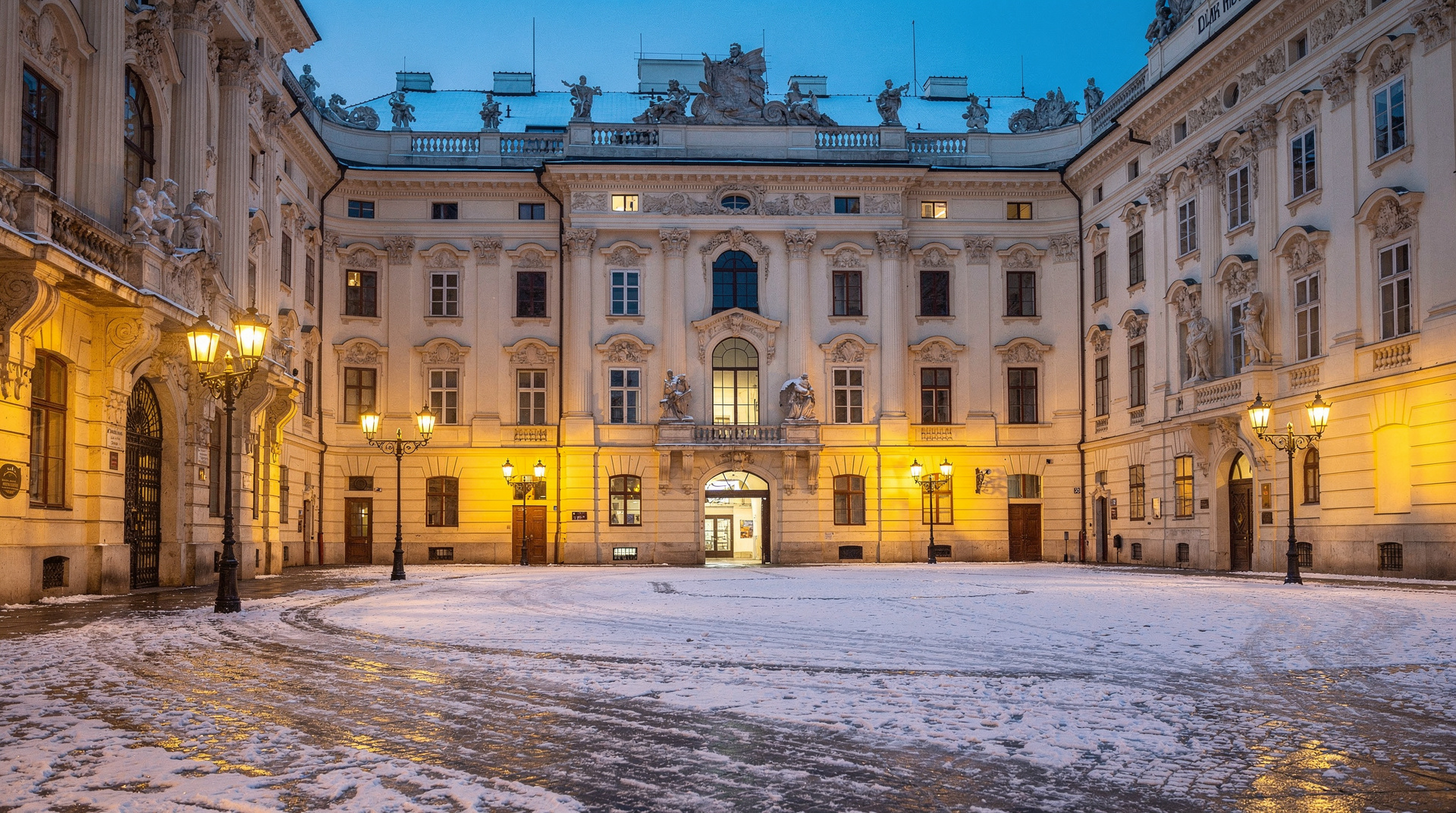
Location: Am Hof square, 1010 Vienna Size: Small (20–30 stalls) Crowd level: Calmer Setting: One of Vienna’s most beautiful Baroque squares, backed by the Bürgerliches Zeughaus (civic armoury)
A genuinely traditional market focused on Austrian craftsmanship and regional products. Less commercial than Rathausplatz, more intimate. The Am Hof square is architecturally stunning and undervisited. A good combination with the nearby Freyung market.
Karlsplatz Advent market
Location: Around Karlsplatz, 1040 Vienna Size: Medium Best for: Art and design-oriented crafts, the Jugendstil Otto Wagner Pavilion backdrop
The Karlsplatz market emphasises contemporary Austrian design and artisan craft alongside traditional items. The presence of the Jugendstil Wagner Pavilion and the Karlskirche creates a different architectural backdrop from the other markets. More interesting for visitors who want contemporary Austrian design rather than purely traditional items.
How to choose for your own trip
The scores above are a starting point, not a verdict. Start by deciding what the evening is for. If it is a celebration with a partner, the setting and the quiet matter most, and Schönbrunn or Spittelberg will serve you better than the biggest plaza. If you are travelling with children, a market with space to move and something to do beats a perfect alleyway. If you want to bring home gifts, craft quality outweighs everything else and the smaller markets pull ahead.
It also helps to think about who you are travelling with and how long you will stand outside. Markets are open-air, so a long evening in winter weather is more tiring than it looks on a photograph. Plan a warm break between two markets rather than trying to link them without stopping, and treat a hot drink as part of the pacing rather than the main event. A café stop fits naturally here — the Vienna coffee house guide explains where to sit and how to order.
If your visit is short, the three-day itinerary and the winter itinerary show how a market evening can sit alongside the major sights without crowding them out. A longer stay gives you room to see one flagship market early in the trip and return later to a smaller one when you know what you liked.
Suggested market itineraries
Innere Stadt cluster (3–4 hours)
- Start at Rathausplatz (1 hour — see the scale, get a Punsch, walk through the market)
- Walk east 10 minutes to Freyung (30 minutes)
- Continue to Am Hof (15 minutes)
- Take U2 from Schottentor to Volkstheater and walk to Spittelberg (45 minutes — the quality crafts)
Palace + village contrast (1 full day)
- Morning at Schönbrunn (U4 Schönbrunn) — palace setting, classical music
- Lunch at a café near the palace
- Afternoon back in the centre at Spittelberg — the authentic neighbourhood market
- Evening at Rathausplatz for the ice rink and night atmosphere
Guided market tours
The Vienna Christmas Markets Tour covers multiple markets in one 2–2.5 hour evening, with a guide who explains traditions and takes you beyond the obvious tourist options.
The Christmas Market Food and Drinks Tour focuses specifically on the culinary side — trying Punsch variants, different food stalls, and explaining what makes each market’s offerings different.
The Christmas Markets and Vintage Shops tour combines the market experience with Vienna’s vintage and antique shopping culture — a good option for visitors interested in both.
Honest tips
The ranking by setting: Schönbrunn = Rathausplatz (tied). The ranking by craft quality: Spittelberg > Karlsplatz > Freyung > Schönbrunn > Rathausplatz. The ranking by crowd management: Spittelberg > Freyung/Am Hof > Schönbrunn > Rathausplatz.
Do not exclusively visit Rathausplatz. It’s the market that appears on every tourist list and most visitors end up there. It’s large and atmospheric but gives a misleading picture of the Vienna Christmas market experience overall. Add at least one smaller market.
Evening vs. afternoon: The markets are photogenic throughout the day, but they come alive at night when the lights are on and the atmosphere peaks. Arrive at 4pm to see the market in the last daylight and then the full illumination as darkness falls around 4:30pm.
Pair with the Naschmarkt: Vienna’s Christmas markets are seasonal add-ons to the city’s regular food culture — the Naschmarkt eating guide is worth combining with a market day if you also want a proper meal away from stall food.
Combining the markets with the rest of Vienna
A market evening works best as the last act of a day, not the whole day. Spend the daylight hours on something indoors and warm, then arrive at the markets as the lights come on. The Hofburg palace guide and the Albertina museum guide pair naturally with the Innere Stadt cluster, since the central markets sit close to those sights. For a day built around the palace setting, the Schönbrunn palace guide covers the visit itself, so you can see the interiors first and the market afterwards.
If music is part of your plan, remember that the season is busy for concerts too. The classical concerts compared guide helps you choose a programme that suits the evening, and the Vienna public transport guide is useful for moving between the markets without relying on taxis.
Finally, if you are travelling on a tight budget, the markets are a good way to enjoy the season cheaply, since entry is free and you decide how much to spend on food and drink. The Vienna on a budget guide has wider advice on keeping the rest of the trip affordable, and what the markets looked like on a real visit gives a first-hand account to set against the scores in this comparison.
Frequently asked questions about Vienna’s Christmas market comparison
Which market is most suitable for children?
Rathausplatz — the ice rink and the Märchenbahn miniature railway are specifically for children. Also: all markets have Kinderpunsch (non-alcoholic hot punch). Schönbrunn’s open courtyard is also good for children, with more space than the alley-based Spittelberg.
Are there markets that focus on Austrian traditional crafts rather than mass-market items?
Yes — Spittelberg has the strictest quality curation. Am Hof and Freyung also emphasise Austrian regional products. The Naschmarkt Advent (if running) is good for Austrian food specialties.
How do the markets compare for buying gifts to take home?
Best for handmade ornaments: Spittelberg. Best for Austrian food products (Schnapps, honey, chocolate): Freyung, Am Hof. Best for variety: Rathausplatz. Avoid purchasing “traditional Austrian” items that appear identical across multiple stalls at the large markets — these are typically mass-produced imports.
Top experiences
Bookable activities with verified prices and instant confirmation on GetYourGuide.