Salzburg
Day trip from Vienna to Salzburg: Hohensalzburg fortress, Mozart's birthplace, the Sound of Music locations, and why staying overnight is worth it.
Salzburg: Small-Group Day Trip from Vienna
Quick facts
- Distance from Vienna
- 295 km (2h30 by Railjet)
- Train
- ÖBB Railjet, Wien Hbf → Salzburg Hbf, ~2h30
- Currency
- Euro (€)
- Best for
- Mozart, baroque architecture, Sound of Music
Salzburg: baroque city, Mozart’s birthplace
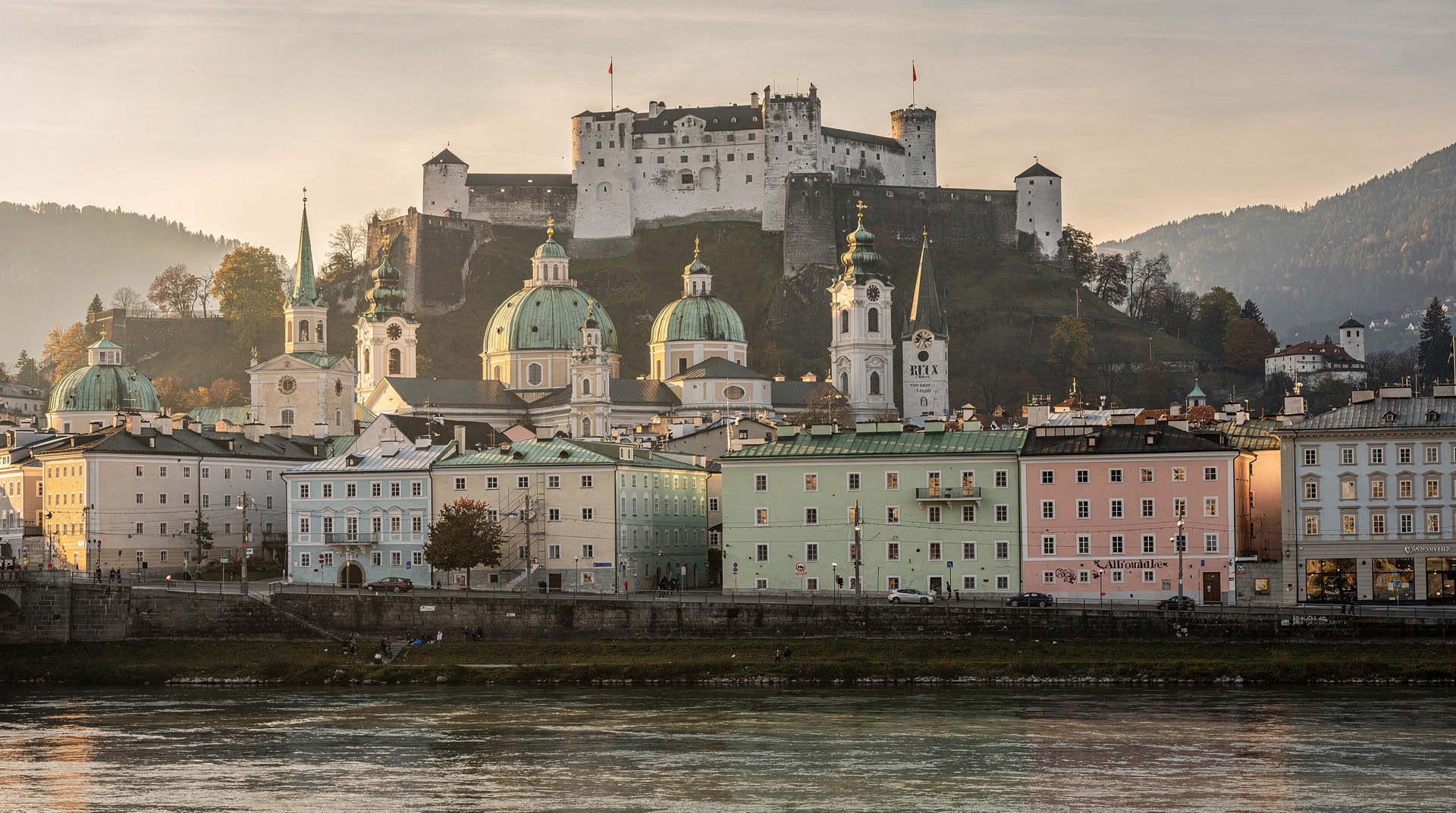
Salzburg is one of the most complete baroque city centres in Europe, a UNESCO World Heritage Site since 1997, and the birthplace of Wolfgang Amadeus Mozart — facts that it deploys with considerable commercial efficiency but that are also simply true. The old town on the left bank of the Salzach river is genuinely one of central Europe’s finest urban compositions: a compact knot of narrow lanes, domed churches, arcaded passageways, and fountained squares enclosed between the cliff-face rock of the Mönchsberg on one side and the Salzach on the other. It sits at the foot of the Alps, and on clear days the snowfields of the Berchtesgadener Alpen are visible above the city rooflines.
The journey from Vienna takes approximately 2h30 by ÖBB Railjet — the fastest and most comfortable option — making Salzburg Austria’s most popular day trip destination from the capital, and also one of the most genuinely rewarding.
| Where | 295km west of Vienna, Salzburg state |
| Cost | Train from around 20–50€ each way; Hohensalzburg funicular+fortress around 17€ |
| Time needed | Full day minimum; overnight recommended |
| Getting there | ÖBB Railjet, Wien Hbf → Salzburg Hbf, hourly, ~2h30 |
| Best time | May–June and September–October |
Getting there from Vienna
The ÖBB Railjet from Wien Hauptbahnhof to Salzburg Hauptbahnhof runs hourly and takes approximately 2h30. Return fares booked several weeks in advance can be very reasonable; fares bought on the day are considerably more. The station is 20 minutes’ walk from the old town or a short bus ride.
An honest planning note: a 12-hour Salzburg day trip (early morning departure, late evening return) leaves about 7 hours in the city. That is enough for the highlights but genuinely exhausting, and it means missing Salzburg at its most atmospheric — the old town at dusk and early morning, when the day-trippers are gone and the streets belong to the city rather than the tours. An overnight stay, even one night, transforms the experience. If the trip is a once-in-a-while visit rather than a quick reconnaissance, stay.
The small-group deluxe day trip to Salzburg from Vienna handles the logistics — transport, guide, priority entry to the main sights — and is the most efficient way to see Salzburg’s highlights in a single day without the anxiety of independent planning.
The day trip to Salzburg with Sound of Music tour combines the city’s historical and architectural highlights with the filming locations from the 1965 film — Nonnberg Abbey (where the real Maria Kutschera was a novice), the Mirabell Gardens gazebo (the “Sixteen Going on Seventeen” scene), the Leopoldskron Palace exterior (seen across the lake in the opening scenes). For visitors for whom the film is significant — and the film introduced Salzburg to an enormous American audience that might otherwise have never heard of it — this is the more emotionally resonant option.
Salzburg’s Sound of Music locations are scattered across the city and the Salzkammergut beyond it, which is why the film route and the lake route are usually sold as one: a Salzburg and Hallstatt trip with Sound of Music follows both at once.
What to see
Hohensalzburg Fortress — one of the largest and best-preserved medieval fortresses in Europe, rising from the Festungsberg above the old town. Founded in 1077 by Archbishop Gebhard, it was expanded into its current scale in the early 16th century when the Prince-Archbishops needed a refuge from the peasants’ rebellions. The funicular runs from the old town to the fortress gate, or a 20-minute walk up the hill. The views over the Salzach valley, the old town rooftops, and the Alps from the battlements are the finest in Salzburg. The fortress interior — apartments, museum, and the medieval torture chamber that every fortress apparently maintained — takes about an hour.
Mozart’s Birthplace (Geburtshaus) — Getreidegasse 9, where Mozart was born on 27 January 1756 in the third-floor apartment of a burgher family that the Mozarts rented. The museum inside covers his early life, the family circumstances of his childhood, and the instruments and manuscripts from his first decade of composition before the family left Salzburg for Vienna. Getreidegasse itself — the pedestrian street that connects the birthplace to the market square — is the most visited street in Salzburg, lined with wrought-iron guild signs (the old identification system before street numbers were introduced) and now also lined with shops. The signs are worth noticing even if the shops are not.
The Residenz — the Prince-Archbishop’s palace and seat of Salzburg’s ecclesiastical rulers, who exercised both religious and secular power over the region from the 13th century until 1803 when Napoleon secularised the archbishopric. The state rooms are the finest baroque interiors in the city. The Residenzgalerie (the art museum in the upper floors) holds Dutch and Flemish masters from the Archbishops’ collections — often overlooked, genuinely good.
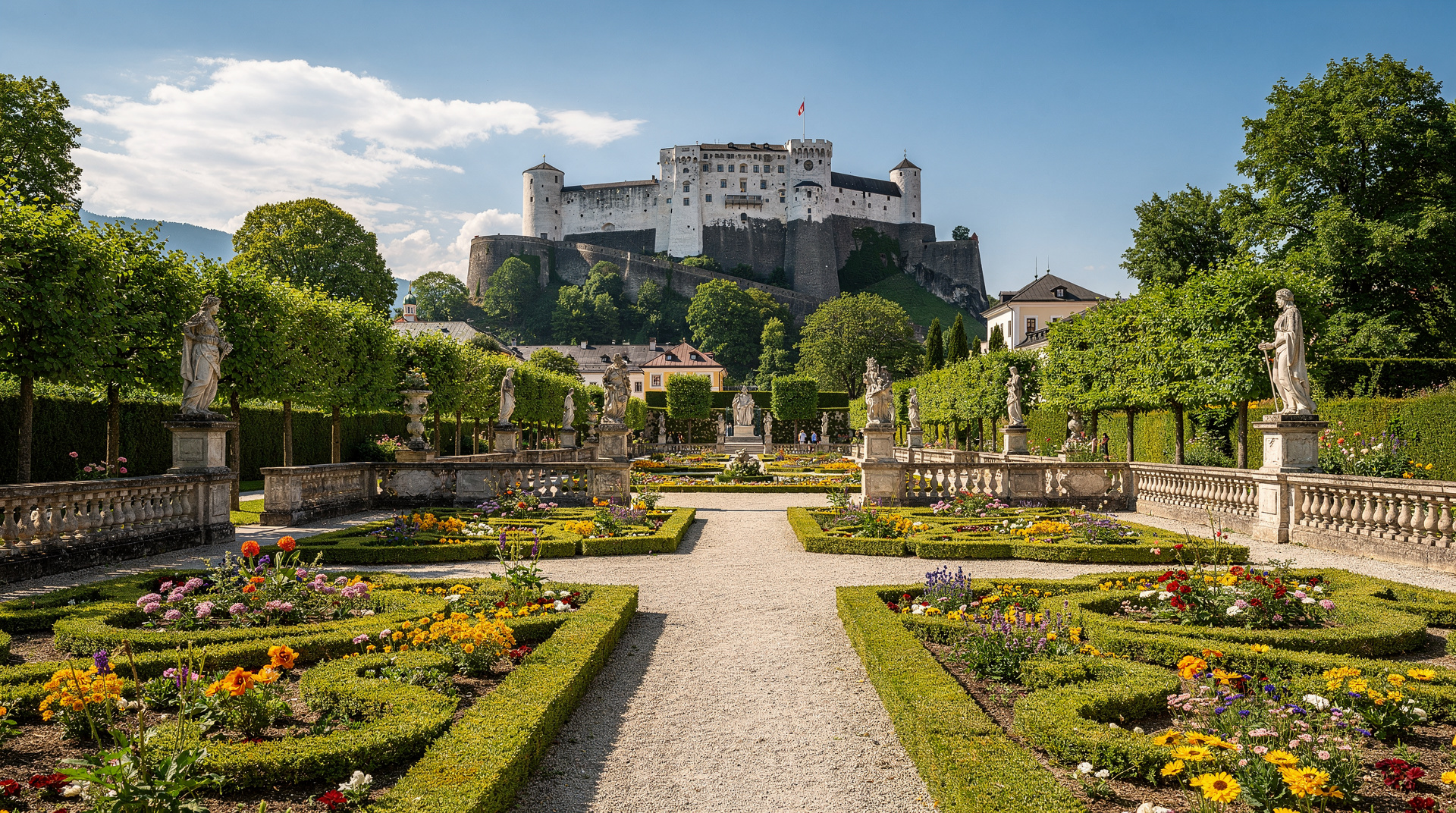
Mirabell Palace and Gardens — built in 1606 for Archbishop Wolf Dietrich von Raitenau as a residence for his mistress Salome Alt (they had 15 children together, which was considered excessive even for a Prince-Archbishop). The formal gardens (always open, free) include the famous staircase and hedge-lined paths, the Hedge Theatre, and the views toward Hohensalzburg. The “Do-Re-Mi” staircase is unmissable if the Sound of Music is on your itinerary. The fountain basin, the dwarf statues, and the parterre garden in front of the palace are worth the time even without the film associations.
Dom zu Salzburg (Salzburg Cathedral) — the 17th-century cathedral on Domplatz, where Mozart was baptised in the font still visible in the nave, and where he later served as court organist until his increasingly fractious relationship with Archbishop Colloredo ended in his dismissal. The facade — white towers, baroque proportions, the plaza framed by archways — is the most-photographed architecture in Salzburg. The interior is large and impressively proportioned; the organ is one of the finest in Austria.
Mozart, authentically
The commercial apparatus around Mozart in Salzburg is considerable — the Mozartkugeln (in the wrong packaging), the Mozart statues, the Mozart concerts (some very good, some purely touristic). The Mozart Wohnhaus on Makartplatz (the house where the Mozart family lived after 1773, on the right bank) is less visited than the birthplace and provides more space for the music manuscripts, instruments, and letters that give a genuine sense of the composer rather than the souvenir.
The Mozartkugel question: the original is a pistachio marzipan and nougat chocolate ball invented by Konditorei Fürst in Salzburg in 1890. The genuine Fürst product is hand-made and sold only at Fürst shops in Salzburg — not at Vienna souvenir shops, not from Reber or other brands that sell the mass-produced version. The authentic Fürst Mozartkugel comes in silver-gold wrapping and is slightly cylindrical-ended rather than perfectly round. The red-foil round version is the industrial imitation. See the Mozartkugel original vs fake guide for the full story.
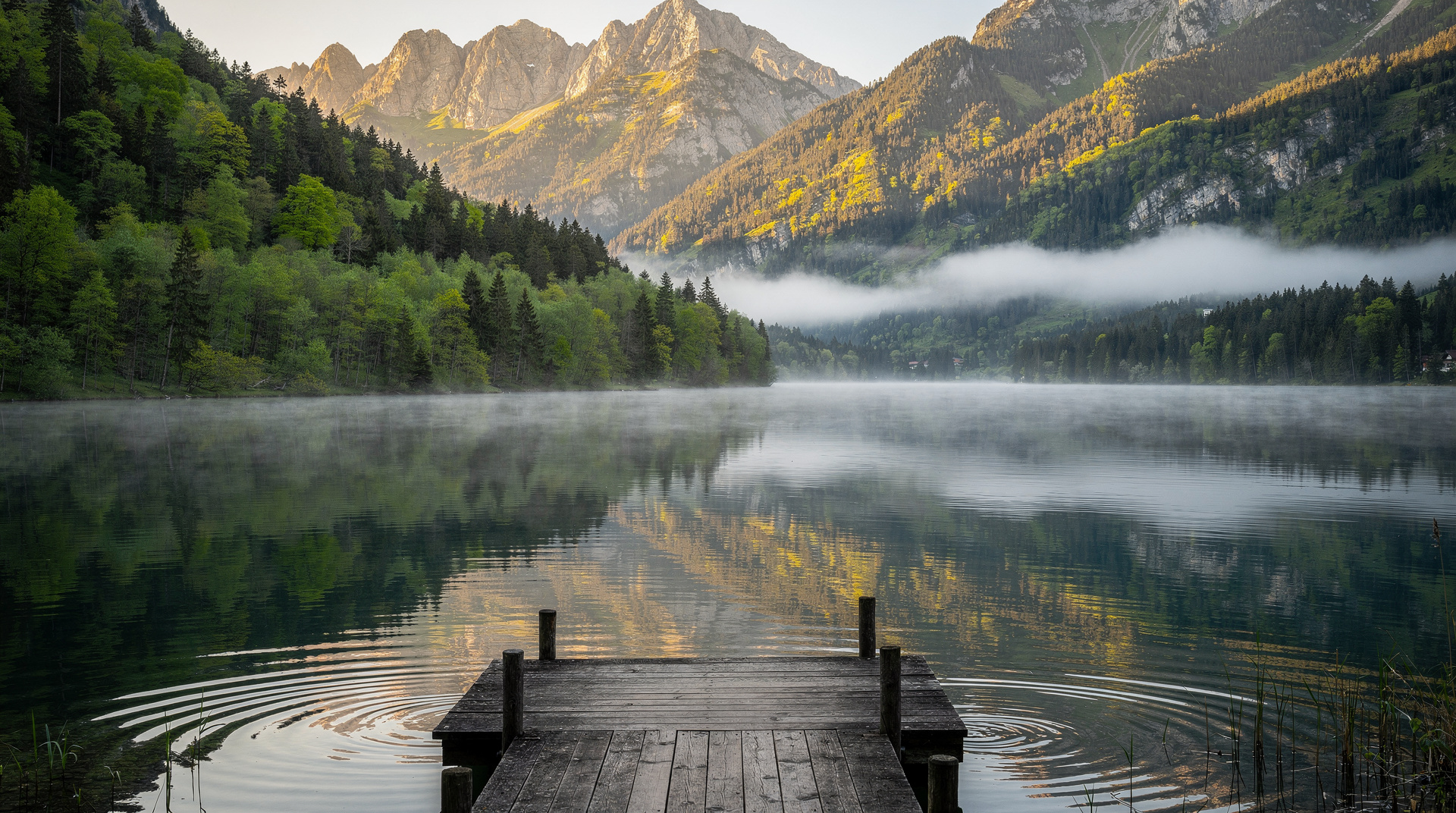
The Salzburg and alpine lakes full-day trip combines a Salzburg visit with the Fuschlsee and other Salzkammergut lakes — a good option for those who want the city and the alpine lake scenery combined in a single day from Vienna.
Shaping your time in the old town
Salzburg rewards a loose plan more than a rigid one. The old town is small enough that the order of the sights matters less than the pace: start with the fortress while the light is clear, drift down through the lanes toward the cathedral and the Residenz, and leave Getreidegasse for the moment when you need a break from walking rather than treating it as a destination in its own right. Cafés tucked into the arcaded passages are the natural place to pause, and the habits you learned in Vienna carry over; the coffee house etiquette guide applies just as well here, and the Viennese coffee types explained will help you order without guessing.
If you are arriving from the capital, it helps to see Salzburg as a counterpoint to Vienna rather than a smaller copy of it. Vienna is imperial: wide boulevards, vast palaces, the weight of the Habsburgs. Salzburg is ecclesiastical and intimate, shaped by the Prince-Archbishops and squeezed between rock and river. The Habsburg history for travelers is useful background for understanding why the two cities feel so different, and the Schönbrunn palace guide shows the imperial side of the story if you have not yet been.
Music is the thread that ties the two cities together. Mozart was born here, but he made his career in Vienna, and many visitors choose to do both halves of the story: the birthplace and the cathedral font in Salzburg, then the concert halls back in the capital. The Mozarthaus concert guide and the Vienna classical concerts compared pick up where Salzburg leaves off, and the Vienna classical music itinerary strings the composer’s world into a single plan.
A few practical habits make the day smoother. Carry a light layer even in summer, since the weather near the Alps can turn quickly. Wear shoes that cope with cobbles and with the hill up to the fortress. Eat a proper meal away from the busiest lanes rather than grabbing something at the first terrace you pass. And keep some flexibility in the afternoon: a sudden shower is a good excuse to step into a church or a museum, and a clear spell is the moment to head for the gardens or the battlements.
Is Salzburg right for you?
Salzburg suits travellers who like walkable, atmospheric cities and who care about music, architecture, or the film. It suits them less well if the plan is to tick off a long list in a few hours, because the old town is best absorbed slowly. If your time in Austria is short and you are still deciding between excursions, the best day trips from Vienna compares the main options side by side, and the Hallstatt day trip guide is worth reading before you decide whether the lakes belong on the same journey. Travellers who prefer a different kind of countryside may be happier on the Wachau day trip, which trades Alpine drama for vineyards and river scenery.
For readers who want a first-hand account before committing, the Salzburg from Vienna trip report describes how the day actually unfolds, including what felt rushed and what felt worth it. It is a useful sanity check against the polished version that tour brochures tend to present.
When to visit
May and June are the optimal months: the Salzburg Festival programme is announced but not yet in session, the town is alive without peak-summer volume, and the alpine scenery around the city is in full spring colour. The Salzach is high and fast from snowmelt.
The Salzburg Festival (late July to August) is the world’s most famous summer music festival — opera, concerts, and theatre across dozens of venues, with ticket prices and accommodation costs to match. Rooms book out a year in advance during Festival weeks; if you want to attend, plan accordingly.
September and October are excellent: the summer crowds thin after the Festival, the alpine foliage turns bronze and copper in the surrounding mountains, and the city returns to a pace that is closer to how it actually lives. The late-afternoon light on the cathedral and the fortress in October is worth making the trip for.
| Month | Weather | Crowds | Notes |
|---|---|---|---|
| May–June | Mild, occasional rain | Moderate | Festival announced, town alive, spring colour |
| July–August | Warm, 20–28°C | Peak (Festival) | Book accommodation a year ahead for Festival weeks |
| September–October | Cool, crisp | Thinning | Best light, bronze foliage, comfortable walking |
| November–March | Cold, snow possible | Low | Christmas market atmospheric; some sights reduced hours |
Day trip or overnight: a practical comparison
The full-day tour handles logistics efficiently but compresses Salzburg into roughly seven hours on the ground once transport is accounted for. Staying overnight roughly doubles the time in the city and adds the old town at dusk and dawn — arguably its best moments, when the day-tripper coach parties have gone.
If you take the Salzburg day trip from Vienna guide approach, plan tightly around Hohensalzburg, the Residenz, and Getreidegasse; if you stay, add the Mozart Wohnhaus and an evening walk along the Salzach. For visitors specifically drawn by the film, the Sound of Music day trip guide covers the filming-location route in detail, including which locations are worth the detour and which are skippable.
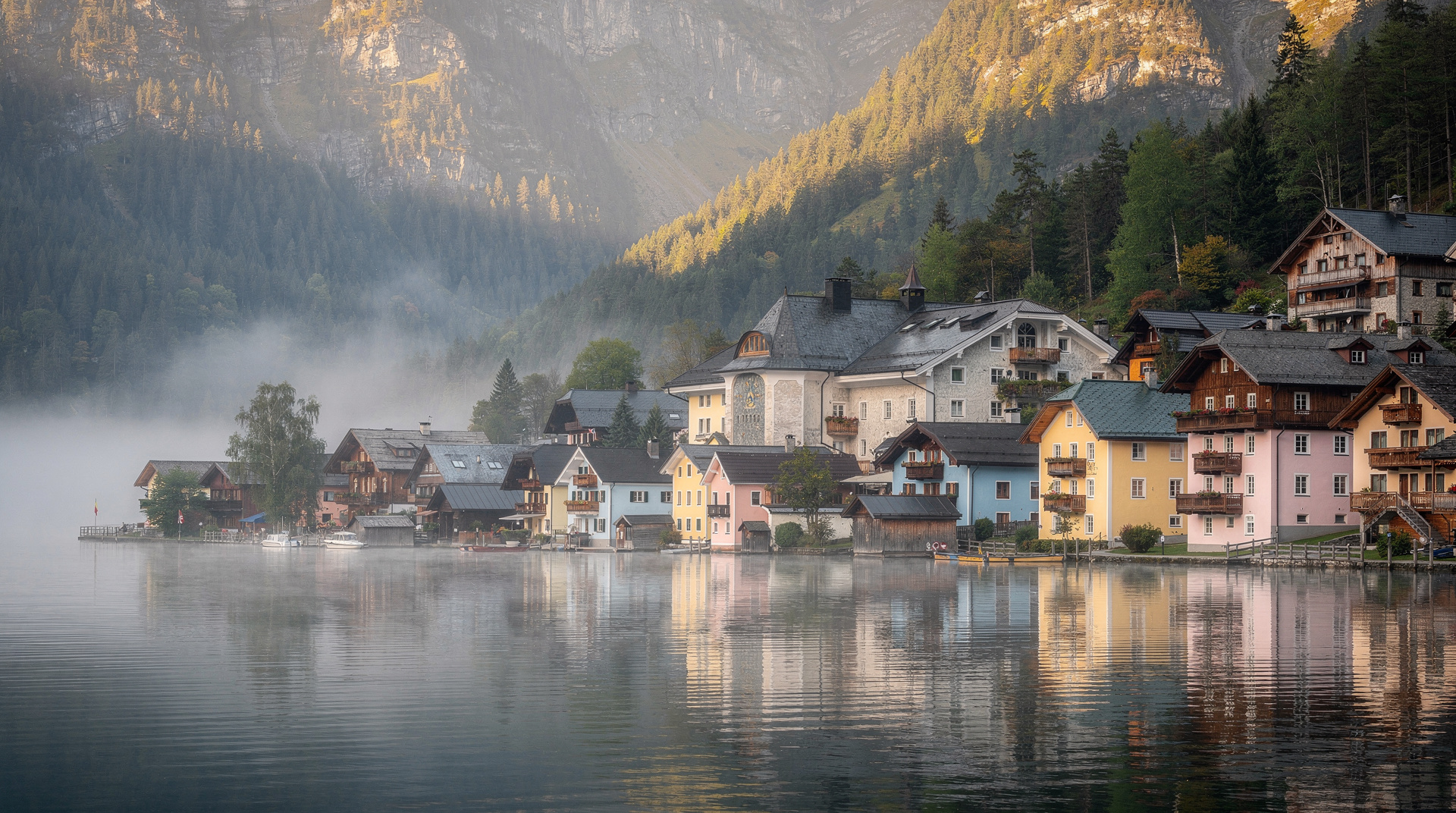
Combining Salzburg with the wider lake district is common and sensible: the Salzkammergut lakes and Hallstatt are both within easy reach and pair naturally with a Salzburg overnight rather than being crammed into the same single day trip from Vienna.
Top experiences
Bookable activities with verified prices and instant confirmation on GetYourGuide.