Vienna in winter: a 4-day Christmas markets itinerary
Vienna: Christmas Markets Tour
Vienna in winter is a different city — quieter crowds at the palaces, extraordinary Christmas markets from late November to 23 December, Glühwein in the snow, and a classical concert in the Musikverein Golden Hall with the radiators on and the audience in coats. This itinerary runs best mid-November to 23 December; adjust for Christmas week (markets close 23–24 December, reopen some markets 26 December–6 January).
| Where | Innere Stadt, Rathausplatz, Schönbrunn, Spittelberg (7th district) |
| Cost | around 350–500 € per person for 4 days, excl. flights |
| Time needed | 4 days (3 works if you drop Belvedere) |
| Getting there | CAT or S-Bahn from the airport, then U-Bahn between markets |
| Best time | mid-November to 23 December; avoid 24–25 December |
At a glance
Day 1: arrival and the Rathausplatz Christmas Market. Day 2: Schönbrunn palace and Christmas market. Day 3: Hofburg, Innere Stadt markets, and a Musikverein concert. Day 4: Spittelberg market, Belvedere, and farewell.
Vienna’s Christmas markets: honest map
Vienna has six main markets and dozens of smaller ones. The three most visited:
Rathausplatz Christkindlmarkt — the biggest, in front of the Neo-Gothic Rathaus, with 140+ stalls, an ice rink, and the illuminated Rathaus as backdrop. Atmospheric but crowded; the food and drink stalls ring the market perimeter, while the artisan stalls are concentrated in the center. Opening typically 15 November – 26 December.
Schönbrunn Christmas Market — smaller than Rathausplatz, set in the Baroque forecourt of the palace. Better quality crafts, less crowded, the palace lit at dusk is genuinely stunning. Opening: mid-November – 26 December.
Spittelberg Christkindlmarkt — the city’s most atmospheric, in the pedestrian lanes of the 7th district’s Biedermeier quarter. Local artisans (jewellery, ceramics, woodwork), narrow lanes decorated with lights, independent food stalls. Opening: late November – 24 December. This is the one locals prefer.
A guided market tour — Vienna Christmas Market tour — 2.5 hours of magical festive time — covers multiple markets with a local guide who explains their history and points out the best stalls. Useful for first-timers navigating the choice.
For the full comparison of all six markets — opening dates, food, crowd levels — see the Vienna Christmas markets guide and the best Christmas markets in Vienna compared. If you only have time for one, the Rathausplatz Christmas market guide and the Spittelberg Christmas market guide each go deeper than this itinerary can.
When to go: week-by-week
Advent runs roughly four weeks, and each one has a different character. Weekends are always busier than weekdays regardless of the week.
| Week | Character | Crowds |
|---|---|---|
| 1st Advent weekend (mid-Nov) | Markets just opened, festive but not yet full | Moderate |
| 2nd–3rd Advent weekends | Peak atmosphere, all markets running | Busy, especially weekends |
| Week before Christmas | Locals shopping, longer evening hours | Busiest of the season |
| 24–25 December | Most markets closed | N/A — plan around this |
| 26 Dec – 6 Jan | A handful of markets reopen (Rathausplatz among them) | Quiet, good value |
Weekday afternoons in the 2nd or 3rd week of Advent are the sweet spot: markets fully open, crowds manageable. See our best time to visit Vienna guide for how winter compares to the rest of the year, and Vienna in winter for a broader seasonal picture beyond just the markets.
Day 1: arrival and Rathausplatz
Afternoon (arrive by 14:00 ideally)
Check in, then take the U2 to Rathaus station by 15:00. The Rathausplatz Christkindlmarkt is best experienced in the 2–3 hours before dusk (around 16:00–17:30 in November–December) when the market lights come on and the Rathaus illumination is at its most dramatic while daylight still remains.
What to eat and drink: Glühwein (heated red wine with spices, the default winter drink, around 4–5 € per cup in the deposit mug), Punsch (a Vienna-specific spiced punch stronger than Glühwein), Marroni (roasted chestnuts, 4 € per paper cone — the smell is the experience as much as the taste), Langos (Hungarian flatbread fried and topped with sour cream — a Vienna Christmas market fixture, 4–6 €).
What to buy: The Rathausplatz stalls include glassware, Christmas ornaments, handmade candles, and Advent calendars. Quality varies — spend time comparing. Austrian Loden wool (the thick boiled-wool fabric) and silver jewellery are typically the best-value purchases.
The Rathaus ice rink (open same period as the market) is free to enter; skate rental costs around 7 €.
Evening (18:30 onwards)
Dinner near Rathausplatz. Café Landtmann (Dr.-Karl-Lueger-Ring 4) is 3 minutes’ walk and does excellent Viennese classics — the Gulasch in winter, warm and paprika-rich, is what Vienna actually eats when it’s cold. Budget 30–40 € per person.
Day 2: Schönbrunn palace and Christmas market
Morning (8:45–12:30)
Take U4 to Schönbrunn. Book the Schönbrunn Palace skip-the-line tour for 9:00 — crowds are lighter in winter than summer but skip-the-line still saves 20–30 minutes. The palace in winter feels more atmospheric: the heating, the dim light through tall windows, the sense of an inhabited building rather than a museum.
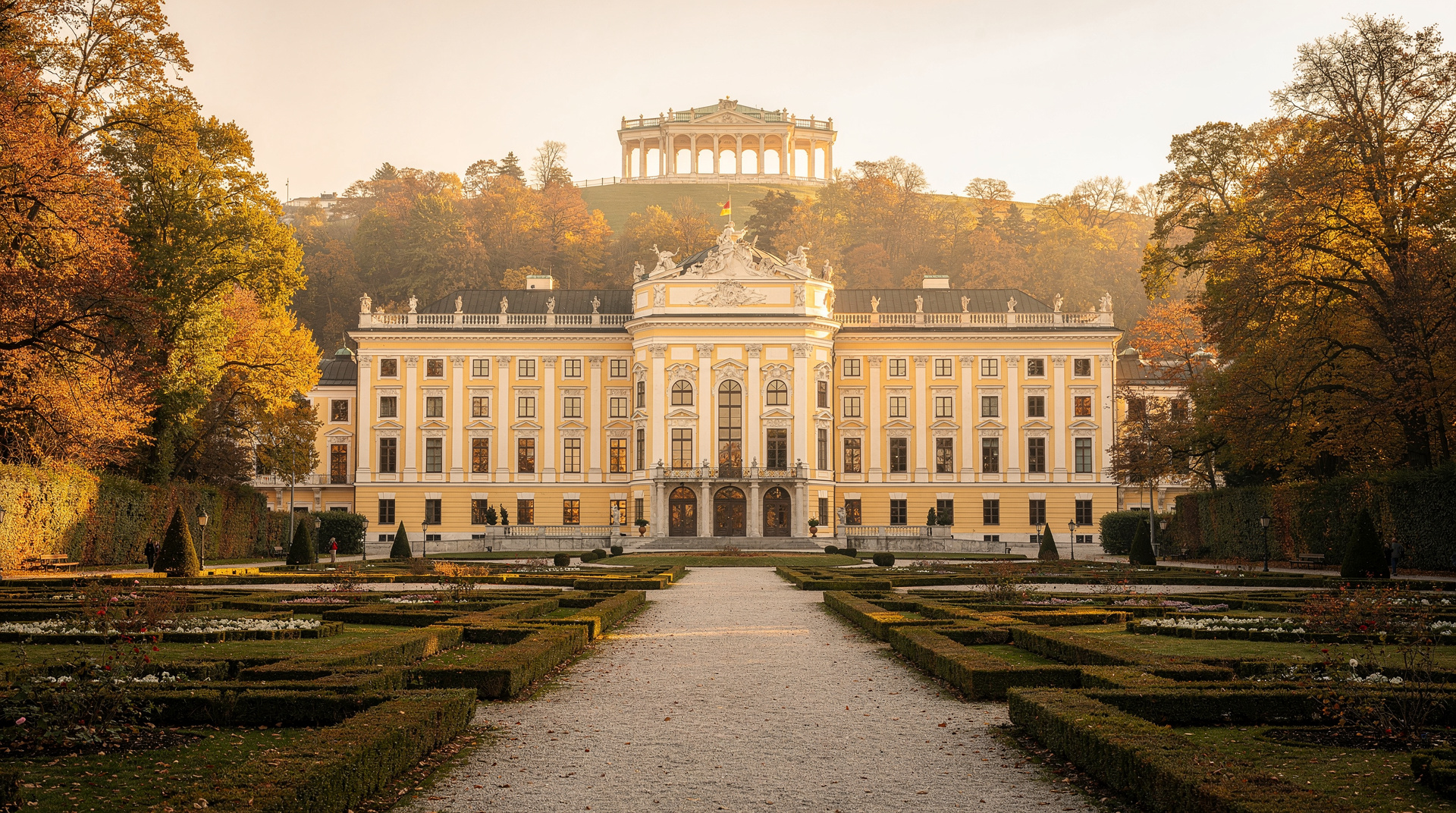
Walk the garden afterward — the formal parterre is bare and geometric in winter, which makes the garden design (not visible in summer through the foliage) clear. The Gloriette is accessible; the view over a grey Vienna is not less beautiful, just different.
Afternoon (13:00–17:30)
Lunch at the Café Residenz (inside the palace grounds) for Viennese classics in an imperial setting.
The Schönbrunn Christmas Market opens from mid-afternoon through the early evening. It is smaller and more upscale than Rathausplatz — better for craft purchases, quieter for Glühwein. The palace illuminated in Schönbrunner Gelb (the palace’s specific shade of imperial yellow, historically colour-matched) behind the market stalls at dusk is one of Vienna’s most photographed winter images.
Evening (18:00 onwards)
Return to the city center. Dinner at Figlmüller Wollzeile — the Wiener Schnitzel in winter, with a glass of Grüner Veltliner, is the comfort food benchmark of the trip. Book ahead.
Day 3: Hofburg, Innere Stadt markets, and Musikverein
Morning (9:30–13:00)
The Hofburg in winter is excellent — the guided tour illuminates the story of the Habsburgs from their medieval origins to the 20th century, and the Christmas decorations that the Hofburg adds to the rooms in November–December are elaborate. Book the Hofburg and Empress Sisi Museum guided tour for the 10:00 departure.
After the Hofburg, the Am Hof Christmas Market (5 minutes’ walk, at the square of the same name) — this is the artisan market, small (around 20 stalls) and focused on handmade goods rather than food. Beeswax candles, hand-carved wooden toys, and Austrian herbal liqueurs. Less crowded than Rathausplatz.
Afternoon (13:30–17:30)
Lunch at Café Central — the full Viennese experience in winter, with the heating on and the newspapers on their wooden hangers and the cakes behind glass.
Afternoon: the Innere Stadt Advent Trail — a self-guided route connecting the smaller markets at Freyung (Austrian wines and crafts), Stephansplatz (compact, touristy but convenient), and the stalls along the Graben. Glühwein as you walk.
The Kunsthistorisches Museum (16:00–17:30) if gallery time is needed — the Bruegel winter landscapes feel appropriate in December.
Evening (19:30 onwards): Musikverein
Tonight: Vienna classical concert in the Musikverein. The Golden Hall in December is heated, full, and the audience includes a higher proportion of Viennese (many Austrians attend Christmas-season concerts as an annual tradition). The programme typically adds Strauss Blue Danube and winter-themed works to the usual Four Seasons and Mozart. Book 2–3 weeks ahead.
Dinner before the concert: Café Schwarzenberg (convenient, reliable, 5 minutes from the Musikverein).
Day 4: Spittelberg, Belvedere, and farewell
Morning (10:00–12:30)
The Spittelberg Christkindlmarkt (7th district, Spittelberggasse and surrounding lanes) is the reason to extend this itinerary to four days. This is the market that Viennese actually attend: local artisans (many selling only here, one week a year), hot Punsch in tiny lanes strung with lights, the Biedermeier architecture of Spittelberg forming a backdrop. Opening: late November, running until 24 December. Go at 10:00 before the afternoon crowds.
The 7th district around Spittelberg is worth 30 minutes of browsing: the Burggasse has good independent shops, Café Phil (Gumpendorfer Strasse 10–12) is the coffee house to know in this neighbourhood.
Afternoon (13:30–17:00)
Last afternoon: Upper Belvedere. Book the Upper Belvedere entry ticket for the afternoon slot. Klimt’s “The Kiss” in December feels seasonally appropriate — the gold-leaf warmth of the painting against the grey December light through the gallery windows. The Baroque garden in winter, bare-branched, reveals its geometric structure. The café in the Orangery does hot chocolate.
Evening: farewell dinner
Plachutta Wollzeile (Wollzeile 38) for the traditional farewell — Tafelspitz (boiled beef in broth, served with roasted potatoes and horseradish cream). Reserve ahead. For a final Glühwein: the Rathausplatz market stays open until 21:00 most evenings; one last cup in the lights before the airport.
Practical notes for a Vienna winter visit
Temperatures: Vienna in December averages 0–4°C. Snow is possible but not guaranteed. Pack proper winter clothing — the Viennese do, and the outdoor market visits add up to significant time outside.
Crowds: December weekends (especially the first three weekends of Advent) are busiest. Visit markets on weekday afternoons for the best experience. Christmas week (23–26 December) is quiet on markets (most close 23–24 December) but very pleasant in the palaces.
What closes in winter: Spanish Riding School closes July–August but is fully operational October–June. The Riesenrad and Prater are open year-round. Heurigen mostly close October–April. Wachau boat trips pause November–March.
Booking in December: Christmas market tours book out. The Musikverein December concerts are often full — book as early as possible.
Getting around: the CAT (City Airport Train) or the cheaper S-Bahn (S7) covers the airport-to-city leg in 16–25 minutes; from there the U-Bahn connects every market on this itinerary. See the Vienna public transport guide for tickets and the airport to city guide for the first leg. Where to stay: basing yourself in Innere Stadt keeps Stephansdom, the Musikverein, and the Innere Stadt Advent Trail within walking distance, at the cost of higher hotel rates than the outer districts.
If four days feels like too much, the Vienna 3-day itinerary compresses this trip’s highlights; if you want to add more classical music, the Vienna classical music itinerary builds an entire trip around concerts instead of one evening.
Frequently asked questions about this itinerary
Q: Which Christmas market is the best in Vienna?
For atmosphere: Spittelberg (authentic, local, intimate). For scale: Rathausplatz (the biggest, most photogenic backdrop). For quality craft shopping: Am Hof. Our Vienna Christmas markets guide compares all six in detail.
Q: Is the Schönbrunn Christmas market worth the trip out?
Yes, particularly at dusk when the palace is illuminated — the setting is more beautiful than Rathausplatz. It is smaller and has better-quality crafts. Combine with the palace visit on the same day.
Q: What is Punsch versus Glühwein?
Glühwein is heated red wine with cloves and cinnamon — widely available across Europe. Punsch (Vienna-specific) is typically a mix of rum, fruit juice, tea, and spices — stronger, sweeter, and more distinctive. Vienna Punsch is worth trying even if you prefer Glühwein at home.
Q: When exactly do the Christmas markets run?
Rathausplatz: typically 15 November – 26 December. Schönbrunn: mid-November – 26 December. Spittelberg: late November – 24 December. Dates vary by a few days each year — confirm before booking travel.
Q: Is 4 days too long for a Vienna Christmas market trip?
Not if you also want the Hofburg, a concert, and the Belvedere — the markets themselves could be done more quickly, but this itinerary balances markets with the palace sightseeing most first-time visitors also want. If markets are genuinely your only priority, the Vienna weekend itinerary compresses a market-focused trip into 2–3 days.
Q: Do I need to book Christmas market tickets in advance?
The markets themselves are free to enter — no tickets needed. What sells out is the guided market tour, the Musikverein concert, and skip-the-line palace slots, all of which get busier through December. Book those specific components ahead; the markets themselves you can simply walk into.
Top experiences
Bookable activities with verified prices and instant confirmation on GetYourGuide.