Vienna honeymoon itinerary: 5 days of imperial romance
Vienna: Schönbrunn Palace Evening Tour, Dinner and Concert
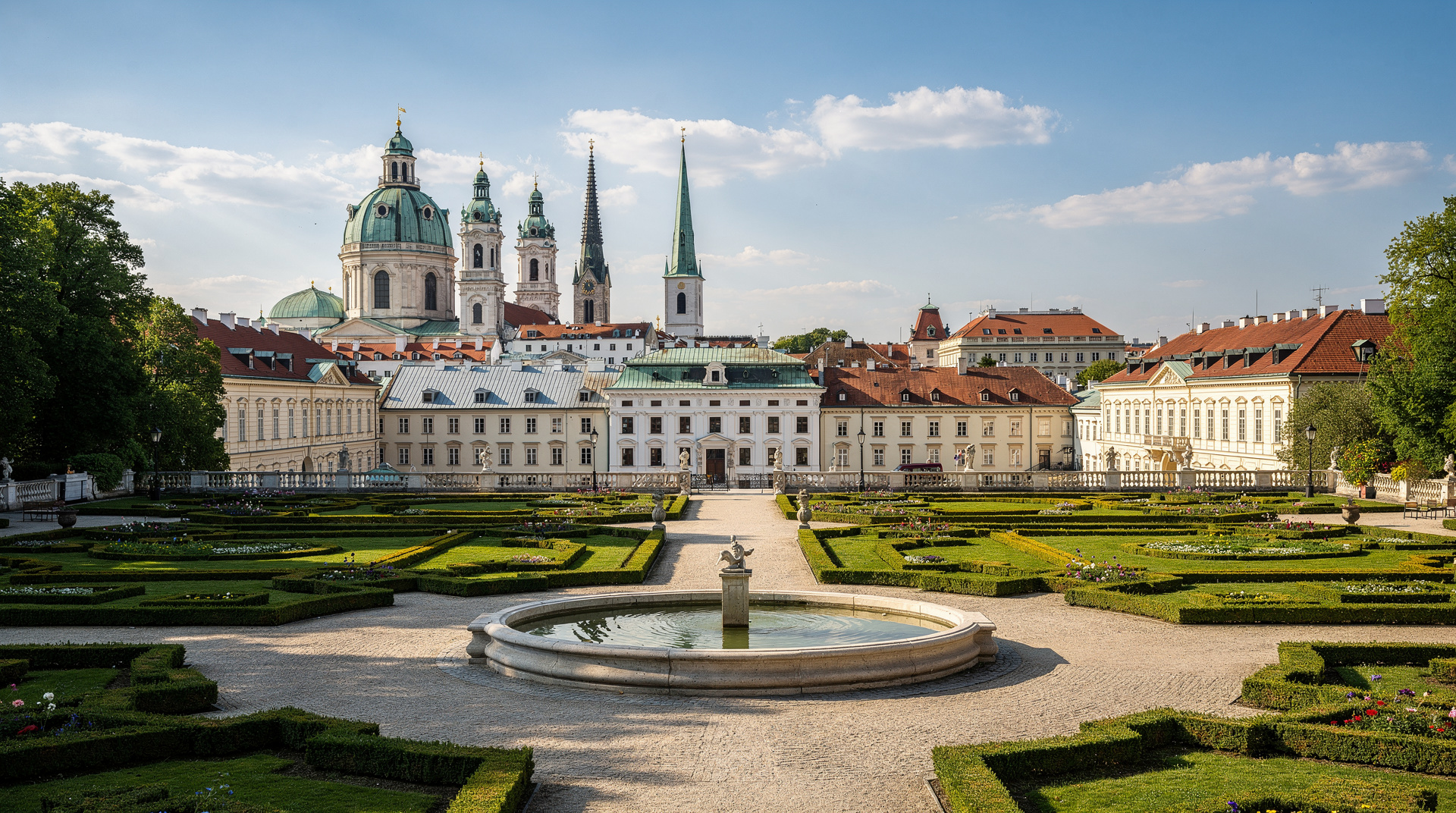
Vienna was built for grand gestures — by emperors who understood that beauty and love are political, by architects who made marble speak. Five days here as honeymooners means slow mornings in coffee houses, private palace tours, a candlelit concert in an 18th-century greenhouse, and a wine cruise through a valley that the Danube carved when the Habsburgs were still just a family of counts. This itinerary prioritises atmosphere over efficiency. For a less indulgent, faster-paced version of the same city, compare the 5-day itinerary.
At a glance
| Duration | 5 days |
| Pace | Slow and deliberate — atmosphere over efficiency |
| Best for | Couples, honeymooners, romantic escapes |
| Transport | Walking, trams, and private tours; no car needed |
| Budget | Luxury — 200–600 € per day for two depending on choices |
| Best season | May–June or September–October |
Day-by-day summary
| Day | Morning | Afternoon | Evening |
|---|---|---|---|
| 1 | Café Landtmann, Hofburg private tour | Café Central, 1st district crypts | Palmenhaus dinner |
| 2 | Schönbrunn Palace, Gloriette | Albertina Museum | Schönbrunn dinner concert |
| 3 | Wachau Valley wine cruise | Wachau Valley wine cruise | Light dinner back in Vienna |
| 4 | Upper Belvedere, private Klimt tour | Steirereck or Meixner’s lunch | Heuriger in Grinzing |
| 5 | Coffee houses (Bräunerhof, Demel) | Naschmarkt, Secession Building | Michelin-level farewell dinner |
Day 1: arrival and the Hofburg with a private guide. Day 2: Schönbrunn morning, evening concert and dinner. Day 3: Wachau Valley wine cruise. Day 4: Belvedere at leisure, private Klimt tour, Heuriger. Day 5: Naschmarkt, coffee houses, and a Michelin-level dinner.
Day 1: the Hofburg and a Viennese first evening
Morning (9:30–13:00)
Resist the impulse to start early. Check in the night before if possible, or use the hotel baggage service and begin at 9:30 with Café Landtmann on Dr.-Karl-Lueger-Ring — the Ring’s most distinguished coffee house, frequented by politicians, actors, and the late Sigmund Freud. Order a Melange (Viennese café au lait), two Kipferl (crescent rolls), and take your time.
Walk from Landtmann to the Hofburg through the Volksgartenpark — the rose garden is at its peak in June and October, and the Theseus Temple (1823) reflected in the formal pool is one of Vienna’s small perfections.
Book the private version for the Hofburg: Vienna Hofburg and Empress Sisi Museum guided tour. The story of Empress Elisabeth (Sisi) — her impossible role as an imperial consort, her obsessive travel, her assassination in Geneva in 1898 — is a genuinely romantic and tragic narrative. A good guide makes it resonate.
Afternoon (13:00–18:00)
Lunch at Café Central — the full Tafelspitz, the best of the period rooms, a shared slice of Sachertorte to settle the original-vs-rival debate (our verdict: Demel’s recipe has more complexity, Sacher’s has more chocolate richness).
Afternoon stroll through the 1st district: Graben, Kohlmarkt, the Imperial Crypt at Kapuzinerkirche (the Kaisergruft where 149 Habsburgs are buried — small, quiet, surprisingly moving; Francis II’s tomb has a long inscription he wrote himself). Then the Augustinerkirche (the Habsburg parish church, where royal hearts are stored in silver urns in the Herzgruft — adjacent to the Albertina).
Evening (19:30 onwards)
First Vienna dinner: Palmenhaus (Burggarten 1) — a 1901 Art Nouveau greenhouse in the Burggarten, converted to a restaurant. In summer, tables set in the tropical greenery with the Brahms monument visible outside. In winter, the steam-heated glass envelope is luminous. The menu is modern Austrian; the wine list is very good.
After dinner, walk the Burggarten under the trees — the Mozart statue (1896) is here, facing the Musikverein.
If the Hofburg leaves you curious about the dynasty behind it, the Habsburg history guide and the story of Franz Joseph and Sisi make good reading on the first evening, and the Innere Stadt page maps the streets you have just walked.
Day 2: Schönbrunn and the evening concert
Morning (8:45–12:30)
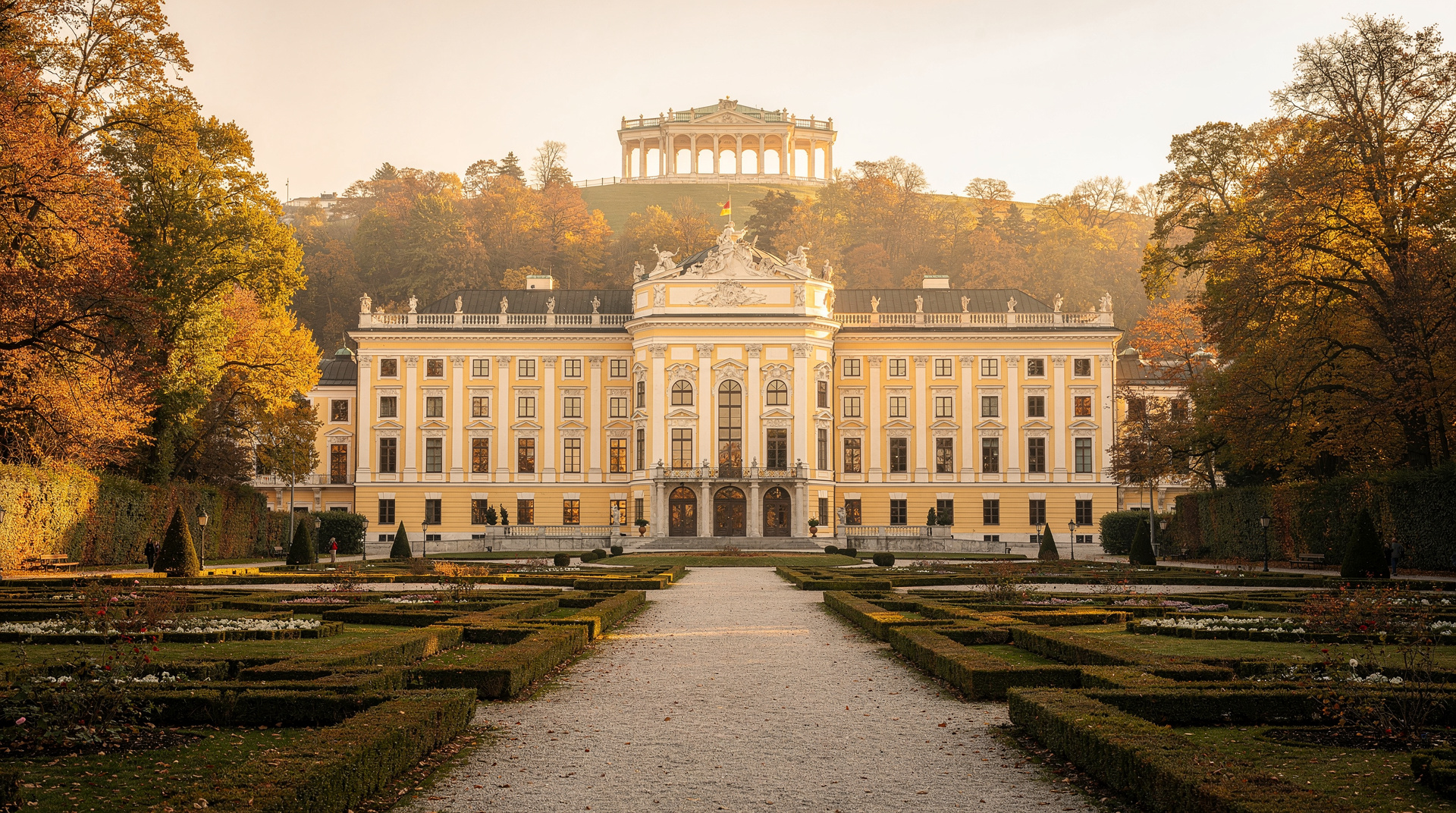
Schönbrunn first thing — book the Schönbrunn Palace skip-the-line tour for 9:00. With the Grand Tour (45 rooms), focus on the rooms that tell the love story: Maria Theresa’s bedroom (she had 16 children here), the Hall of Mirrors where Mozart played for the empress aged 6, and Franz Joseph’s study with Elisabeth’s portrait above his desk. He never redecorated the room after her death.
After the palace, walk up through the formal garden to the Gloriette — 30 minutes each way, the view takes in the full garden geometry and the Vienna skyline beyond. The Gloriette café serves coffee on the terrace.
Afternoon (13:30–17:00)
Lunch at the Café Residenz (Schönbrunn Palace grounds) — expensive but the setting is irreplaceable. Or return to the city for a lighter lunch at Café Hawelka (Dorotheergasse 6) — established 1939, unchanged, still run by the founding family. The Buchteln (sweet buns filled with plum jam) arrive at 22:00 nightly; for honeymooners on a daytime visit, the Melange and people-watching are sufficient.
Afternoon: the Albertina Museum for the permanent collection — Monet’s water lilies, Cézanne, and the 20,000-piece print collection that includes Dürer’s Young Hare (1502). The Albertina is also the best spot in Vienna for a sunset photograph: the equestrian statue of Archduke Albert, the Staatsoper behind, and the Ringstrasse in late light.
Evening: the Schönbrunn dinner concert
Tonight is the centrepiece of the Vienna honeymoon. Book Vienna: Schönbrunn Palace evening tour, dinner and concert well ahead — at least two weeks, more in summer. The package includes a sunset visit to the palace, a candlelit dinner in the Orangery (the 186-metre Baroque greenhouse), and a concert by the Schönbrunn Baroque Ensemble performing Mozart and Haydn. The Orangery in candlelight, with the dinner plates cleared and the musicians taking their places, is one of those evenings that becomes a permanent memory.
Cost: 95–130 € per person. Dress smartly — this is an occasion.
For a wider view of the palace itself, the Schönbrunn Palace guide covers the rooms and gardens, and Schönbrunn vs Hofburg helps if you wonder why this itinerary gives each its own day. Couples who want to compare other musical evenings can look at the Musikverein concerts guide.
Day 3: Wachau Valley wine cruise
The most romantic of the day trips. Two options:
Option A (organised tour): From Vienna: Wachau Valley day tour with wine tasting — small group, two or three winery visits, guided tastings of Grüner Veltliner and Riesling from the Wachau classification system (Steinfeder, Federspiel, Smaragd). Paired with a Danube boat section through the gorge. This is genuinely good wine with context — the guide typically knows the winemakers personally.
Option B (DIY by train and boat): Train from Wien Hbf to Melk (1 hour 15 minutes, 17 €). Walk up to Melk Abbey for 90 minutes. Take the DDSG Blue Danube boat Melk → Dürnstein or Krems (1 hour 45 minutes, 27 €). Walk the Dürnstein village — the blue church, the castle ruin, the apricot orchards. Train back from Krems to Vienna (1 hour).
For honeymooners: Option A is more intimate (small groups, better context) and the winery visits are the best of the day.
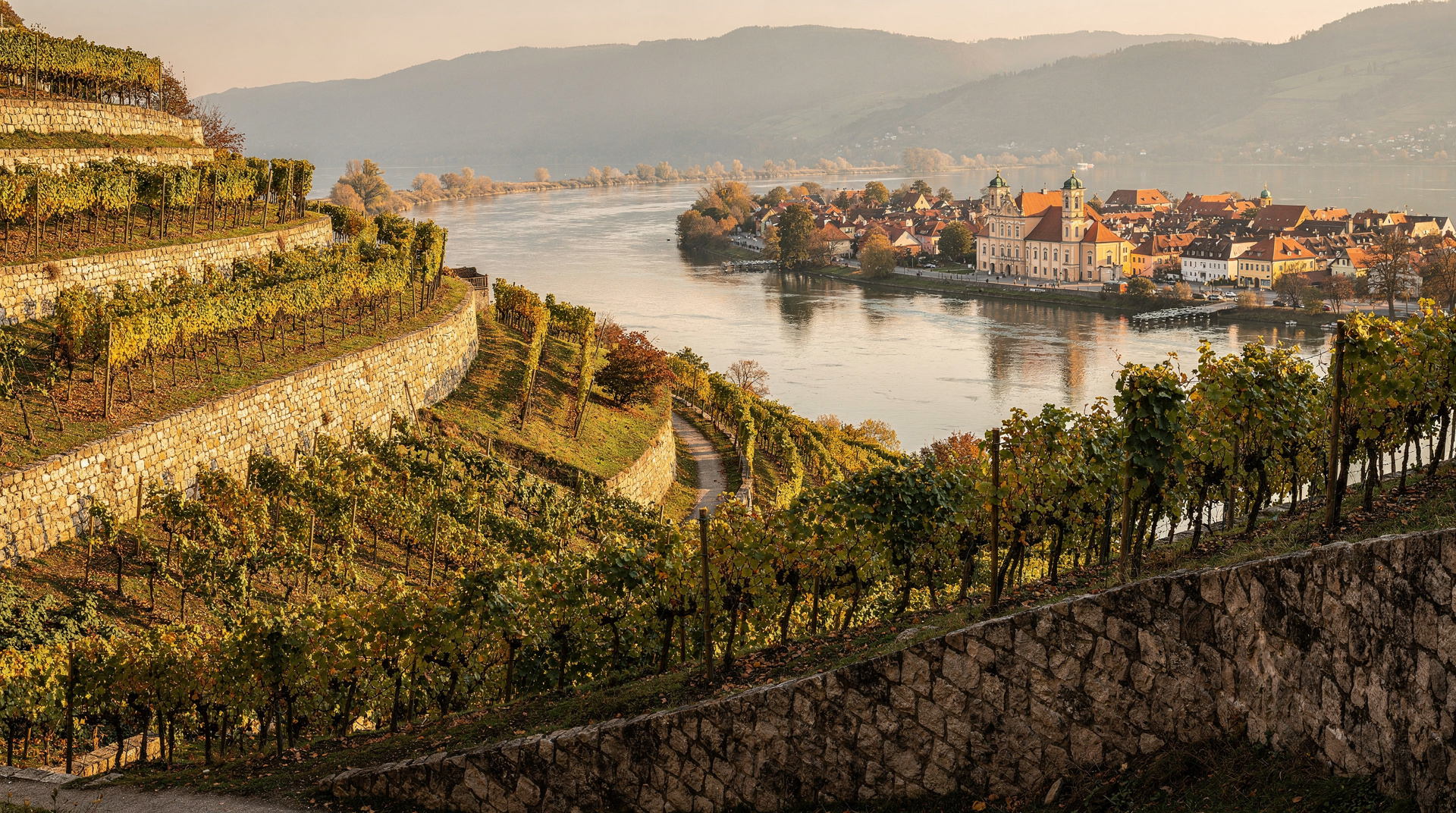
What you see either way: the Wachau gorge — terraced vineyards dropping to the river, castle ruins on heights, medieval villages at river level, the Benedictine abbey at Melk above the bend. This is Austria’s most beautiful river valley.
For more on the valley, see the Wachau Valley destination page, the Wachau wine route guide for the tasting side, and the Wachau day trip guide for logistics.
Day 4: Belvedere, Klimt, and a Heuriger
Morning (9:00–12:30)
Upper Belvedere at opening. For honeymooners: book the private Klimt experience rather than the general entry — Vienna: Belvedere and The Best of Gustav Klimt private tour gives you a guide who explains the symbolism of “The Kiss” (1908) and “Judith I” (1901) in depth. “The Kiss” — two figures merged in gold-leaf and pattern, the city visible below them — has been read as a commentary on the relationship of Franz Joseph and Elisabeth, and as an allegory of Vienna’s golden age, and as simply the most technically accomplished representation of erotic love in Western painting. A guide who knows the work makes the difference.
Afternoon (13:00–17:00)
Walk through the Belvedere garden (free, 30 minutes), then into the 4th district for lunch at Steirereck im Stadtpark (if booked months ahead — this is Austria’s top-rated restaurant, 150–250 € per person, a once-in-a-trip experience). More accessible: Meixner’s Gastwirtschaft (Buchengasse 64, 5th district) for regional Austrian cooking at honest prices.
Afternoon free — the 7th district (Neubau) for design shop browsing, or the Prater for a lazy afternoon walk along the Hauptallee.
Evening: a Heuriger in Grinzing
Take tram D to Grinzing or tram 38 to Nussdorf for a Heuriger evening. Recommendations: Heuriger Mayer am Pfarrplatz (Pfarrplatz 2, 19th district) — where Beethoven spent a summer, excellent estate-grown Riesling from their own vineyards; Heuriger Sirbu (Kahlenbergerstrasse 210) — open vineyards, terrace with city view. The cold buffet (Liptauer cheese, smoked meats, bread) plus a carafe of Grüner Veltliner is the evening’s dinner. Return by tram.
New to the Heuriger tradition? The Heuriger guide explains how the buffet and carafe system works, and the Grinzing destination page describes the neighbourhood.
Day 5: coffee houses and a Michelin farewell dinner
Morning (9:30–12:30)
A slow final morning in the Innere Stadt coffee houses. Begin at Café Bräunerhof (Stallburggasse 2) — the Bernhard café (Thomas Bernhard spent every morning here for 20 years), completely unrenovated, newspapers on wooden hangers, the Viennese coffee house as it actually is rather than as it is marketed. Then walk to Café Demel (Kohlmarkt 14) for the contrast — imperial confectioners since 1786, the shop window full of sugar sculpture, the cakes as good as they look.
For more on the etiquette and the differences between the great houses, the coffee house guide and the comparison of Café Central, Landtmann and Sacher are worth a read before you go.
Afternoon (13:00–17:00)
Naschmarkt for a leisurely lunch from the stalls — this is the best final afternoon in Vienna: the energy, the variety, the connection to everyday Viennese life that the palaces can’t give.
After Naschmarkt, the Secession Building (Friedrichstrasse 12) — the 1898 Art Nouveau exhibition pavilion built for Klimt’s generation. The golden laurel-leaf dome, the Beethoven Frieze in the basement (Klimt’s monumental response to Beethoven’s 9th Symphony), and the building’s inscription: Der Zeit ihre Kunst, der Kunst ihre Freiheit (To every age its art, to art its freedom).
Evening: farewell dinner
For a honeymoon final dinner: Steirereck im Stadtpark is the top choice if the earlier attempt didn’t work out — book months ahead. More accessible alternatives: Meixner’s Gastwirtschaft for Styrian-accented Austrian cooking; Konstantin Filippou (Dominikanerbastei 17) for contemporary Austrian at two-Michelin-star level; or the beautiful Schweizerhaus beer garden for a relaxed, memorable last evening in the Prater.
Romantic add-ons worth knowing
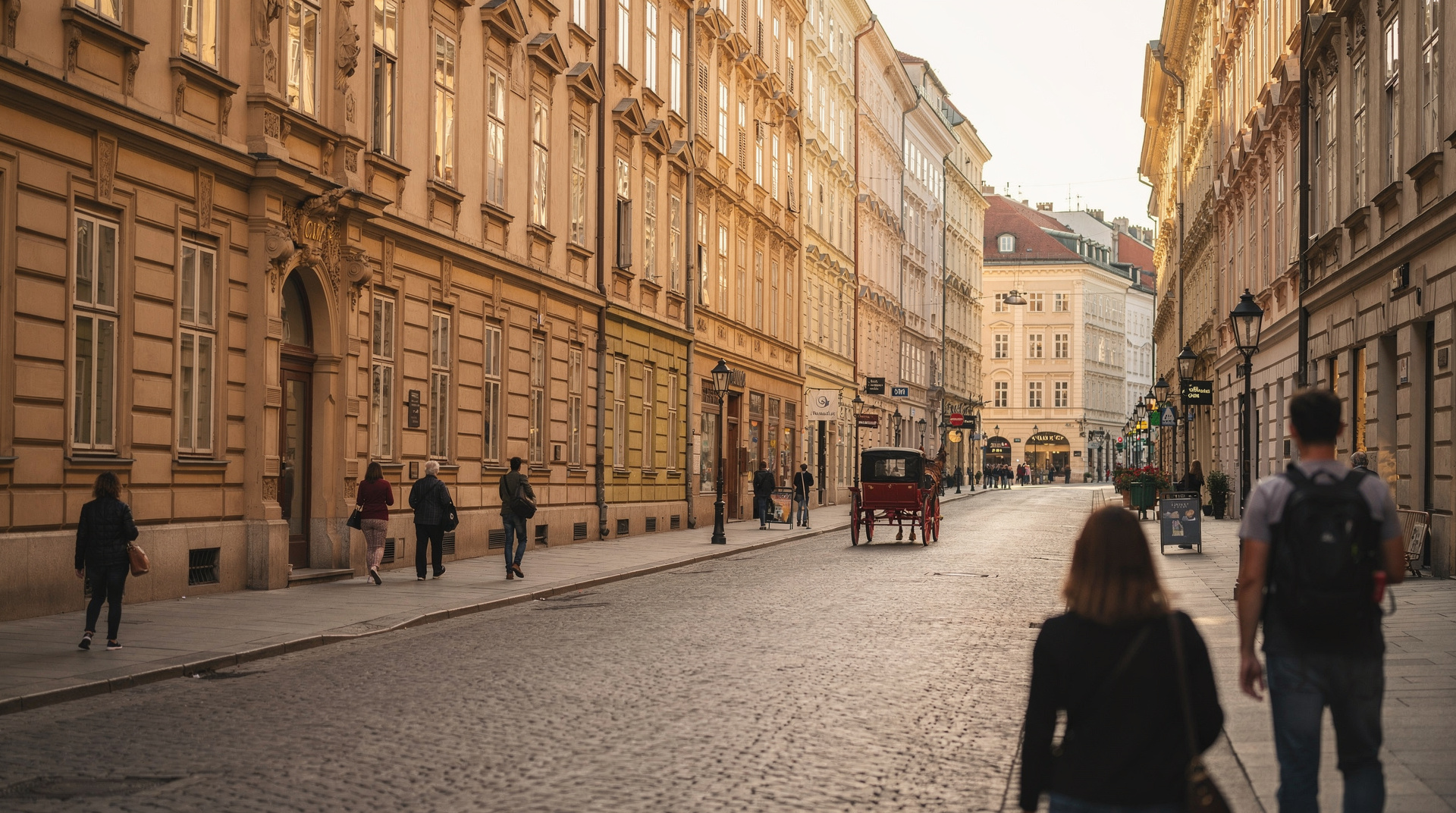
Fiaker ride: A horse-drawn Fiaker from Stephansplatz through the 1st district costs around 55 € for 30 minutes. Touristy but Vienna-authentic; the horses are well-treated and the drivers are licensed.
Private apartment for Schönbrunn: Book the exclusive Schönbrunn after-hours experience — the palace after closing time, private candlelit access to specific rooms. Premium pricing (500 €+) but extraordinary.
Sunrise at the Belvedere: The Belvedere garden opens early; arriving at 7:30 before the coaches means the fountain axis entirely to yourselves.
Choosing between the private tours and general admission
This itinerary leans on private guided experiences — the Hofburg tour, the Belvedere Klimt tour — because a good guide turns a honeymoon visit into something more personal than a printed audio-guide script. If budget is a real constraint, general admission with a well-timed audio guide covers the same rooms and artworks; the romance comes from the pacing and the shared moments (the Gloriette view, the Heuriger evening, the candlelit Schönbrunn dinner) as much as from any single tour format. Our Vienna honeymoon guide has a fuller breakdown of where the private upgrade is worth it and where it isn’t.
Booking priorities for a honeymoon trip
Book the Schönbrunn dinner concert and the private Belvedere Klimt tour furthest ahead — both have limited capacity and sell out weeks in advance in peak season. Restaurant reservations at Steirereck im Stadtpark need to be made months ahead if that’s your farewell-dinner choice; Meixner’s Gastwirtschaft and Konstantin Filippou both take reservations closer to the date and are excellent alternatives.
Frequently asked questions about this itinerary
Q: Is Vienna expensive for a honeymoon?
Vienna is mid-range to premium by Western European standards. A luxury honeymoon (top hotel, Schönbrunn dinner concert, Michelin dinner) runs 400–600 € per day for two. A mid-range romantic Vienna trip (good hotel, concert, nice restaurants) costs 200–300 € per day for two.
Q: What is the most romantic restaurant in Vienna?
For atmosphere: Palmenhaus (Art Nouveau greenhouse in the Burggarten). For cuisine: Steirereck im Stadtpark (Austria’s top-rated restaurant). For Viennese tradition: Meixner’s Gastwirtschaft. Each is romantic in a different way.
Q: When is Vienna most romantic?
May–June for the rose gardens, September–October for the golden light and wine harvest. December for Christmas market atmosphere. July–August is hot and crowded — still beautiful but more effort.
Q: Is the Schönbrunn dinner concert actually good?
Yes — the Schönbrunn Baroque Ensemble is professional, the Orangery setting is exceptional, and the dinner is solid Austrian cooking (not a tourist buffet). It is a premium tourist product executed well. The Schönbrunn evening concert guide covers what to expect in detail.
Q: Should we book the private Hofburg and Belvedere tours instead of general admission?
For a honeymoon, yes if budget allows — a private guide tailors the Habsburg love story (Franz Joseph and Elisabeth) and the symbolism in Klimt’s “The Kiss” specifically, rather than delivering a generic script to a group. General admission tickets are perfectly good if the private premium doesn’t fit your budget; our Hofburg Palace guide and Belvedere Palace guide cover both options.
Q: What if we want a shorter honeymoon in Vienna?
Three days is workable if you drop the Wachau Valley day and keep the Schönbrunn dinner concert and a private palace tour or two — see the 3-day itinerary for the city-core pacing and layer the romantic upgrades from this itinerary on top.
Top experiences
Bookable activities with verified prices and instant confirmation on GetYourGuide.