Wachau Valley day trip from Vienna: the complete loop guide
Vienna: Wachau Valley, Melk Abbey Tour with Danube Boat Trip
How do you do the Wachau Valley as a day trip from Vienna?
The classic loop: train Vienna to Melk (1h15), visit Melk Abbey (2h), take the DDSG boat down the Danube to Krems (1h45), explore Krems and Dürnstein (2h), then train back to Vienna (1h). Total: 8–9 hours, doable independently or on a guided tour.
The Wachau: why this is Vienna’s finest day trip
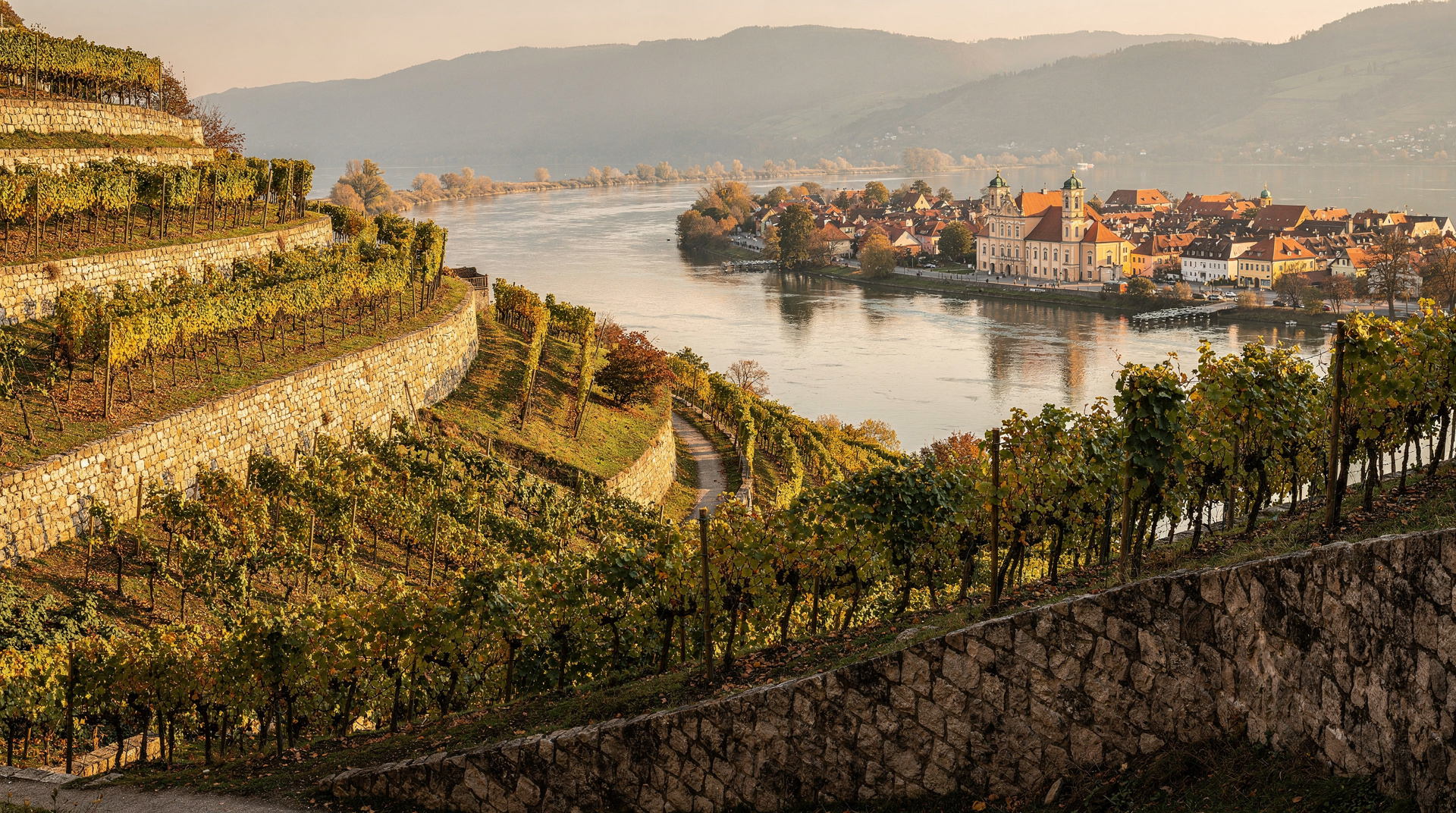
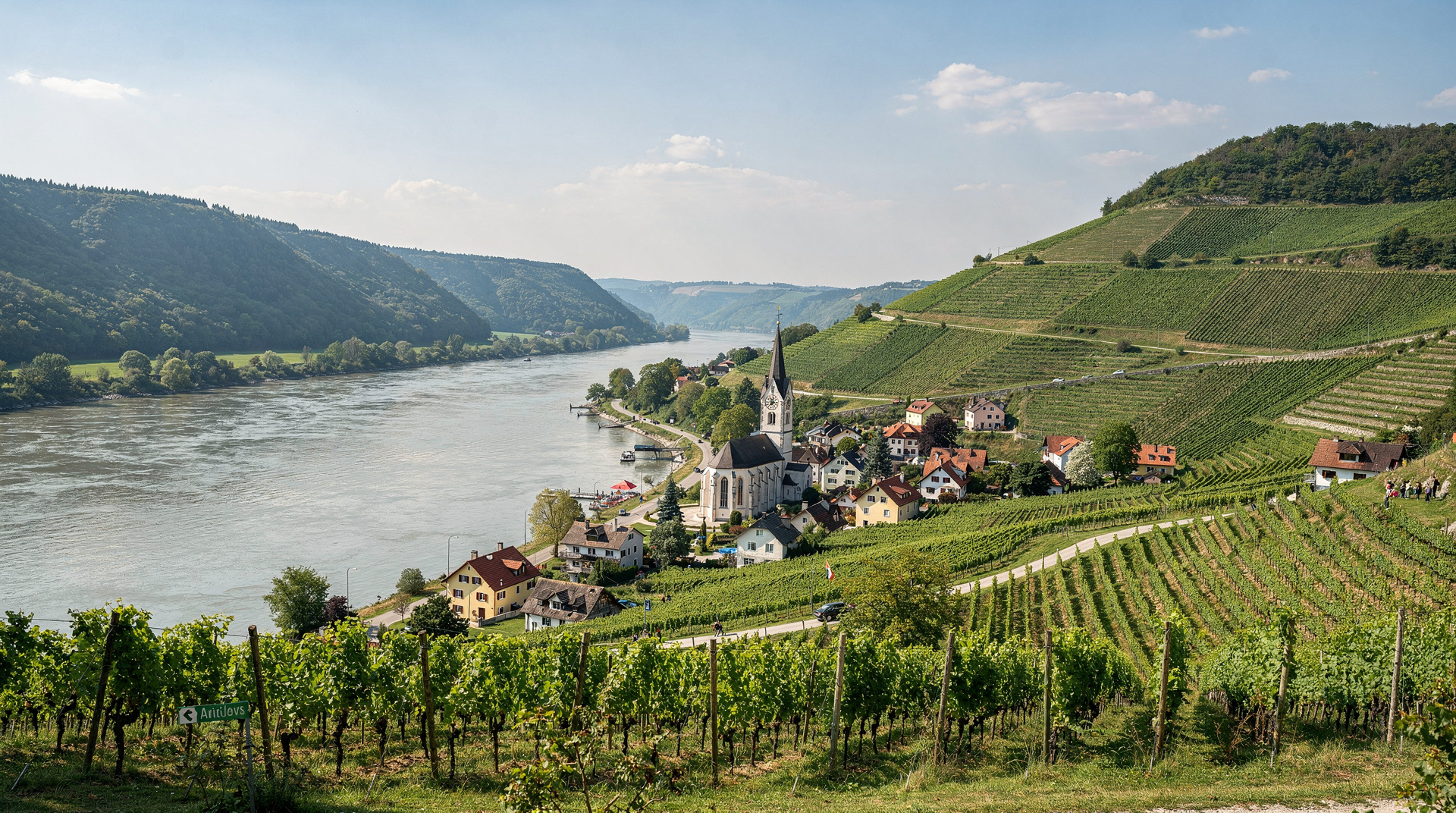
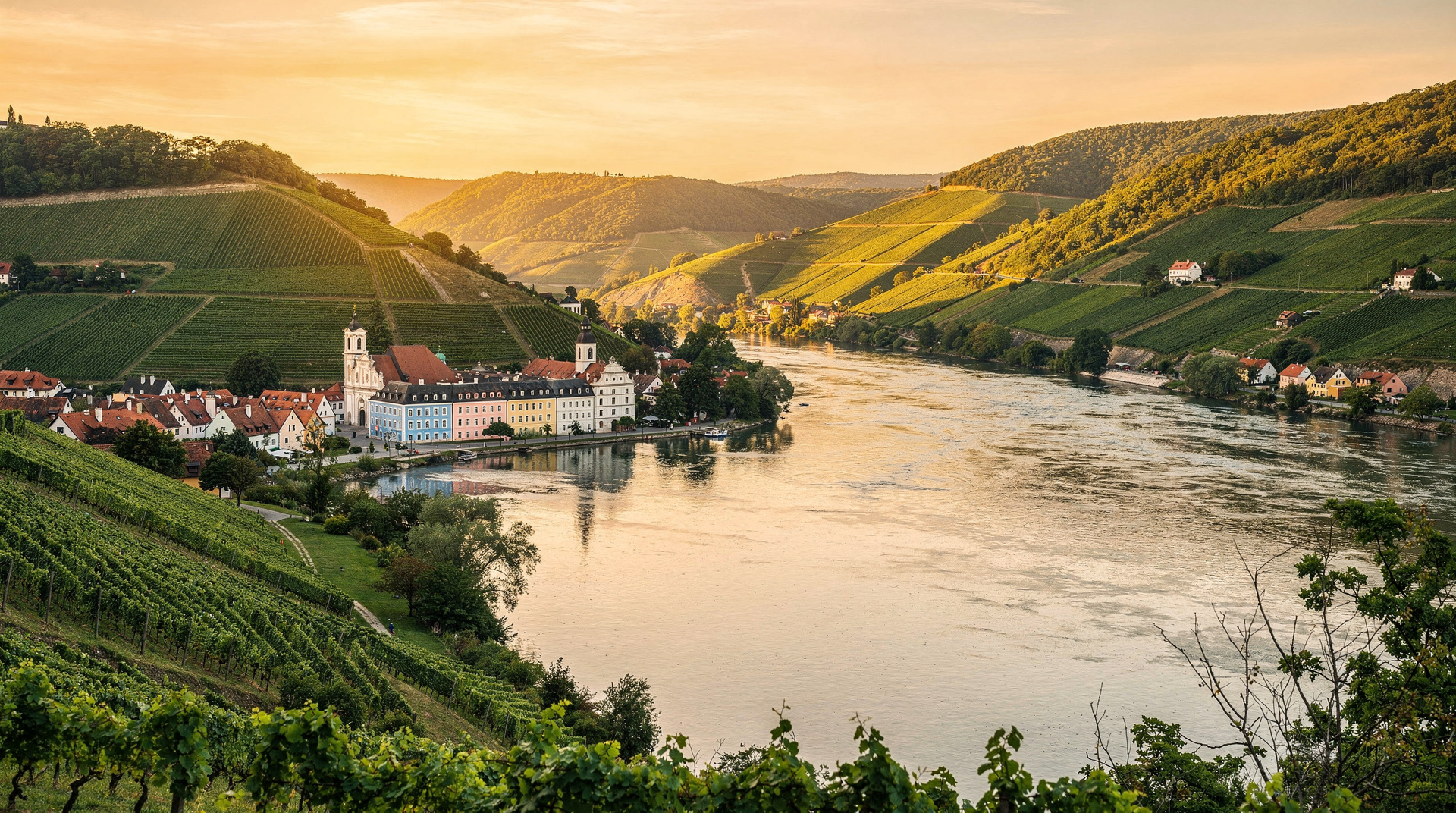
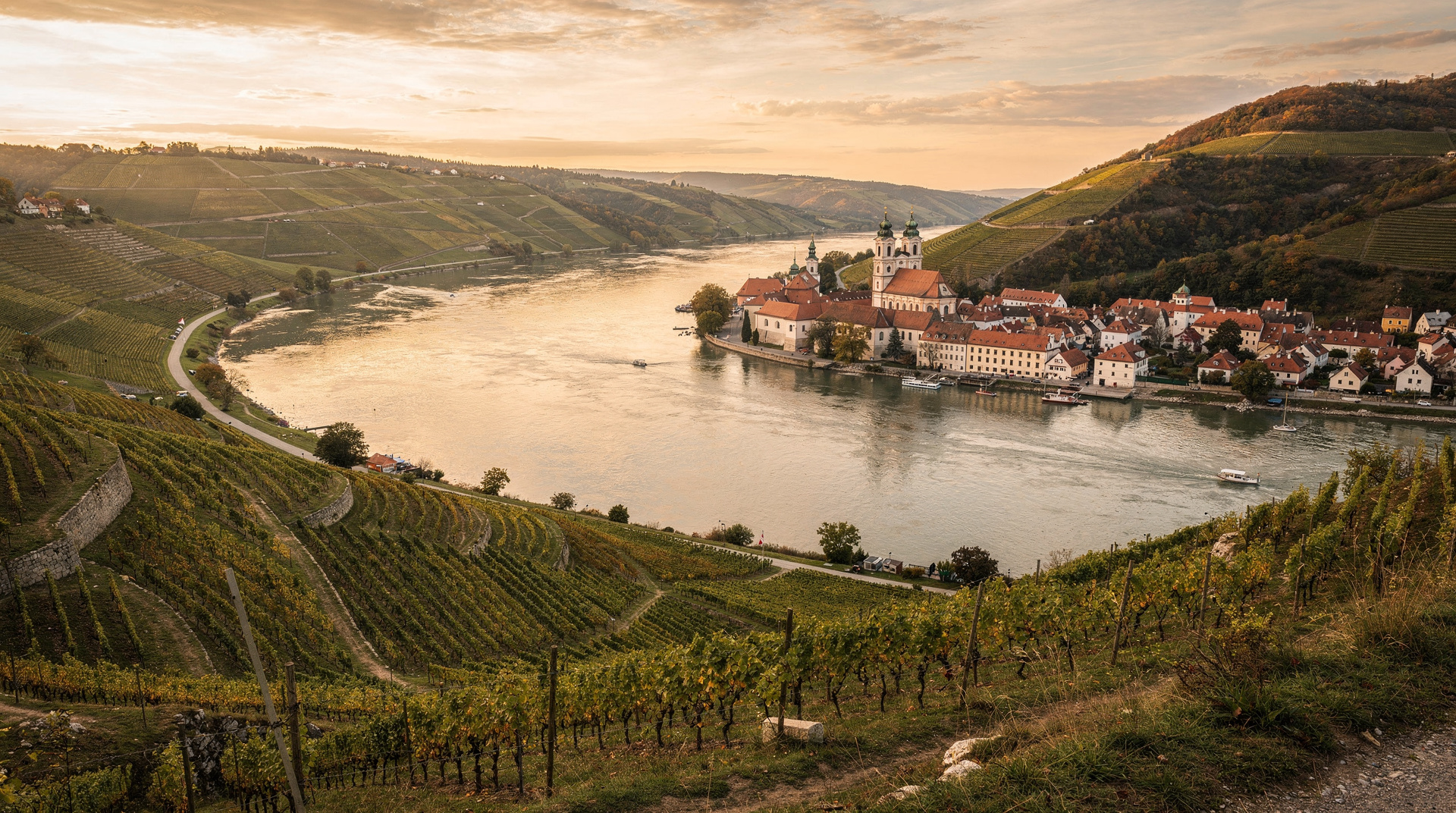
The Wachau Valley is the section of the Danube that runs between Melk and Krems — 36 kilometres of river flanked by terraced vineyards, ruined medieval castles and baroque abbeys perched on rocky outcrops above the water. It became a UNESCO World Heritage Cultural Landscape in 2000, recognition of a combination of natural scenery and accumulated cultural layers that has no real equivalent in Austria.
The day trip from Vienna works as a perfect loop: train west to Melk, visit one of Europe’s grandest Baroque monasteries, board a boat for a 1h45 cruise through the heart of the valley to Krems, explore the medieval town and — ideally — taste the wines that made the region famous, then train back to Vienna. It is one of the most logistically satisfying day trips in Central Europe.
| Where | Melk to Krems, Lower Austria — 36 km of Danube valley |
| Cost | around €18–24 train, €17–22 abbey, €30–40 boat |
| Time needed | Full day, 8–9 hours round trip |
| Getting there | Train to Melk (1h15) or organised bus tour |
| Best time | April (apricot blossom) or September–October (harvest) |
Getting there
By train to Melk (1h15)
Direct ÖBB trains run from Wien Westbahnhof (not Hauptbahnhof) to Melk, taking 1h10–1h20. Trains run approximately every hour. Return tickets to Melk cost €18–24. Book at oebb.at. From Melk station, the abbey is a 15-minute walk uphill.
Alternatively, some Railjet services run from Wien Hauptbahnhof via St. Pölten — add 10 minutes to the journey but may have more convenient departure times.
By organised tour (bus + boat)
Organised tours from Vienna handle all logistics: bus from Vienna to Melk, guided visit to the abbey, boat cruise through the valley, and return transport from Krems. These tours are particularly worthwhile for first-time visitors, as the guide provides historical context on the Habsburg era, the wine classifications, and the medieval castle history that the boat passes.
Vienna: Wachau Valley and Melk Abbey tour with Danube boat tripFor a more wine-focused experience with small-group tasting at a local Wachau winery:
From Vienna: Wachau Valley day tour with wine tastingIf you are still deciding whether the Wachau is the right excursion for your dates, the best day trips from Vienna guide sets it beside the other options, and the Wachau Valley destination page gives the wider picture of the villages along the river.
The classic Wachau loop
Step 1: Melk Abbey
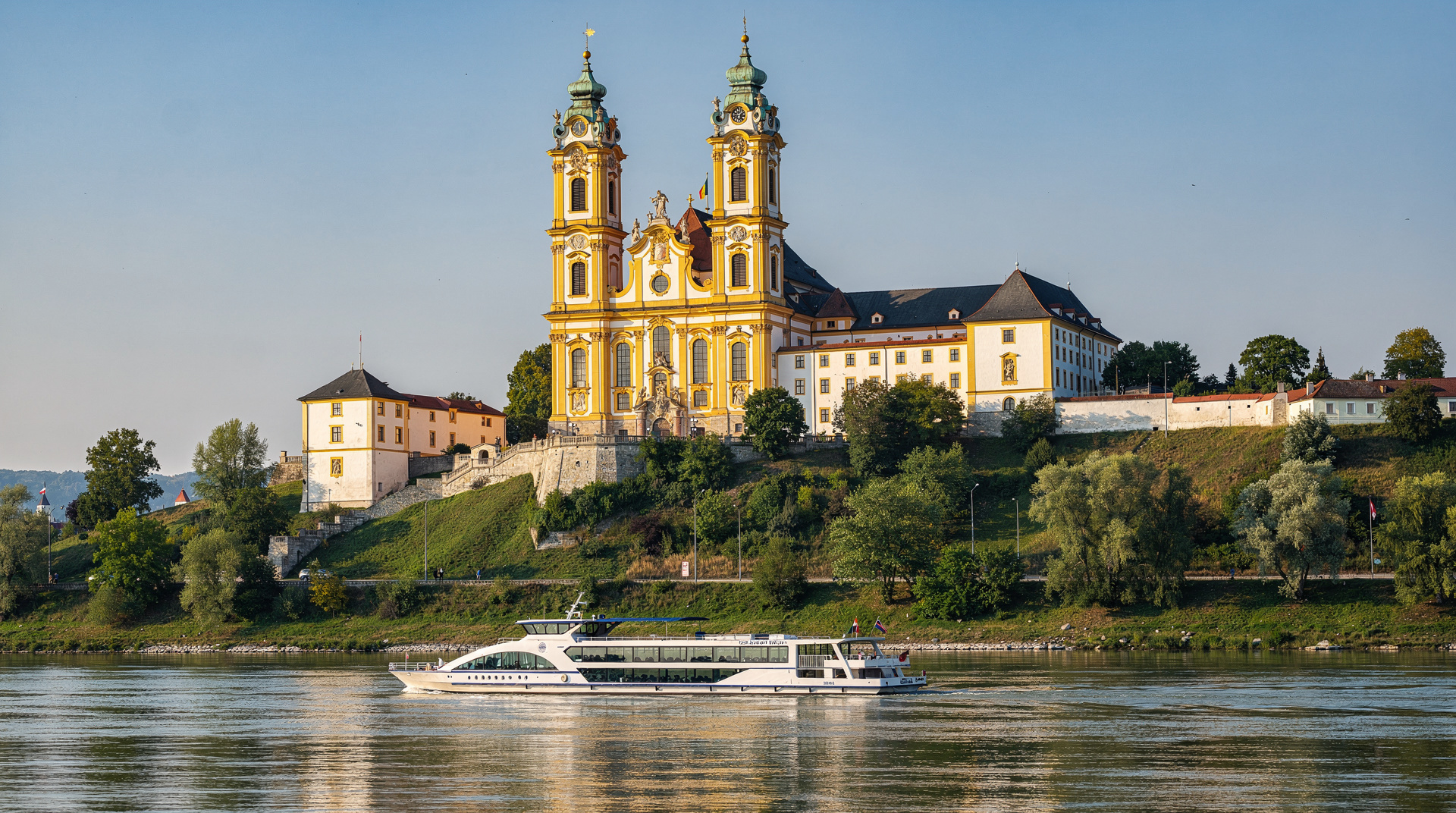
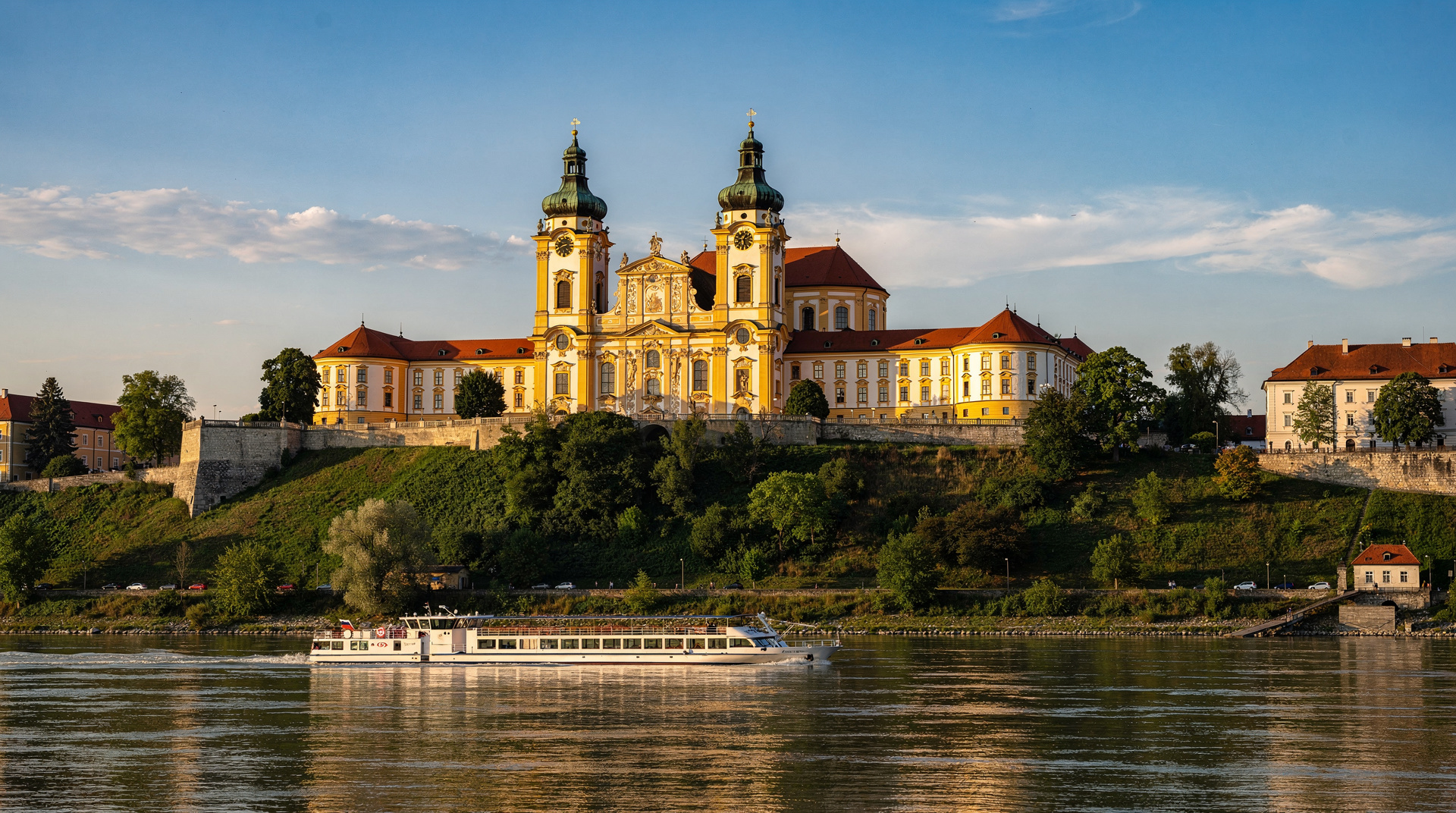
Stift Melk is the logical starting point. This Benedictine monastery above the Danube — first documented in 985, rebuilt in its current Baroque form between 1702 and 1736 — is one of the most visited cultural monuments in Austria, and justifiably so.
The church interior is the showstopper: a single-nave Baroque space of extraordinary theatrical intensity, with frescoes by Johann Michael Rottmayr on the ceiling vault and gilded decoration on every surface. The proportions are perfect — visually overwhelming without being oppressive.
The library is one of the great Baroque library spaces of Europe: 100,000 volumes, celestial globes, frescoed ceiling showing Reason and Faith as allegorical figures, and the intoxicating smell of old paper. The marble hall adjacent to the library serves a similar function — a room so grand it was once used as Napoleon’s headquarters during his 1805 and 1809 campaigns in Austria.
The terrace between the library and the marble hall overlooks the Danube directly. On a clear day the view extends east along the river towards the start of the valley — this is the best viewpoint on the entire day trip.
Entry: adults €17 (self-guided with audio guide), €22 with guided tour. Allow 1.5–2 hours.
Step 2: The Danube boat to Krems
The DDSG Blue Danube boat from Melk to Krems runs April to October, departing Melk at various times (check the current schedule at ddsg-blue-danube.at). The journey downstream takes approximately 1h45.
This is the defining experience of the Wachau day trip. The boat moves at walking pace through the river gorge, passing in sequence: the ruined castle of Aggstein (dramatically positioned on a cliff above the south bank, 10th century); the village of Spitz with its distinctive twin-towered church; the apricot orchards of Weissenkirchen; the blue-and-white church tower of Dürnstein; and finally the wider valley opening towards Krems.
Dürnstein: Many boat services make a short stop at Dürnstein (30 minutes), which is worth getting off for even briefly. The village is famously where Richard the Lionheart was held prisoner in the castle ruins above (1192–93) after his return from the Third Crusade — Duke Leopold of Austria exacted a vast ransom that helped fund, among other things, the construction of Vienna’s first city walls. The castle ruin can be climbed in about 20 minutes (rewarding views, no facilities). The village itself is very pretty — the blue-and-white Augustinian priory church is the most photographed building in the Wachau.
Step 3: Krems and the return to Vienna
Krems an der Donau is a proper medieval town with a long commercial street (Landstraße), several excellent Heurigen wine taverns, and the Kunstmeile Krems — a cluster of contemporary art institutions worth 30–45 minutes if art is your interest.
More practically for the day trip: the Krems old town has several good restaurants for lunch or an early dinner, and the local Heurigen (the agricultural wine taverns of the region) offer Wachau wines by the glass at cellar-door prices. The Riesling and Grüner Veltliner here are among Austria’s finest — markedly different from the wines grown in the Wachau itself given the slightly different microclimate.
Return train from Krems to Vienna (Wien Franz-Josefs-Bahnhof, not Hauptbahnhof, note): 1 hour. Trains run hourly; check current schedules as timetables vary by season.
The towns at either end of the loop have their own pages if you want to plan the stops in more depth: Melk, Dürnstein and Krems. Once back in Vienna, the public transport guide helps you get from the station to your hotel without fuss after a long day.
If you only have time for one piece of the loop
Not every visitor can spare a full day. If you must cut something: the boat cruise is the least skippable element — see the Wachau Danube cruise guide for the boat-only version of this trip. If the abbey is your priority and the boat and Krems are optional, the Melk Abbey day trip guide covers a shorter version focused solely on Melk. For a narrower focus on the river crossing itself, the Melk to Krems boat trip guide and the general Danube river cruise guide both cover adjacent angles on the same stretch of river.
Wine tasting in the Wachau
The Wachau has its own wine classification system: Steinfeder (light, 11.5% max — drink young, picnic wines), Federspiel (medium-bodied, 12.5% max — named after the falconer’s lure, wines of balance), and Smaragd (full-bodied, named after a green lizard found in the valley’s stone walls, 13%+ — the serious wines, ageable).
Most Wachau wineries have visitor areas; the best strategy is to walk into Krems or Dürnstein and find a Heuriger with a terrace overlooking the vines. Domäne Wachau, Nikolaihof, and Emmerich Knoll are among the well-known producers — though booking is needed for seated tastings at the better estates.
See the Wachau wine route guide for more detail on specific producers and villages.
If the grape itself interests you, the Grüner Veltliner guide explains what to look for in the glass, and the Heuriger guide describes how these wine taverns work, which is useful when you sit down in one of Krems’ cellars. Those who want to turn the trip into a wine weekend can look at the Burgenland wine route guide for a different Austrian wine region.
Comparing independent vs organised approaches
| Independent (train + boat + train) | Organised bus tour | |
|---|---|---|
| Cost | around €55–65 total | around €90–140 |
| Flexibility | High — set your own pace at each stop | Fixed schedule, less flexible |
| Logistics | You manage train/boat timing yourself | Fully handled |
| Guiding/context | None unless self-arranged | Included, historical context provided |
| Best for | Confident independent travellers | First-timers, those short on planning time |
Neither approach is objectively better — independent travel rewards those comfortable checking timetables and accepting some schedule risk, while the organised tour trades cost for certainty and context. Families and first-time visitors to Austria generally do better with the organised option; repeat visitors or confident planners often prefer the independent route for the flexibility to linger in Krems or skip a stop.
The Wachau by season
April (apricot blossom): The valley’s hillside orchards turn white in April — the Wachauer Marille apricots have a PDO designation and are the local culinary pride. The visual effect of white blossom against grey stone terraces and the Danube is genuinely beautiful. Tourist numbers are still moderate in April.
May–June: Full spring, vines leafing out, good weather. Boat services running. Increasingly busy on weekends.
September–October (harvest): The best time for wine lovers. Grapes are being picked from the steep terraced vineyards; some estates offer harvest participation. The valley takes on warm autumn colours. The Wachau Marathon (October) closes some roads but adds atmosphere.
November–March: Most Heurigen close. The boat does not run. The abbey is still open. The valley is quiet and beautiful in snow — but the key river experience is absent.
Alternatives and combinations
Wachau day tour (general): For visitors who prefer a guided bus tour without the train logistics:
Vienna: day tour to Wachau ValleyMelk Abbey only: The Melk Abbey day trip guide covers the abbey in more detail for visitors who want to focus solely on Melk rather than the full valley loop.
Boat without train: The Wachau Danube cruise guide covers the river section as a standalone cruise experience.
Three castles tour: The Wachau 3-Castles and Wine private tour covers Aggstein, Dürnstein and Hinterhaus in a single day — ideal for history enthusiasts.
See the Vienna 4-day itinerary for how the Wachau fits into a broader Vienna trip.
Travellers who prefer to read a first-hand account before committing can find one in the blog post on autumn in the Wachau, and cyclists will enjoy the Wachau by bike diary. If the Wachau is only one of several excursions you are weighing, the Hallstatt day trip guide and the Vienna Woods day trip offer a very different kind of scenery.
Honest tips
The boat is non-negotiable: Even if the guide is optional and the abbey is optional (though it shouldn’t be), the boat through the Wachau gorge is the centrepiece of the experience. If the boat schedule doesn’t work on your dates, the trip loses most of its unique character.
Book seats on the boat: In high season (July–August) and weekends, boat tickets sell out. Check at the Melk landing stage immediately after your abbey visit, or book online at ddsg-blue-danube.at.
Franz Josef’s railway: The rail line from Vienna to Melk was built during Franz Joseph’s reign and passes through attractive Lower Austrian countryside. The view from the train window is worth paying attention to in both directions.
Apricot products: The Wachau apricot products (Marillenlikör apricot liqueur, apricot schnapps, dried apricots, apricot jam) sold in village shops are the most authentic food souvenir of the region.
Luggage and pace: Since this is a full 8–9 hour day covering a train, an abbey visit, a boat and a return train, pack light — a day bag rather than anything bulky makes the Melk station-to-abbey walk and the boat boarding noticeably easier. Comfortable shoes matter more than on a typical city sightseeing day, given the uphill walk to Melk Abbey and the cobbled streets of both Dürnstein and Krems.
Frequently asked questions about the Wachau Valley day trip
What is the Wachau Valley?
The Wachau is the stretch of the Danube between Melk and Krems in Lower Austria — a UNESCO World Heritage landscape of terraced vineyards, medieval castle ruins and Baroque abbeys carved into the Danube gorge. It produces some of Austria’s finest white wines (Grüner Veltliner, Riesling).
How long does Melk Abbey take to visit?
Allow 1.5–2 hours for Melk Abbey. The Baroque church takes about 30 minutes; the library, marble hall and imperial rooms need another hour. The terrace over the Danube is the highlight — do not miss it.
Does the Wachau boat run year-round?
No. The DDSG Blue Danube boat between Melk and Krems runs April to October only. In winter, the river loop must be replaced by a bus or train between the two towns.
What wine is the Wachau famous for?
The Wachau is primarily known for Grüner Veltliner (a fresh, peppery white wine) and Riesling. The classification system — Steinfeder, Federspiel and Smaragd — indicates the quality and weight of the wine, with Smaragd being the most concentrated.
What is the best time to visit the Wachau?
April for apricot blossom (the valley’s apricots are famous — Wachauer Marillen), and September–October for the wine harvest. Both seasons are beautiful and have manageable tourist numbers.
Can I cycle the Wachau Valley?
Yes — the Donauradweg cycle route follows the Danube through the Wachau and is one of the most popular cycle routes in Europe. Bikes can be rented in Melk, Dürnstein or Krems. The flat riverside path (80 km round trip) suits all fitness levels.
Top experiences
Bookable activities with verified prices and instant confirmation on GetYourGuide.