Melk Abbey day trip from Vienna: tickets, what to see and how to get there
Vienna: Wachau Valley, Melk Abbey Tour with Danube Boat Trip
How do you visit Melk Abbey from Vienna?
Take the ÖBB train from Wien Westbahnhof to Melk (1h15, €9–12 one-way), then walk 15 minutes uphill to the abbey. Visit takes 1.5–2 hours. Combine with the Danube boat to Krems (1h45) for the full Wachau day trip — one of the most satisfying day-trip circuits from Vienna.
One of Europe’s great Baroque monasteries
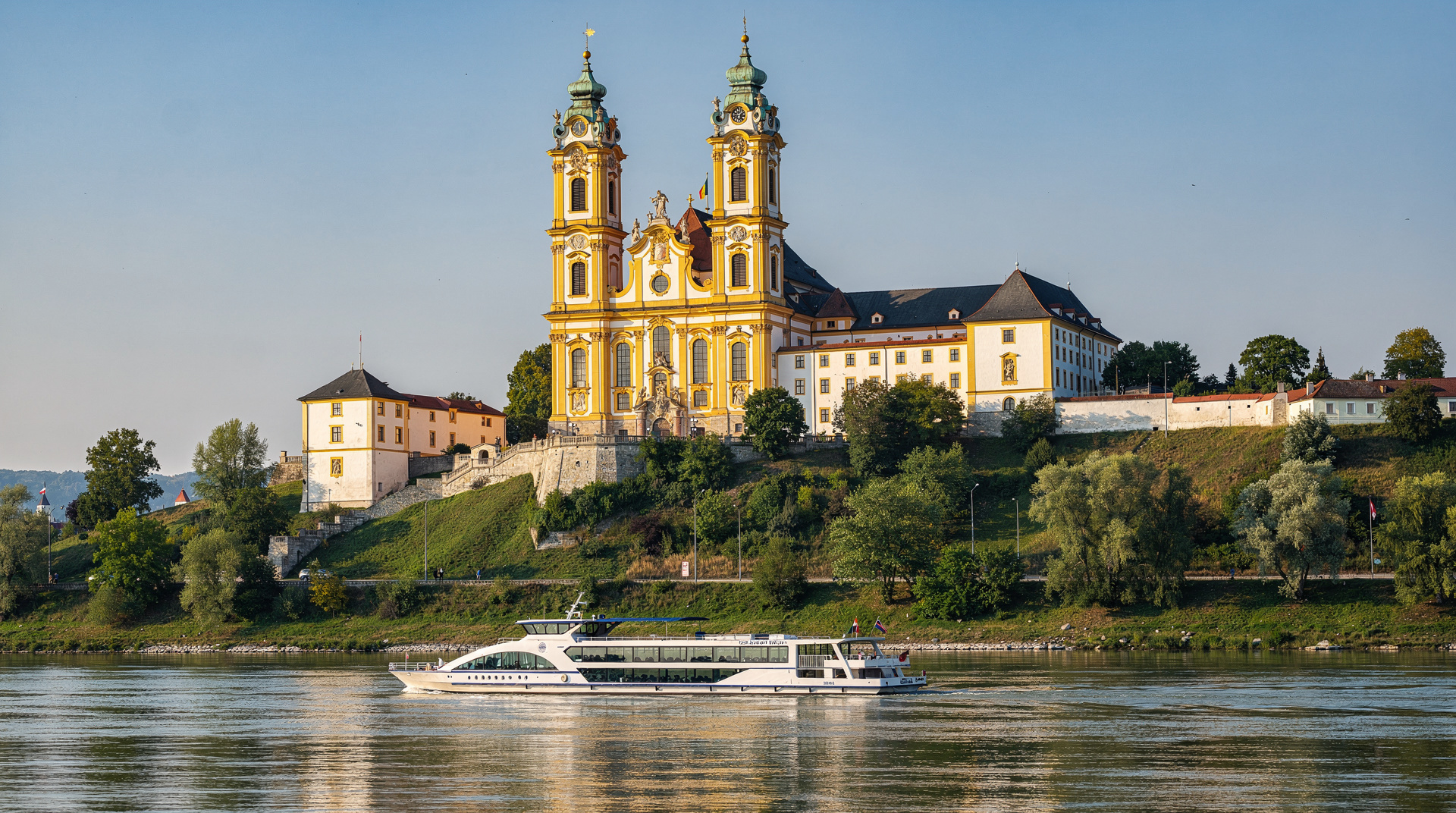
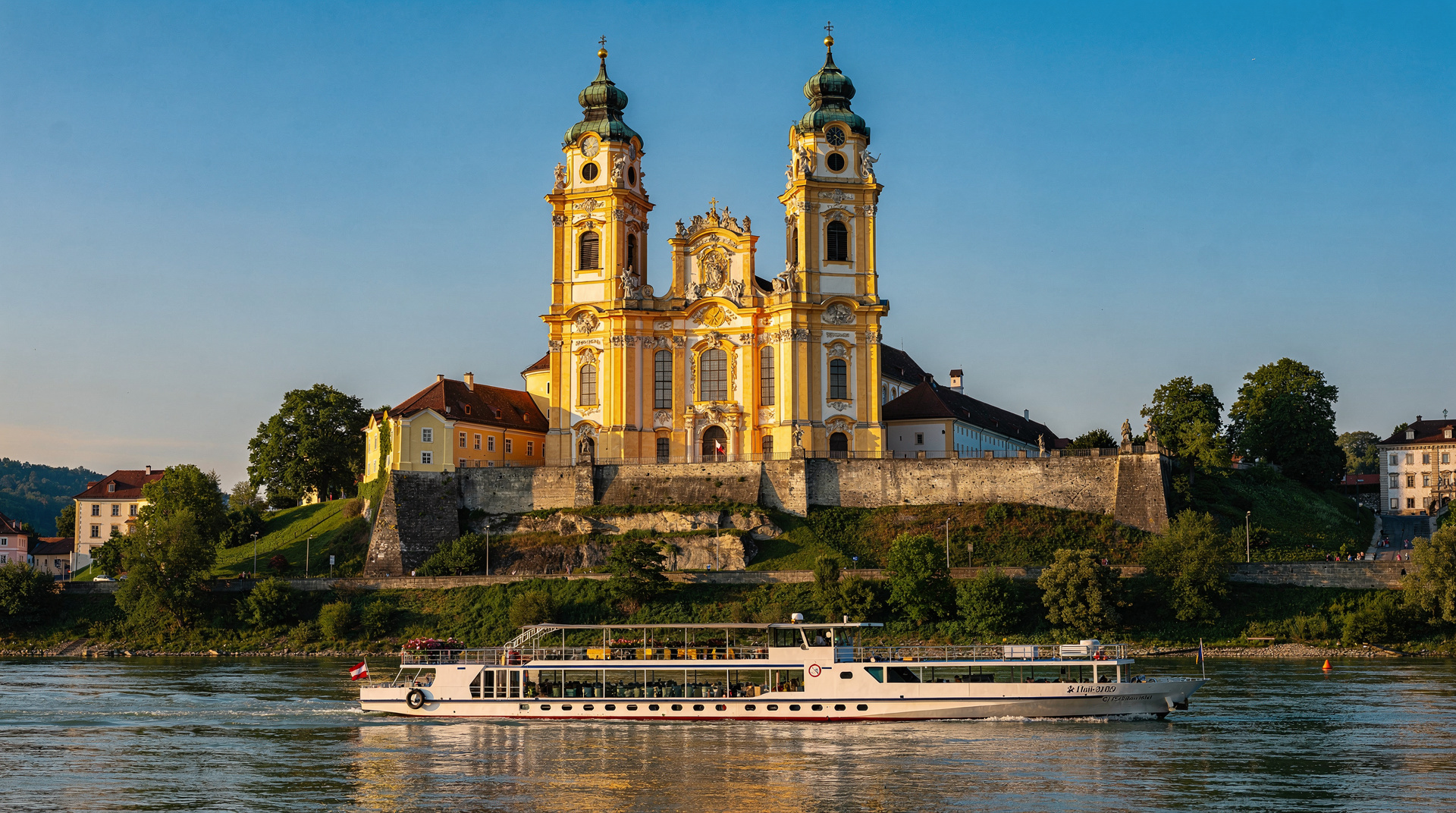
Stift Melk (Melk Abbey) stands on a rocky promontory above the Danube at the western entrance to the Wachau Valley — a Benedictine monastery that has occupied this site since 1089 and been rebuilt, expanded and decorated across nine centuries into one of the most spectacular examples of Baroque architecture in the world.
The combination that makes it exceptional: the physical drama of the setting (cliff above the river, the town of Melk at its feet), the theatrical ambition of the Baroque interior (gilded church, frescoed library, marble state rooms), and the practical fact that it remains a functioning monastery with 25 Benedictine monks in residence. It is not a museum piece. The monks celebrate mass in the church daily; the library still contains 100,000 volumes including illuminated manuscripts that predate the printing press.
For Vienna visitors, Melk is the natural first stop on the Wachau day trip — and the starting point for the Danube boat cruise through the valley to Krems.
| Where | Melk, western Wachau Valley, above the Danube |
| Cost | Train €9–12 one-way; abbey entry around €17 |
| Time needed | 1.5–2 hours for the abbey; full day with the Wachau boat |
| Getting there | ÖBB train from Wien Westbahnhof, 1h15 |
| Best time | May–June or September–October |
Getting from Vienna to Melk
By train (1h15 — the standard option)
Direct ÖBB trains run from Wien Westbahnhof to Melk. Note: it is Westbahnhof (U3/U6), not Hauptbahnhof. Journey time: 1h10–1h20 depending on service. Trains run approximately every hour.
Tickets: €9–12 one-way. Book at oebb.at, ÖBB app or at the station. The Sparschiene early-booking discount applies — for the best fares, book 3–7 days ahead.
From Melk station to the abbey: a 15-minute uphill walk through the town, or €8 by taxi. The walk is pleasant and takes you through the town square.
By bus or organised tour
Organised day tours from Vienna include bus transport, a guided visit to the abbey, and the Danube boat to Krems in a single package. This is the recommended option for visitors who want the full Wachau experience without managing train connections.
Vienna: Wachau Valley and Melk Abbey tour with Danube boat tripFor a focused Melk Abbey visit without the boat:
From Vienna: Wachau Valley tour with Melk Abbey visitMelk fills half a day at most, and the obvious way to use the other half is to keep driving west rather than turning back: a private day trip from Vienna to Hallstatt and Melk chains the abbey to the lake in one direction of travel.
Inside the abbey: what to see
The church
The abbey church (Stiftskirche) is the centrepiece and the most immediately overwhelming space. Built between 1702 and 1736 by architect Jakob Prandtauer, the single-nave Baroque interior is 68 metres long, with a ceiling fresco by Johann Michael Rottmayr running the entire length of the vault. The fresco depicts the Glorification of St. Benedict — the founder of the Benedictine order — in a swirling composition of clouds, angels and allegorical figures.
The organ case above the entrance is one of the most ornate in Austria, with gilded pipes and carved figures. The high altar, also by Prandtauer and completed after his death by his nephew Joseph Munggenast, combines paintings by Rottmayr and Paul Troger with marble columns and gilded woodwork. The lateral altars are separately impressive.
Allow 30 minutes to absorb the church properly. Services (mass) are open to visitors.
The library (Bibliothek)
The abbey library is the best-known room in the complex, and deservedly so. A single rectangular hall approximately 20 metres long, with ceiling frescoes by Paul Troger depicting Faith and Reason as allegorical figures above the bookcases, and two globes — one celestial, one terrestrial — standing on the reading tables.
The bookcases contain approximately 100,000 volumes, including around 1,900 manuscripts and 750 incunabula (books printed before 1501). The oldest manuscripts date from the 9th century. The library is still functional — the monks use it — and the smell of old paper and the quality of the light through the single tall windows creates an atmosphere that no amount of description adequately conveys.
Photographs are permitted; flash is not.
The marble hall (Marmorsaal)
Adjacent to the library, the marble hall served as the ceremonial reception room for secular guests — emperors, kings and noble visitors were received here rather than in the religious spaces. The room is smaller than its name suggests (the actual marble is limited to columns and door frames), but the ceiling fresco by Paul Troger — depicting Athena/Reason driving out the enemies of wisdom — is one of his finest works, and the L-shaped terrace off the marble hall is the most memorable viewpoint of the entire complex.
The terrace
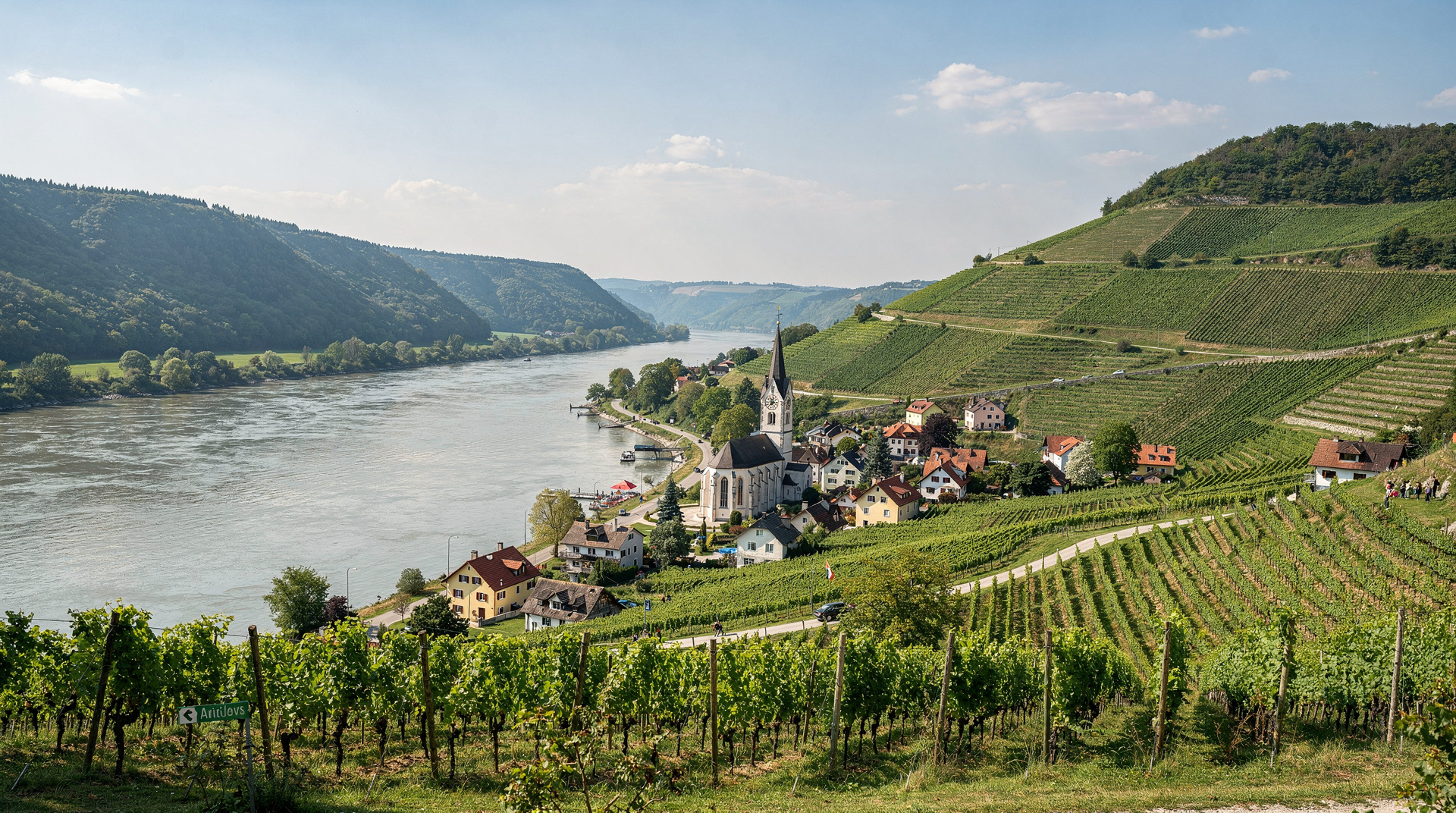
The outdoor terrace between the library wing and the marble hall faces directly east over the Danube, with a view upstream into the beginning of the Wachau gorge. Boats on the river are visible; the vineyards on the far bank, the ruins of Aggstein Castle downstream, and the wide floodplain below make a landscape that is as satisfying as anything inside the abbey.
This is the photograph location that most visitors take — and it is genuinely worth the time to stand here for 10 minutes and absorb the view.
The museum
The abbey museum in the south wing traces the history of the Benedictine community from its foundation by Margrave Leopold I in 1089 through the present day. Good collection of medieval art, illuminated manuscripts (facsimiles — originals in the library), and Habsburg-era court objects. Allow 30–45 minutes if the history is of interest.
Combining Melk with the Wachau boat
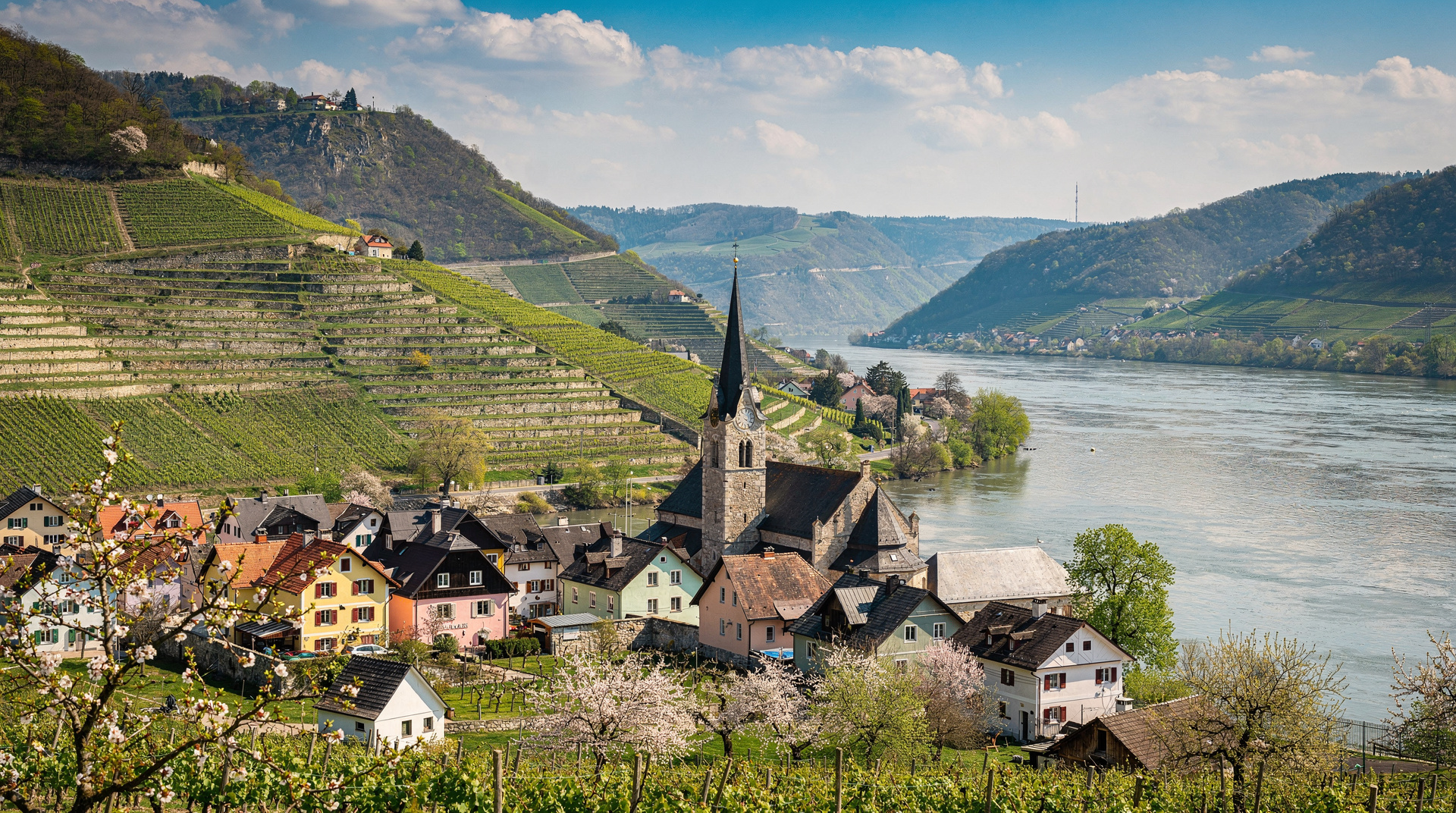
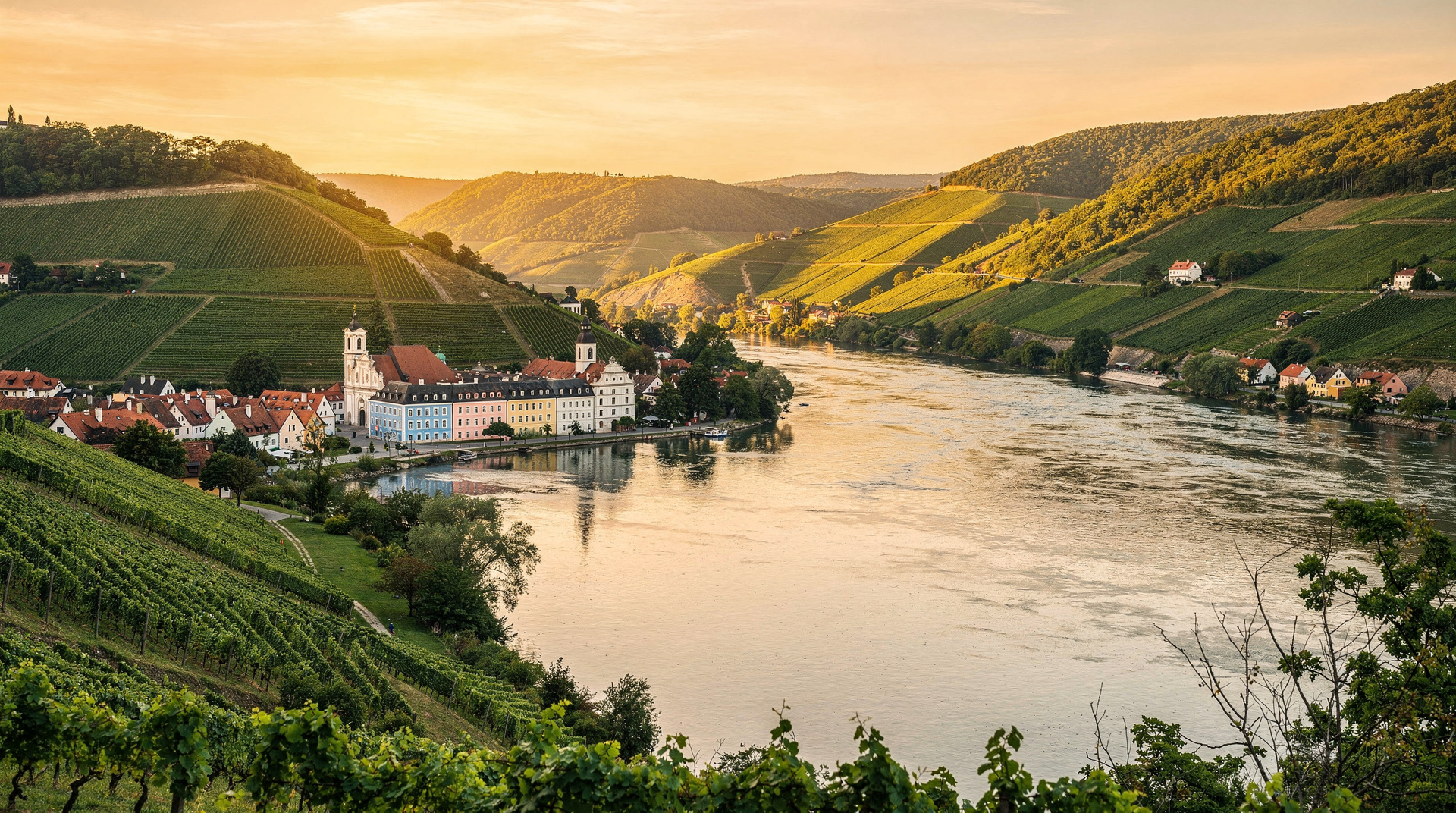
The vast majority of visitors to Melk combine the abbey with the Danube boat cruise downstream to Krems. The DDSG Blue Danube boat runs April to October; the journey through the Wachau takes 1h45 and passes in sequence through Aggstein (ruined cliff castle), Spitz (wine village), Dürnstein (Richard the Lionheart’s prison, blue church tower) and Weissenkirchen.
The recommended timing: Train Vienna → Melk at 8:30 am, abbey visit 9:30–11:30 am, boat Melk → Krems at 13:00 or 14:00 (check current schedule at ddsg-blue-danube.at), arrive Krems 14:45 or 15:45, explore Krems/wine tasting, train Krems → Vienna (1h, Wien Franz-Josefs-Bahnhof).
See the Melk to Krems boat trip guide and the Wachau day trip from Vienna for the full loop logistics.
Practical information
Opening times: Daily May–October 9 am–5:30 pm (last entry 5 pm). November–April 9 am–4:30 pm with guided tours only (self-guided not available in winter).
Entry prices: Adults €17 (audio guide included), guided tour €22, children 6–15 €10. Online booking at stiftmelk.at.
Audio guide languages: Available in German, English, French, Italian, Spanish, Czech, Hungarian and others.
Café and restaurant: The abbey’s own Café Stift Melk (in the courtyard) serves coffee and Austrian pastries. The Stiftsrestaurant serves more substantial meals — worth booking ahead in summer.
Accessibility: The main visitor route has some steps and ramps; the church and marble hall are accessible; the library requires climbing a small staircase.
Photography: Permitted everywhere except where specifically indicated. No flash.
When to visit
May–June and September–October are the best months — good weather, crowds manageable, boat running. The terrace view is at its best in morning light (before 11 am) or late afternoon.
July–August: The abbey is very busy (peak season), particularly when cruise ships dock in Melk and send their passengers up for a visit. An early start (first train, arrive abbey before 9:30 am) mitigates the crowds.
November–April: Self-guided visits not available. Guided tours run but must be booked in advance. The Danube boat does not operate. The interior is less congested; a good option for visitors focused on the architecture without wanting to see it in summer-crowd conditions.
Honest tips
Do not rush the terrace: Many visitors, particularly tour groups, spend only 5 minutes on the terrace. This is a mistake. The view is one of the great landscape compositions of Lower Austria and deserves 10–15 minutes of unhurried attention.
Timing the boat: Check the DDSG schedule before you travel — services do not run every hour and a missed boat means a long wait. Download the schedule from ddsg-blue-danube.at before departing Vienna.
The town of Melk: Worth 20 minutes before the abbey visit. The main square (Rathausplatz), the St. Coloman column and the view of the abbey from below the cliff all deserve a look before the climb.
Combination with Wachau wine: After the boat arrives in Krems, the Heurigen wine taverns of Krems and the nearby village of Stein serve Wachau Grüner Veltliner and Riesling at cellar-door prices. The Wachau wine route guide covers the best producers.
Planning around the abbey
Melk works best as one piece of a wider Lower Austria plan rather than a stand-alone stop. If you are still deciding how to split your time, the Melk destination page and the Wachau Valley overview show how the town sits at the start of the valley, while Krems and Dürnstein are the usual places to end the day if you continue downstream.
Visitors with a little more time often ask whether Melk deserves a place in a longer Vienna stay. In a 4-day Vienna itinerary it fits comfortably as the single day away from the city, leaving the other days for the palaces, museums and coffee houses. If you prefer to stay closer to the capital, the Vienna Woods day trip is a gentler alternative that needs less planning.
Dress comfortably for the walk up from the station and for the stairs inside the abbey, and keep a layer for the terrace, which can feel breezy above the river even on a warm day. If you are travelling with children, the audio guide and the open terrace tend to keep younger visitors engaged, and the Vienna with kids guide has more ideas for family days out.
Where Melk fits among Vienna’s day trips
Melk is consistently one of the highest-rated entries in our best day trips from Vienna guide, and for good reason: it combines a genuinely world-class Baroque interior with one of Austria’s most scenic river landscapes in a single train-and-boat day. If a Danube cruise interests you more broadly, our Danube river cruise guide covers the shorter city-based cruise options as an alternative or complement to the full Wachau itinerary.
Frequently asked questions about the Melk Abbey day trip
How long does a visit to Melk Abbey take?
Allow 1.5–2 hours for the abbey itself. The church takes about 30 minutes; the library, marble hall and museum rooms need another hour. Do not skip the terrace overlooking the Danube — it is the best view on the day trip.
How much does Melk Abbey cost to enter?
Standard entry with audio guide: €17 adults, €10 children (6–15). Guided tour: €22 adults. Combination tickets with other Wachau attractions are sometimes available. Book online at stiftmelk.at to save the ticket-desk queue.
Can I visit Melk Abbey without a guided tour?
Yes — the standard ticket includes an audio guide in multiple languages. The self-guided route takes you through the church, library, marble hall, museum and terrace in a logical sequence. A guided tour adds historical narrative depth but is not essential.
What else is there to see in Melk besides the abbey?
Melk town itself is small but pleasant — a town square, the baroque chapel and some riverside walks. The main reason to visit is the abbey; most visitors then take the Danube boat downstream to Krems for the full Wachau experience.
What time does Melk Abbey open?
Open daily May to October 9 am–5:30 pm (last entry 5 pm). November to April 9 am–4:30 pm with guided tours only (self-guided visits not available November–March). Check stiftmelk.at for current hours.
Is Melk Abbey worth visiting?
Unequivocally yes. It is one of the finest Baroque monastery complexes in the world — the church interior, the library and the terrace view combine into an experience that justifies the train journey from Vienna on its own.
Top experiences
Bookable activities with verified prices and instant confirmation on GetYourGuide.