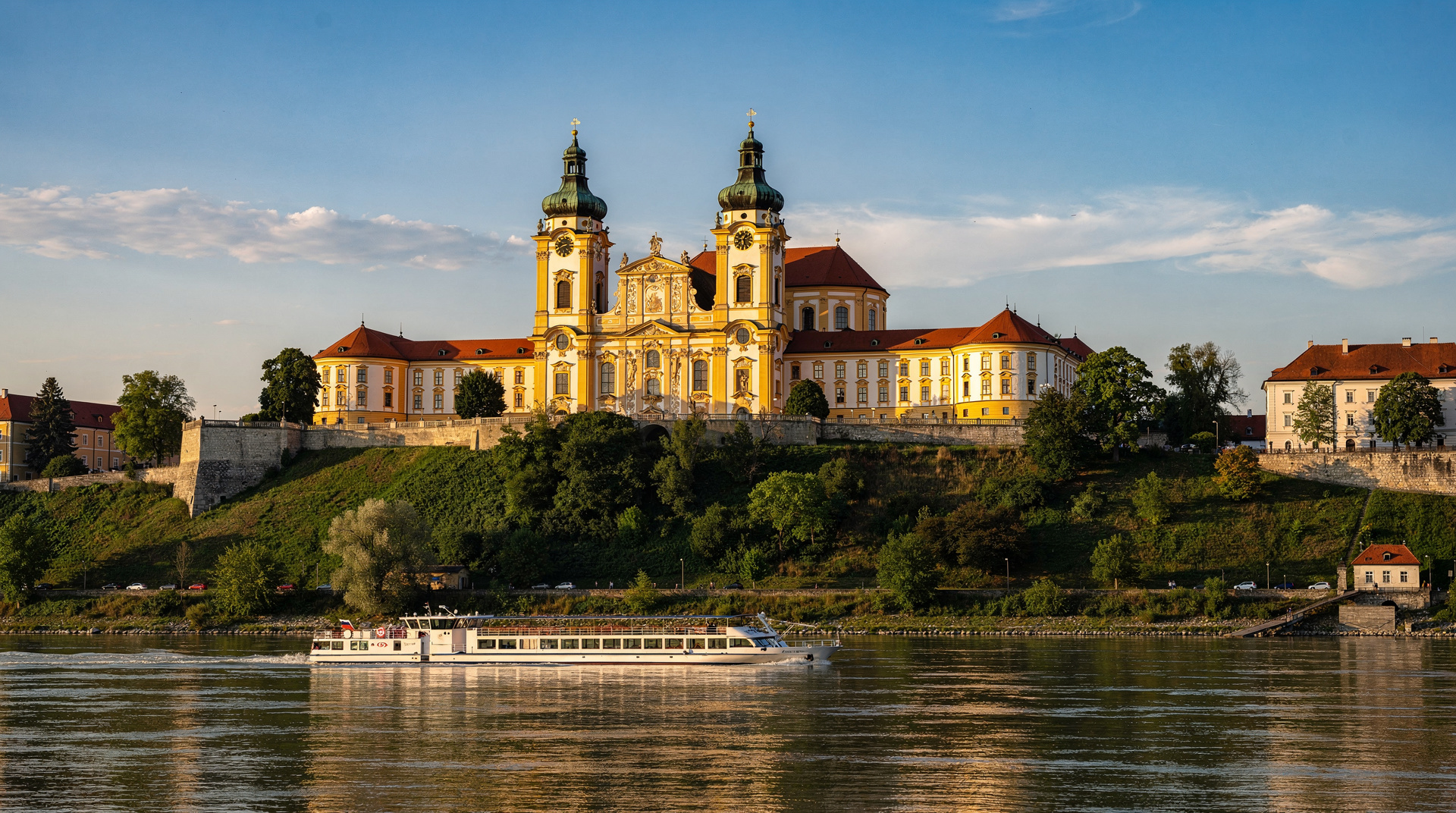
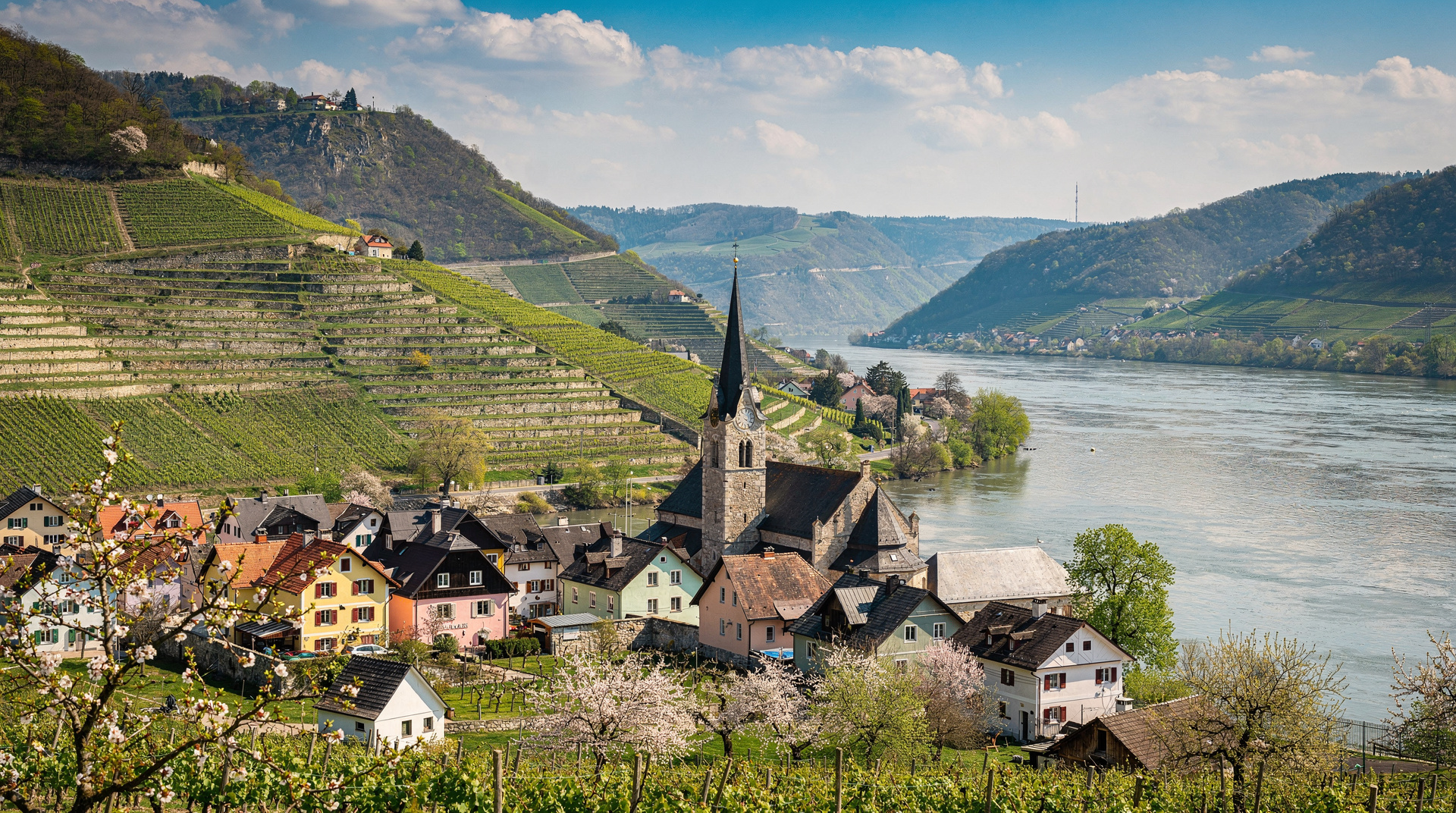
Melk to Krems boat trip: the Wachau in 1h45 on the Danube
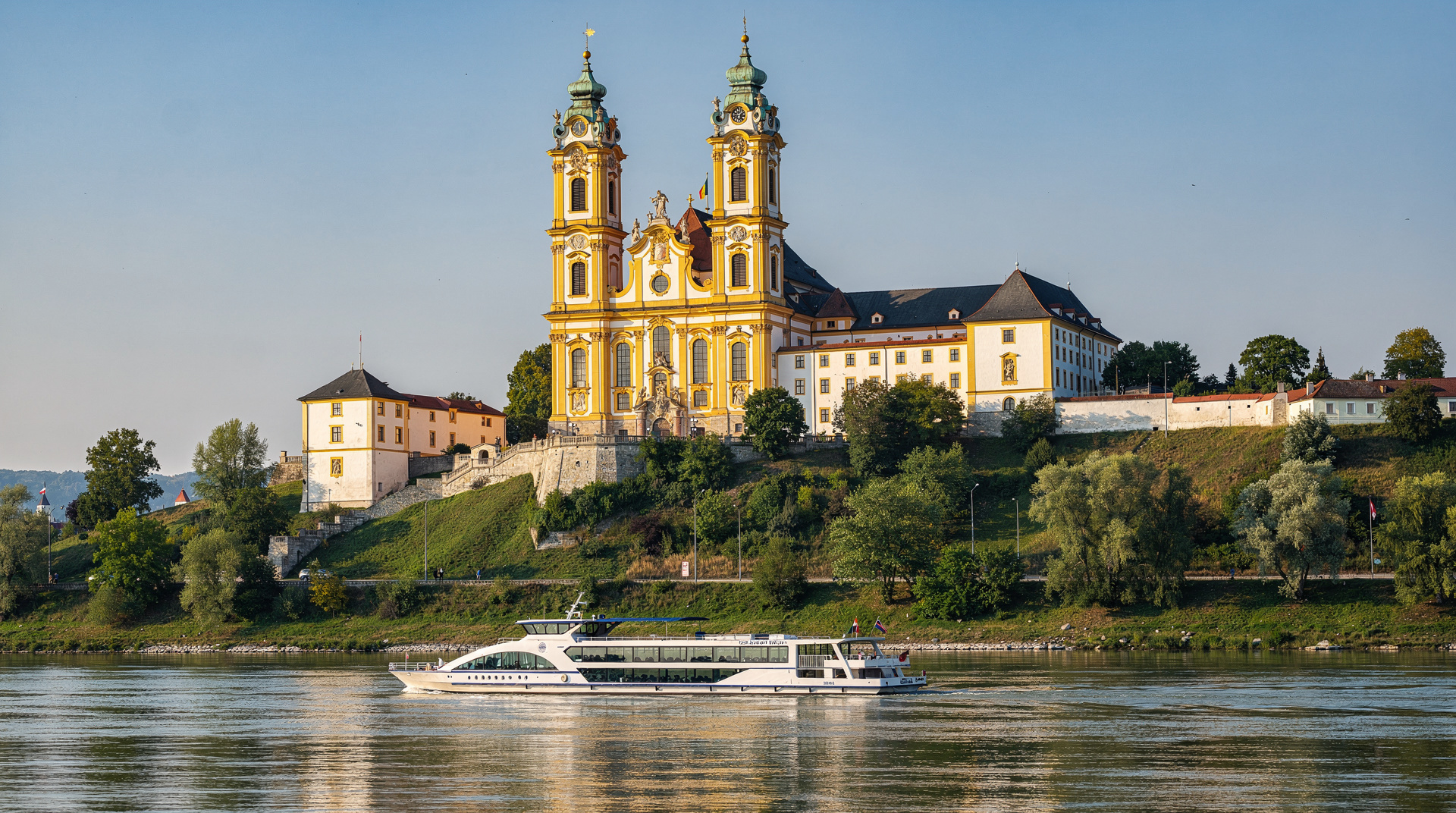
Vienna: Wachau Valley, Melk Abbey Tour with Danube Boat Trip
How does the Melk to Krems boat trip work?
The DDSG Blue Danube boat runs downstream from Melk to Krems (1h45) through the UNESCO Wachau Valley, stopping at Dürnstein en route. It runs April to October. Combine with a morning visit to Melk Abbey and a late afternoon in Krems for the perfect Wachau day trip from Vienna.
One hour and forty-five minutes of concentrated beauty
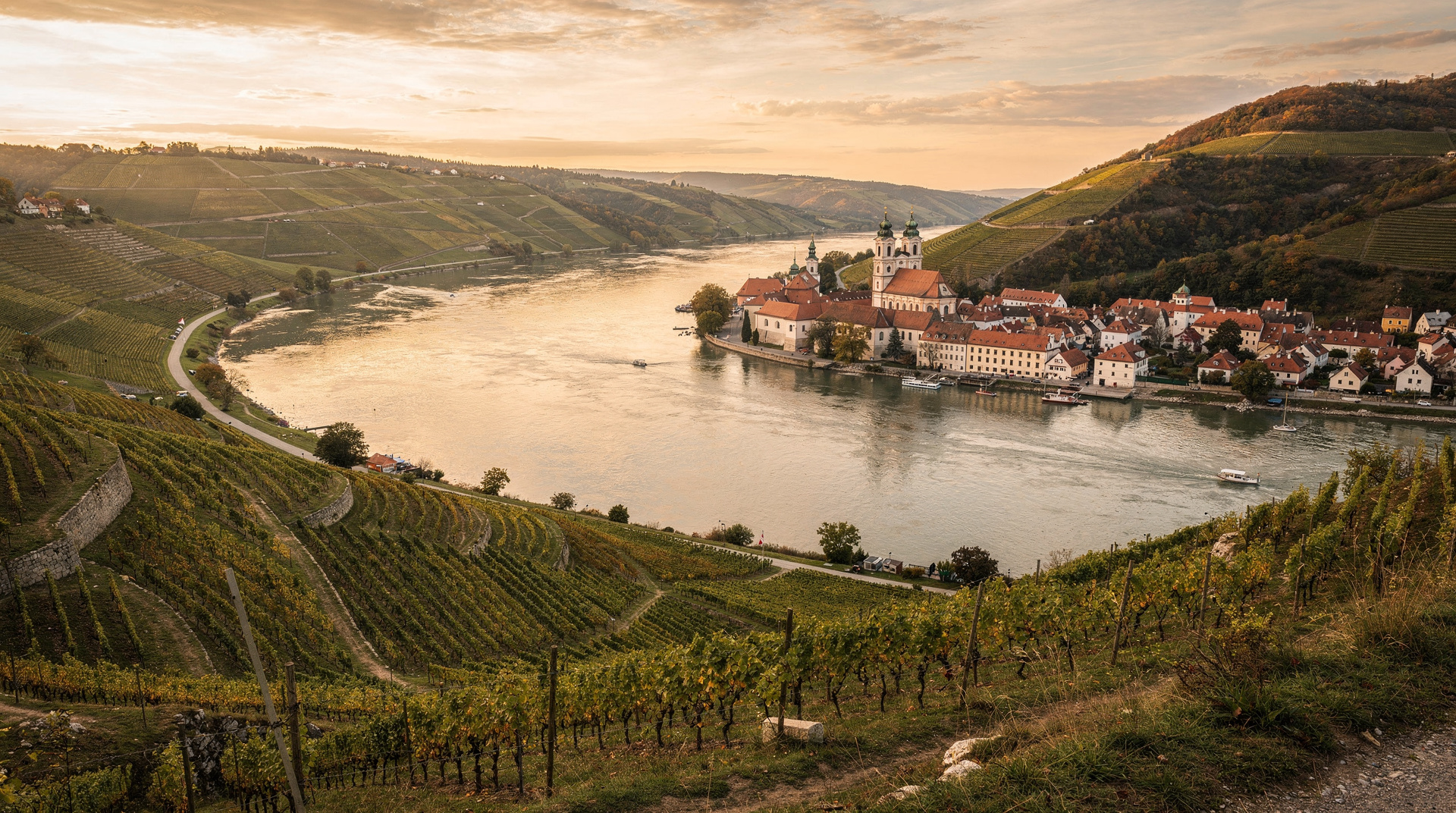
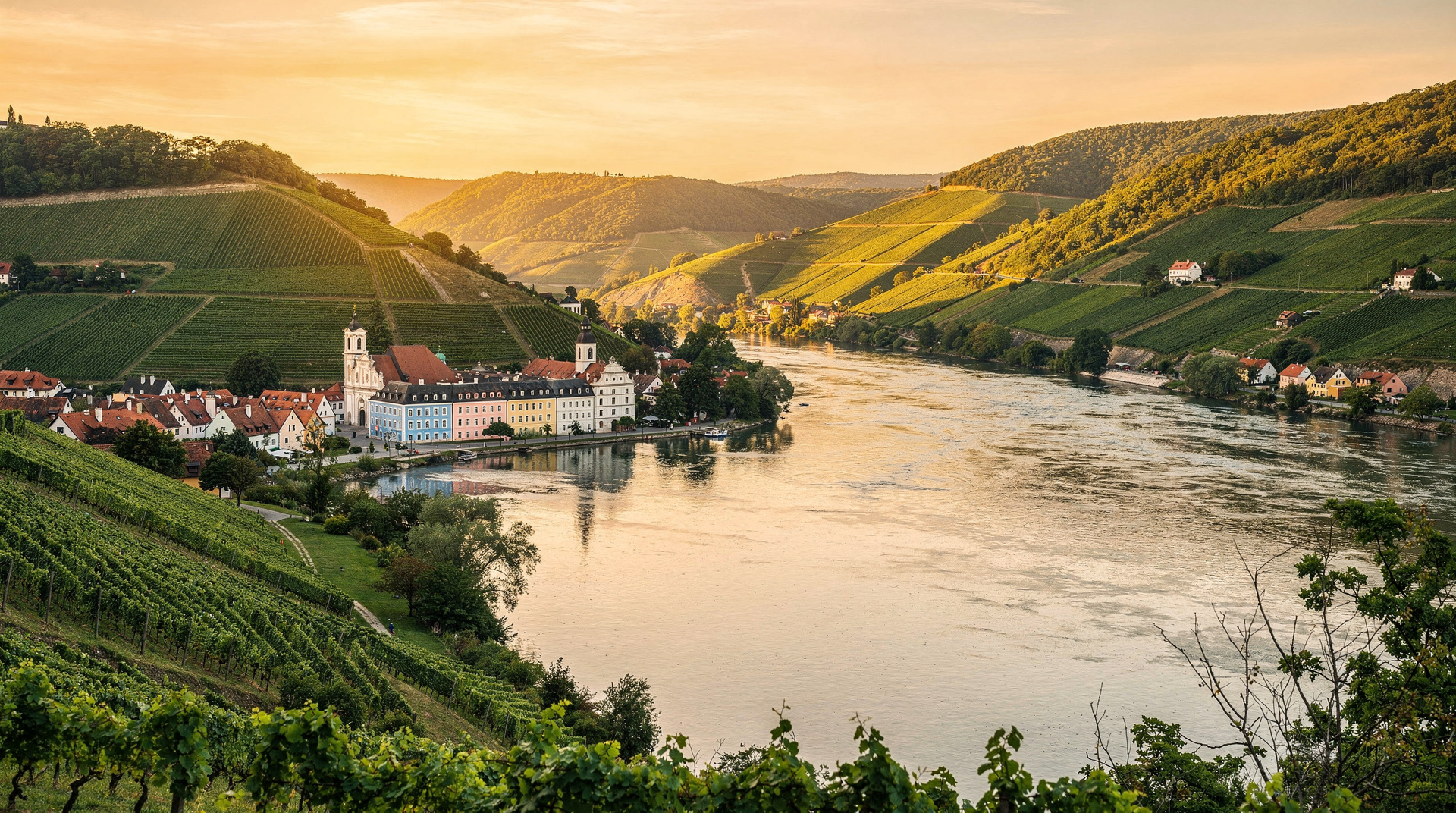
The boat from Melk to Krems covers 36 kilometres of the Danube in approximately 1h45. Every minute of this journey contributes something — a ruined castle on a cliff, a vine-terraced hillside, a medieval church tower above a wine village, a 12th-century priory in powder blue and white. There are very few stretches of river in the world where the scenery is this consistently exceptional for this duration.
The Wachau river journey became familiar to Habsburgs travelling between Vienna and Linz, to wine merchants shipping barrels downstream, to Crusaders heading for the Holy Land via the Danube route, and to Danube pilots navigating the narrow gorge against the current. The river here has always been a working corridor between the Austrian east and west. The 2000 UNESCO inscription recognised that this corridor had accumulated a density of cultural landscape — vines, villages, abbeys, castles — that had no equivalent elsewhere on the Danube.
This guide covers the practical details of the boat journey itself: schedule, stops, what to see from the deck, and how to structure the day.
| Where | Melk to Krems, through the Wachau Valley |
| Duration | 1h45 downstream (3h15 upstream) |
| Season | April to October |
| Cost | Around €30–36 adults, one-way |
| Highlight stop | Dürnstein, 30-minute stop |
| Best paired with | Morning at Melk Abbey |
The boat operator: DDSG Blue Danube
DDSG Blue Danube (Donaudampfschiffahrtsgesellschaft — the acronym outlasted the full name, mercifully) is the main passenger boat operator on the Austrian Danube. Their Wachau service runs April to October between Melk, Schönbühel, Spitz, Weissenkirchen, Dürnstein and Krems in both directions.
Online booking: ddsg-blue-danube.at. Tickets can also be purchased at the Melk boat landing (Schiffsstation Melk) adjacent to the town centre.
Approximate fares (2026): Melk → Krems one-way: €30–36 adults, €17–20 children. Melk → Dürnstein one-way: €23–28. Krems → Melk (upstream): same rates.
Schedule: Varies by season (April has fewer departures than August). Check the current timetable online. Most day-trippers aim for the 11:00 or 13:00 departure from Melk — the former allows time for Melk Abbey in the morning; the latter suits later arrivals from Vienna.
The journey in detail
Boarding at Melk
The Melk boat landing (Schiffsstation Melk) is below the town near the Danube bridge — about a 10-minute walk downhill from the abbey entrance. After visiting the abbey, follow the signs downhill to the boat station. There is a small waiting area and a kiosk.
The DDSG boats are comfortable river cruisers — open deck above and an enclosed cabin below with windows and a bar serving Wachau wines, coffee and simple food. In good weather, the open deck is the obvious choice for the views.
The first 30 minutes: Schönbühel and Aggstein
Shortly after leaving Melk, the boat passes Schönbühel an der Donau — a small castle on a rocky promontory just above the south bank, privately owned and not open to visitors. The castle dates from 1100 and its position above the river is striking against the limestone cliffs.
Thirty minutes into the journey, the south bank reveals Aggstein Castle ruin — one of the most dramatically sited ruins in Austria. The narrow rocky ridge juts into the valley and the remaining walls of the 13th-century fortress fill it from edge to edge. The lords of Kuenring who held the castle in the 13th century extracted tolls from river traffic passing below — an entirely characteristic medieval arrangement that gave the Wachau both its wealth and its conflict history.
Aggstein can be visited on foot from Aggsbach Dorf village — a 40-minute walk up the hillside. This requires disembarking and taking a later boat, but the views from the castle tower over the valley are exceptional.
The wine villages: Spitz and Weissenkirchen
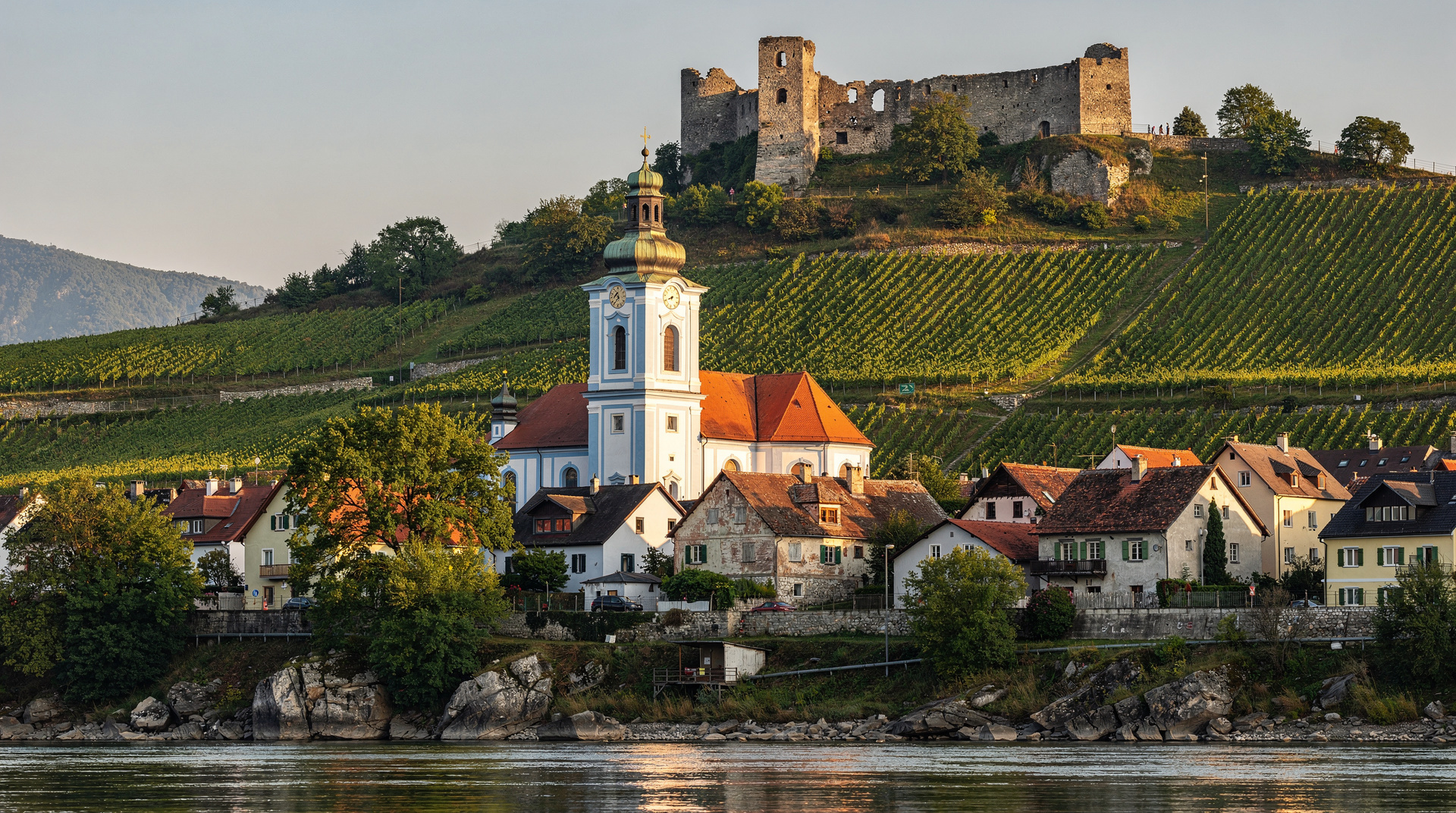
At about 45 minutes, Spitz an der Donau appears on the north bank. The distinctive profile of the twin-towered parish church and the Hinterhaus castle ruin above the village create the characteristic Wachau skyline — church tower, terraced vines, ruins above. Spitz has good Heurigen wine taverns if you stop here; the local speciality is the wine from the Tausendeimerberg (Thousand Bucket Hill), named for the legendary annual harvest.
Weissenkirchen, about 55 minutes in, has a Romanesque-Gothic parish church (the “White Church” that gives the village its name) visible from the river and a productive wine cooperative. The village was the landing point for the Crusader army of Frederick Barbarossa in 1190. The Wachau Museum, in the old Teisenhoferhof warehouse building, covers local history.
Dürnstein: the compulsory stop
Most DDSG services stop at Dürnstein for 30 minutes. This stop is the highlight of the cruise for most passengers.
What you see from the boat: Approaching Dürnstein, the powder-blue and white tower of the Augustinian priory church (Stiftskirche, 1721) appears around the river bend — the most recognised architectural image in the Wachau. Above the village, the ruins of Dürnstein Castle are visible on the ridge — a pointed limestone promontory with the remaining walls of the 12th-century fortress.
During the stop: The boat landing is at the edge of the village. Walk up Hauptstraße (5 minutes) to the church facade, village square, and Kellergasse (wine cellar alley). The church interior is worth 10 minutes. If the castle ruin is accessible during your stop time, the 20-minute climb delivers one of the finest viewpoints in the valley — but confirm the stop duration before committing to the walk.
The Richard the Lionheart connection: Duke Leopold V of Austria held the English king Richard I prisoner in Dürnstein Castle from December 1192 to February 1193. Richard had been captured while returning from the Third Crusade — the cause of the dispute between the two was an incident at Acre where Richard had allegedly had Leopold’s standard thrown down. The ransom eventually paid — 150,000 marks of silver — funded, among other things, Vienna’s first permanent city walls.
Arriving in Krems
The boat arrives in Krems at the Krems-Schiffsstation, near the old town centre. Krems is a proper medieval market city — the Landstraße main street is atmospheric, there are several quality restaurants, and the Heurigen wine taverns offer Wachau Grüner Veltliner and Riesling at cellar-door prices.
Allow 1–2 hours in Krems: the old town (Steiner Tor gateway, Dominikanerkirche now used as a concert hall, Göglhaus pharmacy with Gothic frescos), a Heuriger for wine, and the Weinstadt Museum covering local wine history. The Kunstmeile Krems contemporary art cluster is on the former industrial waterfront.
Return to Vienna from Krems: Train from Krems to Wien Franz-Josefs-Bahnhof (1h, approximately every 30 minutes). Note: this arrives at Franz-Josefs-Bahnhof in the 9th district, not Wien Hauptbahnhof — both are close to U-Bahn connections.
Combining with Melk Abbey
The natural day-trip structure:
- 7:30 am: Train Wien Westbahnhof → Melk
- 9:00 am: Arrive Melk, walk to abbey (15 min)
- 9:30 am – 11:30 am: Visit Melk Abbey
- 11:30 am: Walk to boat landing (10 min)
- 11:45 am or 13:00: Board DDSG boat Melk → Krems
- 1:30 pm or 3:00 pm: Arrive Krems (with Dürnstein stop)
- Afternoon: Explore Krems, wine at a Heuriger
- 5:00–6:00 pm: Train Krems → Wien Franz-Josefs-Bahnhof
This is the Wachau day trip at its most efficient.
Organised tours for the boat trip
For visitors who prefer a guided experience with transport from Vienna:
Vienna: Wachau Valley and Melk Abbey tour with Danube boat tripThis tour handles all logistics including the bus from Vienna, abbey visit, boat from Melk to Krems, and return transport to Vienna.
For a general Wachau Valley day tour with more flexibility:
Vienna: day tour to Wachau ValleyWhen to take the boat
April: Best for apricot blossom. The valley orchards flower white in mid-April — a spectacular effect against the limestone cliffs. Fewer tourists than summer.
May–June: Green, warm, excellent. Vineyards leafing out, the valley at its freshest.
September–October: Harvest season is exceptional. Vines gold and copper, harvest activity visible on the slopes, wine at its freshest in the Heurigen.
July–August: Beautiful but busiest. Book seats in advance; the morning services fill up.
Practical notes
Sunscreen: The open deck is fully exposed, even on partly cloudy days.
Layers: The river creates wind; a light jacket is useful even in July.
Luggage: If you are travelling through the Wachau on your way somewhere else with luggage, consider leaving bags in Melk station lockers before the abbey visit, collecting them and continuing by train from Krems rather than returning.
Photography: The best light is morning (before 11 am, if you are already in Melk) and late afternoon (from the Krems direction upstream). Aggstein and Dürnstein are particularly dramatic in low light.
If you don’t have a full day
Not every visitor has time for the full Melk-abbey-then-boat sequence. Two shorter alternatives are worth knowing about.
Boat only, no abbey: Take a later train to arrive in Melk around midday, walk straight to the boat landing (skipping the abbey interior — you still see it from the boat and from the platform), and board the 13:00 departure. This gets you the Dürnstein stop and the Krems afternoon without the 9:30 am abbey slot, useful if your train from Vienna is delayed or you prefer a slower morning.
Dürnstein instead of Krems: If your onward plans don’t require reaching Krems, disembark at Dürnstein rather than continuing. Dürnstein itself is a satisfying half-day destination — the priory church, the castle-ruin climb, and several good Heurigen — and local buses connect back to Krems or Melk if you need to catch a return train. This suits travellers who want the boat’s views of Schönbühel and Aggstein without committing to the full 1h45 plus a Krems stopover.
For a broader look at how this boat trip fits into a wider Wachau day, the Wachau day trip from Vienna guide and the Wachau Danube cruise guide cover the alternative starting points (some visitors begin in Krems and travel upstream, or start the day directly from Vienna by a longer river cruise). If you’re deciding between this regional Wachau service and a full-day Danube cruise departing Vienna itself, the Danube river cruise guide explains how the two products differ — Vienna departures cover far more river and far less walking time in the wine villages.
Wine along the route
The boat passes through some of Austria’s most respected Grüner Veltliner and Riesling terroir without a single vine visible up close — the terraces are set back from the bank and best appreciated from a distance. If wine is part of why you’re making this trip, note that the boat itself is not the place to taste it: plan a stop in Spitz, Weissenkirchen, Dürnstein or Krems, all of which have Heurigen or cellar-door tastings within a short walk of the landing stage. The Wachau wine route guide covers which villages have the most accessible tastings for a traveller without a car.
Building it into a longer Vienna stay
The Melk-to-Krems boat works as a single well-planned day within a longer Vienna visit rather than a trip in its own right — most travellers base themselves in Vienna and treat this as one day among several. Our Vienna 4-day itinerary places the Wachau day in context alongside the city’s core sights, so you’re not trying to squeeze the abbey, the boat and Krems into a trip that’s too short to enjoy them properly.
Frequently asked questions about the Melk to Krems boat trip
How much does the Melk to Krems boat cost?
The DDSG one-way ticket from Melk to Krems costs approximately €30–36 adults, €17–20 children (6–15). Family and combination tickets are available. Book at ddsg-blue-danube.at.
How often does the Melk to Krems boat run?
Services run 2–4 times daily depending on the season, April to October. Check the current timetable at ddsg-blue-danube.at — the morning departures (around 11 am and 1 pm from Melk) are the most practical for day-trippers from Vienna.
Can you get on the boat in Dürnstein?
Yes — Dürnstein has its own boat landing. You can board or disembark there. This allows visitors to explore Dürnstein and join a later boat to Krems, or to go directly to Dürnstein from Melk and skip the earlier sections.
Is there a boat from Krems to Melk (upstream)?
Yes — the upstream service runs Krems to Melk in approximately 3h15. It operates on the same route in reverse but takes significantly longer against the current. Most day-trippers use the downstream direction (Melk to Krems).
What is the river like on this section of the Danube?
The Wachau section of the Danube is a gorge — the river is relatively narrow (200–400 metres wide), with steep banks on both sides rising to limestone cliffs above. The current is moderate; the water is typically green-blue.
Can you take bicycles on the Wachau boat?
Yes — DDSG boats allow bicycles for an additional fee. This suits visitors who cycle one direction along the Donauradweg riverside path and take the boat back. Check the current bike fee at ddsg-blue-danube.at.
Top experiences
Bookable activities with verified prices and instant confirmation on GetYourGuide.