Vienna in 4 days: classic city plus a day trip
Vienna: Schönbrunn Palace & Gardens Skip-the-Line Tour
Four days is the sweet spot for a first visit to Vienna: enough time to absorb the imperial core without rushing, plus a full day out of the city to somewhere genuinely different. This itinerary gives you the choice between two outstanding day trips — Hallstatt in the Salzkammergut or Bratislava on the Danube — each completely different in character. If neither day trip appeals, the 3-day itinerary covers the same city core without the extra day, and the 5-day itinerary adds a second day trip if you have more time.
At a glance
| Duration | 4 days |
| Pace | Deliberate for days 1–3, full day for the day trip |
| Best for | First-timers, couples, city-breakers |
| Transport | U-Bahn in the city; organised tour or train for day 4 |
| Budget | Mid-range, roughly 180–230 € per day for two, plus day-trip cost |
| Best season | April–June or September–October |
Days 1–3 follow the Vienna imperial core at a deliberate pace. Day 4 is your choice: Hallstatt (lakes and Alps, 3.5 hours each way — always take an organised tour) or Bratislava (1 hour by train or 75 minutes by hydrofoil, doable independently). Both are spectacular for opposite reasons.
Day-by-day summary
| Day | Focus | Key booking |
|---|---|---|
| 1 | Stephansdom, Hofburg, Ringstrasse, Albertina | Hofburg guided tour |
| 2 | Schönbrunn, Naschmarkt, MuseumsQuartier | Schönbrunn skip-the-line |
| 3 | Belvedere, Neubau district | Belvedere entry ticket |
| 4 | Hallstatt or Bratislava | Day-trip tour or train ticket |
Day 1: arrival and the Innere Stadt
Morning (9:00–12:30)
If arriving the night before, start fresh at 9:00 with Stephansdom (St. Stephen’s Cathedral) — the Gothic spire visible from half of Vienna. Climb the South Tower (6 €, 343 steps) or take the lift in the North Tower. The cathedral interior is free.
Walk the Graben pedestrian zone west — pause at the ornate Pestsäule — then onto Kohlmarkt toward the Hofburg. Book the Hofburg and Empress Sisi Museum guided tour for the 10:30 or 11:00 departure. Allow 2.5 hours.
Afternoon (13:00–18:00)
Lunch at Café Central (Herrengasse 14) — the Tafelspitz is authentic, the architecture unmissable. Budget 25 € per person.
After lunch, walk the Ringstrasse from the Burgtor past the Parliament, Rathaus, and Burgtheater — this boulevard was built by Franz Joseph as a statement of imperial ambition and it works. The full circuit on foot takes about 45 minutes.
Spend 16:00–18:00 in the Albertina Museum: world-class Monet, Picasso, and Dürer collection, plus reliable temporary exhibitions. Entry 18 € — worth it.
Evening (19:30 onwards)
Dinner at Figlmüller Wollzeile (Wollzeile 5) — book ahead, always full. The benchmark Wiener Schnitzel in the city. Walk back via the illuminated Graben.
Day 2: Schönbrunn and classical music
Morning (8:45–13:00)
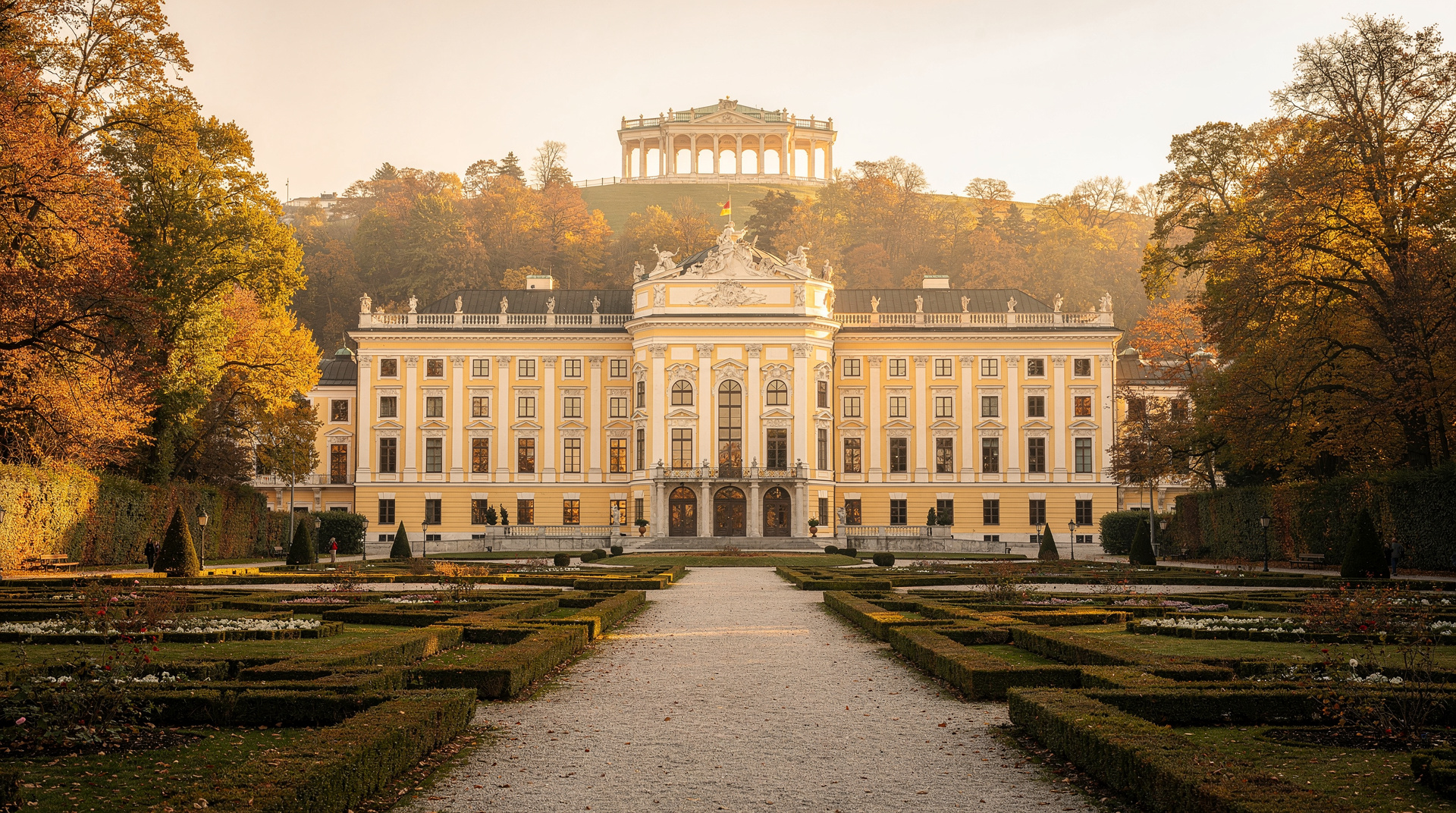
Take U4 to Schönbrunn station (12 minutes from the center). Book the Schönbrunn Palace skip-the-line tour in advance — queues at 10:00 in summer reach 90 minutes without a booking. The Grand Tour (45 rooms, audio guide) takes about 55 minutes; add 30 minutes for the garden and a 30-minute walk up to the Gloriette for the Vienna panorama.
Afternoon (13:30–18:00)
Return to the city. Lunch at Naschmarkt — best on a weekday (Saturday is chaotic). Try a Käsekrainer (cheese sausage) from a Würstelstand or sit at one of the market-edge restaurants.
Afternoon in the MuseumsQuartier: the Kunsthistorisches Museum (KHM) is one of Europe’s great art museums — the Bruegel collection, Vermeer’s The Art of Painting, and Raphael’s Madonna in the Meadow. Allow 2 hours minimum. The Leopold Museum (Schiele, Klimt) is 15 minutes’ walk and excellent if time allows.
Evening (19:30 onwards)
Tonight: a concert at the Musikverein. Book the Vienna classical concert in the Musikverein at least a week ahead. The Golden Hall’s acoustics and rococo interior are exceptional — this is where the Vienna Philharmonic plays the New Year’s Concert. Programme: Vivaldi, Mozart, Strauss. Duration approximately 1 hour 40 minutes.
Dinner before the concert (18:00–19:00) at Café Schwarzenberg on the Ring — efficient, good quality, and close to the Musikverein.
Day 3: Belvedere and the 7th district
Morning (9:00–12:30)
Upper Belvedere first thing — opens 9:00, crowds arrive 10:30. Gustav Klimt’s “The Kiss” is the centrepiece but the full permanent collection (Schiele, Kokoschka, Austrian Baroque) justifies 2 hours. Book the Upper Belvedere entry ticket online to skip the queue.
Afternoon (13:00–18:00)
Walk through the Belvedere garden to the Lower Belvedere (Baroque Museum, free with Upper ticket on combined days) and continue into the Naschmarkt for lunch.
Afternoon in Neubau (7th district): Vienna’s neighbourhood for independent bookshops, concept stores, and honest coffee houses. Recommended stops: Café Hawelka (Dorotheergasse 6 — established 1939, still family-run, untouched by renovation), or Café Phil on Gumpendorfer Strasse (books, vinyl, excellent coffee).
Evening: Spanish Riding School matinée if available (check schedule — closed July and August; performances typically Tuesday/Thursday/Saturday). Otherwise, a final dinner at Plachutta Wollzeile for Tafelspitz — the definitive Vienna dining experience. Book ahead.
Day 4, option A: Hallstatt — the Alpine lake village
Start early — this is a long day. Independent travel to Hallstatt by train is possible (3 hours each way, change at Attnang-Puchheim) but uncomfortable. An organised tour is significantly better: Hallstatt day trip with boat ride and Skywalk departs around 7:00–7:30 from central Vienna and returns by 20:00–21:00.
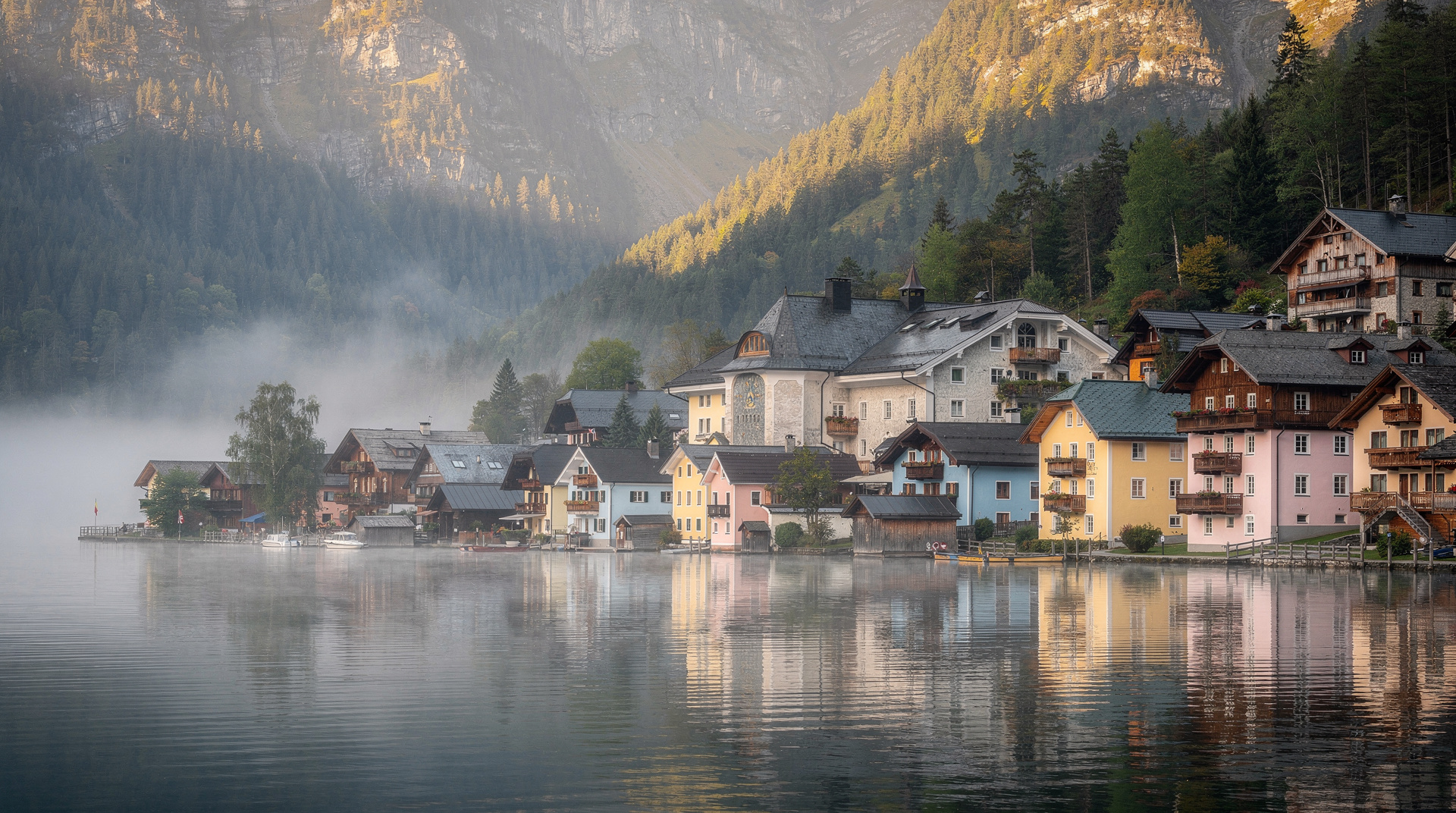
What you get: a mountain lake village that looks like a painting (because it is — it inspired a Disney backdrop), a boat ride on the Hallstätter See, the Skywalk viewpoint, and time to walk the historic village centre. The boat ride is the highlight — the reflection of the Dachstein glacier in the lake on a clear morning is genuinely one of the best views in Central Europe.
Honest note: Hallstatt is overcrowded in July and August. Spring (April–May) and September are far preferable. The village is small — you will see it in 2–3 hours. The journey and the landscape are the point.
Day 4, option B: Bratislava — the Slovak capital
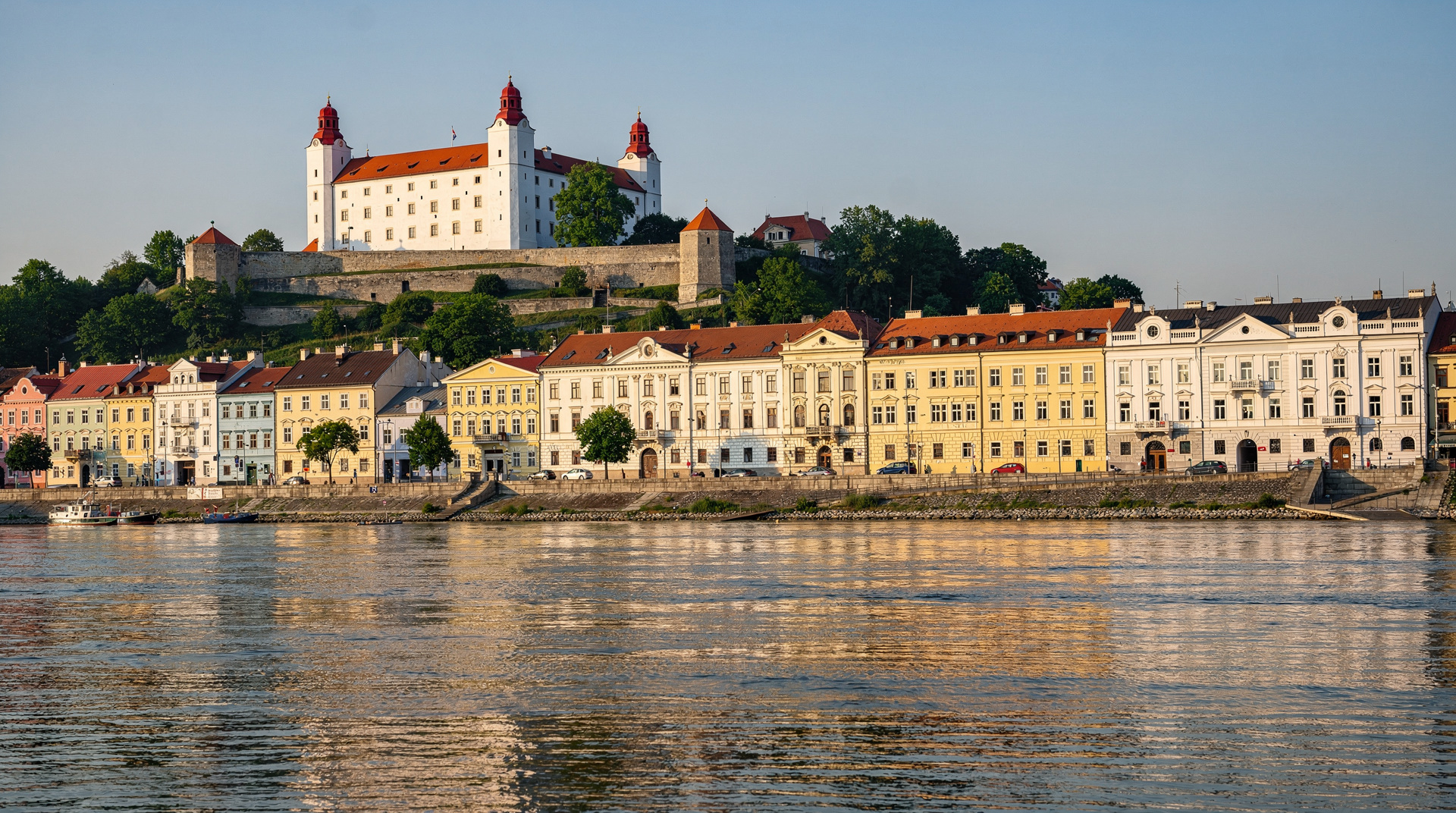
Bratislava is 1 hour by train from Wien Hbf (RegioJet or ÖBB, around 10 €), or 75 minutes by Twin City Liner hydrofoil (a spectacular way to travel — the river approach to Bratislava castle is memorable). Or take the organised Bratislava guided tour with speedboat ride which combines transport, a city walking tour, and a Danube boat.
What to do independently: the Old Town (Staré Mesto) is compact and walkable in 2 hours. Bratislava Castle (15-minute walk uphill from the old town) has free panoramic views and a history museum. Slovak pub cuisine — bryndzové halušky (sheep cheese dumplings) at Pub Slovakia or Kolkovna — is hearty, cheap, and very good.
Currency: Bratislava uses EUR (Slovakia is in the Eurozone). No currency exchange needed.
How to adapt this itinerary
For music lovers: Use the saved day-trip time to add a second concert (St. Stephen’s Cathedral concerts run most evenings) or visit the Haus der Musik interactive museum (Seilerstätte 30, 2 hours).
For families: Swap day three’s Belvedere for Schönbrunn Zoo combined with the palace visit — the world’s oldest zoo in 1752 is excellent for all ages. Add the Riesenrad (Giant Ferris Wheel) in the Prater on a free afternoon.
For art lovers: The Leopold Museum in the MuseumsQuartier (Schiele’s largest collection) and the Albertina Modern (contemporary Austrian art) are underrated compared to the more famous institutions.
Costs and logistics
Transport card: 48-hour Wiener Linien (17.10 €) or a single 24-hour extension for day three (8 €). If doing the Bratislava train option, buy a separate point-to-point ticket (10 €).
Average daily spend (mid-range couple): Day 1–3: approximately 180–230 € per day for two, as per the 3-day itinerary. Day 4 (Hallstatt tour): 70–90 € per person all-in. Day 4 (Bratislava train): 15–30 € per person all-in plus lunch.
Booking priority: Schönbrunn skip-the-line and Musikverein concert (book 1–2 weeks ahead in summer). Hallstatt tour books out quickly in July–August — book 2–3 weeks ahead in peak season.
Going deeper on each day
Each stop in this plan has a dedicated page if you want more detail before you go. For day 1, the Stephansdom cathedral guide, the Hofburg palace guide and the Ringstrasse architecture walk explain what you are looking at, and the Albertina Museum guide helps you decide how long to stay inside. The Innere Stadt neighbourhood page is useful for orienting yourself on foot.
For day 2, the Schönbrunn Palace guide covers the palace in more depth, and the Kunsthistorisches Museum guide helps you prioritise rooms so the museum does not swallow the whole afternoon. Pair them with the Musikverein concerts guide when choosing your evening.
For day 3, the Belvedere Palace guide and the Klimt trail show how to link the paintings you see with the city around them. If your pace feels too tight overall, the how many days in Vienna guide is a useful reality check.
Deciding between Hallstatt and Bratislava the honest way
Most first-time visitors default to Hallstatt because it photographs better, but that isn’t always the right call. If you already have alpine lake scenery planned elsewhere in your trip (a Switzerland or Salzkammergut leg, for instance), Bratislava’s contrast — a completely different capital city, castle, and cuisine in half the travel time — often serves the trip better.
Our Bratislava day trip from Vienna guide and Hallstatt day trip from Vienna guide both go deeper on logistics than this itinerary has room for. If you can’t decide and have a fifth day available, the 5-day itinerary fits a Wachau Valley day in as well, sidestepping the choice.
Getting the timing right
Book the Hallstatt tour or the Bratislava train ticket before you fix your day 1–3 restaurant reservations — the day-4 departure time (typically 7:00–7:30 for Hallstatt) affects how late you can reasonably stay out on day 3. If choosing Bratislava, the Vienna to Bratislava transport guide compares the train, the Twin City Liner hydrofoil, and the guided bus tour options in detail.
Frequently asked questions about this itinerary
Q: Should I choose Hallstatt or Bratislava as my day trip?
Choose Hallstatt for natural landscapes and Alpine beauty. Choose Bratislava for urban culture, history, and flexibility (you can go independently). Hallstatt is more dramatic visually; Bratislava gives you more control over your time.
Q: Can I do Hallstatt independently by train?
Technically yes: Wien Hbf to Hallstatt station by train and ferry takes 3–3.5 hours each way, leaving you only 2–3 hours in the village. An organised tour is a significantly better use of your day and often cheaper than the train plus ferry costs.
Q: Is the Bratislava hydrofoil worth the extra cost over the train?
The Twin City Liner (about 25–30 € one way) is a beautiful journey and the river approach to Bratislava castle is worth it. If budget is a factor, the train is perfectly good.
Q: What should I skip if I have to cut something?
The Albertina (day one afternoon) can be sacrificed first — it is excellent but the Kunsthistorisches and Belvedere are higher priority for a first visit.
Q: Is 4 days enough time for a day trip plus the city core?
Yes, comfortably — three days is already enough for the Vienna imperial highlights (see the 3-day itinerary for that version), so the fourth day is purely additive rather than squeezed out of the city time.
Q: Can I swap the Musikverein concert for something cheaper?
Yes — a same-day standing-room ticket at the Vienna State Opera (around 4 €, released 80 minutes before curtain) or a concert at St. Stephen’s Cathedral (20–25 €) both cost significantly less than the Musikverein’s 45–65 € tourist programme, at the cost of a less famous hall.
Top experiences
Bookable activities with verified prices and instant confirmation on GetYourGuide.