Vienna Woods hiking guide: trails, routes and what to expect
Vienna Woods and Mayerling Half-Day Tour from Vienna
What hiking is available in the Vienna Woods?
The Wienerwald (Vienna Woods) has over 1,000 km of marked trails starting from the edge of Vienna. Popular routes: Kahlenberg summit from Grinzing (5 km, 200m ascent), Leopoldsberg loop from Klosterneuburg (8 km), the Mayerling circuit through Heiligenkreuz (15 km, moderate), and the Hermann-Chilla-Weg long trail. All accessible by public transport from Vienna.
Walking distance from the opera to the forest
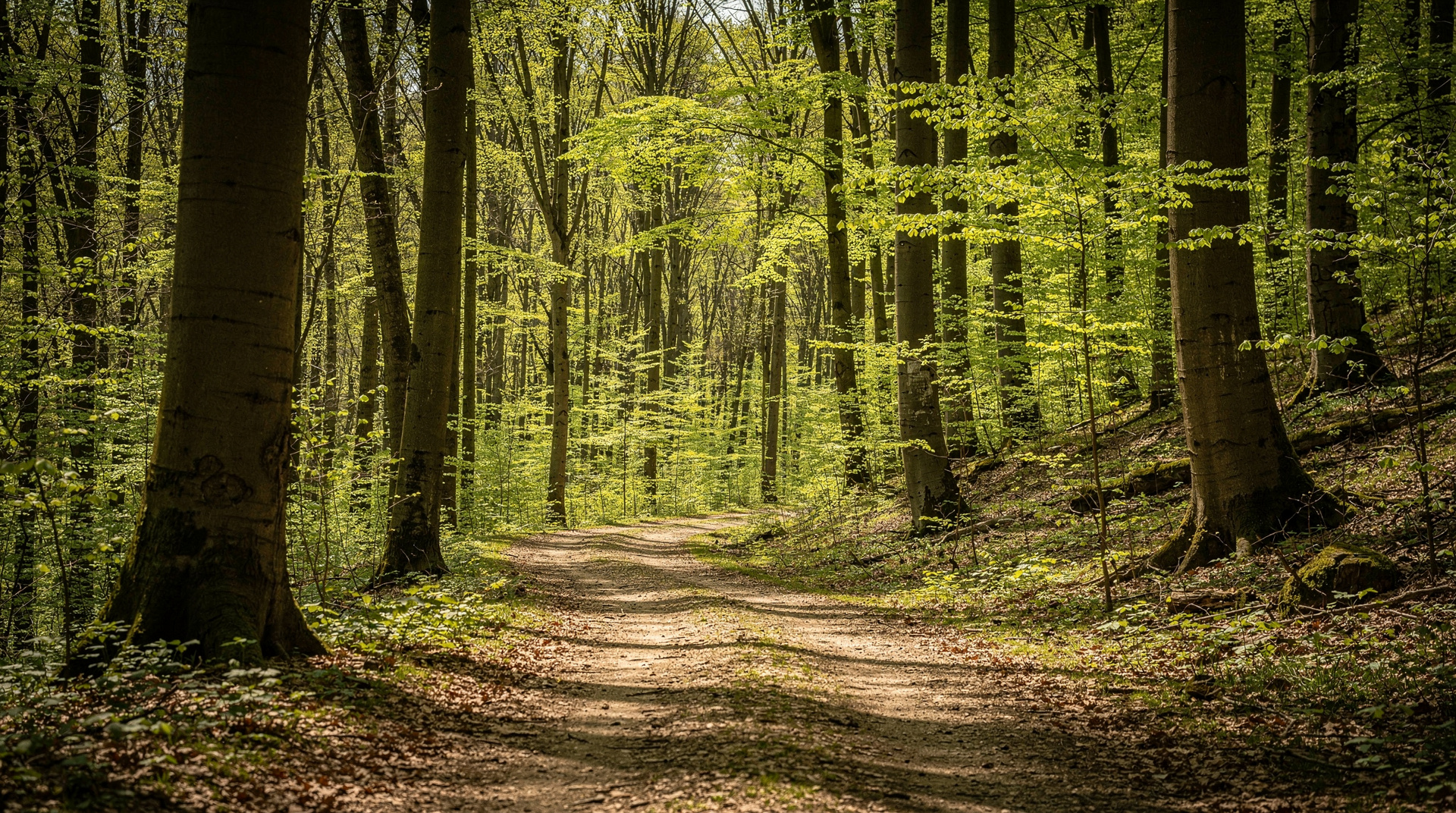
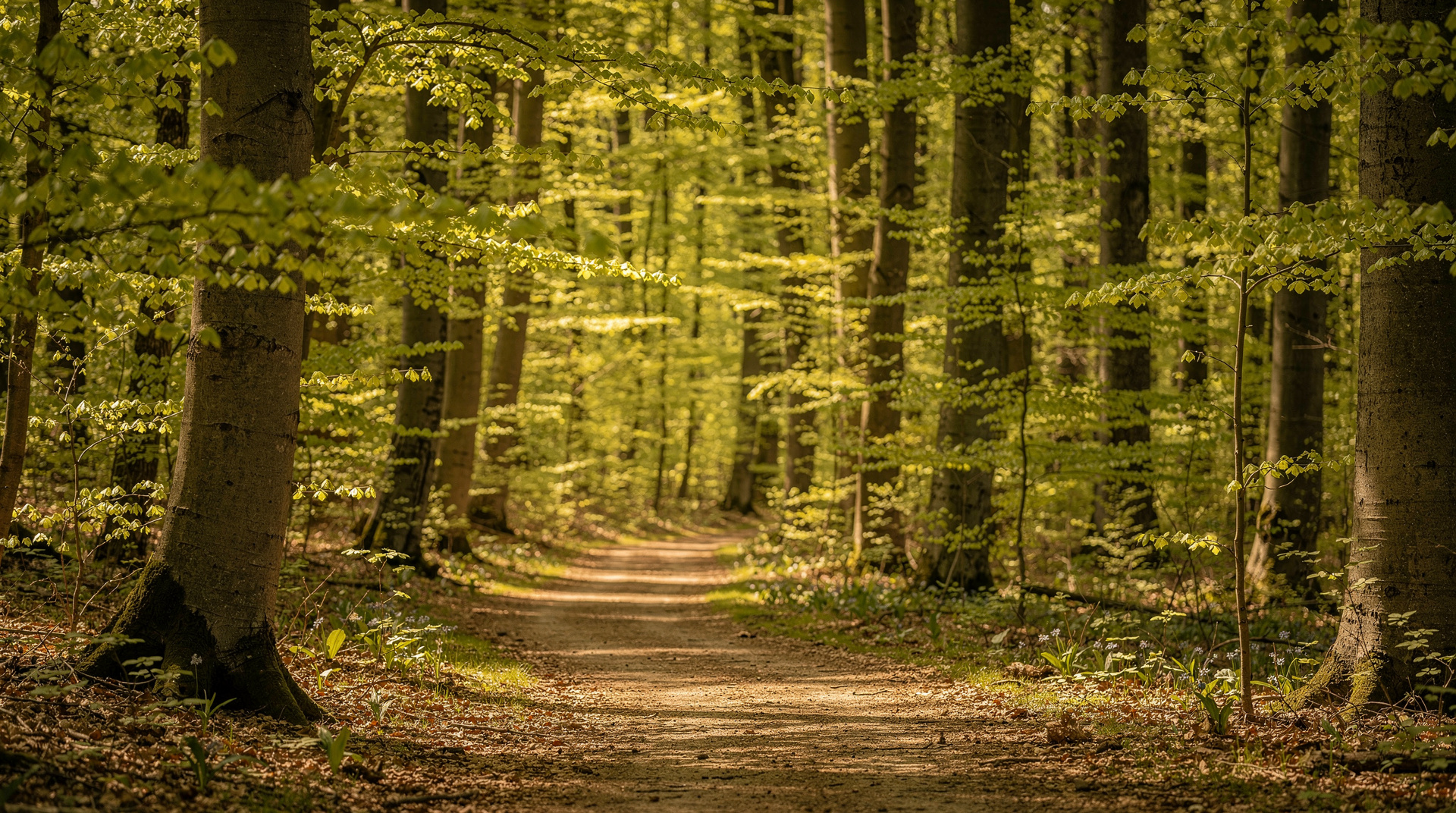
Vienna is the only major European capital with extensive forests within its city limits — the Wienerwald (Vienna Woods) begins at the city’s western edge and extends south and southwest into Lower Austria, covering some 1,350 km² of forested hills, vine-covered slopes and river valleys. The UNESCO Man and Biosphere Reserve designation recognises the ecological importance of this green corridor at the edge of one of the continent’s most densely populated metropolitan areas.
For visitors to Vienna, the Vienna Woods offers something uniquely practical: serious hiking within 30 minutes of Stephansplatz. No special equipment needed for the day trails, no overnight commitment, no mountain gear — just walking shoes and the U-Bahn. This guide covers the best trails, how to reach them, and how to combine hiking with the distinctly Viennese tradition of ending a walk at a Heuriger wine tavern.
| Where | Kahlenberg, Leopoldsberg, Lainzer Tiergarten, southern Wienerwald |
| Cost | Free trails; Hermesvilla entry around €10 |
| Time needed | 2 hours (short ridge walk) to a full day (Heiligenkreuz–Mayerling circuit) |
| Getting there | Bus 38A from Heiligenstadt U-Bahn, or U4 to Hütteldorf |
| Best time | April–June for birdsong and wildflowers; September–October for autumn colour |
How to reach the Vienna Woods by public transport
From Heiligenstadt U-Bahn (U4)
Bus 38A runs from Heiligenstadt (U4 terminus) to Kahlenberg (484m) and Leopoldsberg (425m) at the top of the wine hills above Grinzing. This is the most direct public transport route to the Viennese hills.
Duration: 25–30 minutes to Kahlenberg. The bus runs approximately every 30–60 minutes; check the current schedule at wienerlinien.at before setting off.
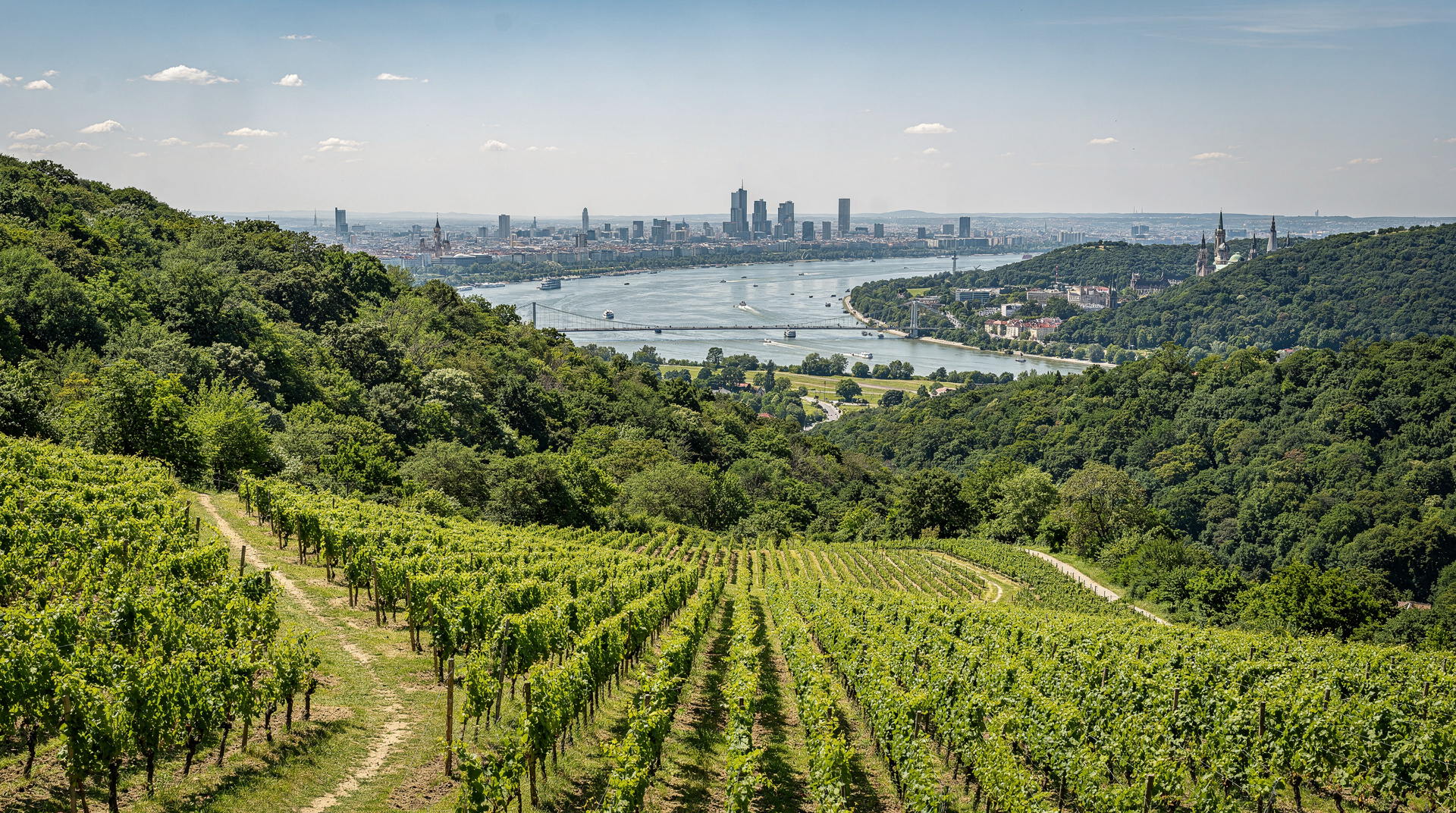
Hiking from the bus stop: At the Kahlenberg summit, trails lead north along the ridge towards Leopoldsberg (45 minutes) and south towards Klosterneuburg. The views from Kahlenberg over Vienna and east towards the Pannonian plain are the best accessible from public transport.
From Hütteldorf U-Bahn (U4)
Hütteldorf U4 station is the western terminal of the U4 and the gateway to the central Wienerwald. From here, hiking trails head directly into the forest — towards Mauerbach (2h), the Wienerwald Steig (the main long-distance trail through the Vienna Woods), and eventually to Heiligenkreuz and Mayerling to the south.
Day hike suggestion from Hütteldorf: The 5 km circular trail to the Jubiläumswarte watchtower (388m) — a 90-minute loop through beech forest with views over the western Vienna suburbs. Entirely accessible for average fitness levels.
From Mödling (south — by S-Bahn)
S-Bahn lines S1 and S2 run south from Wien Hauptbahnhof to Mödling (20 minutes), the gateway to the southern Vienna Woods and the Naturpark Föhrenberge. This area is less visited than the Kahlenberg hills and offers more varied terrain including the dramatic Klausen-Leopoldsdorf limestone gorge.
The best hiking routes
Kahlenberg to Leopoldsberg ridge walk (4 km, 2 hours, easy)
This is the most popular short hike in the Vienna Woods — the ridge connecting Kahlenberg (484m) and Leopoldsberg (425m), both accessible by bus from Heiligenstadt.
Starting point: Kahlenberg summit (bus 38A from Heiligenstadt).
Route: From the Kahlenberg summit viewpoint and café, take the marked path north along the ridge. The first section descends into the saddle between the two hills through mixed forest, then climbs to the Leopoldsberg summit. The Leopoldsberg promontory was the site of a Roman fortification and later a medieval castle; today it has a restored Baroque church and a terrace cafe with views over the Danube and the Klosterneuburg Monastery below.
Return: Walk down to Klosterneuburg town (45 minutes) and train back to Vienna, or return to Kahlenberg and bus 38A back to Heiligenstadt.
Combination with Grinzing Heuriger: Descend from Kahlenberg through the vineyards to Grinzing village (45 minutes downhill). Grinzing is the centre of Vienna’s Heuriger wine-tavern tradition — the village streets are lined with wine taverns open in season (April–October). See the Heuriger guide for recommendations. This combination of panoramic hike + Heuriger wine is the quintessential Vienna Woods experience.
The Lainzer Tiergarten circuit (6–12 km, 2–4 hours, easy to moderate)
The Lainzer Tiergarten is Vienna’s largest protected nature reserve — 2,450 hectares of enclosed woodland that was the imperial hunting ground from 1557 until 1918. The wall around the perimeter (22 km) was built under Karl VI; the forest has been essentially undisturbed since then. Today it is a public park accessible on foot from the 13th district.
Access: From Hütteldorf U4, tram 60 to Lainz gate, or from Ober St. Veit station on tram 60. Multiple gates provide entry; the Nikolaitor gate near Hütteldorf is the most convenient.
Wildlife: The reserve has a visible population of wild boar (Wildschwein) — family groups are commonly seen on the forest clearings, particularly in the morning and evening. Roe deer, red deer, mouflons and woodpeckers are also regularly observed. The wild boar are accustomed to visitors but should not be approached with food.
Hermesvilla: In the centre of the reserve, the Hermesvilla is a late neo-Renaissance hunting lodge built by Franz Joseph as a gift for Empress Sisi (completed 1886). The empress decorated some rooms personally and reportedly spent time here away from court obligations. The villa houses a permanent exhibition on imperial Vienna lifestyle. Entry: €10.
Trail options: The marked routes in the Tiergarten range from 3 km (around the Hermesvilla) to 12 km (full circuit of the reserve’s interior). All are well-marked and on forest roads or maintained paths.
Heiligenkreuz and Mayerling circuit (15 km, 5–6 hours, moderate)
For more ambitious hikers, the circuit through the southern Vienna Woods linking Heiligenkreuz Abbey and Mayerling hunting lodge is a full-day walk through mature beech forest.
Starting point: Baden bei Wien (train from Wien Hauptbahnhof, 30 minutes) or Heiligenkreuz village (bus 365 from Baden).
Route: Heiligenkreuz Abbey → forest paths through the Alland valley → Mayerling → Baden bei Wien. The terrain is forest paths and fire roads — no exposed sections or climbing. The walking is quiet and atmospheric.
Combination with abbey visit: The logical approach is to visit Heiligenkreuz Abbey (guided tour: 1.5h) and then begin the forest walk to Mayerling (2h) and back to Baden by path or taxi. This combines the cultural and natural highlights of the southern Vienna Woods in one day.
Transport note: For the return from Mayerling to Baden, a taxi costs approximately €15. Bus 365 runs between Baden and Mayerling/Heiligenkreuz but on a limited schedule — check before setting off.
Vienna Woods and Mayerling half-day tour from ViennaThe Wienerwald Steig (120 km, multi-day long trail)
For serious hikers, the Wienerwald Steig is the long-distance trail that traverses the entire Vienna Woods from Klosterneuburg in the north to Mayerling in the south. The full trail takes 4–7 days; most day hikers choose a section based on their starting point.
Well-marked with the green Wienerwald diamond sign. Overnight huts and guesthouses are available along the route. The trail crosses nine different ecological zones from Pannonian dry grassland to cool mixed forest.
Practical gear notes for city-based hikers
Most visitors arriving in Vienna without dedicated hiking gear can still manage the shorter routes comfortably. Trainers with decent grip are adequate for the Kahlenberg–Leopoldsberg ridge in dry weather; the Lainzer Tiergarten’s wide forest roads are similarly forgiving. The Heiligenkreuz–Mayerling circuit and any Wienerwald Steig section are a different matter — proper waterproof walking shoes make a real difference given how often the forest floor stays damp under tree cover even after the city itself has dried out. A basic day pack with water, a snack, and a light waterproof layer covers nearly every Vienna Woods scenario; there is no need to bring specialist alpine equipment for any of the routes described here.
Combining hiking with wine
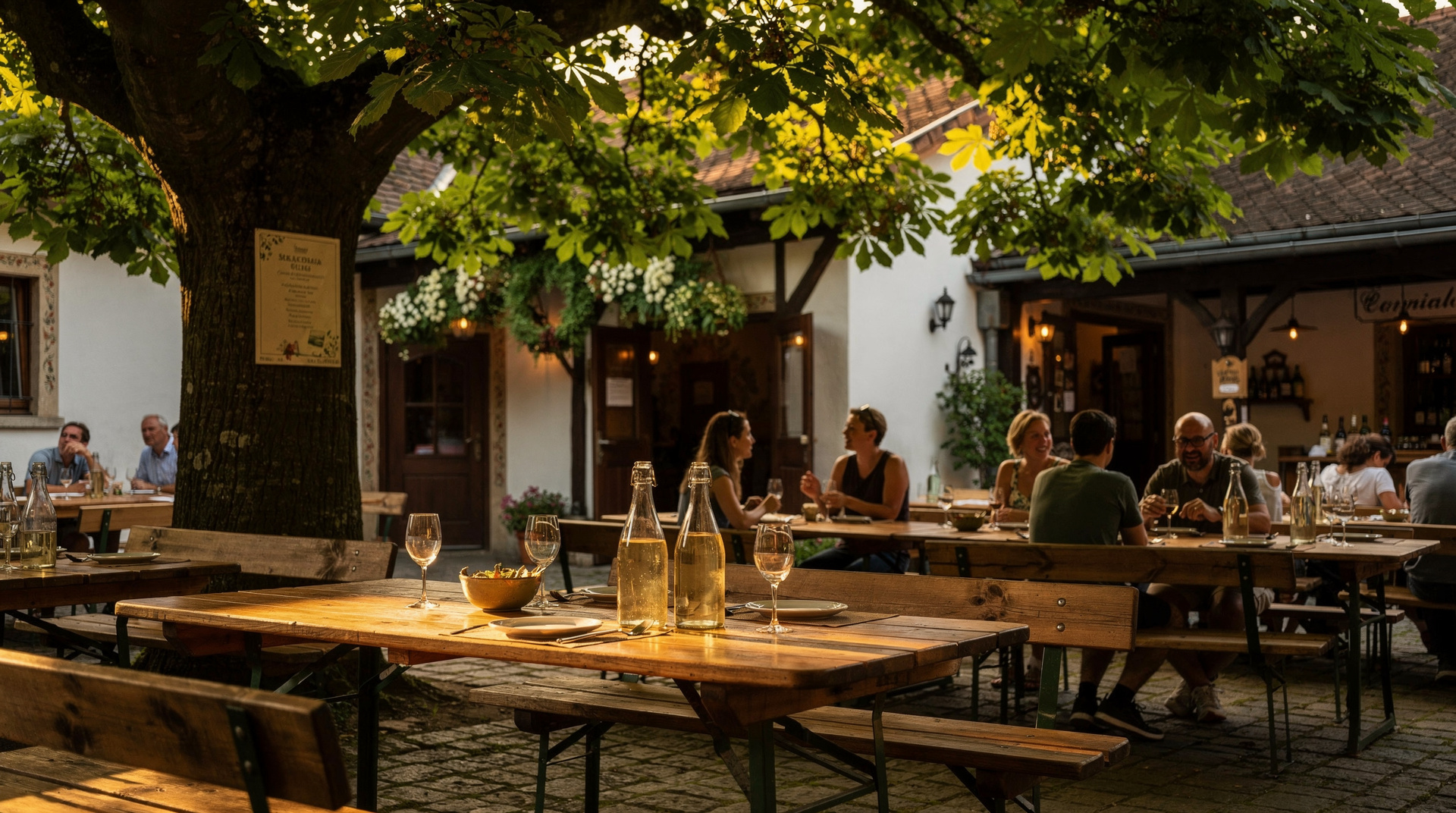
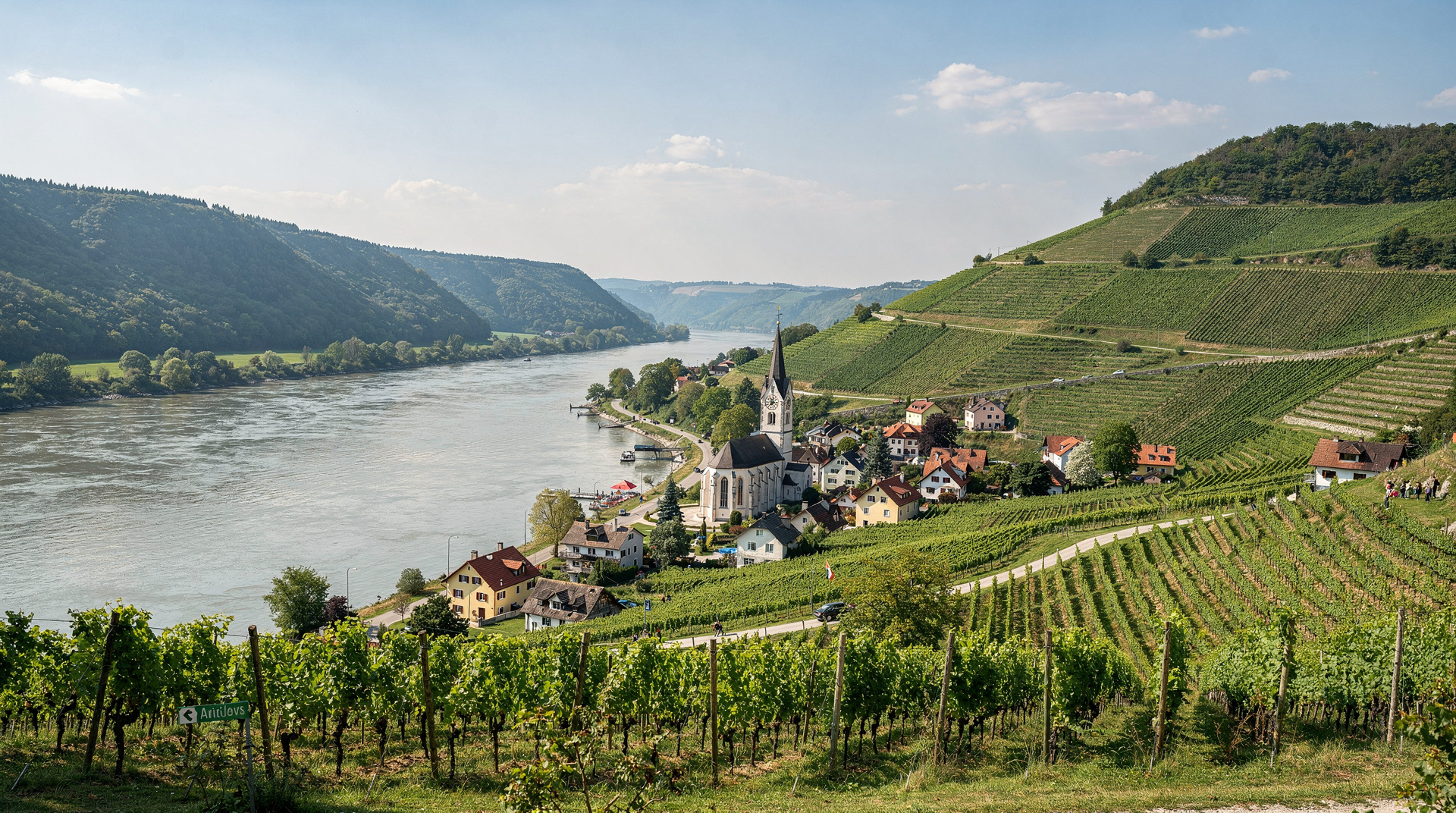
The Vienna Woods wine tradition is inseparable from the hiking culture. The western hills of Vienna — Kahlenberg, Bisamberg, Wienerberg, and the southern Wienerwald slopes around Gumpoldskirchen — produce Grüner Veltliner, Riesling and Pinot Noir. The Heurigen wine taverns open seasonally (April–October) and serve young wine from the current vintage alongside traditional Austrian cold cuts (Liptauer spread, bread, radishes, pickles).
Best Heuriger combinations with hiking:
- Kahlenberg descent → Grinzing Heuriger (45 min walk)
- Leopoldsberg descent → Klosterneuburg Heuriger (30 min walk)
- Southern Wienerwald → Gumpoldskirchen Heuriger villages (by train from Baden)
See the Heuriger guide and best Heurigen in Grinzing and Nussdorf for specific recommendations.
When to hike in the Vienna Woods
April–June: The beech and oak forest at its freshest. Anemones and wood violets in April–May. Temperatures ideal for walking (10–22°C). Birds in full song.
July–August: Hot (25–32°C in July) but the forest canopy provides shade. Start early (before 9 am) for the most comfortable conditions. The Kahlenberg summit café is open and busy.
September–October: The finest season. Autumn colours in the beech forest — copper, gold and russet — are spectacular in a continental European forest, and the Vienna Woods has one of the largest beech wood areas in Austria. Mushroom season (Steinpilz, Pfifferlinge) for those who know what they are looking for.
November–March: The forest is quiet and sometimes snow-covered in January and February. Some Heurigen close. Trail conditions can be muddy after rain. The Lainzer Tiergarten wildlife (boar, deer) is more visible with the leaf cover gone.
Comparing the main routes
| Route | Distance | Difficulty | Best for |
|---|---|---|---|
| Kahlenberg–Leopoldsberg ridge | 4 km | Easy | First-timers, combining with a Grinzing Heuriger |
| Lainzer Tiergarten circuit | 6–12 km | Easy to moderate | Wildlife, families, the Hermesvilla |
| Heiligenkreuz–Mayerling circuit | 15 km | Moderate | Full-day hikers wanting history plus forest |
| Wienerwald Steig (section) | Varies | Moderate | Serious multi-day hikers |
If you only have half a day, the Kahlenberg–Leopoldsberg ridge combined with a descent into Grinzing is the single best-value route: short, scenic, and it ends at a wine tavern. For a full day that combines the region’s cultural highlights with genuine forest walking, pair the abbey visit described in the Vienna Woods day trip guide with the Mayerling forest walk described above.
Practical tips
Maps: The Freytag and Berndt 1:50,000 “Wienerwald” map covers all trails in detail and is available at Viennese bookshops and tourist offices. The wienerwald.info website also has downloadable trail maps.
Footwear: Waterproof walking shoes or boots are advisable — the forest paths can be muddy after rain even in summer. Trail runners are fine in dry conditions.
Mobile reception: Generally good throughout the Vienna Woods due to the proximity to the city.
Emergency: The Austrian Alpine Club emergency number is 140. Most Vienna Woods trails are within mobile phone coverage for emergency calls.
Guided options: For visitors who prefer a guide and handle all logistics, the half-day Mayerling tour covers the main historical and natural highlights with transport:
Vienna Woods and Mayerling tour: enchanting escapesSee the Kahlenberg Vienna hike guide for the specific Kahlenberg–Grinzing route in detail.
Combining a hike with a Vienna Woods day trip
Hikers who want history alongside the walking should read this alongside the Vienna Woods day trip guide, which covers Mayerling and Heiligenkreuz Abbey in full historical detail — the Habsburg tragedy at Mayerling and the 12th-century Cistercian abbey are worth understanding before or after the forest walk between them. For visitors planning a longer stay, the Vienna 7-day itinerary shows where a Vienna Woods hiking day fits alongside the city’s main sights, and the best day trips from Vienna guide ranks it against the region’s other excursions for travellers deciding how to spend a single free day.
Frequently asked questions about hiking in the Vienna Woods
Can you hike in the Vienna Woods directly from the city?
Yes — the Vienna Woods begins at the western edge of the city, reachable by tram and U-Bahn. The Kahlenberg and Leopoldsberg hills are accessible from Grinzing (bus 38A from Heiligenstadt U-Bahn). Trails into the Wienerwald proper start at several western districts including Hütteldorf (U4).
How difficult are the Vienna Woods trails?
Most Vienna Woods trails are moderate — well-marked, with gentle gradients and forest paths rather than exposed mountain terrain. The Vienna Woods is a forested plateau, not an alpine range. The maximum elevation in the Wienerwald is around 893m (Schöpfl peak, accessible by hiking trail).
What is the Lainzer Tiergarten?
The Lainzer Tiergarten is a 2,500-hectare nature reserve in the western suburbs of Vienna, formerly an imperial hunting ground. It is home to wild boar, red deer, mouflons and rare birds. The Hermesvilla (a late 19th-century hunting lodge decorated for Empress Sisi) is within the park and open to visitors.
Are there Heurigen (wine taverns) along the hiking trails?
Yes — this is one of the Vienna Woods’ particular pleasures. The vineyards of Grinzing, Sievering, Nussdorf and Gumpoldskirchen all have Heurigen near hiking routes. A popular local tradition is to hike to a viewpoint and then descend to a Heuriger in Grinzing for wine and Viennese cold cuts.
Is the Vienna Woods suitable for families with children?
Yes — many trails are wide and well-maintained forest roads suitable for families. The Lainzer Tiergarten, with its wildlife and Hermesvilla, is particularly good for children.
What wildlife can you see in the Vienna Woods?
The Wienerwald hosts roe deer, red deer, wild boar, foxes, hares, woodpeckers (including the rare white-backed woodpecker), and numerous bat species. The Lainzer Tiergarten has visible herds of wild boar. Spring is best for birdsong; dusk for deer sightings.
Top experiences
Bookable activities with verified prices and instant confirmation on GetYourGuide.