Vienna to Prague overland: a 7-day route via Český Krumlov
Vienna: Transfer to Prague via fabulous Cesky Krumlov
The overland route from Vienna to Prague via Český Krumlov is one of the great Central European journeys. You move from the Habsburg imperial capital through a perfectly preserved medieval Bohemian town to the capital of the Czech Republic — three completely different versions of Central European history, connected by 500 kilometres of landscape. If you’d rather see Český Krumlov without committing to the full overland route, our Český Krumlov day trip from Vienna guide covers the single-day version.
At a glance
| Duration | 7 days |
| Pace | 3 Vienna nights, 1 Český Krumlov night, 2 Prague nights, travel days between |
| Best for | Train travellers, city hoppers, first-timers to Central Europe |
| Transport | Coach and train — no car needed |
| Budget | Mid-range |
| Best season | April–June or September–October |
Day-by-day summary
| Day | Location | Focus |
|---|---|---|
| 1–3 | Vienna | Hofburg, Schönbrunn, Belvedere, Imperial Treasury |
| 4 | Český Krumlov | Travel from Vienna, castle in the afternoon |
| 5 | Český Krumlov → Prague | Old Town morning, afternoon coach to Prague |
| 6–7 | Prague | Prague Castle, Charles Bridge, Josefov |
Days 1–3: Vienna (palaces, concerts, coffee houses). Day 4: travel day Vienna to Český Krumlov (3.5 hours) — afternoon and evening in the town. Day 5: morning in Český Krumlov, afternoon transfer to Prague (2.5 hours). Days 6–7: Prague.
Transport logistics: the essential numbers
Vienna to Český Krumlov (direct): No direct train. Options:
- FlixBus or RegioJet coach: Wien Erdberg bus station to Český Krumlov — 3h30–4h, €10–20. Requires booking.
- Private transfer: Vienna hotel to Český Krumlov hotel, 3–3.5 hours, approximately €120–150 for a private car.
- Organised tour/transfer: Vienna: transfer to Prague via Český Krumlov is the simplest option — door-to-door with a stop in Český Krumlov included.
Český Krumlov to Prague: RegioJet or Student Agency coach: Český Krumlov to Praha Florenc — 3 hours, €8–15. Daily departures from the Český Krumlov bus station (5-minute walk from the castle).
Vienna to Prague direct (if skipping Český Krumlov): ÖBB Railjet from Wien Hbf to Praha hl. n. — 4 hours, €25–60 depending on advance booking. But this misses one of Bohemia’s most extraordinary towns.
Currency: Vienna uses EUR, Český Krumlov and Prague use CZK (Czech Koruna — 1 € ≈ 25 CZK at 2026 rates). Card payments are widely accepted in Prague; carry some CZK for Český Krumlov’s smaller establishments.
Days 1–3: Vienna
Day 1: Hofburg and the imperial narrative
The Habsburg story you learn in Vienna becomes the context for everything in both Český Krumlov (which the Schwarzenberg family — an aristocratic dynasty whose fate was bound up with the Habsburgs — owned for centuries) and in Prague (where Habsburg rule from 1526 to 1918 left a permanent imprint).
Start with the Vienna Hofburg and Empress Sisi Museum guided tour at 10:30. Walk the Ringstrasse in the afternoon. Evening: Vienna classical concert in the Musikverein — Mozart was born in Salzburg but spent his most productive decade in Vienna; the Musikverein concert is a fitting start to a Central European journey.
If you want more depth on the imperial story before you leave, the Habsburg history for travelers guide and the Hofburg Palace guide fill in the background, and the Vienna classical concerts compared guide helps you choose an evening programme.
Day 2: Schönbrunn
Morning: Schönbrunn Palace skip-the-line tour. The Schönbrunn palace is, in scale and ambition, the benchmark that every other Habsburg palace in Central Europe is measured against. Afternoon: Naschmarkt and the 7th district. Dinner at Plachutta Wollzeile.
For a closer look at the palace itself, see the Schönbrunn Palace guide; the Schönbrunn destination page covers the grounds and surroundings.
Day 3: Belvedere and farewells
Morning: Upper Belvedere (Klimt’s “The Kiss”). Afternoon: the Imperial Treasury (Schatzkammer) — the Habsburg crowns, the Holy Lance, the Rudolphinean emerald table cut. Evening: dinner at Café Central and early packing for the morning departure.
More detail on each stop is in the Belvedere Palace guide, the Imperial Treasury guide and the best coffee houses in Vienna guide, which also helps if you would rather swap Café Central for another classic. If you have more time in the city, the 4-day Vienna itinerary stretches the same core into an extra day.
Day 4: Vienna to Český Krumlov
Morning departure (depart by 10:00)
Book the coach or private transfer in advance. The FlixBus from Wien Erdberg (U3 to Erdberg station, then 5-minute walk to the bus terminal) departs twice daily; RegioJet offers more departures. Journey: 3.5 hours through Lower Austria and into Bohemia.
Arrival in Český Krumlov: approximately 13:30. Check into your accommodation — the town is tiny (14,000 people) and virtually all hotels are in the Old Town or a 10-minute walk from the castle. Recommended: Hotel Dvořák (5-star, Radniční 101) for splurging, Pension Lobo (central, simple, good value) for budget.
Afternoon (14:00–18:00): Český Krumlov Castle
Český Krumlov Castle is the second-largest castle complex in the Czech Republic after Prague Castle. The Baroque castle theatre (one of the best-preserved in Europe, original 18th-century machinery intact) and the castle gardens (formal French style, with a revolving auditorium for the annual Baroque opera festival in summer) are highlights.
The castle offers several guided tours: Tour I covers the State Rooms and chapel (€12), Tour II covers the Schwarzenberg apartments (€12), the Baroque Theatre tour is available on specific days (€16). Allow 2–3 hours with one or two tours.
Evening (18:00–22:00)
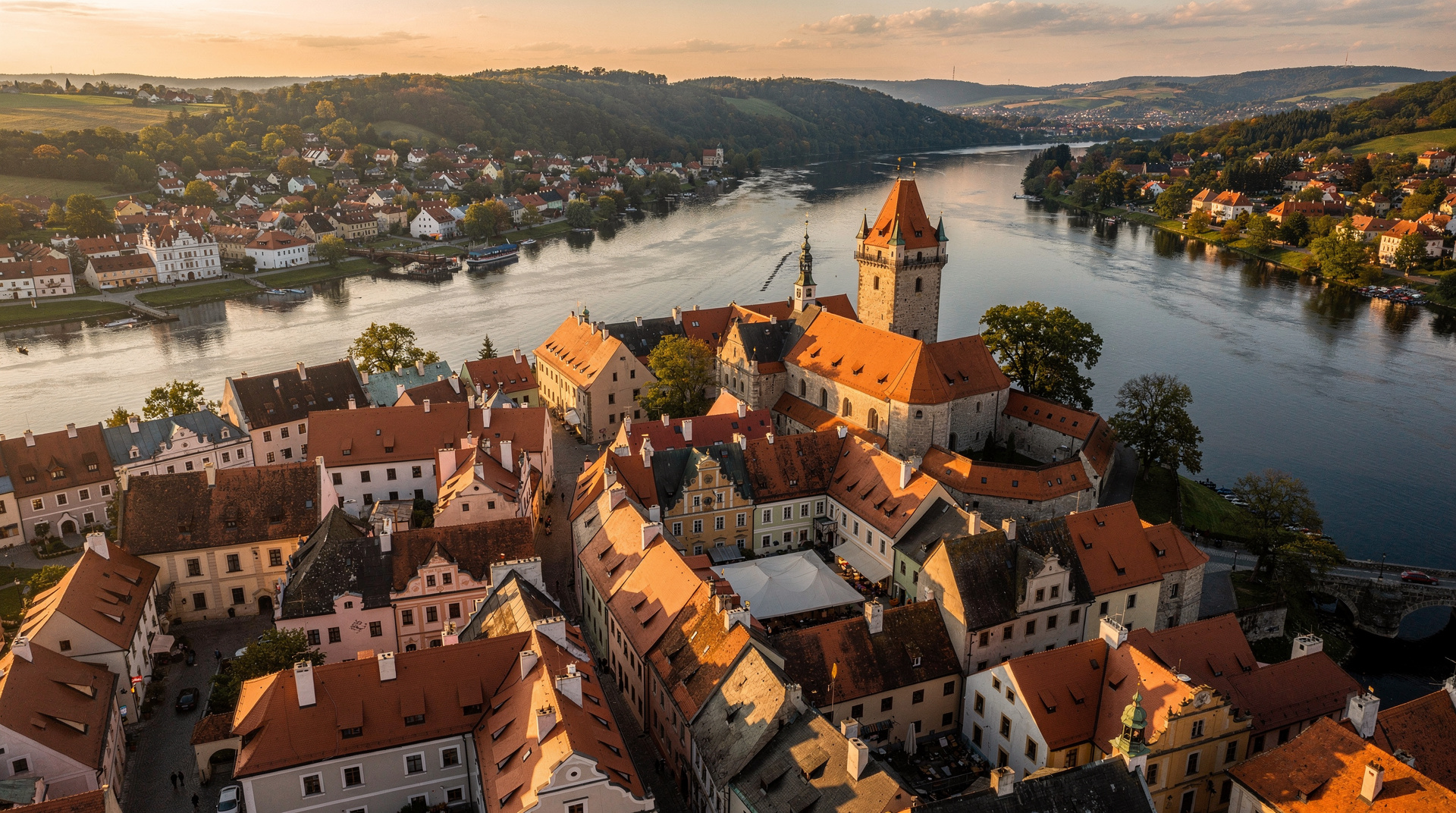
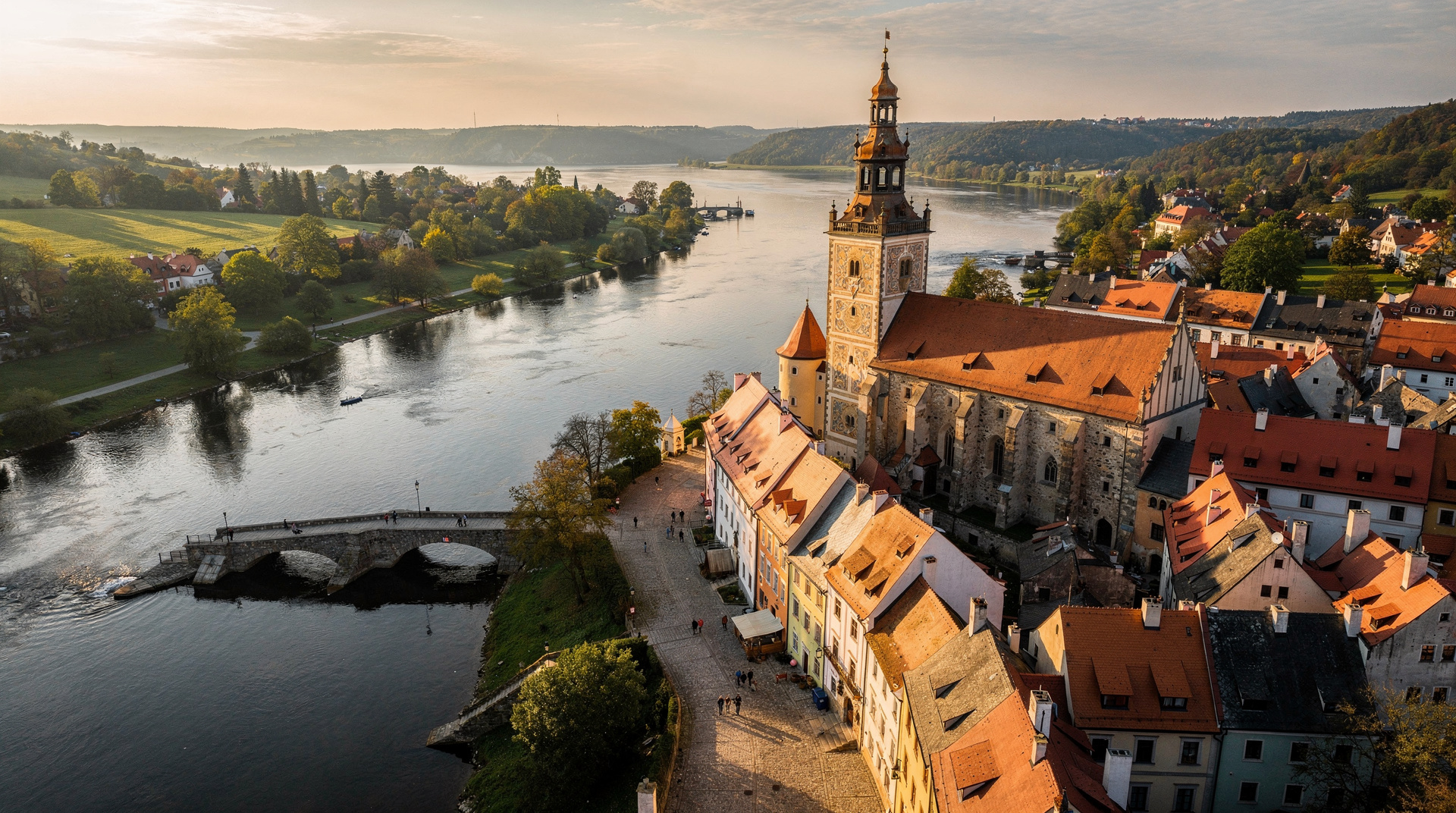
The town at dusk is extraordinary — the river Vltava bends almost completely around the old town, creating a natural moat. Walk the river loop (20 minutes) and cross the two bridges for the best views.
Dinner at Švejk Restaurant (Horní 157) or Krčma Markéta for traditional Bohemian food. Expect: svíčková (beef in cream sauce with bread dumplings — the Czech national dish), goulash, roast duck with red cabbage. Budget 10–15 € per person. Czech beer: Kozel or Budvar on tap, 1.5–2 € per half-litre.
Day 5: Český Krumlov morning, Prague afternoon
Morning (9:00–12:00)
With the castle done yesterday, this morning is for the town itself. The Old Town is a UNESCO World Heritage Site — the market square (náměstí Svornosti), the Plague Column, the Baroque fountain, the narrow lanes of Horní and Latrán streets. The Egon Schiele Art Centre (Široká 71) displays local connections to the Austrian expressionist painter (Schiele spent summers in Český Krumlov — his mother was from here, and the town appears in several of his landscapes). Excellent small museum, entry 8 €.
Departure: coach to Prague (12:30–15:30)
RegioJet or Student Agency coach from the Český Krumlov bus station (Špičák terminal, 5-minute walk from the castle area) to Praha Florenc. Journey: 3 hours.
Alternatively: The organised transfer Vienna: transfer to Prague via Český Krumlov handles the logistics from Vienna to Prague with a Český Krumlov stop included — useful if you want to avoid navigating bus terminals in two countries.
Arrival in Prague (15:30)
Check in. Where to stay: Prague’s Old Town (Staré Město) puts you 10 minutes on foot from everything. Mid-range: Hotel Paris Prague (U Obecního domu 1), Augustine Hotel in Malá Strana. Budget: Sir Toby’s Hostel (Dělnická 24, Holešovice) for excellent value.
Evening orientation: walk from your hotel to Old Town Square (Staroměstské náměstí) — the Astronomical Clock (Orloj) on the hour from 9:00 to 23:00, Gothic Týn Church, Baroque St. Nicholas Church. Walk north over the Charles Bridge to Malá Strana for dinner — Café Savoy (Vítězná 5) is excellent for a first Prague evening.
Days 6–7: Prague
Prague needs two full days minimum. Key areas:
Prague Castle (Pražský hrad): The world’s largest ancient castle complex. The St. Vitus Cathedral (inside the castle) has remarkable Gothic stained glass including a Mucha window (1931). The Old Royal Palace, St. George’s Basilica, and the Golden Lane (tiny medieval houses) are included in the basic circuit ticket (€15). Arrive 9:00 before the coach groups.
Charles Bridge (Karlův most): Best before 8:00 or after 20:00 — otherwise packed. The 30 Baroque statues (1683–1714) are extraordinary in detail; the river view from the bridge includes Prague Castle, Malá Strana, and the Vltava.
Old Town and Josefov (Jewish Quarter): The Prague Jewish Museum (Maiselova 15) — the oldest functioning synagogue in Europe (Staronová, 1270) and the most moving synagogue in the world (Pinkas Synagogue, walls inscribed with 80,000 Czech Jewish Holocaust victims’ names). Entry €16 for the combined ticket. The Old Jewish Cemetery — layers of graves on top of each other because Jews were not permitted burial land within the city.
Vinohrady and Žižkov: Prague’s residential neighbourhoods, less touristy, better restaurants, the Žižkov TV Tower with its crawling bronze babies (David Černý, 1991), and the view from the Vítkov hill.
Czech food: Svíčková (marinated beef sirloin in cream sauce, served with bread dumplings and cranberry — the definitive Czech dish). Trdelník (chimney cake, a tourist version of a Slovak tradition — fine, not authentic). Czech beer on tap: Pilsner Urquell, Kozel, Budvar — consistently excellent at 1.5–2.50 € per 0.5L. Best restaurants: Lokál (Dlouhá 33) for traditional Czech food and perfect tank-fresh Pilsner, Eska (Pernerova 49) for modern Czech cooking.
If you are still weighing Prague against the city you have just left, the Vienna vs Prague comparison and the Vienna vs Prague real talk trip report give two different perspectives. For another way to link Vienna and Český Krumlov in one go, the Vienna to Prague via Český Krumlov guide sets out the same route from a transport angle, and the Český Krumlov destination page covers the town in more depth.
Return options from Prague
To Vienna: ÖBB Railjet from Praha hl. n. to Wien Hbf — 4 hours, €25–60. Multiple daily departures.
To Vienna via airport: No direct fast train. Prague airport (PRG) to the city center: Airport Express bus to Praha hl. n. (35 minutes, €4) or Uber (25–35 €). Then Railjet to Vienna.
Fly home from Prague: PRG is well-connected to Western Europe. Ryanair, easyJet, Wizz Air serve most major cities; Austrian Airlines and Czech Airlines for network destinations.
Deciding between the overland route and flying direct to Prague
Flying or taking the direct Railjet from Vienna to Prague (4 hours, skipping Český Krumlov) saves a full day but cuts one of Central Europe’s most rewarding small towns from the trip. If you’ve already seen Český Krumlov or genuinely need the extra day elsewhere, our Vienna to Prague options guide compares the direct train, the overland route, and flying. For travellers who want three capitals instead of a capital-plus-small-town route, the Vienna, Bratislava and Budapest 8-day itinerary is the equivalent trip in the other direction from Vienna.
What to pack for the coach legs
The Vienna–Český Krumlov and Český Krumlov–Prague legs are by coach (FlixBus, RegioJet, or Student Agency), each 3–4 hours. Bring snacks and a phone charger — service can be patchy in rural stretches of both the Czech Republic and Lower Austria. Comfortable layers matter more here than in the cities: Český Krumlov’s Old Town is built on steep cobbled streets, and Prague Castle Hill involves a genuine uphill walk. See our Prague via Český Krumlov destination guide for a fuller sense of the route between the two.
Frequently asked questions about this itinerary
Q: Can I do the Vienna–Český Krumlov–Prague route without pre-booking the coach?
In shoulder season (April–June, September–October), last-minute coach bookings are usually available. In July–August, book coaches 1–2 weeks ahead. The private transfer option is more flexible but more expensive.
Q: Should I spend 1 or 2 nights in Český Krumlov?
One night (as in this itinerary) covers the castle, the old town, and a river walk. Two nights allows the Baroque theatre tour (limited departures), a day trip to Třeboň (nearby lake landscape), or simply a more relaxed pace. For most travellers, one night is sufficient.
Q: How does the organised Vienna–Prague transfer via Český Krumlov work?
Tours like the From Vienna: Český Krumlov small-group guided day trip operate as day trips (return same day) rather than transfers; for an overnight stop, the coach option or private transfer is needed. Check itinerary details when booking.
Q: Is Prague more or less expensive than Vienna?
Prague is significantly cheaper than Vienna for food and drink (50–60% cheaper) and somewhat cheaper for accommodation (30–40%). Attractions are comparable in price. Your daily spend in Prague on the same activity-level as Vienna will be roughly 60–70% of your Vienna budget.
Q: Could I do this route in fewer than 7 days?
Cutting Vienna to 2 days and Prague to 2 days brings the trip to 5 days, but it makes both cities feel rushed. If time is tight, keep Český Krumlov (it’s the hardest part to compress) and trim a Vienna day instead — the 3-day itinerary shows what the essential Vienna core looks like if you need to shorten that portion.
Q: Is Český Krumlov worth an overnight stop rather than a day trip from Vienna?
Yes, if your schedule allows it — a day trip from Vienna is a very long round trip (7+ hours of driving for a few hours in the town), while this itinerary’s overnight stop lets you see the castle at a relaxed pace and experience the town at dusk and again the next morning, when it’s far quieter. Our Český Krumlov day trip from Vienna guide covers the day-trip alternative in more detail if an overnight stop doesn’t fit your plans.
Top experiences
Bookable activities with verified prices and instant confirmation on GetYourGuide.