Three capitals in 8 days: Vienna, Bratislava, and Budapest
From Vienna: Guided Tour to Bratislava with Speed Boat Ride
Three capital cities, one week of trains, and three completely different versions of Central Europe. Vienna is imperial grandeur and coffee house culture. Bratislava is intimate, underrated, and utterly unpretentious. Budapest is baroque drama on a grand scale. Eight days gets you a real sense of all three without rushing any of them. If you’d rather see Budapest as a single long day instead of an overnight stop, our Budapest day trip from Vienna guide covers that alternative.
At a glance
| Duration | 8 days |
| Pace | 3 Vienna nights, 1 Bratislava night, 3 Budapest nights, return day |
| Best for | City hoppers, first-timers to Central Europe, train travellers |
| Transport | Train throughout — no car needed |
| Budget | Mid-range, roughly 1,100–1,500 € per person for the full trip |
| Best season | April–June or September–October |
Day-by-day summary
| Day | City | Focus |
|---|---|---|
| 1–3 | Vienna | Hofburg, Schönbrunn, Belvedere, coffee houses |
| 4 | Bratislava | Old Town, Primate’s Palace, Slovak food |
| 5 | Bratislava → Budapest | Bratislava Castle, afternoon train |
| 6–7 | Budapest | Buda Castle, Parliament, thermal baths |
| 8 | Return | Train back to Vienna or onward |
Days 1–3: Vienna. Day 4: Bratislava (travel day plus overnight). Days 5–7: Budapest. Day 8: return to Vienna for flight, or continue by train.
Train logistics: the essential numbers
Vienna to Bratislava: ÖBB or RegioJet from Wien Hbf to Bratislava hl. st. — 1 hour, €8–12. Trains run hourly. Book same-day or the night before; advance booking rarely cheaper here.
Vienna to Budapest: ÖBB Railjet from Wien Hbf to Budapest-Keleti — 2 hours 40 minutes direct, €20–45 depending on booking timing. One direct Railjet per hour; book 4–6 weeks ahead for best prices.
Bratislava to Budapest: RegioJet or ÖBB from Bratislava hl. st. to Budapest-Keleti — 2 hours 30 minutes, €12–20. Trains approximately every 2 hours.
Currency: Vienna and Bratislava use EUR (Austria and Slovakia). Budapest uses HUF (Hungarian Forint — 1 € ≈ 390–400 HUF at 2026 rates). Budget card payments are widely accepted in Budapest but carry small HUF amounts for markets, tips, and Thermal baths lockers.
Days 1–3: Vienna
Day 1: Hofburg and the city center
Start with the Vienna Hofburg and Empress Sisi Museum guided tour at 10:30. The Habsburg story, told properly, is the foundation for everything you will understand about Vienna, Bratislava (the Habsburg coronation city), and Budapest (the second city of the Dual Monarchy) for the rest of the trip.
Afternoon: Ringstrasse walk and the Kunsthistorisches Museum. Evening: Vienna classical concert in the Musikverein. Book before you arrive.
Day 2: Schönbrunn and Naschmarkt
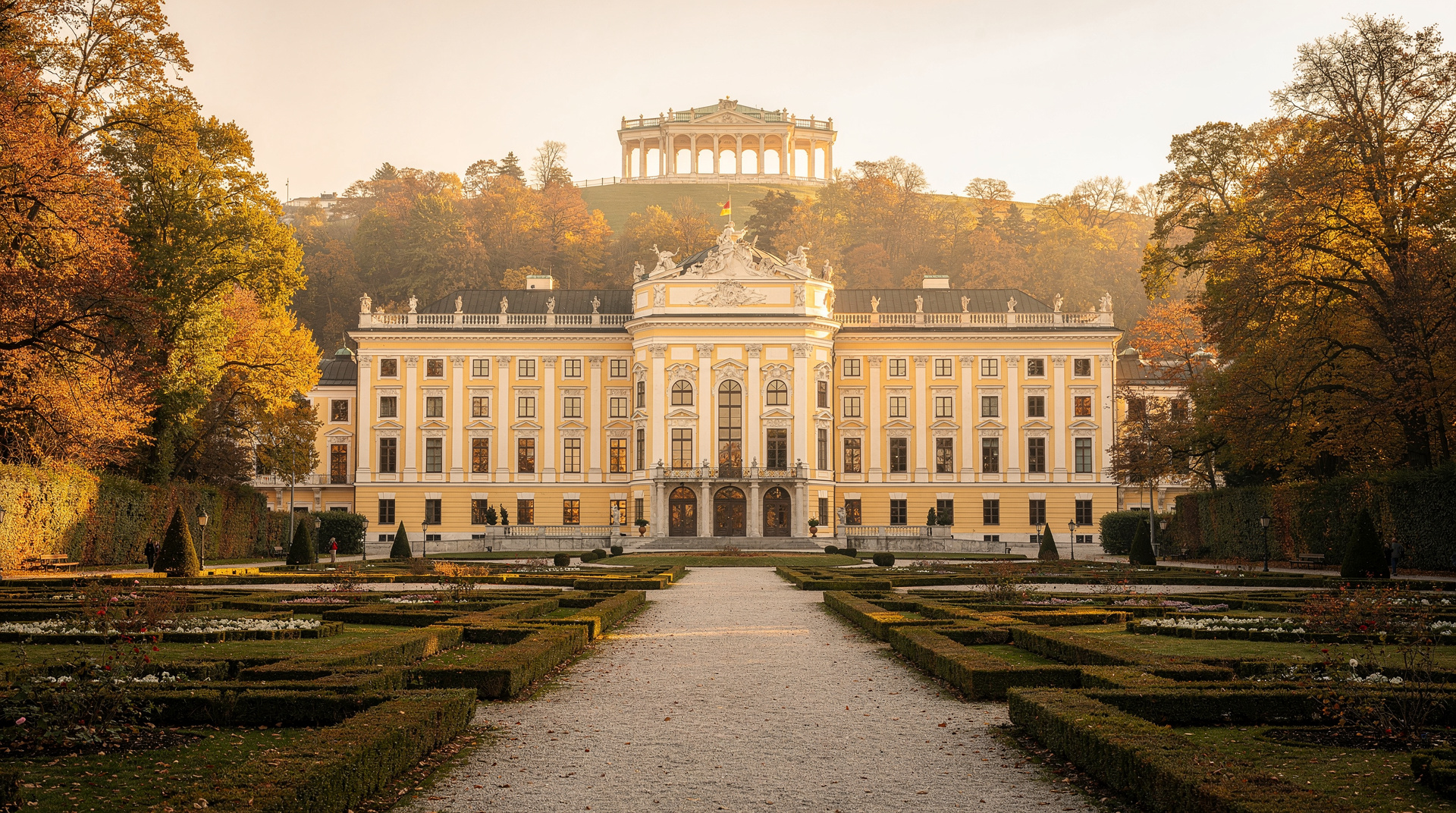
Morning: Schönbrunn Palace skip-the-line tour at 9:15 — the summer palace makes sense as a contrast to the urban Hofburg. The Gloriette panorama and the formal garden.
Afternoon: Naschmarkt for lunch and the 7th district (Neubau) for independent shops and coffee. Evening: dinner at Figlmüller Wollzeile (Wiener Schnitzel, essential before the comparison with Bratislava and Budapest food).
Day 3: Belvedere, coffee houses, and packing
Morning: Upper Belvedere — Klimt’s “The Kiss.” Afternoon: the Imperial Treasury (Schatzkammer) — the Habsburg crown, the Order of the Golden Fleece insignia, and the Holy Lance. This is underrated and exceptionally significant for the Central European story. Dinner at Plachutta Wollzeile (Tafelspitz, the definitive Viennese dish before departing to the comparative).
If you want more depth on any of these Vienna stops, the Belvedere Palace guide, the Imperial Treasury guide and the Schönbrunn Palace guide go well beyond what fits in a three-day slot. For the Ringstrasse walk on day 1, the Ringstrasse architecture walk gives you a route and the stories behind the buildings, and the best coffee houses in Vienna will help you choose where to sit down between sights. Travellers who arrive by air can sort out the transfer with the Vienna airport to city guide.
Day 4: travel to Bratislava and settle in
Morning: Vienna to Bratislava
Take the 10:00 RegioJet from Wien Hbf (or Wien Hauptbahnhof — same station) to Bratislava hl. st. Journey: 1 hour. Check into your Bratislava hotel by noon.
Where to stay in Bratislava: The Old Town (Staré Mesto) is the obvious choice — everything on foot. Budget-mid-range options: Hotel Marrol’s (boutique, Tobrucká street), Stay In Old Town (apartments), or Hotel Devin (riverside, views of the castle). Bratislava accommodation is notably cheaper than Vienna: expect 60–100 € for a good mid-range double versus 130–200 € in Vienna.
Afternoon: Bratislava on foot
The Old Town is compact enough to cover in 2–3 hours. Start at Michael’s Gate (Michalská brána) — the last remaining medieval gate, now with a small weapons museum and a bridge over the former moat.
Walk south along Michalská and Ventúrska to the Main Square (Hlavné námestie) with its Roland Fountain (1572). The Old Town Hall (Stará radnica) houses the city museum; worth 30 minutes for the Gothic and Renaissance rooms.
The Primate’s Palace (Primaciálny palác) on Primaciálne námestie — an 18th-century Neo-Classical palace where Napoleon signed the Peace of Pressburg (1805) after the Battle of Austerlitz. The Hall of Mirrors is open to visitors.
Evening: Bratislava food
Bryndzové halušky — Slovakia’s national dish, potato gnocchi with bryndza (sheep’s milk cheese) and fried bacon. Essential Slovak food experience. Best in Bratislava at Kolkovna (Obchodná 38) or Slovak Pub (Obchodná 62). Meal costs: 8–12 € per person. Wash it down with Slovak beer — Zlatý Bažant (Golden Pheasant) is the standard, or Pivovar Rázus if you find it.
For a fuller picture of the city before you arrive, read the Bratislava destination page. If the castle on its hill catches your eye and you have spare time, the ruins at Devín Castle are the natural extension.
Day 5: Bratislava Castle and onward to Budapest
Morning (9:00–12:00): Bratislava Castle
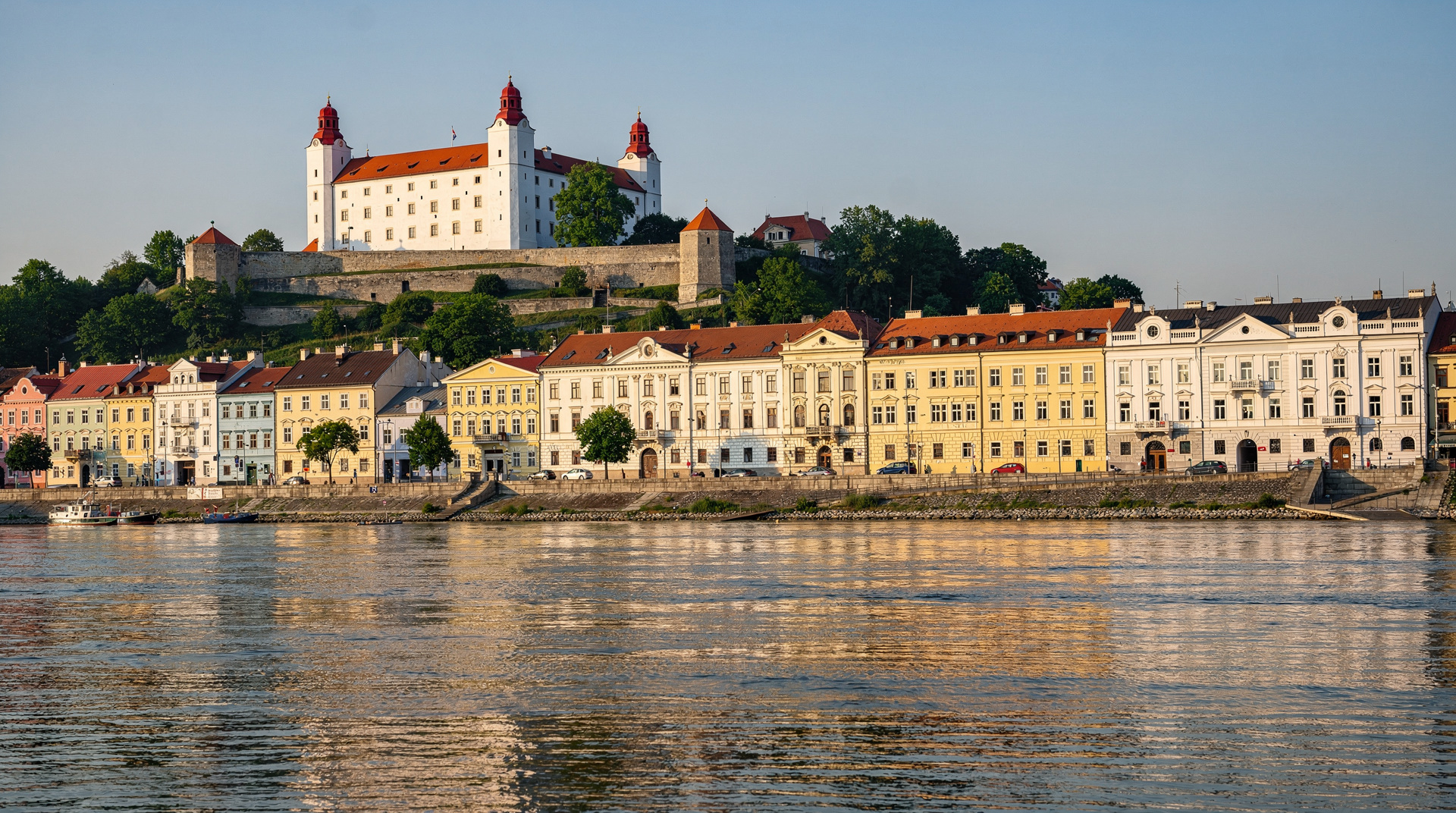
Bratislava Castle (Bratislavský hrad) — 15-minute walk uphill from the Old Town, or take tram 1 to Hrad stop. The castle dominates the city from its hill above the Danube; the white silhouette with four towers is called “the overturned table” by locals. The History Museum inside covers 6,000 years of Slovak history; the Treasury exhibits medieval Slovakian crowns and artefacts. The terrace view — Austria to the west, Hungary to the south, the Danube below — is remarkable and free to access without entering the museum.
Walk back through the Castle district (Zámocká street and Mudroňova) — the area west of the Old Town is residential and much less visited, with views back across the Danube to the Austrian plain.
Afternoon: Vienna → Budapest by train
Check out of Bratislava hotel by 12:00. Take the 13:00 RegioJet from Bratislava hl. st. to Budapest-Keleti (2 hours 30 minutes, around €15). Arrive Budapest by 15:30.
Or: If time allows, the 15:00 departure gives you more Bratislava morning time, arriving Budapest by 17:30 — still time to orient before dinner.
Check into Budapest hotel. The 7th district (Erzsébetváros / Jewish Quarter) is the liveliest and most convenient area — walking distance to the Great Market Hall, the Dohány Street Synagogue, and the ruin bars (romkocsmák).
Evening in Budapest
First night: dinner at Borkonyha (Hold utca 13) — Modern Hungarian cooking with a wine-bar format, Michelin-starred but relaxed, around 40–55 € per person. Or: the Great Market Hall (Vásárcsarnok) on Fővám tér for an early exploration before dinner at Café Gerbeaud on Vörösmarty square — the Budapest equivalent of Demel, established 1858.
Days 6–7: Budapest
Budapest deserves two full days. Key sites:
Buda side: Buda Castle (Royal Palace, now housing the Hungarian National Gallery and Budapest History Museum), Matthias Church (Mátyás-templom) in the Castle District, and the Fishermen’s Bastion (Halászbástya) for the most photographed view over the Danube and Parliament. Take the funicular (Budavári Sikló, 4 €) up from Clark Ádám tér.
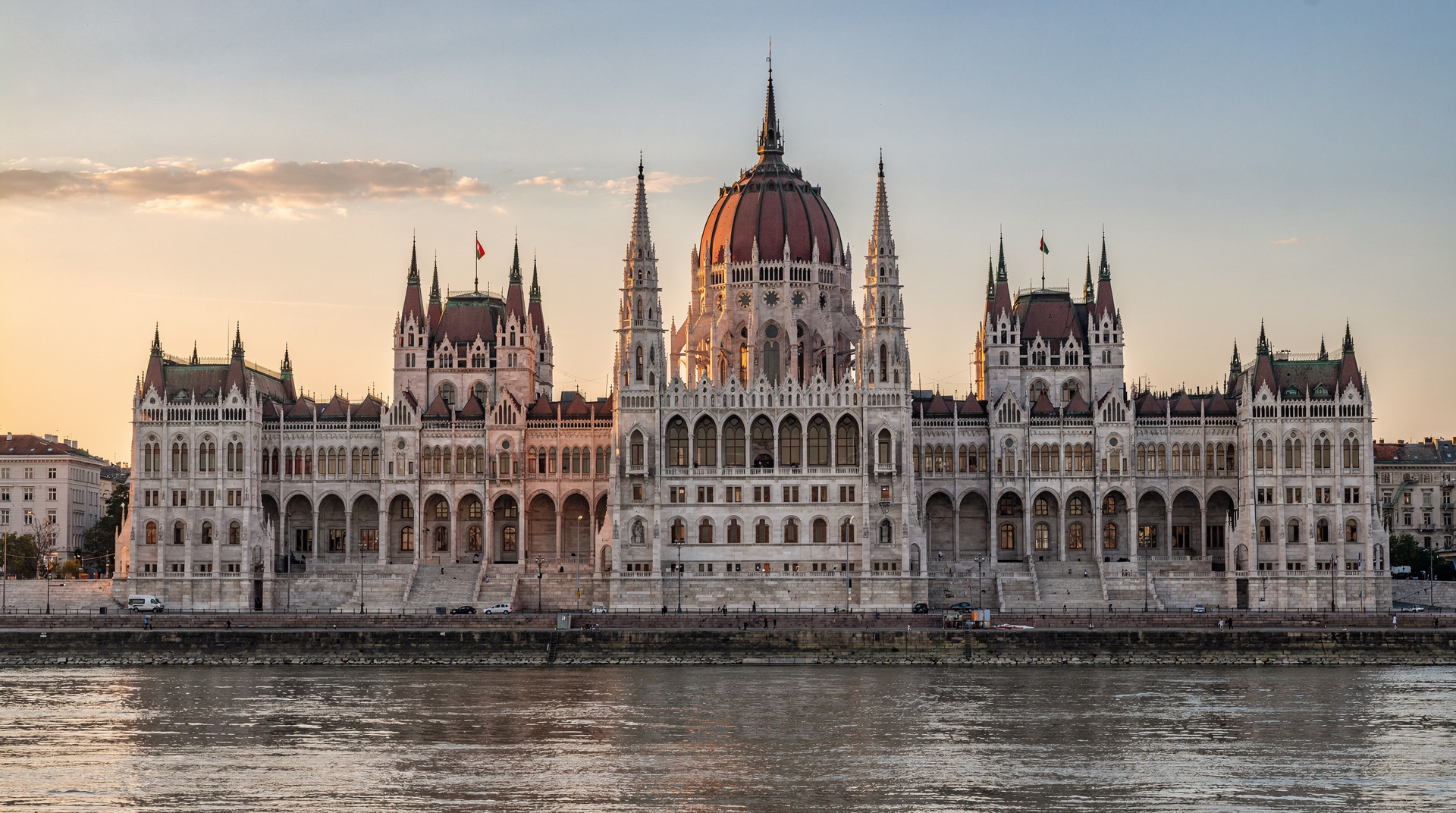
Pest side: the Hungarian Parliament Building (the world’s third-largest parliament, open for guided tours — book ahead, €20); St. Stephen’s Basilica (free entry to the nave, small fee for the dome climb); Andrássy Avenue (Budapest’s Ringstrasse equivalent, lined with Neo-Renaissance mansions); Heroes’ Square (Hősök tere) at the end of Andrássy; and the Fine Arts Museum (Szépművészeti Múzeum) flanking the square.
Thermal baths: Budapest’s defining experience. Széchenyi Baths (Állatkerti körút 9–11) — the enormous Neo-Baroque complex in City Park, outdoor pools at 38°C year-round. Gellért Baths (Kelenhegyi út 4) — Art Nouveau interior, indoor pool with wave machine. Budget 25–30 € for a 3-hour session including locker rental.
Organised option: From Vienna: Budapest small-group guided day tour is also available as a day trip if you are basing in Vienna rather than staying over — but for this 8-day itinerary, two overnight nights in Budapest are strongly recommended.
Budapest food: Beyond the Great Market Hall. Lángos (fried dough with toppings — Budapest street food, 2–3 € from market stalls). Goulash soup (gulyásleves — very different from Viennese Gulasch, more soup-like, always good). Kürtőskalács (chimney cakes, sweet spiral pastry, tourist food but genuinely good warm from the stand). Ruin bars (romkocsmák) — bars set up in derelict Pest buildings, most famously Szimpla Kert (Kazinczy utca 14), open from 12:00 daily.
Currency note: Budapest is significantly cheaper than Vienna. A mid-range restaurant dinner runs 15–25 € per person. A craft beer: 3–4 €. Metro ticket: 0.50 €.
Before you go, the Budapest destination page lays out the neighbourhoods in more detail, and Vienna vs Budapest is a useful read if you want to understand why the two cities feel so different despite their shared history.
Day 8: return to Vienna or onward
Return options
If flying from Vienna: Take the direct ÖBB Railjet from Budapest-Keleti to Wien Hbf (2h40, departs multiple times daily). Book the 8:00 or 10:00 for a comfortable return. VIE airport is 30 minutes from Wien Hbf by S-Bahn S7 or Railjet (4.40 €) or 16 minutes by CAT (15 €).
If continuing to Prague: From Budapest, train to Bratislava (2h30) then Railjet to Vienna (1h) then Railjet to Prague (4h from Wien Hbf) — a full day of travel but doable. Alternatively, coach services run Budapest → Prague direct (7 hours).
If returning to Vienna for 1–2 extra days: The Wachau Valley day trip from Vienna makes an excellent add-on after the three-capital circuit — the contrast of the peaceful Danube gorge and abbey after the urban intensity of Budapest is significant. Start with the Wachau day trip from Vienna, and see Melk Abbey for the abbey half of that day.
Travellers who would rather head to Prague than back to Vienna can compare the options in Vienna to Prague overland and the Vienna to Prague options guide.
Costs and budget breakdown
Transport (per person): Vienna city transport 3 days (17.10 €) + Vienna–Bratislava train (10 €) + Bratislava–Budapest train (15 €) + Budapest transport 2 days (4 €) + Budapest–Vienna train (25 €) ≈ 72 € per person.
Accommodation (per person/night): Vienna 70–100 € (mid-range hotel per person), Bratislava 35–55 €, Budapest 40–65 €.
Food average (per person/day): Vienna 60–90 € (mid-range), Bratislava 30–45 €, Budapest 35–55 €.
Total 8-day budget (mid-range, per person): approximately 1,100–1,500 € including accommodation, food, transport, and entry fees.
Why Vienna first, and how this compares to a shorter version
Doing Vienna first, as this itinerary does, means the Habsburg context you absorb at the Hofburg and Schönbrunn makes both Bratislava (a former Habsburg coronation city) and Budapest (the second capital of the Dual Monarchy) more legible. If eight days isn’t available, our Vienna to Budapest train guide and Vienna to Bratislava transport guide both work as standalone references for doing either city as a shorter add-on to a Vienna-only trip — see the 3-day or 5-day itineraries for that Vienna core on its own.
Packing for three currencies and climates
Vienna and Bratislava use EUR; Budapest uses HUF. Carry a small amount of HUF cash for Budapest’s thermal bath lockers and market stalls, even though card payments are widely accepted elsewhere. Pack a swimsuit specifically for the Budapest thermal baths (Széchenyi or Gellért) — it’s easy to forget when the rest of the trip is city-and-palace focused. Comfortable walking shoes matter across all three cities; the Bratislava Old Town, Buda Castle Hill, and Vienna’s Ringstrasse are all best covered on foot.
Frequently asked questions about this itinerary
Q: Is it better to do Vienna–Bratislava–Budapest or the reverse?
Vienna first is better: the Habsburg context learned in Vienna makes Bratislava (the Habsburg coronation city) and Budapest (capital of the Hungarian half of the Austro-Hungarian Empire) far more meaningful. The narrative builds.
Q: How many nights should I spend in each city?
Vienna: 3 nights. Bratislava: 1 night (the city is small — 1 night is adequate, 2 if you love it). Budapest: 2 nights minimum, 3 ideally.
Q: Is the Twin City Liner hydrofoil an alternative for Vienna–Bratislava?
Yes — the Twin City Liner runs between Vienna (Schwedenplatz dock) and Bratislava (Hydrofoil terminal) in 75 minutes (29–34 €). Seasonal (April–October). Spectacular river journey. For this 8-day itinerary, the train is more flexible; the hydrofoil is a good option for a day trip version.
Q: Do I need to book the Railjet Vienna–Budapest in advance?
Booking 4–6 weeks ahead typically saves 30–50% versus same-day prices. The 40 € A/R round-trip price requires advance booking (1 month+); same-day tickets run 50–70 € each way.
Q: Can I do this itinerary in reverse, starting in Budapest?
Yes, if your flights work better that way, but the Habsburg narrative reads less naturally in reverse. Budapest and Bratislava both still work well as standalone destinations regardless of order — the context loss is minor compared to flight logistics if that’s the deciding factor.
Q: Is one night really enough in Bratislava?
For most travellers, yes — the Old Town and castle are both walkable in a day, and this itinerary already gives you an afternoon and evening on arrival plus a full morning before departing for Budapest. Extend to two nights only if you want a slower pace or a side trip to the Devín Castle ruins outside the city.
Top experiences
Bookable activities with verified prices and instant confirmation on GetYourGuide.