Budapest
Day trip or overnight from Vienna to Budapest: Buda Castle, the Parliament, thermal baths, the Danube promenade and realistic travel planning advice.
From Vienna: Budapest Small-Group Guided Day Tour
Quick facts
- Distance from Vienna
- 245 km (2h30 by Railjet)
- Train
- Wien Hbf → Budapest-Keleti, Railjet, 2h30
- Currency
- Hungarian Forint (HUF) — 1€ is approximately 400 HUF
- Language
- Hungarian (English in tourist areas)
Budapest: the Danube’s grandest city
Budapest is Vienna’s most impressive gateway-city neighbour — a Hungarian capital of extraordinary architectural scale and historical density, where the forested Buda hills meet the flat Pest plain across the width of the Danube, creating one of Europe’s most dramatic urban panoramas. The two cities were, until 1918, twin pillars of the same empire; they have been separate capitals for over a century, and the differences between them are as instructive as the similarities.
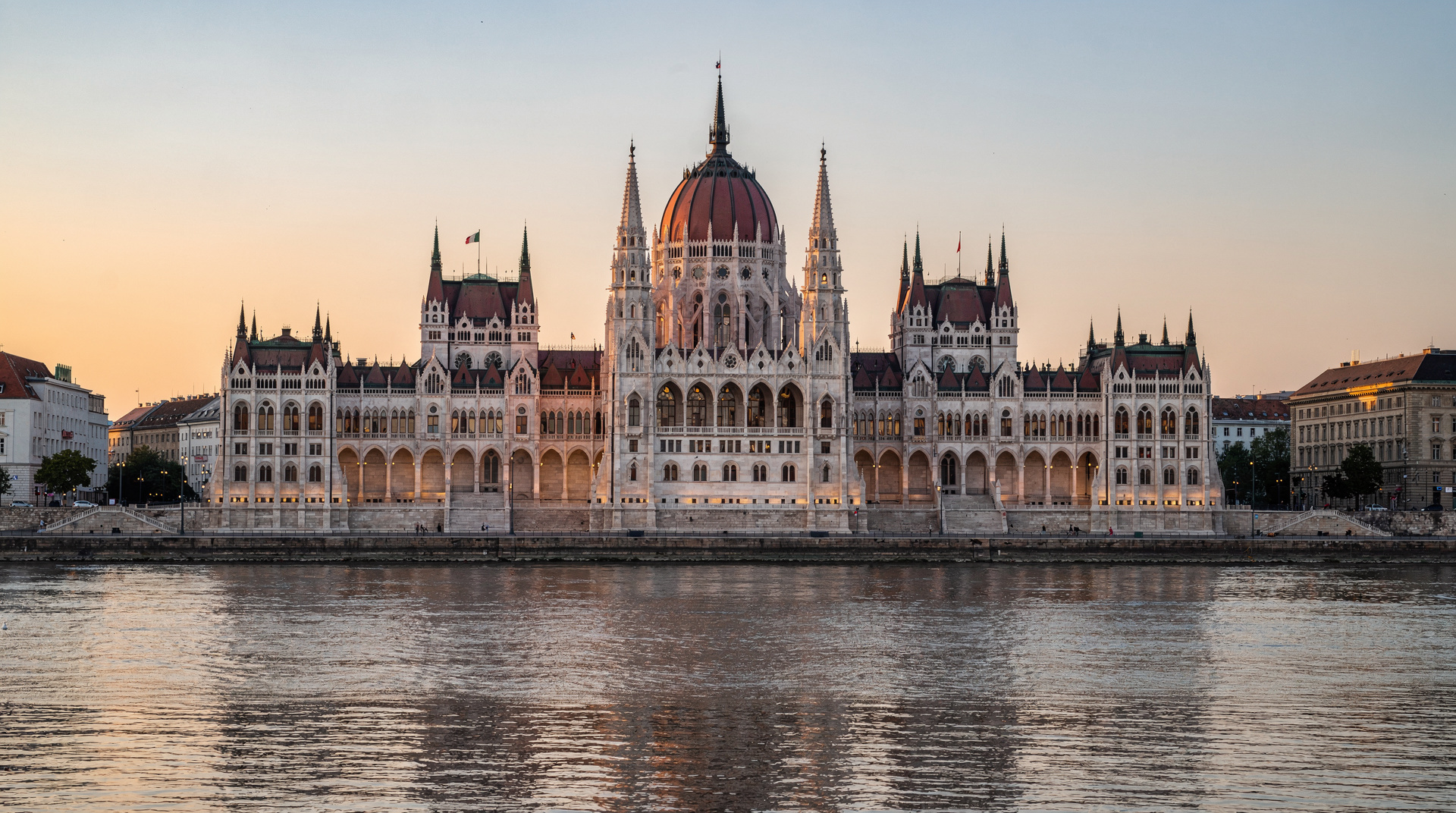
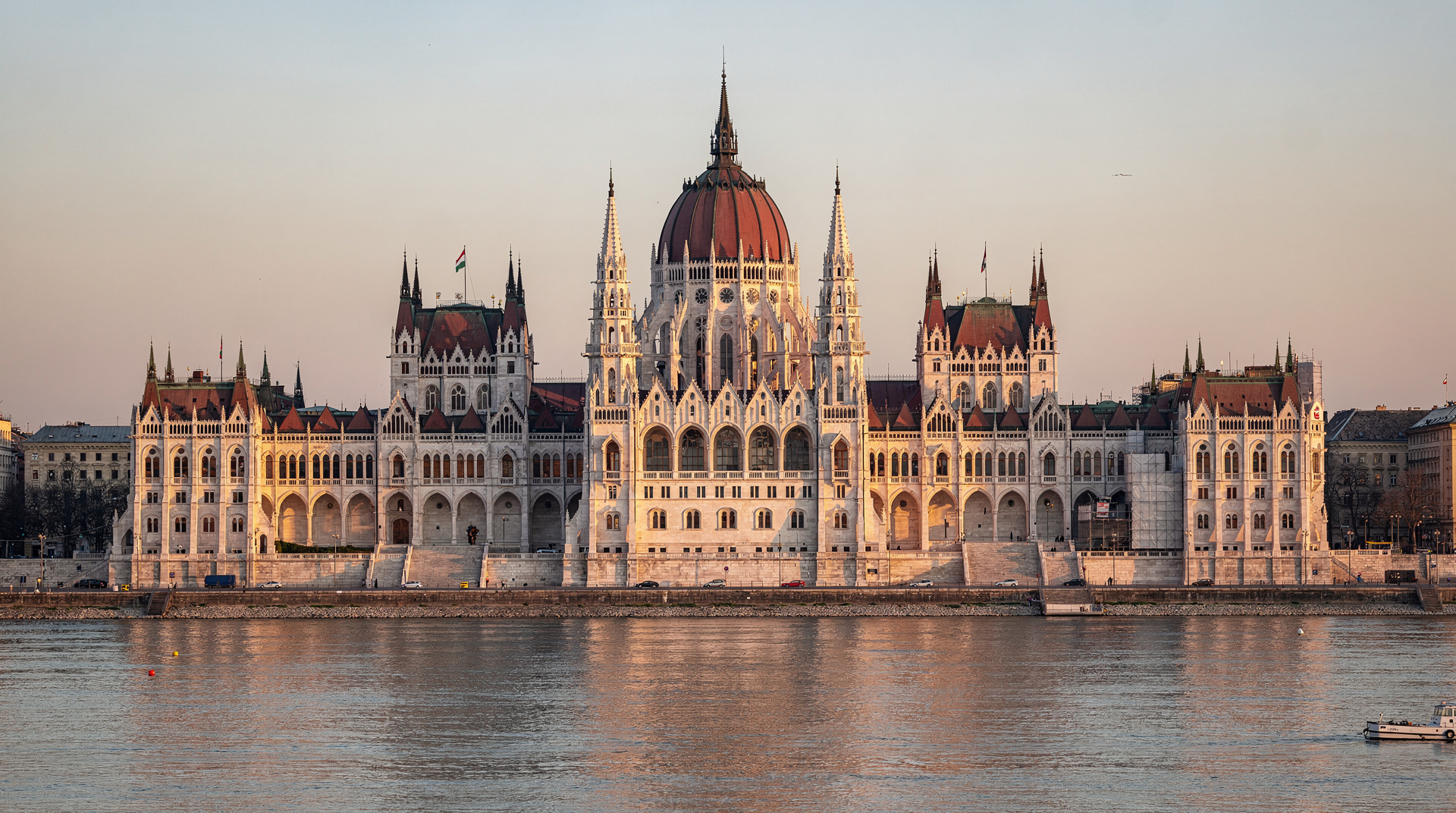
Vienna is imperial in a Roman, administrative sense — orderly, monumental, precise. Budapest is imperial in a theatrical, slightly overwrought sense — the Parliament building, the largest neo-Gothic structure in Europe, faces the water like a stage set; the Buda Castle complex occupies an entire hilltop; the Chain Bridge below it is framed by the twin towers of the castle tunnel as though composed for a panoramic painting.
The honest note for Vienna visitors is simple: Budapest deserves two days. A single day covers the main sights at a pace that leaves little time for what actually makes Budapest Budapest — the thermal bath culture, the ruin bar district, the Jewish heritage of the 7th district, a proper sit-down lunch of goulash and Tokaji. If the itinerary allows only one day, it is still entirely worth the Railjet journey. Just come with realistic expectations about what a sprint through the highlights actually delivers.
| Where | 245 km east of Vienna, across the Hungarian border |
| Cost | Train fare cheaper booked ahead; thermal baths from around 6,000–7,000 HUF |
| Time needed | 1 day minimum; 2 days recommended |
| Getting there | Railjet from Wien Hbf to Budapest-Keleti, 2h30 |
| Best time | April–June and September–October |
Getting there
By Railjet train: Wien Hauptbahnhof to Budapest-Keleti Pályaudvar, approximately 2h30 direct. The Railjet service is comfortable, has a dining car, and the journey along the Danube valley and into the Hungarian plain is genuinely scenic — particularly the stretch through the Danube Bend north of Budapest, where the river turns sharply southward between the Börzsöny and Pilis hills. Trains run approximately hourly; book on the ÖBB or MÁV (Hungarian railways) websites, where prices are significantly cheaper when purchased in advance.
Practical currency note: Budapest operates on Hungarian Forint (HUF). Credit cards are accepted in most tourist-area restaurants and museums, but carry some cash for smaller cafés, the covered market halls, and public transport — the Budapest metro and tram system requires local currency or an Oyster-style travel card. The approximate rate is 400 HUF to 1€, though check current rates before travel.
The Budapest small-group guided day tour from Vienna handles transport and includes a guided circuit of the main sites — the most efficient approach for a single day, covering Buda Castle, the Parliament exterior and the city’s key architectural highlights with a guide who provides the historical context that sprint-visiting alone cannot.
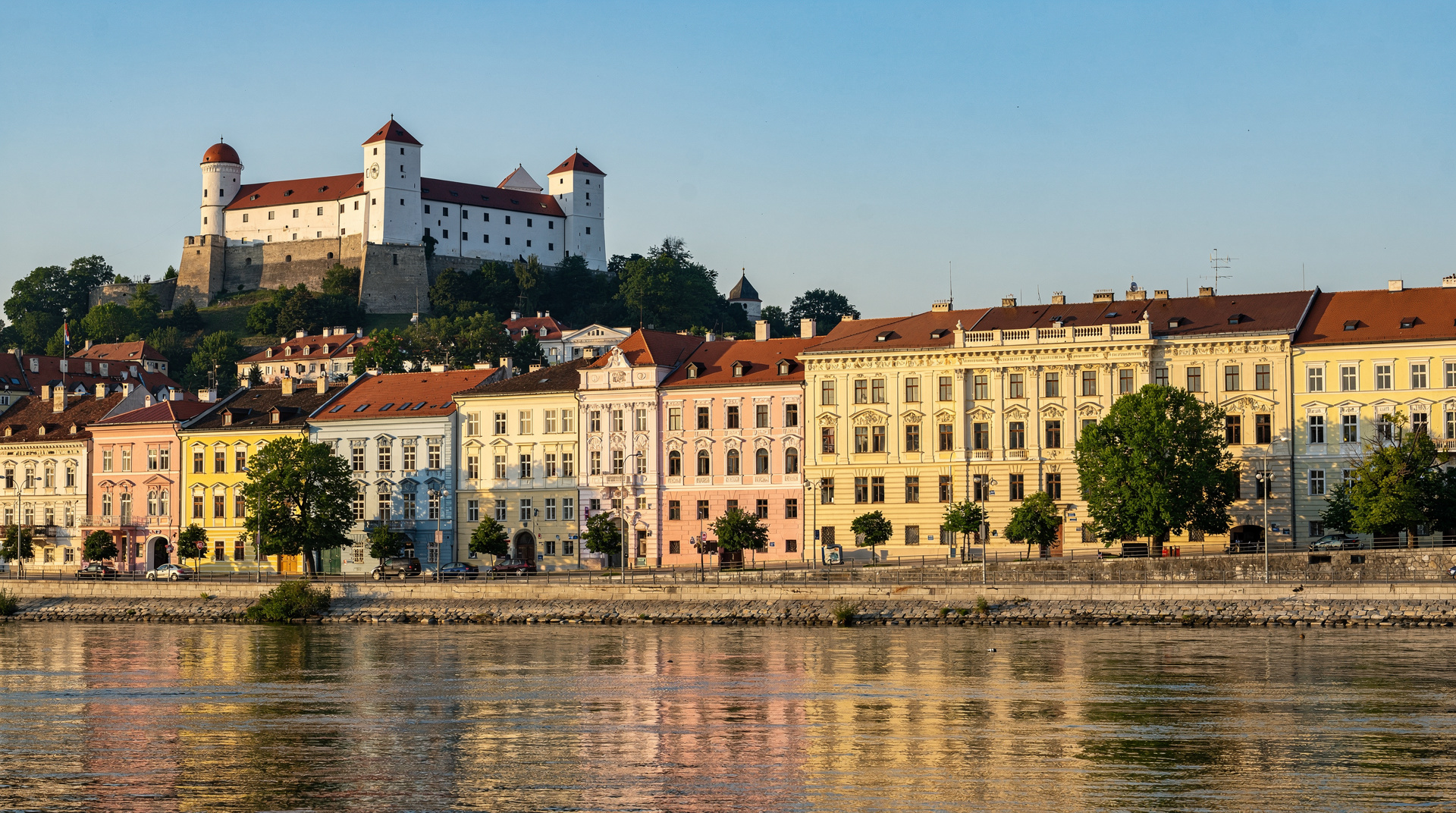
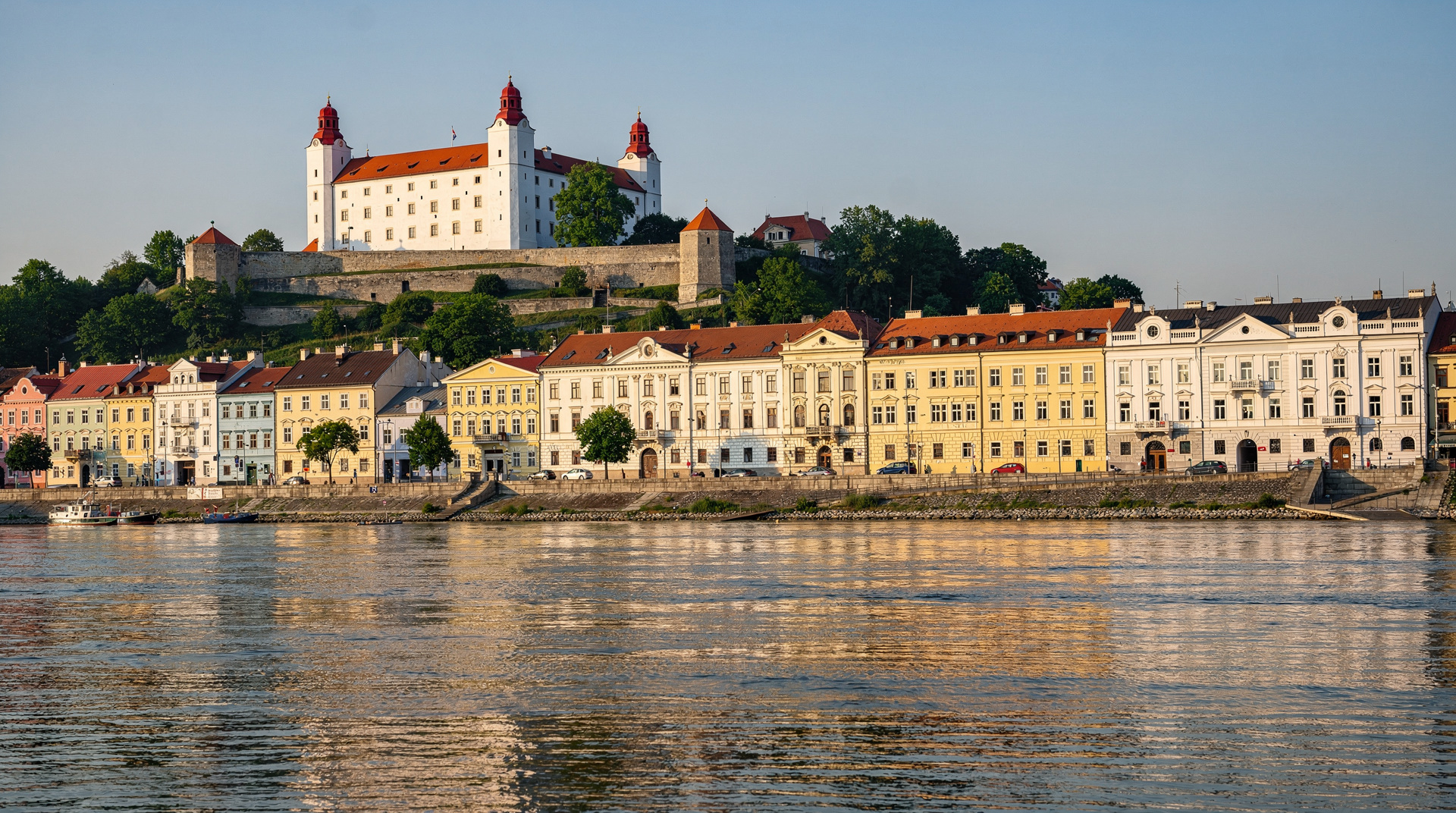
The Budapest day trip from Vienna with Bratislava photo stop adds a brief stop in Bratislava en route — a useful option for visitors who want a glimpse of the Slovak capital alongside their Budapest day.
Bratislava and Budapest sit on the same road east, an hour and three hours out respectively, so seeing both in one run is a question of pacing rather than distance: a Bratislava and Budapest day trip with a guide is built around that pairing.
What to see
Buda Castle and the Castle District — the historic complex on the Buda hill, the defining image of the city from the Pest embankment. Accessible by the funicular from the Chain Bridge (the Budavári Sikló, in operation since 1870) or on foot from various directions. The complex contains the Hungarian National Gallery inside the castle buildings, the Budapest History Museum in the southern wing, and the castle’s own defensive bastions and ramparts. The view of Pest from the ramparts across the Danube — the Parliament, the bridges, the flat Pest skyline — is one of Europe’s finest urban vistas. Arrive as early as possible, as the Castle District is a victim of its own fame by mid-morning.
Fisherman’s Bastion (Halászbástya) — the decorative neo-Romanesque terrace adjacent to the Matthias Church, built between 1895 and 1902 primarily as a viewpoint. Seven conical turrets, white stone galleries, and a panorama over the Danube and Pest below. The name commemorates the fishermen’s guild that defended this section of the medieval walls; the current structure is a late-19th century romantic reconstruction rather than a genuine fortification. Possibly over-visited, certainly photo-saturated — but genuinely beautiful, and the Matthias Church immediately behind it is one of the finest Gothic churches in Central Europe.
Parliament (Országház) — the neo-Gothic building on the Pest embankment, designed by Imre Steindl and completed in 1904, is one of the most spectacular parliamentary buildings in the world — its dome and twin Gothic towers reflected in the Danube at dusk in what must be one of Central Europe’s most photographed compositions. Interior guided tours run daily and must be booked in advance in summer; the main chamber and the Crown Jewels — the Holy Crown of Hungary, dating to the 11th century — are included. Book timed entry well ahead for summer visits.
Thermal baths — Budapest sits over more than 100 natural hot springs and has 15 public thermal baths in operation. The three most visitor-friendly: Széchenyi (the largest, in City Park — neo-baroque building with outdoor pools where chess boards are set up on the pool edges and elderly regulars play games in the warm water); Gellért (art nouveau interior on the Buda side, more upmarket and more formal); and Rudas (an original Ottoman bathing house from 1566, with a central domed bathing pool surrounded by columns — the most authentic and the least tourist-oriented of the three). The bath experience is uniquely Budapest and has no real equivalent in Vienna.
| Bath | Atmosphere | Best for |
|---|---|---|
| Széchenyi | Grand neo-baroque, outdoor pools, chess players | First-timers, photos, mixed crowds |
| Gellért | Art nouveau, more formal | Upmarket wellness afternoon |
| Rudas | Ottoman-era, domed central pool | Authenticity, fewer tourists |
Andrássy Avenue — the grand Haussmann-style boulevard from the city centre to City Park, designated a UNESCO World Heritage Site. The Hungarian State Opera House at No. 22 offers guided tours. At the far end, Hero’s Square (Hősök tere) has the Millennial Monument, erected in 1896 to mark the thousandth anniversary of the Magyar conquest of the Carpathian Basin, and two matching museums — the Museum of Fine Arts and the Hall of Art (Műcsarnok) — flanking the square symmetrically.
The ruin bars (Romkocsmák) — the 7th district (Erzsébetváros), the former Jewish quarter, found a new identity in the 2000s when young Budapestians began opening open-air bars in the abandoned buildings and courtyards of the neighbourhood. Szimpla Kert is the original and most famous, a multi-courtyard warren of different rooms, mismatched furniture, and an atmosphere that is genuinely unlike any bar in Vienna. Best experienced in the evening — this is not a daytime sight.
Margaret Island (Margitsziget) — a car-free park island in the middle of the Danube, reached by tram or on foot across the Margaret Bridge, popular with locals for jogging, cycling hire, a musical fountain, and the ruins of a medieval Dominican convent. It has no equivalent single sight but is a genuinely pleasant break from monument-hopping if the schedule allows an extra hour, and rarely appears on single-day itineraries — one more reason a second day in Budapest changes the character of the visit.
Where to eat
Budapest has a strong café and restaurant scene, and everything costs considerably less than the Viennese equivalent. Gundel in City Park is Hungary’s most famous traditional restaurant, in continuous operation since 1894 and still serving the old standards (Hungarian goulash, Gundel pancakes with walnut and rum sauce) with some style. Borkonyha (Wine Kitchen) near the Parliament is Michelin-starred and pairing-focused. Gerbeaud on Vörösmarty Square is Budapest’s equivalent of Demel — an historic 19th-century café with extraordinary pastry and a terrace on the city’s grandest square.
For more affordable and local-facing options: Menza on Liszt Ferenc tér (Hungarian comfort food in a cheerfully retro interior); Pesti Disznó on Nagymező utca for Hungarian charcuterie and sausages; and the Vásárcsarnok (Central Market Hall) on the Pest embankment — an extraordinary 1890s iron-and-tile building where the ground-floor stalls serve langos (fried dough with toppings, Hungary’s great street food) and smoked sausages at prices that make the indoor seating in the gallery above look expensive.
A private Budapest day trip from Vienna in English is the best option for families or small groups wanting personal attention rather than a shared coach tour — allowing the itinerary to be adjusted around particular interests.
Shaping the day around your Vienna base
Budapest rewards a plan made before the train leaves. Visitors who have already spent time in the Innere Stadt or on the Ringstrasse will recognise the imperial ambition behind the Hungarian capital’s boulevards, and it helps to arrive curious about how the same empire produced two such different cities. If you have walked the Ringstrasse architecture route, Andrássy Avenue and the Parliament will read as a conversation with it.
A sensible split for a single day is one major sight in the morning, a long lunch, and then one slower activity: a bath, the river promenade or Margaret Island. Packing in every landmark turns the day into a series of photographs. If a thermal bath is the priority, plan the rest of the day around it and let the castle wait for a second visit.
Travellers who like to compare cities will find the Vienna vs Budapest guide a useful companion before deciding how many nights to give each. Those choosing between Budapest and its closer neighbour can weigh it against the Bratislava day trip from Vienna, which asks far less of the clock.
Making Budapest part of a longer trip
Budapest fits naturally into a wider Central European loop. The 3-day Vienna itinerary leaves room to add a Budapest leg afterwards, and anyone planning a longer stay can use the 5-day Vienna itinerary as the Vienna half before heading east. For those who prefer to keep Vienna as a base and travel out repeatedly, the best day trips from Vienna puts Budapest in context beside the Wachau, Salzburg and Bratislava, so the effort of each can be compared honestly.
Whichever structure you choose, leave a little slack on the return. Evening in Budapest is when the city is at its best, and a relaxed dinner is easier to enjoy when the last train back has been checked in advance and the Vienna end of the journey needs no further planning.
Honest take
Budapest is more intense and more chaotic than Vienna — the traffic, the noise, the scale of the city, the sheer number of people, the nightlife that runs later and harder than anything in the Austrian capital. It is also, in many respects, more viscerally interesting: the communist-era architecture of the Pest outer districts, the Jewish heritage of the 7th district including the Dohány Street Synagogue (the largest in Europe), the ruin bar culture, and the thermal bath institution have no meaningful equivalent in Vienna. The two cities are not competing — they are complementary.
For visitors who can spare the time, the combination of 3–4 nights in Vienna, Railjet to Budapest, 2–3 nights there is one of Central Europe’s most satisfying city-break structures. The train journey is comfortable, the contrast between the two cities is immediate and illuminating, and neither city feels like a lesser version of the other. See the Vienna, Budapest and Bratislava 3-capitals itinerary for the full route plan.
Planning and further reading
For train timetables, ticket-booking tips and the practicalities of the border crossing, see the Vienna to Budapest train guide and the fuller Budapest day trip from Vienna guide. If Bratislava is also on the itinerary, the Bratislava destination guide covers the closer, smaller alternative gateway city, and a first-hand account of a day trip is in the Budapest day trip diary.
Top experiences
Bookable activities with verified prices and instant confirmation on GetYourGuide.