Vienna in 7 days: a deep-dive itinerary with day trips
Vienna: Schönbrunn Palace & Gardens Skip-the-Line Tour
A week in Vienna and its surroundings is enough to understand why this city holds a claim on European memory that far exceeds its current political weight. Seven days takes you through the imperial core, out to the Alpine lakes, along the Danube through wine country, into the Slovak capital, and into the forested hills west of the city — all without a car. If a week feels like too much, the 5-day itinerary covers Vienna plus the Wachau and Hallstatt without Bratislava or the Vienna Woods.
At a glance
| Duration | 7 days |
| Pace | Comprehensive — city days interleaved with four day trips |
| Best for | Couples, slow travellers, first visit wanting everything |
| Transport | Public transport and organised tours, no car needed |
| Budget | Mid-range, roughly 1,800–2,400 € for two over the week |
| Best season | April–June or September–October |
Day-by-day summary
| Day | Focus | Key booking |
|---|---|---|
| 1 | Hofburg, Ringstrasse, Kunsthistorisches | Hofburg guided tour, Musikverein concert |
| 2 | Imperial Treasury, Spanish Riding School | — |
| 3 | Schönbrunn, Zoo, Heuriger | Schönbrunn skip-the-line |
| 4 | Wachau Valley and Melk Abbey | Wachau day-trip tour |
| 5 | Hallstatt and the Salzkammergut | Hallstatt day-trip tour |
| 6 | Bratislava | Train or guided tour |
| 7 | Vienna Woods, Belvedere | Half-day tour, Belvedere ticket |
Days 1–2: Vienna imperial core and classical music. Day 3: Schönbrunn deep-dive and Heuriger. Day 4: Wachau Valley and Melk Abbey. Day 5: Hallstatt. Day 6: Bratislava. Day 7: Vienna Woods, Belvedere, and MuseumsQuartier.
Day 1: the Hofburg, the Ring, and the Musikverein
Morning (9:00–12:30)
Stephansdom at 9:00 — climb the South Tower (6 €, 343 steps) for an orientation view. The Gothic nave is remarkable; the ornate Wiener Neustadt Altar (1447) in the left transept is usually overlooked by groups heading straight for the exit.
By 10:00, walk Graben → Kohlmarkt to the Hofburg. Book the Hofburg and Empress Sisi Museum guided tour at 10:30. The guide provides the Habsburg narrative that contextualises everything you will see over the next six days.
Afternoon (13:00–18:00)
Lunch at Café Central (Herrengasse 14). After lunch, do the full Ringstrasse walk (90 minutes) past Parliament, Rathaus, Burgtheater, State Opera. Enter the Kunsthistorisches Museum at 16:00 — the Bruegel collection (the world’s largest), Raphael’s Madonna in the Meadow, and Vermeer’s Art of Painting reward 2 hours minimum.
Evening (19:30 onwards)
Book the Vienna classical concert in the Musikverein for tonight — the Golden Hall is Austria’s most famous concert space. Dinner before at Café Schwarzenberg.
Day 2: Innere Stadt deep-dive and the Imperial Treasury
Morning (9:00–12:30)
Imperial Treasury (Schatzkammer) — the Hofburg’s most underrated collection. The Habsburg Crown, the Holy Lance, the Order of the Golden Fleece insignia, and the 2,680-carat Colombian emerald “table cut” known as the Rudolphinean collection. Allow 2 hours. Located through the Schweizerhof courtyard.
Then: Spanish Riding School — performances Tuesday/Thursday/Saturday, closed July–August. If performing, the 10:30 show lasts 1 hour and shows the Lipizzaner stallions’ classical dressage at its finest. The baroque Winter Riding Hall (1729) is a UNESCO World Heritage site. Book well ahead.
Afternoon (13:00–18:00)
After a lunch break at Café Frauenhuber (Himmelpfortgasse — allegedly where Mozart performed his last public concert), spend the afternoon on the museums of the second district. The Jewish Museum Vienna on Dorotheergasse is thoughtful and historically rich (2 hours). Alternatively, the Albertina Museum for the permanent collection (Monet, Picasso, Dürer).
Evening (18:00 onwards)
Walk through the Stadtpark at golden hour — the Kursalon and the gilded Johann Strauss statue are here. Dinner at Steirereck im Stadtpark if budget allows (Austria’s top-rated restaurant, book months ahead) or at Kim Kocht on Lustkandlgasse for excellent modern Austrian at reasonable prices.
Day 3: Schönbrunn, the Zoo, and a Heuriger
Morning (8:45–12:30)
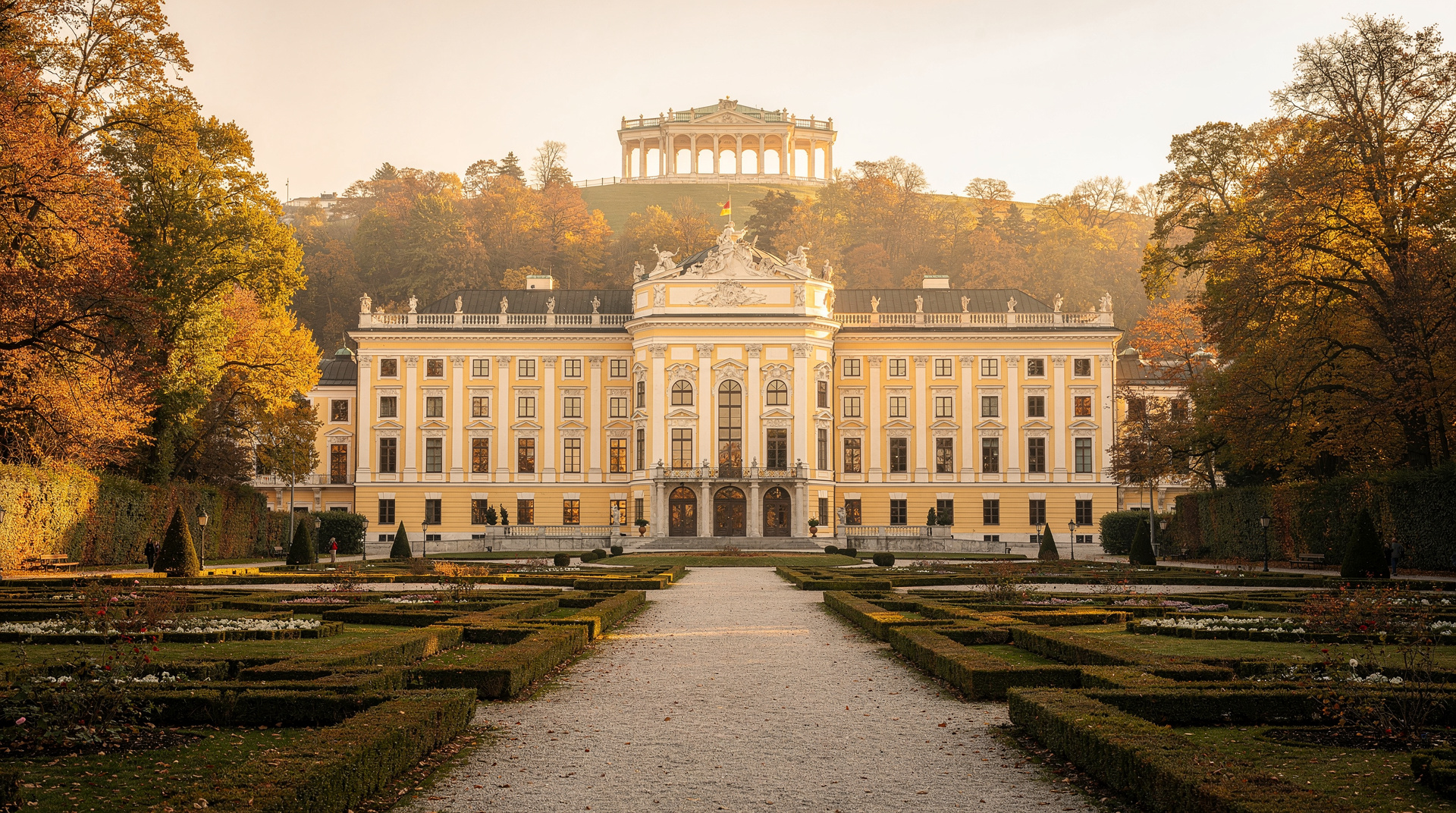
U4 to Schönbrunn station (12 minutes from the center). Book the Schönbrunn Palace skip-the-line tour for 9:15. With 7 days, spend more time here: the Grand Tour (45 rooms), then the Schönbrunn Zoo (Tiergarten Schönbrunn — established 1752, the world’s oldest). The Zoo takes 2–3 hours; the giant pandas (Schönbrunn has had them since 2003) and the tropical house are standouts.
Afternoon (13:30–17:30)
Return to the city. Lunch at Naschmarkt. Afternoon free for shopping (Mariahilfer Strasse) or a second visit to the MuseumsQuartier — Leopold Museum for the world’s largest Egon Schiele collection.
Evening (17:30 onwards)
Take tram D to Grinzing for a Heuriger. The ones worth knowing: Heuriger Mayer am Pfarrplatz (Pfarrplatz 2, 19th district, where Beethoven spent a summer), Heuriger Sirbu on Kahlenbergerstrasse for Riesling from their own vineyard, or Heuriger Hirt in Grinzing for atmosphere. Budget 30–40 € for two including wine and cold buffet.
Day 4: Wachau Valley and Melk Abbey
The most complete Wachau day: book the Vienna: Wachau Valley, Melk Abbey tour with Danube boat trip. Departure around 8:00–8:30 from the city.
Melk (10:00–12:00)
Stift Melk — the Benedictine abbey above the Danube — is one of the great Baroque buildings in the German-speaking world. The library (100,000 volumes, ceiling frescoes by Paul Troger) and church interior (frescoes by Johann Michael Rottmayr) are breathtaking. The terrace view of the Danube bend from the abbey garden is the definitive Wachau photograph.
Boat trip: Melk to Krems (12:30–14:30 approximately)
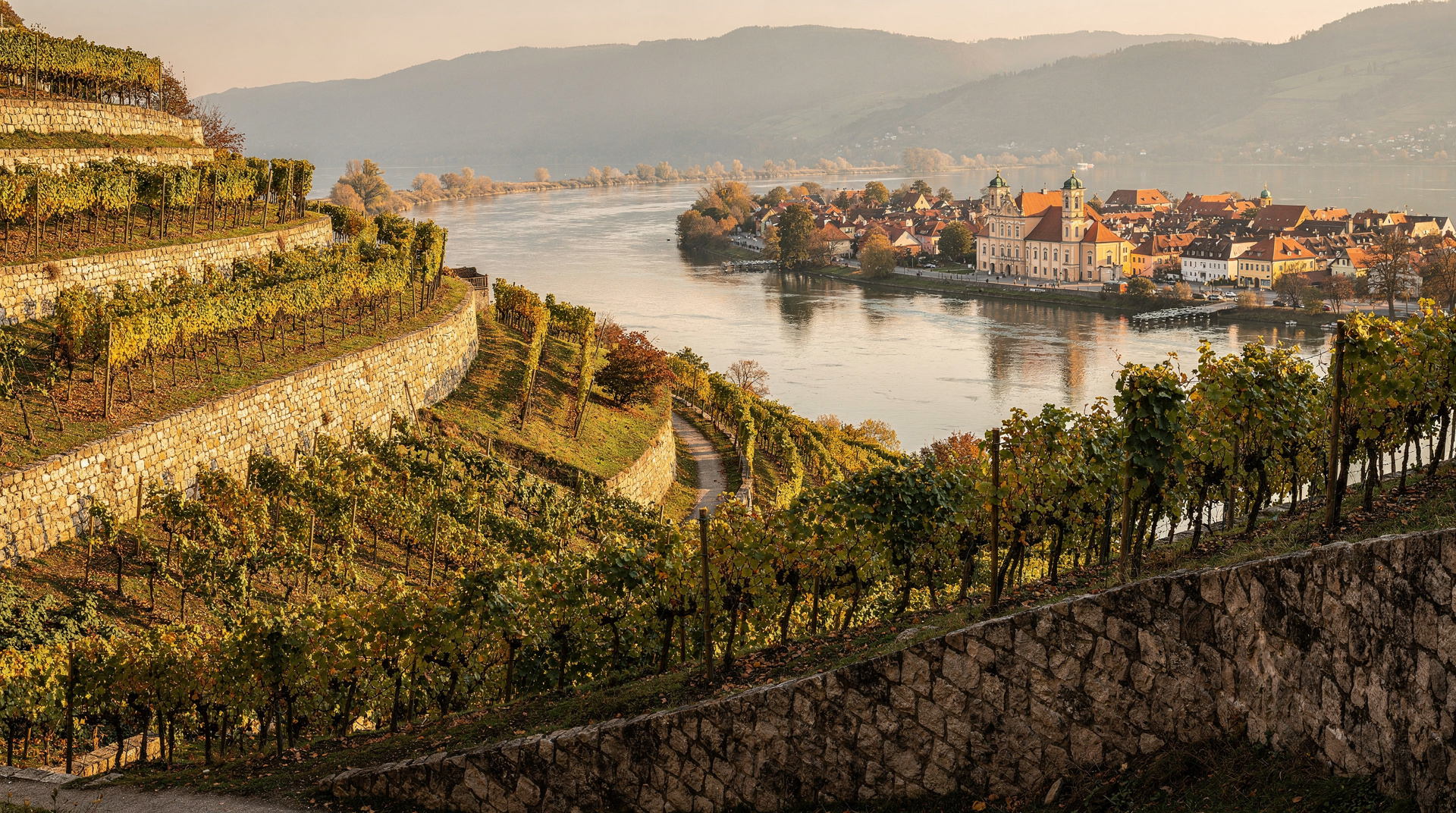
The 1h45 boat journey downstream through the Wachau UNESCO World Heritage landscape: apricot orchards, terraced Riesling vineyards, the ruined Aggstein fortress (11th century, worth a visit if doing the 3-castle tour), Dürnstein’s blue church tower and the ruin where Richard the Lionheart was imprisoned (1192–1193), and finally Krems at the eastern end of the Wachau.
Krems (14:30–16:30)
Krems is an underrated town with a good old quarter (Altstadt) and the Kunsthalle Krems for contemporary art. The Göttweig Abbey on the hillside opposite Krems is visible from the riverside.
Return to Vienna by coach (45–60 minutes).
Day 5: Hallstatt and the Salzkammergut
Early departure — the Hallstatt day trip with boat ride and Skywalk leaves at 7:00–7:30 for the 3-hour drive south into the Salzkammergut.
Hallstatt (10:00–16:00)
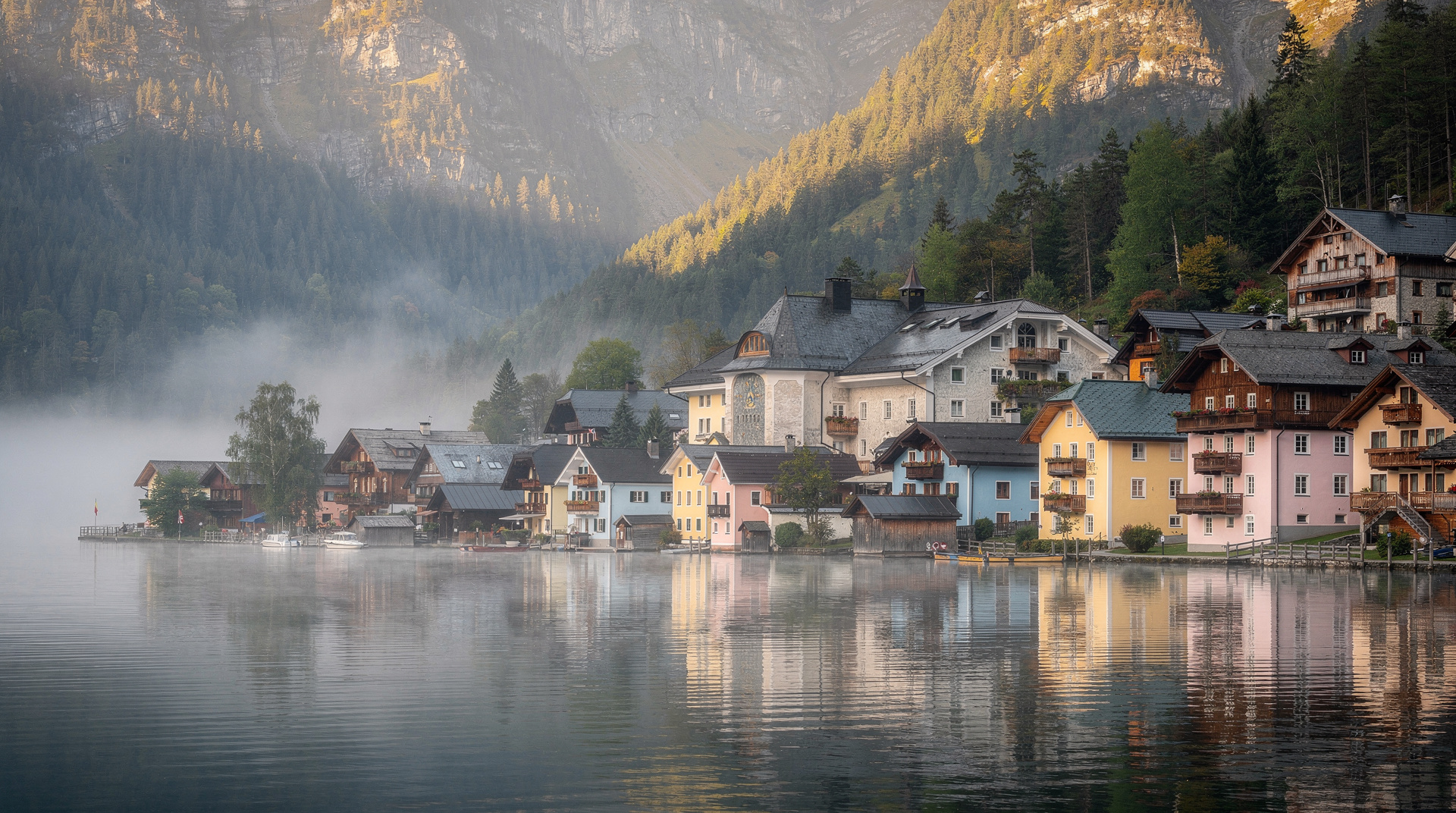
The village is small (700 residents) but the setting is extraordinary: pastel houses squeezed between a steep mountain and the Hallstätter See, with the Dachstein glacier visible to the south. The Skywalk viewpoint (cable car up, then 10-minute walk) gives the Instagram shot. The salt mine (Salzwelten Hallstatt) is genuinely fascinating — salt has been mined here since at least 1000 BC, making this one of the oldest industrial sites in Europe. The ossuary in the Catholic churchyard (decorated skulls, a tradition since the 18th century) is unsettling in the best way.
The boat ride on the Hallstätter See gives the perspective that photographs rarely capture: the mountain rising directly from the water, the village clinging to the narrow shelf between.
Return to Vienna by 20:00–21:00.
Day 6: Bratislava
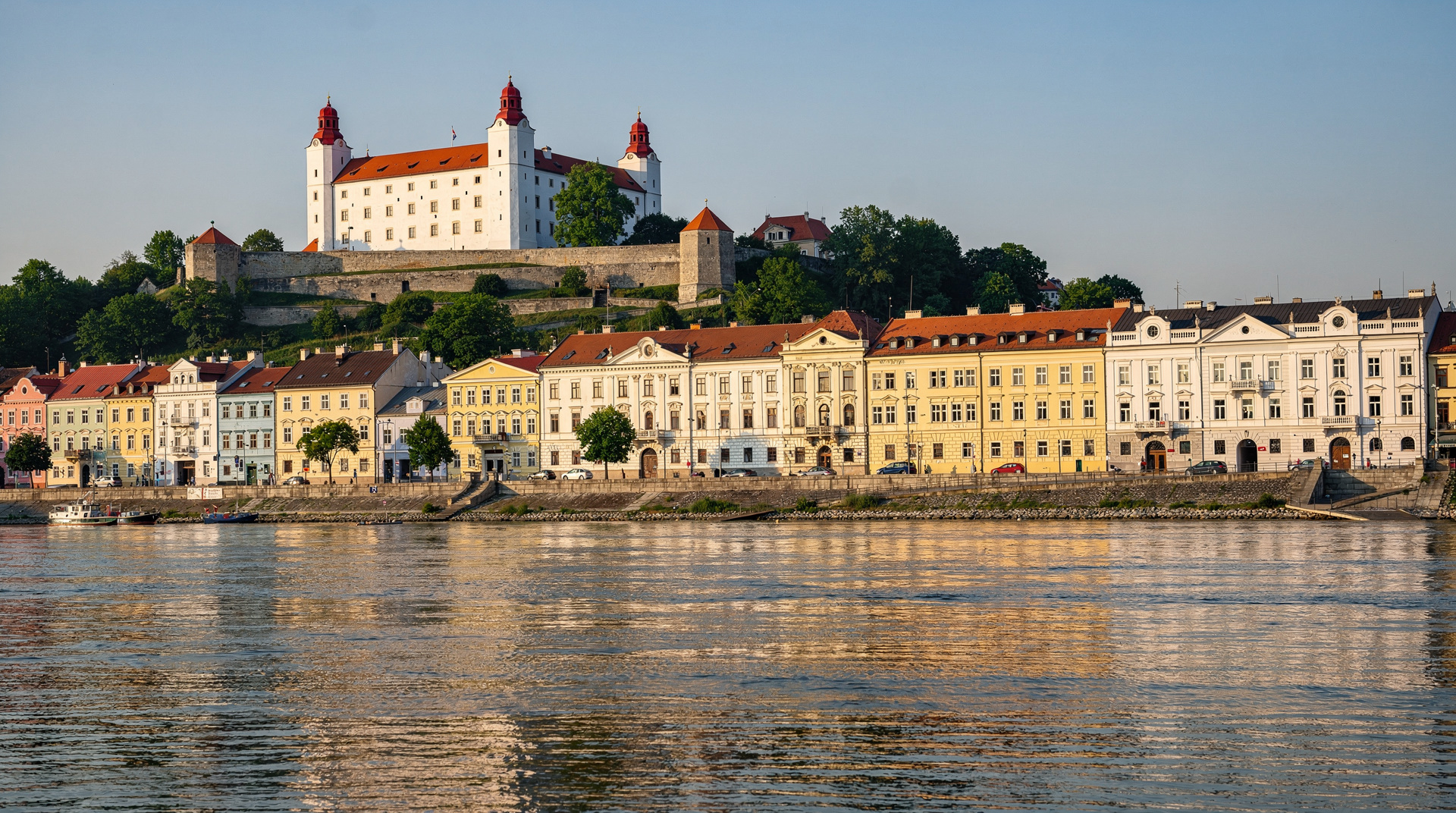
Two options. Option A — by train: RegioJet or ÖBB from Wien Hbf to Bratislava hl. st. — 1 hour, around 10 €. Fully flexible, independent. Option B — guided tour: Bratislava guided tour with speed boat ride combines transport, a walking tour, and a dramatic Danube speedboat — the river approach to Bratislava Castle is memorable.
What to do in Bratislava
Bratislava Castle (Bratislavský hrad): 15-minute walk uphill from the Old Town, free panoramic views of three countries on a clear day (Austria, Hungary, Slovakia). The history museum inside covers Slovak history from prehistoric times.
Old Town (Staré Mesto): Michael’s Gate, the narrow Zámocká street, the Roland Fountain on Hlavné námestie (main square). UFO Bridge (SNP Bridge) observation deck for city views.
Lunch: Bryndzové halušky (sheep cheese and potato dumplings with bacon — Slovakia’s national dish) at Pub Slovakia or Kolkovna on the old town edge. Budget 15–20 € per person all-in.
Note: Bratislava uses EUR — no currency exchange needed.
Return to Vienna by 19:00–20:00 on RegioJet or by the hydrofoil if booked in advance.
Day 7: Vienna Woods, Belvedere, and a farewell dinner
Morning (9:00–13:00): Vienna Woods
Take the bus or an organised half-day tour (the Vienna Woods and Mayerling half-day tour takes 4 hours) to Mayerling — the hunting lodge where Crown Prince Rudolf died in 1889 in circumstances still debated by historians. The lodge is now a Carmelite convent with a small chapel museum. Continue to Heiligenkreuz Abbey (founded 1133) — the oldest continuously inhabited Cistercian monastery in the world and still home to 80 monks; the Romanesque cloister is extraordinary.
Baden bei Wien (45 minutes by regional train from Wien Josefsplatz) is an alternative — the Biedermeier spa town where Beethoven spent 15 summers and wrote much of his 9th Symphony.
Afternoon (14:00–18:00): Upper Belvedere
Back to Vienna for the Upper Belvedere — Gustav Klimt’s “The Kiss” and the comprehensive Austrian art collection. Book the Upper Belvedere entry ticket for a timed morning or afternoon slot. Then: the MuseumsQuartier courtyard for a final Viennese Melange (the café-au-lait with foamed milk) at Café Leopold.
Evening (19:00 onwards)
Final dinner at Plachutta Wollzeile (Wollzeile 38) — the definitive address for Tafelspitz (boiled beef in broth, served with roasted potatoes, chive sauce, and apple horseradish). This is what aristocratic Vienna ate and what contemporary Vienna still eats when it wants to be comforted. Reserve ahead.
Nightcap: a glass of Zweigelt at Vinothek W (Schottengasse 3) or the wine bar in the Spittelberg neighbourhood.
How to adapt this itinerary
With a car (optional for days 4 and 7): A car enables the Wachau 3-castle route (Aggstein, Dürnstein, Schönbühel) and allows you to drive the vineyard roads at your own pace. Also useful for the Vienna Woods — you can combine Mayerling, Heiligenkreuz, and the Perchtoldsdorf vineyards in a single morning.
For music lovers: Replace the Vienna Woods morning (day 7) with a morning visit to the Haus der Musik (interactive sound museum, Seilerstätte 30) and an afternoon at the Kursalon for a matinée Strauss programme.
In winter: Replace the Heuriger evening (day 3) with the Schönbrunn Christmas Market; add the Rathausplatz Christmas Market to day one evening. The Wachau boat trip doesn’t run November–March; substitute the Wachau wine tour (bus-only version) or a full-day Wachau private car tour.
Going deeper on each day
A week gives you room to read up before each stop, so here is where to find more detail. For day 1, the Hofburg palace guide explains how the palace complex fits together, and the Ringstrasse architecture walk gives context for the boulevard you cover in the afternoon. The Musikverein concerts guide helps you choose a programme for the evening.
On day 2, the Imperial Treasury guide and the Spanish Riding School guide cover what to expect inside, and the Albertina Museum guide helps if you pick the museum afternoon. For day 3, the Schönbrunn Palace guide is worth a read before the Grand Tour, and the Heuriger guide explains how the wine taverns work so the Grinzing evening goes smoothly.
For the day trips, the Wachau day trip guide, the Hallstatt day trip guide and the Bratislava day trip guide go further into logistics and alternatives. The Vienna Woods day trip guide covers the day 7 morning, and the Belvedere Palace guide prepares you for the afternoon.
Costs and logistics
7-day transport: Buy a Wiener Linien weekly card (17.10 € for 7 days — the best value for a week). Add separate point-to-point tickets for Bratislava (10 € each way) and day trips.
Average 7-day spend (couple, mid-range): Approximately 1,800–2,400 € for two including accommodation (mid-range hotel at 120–180 €/night), all meals, sights, and the day trips linked above.
Booking checklist (at least 1–2 weeks ahead): Schönbrunn skip-the-line, Musikverein concert, Wachau tour, Hallstatt tour, Bratislava tour or train, Plachutta dinner reservation.
Sequencing the four day trips
This itinerary places Wachau (day 4), Hallstatt (day 5), and Bratislava (day 6) on consecutive days, which is demanding — three early-to-moderate starts in a row. If that pace feels too much, swap day 3 (Schönbrunn, a city day) between two of the day trips to break up the run; the 5-day itinerary uses this gentler alternation as its default structure. Whichever order you choose, keep the Vienna Woods half-day (day 7) last — it’s the shortest and lowest-key of the four, a good way to wind down before a final Belvedere afternoon.
Comparing this to the shorter itineraries
If you’re deciding between committing to a full week or trimming back, the 3-day and 4-day itineraries cover the same imperial city core with zero or one day trip respectively — useful for judging how much of this itinerary’s value comes from the extra days away from the city. Music-focused travellers who want to trade day trips for concerts entirely should look at the Vienna classical music itinerary instead, which uses a comparable time budget across four different venues.
Frequently asked questions about this itinerary
Q: Is 7 days too long in Vienna?
Not if you include the day trips. Vienna the city could fill 4–5 days comfortably; the Wachau, Hallstatt, Bratislava, and Vienna Woods add three genuinely different experiences. Slow travellers could extend to 10 days.
Q: Do I need a car for this itinerary?
No. The Wachau and Hallstatt day trips include transport; the Bratislava train runs hourly. The Vienna Woods half-day tour includes coach transport. A car is useful but not necessary.
Q: When should I book things?
For a July–August visit: book Schönbrunn skip-the-line, Musikverein concert, and the Hallstatt and Wachau day trips 3–4 weeks ahead. Plachutta takes reservations 2–3 weeks out. For shoulder season (April–June, September–October), 1 week ahead is usually sufficient.
Q: What is the best day to visit Hallstatt?
Weekdays are significantly less crowded than weekends. Arriving before 10:00 (as organised day trips typically do) avoids the worst of the day-tripper congestion. The village fills to uncomfortable levels on summer Saturday afternoons.
Q: Should I do the day trips on consecutive days or spread them out?
Spreading them out is gentler if your schedule allows it — swap day 3 (Schönbrunn) between two of the day trips rather than running Wachau, Hallstatt, and Bratislava back to back. The itinerary above keeps them consecutive for a compact week, but there’s no logistical reason you can’t reorder.
Q: What if I don’t want to visit Bratislava?
Replace day 6 with a second Vienna Woods excursion (Baden bei Wien, covered as an alternative on day 7) or an extra half-day in the MuseumsQuartier and Naschmarkt. Bratislava is the most easily substitutable day of the seven if Slovak history doesn’t appeal — our best day trips from Vienna guide has other options if none of the four here fit your interests.
Top experiences
Bookable activities with verified prices and instant confirmation on GetYourGuide.