Vienna in 5 days: a comprehensive itinerary
Vienna: Schönbrunn Palace & Gardens Skip-the-Line Tour
Five days gives you Vienna and its most compelling surroundings without rushing. You get the full imperial core, two contrasting day trips — the Wachau Valley’s wine and abbeys, and Hallstatt’s Alpine drama — plus time to experience the city at a pace that allows for a genuine Viennese coffee house afternoon and an evening in a Heuriger. If two day trips feels like too much, the 4-day itinerary picks just one; if you want a third, the 7-day itinerary adds Bratislava and the Vienna Woods.
At a glance
| Duration | 5 days |
| Pace | Comprehensive but unhurried — one day trip every other day |
| Best for | Couples, culture lovers, first-timers wanting depth |
| Transport | Public transport and organised tours, no car needed |
| Budget | Mid-range, roughly 180–230 € per day for two, plus day trips |
| Best season | April–June or September–October |
Day-by-day summary
| Day | Focus | Key booking |
|---|---|---|
| 1 | Hofburg, Ringstrasse, Kunsthistorisches | Hofburg guided tour, Musikverein concert |
| 2 | Schönbrunn, Naschmarkt, Heuriger | Schönbrunn skip-the-line |
| 3 | Wachau Valley and Melk Abbey | Wachau day-trip tour |
| 4 | Hallstatt and the Salzkammergut | Hallstatt day-trip tour |
| 5 | Belvedere, Leopold Museum | Belvedere entry ticket |
Days 1–2: Vienna imperial core. Day 3: Wachau Valley and Melk Abbey. Day 4: Hallstatt. Day 5: Belvedere, MuseumsQuartier, and a Heuriger farewell. All by public transport and organised tours — no car required.
Day 1: Hofburg, Ringstrasse, and a concert
Morning (9:00–12:30)
Begin at Stephansdom (9:00) — South Tower climb for context-setting views over the city. Walk the Graben and Kohlmarkt to the Hofburg, where the Hofburg and Empress Sisi Museum guided tour departs at 10:30. The guide explains what the rooms and objects meant to the people who used them — essential context for the next four days.
Afternoon (13:00–18:00)
Lunch at Café Central (Herrengasse 14) — the full Tafelspitz experience with the best address book in Vienna (Lenin, Trotsky, and Sigmund Freud were regulars).
Walk the Ringstrasse — the 5.6-kilometre boulevard Emperor Franz Joseph built in the 1860s. Highlights: the Parliament (Greek Revival), Rathaus (Neo-Gothic), Burgtheater, Vienna State Opera, and the Kunsthistorisches Museum (exterior). Allow 1.5 hours.
Finish in the Kunsthistorisches Museum from 16:00–18:00 — world-class Old Masters (Bruegel, Raphael, Vermeer, Velázquez). Budget 21 €.
Evening (19:30 onwards)
Tonight is concert night. Book the Vienna classical concert in the Musikverein well in advance — the Golden Hall is the highlight and the acoustic alone justifies the ticket. Dinner before at Café Schwarzenberg (quick and good).
Day 2: Schönbrunn, Naschmarkt, and a Heuriger
Morning (8:45–13:00)
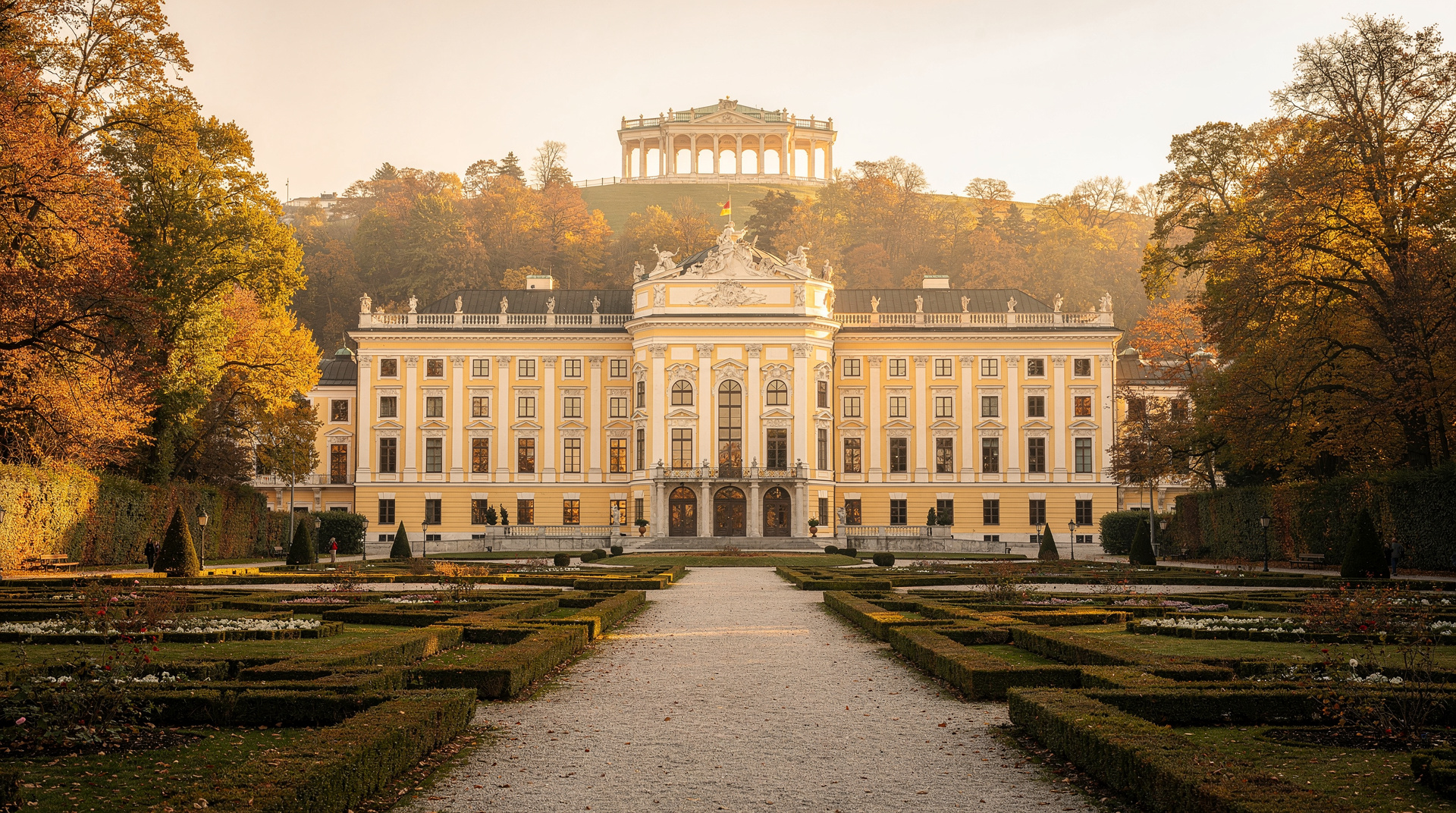
U4 to Schönbrunn station, arrive 8:45. The Schönbrunn Palace skip-the-line tour is essential in summer — without it, queue times regularly top 90 minutes. Grand Tour: 45 imperial rooms, Napoleon’s bedchamber, Maria Theresa’s bedroom. Walk up to the Gloriette for the panorama (30 minutes each way).
Afternoon (13:00–17:30)
Lunch at Naschmarkt — Vienna’s legendary open-air market, best explored on weekdays. The market runs 6 days a week on Linke Wienzeile; Saturday adds a flea market.
Afternoon in the 7th district (Neubau): Vienna’s independent neighbourhood. Coffee at Café Phil (books, vinyl, unhurried), browse the design shops on Kirchengasse, then loop back through Spittelberg — the prettiest neighbourhood in the inner districts, with baroque townhouses and quiet squares.
Evening (17:30 onwards)
Take tram D or U4/U6 to Grinzing or Nussdorf for a Heuriger evening. These are Vienna’s wine taverns, open when a pine branch hangs above the door. The local Grüner Veltliner and Riesling from Vienna’s own vineyards are excellent — Vienna is the only capital in Europe with significant wine production. Most Heurigen serve cold buffets (Liptauer cheese, cold cuts, Laugengebäck). Budget 25–35 € for two including wine. Return by tram.
Day 3: Wachau Valley and Melk Abbey
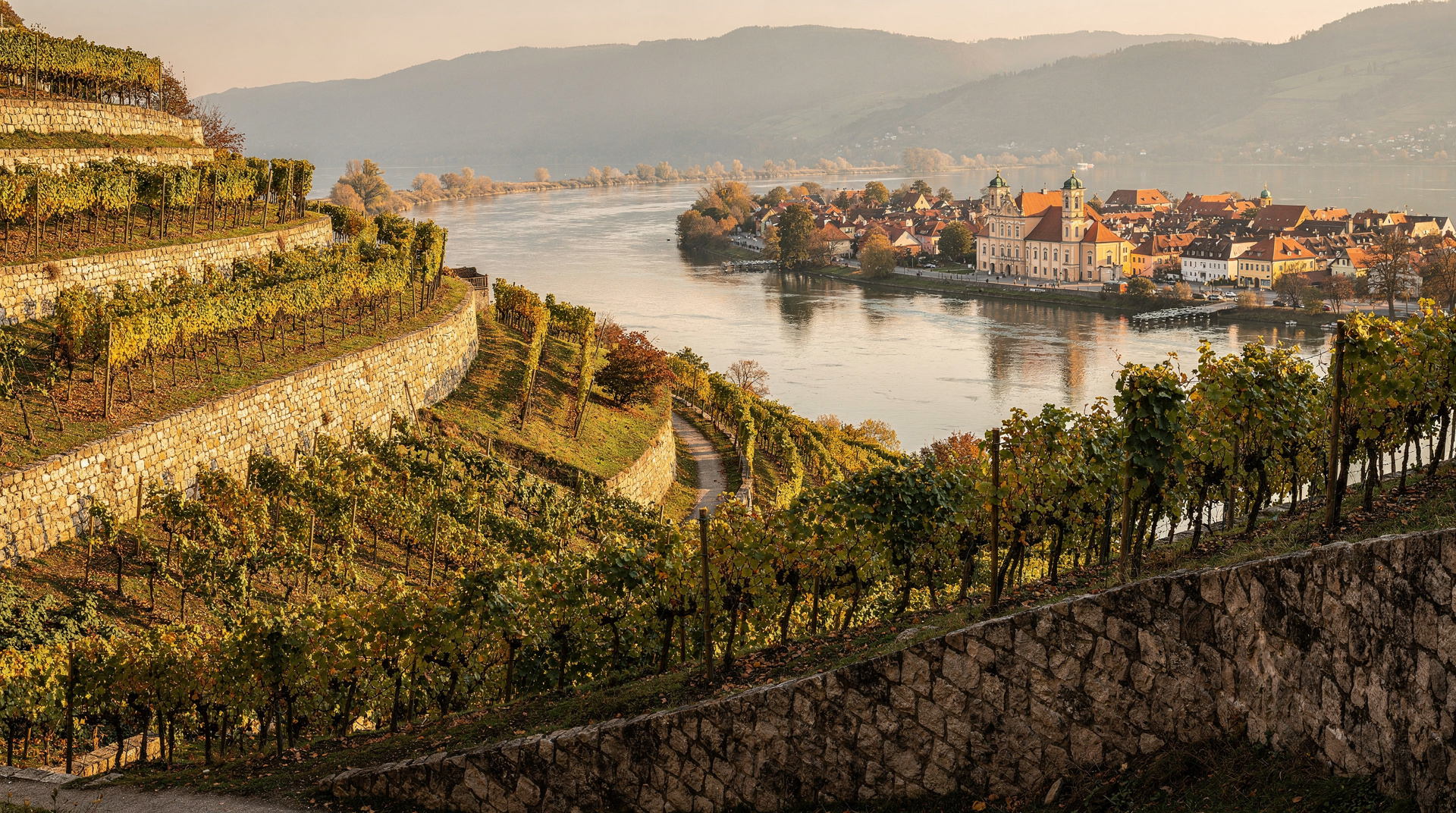
Start early — the day trip departs around 8:00. Book the Vienna: Wachau Valley, Melk Abbey tour with Danube boat trip. This is the classic Wachau loop: bus out to Melk, visit the Baroque abbey perched above the Danube (genuinely stunning — the library and church are among Austria’s finest interiors), then a 1-hour 45-minute boat trip downstream through the Wachau gorge (apricot orchards, castle ruins, vine terraces, medieval village of Dürnstein where Richard the Lionheart was imprisoned), finishing at Krems for the coach back to Vienna. Total day: 10 hours, returns around 18:00–19:00.
What to see in Melk
Melk Abbey (Stift Melk) is a Benedictine monastery in continuous use since 1089. The current Baroque building (1702–1736) by Jakob Prandtauer is extraordinary: the library holds 100,000 books, the church’s ceiling frescoes are by Johann Michael Rottmayr, and the terrace view of the Danube bend is perfectly composed. Allow 1.5–2 hours.
The boat trip
The Wachau gorge is UNESCO World Heritage listed — correctly. The section from Melk to Krems passes Schönbühel Castle, the ruined Aggstein fortress (visible from the river), the blue-towered village church of Dürnstein, and kilometre after kilometre of terraced Riesling vineyards. If the timing works, a glass of Wachau Riesling on the deck is not optional.
Evening (19:30 onwards)
Return to Vienna. Light dinner near the hotel — the Wachau day is long and rich. Zum Wohl wine bar on Bauernmarkt (open until 22:00) serves Austrian cold cuts and wines by the glass: a perfect decompression.
Day 4: Hallstatt — the Alpine lake
Start very early. The Hallstatt day trip with boat ride and Skywalk typically departs 7:00–7:30 from central Vienna. It is a 3-hour drive each way through the Salzkammergut region.
What Hallstatt is
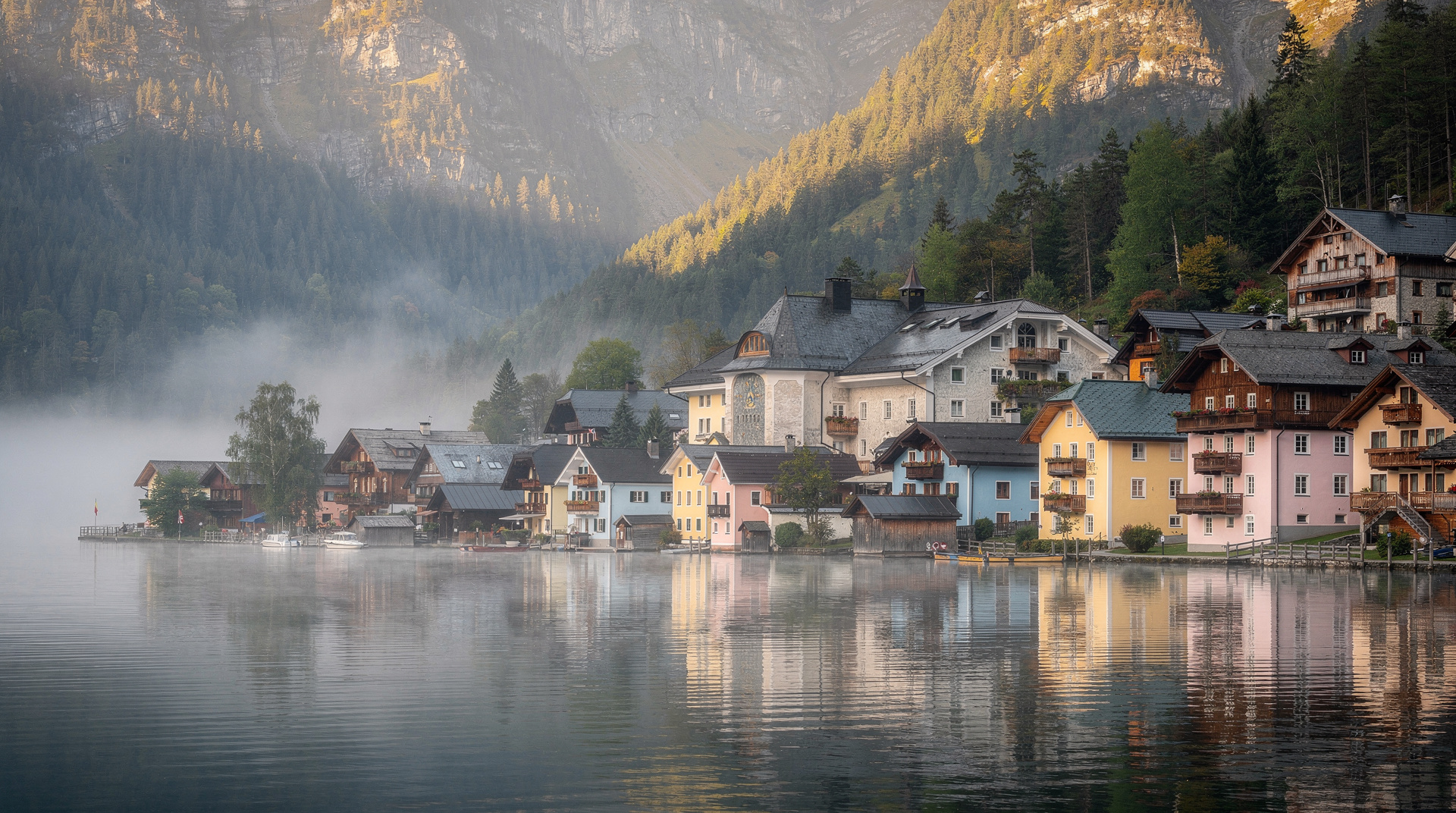
A village of 700 people squeezed between a steep mountain and a lake, Hallstatt has been inhabited since at least 1000 BC (the Celtic salt-mining culture is named after it — “Hallstatt period”). The UNESCO World Heritage listing is for the cultural landscape, not just the pretty houses. What draws visitors today is the impossibly photogenic combination of pastel-coloured townhouses, mirror-still lake, and glacier-dusted peaks.
What to do
- Hallstatt Skywalk viewpoint (included in most tours): cable car up to 850m, the most photographed view
- Boat ride on the Hallstätter See: the reflection of the Dachstein in the water on a clear morning
- Historic salt mine (Salzwelten Hallstatt, 2 hours, not always included — check your tour)
- Walking the village: the market square, the ossuary, the parish church
Honest advice: Hallstatt is genuinely beautiful but genuinely crowded in July and August. If you are visiting in peak summer, the 8:00 arrival (before coach groups arrive) is important — by 10:30, the market square is difficult to photograph. April–May or September is significantly better.
Evening (20:00–21:00)
Return to Vienna. Dinner near arrival — something simple. Tomorrow is the museums day and requires energy.
Day 5: Belvedere, Leopold Museum, and farewell
Morning (9:00–12:30)
Upper Belvedere at opening (9:00). Gustav Klimt’s “The Kiss” plus a comprehensive Austrian art collection from the Baroque to Expressionism. Book the Upper Belvedere entry ticket online. Allow 2 hours.
Walk through the Belvedere garden (free) to the Lower Belvedere — the Baroque museum and Orangery are included in some combined tickets.
Afternoon (13:00–18:00)
Lunch on Schwarzenbergplatz or walk north into the center for a final Café Landtmann coffee (Landtmann is on the Ring opposite the Rathaus — the coffee here is consistently excellent and the prices honest for a historic café).
Afternoon in the MuseumsQuartier: the Leopold Museum for Schiele and Klimt (the world’s largest Schiele collection) and the MUMOK (Museum of Modern Art) if contemporary art interests you. The MQ courtyard is a Vienna summer institution — outdoor seating, food stalls, locals lounging on Enzis (the bright foam seating blocks unique to the MQ).
Evening (18:00 onwards)
Final dinner: Gasthaus Pöschl (Weihburggasse 17) for traditional Viennese cooking without the tourist markup. Try the Zwiebelrostbraten (roast beef with crispy onions) or the Beuschel (offal ragout — Viennese traditional, not for everyone but remarkable). Wine: a Blaufränkisch from Burgenland.
Walk home via the Graben and Kohlmarkt one last time.
How to adapt this itinerary
For wine enthusiasts: Replace one city afternoon with the Wachau Valley wine tasting day tour — small group, visits to two or three wineries, guided tastings of Grüner Veltliner and Riesling, much more depth than the general Wachau tour.
For families with children: Schönbrunn Zoo on day two instead of the Heuriger evening. Riesenrad at the Prater as an afternoon add-on. Skip the Leopold Museum (Schiele is too adult for young children) in favour of the Naturhistorisches Museum — the Venus of Willendorf, dinosaur skeletons, and the meteorite collection are excellent for kids.
In winter: The Wachau day trip still operates (Melk Abbey is open year-round) but the boat trip may not run from November–March. Replace with the Christmas market circuit: Rathausplatz (the large one), Schönbrunn (atmospheric), and the cosy Spittelberg market.
Costs and logistics
Transport: 72-hour Wiener Linien (17.10 €) covers days 1–3; extend with a 24-hour or 48-hour card for days 4–5. Day trips (Wachau, Hallstatt) include transport.
Average daily spend (couple, mid-range): Days 1–2 and 5: 180–230 € per day. Day 3 (Wachau tour): 70–100 € per person all-in. Day 4 (Hallstatt tour): 75–95 € per person all-in.
Booking checklist: Schönbrunn skip-the-line, Musikverein concert, Wachau day trip, Hallstatt day trip. All should be booked 1–2 weeks ahead in summer.
Managing two back-to-back day trips
Days 3 and 4 are both long — the Wachau day runs roughly 8:00 to 18:30–19:30, and Hallstatt departs even earlier at 7:00–7:30 and returns by 20:00–21:00. Keep day 3’s evening light (the “light dinner” suggestion above is deliberate) so day 4’s early start doesn’t feel punishing. If early starts genuinely don’t suit your travel style, swap the order — do Hallstatt on day 3 and the Wachau on day 4 — since the Wachau’s later departure time gives you a gentler final full day before the museums on day 5. Our best day trips from Vienna guide ranks both trips alongside Bratislava and Budapest for context.
What this itinerary intentionally leaves out
Five days with two day trips means less city time than the 3-day or 4-day itineraries spend on museums and neighbourhoods. The Imperial Treasury, the Spanish Riding School, and a deeper MuseumsQuartier visit (MUMOK, Kunsthalle) are all worth adding if you extend to 7 days — see the 7-day itinerary for how they fit. If classical music matters more to you than day trips, the dedicated Vienna classical music itinerary reallocates this same time budget toward four different concert venues instead.
Frequently asked questions about this itinerary
Q: Is 5 days too long for Vienna?
Not at all. Vienna rewards slow travel. The Wachau and Hallstatt day trips are highlights in their own right, and the city has enough museums, music, and food culture for a week.
Q: Which day trip should I prioritise if I can only do one?
The Wachau Valley (Melk plus boat) is more distinctively Austrian and culturally richer. Hallstatt is more dramatic visually. If the landscape moves you, choose Hallstatt. If history and wine interest you, choose the Wachau.
Q: Do I need to book the Heuriger in advance?
No — Heurigen are informal and most accept walk-ins. In summer, arrive by 17:30–18:00 to secure a table. The Heuriger guide for Vienna lists the best ones by neighbourhood.
Q: Is the Wachau boat trip available year-round?
The DDSG Blue Danube boat service typically runs April to October. In winter, the Melk Abbey tour runs by bus both ways — still excellent. Confirm dates when booking.
Q: Should I do the Wachau or Hallstatt day trip first?
Either order works, but doing Hallstatt on day 3 (with its earlier, more demanding 7:00 start) and the gentler Wachau day on day 4 gives you a softer landing before the museums on day 5. This itinerary lists Wachau first because most travellers prefer easing into the day-trip pace, but swap freely.
Q: Is 5 days enough for both day trips plus the full imperial core?
Yes, if you accept two genuinely early mornings. If that pace doesn’t suit you, the 4-day itinerary picks a single day trip instead and keeps the city days identical.
Top experiences
Bookable activities with verified prices and instant confirmation on GetYourGuide.