Grinzing and the Heuriger villages
Vienna's wine villages: how to visit a Heuriger in Grinzing, Nussdorf or Neustift, what Grüner Veltliner tastes like, and when they're actually open.
Vienna: Small-Group Wine Tasting Tour with Heurigen
Quick facts
- Location
- Grinzing, Nussdorf, Neustift (19th district and surrounds)
- Getting there
- Tram D then bus 38A to Grinzing
- Main wine
- Grüner Veltliner (white), Gemischter Satz (field blend)
- Season
- Mainly April–October; some close for weeks at a time
Vienna’s wine culture, in a village 20 minutes from the centre
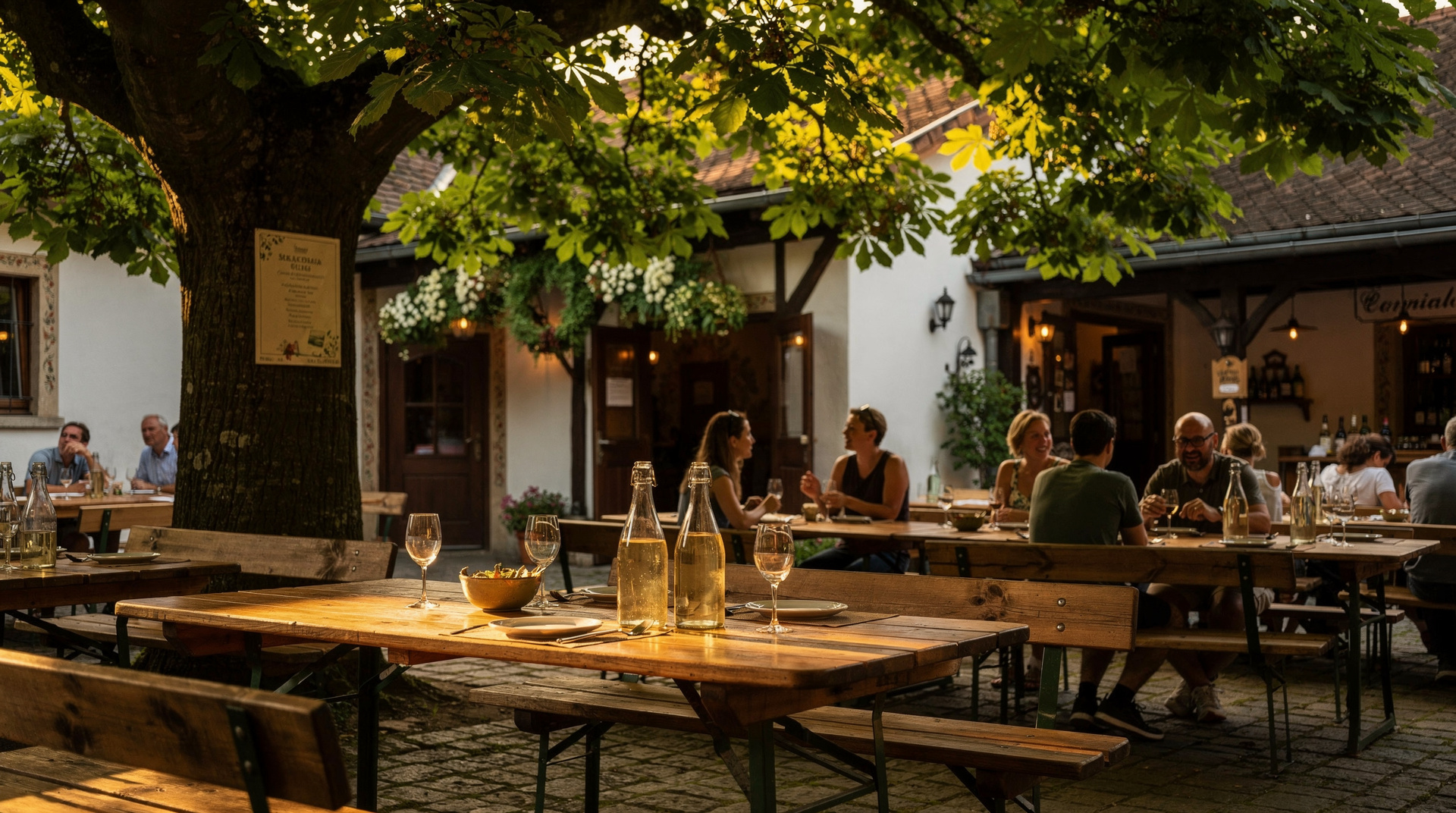
Vienna is the only capital city in the world with significant wine production within its municipal limits — a fact that seems implausible until you take bus 38A from the Grinzing stop and find yourself in a lane lined with vine-covered walls and wooden-gate entrances to family wine taverns. The Heuriger (plural: Heurigen) — a wine tavern where the producer sells their own wine directly on their own premises — is the institution that makes this fact tangible.
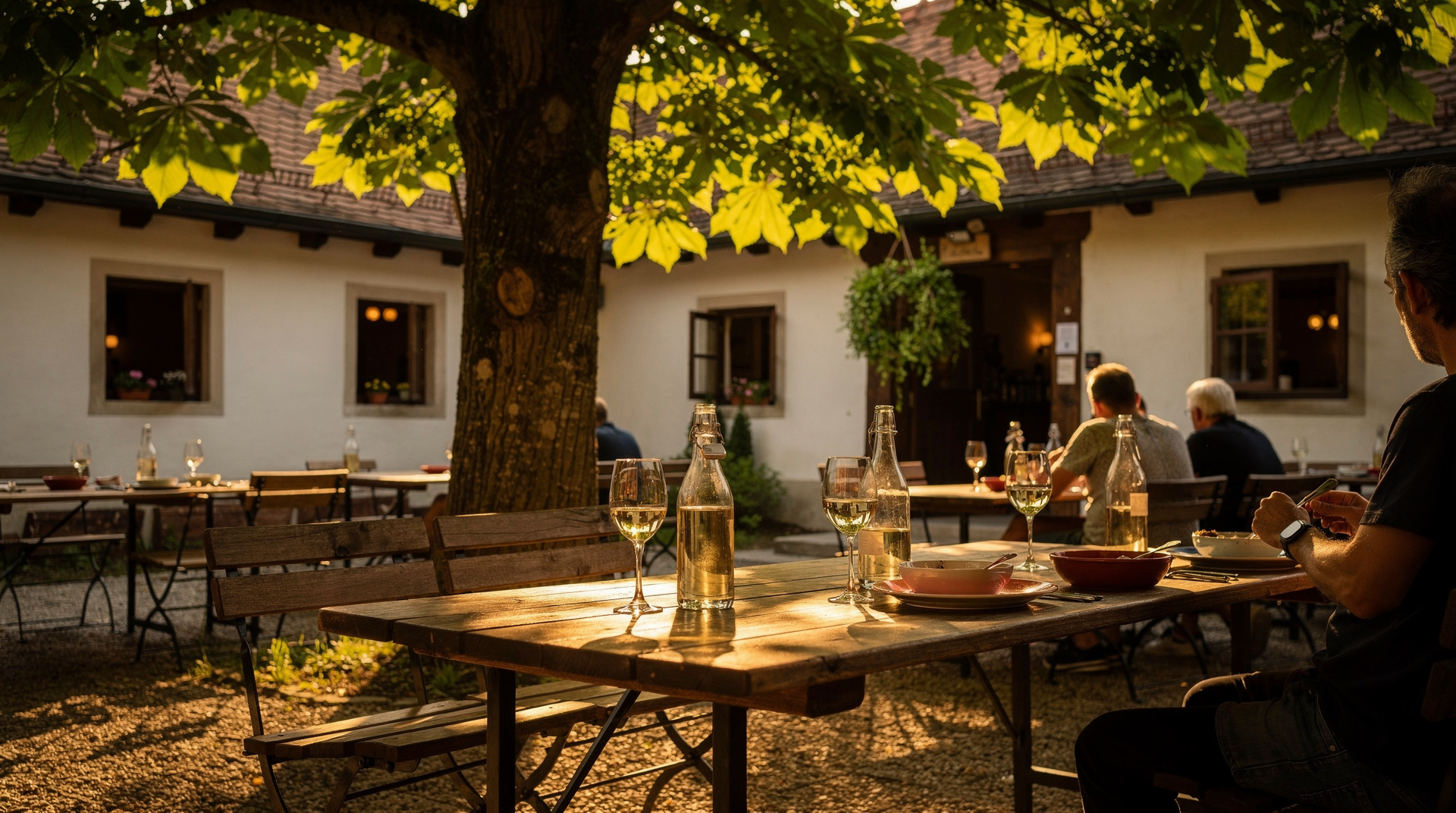
In Grinzing, Nussdorf, Neustift am Walde, Kahlenbergerdorf, and Gumpoldskirchen to the south, vine-covered hillsides run to within metres of Vienna’s tram and bus network. You can be sitting under a chestnut tree drinking new wine from a vineyard visible behind the garden wall within 30 minutes of leaving the Stephansdom.
| Where | Grinzing, Nussdorf, Neustift am Walde (19th district) |
| Cost | Around €3–5 per Viertel; a cold buffet plate a few euros more |
| Time needed | Half a day, best from late afternoon into evening |
| Getting there | Tram D to Nussdorf, then bus 38A to Grinzing terminus |
| Best time | April–October, weekday evenings for the least crowded gardens |
A Heuriger is not a restaurant in the ordinary sense. By Austrian law — the relevant statute derives from a 1784 decree by Emperor Joseph II, who wanted to allow farmers to sell their agricultural produce directly without involving middlemen — a Buschenschank (the formal legal term for the institution) may sell only its own wine and simple cold food: bread, cheese, cured meats, pickled vegetables, spreads.
Hot food, when it appears, is technically outside the traditional definition, though the larger and more commercially oriented establishments have long stretched this rule. The pine branch (Buschen) hung above the door, or a green branch displayed at the gate, is the traditional signal that the Heuriger is open that day — when it is not displayed, the establishment is closed, sometimes for weeks at a time.
What Heuriger wine tastes like
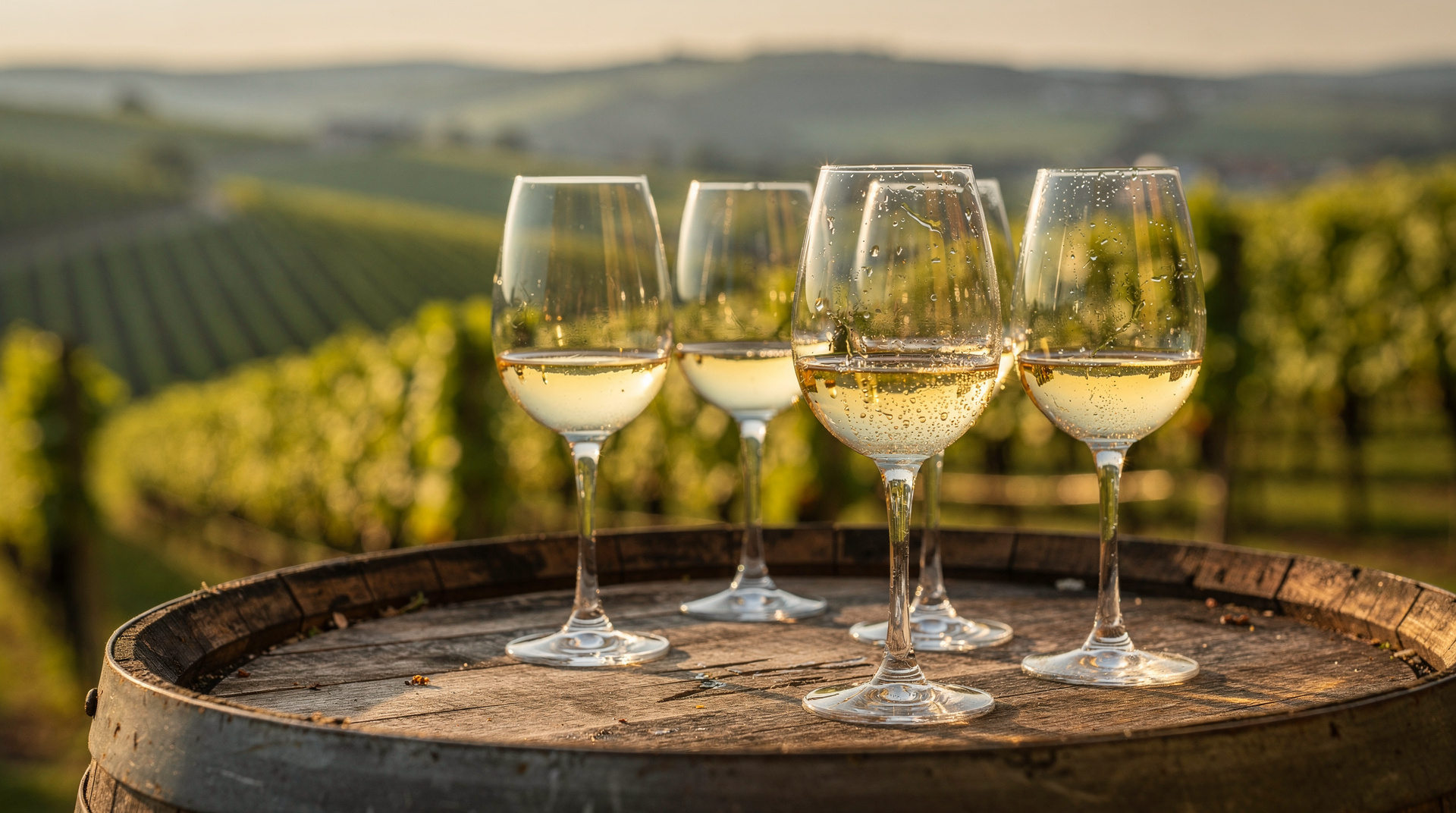
The dominant variety in Vienna’s wine villages is Grüner Veltliner — Austria’s signature white grape, producing a dry wine with characteristic white pepper spice, fresh citrus acidity, and a mineral finish that the Viennese describe as having “Pfefferl” (pepperiness). Drunk young, typically within a year of harvest, and served in a small standard-sized glass called an Achtel (1/8 litre) or Viertel (1/4 litre), Grüner Veltliner at a Heuriger is more about freshness and directness than complexity — it is wine to drink in a garden, with food, in convivial company.
The Wiener Gemischter Satz (Viennese field blend) is the other distinctly local speciality: multiple grape varieties — sometimes a dozen or more different types — planted and harvested together in the same plot, producing wines of deliberate and unrepeatable complexity. The DAC (Districtus Austriae Controllatus) designation for Wiener Gemischter Satz was established to protect this traditional approach. The wines vary considerably by producer and plot, but share a layered quality that straightforward varietal wines cannot achieve — something happens in the fermentation of multiple varieties together that cannot be replicated by blending separate fermentations afterward.
Prices at a genuine Heuriger remain modest — a Viertel costs a few euros, a plate of bread and cheese a little more. Food is typically self-service from a cold buffet. The experience is fundamentally about sitting outside in a garden or courtyard as the evening draws in, with a carafe of local wine and no particular schedule to observe.
Where to go
Grinzing (19th district) is the most accessible and most visitor-aware of the Heuriger villages. Take tram D to Nussdorf and then bus 38A to the Grinzing terminus. The village main street and the lanes behind it have a concentration of Heurigen open on most weekends from spring through autumn. Heuriger Mayer am Pfarrplatz in nearby Nussdorf is the best-known establishment — it claims Ludwig van Beethoven as a former resident (he lived in a house on the site for a period) — and is reliably open, large, well-staffed, and more restaurant-like in its operation than a traditional family Heuriger. For a first visit, this reliability is a virtue even if the atmosphere is somewhat managed.
Neustift am Walde (18th district) has a smaller concentration of Heurigen with a more local atmosphere than Grinzing — fewer coach parties, more neighbourhood regulars. Heuriger Reinprecht and Heuriger Schilling are both long-established family operations with good Gemischter Satz from their own vineyards. The walk from the Neustift stop on the 35A bus through the village to the Heuriger lanes passes through genuine vineyard territory within the city limits.
Kahlenbergerdorf on the Danube slope above Nussdorf is the most scenic option — a small, quiet hamlet where the road narrows and the houses press against the hillside above the river. The Heurigen here are open sporadically and with minimal commercial orientation; this is where Viennese wine-lovers who already know the system go when they want authenticity over convenience. Call ahead, check online, and allow for the possibility that the one you planned to visit is closed for the month.
Gumpoldskirchen in the Thermenregion south of Vienna (accessible by S-Bahn S1 to Baden, then local bus) is outside the city but extends the Heuriger culture into Austria’s oldest wine region — Pinot Noir (Blauburgunder) and Rotgipfler alongside the standard white varieties, with a different landscape character from the Viennese hills.
When each village is at its best
Heuriger season runs April to October, but the character of a visit shifts noticeably through those months, and matching your visit to the right window matters more than picking the right village.
| Period | What to expect |
|---|---|
| April–May | New wine (Sturm from the previous autumn has cleared), fresh spring greens on the vines, gardens open but not yet crowded |
| June–July | Long evenings, gardens at their busiest on weekends, best for the classic “sit outside till dark” experience |
| August | Some family Heurigen close for a summer break; check ahead before making a special trip |
| September–October | Harvest season, the most atmospheric time — new Sturm wine appears, vineyard workers visible on the slopes above Grinzing and Nussdorf |
For a fuller village-by-village comparison, the best Heurigen in Grinzing and Nussdorf guide ranks specific taverns, and the Heuriger guide to Vienna explains the etiquette and ordering system in more depth. If Grüner Veltliner is new to you, the Grüner Veltliner guide is worth reading before you go, so the wine list makes sense on arrival.
Guided wine tours
A small-group wine tasting tour with a Heuriger visit is the most reliable way to guarantee access to an open Heuriger, with an English-speaking guide who explains the history and culture of the institution alongside the wine itself. Individual Heurigen post their opening hours on their websites, but the “closed for three weeks without notice” situation catches visitors off-guard with depressing regularity; a guided tour handles the logistics entirely and removes the risk of arriving at a locked gate.
A half-day countryside wine tour with meal goes further afield to the broader Vienna wine region and pairs the tasting with traditional food — a more structured introduction for those who want the meal as well as the wine.
When the Heuriger are open
This is the most practically important thing to know before visiting: a traditional Heuriger is open when it chooses to be. The legal framework allows a producer to sell wine only during certain periods of the year, typically three to four months in total. Many small operations open for 2–3 weeks, close for a month, reopen for harvest, close again. The schedule is set by the producer and there is no obligation to maintain a regular pattern.
The larger, more commercially oriented establishments — Mayer am Pfarrplatz, Reinprecht, a handful of others — maintain a more regular schedule and can be visited with reasonable confidence from April through October. Most are open from around 16:00 on weekdays and from midday on weekends, closing around 23:00.
If you specifically want to visit a traditional small family Heuriger rather than the commercial operations, check their website or telephone ahead. Do not rely on guidebook opening hours, which can be months or years out of date by the time a printed guide reaches you. The green branch or pine sprig above the door, hung that day, is the only truly reliable indicator that the wine is flowing.
How an evening usually unfolds
The rhythm of a Heuriger visit is slow by design. You arrive, look for a table in the garden or in the low-ceilinged rooms inside, and only then walk to the counter to order a first glass and fill a plate from the cold buffet. Nobody expects you to order everything at once. Most people start with a light Grüner Veltliner, move on to a Gemischter Satz once the food arrives, and keep going at whatever pace the conversation sets.
Because the glasses are small, it is easy to try two or three different wines without feeling that you have committed to a bottle. Ask the person at the counter what the house is pouring that week; family producers are usually happy to explain which plot a wine comes from and how it differs from the one next to it. If you want the vocabulary to follow along, the Grüner Veltliner guide covers the basics, and the wider Heuriger guide explains the ordering conventions.
Seating is shared more often than not. Do not be surprised if a local group asks whether the other half of your bench is free, and do not feel obliged to make conversation. Equally, nobody will rush you to give the table back, which is part of why an evening here feels so different from a restaurant dinner in the centre.
Choosing between the villages
If you want ease and an obvious choice of gardens, Grinzing is the natural first stop. If you prefer a quieter, more neighbourhood feel, Neustift am Walde rewards the extra effort. Kahlenbergerdorf suits those who already know what they are looking for and are happy to improvise. A reasonable approach for a first-timer is to pick one village and stay put, rather than hopping between several; the point is to settle in, not to tick off addresses.
If your trip is built around music, a Heuriger evening pairs well with a concert earlier in the day, and the classical music itinerary shows how to fit the two together. Visitors planning a short stay can see where a wine-village evening fits in the 3-day itinerary or the weekend itinerary. Readers who like green space with their wine may also enjoy the Kahlenberg hike and the wider Vienna Woods, both of which sit on the same side of the city and can be combined with an evening in the taverns.
Getting around and getting home
Public transport is the sensible way to reach the wine villages and the sensible way to leave them. Since you will be drinking, plan your return before you sit down rather than after the second carafe. The public transport guide explains how the tram, bus and night services fit together, which is useful if you are staying late. Check the last departures in advance, because the buses serving the hillside lanes do not run as frequently as the city centre lines.
Dress for the weather rather than the occasion. Gardens are pleasant on a warm evening but cool down quickly once the sun drops, and a light layer is worth bringing even in summer. In the cooler shoulder months many Heurigen also have a heated interior room, which is often the better seat.
Pairing the evening with other Vienna food
A Heuriger is a gentle counterpoint to the city’s café and restaurant scene. If you are building a food-focused trip, the Vienna food guide places the taverns alongside coffee houses and markets, and the Naschmarkt eating guide suits a lunch earlier in the same day. For those who want something more structured, food tours compared looks at the guided options.
Combining with the rest of Vienna’s wine country
Grinzing and Nussdorf are the easiest introduction, but they are not the only Viennese wine landscape. If you enjoy the format, the vineyards continue south into Burgenland, where the Burgenland wine route covers red wine country around Neusiedlersee, and further west the Wachau wine route pairs vineyard visits with the Danube valley’s medieval towns.
Both make a good full-day follow-up to a Grinzing evening if wine is the theme of the trip. For general orientation on where the Heuriger villages sit relative to the rest of the city, see the Vienna destination overview, and for a first-hand account of an evening in the taverns, the Grinzing Heuriger evening trip report captures the pacing of a typical visit better than a checklist can.
Top experiences
Bookable activities with verified prices and instant confirmation on GetYourGuide.